Ahead of the International Day to End Impunity for Crimes against Journalists on 2 November, and in the year that marks the 75th anniversary of the Universal Declaration of Human Rights, High Representative Josep Borrell and Vice-President Věra Jourová issued the following statement:
“In these difficult times, marred by wars*, conflict and terrorist acts, we recall and praise the essential role played by journalists and media workers in fighting for the truth and for human rights. Journalists contribute to counter disinformation and hate speech and to keep checks and balances on governments and public institutions. They shed light on war crimes and human rights violations, sometimes at the risk of their own lives.
We firmly condemn the killings, physical attacks, arbitrary detentions, online and offline intimidation, harassment, and surveillance, that journalists at times face while exercising their profession. Media worldwide continue to be raided or closed, and journalists are increasingly targeted by legislation that curtails freedom of expression, and by abusive litigation, thus limiting pluralism, editorial independence, and infringing freedom of expression.
…
The EU remains committed to support independent journalists and media workers everywhere. We will continue to mobilise all the diplomatic tools at our disposal to raise attention to individual cases of journalists in detention or at risk. We have also established ProtectDefenders.eu to provide journalists at high risk with physical and digital protection, legal support, and relocation.
Protecting journalists means protecting our own rights. Democracy cannot work without free and independent media. This is why the EU is also taking unprecedented steps at home to protect journalists.
We call on Member States to implement the Commission Recommendation on the safety of journalists. The proposal for a Media Freedom Act aims to safeguard their independence and media pluralism. The Commission also took action to fight strategic lawsuits against public participation, which put pressure on journalists and want to silence them. These legislative proposals should be adopted swiftly to improve the environment in which journalists and media operate and to set global standards. See also: https://humanrightsdefenders.blog/2023/07/02/eu-directives-for-slapps-and-media-freedom-being-weakened-european-parliament-should-come-to-the-rescue/
The European Union stands with journalists around the world who, each and every day, exercise their freedom of expression for the benefit of us all.”
What is special is that the report is not a country overview but thematic, including this paragraph on HRDs:
“Assistance to human rights defenders through both political and financial means is one of the flagship EU human rights activities, having a direct impact on individuals, groups and organisations defending human rights. In 2022, human rights defenders continued to face threats and attacks such as killings, arbitrary detention, smear campaigns or judicial harassment. They are also increasingly victims of illegal online surveillance, transnational repression or criminalisation due to ill-motivated “foreign agent” or counterterrorism laws. To counter this trend, the EU raised specific cases of human rights defenders at risk in all its human rights dialogues, subcommittee meetings and consultations (e.g. dialogue with Colombia or India). The protection of human rights defenders was also discussed in EU- supported civil society seminars preceding human rights dialogues (e.g. EU-Brazil and EU-Mexico seminars). The EU also continued to make its voice heard with public statements and declarations to support human rights defenders at risk (for instance on cases in Iran, Russia, or Mexico). Global support for human rights defenders was voiced by The High Representative on the occasion of the World NGO Day in February 2022 and during the 24th EU-NGO Forum on Human Rights in December 2022. EU Delegations and Member States’ embassies engaged and met with human rights defenders, monitored trials, and visited human rights defenders in detention. Annual meetings between EU diplomats and human rights defenders have become an established practice in non-EU countries, increasing the visibility of human rights defenders where appropriate and allowing for in-depth analysis of the challenges they face. Some EU Delegations provided awards to Human Rights Defenders (for instance in Uganda). The support and protection of human rights defenders is also a priority for the EUSR for Human Rights. Throughout 2022, the EUSR continued to raise individual cases of human rights defenders, particularly those in long-term detention, and to meet with human rights defenders, both in Brussels and during country visits. He availed of every opportunity to express support and solidarity directly to the defenders themselves or their families. He raised specific cases during visits to several countries, including India, Uganda, Pakistan, Egypt and Colombia and in other bilateral contacts, notably with Cuba and Brazil. He also participated in a number of high profile events aimed at raising awareness and visibility around their work and the need for their protection, such as the ProtectDefenders.eu beneficiary meeting in September, or the Front Line Defenders Dublin Platform in October. The EUSR was very active on individual cases on social media, notably regarding Belarus. He also highlighted the situation of Palestinian prisoners on hunger-strike and their deteriorating health conditions. The EU remained active in multilateral fora in particular in the United Nations Human Rights Council and the United Nations General Assembly. The EU actively collaborated with the UN Special Rapporteur on the situation of human rights defenders, regularly exchanging information on cases and thematic priorities. The EU advocated for the recognition of human rights defenders in several UN General Assembly resolutions. At the Human Rights Council, the EU highlighted the critical role that human rights defenders play in the protection and promotion of human rights and spoke out in their defence inter alia during the interactive dialogues with several Special Procedures.””Assistance to human rights defenders through both political and financial means is one of the flagship EU human rights activities, having a direct impact on individuals, groups and organisations defending human rights. In 2022, human rights defenders continued to face threats and attacks such as killings, arbitrary detention, smear campaigns or judicial harassment. They are also increasingly victims of illegal online surveillance, transnational repression or criminalisation due to ill-motivated “foreign agent” or counterterrorism laws. To counter this trend, the EU raised specific cases of human rights defenders at risk in all its human rights dialogues, subcommittee meetings and consultations (e.g. dialogue with Colombia or India). The protection of human rights defenders was also discussed in EU- supported civil society seminars preceding human rights dialogues (e.g. EU-Brazil and EU-Mexico seminars). The EU also continued to make its voice heard with public statements and declarations to support human rights defenders at risk (for instance on cases in Iran, Russia, or Mexico). Global support for human rights defenders was voiced by The High Representative on the occasion of the World NGO Day in February 2022 and during the 24th EU-NGO Forum on Human Rights in December 2022. EU Delegations and Member States’ embassies engaged and met with human rights defenders, monitored trials, and visited human rights defenders in detention. Annual meetings between EU diplomats and human rights defenders have become an established practice in non-EU countries, increasing the visibility of human rights defenders where appropriate and allowing for in-depth analysis of the challenges they face. Some EU Delegations provided awards to Human Rights Defenders (for instance in Uganda). The support and protection of human rights defenders is also a priority for the EUSR for Human Rights. Throughout 2022, the EUSR continued to raise individual cases of human rights defenders, particularly those in long-term detention, and to meet with human rights defenders, both in Brussels and during country visits. He availed of every opportunity to express support and solidarity directly to the defenders themselves or their families. He raised specific cases during visits to several countries, including India, Uganda, Pakistan, Egypt and Colombia and in other bilateral contacts, notably with Cuba and Brazil. He also participated in a number of high profile events aimed at raising awareness and visibility around their work and the need for their protection, such as the ProtectDefenders.eu beneficiary meeting in September, or the Front Line Defenders Dublin Platform in October. The EUSR was very active on individual cases on social media, notably regarding Belarus. He also highlighted the situation of Palestinian prisoners on hunger-strike and their deteriorating health conditions. The EU remained active in multilateral fora in particular in the United Nations Human Rights Council and the United Nations General Assembly. The EU actively collaborated with the UN Special Rapporteur on the situation of human rights defenders, regularly exchanging information on cases and thematic priorities. The EU advocated for the recognition of human rights defenders in several UN General Assembly resolutions. At the Human Rights Council, the EU highlighted the critical role that human rights defenders play in the protection and promotion of human rights and spoke out in their defence inter alia during the interactive dialogues with several Special Procedures.“
Other sections specially relevant for HRDs include:
The death penalty…………………………………………………………………………………………….page.21 Torture and other cruel, inhuman or degrading treatment or punishment……………………………………………………………………………………………………………. 24 Freedom of religion or belief ………………………………………………………………………..33 Human rights of persons belonging to minorities………………………………. 38 Gender equality ………………………………………………………………………………………………..40 LGBTI ……………………………………………………………………………………………………………………..50 Migration and mobility – migrants, refugees and asylum seekers ..59 Empowering women ……………………………………………………………………………………….62 Rights of indigenous peoples …………………………………………………………….. 75 Freedom of expression ………………………………………………………………………..78 Safety and protection of journalists…………………………………………………. 80 Countering disinformation, hate speech, extremist and terrorist content………………………………………………………………………………………………………. 81 Academic freedom and protection of the academic community at risk…………………………………………………………………………………………………………….. 84 Labour rights ……………………………………………………………………………………………………… 90
Support to Human Rights Defenders in the Digital Sphere ……………..175
The conference “The Human Rights Defenders’ Movement at a Crossroad“ featured the testimonies and experiences of a great diversity of grassroots activists coming from all backgrounds, including Yvette Mushigo (Synergie des Femmes pour la Paix et la Réconciliation des Peuples des Grands Lacs d’Afrique, DRC); Ukei Muratalieva (Nazik Kyz, Kyrgyzstan); Rocío Walkiria Santos Reyes (CEHPRODEC, Honduras); Yasmine Shurbaji (Families for Freedom, Syria); and Monika Maritjie Kailey (Komunitas Masyarakat Adat Marafenfen, Aru Islands, Indonesia).
With the participation of the United Nations Rapporteur on the situation of Human Rights Defenders, Mary Lawlor; the French Ambassador at Large for Human Rights, Delphine Borione; the Inter-American Commission on Human Rights Rapporteur on the Rights of Human Rights Defenders and Justice Operators, Commissioner Joel Hernández García; the Human Development, Migration, Governance, and Peace Unit Acting Director at the European Commission, Chiara Adamo.
“We call on the EU and the Member States to ensure the effective, timely, relevant and comprehensive implementation of the EU Guidelines on Human Rights Defenders”.
Read the keynote by Cristina Palabay (KARAPATAN Alliance, The Philippines)
“Look around this room and you will see so many different nationalities full of patient, committed, resilient people working to defend human rights. That is hope” – UNSR on HRDs, Mary Lawlor.
You can see all the photos of the conference “The Human Rights Defenders Movement at a Crossroad” in the gallery here.
Andrew Rettman writing in the EUObserver of 27 April 2022
Independent media should have less to fear in future from malicious lawsuits, after the EU Commission put forward a new law to shield them.
Billionaires, big corporations, and autocrats have, in recent years, resorted ever more frequently to so-called strategic lawsuits against public participation (SLAPPs) in order to try to gag adversaries.
But if EU states and MEPs back the commission’s proposed anti-SLAPP directive, then judges will soon get a fresh mandate to throw out bogus cases — and compensate their victims.
“With these measures we are helping to protect those who take risks and speak up when the public interest is at stake,” EU values commissioner Věra Jourová said in Brussels.
“We promised to defend better journalists and human rights defenders,” she said. “The new law does that,” Jourová said.
The directive lists criteria which individual judges can, using their discretion on a case-by-case basis, use to decide whether litigation is genuine or abusive.
These include seeking disproportionately huge financial damages or launching multiple cases at the same time, for instance.
The anti-SLAPP law applies to non-EU or “third” countries, giving European judges leeway to annul vexatious judgments against EU nationals if they are doled out in London, for example.
It is delimited to civil cases “with cross-border implication”. This is because EU competences do not cover national and criminal media laws in member states under the terms of Europe’s treaties. It means a Polish journalist or LGBTI rights activist, for example, who is sued by a Polish entity would normally not be covered.
But the “cross-border” element has been drafted by Jourová’s lawyers in a canny way so that if their case arguably had relevance beyond their national borders then the EU law would kick in.
EUobserver has faced three lawsuits in the past three years that were designated as SLAPPs by leading pro-free media NGOs.
The first saw a Luxembourg-based firm sue us in Belgium about an article on disinformation in Malta — an archetypal example of a “cross-border” lawsuit falling under the directive.
The second saw a Belgian firm sue EUobserver in Belgium, but as the story covered VIP-jet leasing security for EU and Nato heads of state from all over Europe this would also be covered under the cross-border clause.
The final one, which is ongoing, involves a Belarusian firm suing EUobserver in Belgium over an article about alleged money-laundering in Cyprus, but this would also likely fall under both the “third-country” and “cross-border” provisions, NGO experts told this website Wednesday in a flash analysis.
The commission “did the best it could do”, given its jurisdiction, Julie Majerczak, from the Paris-based NGO Reporters Without Borders, said. “It’s not perfect, but it’s a big step forward — two years ago we were nowhere on this,” she added…
There were at least 438 SLAPP cases in 24 member states in 2021 targeting 978 people or entities, the commission noted. Journalists in Bulgaria, Croatia, Poland, and Slovenia were being routinely targeted, Reporters Without Borders said. Journalists in Italy and environmental activists in France and Spain were also notable victims, it added.
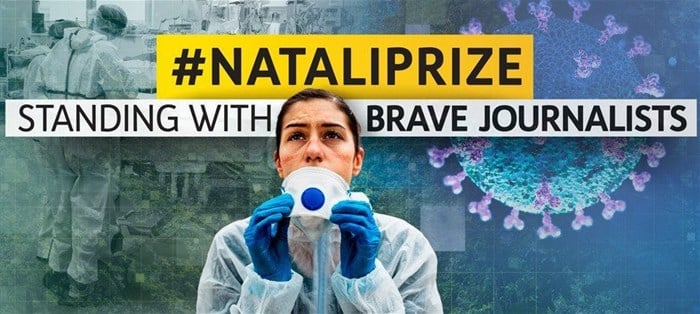
The Lorenzo Natali Media Prize has announced that it is open for applications. The European Union’s journalism award is celebrating its 30th anniversary, and awards journalists reporting on themes such as inequality, poverty, climate, education, migration, employment, digital, healthcare, peace, democracy, and human rights.
Commissioner for International Partnerships, Jutta Urpilainen, said, “The Lorenzo Natali Media Prize celebrates its 30th anniversary. Democratic backsliding that we have witnessed during the pandemic, hybrid threats, disinformation and shrinking space for civil society are all worrying phenomena, which brave journalists tackle. As showcased at the Summit for Democracy in December, the EU is a firm supporter of fundamental freedoms and those who defend them, often with high personal risk. The Lorenzo Natali Media Prize is a symbol of our support to those who give voice to the voiceless and bring truth to light.”:
The submission should be made online in one of the five accepted languages (English, French, Spanish, Portuguese, or German). Applications can be submitted from today until 31 March 2022. Submissions can be entered online here.
A Grand Jury of international renowned journalists and specialists in international development from around the world will choose the winners in each category. Each winner will receive €10,000. The winner of the Best Emerging Journalist category will also be offered work experience with a media partner. The winners will be announced at the Lorenzo Natali Media Prize Award Ceremony during the 2022 European Development Days between 14 – 15 June 2022.
As if the fight against terrorists is not already complex enough, Israel has muddied the water more by accusing six prominent Palestinian human rights groups of being terrorist organisations, saying they have undercover links to a militant movement. Not surprisingly. most of the groups document alleged human rights violations by Israel and the Palestinian Authority.
The six are Al-Haq, a human rights group founded in 1979, [and the winner of 5 human rights awards, see: https://www.trueheroesfilms.org/thedigest/laureates/0F74BF45-72C4-9FDD-F96D-2B87BF6C7728] Addameer, Defence for Children International – Palestine, the Bisan Center for Research and Development, the Union of Palestinian Women’s Committees and the Union of Agricultural Work Committees.
The Israeli defence ministry said they were linked to the Popular Front for the Liberation of Palestine (PFLP), a secular political movement with an armed wing that in the past carried out attacks against Israel. The groups “were active under the cover of civil society organisations, but in practice belong and constitute an arm of the [PFLP] leadership, the main activity of which is the liberation of Palestine and destruction of Israel”, the defence ministry said. It claimed they were “controlled by senior leaders” of the PFLP and employed its members, including some who had “participated in terror activity”. The groups serve as a “central source” of financing for the PFLP and had received “large sums of money from European countries and international organisations”, the defence ministry said.
The groups, well known for their human rights work, have indeed quite openly received funding from EU member states, the United Nations and other donors.
Shawan Jabarin, the director of Al-Haq, said the move was an attempt to stifle criticism. “They may be able to close us down. They can seize our funding. They can arrest us. But they cannot stop our firm and unshakeable belief that this occupation must be held accountable for its crimes,” he told the Times of Israel.
The Israeli human rights group B’Tselem called the government’s declaration “an act characteristic of totalitarian regimes, with the clear purpose of shutting down these organisations”. It added: “B’Tselem stands in solidarity with our Palestinian colleagues, is proud of our joint work over the years and is steadfast to continue so.”
Human Rights Watch and Amnesty International, who work closely with many of these groups, said in a joint statement:
“This appalling and unjust decision is an attack by the Israeli government on the international human rights movement. For decades, Israeli authorities have systematically sought to muzzle human rights monitoring and punish those who criticize its repressive rule over Palestinians. While staff members of our organizations have faced deportation and travel bans, Palestinian human rights defenders have always borne the brunt of the repression. This decision is an alarming escalation that threatens to shut down the work of Palestine’s most prominent civil society organizations. The decades-long failure of the international community to challenge grave Israeli human rights abuses and impose meaningful consequences for them has emboldened Israeli authorities to act in this brazen manner.
How the international community responds will be a true test of its resolve to protect human rights defenders. We are proud to work with our Palestinian partners and have been doing so for decades. They represent the best of global civil society. We stand with them in challenging this outrageous decision.”
The US Department of State spokesperson Ned Price said his office had not been given advance warning of the designation. “We will be engaging our Israeli partners for more information regarding the basis for the designation,” Price said on a telephone briefing with reporters in Washington.
The move by the Israeli government represents a challenge for the many European countries that provide financing to the six organizations, European governments, .. now risk being accused of funding terrorism if they continue financing the six groups. One senior European official working in the region admitted the move was likely aimed at putting pressure on donors’ decision-making but said there needed to be an analysis of any evidence put forward by Israel, said CNN Europe.
On 7 the ADHRB published a joint letter by 20 major NGOs to the EU about the EU-Bahrain Cooperation Agreement, which they say must Depend on Human Rights Improvements.
TO: Joseph Borrell, High Representative of the European Union for Foreign Affairs and Security Policy / Vice-President of the European Commission and Eamon Gilmore, EU Special Representative for Human Rights
Your Excellencies,
In light of the meeting between Bahrain’s Minister of Foreign Affairs and the European External Action Service currently scheduled to take place in Brussels on 10 february 2021, we are writing to raise concerns about the deterioration of the human rights situation in Bahrain, following a year in which Human Rights Watch reports that the Bahraini government has “escalated repression” against critics. As the informal EU-Bahrain Human Rights Dialogue originally scheduled for November 2020 has been indefinitely postponed, it is vital that human rights concerns are placed at the center of your conversations with Bahraini officials during this upcoming meeting.
Bahrain’s Crackdown on Political Opposition and Civil Society
Bahrain’s February 2011 Arab Spring uprising was an event which many hoped would herald a new era of democracy in the country. However, since the government’s violent suppression of the protests, promised reforms have failed to materialise. The leaders of the protest movement, some of them now elderly, continue to languish in prison.
Since 2017, authorities have outlawed all independent media and dissolved all political opposition parties. Among the most prominent prisoners currently incarcerated are high-profile political opposition leaders, activists, bloggers and human rights defenders sentenced to life imprisonment for their roles in the 2011 pro-democracy protests. These include Hassan Mushaima, Abduljalil AlSingace, Abdulhadi AlKhawaja,[see: https://www.trueheroesfilms.org/thedigest/laureates/4d45e316-c636-4d02-852d-7bfc2b08b78d] Sheikh Mohammed Habib AlMuqdad and Abdulwahab Husain. In 2018, the leader of Bahrain’s largest opposition bloc, Sheikh Ali Salman, was sentenced to life in prison following trials on speech charges and spurious accusations of espionage.
Over the last four years, political activists have borne the full brunt of political repression in Bahrain, facing arbitrary arrest and lengthy prison terms, and in some cases torture, for opposing the government. Hundreds have been arbitrarily stripped of citizenship, while activists and journalists who continue their work from exile risk reprisals against family members who remain in the country.
According to the Committee to Protect Journalists, at least six journalists are currently imprisoned for their work in Bahrain, while the country has fallen to a lamentable 169/180 on the Reporters Without Borders 2020 World Press Freedom Index. Bahrain scored a paltry 1/40 for political rights in Freedom House’s Freedom in the World 2020 report.
In addition, Bahrain’s government has increasingly turned to repressive cyber crime legislation to further restrict civic space, with prominent defence lawyers, opposition leaders and human rights defenders prosecuted over their social media activity since 2018. As Amnesty International has reported, Bahrain’s authorities have used the COVID-19 pandemic as a pretext “to further crush freedom of expression.”
Medical Negligence and Mistreatment in Jau Prison
Bahrain’s prisons remain overcrowded and unsanitary, and human rights groups have called on the government to release those imprisoned solely for exercising their right to freedom of expression in light of the threat posed by COVID-19. Prisoners are frequently subjected to humiliating treatment and denied adequate medical care, in violation of Bahrain’s international human rights obligations. These include Hassan Mushaima and Dr Abduljalil AlSingace, who suffer from a range of chronic medical conditions, as well as human rights activists Ali AlHajee and Naji Fateel.
Other prominent prisoners include two European-Bahraini dual citizens, the Danish-BahrainiAbdulhadi AlKhawaja and the Swedish-BahrainiSheikh Mohammed Habib AlMuqdad, both of whom are considered prisoners of conscience by Amnesty International, having been prosecuted and sentenced to life imprisonment for peacefully exercising their right to freedom of expression and peaceful assembly, and subjected to torture and other ill-treatment including denial of medical care.
In April 2011, security forces violently arrested Al-Khawaja and broke his jaw, leading to surgery for four broken bones in his face. Security officers tortured Al-Khawaja directly after his major jaw surgery, while blindfolded and restrained to a military hospital bed, which forced the doctor to ask the security officers to stop as it would undo the surgical work. Almost ten years later he still suffers from chronic pain and requires additional surgery to remove the metal plates and screws that were used to reattach his jaw. [see also: https://humanrightsdefenders.blog/2021/01/27/over-100-ngos-write-to-prime-minister-of-denmark-to-pressure-bahrain-to-release-abdul-hadi-al-khawaja/]
AlMuqdad, who was tortured by methods including severe beating and electrocution, suffers from multiple health problems, including a hernia likely caused by his torture, but is being denied proper health care. As of January 2021, in addition to the need for urgent surgery to repair the hernia, AlMuqdad is in need of heart surgery to unblock his coronary arteries and examination by a urologist to diagnose a prostate problem. The prison administration continues to delay the surgeries and specialist appointments, blaming the ongoing COVID-19 pandemic.
Death Penalty and Arbitrary Killings
In 2017, Bahrain abandoned a de facto moratorium on the death penalty and has since conducted six executions, five of which were condemned as arbitrary by UN Special Rapporteur on extrajudicial executions Agnes Callamard, in 2017 and 2019 respectively. According to recent research by the Bahrain Institute for Rights and Democracy (BIRD) and Reprieve, 26 death row inmates currently face imminent execution in the country, nearly half of whom were convicted on the basis of confessions allegedly extracted under torture in cases related to political unrest.
These include Mohammed Ramadhan and Husain Moosa, whose death sentences were upheld in July 2020 despite credible evidence that both men were convicted on the basis of confessions obtained under torture. Independent experts at the International Committee for the Rehabilitation of Torture Victims concluded that investigations by Bahrain’s human rights oversight bodies into the torture of the two men “fail[ed] to meet the minimum professional standards and the minimum international legal standards”, while the Bar Human Rights Council of England and Wales warned that “upholding the convictions would be wholly inconsistent with Bahrain’s international obligations”. Both men are at risk of imminent execution. Three UN human rights experts warned on 12 February 2020 that carrying out these death sentences would constitute an arbitrary killing.
Our Requests
Bahraini authorities have engaged in widespread violations of human rights enshrined in both Bahrain’s national legal system as well as in multiple international human rights treaties to which Bahrain is a state party.
Furthermore, a prevailing culture of impunity has allowed suspected perpetrators of serious human rights violations to avoid accountability. In light of the continued deterioration of the human rights situation in Bahrain, we therefore ask that during the meeting the EEAS:
Urges the unconditional and immediate release of all those imprisoned solely for peacefully exercising their right to freedom of expression, peaceful assembly and association, including Hassan Mushaima, Abduljalil AlSingace, Abdulwahab Husain and Sheikh Ali Salman;
Urges for the unconditional and immediate release of Danish-Bahraini Abdulhadi AlKhawaja and Swedish-Bahraini Sheikh AlMuqdad;
Calls for an independent review of the cases involving those facing the death penalty, including the cases of Mohammed Ramadhan and Husain Moosa; as well as for the ultimate revocation of their death sentences;
Urges Bahraini authorities to reinstate a moratorium on the death penalty;
Pressures Bahrain to end the use of torture and other -ill-treatment and to tackle the culture of impunity by holding suspected perpetrators accountable and ensuring effective mechanisms for victims to receive justice and restitution;
Urges Bahrain to rescind its arbitrary bans on opposition parties, civil society groups and independent media and encourage the development of civic space in Bahrain;
Urges the Bahraini Government to ensure its respect to, and protection of, the right to freedom of expression, and to take necessary steps to ensure freedom of the press; and
Persuades Bahrain’s government to take concrete and measurable steps towards justice reform and respect for human rights.
Courtesy of Reliefweb of 15 Jun 2020, here the introduction to the EU’s annual report on human rights
1. INTRODUCTION
The 2019 EU annual report on human rights and democracy in the world marks the final phase of implementation of the EU Action Plan on Human Rights and Democracy (2015-2019) 1 . It presents the progress achieved to date, by means of a comprehensive set of actions taken by the European External Action Service (EEAS), the European Commission and EU delegations and offices around the world. In 2019, the EU demonstrated once again that it is a reliable, cooperative and principled global player, working for a better world where all human rights are fully protected and respected.
However, in many parts of the world, challenges remain. Human rights defenders (HRDs), journalists and media workers are under threat and attack because of their daily work, civic and democratic space continues to be restricted, women’s and girls’ human rights are being violated, and vulnerable groups are often left behind and exposed to further discrimination and inequality.
Against this background, the international community celebrated in 2019 the 10th anniversary of the Charter of Fundamental Rights, the 30th anniversary of the UN Convention on the Rights of the Child, the 70th anniversary of the Council of Europe and the 100th anniversary of the International Labour Organisation. These anniversaries gave great impetus to the EU’s continuous efforts to translate its legal and policy frameworks on human rights into reality. The EU worked with all partners to turn challenges into opportunities for all human beings, at any time, in any place.
The 21st EU-NGO Forum on Human Rights, held in Brussels on 3-4 December, put the human rights and environment nexus in the spotlight as an emerging challenge and gained unprecedented traction. On 9 December 2019, the Foreign Affairs Council agreed on the political appropriateness of establishing an EU global human rights sanctions regime to tackle serious human rights violations worldwide committed by state and non-state actors.
In 2019, the first ever EU guidelines focusing on economic, social and cultural rights were adopted: the EU Human Rights Guidelines on safe drinking water and sanitation. These guidelines opened new horizons in promoting the indivisibility of civil, political, economic, social and cultural rights. The Council also adopted Guidelines on non-discrimination in external action and revised Guidelines on EU policy towards third countries on torture and other cruel, inhuman or degrading treatment or punishment. Moreover, the Council conclusions on Democracy adopted in October provided a comprehensive framework to advance democratic governance.
This report focuses on thematic issues, using a number of country-specific examples, and aims to be a practical tool for all stakeholders. Reporting on human rights and democracy at country level can be found on the EEAS2 and EU delegations’ webpages.
Since the adoption of the EU strategic framework on human rights and democracy in 2012, the EU has adopted two EU Action Plans (2012-2014 and 2015-2019). The new proposal follows up on this, setting out the priorities for the period of 2020-2024.
This Action Plan identifies priorities around five mutually reinforcing lines of action:
Protecting and empowering individuals;
Building resilient, inclusive and democratic societies;
Promoting a global system for human rights and democracy;
New technologies: harnessing opportunities and addressing challenges;
Delivering by working together.
What is new in this Action Plan?
The new Action Plan builds on the previous action plans and continues to focus on some long-standing priorities, such as supporting human rights defenders and the fight against death penalty. More importance is given to empower people and defeat discrimination on all grounds. It also addresses more prominently the accountability gap, the erosion of rule of law and access to justice. This Action Plan takes account of today’s world new challenges and therefore focuses in particular on:
environmental challenges and climate change;
leveraging the benefits of digital technologies and minimising the risks of misuse in line with EU’s commitment to lead the transition to a new digital world;
stepping up economic, social and cultural rights;
more emphasis on democracy, including on the misuse of online technologies and shrinking civic and political space;
a stronger focus on human rights defenders;
strategic communication and public diplomacy.
How will the Action Plan be implemented?
The objectives under the Action Plan will be implemented at country, regional and multilateral level, taking account of local circumstances and specificities. The EU will leverage the broad range of policies, tools and political and financial instruments at its disposal to implement it, such as:
political, human rights and sectoral policy dialogues;
EU trade policies, including the EU’s generalised scheme of preferences;
thematic and geographical instruments under the 2021-2027 multiannual financial framework;
actions in multilateral and regional human rights fora;
communication activities and awareness‑raising campaigns;
dialogue with civil society, human rights organisations and the business sector.
The EU Action Plan provides guidance to over 140 EU Delegations and Offices as well as Member States embassies for targeted initiatives and actions at country level all over the world.
How will the Commission and the High Representative follow up on and monitor the implementation of this Action Plan?
Actions apply to all regions in the world taking into consideration local needs and specificities. The EU’s 142 Delegations and Offices will take a lead in reflecting the priority actions in initiatives at the country level including through the adoption of tailored-made strategies at a local level. The EU will also engage with different stakeholders on the overall implementation, and organise an annual meeting with civil society. The public EU annual report on Human rights and democracy in the worldis another effective tool to monitor the progress made in a transparent manner. A mid-term review of the implementation is foreseen.
What has the EU achieved on human rights and democracy worldwide so far?
Since 2015, more than 30 000 human rights defenders were protected by the EU via the dedicated mechanism ProtectDefenders.eu. In 2019 alone, the EU raised Human Rights Defenders cases in dialogues and consultations with over 40 countries.
The EU advocated for abolition of death penalty.
Between January 2015 and October 2019, the EU supported over 3 350 actions relevant to children’s rights in 148 third countries and territories. For example, under the global programme on Female Genital Mutilation (€11 million), 16 countries adopted action plans and 12 established national budget lines to put an end to Female Genital Mutilation.
In 2014-2019, the EU supported democracy in more than 70 partner countries with €400 million aiming at, for instance, contributing to the organisation of elections and supporting oversight bodies, independent media, parliaments and political parties to play their essential role in democratic societies. 98 EU Election Observation Missionswere deployed worldwide.
The General System of Preference contributed to the implementation of human rights and labour Conventions, including through monitoring missions in 11 countries in the last year. For example, this contributed to a reduction of child labour to 1% in Sri Lanka through pioneering ‘Child Labour Free Zones’.
Joint Proposal
…Article 22 of the Treaty on the European Union offers the European Council the possibility to adopt a unanimous Decision setting out the EU’s strategic interests and objectives in specific areas of the Common Foreign and Security Policy (CFSP). Once the European Council sets the strategic objectives, the Council would then be able to adopt by qualified majority (QMV) decisions implementing the European Council’s strategic decisions.
Why is this proposed now? In 2018, the Commission has proposed to move from unanimity to QMV in certain areas of the CFSP. The Von Der Leyen Commission recognises that to be a global leader, the Union needs to take decisions in a faster and more effective way and overcome unanimity constraints that hamper our foreign policy, as set out in the High Representative/Vice-President’s mission letter. The Joint Proposal adopted by the College today offers such a possibility, by proposing to take decision related to the implementation of the Action Plan by QMV.
Barbora Cernusakova (Amnesty International’s Poland researcher) posted in Euronews on 4 April 2019 a piece entitled “When Polish judges become human rights defenders”.
“There is a danger when politics enters the judiciary,” warned Judge Sławomir Jęksa in his summing up of his decision to accept the appeal of a woman who had been charged for using offensive language at a rally. She had, he reasoned, not only been entitled to express herself in the way that she did, especially since she was expressing genuine concerns about the encroachment on human rights in Poland. Days after his ruling, Judge Jęksa found himself at the receiving end of just the sort of political interference of which he had warned. The Disciplinary Prosecutor started proceedings against him on the grounds that his ruling was an “expression of political opinions” and “an offence against the dignity of the office of the judge.”
Judge Jęksa does not have much faith in the disciplinary procedure which will take place in the Disciplinary Chamber of the Supreme Court. The Disciplinary Chamber is a special body whose members were chosen by a body formed of politicians from the governing party. He is just one of several judges facing similar pressures. More than a dozen judges have faced disciplinary proceedings since last autumn. These may result in sanctions, including their dismissal from office.
Some of the more outspoken judges who publicly expressed their opposition to the government’s interference with the judiciary have even received death threats…..
This is all happening in the context of a wider smear campaign against judges that have upheld decisions in defence of human rights that began in 2017. Judges are constantly portrayed as “enemies of the people” who “damage the interests of Poland.” Pro-government media and social media accounts have gone as far as invading their privacy by regularly publishing their personal information, including details about their sick leave and their trips abroad.
Despite this, judges in Poland continue to organise and collectively resist the pressures from the government. “For the first time in our careers we have to stand our ground and show we are not just civil servants, but the authority that protects legal order,” Judge Dorota Zabłudowska told me.
But the ongoing struggle over the independence of the judiciary in Poland is not only about them. It is a fight for human rights that ultimately affects everyone in the country and indeed in Europe. In a significant move yesterday, the European Commission launched an infringement procedure to protect judges in Poland from political control. …The chilling effect of the abuse of this already flawed disciplinary system is real and this has now been called out by the Commission. Member states should back this step and call on Poland in the General Affairs Council next week to end the harassment and intimidation of judges.
This decision draws an important line in the sand and makes clear that interfering with the independence of the judiciary cannot and will not be tolerated. Allowing one member state to operate outside the rule of law would be to allow the entire system to be contaminated…


 Imaged sourced:
  Hans Thoolen on Human Rights Defenders and their awards