
Posts Tagged ‘european region’

Council of Europe’s Dunja Mijatović presents her first annual report

April 9, 2019

Dunja Mijatović

Dunja Mijatović

Today the Council of Europe Commissioner for Human Rights, Dunja Mijatović, presented her first annual activity in a debate before the Parliamentary Assembly of the organisation. [see also: https://humanrightsdefenders.blog/2018/04/03/dunja-mijatovic-starts-her-term-as-council-of-europe-commissioner-for-human-rights/]

While the report covers a variety of the most pressing human rights issues in the Council of Europe member states, the Commissioner highlights migration, women’s rights, human rights of persons with disability, the protection of human rights defenders and the safety of journalists as the most recurrent topics of her work.

Migration is among the most pressing human rights issues on my agenda”, she says. “National authorities should improve the treatment of immigrants, asylum seekers and refugees, and put human rights and the principle of responsibility sharing at the centre of their migration and asylum policies”.
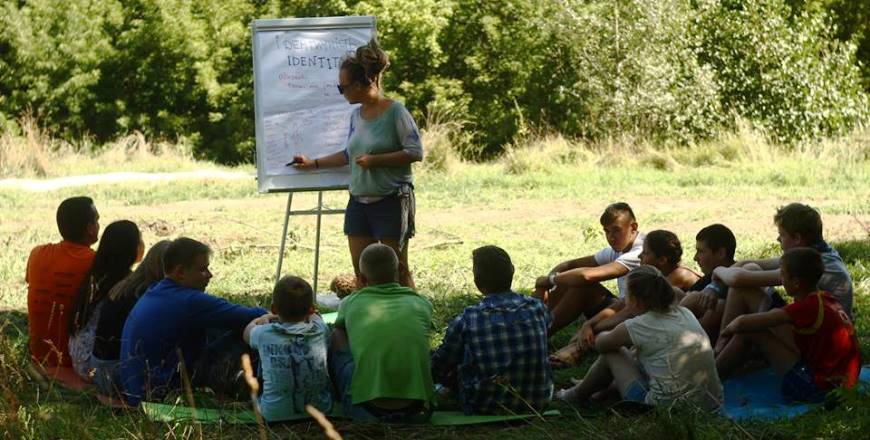
OSCE Human Rights Monitoring and Security Training for Human rights defenders: apply soon

March 23, 2019
The OSCE Office for Democratic Institutions and Human Rights (ODIHR) is pleased to offer a five-day training event on human rights monitoring and safety and security for human rights defenders (HRDs) working in three thematic areas: 1) human rights of Roma and Sinti, 2) human rights of people of African descent, and 3) environmental protection issues.
The objective of the training event is to enable human rights defenders (HRDs) to independently carry out quality and objective human rights monitoring activities in a safe and secure manner and taking into account relevant gender considerations. The event will take place in Montenegro from 27 to 31 May 2019, and will cover the human rights monitoring cycle and principles; physical safety and security of human rights monitors; and digital security, including secure information management. The language of the event will be English. The training will be based on interactive learning methods and requires a high level of active participation by all participants. During group exercises, participants will be divided based on their field of work/interest and coached by a senior professional expert. ODIHR will select up to eight participants per group.

The size of the entire group will be limited to 25 participants, selected according to the following criteria:
• Citizenship or residence in one of the OSCE participating States;
• Involvement as a human rights defender in one of the specified fields: environmental protection, human rights of Roma and Sinti, or human rights of people of African descent;
• Limited or no experience on human rights monitoring and reporting;
• No or limited previous training in safety and security (including digital security);
• Relevance of the training for future human rights activities in OSCE the region;
• Computer literacy;
• Fluency in English.

The OSCE/ODIHR recognizes as a human rights defender any person promoting and striving for the realization of human rights regardless of profession, age or other status. Human rights defenders carry out their human rights activities individually or jointly with others, as part of an informal group or as a non-governmental organization (NGO), and act in a voluntary capacity or professionally. ..The workshop is designed for activists with limited or no skills who can benefit fully from receiving the training. Accommodation and travel for the selected human rights defenders to attend the event will be covered by ODIHR.

Deadline for submission: 29th March 2019. If you have any questions about the content or the selection procedure of the training, please do not hesitate to contact David Mark david.mark@odihr.pl and Marine Constant at marine.constant@odihr.pl.

https://docs.google.com/forms/d/e/1FAIpQLSfQUm0t3S8vU3Kat8C46gbcRlxSaXQC6ZcMA7DwKmEyngknQA/viewform

See also: https://humanrightsdefenders.blog/2019/02/28/human-rights-education-courses-also-exist-in-europe/

Human Rights Education courses also exist in Europe!

February 28, 2019
2019 COMPASS National Training Courses on Human Rights Education with Young People

For those who think that human rights education work is done only in developing countries, here some information from the Council of Europe. The 2019 call for COMPASS National and Regional Training Courses in Human Rights Education for young people generated 45 projects proposals submitted by youth NGOs from 24 Council of Europe member states. The 2019 programme of Compass courses includes activities in Azerbaijan, Greece, Ireland, Italy, Lithuania, the Republic of Moldova and Serbia (see list below). Proposals from Norway, Slovenia and Portugal are on a reserve list pending further availability of funds.

Read the rest of this entry »

Paris Principles@25: Needed More Than Ever says Dunja Mijatović

December 20, 2018

Dunja Mijatovićthe Council of Europe Commissioner for Human Rights, published on 18 December a piece stressing the importance of the so-called “Paris Principles” for having strong National Human Rights Institutions. Worth reading in toto:

Read the rest of this entry »

The Human Rights Cities Network: a good beginning

December 14, 2018

The Human Rights Cities Network promotes the development of human rights in Europe and beyond. This online platform creates an interactive community of human rights cities practitioners. It is a team of like-minded people committed to acknowledge the vital role cities play in protecting, promoting and fulfilling human rights. Guest member cities and associate members are key actors, sharing new ideas and taking current concepts to their own cities.

Its mission is to create an information hub and support people to connect and scale up the successful expansion of human rights cities.

Its vision is to help make human rights a reality for every citizen, in every city; and in doing so to foster participatory democracy and social justice.

About the network

The Human Rights Cities Network is an info hub, where you will find information on what constitutes a human rights city and how existing cities can be developed further. The primary objective is to develop a network of like-minded people who can expand their knowledge and share their experiences, to significantly grow the number of Human Rights Cities around Europe. The Human Rights Cities Network acknowledges the vital role cities play in protecting, promoting and fulfilling human rights.

The network helps implement the full spectrum of human rights for people living in urban settings, by supporting cities and political decision-makers. It also connects them with Human Rights Cities practitioners, who can contribute to the development of concepts, guiding practices and operational strategies, to enhance human rights. Professionalism, inclusive governance and a clear human rights perspective are essential principles. Ultimately, the network promotes a model where human rights are used to redefine the city as a more livable space.

Currently are listed as members:

Barcelona

Graz

Lund

Middelburg
Utrecht
Vienna
York
Not yet listed: Bergen and Nürnberg

https://humanrightscities.net

see also: https://rwi.lu.se/publications/human-rights-cities-and-the-sdgs/

Nominations for the European Civil Society Prize 2018 closing soon

September 1, 2018

Although not a human rights award in the strict sense, I think that the current state of civil society in large parts of Europe does need a boost [see e.g. https://humanrightsdefenders.blog/2017/04/04/europe-also-sees-shrinking-space-for-human-rights-defenders/]. So the EESC Civil Society Prize 2018 on identities, European values and cultural heritage in Europe is most welcome and human rights groups and defenders should apply.

The European Economic and Social Committee (EESC) this year is promoting initiatives to do with European values, identities and cultural heritage. The deadline is 7 September 2018. The Civil Society Prize, now in its tenth edition, was launched by the EESC to reward and encourage by civil society organisations and/or individuals that have made a significant contribution to promoting the common values that bolster European cohesion and integration.

Prize money totals EUR 50 000 and will be awarded to a maximum of five winners and it will reward innovative initiatives which have made a significant contribution to:

  • raising awareness of the multiple layers and richness of European identities;
  • exploiting the full potential of Europe’s cultural wealth;
  • facilitating access to European cultural heritage; and
  • promoting European values such as respect for human dignity and human rights, freedom, democracy, equality and the rule of law.

The full list of requirements and the online application form are available on webpage – EESC Civil Society Prize 2018.

The EESC Civil Society Prize is open to all civil society organisations officially registered within the European Union and acting at local, national, regional or European level. It is also open to individuals.

The award ceremony will take place on 13 December 2018 in Brussels.

https://www.eesc.europa.eu/en/news-media/press-releases/eesc-civil-society-prize-2018-applications-closing-soon

ECCHR launches new Institute for Legal Intervention

June 15, 2018

The European Centre for Constitutional and Human Rights, ECCHR, uses the emancipatory potential of law in order to unmask unjust power relations and enforce social justice. Its goal is to change or re-create legal norms in the spirit of global justice. As part of its 10-year anniversary it created a new ECCHR department: the Institute for Legal Intervention. The Institute will complement ECCHR’s litigation and will encompass the Education Program, professional exchanges in transnational networks, cooperation with universities and dialogue with artists as well as cultural and social movements. The aim of the Institute is to initiate important legal debates, to foster young human rights lawyers and to deepen collaboration between disciplines.
All this thanks to the generous support of the Bertha Foundation. The Video clip above gives the details.

see also my: https://humanrightsdefenders.blog/2017/03/31/universal-jurisdiction-gathers-momentum-says-group-of-ngos/