Posts Tagged ‘environmental human rights defenders’

Uncalculated Risks: attacks on human rights defenders in name of development

July 30, 2019

The Campaign is made up of defenders and those who work with them on issues of development and human rights – community organizations, human rights and environmental groups, defender security organizations, transparency and accountability NGOs, and indigenous peoples and women’s networks. It is hosted by the Coalition for Human Rights in Development. You can find the Campaign Declaration and list of participant organizations here. In June, the Coalition for Human Rights in Development (CHRD) launched a landmark report with the Defenders in Development Campaign, exposing the risks of mega-infrastructure  and other ill-planned development projects on human rights defenders (HRDs). The report laid out 25 case studies demonstrating that HRDs are facing increasing threats and attacks in the context of their resistance to activities undertaken in the name of development, including harassment, physical violence, criminalisation, arbitrary detention and murder.

The Findings:

  • Threats and attacks against human rights defenders in the context of development activities are widespread.
  • Though they take many different forms, the threats and attacks often start with the labeling of communities, groups, and individuals as “anti-development.”
  • The imposition of development activities without the consent or meaningful consultation of local communities and marginalized groups is one of the key root causes of threats for defenders in development.
  • Development finance institutions have a duty to respect human rights and to ensure that their investments are not putting people at risk.
  • Yet too often, development interventions exacerbate risks for defenders due to lack of adequate attention to the rights and interests of local communities and marginalized populations, and to the contextual risks and power imbalances that may cause them to bear negative impacts or to be made vulnerable.
  • Early warning signs of potential threats to defenders are often missed or ignored.
  • DFIs have a wide range of resources and influence that can be utilized to change the risk equation for defenders under threat, but often fail to proactively develop this leverage or are reluctant to utilize the leverage they have.
  • DFIs often remain silent in the face of threats and attacks, or responses come too little, too late and defenders and communities are left without protection or remedy for harm.
  • Several DFIs are beginning to grapple with threats to defenders in development, but much more is needed.

Effectively addressing the shrinking space for participation in development processes and the growing threats to defenders will require not only a change in policy and practice, but a fundamental shift that places human rights and local communities at the center of how development is conceived and implemented.

Landmark report finds attacks on human rights defenders in name of ‘development’ on the rise

https://rightsindevelopment.org/uncalculatedrisks/

Aruanas: human rights defenders in fiction series playing in Amazon

July 17, 2019
Eco trip
Michael Pickard Michael Pickard writes in Drama Quarterly of 2 July 2019 about the Brazilian drama Aruanas, which charts the work of environmental human rights defenders who investigate the suspicious activities of a mining company in the Amazon rainforest. The Brazilian drama Aruanas  – launched two weeks ago worldwide – won’t be found on any of the major global streaming giants. Instead, it will be available on a standalone platform for anyone around the globe to download – because the subject matter demands this story not be restricted to viewers with the right kind of subscription. The 10-part Portuguese-language thriller, which is backed by more than 20 international and national non-governmental organisations (NGOs), including WWF Brazil, Amnesty International, Global Witness, UN Environment, UN Women, Oxfam Brazil and the Rainforest Foundation. Greenpeace is a technical collaborator on the show.

Aruanas comes from a partnership between prodco Maria Farinha Films and Brazil’s Globo TV, which have created the fictional story about three idealistic women who set up an NGO to investigate the suspicious activities of a mining company operating in the Amazon. Bypassing traditional broadcast partners by making the series available at aruanas.tv – in more than 150 countries and 11 different languages – also means 50% of the download fee will go to initiatives designed to protect the Amazon rainforest. In Brazil, Globo will air the first episode on its domestic and international channels, which reach more than 100 million people, with the series then being made available on SVoD service Globoplay…

For the last 10 years, Maria Farinha Films has been built on producing documentaries and TV series focusing on social and environmental issues, tackling subjects including childhood obesity, refugees and LGBT rights. Climate change has been a cause long on its agenda but, as the company’s founder Estela Renner explains: “We wanted to do something long term, something that could stay for seasons,” she tells DQ following the London premiere of Aruanas. “There are so many seasons of Grey’s Anatomy and ER and you learn so much about hospitals and the dynamics that are involved. How about making a TV series that takes place in an environmental NGO? What better way to talk about the drama and activists and all issues there are to address – the oceans, oil, soil, air. That’s why we decided to jump into fiction.”

Renner wrote the series with her business partner Marcos Nisti, in collaboration with Pedro de Barros, and developed it alongside Globo. The story introduces Aruana, an NGO that receives an anonymous complaint about a mining company working deep in the Amazon rainforest. When the NGO’s contact is killed and the incriminating dossier is destroyed, its staff become determined to uncover what is going on.

……the series is not a lecture about climate change, nor does it present an unwaveringly positive representation of an NGO or condemn mining outright. “It’s not propaganda. You can see the activists doing stuff you wouldn’t recommend doing,” Renner says. “We found a way to build the layers of the series so we can see why mining can be important, because it develops a country, it creates jobs and it brings development sometimes.

“Even when Natalie interviews our villain, they have a battle where, for a while, you don’t know which side to take because both sides are right. But at the end of the season, we see this type of mining is wrong. You cannot mine and pollute the rivers, the soil, the air and people. You have to do it the right way.”

Renner also states that her NGO partners, which contributed no money to the production, were clear this would be a non-factual drama from the outset: “They were with us from the beginning but they also understood this is fiction. You have to put some salt and pepper in to make it interesting and edgy. All the organisations understood that and were happy. Because it’s  fiction, they knew they didn’t have to correct us. It’s important it’s fiction; it’s not a documentary.”

Filming took place across four months, with the cast and 190-strong crew travelling back and forth between the south-west city of São Paulo and the Amazon, where filming took place in Manacapuru, in the northern state of Amazonas in the centre of the rainforest.

……..
The decision to set the drama within an NGO and the world of its activists doubles as a mechanism for the organisation, in future seasons, to explore other aspects of climate change, looking at the oil industry and the oceans. Work is already progressing on a second season, which will explore a different type of environmental crime. But Renner says that despite Aruanas’ representation of the work of NGOs and their fight for a more equitable and sustainable world, her main priority is to entertain viewers with this high-stakes thriller.

“Chernobyl would be the perfect example because it’s super well done, super entertaining and when you finish watching it, it makes you think this power of destruction we have now is bad,” she says, referring to HBO and Sky Atlantic’s recent miniseries about the 1980s nuclear disaster.

“Maybe people can connect with NGOs and see what they’re doing. We didn’t want this to be too on the nose. We want to stay for several seasons through the characters and their lives, and it does have a happy ending. There are so many series with a dystopian future; dreaming collectively of a good future is important because it has power.”

Eco trip

Environmental defenders in Alberta, Canada, be warned….oil will get you

July 9, 2019

2019-07-01_thumb

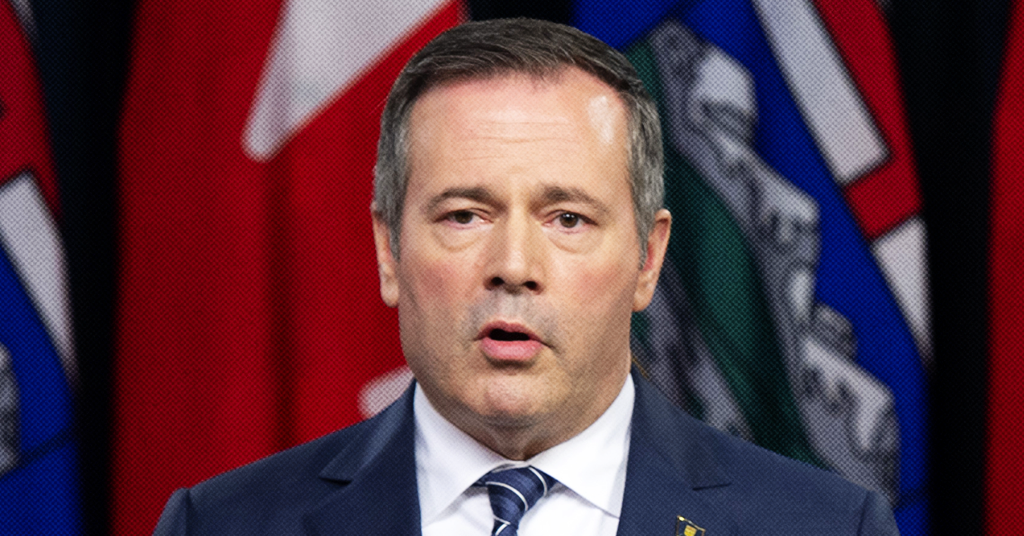
Press Progress blog of 3 July 2019 analyses the agressive tone of Alberta‘s Premier Jason Kenney, who talks of “war” on environmental defenders. Civil liberties groups and human rights organizations are warning that his new “war room” is an attempt to intimidate critics and put a chill on free expression rights in the province. Described as a “fully staffed, rapid response” unit mandated to respond to “all the lies” about the oil industry, the $30 million “war room” is part of Kenney’s so-called “fight back strategy” that aims to wage war against environmental groups. Kenney has also indicated he will launch a public inquiry into the activities of environmental groups like the David Suzuki Foundation, while Kenney’s energy minister has promised the government will assemble a team of lawyers to launch lawsuits against environmentalists.

“Talk of a war room, focused on targeting ‘offending’ environmentalists, seems determined to send a clear message,” Amnesty International Canada Executive Director Alex Neve told PressProgress. Cara Zwibel, director of the Canadian Civil Liberties Association’s Fundamental Freedoms program, agrees the campaign’s stated mission could be “very problematic from a free expression perspective.”

Standing behind Kenney at the press conference was Vivian Krause, a self-described “researcher” who focuses on “the money behind environmental campaigns.” Krause’s research, which is often panned by her critics as a “conspiracy theory,” claims environmental groups funded by the Rockefeller Brothers are secretly working to cap oil production in Alberta.

Also sharing the stage with Krause and Kenney was Tim McMillan, President and CEO of the Canadian Association of Oil Producers (CAPP) as well as Sandip Lalli, President and CEO of the Calgary Chamber of Commerce. Kenney was introduced at the press conference by Robbie Picard, an oil activist who has been involved with groups like Canada Action and Rally for Resources, but better known for creating the “I Love Oilsands” t-shirts. As Maclean’s notes, Picard is known to be “a bit too enthusiastic in his cheerleading” for the oil industry, as well — in a 2018 appearance on Rebel Media, Picard described environmentalists as “terrorists” who should face “six months in jail” for protesting the oil industry.

Jason Kenney’s ‘War Room’ is a Threat to Free Speech, Say Civil Liberties and Human Rights Groups

Greta Thunberg becomes Amnesty International’s 2019 Ambassador of Conscience

June 7, 2019
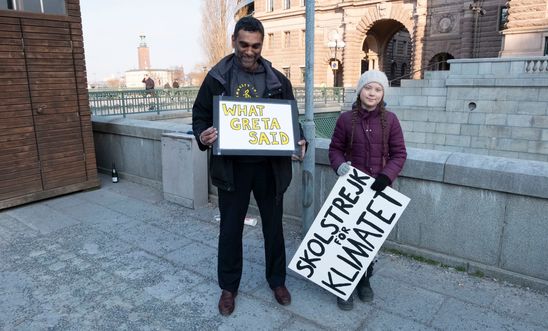
Climate activist Greta Thunberg and the Fridays for Future movement of schoolchildren have been given Amnesty International’s ‘Ambassador of Conscience’ award for 2019

Climate activist Greta Thunberg and the Fridays for Future movement of schoolchildren have been given Amnesty International’s ‘Ambassador of Conscience’ award for 2019 © Amnesty International

On 7 June it was announced that climate activists Greta Thunberg and the Fridays for Future movement are given Amnesty International’s Ambassador of Conscience Award 2019 [for more on this and other such awards:http://www.trueheroesfilms.org/thedigest/awards/ambassador-of-conscience-award]. See also: https://humanrightsdefenders.blog/2019/04/10/first-prix-liberte-of-normandy-for-teen-climate-activist-greta-thunberg/.

The Fridays for Future movement was started by Greta Thunberg, a teenager from Sweden who last August began protesting outside the Swedish parliament – skipping school every Friday demanding the Swedish government take more serious action to tackle the climate crisis. Her efforts have inspired a global movement, with the most recent Fridays for Future schools strikes seeing more than one million young people from all over the world take part, with demonstrations in more than 100 countries.

Greta Thunberg, said: “It is a huge honour to receive Amnesty International’s Ambassador of Conscience award on behalf of Fridays for Future. This is not my award, this is everyone’s award. It is amazing to see the recognition we are getting and know that we are fighting for something that is having an impact.  To act on your conscience means that you fight for what you think is right. I think all those who are part of this movement are doing that, because we have a duty to try and improve the world. The blatant injustice we all need to fight against is that people in the global south are the ones who are and will be most affected by climate change while they are the least responsible for causing it.

Kumi Naidoo, Amnesty International’s Secretary General, said: “The Ambassador of Conscience award celebrates people who have shown unique leadership and courage in standing up for human rights. I can think of no better recipients this year than Greta Thunberg and the Fridays for Future climate strike movement.

Greta Thunberg, said: “Human rights and the climate crisis go hand in hand. We can’t solve one without solving the other. Climate change means people won’t be able to grow food, their homes will come under threat and their health will be compromised. Governments have a duty to protect us, so why are they doing nothing to stop climate change from devastating our lives?”

Kananura Irene, a Fridays for Future activist from Kampala, Uganda, said: “Sometimes I feel really sad because some of the people I try to talk to won’t listen. Some people insult us, others think we are politicians, and others ignore us entirely, they tell us maybe we won’t finish what we’ve started.  But I can assure everyone that we are really determined to finish what we have started, because our futures are on the line.

[Around the world, attacks against ordinary people who stand up for freedom, justice and equality are surging. Authorities around the world are misusing their power to crack down on human rights defenders – imprisoning, torturing and even killing them for speaking up. In 2018, 321 defenders in 27 countries were targeted and killed for their work – the highest number ever on record. Amnesty is calling on the UK Government to show the world that protecting human rights defenders is a priority.]

—-

https://www.amnesty.org.uk/press-releases/greta-thunberg-given-amnestys-2019-ambassador-conscience-award

https://www.dw.com/en/greta-thunberg-fridays-for-future-movement-win-amnesty-human-rights-award/a-49096921

Human Rights Council recognises vital role of environmental human rights defenders

March 23, 2019

The ISHR reports that on 21 March 2019 the UN Human Rights Council has adopted a strong consensus resolution recognising the critical role of environmental human rights defenders in protecting vital ecosystems, addressing climate change, attaining the sustainable development goals (SDGs) and ensuring that no-one is left behind. [See also: https://humanrightsdefenders.blog/2019/01/09/front-line-defenders-says-record-number-of-activists-killed-in-2018/].

The resolution meets many of the civil society demands ISHR expressed in a joint letter along with more than 180 groups (see reference below). By formally acknowledging the important role of environmental human rights defenders, the Council highlights the legitimacy of their work, helps counter stigmatisation and can contribute to expanding their operating space. Though the resolution falls short in some key areas, its adoption by consensus is a positive step towards better protection of environmental human rights defenders. It must now be followed by implementation at the national level by all relevant stakeholders, including States, UN agencies, businesses and development finance institutions….

The resolution was led and presented by Norway, on behalf of 60 States from all regions. In particular, many Latin American States strongly supported the resolution, which is significant given the dangerous situation for defenders in many of those countries. The consensus on the protection of environmental human rights defenders is a welcome sign of unity by the international community in recognising their vital contribution to a biodiverse and healthy environment, to peace and security, and to human rights.

We now look to States, business enterprises and development finance institutions to take rapid and decisive steps to address the global crisis facing environmental human rights defenders’, said Michael Ineichen, Programme Director at the International Service for Human Rights. ‘This means States need to create protection mechanisms which guarantee the security of defenders. States must also ensure that businesses put in place specific policies and processes allowing for the inclusion of human rights defenders and their concerns in due diligence processes’, Ineichen said.   

Key points of the resolution:

  • Expresses alarm at increasing violations against environmental defenders, including killings, gender-based violence, threats, harassment, intimidation, smear campaigns, criminalisation, judicial harassment, forced eviction and displacement. It acknowledges that violations are also committed against defenders’ families, communities, associates and lawyers;
  • Recognises that the protection of human rights defenders can only be achieved through an approach which promotes and celebrates their work. It also calls for root causes of violations to be addressed by strengthening democratic institutions, combating impunity and reducing economic inequalities;
  • Pays particular attention to women human rights defenders, by stressing the intersectional nature of violations and abuses against them and against indigenous peoples, children, persons belonging to minorities, and rural and marginalised communities;
  • Urges States to adopt laws guaranteeing the protection of defenders, put in place holistic protection measures for and in consultation with defenders, and ensure investigation and accountability for threats and attacks against environmental human rights defenders; and
  • Calls on businesses to carry out human rights due diligence and to hold meaningful and inclusive consultations with defenders, potentially affected groups and other relevant stakeholders.

While the resolution was adopted by consensus, the unity came at the price of a lack of specificity in certain areas. For instance, the resolution does not clearly recognise all of the root causes of the insecurity facing environmental human rights defenders, as documented by UN experts, nor comprehensively name the perpetrators or the most dangerous industries. It also fails to clearly spell out the human rights obligations of development finance institutions, and to detail the corresponding necessary steps to consult, respect and protect the work of environmental human rights defenders. 

https://www.ishr.ch/news/hrc40-council-unanimously-recognises-vital-role-environmental-human-rights-defenders

https://www.ishr.ch/news/hrc40-states-should-defend-environmental-human-rights-defenders