UN Special Rapporteur on the human rights situation in Belarus
Oleg Kozlovsky
Vice President of the Digital Communication Network
Valiantsin Stefanovic
and
Associate director, Europe and Central Asia, Human Rights Watch
share information on human rights defenders, with special focus on human rights awards and laureates
Oleg Kozlovsky
Valiantsin Stefanovic
and

The U.N. Commission of Inquiry on Burundi is doubting that promises of reform made by Burundi’s newly-elected president will result in hoped-for improvements in the country’s human rights situation. The commission has submitted its report on prevailing conditions in the country to the U.N. Human Rights Council.
The three-member panel welcomes promises of political reconciliation, judicial reform and protection of the population made by President Ndayishimiye, in his inaugural address. But, the chair of the U.N. commission, Doudou Diene, says the president’s comments were full of ambiguities and contradictions.
For example, he notes the president’s remarks seemed to justify the imposition of restrictions on some public liberties such as freedom of expression, information and assembly under the guise of preserving Burundian culture.
Speaking on a video link from Paris, he said, “Such remarks are concerning, especially given that the new president’s policies will be implemented by a government composed primarily of the old guard of the late President Nkurunziza’s regime — some of whom are under sanctions for their involvement in grave human rights violations.”
President Pierre Nkurunziza died of cardiac arrest on June 8, after a brief hospitalization, while his wife was in Kenya undergoing medical treatment. A number of news outlets report he died of the coronavirus.
Commission chair Diene says gross, widespread human rights violations continue in Burundi and that it would be premature to make any pronouncements on the possible evolution of the situation under the new government.
He said, “We solemnly urge the new president of the republic to demonstrate his willingness for change by fully cooperating with the international human rights mechanisms. The immediate release of the four journalists of Iwacu, of human rights defenders … would be a significant gesture of this.” {see: https://humanrightsdefenders.blog/2020/02/05/burundi-elections-start-with-convicting-4-journalists/]
Burundi’s ambassador to the United Nations in Geneva, Renovat Gabu, rejects the commission’s report. He accuses the commission of interfering in the domestic affairs of his country and of slandering and insulting public authorities with the blessing of the U.N. council.
Re: Protecting Human Rights in Burundi
… We have reported on human rights concerns in Burundi since 1995. We are writing to raise important concerns and share our recommendations on steps your government should take to advance and protect human rights in Burundi. We hope that you will address these issues and make the protection and promotion of human rights a top priority throughout your presidency. We urge you to work to make systemic changes to end the violence and abuse, fueled by widespread impunity, that have plagued the country for far too long, especially since 2015.
While we regret the former administration’s withdrawal of Burundi from the International Criminal Court, which took effect in 2017, we are encouraged by the commitments stated in your inaugural speech to reform the judiciary and ensure that all government or other officials who commit offenses are held accountable. Your assurances that measures will be taken to protect victims and witnesses are critical to delivering this promise, as is your commitment to ensuring that corruption will not be tolerated….
To address these challenges and demonstrate a real commitment to promoting rights and turning the page on decades of violence, abuse, mismanagement, and impunity, we urge you to take the following steps during your first year in office:
https://www.voanews.com/africa/un-investigators-skeptical-reform-promises-new-burundi-president
https://www.hrw.org/news/2020/07/15/letter-president-ndayishimiye-protecting-human-rights-burundi
On 16 May 2020 Paula Donovan and Stephen Lewis (Co-Directors of AIDS-Free World and its Code Blue Campaign) wrote that “Burundi Threatens to Deal a Severe Blow to UN Reputation”.
It is a matter of extreme urgency that Burundi’s presidential, legislative, and local elections, scheduled for May 20, be postponed. Admittedly, it’s the eleventh hour, but the contagion of violence, and the viral contagion of COVID-19, make rescheduling imperative. Three events of the past several days make an incontrovertible argument:
Pierre Nkurunziza, granted the title of “Supreme Guide of Patriotism,” heads an authoritarian regime. Nkurunziza, who is not standing for re-election, has chosen as his successor a man who is complicit in the alleged crimes against humanity now being investigated by the UN’s COI and the International Criminal Court. His name is Evariste Ndayishimiye, a retired army general who has served as minister of the interior and security. “Do not be afraid,” General Ndayishimiye said of COVID-19 during the campaign. “God loves Burundi, and if there are people who have tested positive, it is so that God may manifest his power in Burundi.”
New reports from Human Rights Watch and Amnesty International amply testify that the crisis in Burundi has been worsening as the election nears. Government forces are launching attacks against real and perceived regime opponents. The few remaining independent media outlets are being threatened and harassed. Human rights defenders have either fled the country or been intimidated into silence…………..
[see: https://humanrightsdefenders.blog/tag/burundi/]
The UN recently called the sentencing of several opposition leaders on charges including sedition and unlawful assembly “further troubling evidence” of a crackdown on dissent and stifling of public freedoms in the country. It accused the government of using the country’s criminal justice system to target its critics, and called on Tanzania to “immediately lift” a four-year ban on political rallies ahead of the October election. “The democratic and civic space has shrunk to almost nothing in Tanzania,” the agency said.
[see also: https://humanrightsdefenders.blog/2019/12/31/annual-reports-2019-tanzania-mostly-a-bad-year/]
—–
Sri Lanka’s newly elected president, Gotabaya Rajapaksa and his Government must demonstrate that they will uphold human rights and rule of law, and ensure that Sri Lanka sustains its international obligations and commitments to justice and accountability, said the International Commission of Jurists (ICJ) on 19 November 2019. “The election of Gotabaya Rajapaksa, after a highly polarizing campaign, has alarmed human rights defenders in Sri Lanka and abroad, who have little reason to believe that someone facing such serious allegations of perpetrating human rights violations can be relied upon to meet the country’s obligations under international law,” said Frederick Rawski, ICJ Asia Pacific Director.
Gotabaya Rajapaksa, who won the presidency with 52.25% of votes, served as Sri Lanka’s Secretary of the Ministry of Defence from 2005 to 2015 during the tenure of his brother Mahinda Rajapaksa, at the height of the armed conflict against the Liberation Tigers of Tamil Eelam (LTTE). Gotabaya Rajapaksa faces credible allegations of involvement in war crimes and crimes against humanity that took place during the country’s armed conflict.
International condemnation of atrocities committed during the conflict led to the UN Human Rights Council demanding that the Sri Lankan government commit to a process of transitional justice, in view of the systematic failures of accountability mechanisms in Sri Lanka in the past, as documented by the ICJ in its submission to the Human Rights Council, and others. Despite commitments from the Sri Lankan government, the transitional justice process has effectively stalled and impunity has prevailed.
“The ICJ is deeply concerned that even the limited strides made over the past five years in Sri Lanka on transitional justice, positive constitutional amendments and institutional reform will be reversed,” said Rawski. The ICJ urged the Government to deliver on its commitment to the transitional justice process, including by holding those responsible for human rights violations and abuses accountable, and complying with the obligations set out in United Nations Human Rights Council Resolutions 30/1, 34/1 and 40/1.
This is to draw attention to a long-runing battle between civil society and the authorities in Malawi.
The Human Rights Defenders Coalition (HRDC) says it will not be intimidated by arrests of its members. The coalition said on Friday it will continue demanding the resignation of Malawi Electoral Commission Chairperson Justice Dr Jane Ansah. Speaking at a press briefing at the HRDC Offices in Lilongwe, Vice Chairperson for HRDC Gift Trapence said his arrest has reinvigorated the coalition. “We will continue to fight for justice. They are not going to win and suppress this justice,” he explained. Trapence who was arrested for K7 million fraud on Tuesday and released on bail on Friday refused to comment on the case saying it is in court. The activist was arrested together with HRDC member Macdonald Sembereka. Trapence revealed that that HRDC members have been receiving threats from people who say they will torch the activists’ houses. He however stated that the HRDC will continue with plans to demonstrate two days a week until Ansah resigns. The coalition therefore encouraged people to join the protests in large numbers on Tuesdays and Fridays.
HRDC wants Ansah to resign saying she mismanaged the 2019 presidential elections in which President Peter Mutharika was declared winner.
See also: https://www.frontlinedefenders.org/en/cases/location/malawi
Court releases Malawi activists Trapence and Sembereka on bail
As 2018 draws to an end, we take a look at how the year fared for dissent and democracy in different parts of the world:
…Palestinian children detained in Israeli prisons for protesting the occupation
The occupying state of Israel is perhaps one of the best examples of a country normalising violence of all sorts. For decades, Israel has occupied Palestinian lands and subjected the people to all kinds of humiliation. This has only intensified the resistance against the occupation, with Palestinians ferociously protesting, even at the cost of their lives…..Israel recognises this threat, which is why as of November 2018, there were almost 6,000 Palestinians in Israeli prisons, most of whom challenged the occupation in one way or another. Even more astonishing is the fact that among these prisoners are nearly 250 children, over 40 of whom are under 16 years of age..This imprisonment of children and subjecting them to torture, inhumane living conditions, often even solitary confinement, is a clear violation of the UN Convention on the Rights of Child, to which Israel is a signatory. Just recently, a 17-year-old Palestinian boy, Ahyam Sabbah, was sentenced to 35 years in prison for a charge of attempted stabbing…
Plot to assassinate the prime minister in India
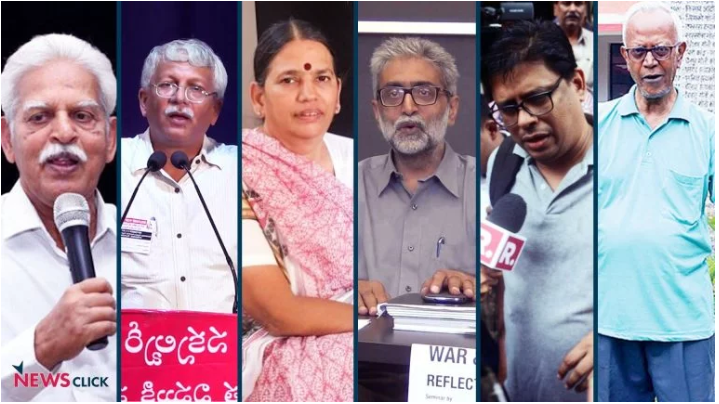
… With the general elections approaching in 2019, the far-right government led by the Bharatiya Janata Party (BJP) with Narendra Modi at the helm, has been looking for any excuse to silence those highlighting this government’s many flaws and suppression of minorities. The most prominent case this year was of the arrest of 10 renowned human rights activists, who were labelled members of the banned Communist Party of India (Maoist) and made part of a plan to assassinate Prime Minister Modi, despite there being no concrete evidence supporting these allegations. The wording of the UAPA is such that any speech a person makes questioning the state can be seen as a threat to the country’s security and sovereignty. [see also: https://humanrightsdefenders.blog/2018/09/22/attack-on-human-rights-defenders-in-india-are-an-attack-on-the-very-idea-of-india/]
Failed peace process in Colombia
Two years after the signing of a peace treaty between the Colombian government and the Revolutionary Armed Forces of Colombia (FARC) in Havana, Cuba, the government has failed to make good on its promises. While the guerrilla organisation surrendered arms for the most part after the treaty was signed, the government now shows no political will to implement the accords and demobilised combatants have been subject of unabated persecution. 92 people who participated in the reincorporation process have been killed……For the more than 400 social leaders and human rights defenders assassinated by right-wing paramilitary and state forces since the Havana agreements were signed, the legal system has been much slower to find those responsible and the government has shown it has no desire to dismantle the criminal structures that carry out these crimes. Just in 2018, human rights organisations reported that over 226 leaders were assassinated and the National Indigenous Organisation of Colombia (ONIC) declared in August that under Duque’s presidency, there has been an increase in the attacks against indigenous people.
Impending elections always create an upsurge in state clampdowns on people’s rights to free speech and protest.
Crackdown in Congo
As the Democratic Republic of Congo finally hit the polls on December 30 after a delay of two years, there was widespread apprehension over the fairness of these elections. President Joseph Kabila held on to power for two years after his constitutionally mandated term ended in December of 2016. Despite being president for the permitted two terms, he remained reluctant to give up control over the country, and only agreed to not contest this time after naming Emmanuel Ramazani Shadary as his successor. Shadary is a former minister of interior, and remains under sanctions by the European Union for committing human rights violations in Congo…..At least 2,000 activists, opposition members, and journalists have been put behind bars since the protests against Kabila began in 2015. Many were released after weeks or months of detention and reported mistreatment. In November alone, at least 18 pro-democracy activists were arrested from the capital city Kinshasa. It remains to be seen if the much anticipated elections will bring a change and some relief to the people of Congo.
Philippines
A scenario similar to this, but of a different magnitude, is being witnessed in the island nation of Philippines under the authoritarian regime of Rodrigo Duterte, with widespread attacks on activists and pubic dissenters…Earlier this month, the government approved extension of martial law for the third time, making it effective for another year. While the stated purpose of this is to combat “extremists”, often labelled as members or leaders of the banned Communist Party of Philippines (CPP) or New People’s Army (NPA), those facing chargers are mostly activists challenging Duterte’s authority. In late February, the Duterte regime released a list of almost 600 activists and political dissenters, which was called the Terror List. Labelled terrorists and members of banned groups, many in the list are renowned activists and public figures, including Victora Tauli-Corpus, the current UN Special Rapporteur on the Rights of Indigenous People.
Brasil
Any concrete evidence to show Lula’s involvement in the corruption scandal is yet to be presented. His indictment, however, gave the extreme right candidate Jair Bolsonaro’s campaign a push, ultimately leading to his victory. The judge responsible for the legal crusade against Lula, Sergio Moro, has been rewarded with a place in Bolsonaro’s cabinet as the Minister of Justice. The attacks against Brazil’s social movements have already intensified. Two leaders of the Landless Rural Workers Movement (MST) were assassinated days before the Human Rights Day on December 10. Members of social movements fear that such incidents will become more commonplace under Bolsonaro, known for encouraging Brazilians to resort to violence when faced with social conflicts.
The year ahead…
While 2018 saw several right-wing regimes and authoritarian leaders accede to power, the coming year offers hope of being different as discontent against neo-liberal systems is rising. The Yellow Vests movement in France, which is still going strong after almost a month and a half, is an inspiring instance of that. Several countries will hit the polls in 2019. The need for mobilising against anti-people parties and disseminating the truth about such parties which often seem appealing to the masses with their populist messages is now stronger than ever, especially if we are to make 2019 any different.
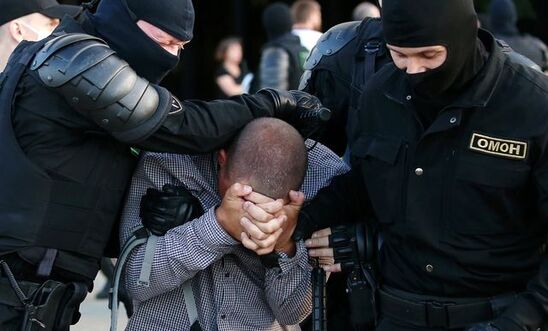
Since re-election in 2012, the Russian president has overseen the creation of 50 laws designed to strangle opposition voices and raise the level of fear and self-censorship in society. FIDH with its Russian member organizations released a table of the latest 50 new anti-democracy laws since 2012. It explains the impact of each of them on the fundamental freedoms of Russian citizens, cutting down every day a little bit more the free exchanges with the outside world. It also provides some, far from exhaustive examples of the legal abuses it provokes in the every day life of citizens.
Not only the present but also the past gets filtered and controlled.
The laws and regulations range from increased surveillance and censorship powers, to laws banning “questioning the integrity of the Russian nation” – effectively banning criticism of Russia’s presence in Eastern Ukraine and the Crimea – broad laws on “extremism” that grant authorities powers to crack down on political and religious freedom, to imposing certain views on Russian history forbidding to think differently.