The selection panel of the Václav Havel Human Rights Prize, which rewards outstanding civil society action in defence of human rights in Europe and beyond, has announced the shortlist for the 2024 Award.
Meeting in Prague, the panel – made up of independent figures from the world of human rights and chaired by the President of the Parliamentary Assembly of the Council of Europe (PACE) Theodoros Rousopoulos – decided to shortlist the following three nominees, in alphabetical order:
Akif Gurbanov, Azerbaijan
The nominee is a human rights defender, political activist and active member of the Azerbaijani civil society. He is the co-founder of the Institute of Democratic Initiative (IDI) and of the Third Republic Platform. He was arrested in March 2024 in a wave of arrests targeting journalists and activists in the country.
María Corina Machado, Venezuela
The nominee is a leading political figure in Venezuela engaged in denouncing human rights abuses in her country and defending democracy and the rule of law. She is the co-founder of the Venezuelan volunteer civil organisation ‘Súmate’ for civil and political freedom, rights and citizen participation.
Babutsa Pataraia, Georgia
The nominee is a leading feminist activist and human rights lawyer in Georgia. She is the Director of ‘Sapari’, an NGO focusing on women’s rights and providing support for victims of violence since 2013. She has worked for over a decade to fight against feminicide, sexual violence against women, and sexual harassment.
Human Rights First announced a call for nominations for the 2024 Roger N. Baldwin Medal of Liberty Award. Nominations are due by September 23, 2024.
“Honoring those who champion human rights despite immense personal risk is at the heart of what we do,” said Human Rights First President and CEO Sue Hendrickson. “This award stands as a testament to the power of individuals to make a difference, even in the face of adversity.”
UN experts called on the Tunisian authorities to respect the right to judicial guarantees and judicial protection of Sihem Bensedrine, who was arrested on 1 August 2024.
“In a context marked by the suppression of numerous dissenting voices, the arrest of Ms Bensedrine raises serious concerns about the respect of the right to freedom of opinion and expression in Tunisia and has a chilling effect on journalists, human rights defenders and civil society in general,” the experts said.
Bensedrine is the former President of the Truth and Dignity Commission (TVD) which documented the crimes committed under previous regimes, and a journalist who has long denounced human rights violations in the country.
Since 2021, she has been involved in a judicial investigation into the alleged falsification of a chapter in the TVD´s final report regarding corruption in the banking system. The independent human rights experts have already held discussions with the Tunisian government concerning this investigation.
“This arrest could amount to judicial harassment of Ms Bensedrine for work she has undertaken as President of the Truth and Dignity Commission,” the experts said. “It appears to be aimed at discrediting information contained in the Commission’s report, which could give rise to legal proceedings against alleged perpetrators of corruption under the previous regimes.”
The Special Rapporteurs urged Tunisia to uphold its obligation to protect members of commissions of enquiry into gross human rights violations from defamation and civil or criminal proceedings brought against them because of their work, or the content of their reports.
“We call for strict respect for Ms Bensedrine’s right to judicial guarantees, including the right to a fair trial by due process, impartiality and independence, and for an end to abusive proceedings and reprisals against her.”
The Abu Dhabi Federal Court of Appeal in the United Arab Emirates (UAE) sentenced 43 individuals to life in prison in a mass trial on Wednesday 3 July 2024, according to the UAE’s state-run news agency, WAM. The trial, which has been criticized by human rights organizations for allegedly targeting dissidents, involved charges linked to the Muslim Brotherhood, a group designated as a terrorist organization by the UAE government. WAM reported the verdicts shortly after human rights advocates released statements announcing the sentences. Alongside the life sentences, five defendants received 15-year prison terms and another five were sentenced to 10 years. The court dismissed the cases of 24 defendants.
According to WAM, the court ruled that those convicted “have worked to create and replicate violent events in the country, similar to what has occurred in other Arab states—including protests and clashes between the security forces and protesting crowds—that led to deaths and injuries and to the destruction of facilities, as well as the consequent spread of panic and terror among people.”
While WAM did not identify those sentenced by name, and specific details regarding the trial are not clear, Joey Shea, a researcher focusing on the UAE for Human Rights Watch, noted a few prominent figures involved in the case to the Associated Press (AP).
On 10 July 2024, Human Rights First condemned the secret trial and sentencing of dozens of activists in the United Arab Emirates:
“Washington’s ally has again today demonstrated its violent repression,” said Senior Advisor Brian Dooley. “The Biden administration has struck millions of dollars of arms deals with the UAE dictatorship, and failed to sanction its officials responsible for cracking down on peaceful dissent. The message from Washington to the UAE has been clear for many years: Do what you want, there will be no consequences.”
Among those reportedly sentenced to life in prison after a mass trial is prominent legal scholar Nasser bin Ghaith. He graduated with honors from Case Western Reserve University School of Law in Ohio with an LLM in U.S. and Global Legal Studies in 2001. Another of those in the mass sham trial — which included 84 defendants — was Ahmed Mansoor, who received his Bachelor’s Degree in Electrical, Computer, & Energy Engineering and his Master’s in Telecommunications for the University of Colorado, Boulder. Human Rights First is still waiting for confirmation on the outcome of his case in the trial. [see https://www.trueheroesfilms.org/thedigest/laureates/074ACCD4-A327-4A21-B056-440C4C378A1A]
Bin Ghaith, Mansoor, and other prominent activists in the trial were already in prison serving long sentences for their peaceful activism.
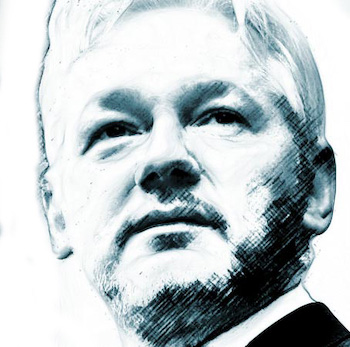
But many, such as the NGO ARTICLE 19, have a warning: However, this is not a slam-dunk win for press freedom. The US should have never brought these charges. The single remaining criminal count of conspiring to obtain and disclose classified US national defence documents puts investigative journalism at severe risk in the United States and beyond. Journalists that cover national security, the armed forces and defence do this day in and day out as part of providing transparency and accountability to hold abuses of power in check.
‘We are all at risk if the government can hold an archaic law, the Espionage Act, over the heads of journalists to silence them.’ The charge under the Espionage Act undermines the principles of media freedom, accountability, and independent journalism that Assange, his legal team, and campaigners had championed throughout his case, which began in 2012. The fact that his release from Belmarsh prison is a result of plea deal is a clear reminder of how important it is to redouble our efforts defending media freedom and pushing for accountability.
The Lorenzo Natali Journalism Prize, sponsored by the European Commission (EU), is inviting applications that recognise excellence in writing, radio, and broadcast journalism on the theme of development, democracy, and human rights around the world. Sewe: https://www.trueheroesfilms.org/thedigest/awards/D49ECF35-4B42-444D-B4FA-F7ACE2BF65BC
This year’s contest is focused on related issues of gender equality, human development, climate, environment and energy, digital and infrastructure, sustainable growth and jobs, youth, migration and forced displacement, peace, and governance.
The application encouraged journalists committed to defending democracy and human rights can enter a competition.
The contest has four award categories: Best Emerging Journalist, Investigative Journalism, Feature Journalism, and Special Photojournalism.
Works must have been published or broadcast between May 30, 2023, and May 24, 2024.
On 12 June 2024, a group of important NGOs addressed the following letter to Josep Borrell, EU High Representative for Foreign Affairs:
We, the undersigned civil society organisations, are writing to reiterate our request for the European Union to suspend its human rights dialogue with China, and to consider other, more impactful measures at the EU’s disposal to address the Chinese government’s assault on human rights at home and abroad.
While appreciative of the open and frank discussion and engagement with the EEAS in preparation of each round of human rights dialogue with China, we regret that the EU continues this exercise despite its amply proven ineffectiveness over 38 rounds. While the EU raises concerns during these dialogues, it knows that the Chinese government will not acknowledge abuses, will not undertake any effort to secure accountability, and will not be persuaded to undertake any policy or legislative action to comply with China’s international human rights obligations. The EU’s reluctance to establish any measurable benchmark of progress, or even to establish clearly defined objectives beyond having a dialogue, exacerbates the ineffectiveness of this exercise.
This year’s human rights dialogue would also entail EU officials sitting down with authorities in Beijing to “engage… through dialogue and cooperation” on human rights, days after the 35th anniversary of the Tiananmen massacre.
Since Xi Jinping came to power in 2013, the Chinese government has intensified its crackdown on dissent, harassing and imprisoning human rights defenders and activists including the Swedish bookseller Gui Minhai, the Uyghur economist and Sakharov Prize laureate Ilham Tohti [7 human rights awards, see: https://www.trueheroesfilms.org/thedigest/laureates/37AE7DC4-16DB-51E9-4CF8-AB0828AEF491], the Hong-Kong barrister and human rights activist Chow Hang-tung and human rights lawyers Yu Wensheng and his wife Xu Yan, who were arrested a little over a year ago on their way to meet with the EU delegation [see: https://www.trueheroesfilms.org/thedigest/laureates/69fc7057-b583-40c3-b6fa-b8603531248e and https://humanrightsdefenders.blog/2023/07/12/new-wave-of-repression-against-human-rights-lawyers-unleashed-in-china/]. The Chinese government has committed egregious violations against Uyghur and other Turkic communities in Xinjiang/The Uyghur Region, which a report of the UN High Commissioner for Human Rights in August 2022 stated “may constitute international crimes, in particular crimes against humanity.” Beijing has also intensified its repression in Tibet, while in Hong Kong the creation of a new national security architecture at Beijing’s behest has severely restricted the rights and freedoms long enjoyed by Hong Kong’s people.
Beijing’s foreign policy has also been increasingly detrimental to human rights, both in the region and beyond. The Chinese government continues to support highly abusive governments, to challenge international efforts to secure accountability for grave abuses, and to intensify efforts to undermine the international human rights system and rewrite its norms. The Chinese government has also engaged in increasingly brazen transnational repression – abuses committed outside its borders – including in EU countries.
The EU has already suspended human rights dialogues with highly repressive countries such as Russia, Syria, Belarus, and Myanmar, among others, in light of the nature, scale and pervasiveness of their authorities’ human rights abuses and violations of international law. The Chinese government has committed serious crimes amounting to crimes against humanity. It has long been evident that the human rights dialogue is not an appropriate nor an effective tool to address them. There is no reason to expect the 39th round will prove more beneficial to the rights of people in China than the previous 38. The EU and its member states should pursue different, more effective actions to press the Chinese government to end its crimes against humanity and other serious violations – and to hold accountable those responsible for failing to do so.
We have long been suggesting alternative action, latest in this February 2023 letter. We stand ready to discuss these and other options with you any time.
Signatories: Amnesty International Front Line Defenders Human Rights Watch International Service for Human Rights World Uyghur Congress
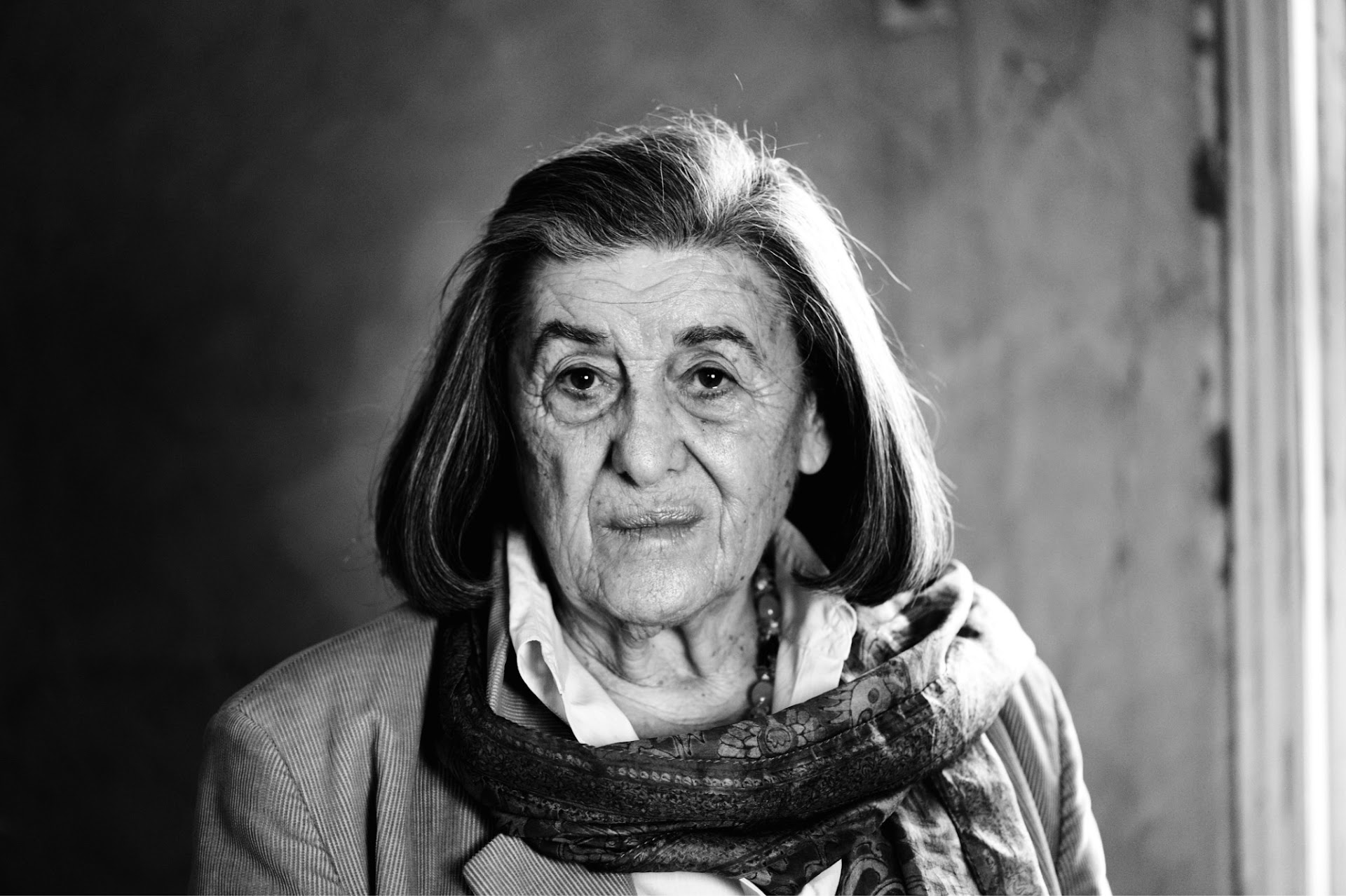
I am not a professional obituary writer, but I surely wished I were, as writing about my dear friend Leah Levin deserves the best possible skills. Fortunately, I received some excellent input from her caring family of which I am making good use. A celebration of Leah’s life will be held by the family on 13 June, 4 pm BST which can also be followed online.
Leah Levin, was a well-known figure in the international human rights movement of the 1970’s and onwards. She died of cardiac arrest on 25 May, 2024, at the formidable age of 98. For over half a century, she served and led a range of human rights organisations and collaborated globally with some of the world’s leading activists. For which she received an honorary doctorate from the University of Essex in 1992 and an OBE in 2001.
She was the author of UNESCO’s “Human Rights: Questions and Answers”, one of the world’s most widely disseminated books on human rights, (translated into more than 30 languages).
From 1982-1992, she was director of JUSTICE, a pioneering organisation that sought to right miscarriages of justice and which was a national section of the International Commission of Jurists . She served as a board member or trustee of the United Nations Association, the Anti-Slavery Society, International Alert, Redress, Readers International and The International Journal of Human Rights. But most of all, I remember her from the work she did to make sure that we would not forget one of our most impressive friends: Martin Ennals, who had led Amnesty from 1968 to 1980 and had been one of her closest friends until his death in 1981. [see his biography in the Encyclopedia of Human Rights, OUP, 2009, Vol 2, pp 135-138].
Frances D’Souza, said about Leah: “without any pretension she was nearly always right. She hit the nail on the head whether dealing with world affairs or people. She made a significant difference by her wise counsel and fact that she could really see what the issues were, read the situation and do something about it.”
Leah Levin had the special talent to draw other like-minded people to her and help coalesce a community of activists with whom she would collaborate throughout her entire life.
Her own life story is one of human rights struggle: Leah was born Sarah Leah Kacev on 1 April 1926 in Lithuania. She grew up as Leah Katzeff in Piketberg, South Africa, a small, rural town in Western Cape to where the family had to flee to escape poverty and anti-Semitism in the difficult years after the First World War and Russian revolution. Leah was the first of four children and the first person in her family to go to university. She graduated in 1945, when at the end of the second world war, the Katzeffs found out that their family along with their entire Jewish community in Mazeikiai, had been murdered by local Lithuanians organized by the Germans in the very first days of the Nazi advance in 1941.
In 1947 she married Archie Levin, fifteen years her senior. Like Leah, Archie was the child of European Jewish immigrants. Together they set up a new business, writing travel guides to Central and Southern Africa. In 1960, disgusted by the repression of anti-apartheid protest, the couple moved to the British colony of Southern Rhodesia (now Zimbabwe) with their two children Michal and Jeremy. A third son, David, was born in Salisbury (now Harare).
In Rhodesia, Leah completed a second degree in international relations at the University of Rhodesia and Nyasaland, while her husband became politically active. His activities angered those in power; shortly before Rhodesia unilaterally declared independence. Archie was tipped off that he was likely to be arrested. He rapidly left for the UK with his daughter Michal and later was joined by his son Jeremy; a few months later, Leah and her infant son David joined the rest of the family in the UK.
In London, Leah found a volunteer post as Secretary of the newly founded United Nations Association. The UNA human rights committee brought together people who became lifelong friends as well as colleagues: Martin Ennals, Sir Nigel Rodney, Amnesty’s first legal officer and later UN rapporteur on torture, and Kevin Boyle, who ran the Human Rights Centre of the University of Essex. After the death in 1977 of her husband Archie, Leah threw herself still more wholeheartedly into human rights work. In 1978, she took a job as Secretary of the Anti-Slavery Society, which connected her to the United Nations in Geneva. And in 1982 she moved to run JUSTICE for a decade. In 1992, she co-founded Redress, representing victims of torture to obtain justice and reparation for them.
Even when fully retired Leah continued to keep an active interest in children and grandchildren as well as her human rights “children”. I will bitterly miss her almost yearly phone calls to check on me to make sure I am doing the right thing.
On 31 May 2024, Front Line Defenders announced the five winners of its top distinction, the 2024 Award for Human Rights Defenders at Risk, at a special ceremony in Dublin this morning. Laureates from each of the major global regions travelled to Ireland to accept the Award, including:
Africa: Gamito dos Santos Carlos of AJOPAZ, the Youth Association for Peace (Mozambique)
Americas: The Trans women collective Muñecas de Arcoíris (Honduras), represented by Jennifer Bexara Córdova
Asia and the Pacific: Sammi Deen Baloch of the Voice for Baloch Missing Persons (Balochistan, Pakistan)
Europe and Central Asia: Doros Polykarpou of KISA (Cyprus)
Middle East and North Africa: We Are Not Numbers (Gaza, Palestine), represented by Ahmed Alnaouq
“Given the immensity of the challenges we face and the adverse forces working against human rights in many parts of the world, it might seem tempting to lose hope that a better world is even possible,” said Alan Glasgow, Executive Director of Front Line Defenders. “But these courageous human rights defenders have defied that temptation and inspire us to keep hope alive. They say ‘no’ to the perpetrators and ‘yes’ to optimism – they know a fairer, more equal, rights-respecting world is worth fighting for.
Gamito dos Santos Carlos, a human rights defender from Nampula, northern Mozambique, is the executive director of AJOPAZ, the Youth Association for Peace. His human rights work centres around social, civil and political rights and accountability. Gamito has been advocating for the protection of human rights activists and engaging with young people to advocate for significant social change in his community, to foster justice and sustainable decision-making by authorities. He is also a member of the Friends of Amurane Association for a Better Mozambique -KÓXUKHURO, as well as an analyst and Provincial Coordinatorof the Mozambican Network of Human Rights Defenders (RMDDH). He has faced ongoing intimidation for his human rights work, including repeated raids on his home and the loss of his job, and in March 2023 he was kidnapped and tortured after he organised a demonstration.
Muñecas de Arcoíris (Rainbow Dolls) is a collective of trans women from the city of Tegucigalpa and Comayagüela in Honduras, founded in 2008. Muñecas works under the LGTBI+ Arcoíris Association of Honduras with the aim of creating a safe space for trans sex worker women. The members of Muñecas started as volunteers of the Arcoíris Association, where they became more aware of the situation that trans people were facing in Honduras. With the support of the Arcoíris Association, Muñecas members received training related to their rights as LGTBI+ people. They then started to document human rights violations specifically against trans women in 2006 and two years later, on 31 October 2008, the collective was formally created as a trans women organisation. Most of its members are sex workers, informal workers, stylists, and housekeepers,among others.
Sammi Deen Baloch is a Baloch woman human rights defender from Mashkai, Awaran District of Balochistan province,Pakistan. She is the General Secretary of the Voice for Baloch Missing Persons (VBMP), a non-governmental organisation that represents and supports victims and relatives of enforced disappearances in Balochistan. In June 2009, at the age of 10, Sammi’s father, Dr Deen Mohammed Baloch, was forcibly disappeared in Khuzdar, Balochistan. She began persistently campaigning for the release of her father, which further led to her deeper, collective involvement in advocating against enforced disappearances in Balochistan by state forces.
Doros Polykarpou is a leading human rights defender and founding member of KISA (the Movement for Equality, Support, and Anti-Racism). He is an expert on migration, asylum, discrimination, racism, and trafficking in Cyprus. For over 27 years, he has dedicated himself to defending and advocating for the rights of people on the move and tackling discrimination and xenophobia in Cyprus, navigating the unique socio-political environment of the small island nation with strong conservative elements. This has exposed him and the organisation to a backlash, and earlier this year KISA’s office was targeted by a bomb attack. [see also: https://humanrightsdefenders.blog/2024/01/19/attack-against-cypriot-anti-racism-ngo-kisa/]
We Are Not Numbers (WANN) is a youth-led Palestinian nonprofit project established in the Gaza Strip in 2014, with the aim of telling the everyday, human stories of thousands of Palestinians. Their vision is to spread Palestinian voices and narratives, based on respect for human rights through the work of peaceful, non-violent, youth led Palestinians. When co-founder Ahmed Alnaouq lost his 23-year-old brother, Ayman, during an Israeli military attack on Palestinians in the summer of 2014, he was devastated, and sunk into a depression from which he thought he would never escape. During this time, he met American journalist Pam Bailey, who encouraged him to celebrate his brother’s legacy by writing a story about him. Like many young people in Gaza, Ahmed was majoring in English literature to improve his language skills. Pam published the story on a Western news website, which was well-received beyond expectation. Ahmed and Pam realised that writing the story had brought some healing to him and that this could be done on a much bigger platform.
Iranian hip-hop artist Toomaj Salehi, Uyghur poet and activist Tahir Hamut Izgil, and Venezuelan pianist and recording artist Gabriela Montero.
On 22 May 2024) The Human Rights Foundation announced the recipients of the 2024 Václav Havel International Prize for Creative Dissent: Iranian hip-hop artist Toomaj Salehi, Uyghur poet and activist Tahir Hamut Izgil, and Venezuelan pianist and recording artist Gabriela Montero.
“Their work stands as a testament to extraordinary bravery and ingenuity,” HRF Founder Thor Halvorssen said. This year’s laureates will be recognized during a ceremony on Tuesday, June 4, at the 2024 Oslo Freedom Forum (OFF) in Oslo, Norway. Montero will be performing the European and Scandinavian premiere of “Canaima: A Quintet for Piano and Strings” at the Oslo Konserthus. The Havel Prize ceremony will also be broadcast live at oslofreedomforum.com.
Toomaj Salehi is an Iranian hip-hop artist known for lyrics protesting the Iranian regime and calling for human rights. In September 2022, at the height of the nationwide “Women, Life, Freedom” protests, Salehi released several songs supporting women’s rights. One song, “Divination,” with the lyrics, “Someone’s crime was that her hair was flowing in the wind. Someone’s crime is that he or she was brave and…outspoken,” grew in popularity and was sung throughout the protests. Salehi was first arrested in October 2022 and was released on bail in November 2023 after the Iranian Supreme Court overturned his charges of “corruption on Earth,” “propaganda against the system,” “collaboration with a hostile government,” “inciting people to murder and riot,” and “insulting the leadership.” On November 27, 2023, he posted a YouTube video describing the torture and forced confession he experienced during his detention. Three days later, armed plain-clothes agents abducted Salehi. He was subsequently charged in two trials. On April 24, the Isfahan Revolutionary Court sentenced him to death.
Tahir Hamut Izgil is a prominent Uyghur poet, filmmaker, and activist. He is known for his avant-garde poetry, written in Uyghur and influenced by Uyghur life. Originally from Kashgar, Izgil led the 1989 student movement at the Central Nationalities Institute in Beijing. In the late 1990s, he was arrested on charges related to the possession of sensitive literature, leading to a three-year sentence in forced labor camps. He is among the few Uyghur intellectuals who successfully escaped the region in 2017.Izgil’s new memoir, “Waiting to Be Arrested at Night: A Uyghur Poet’s Memoir of China’s Genocide,” documents his journey living in and escaping the Uyghur Region, sharing a rare testimony of the Uyghur genocide with the broader world. His book has been listed as one of the “50 notable works of nonfiction” by The Washington Post and as one of the “10 0 Must-Read Books of 2023” by Time Magazine
Gabriela Montero is a Grammy Award-winning Venezuelan pianist and recording artist. Celebrated for her exceptional musicality and ability to improvise, Montero has garnered critical acclaim and a devoted following on the world stage. Montero’s recent highlights include her first orchestral composition, “Ex Patria,” a tone poem that grew from the human rights struggle in Montero’s native Venezuela. The piece powerfully illustrates and protests Venezuela’s descent into lawlessness, corruption, and violence, winning her first Latin Grammy® for Best Classical Album.Montero is a committed human rights advocate, using her gifts of composition and improvisation as tools of creative dissent. In 2015, she was named an Honorary Consul by Amnesty International. Montero was awarded the 2012 Rockefeller Award for her contribution to the arts and was a featured performer at Barack Obama’s 2008 Presidential Inauguration. [see also: https://humanrightsdefenders.blog/2018/10/15/venezuelan-pianist-gabriela-montero-wins-the-2018-beethoven-prize/]