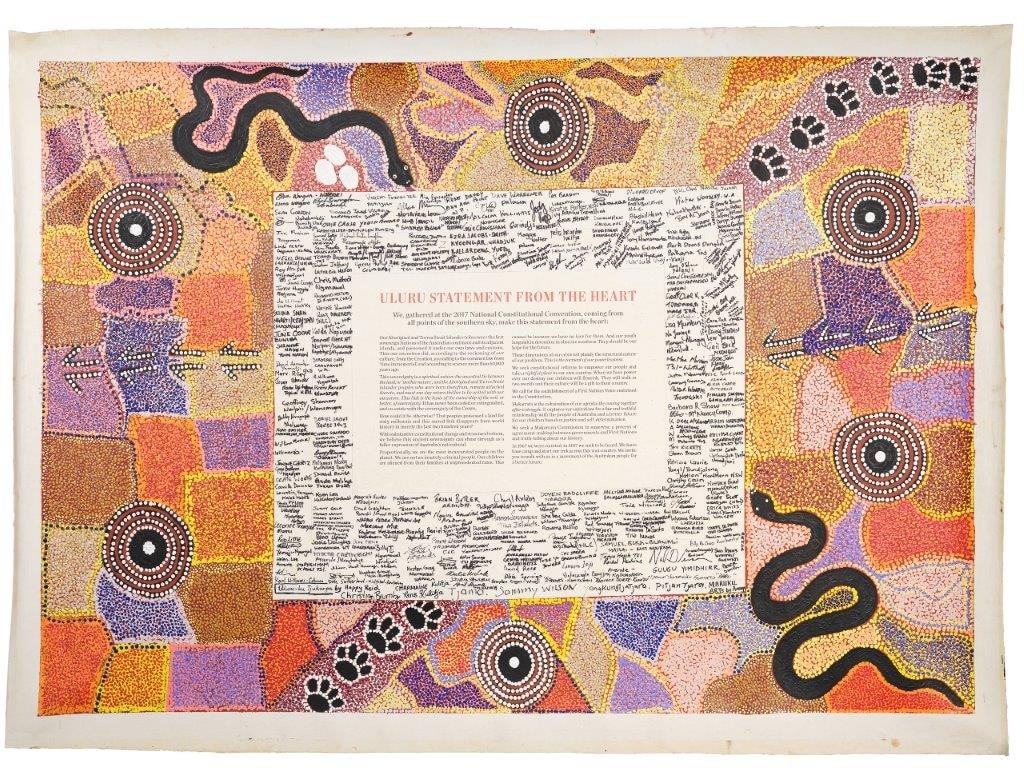
On 26 May 2021 the ongoing campaign for First Nations recognition in the Constitution has been awarded Australia’s Sydney Peace Prize.
Proud First Nations leaders and drivers of the Uluru Statement from the Heart, Professor Megan Davis, a Cobble Cobble woman from the Barunggam Nation in South East Queensland; Pat Anderson AO, an Alyawarre woman from the Northern Territory; and Noel Pearson, a Guugu Yimidhirr man from Hopevale on the Cape York Peninsula, jointly welcomed the announcement and will receive the prize together at an official event later in the year.
Delivered in May 2017 at the National Constitutional Convention, the Uluru Statement from the Heart is a ‘historic offering of peace’ that calls for the establishment of a ‘First Nations Voice’ in the Australian Constitution.
Professor Davis, Ms Anderson and Mr Pearson worked tirelessly to deliver the statement in 2017 and have spent the past four years leading the campaign for a referendum to change the constitution. The announcement of their win coincides with National Sorry Day, and marks four years since the Uluru Statement was originally endorsed by First Nations people from across Australia.
“The Uluru Statement was the culmination of a dialogue process designed to take agreement and disagreement and elicit a pathway forward on the vital question of recognition,” Professor Davis said.
“This is a tribute to the men and women of the dialogues who crafted a roadmap to peace for the nation. We are accepting this prize on behalf of all of the First Nations that participated in the Uluru Dialogues and the National Constitutional Convention at Uluru in 2017.”
Most human rights lawyers are not famous, nor are they wealthy, but they have irrefutably stood out in the Chinese legal community, elevating the profession to a worthier height. Over the past two decades, they have represented clients in all aspects of human rights and public interest, including but not limited to freedom of speech, freedom of belief, political dissent, property rights, women’s rights, labor rights, minority rights, anti-discrimination, food safety, and redress of wrongful convictions and other grievances. Their clients are from all walks of Chinese society, including political dissidents, religious believers, human rights defenders, civil society activists, farmers who lost land to illegal appropriation, factory workers, NGO practitioners, private entrepreneurs, writers, journalists, ordinary netizens, street vendors, victims of miscarriage of justice, and even Chinese Communist Party officials who have become prisoners in the so-called anti-corruption campaign. Their clients are often either opponents of the authoritarian regime or those whose rights and dignity are trampled.
Human rights lawyers have performed their duties in the process of defending their clients under the law, but precisely because they take both the law and their duties seriously, they have been subject to increasingly strong hostility from the authorities. Since the emergence of the legal rights defense movement in the early 2000s, these lawyers have only faced worse repercussions for their work; many have been arrested and tortured, suspended and disbarred. But the mass arrests on July 9, 2015, marked the beginning of a broader persecution of human rights lawyers by the Chinese authorities. Dozens of human rights lawyers and their assistants were suddenly arrested and hundreds of lawyers were threatened across the country. The jailed lawyers were subjected to harrowing physical and mental abuse. They were deprived of legal representation, forcibly injected with unknown drugs, forced to make confessions. Over the past two decades, more than 70 human rights lawyers have been disbarred, and about 40 of them have had their licenses revoked or cancelled in the past five years. At least 50 human rights lawyers have been illegally barred from leaving the country.
Even though most of the 709 detainees have been released, imprisonment of human rights lawyers has not ceased. Today, 13 human rights lawyers remain in prison in China, and one has been missing for more than three years.
Although human rights lawyers are a small group among China’s half-million lawyers, they are among those holding a torch lighting the road to rule of law and freedom for the Chinese people. They emerged during the most dynamic period of China’s reform and opening up, and now face hardship and great danger. In a totalitarian state in possession of an overwhelming state apparatus, they have opted for a challenge that few of their peers would be willing to take, but they have no regrets and hold their heads high in their vocation. They and their families have endured sufferings and setbacks, but have remained resilient and steadfast. They have been writing history and they are paving the road to the future. More than 15 human rights lawyers figure in the Digest of Human Rights laureates: see https://www.trueheroesfilms.org/thedigest.
For this special day, we call upon members of the public, whoever and wherever you are, to send a message of appreciation and encouragement to human rights lawyers in China by:
· Printing or handwriting your message on a sheet of paper (or displaying it on your laptop screen);
· Taking a photo of yourself with your message (group photo is welcome); and
· Sending it to humanrights.lawyers.day@gmail.com with your name, profession, and location. Your email address will be carefully guarded and not shared or used for any other purposes. Deadline: June 10, 2021
We will play your message in a video collage called “Messages to Human Rights Lawyers in China.”
Organizers:
Humanitarian China (U.S.), ChinaAid (U.S.), China Change (U.S.), Judicial Reform Foundation (Taiwan), New School for Democracy (Taiwan), Taiwan Support China Human Rights Lawyers Network
“Yuri Dmitriev has returned the human value back to the Russian state. He confronts the past and gives a new vision for the future, which today’s regime does not have,” says Secretary General of the Norwegian Helsinki Committee, Geir Hønneland, to the Barents Observer.
Explaining the reason behind the award, Hønneland says it is not only about Dmitriev as a historian. “His work has already inspired thousands of young and old people, who want to find their dearest in the darkest graves. It is about hope and common identity.”
Millions were killed during Soviet terror, but the victims of these atrocities and their living relatives have never been given real justice. This was what Yury Dmitriev was working on. In the forests of Karelia, tens of thousands of people were shot and killed without trial or conviction and buried in mass graves.
Two Chinese human rights lawyers serving jail sentences for “inciting subversion of state power,” Yu Wensheng (L) and Qin Yongpei (R), were permitted limited visits with their families, May 10, 2021. Yu Wensheng/Qin Yongpei
Jailed Chinese rights lawyer Yu Wensheng, who was held incommunicado for three years and sentenced to jail for “incitement to subvert state power,” was allowed a visit from relatives at the weekend, his wife said. Yu’s young son was allowed to visit his father in Nanjing Prison on May 9, along with his mother Xu Yan, Xu told RFA.
The couple’s son spoke with Yu by phone from behind a glass partition during the half-hour visit, Xu said.
“Yu Wensheng had a very good chat with our son,” she said. “Both them were laughing a lot, and there was no sense of strangeness.”
“Our son told his father that he missed him, and Yu was happy to hear that,” she said. “Yu told him that he had wanted to spend more time with him … and apologized for not being there longer than three years.”
On 11 May 2021 Czech Radio announced that the annual One World festival of human rights documentary films got underway on Monday evening under the motto Connection Lost. The festival, which has moved entirely online due to Covid-19 restrictions, started by presenting its annual Homo Homini prize for human rights advocacy.
During the virtual opening ceremony on Monday evening, the People in Need foundation presented this year’s Homo Homini prize to four members of the Belarusian human rights organization Viasna, who have been persecuted for tracking detained protestors, documenting human rights violations and helping victims of police violence.
For the first time in the 25-year history of Homo Homini Award, it was presented to the same organization. People in Need director Šimon Pánek explained the decision to Czech Television: “15 years ago Ales Bialatski, founder of Viasna, received the Homo Homini Award. He saw what was happening at the time and put together a group of people to defend the rights of detainees. In the end, he himself ended up in prison.
“He was presented the award by Václav Havel, who said he hoped Belarus would live to see its 1989, but unfortunately, it hasn’t happened yet.
“For a while it looked as if Belarus has resigned, but the new generation of young people have not accepted the situation and despite the brutality of the regime, they have repeatedly taken to the streets.”
The festival, which runs until May 19, will present over a hundred films in 15 thematic categories, the main one focusing on technology and its impact both on the society and individuals. Some of the screenings will also be accompanied by live discussions as part of the One World Live Programme.
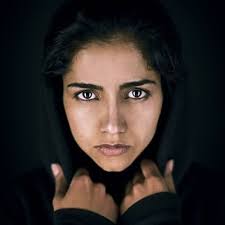
The Normandy Freedom Prize invites young people aged 15 to 25 in France and around the world, to reward each year a person or an organization engaged in an exemplary fight in favour of freedom. The online vote open to 15-25 year olds around the world to elect the 2021 Freedom Prize closed on April 26. Sonita Alizadeh, 25 years old, rapper born in Afghanistan, was named the laureate of this third edition of the Freedom Prize thanks to the votes of more than 5,000 young people from all over the world. For more on this award and its laureates see: https://www.trueheroesfilms.org/thedigest/awards/fef9ddd0-5b73-11e9-aba0-2ddd74eff7fa
Sonita Alizadeh is a rapper who was born in Afghanistan under the Taliban regime. At the age of 9, her parents planned to sell her as a bride but because of the war, her family fled to Iran and the planned marriage fell through. In Teheran, an NGO provided her with access to education and a cleaning job. When Sonita stumbled upon a song by the rapper Eminem, it is a real breakthrough. She began writing to tell her story and to speak out against forced marriage and the plight of millions of children around the world. Her first single, “Brides for Sale” garnered worldwide attention. Having moved to the United States, she now studies law to become a lawyer and to return to her country to defend Afghan women and children.
“I am proud to accompany the youth jury for the Prix Liberté. It is essential to sensitize the young generation to the defense of freedoms whatever they may be and to involve them in the construction of equality and the rights of every woman and man in the world. This requires awareness and teaching of what is happening elsewhere but also in France. Young people need to be heard because they are just like adults, victims of suffering and indifference.”
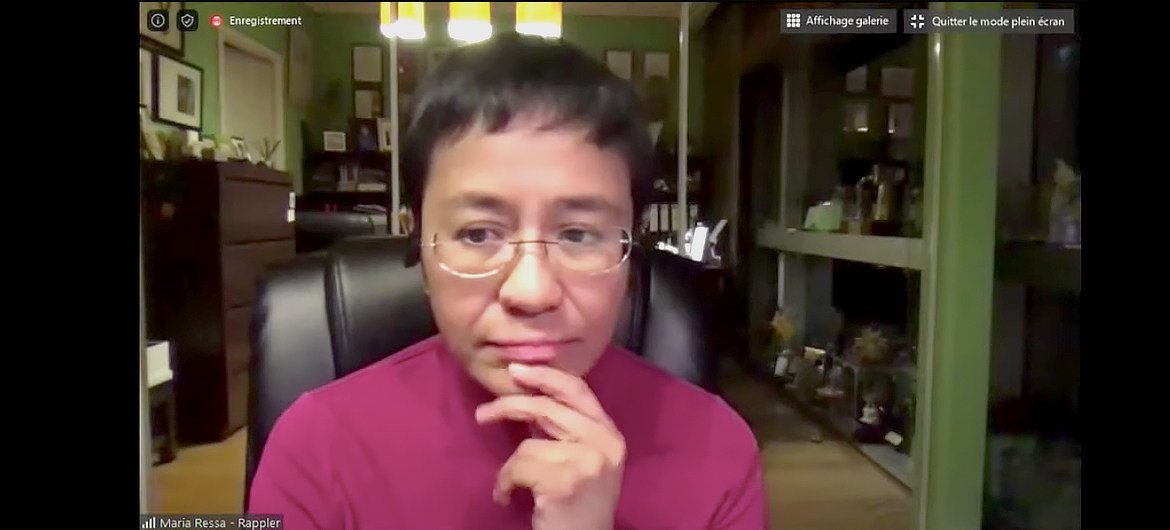
For over three decades, Ms. Ressa has been involved in many initiatives to promote press freedom and currently manages the online outlet, Rappler. Her work however, also made her a target for attacks and abuse, UNESCO – the UN agency tasked with defending press freedom – said in a news release.
Ms. Ressa was chosen for the UNESCO/Guillermo Cano World Press Freedom Prize following the recommendation of an international jury of media professionals.
“Maria Ressa’s unerring fight for freedom of expression is an example for many journalists around the world. Her case is emblematic of global trends that represent a real threat to press freedom, and therefore to democracy”, Marilu Mastrogiovanni, Chair of the Prize’s international jury and an investigative journalist from Italy, said.
The award ceremony will take place on 2 May in Windhoek, Namibia, during the World Press Freedom Day Global Conference. It will be streamed online.
Hosted by UNESCO and the Government of Namibia, the 2021 World Press Freedom Day Global Conference will be held from 29 April to 3 May under the theme of information as a public good, and will focus on topics such as transparency of online platforms and the importance of media and information literacy.
The Council of Europe has given its annual human rights award to the Saudi Arabian women’s rights activist Loujain al-Hathloul who was released last month after nearly three years in prison
As can be seen from THF’s Digest of Human Rights Laureates [https://www.trueheroesfilms.org/thedigest] there is a small number of important individuals which do not appear in the Digest for the simple reason that they did not get an award while they were still alive. One explanation is that these leaders of the early days operated in the time that awards were less numerous (most awards were after all created after 2000).
In order to rectify this a group of individuals has created a Life-time Human Rights Achievement Award, which is an honorary, posthumous award for individuals who have greatly contributed to the international protection of human rights defenders but have been ‘forgotten’ by other awards. Attributed in exceptional cases.
The first 6 laureates are: Werner Lottje, Niall MacDermot, Hansa Mehta, Bertha Lutz, Minerva Bernardino and Charles Malik. This selection is an indication of what the “Ad Hoc Committee for recognition of forgotten human rights heroes” considers lifetime achievements. See: https://www.trueheroesfilms.org/thedigest/awards/3816a904-e225-4c74-a5da-136507ba27a2
A human rights lens is urgently needed so that the opportunities of digital technology reach all of humanity and solutions can be found for risks online. Human rights Defenders are at the forefront of ensuring digital technology is inclusive, respectful of human rights and employed for human betterment. To offer our support to them and keep the spotlight on these issues, the Martin Ennals Award 2022 will reserve one of its three prizes for defenders working at the intersection of human rights and digital technology.
The deadline for nominations is: 30 May 2021. The independent Jury composed of 10 major NGOs will select three Finalists to the Award, who will be announced publicly in early 2022. The Laureate of the Award will be announced in the first semester of 2022.
Read the Nominations FAQ here to learn more about the nominations process.




 Hans Thoolen on Human Rights Defenders and their awards
