Posts Tagged ‘died’

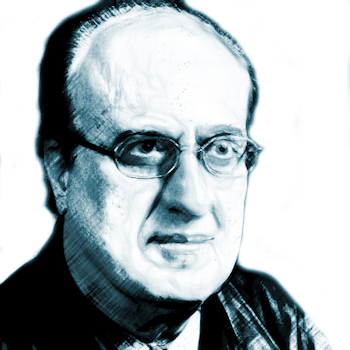
MEA Laureate Mario Joseph dies in accident in Haiti

April 7, 2025

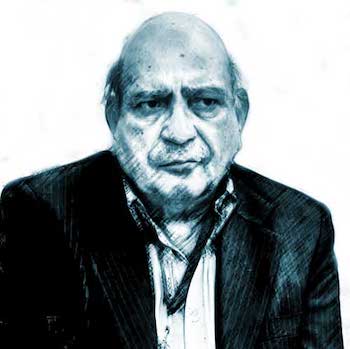
On 4 April, 2025 the Miami Herald reported that Haiti-based human rights lawyer Mario Josep died in a car accident.

In a country where justice is often elusive, Mario Joseph was a fearless crusader who didn’t care whether his opponent was the Haitian government or the international community as he defended political prisoners and poor victims of human rights abuses in his Caribbean homeland. Joseph died Monday night from injuries sustained in a car accident last week as he pulled into his house. His death was confirmed by his longtime friend Brian Concannon and the Boston-based nonprofit Institute for Justice & Democracy in Haiti. He was 62. Concannon said in a statement. “The global human rights movement has lost an inspirational leader when the notion of human rights itself is under broad attack.” 

Since 1996 Joseph had served as the attorney for the Bureau des Avocats Internationaux, or Bureau of International Lawyers, in Port-au-Prince. The organization represented victims of human rights violations, trained Haitian law students and worked with U.S. law schools clinics, while also closely collaborating with the Institute for Justice & Democracy in Haiti. His high-profile cases included championing the rights of 5,000 victims of waterborne-cholera who blamed the United Nations for its introduction into Haiti after the 2010 earthquake.

Among Jospeh’s many accolades over the years was the Judith Lee Stronach Human Rights Award from the Center for Justice & Accountability in San Francisco, the Alexander Human Rights Award from Santa Clara University, and honorary doctorates from the University of San Francisco and Indiana University School of Law. He was also a finalist for the 2013 Martin Ennals Human Rights Defenders Award.
[see: https://humanrightsdefenders.blog/2013/04/24/breaking-news-final-nominees-martin-ennals-award-2013-made-public/]

https://www.trueheroesfilms.org/thedigest/laureates/3bb30bee-dd32-4668-9079-89dd464e5eff

https://www.miamiherald.com/news/nation-world/world/americas/haiti/article303281216.html

https://www.blackagendareport.com/remembering-mario-joseph-bai-managing-attorney

Chilean human rights defender Mercedes Bulnes dies

November 27, 2024

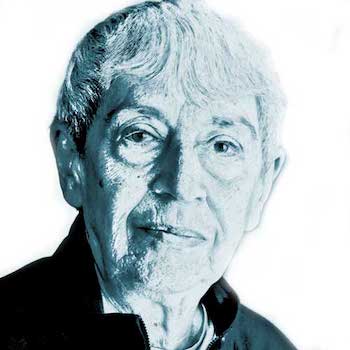
human rights defender Mercedes Bulnes.

The lawyer and independent legislator for the Maule region died at the age of 74, a victim of cancer. “She left attentive, fighting until the end, and her life leaves these marks that will not be erased,” wrote X Boric on her account, who highlighted her fight for citizen prerogatives in the country’s dark times.

Despite being pregnant, Bulnes, along with her husband Roberto Celedón, were arrested after the 1973 coup d’état and subjected to torture, after being accused of having links with the Revolutionary Left Movement. After living in exile in the Netherlands, they returned to the country and opened a law firm in the 1990s to help those who did not have access to justice due to their lack of financial resources.

“Our Mercedes Bulnes has passed away, but she leaves behind in all of us who knew her a beautiful memory of life and struggle. Always a loving and fierce defender of human rights,” said the government spokesperson, Camila Vallejo.

The Frente Amplio party expressed its sorrow for the death of its colleague, whom it described as an “example of commitment and work for justice.”

Felice Gaer, inspiring Human Rights Defender dies at 78

November 26, 2024

Felice Gaer Baran, an internationally renowned human rights expert who for more than four decades brought life and practical significance to the Universal Declaration of Human Rights and international commitments to prevent grave human rights abuses around the world, died on November 9, 2024 in New York City, following a lengthy battle with metastatic breast cancer. She was 78. At the time of her death, she was the director of the American Jewish Committee’s Jacob Blaustein Institute for the Advancement of Human Rights (JBI)Felice Gaer headshot

Longtime UN official and Acting High Commissioner for Human Rights from 2003-2004 Bertrand Ramcharan characterized Gaer as a “pillar of the human rights movement.

Throughout her career, in myriad roles, Gaer insisted that governments and the United Nations should consistently condemn the practices of tyrants and authoritarians and recognize that many forms of harm and inequality once considered ‘internal affairs’ of states as human rights abuses. Gaer’s influence established more protective interpretations of human rights norms from within and outside the United Nations human rights system. She effectively advocated for the creation and evolution of numerous international institutions and processes that play a critical role today in monitoring states’ human rights practices and holding violators to account.

Gaer achieved international recognition among human rights advocates as a force multiplier capable of overcoming the obstacles within government bureaucracies and multilateral institutions that often allow perpetrators of egregious abuses to avoid scrutiny and condemnation. Dr. Ahmed Shaheed, who served as the UN’s independent monitor on human rights in Iran and on the right to freedom of religion or belief, praised Gaer’s “exemplary track record” in 2021, stating that “You and JBI have made exemplary contributions to advancing human rights through the UN, especially in strengthening the effectiveness of the UN’s human rights mechanisms. Your own personal contribution, not just through the JBI, but in your own capacity as a member of the UN Committee against Torture and other roles, are not only legendary, but are a source of inspiration for everyone.” Elena Bonner, a one-time Soviet political prisoner, founder of the Moscow Helsinki Group, relentless advocate for democratic change in Russia, and wife of famed Soviet physicist, dissident, and Nobel Laureate Andrei Sakharov, with whom Gaer worked closely, recounted in 1997 that Gaer’s fierce approach to advocacy had helped a nascent international human rights movement find its voice. Said Bonner, “it was thanks to individuals like…Felice…who had the courage to be impertinent, that today it is more and more difficult for the rights-violating governments to challenge the universality of human rights and to ignore human rights concerns.”

Gaer began her career at the Ford Foundation as a program officer in 1974, focusing on the Soviet Union and Eastern Europe; subsequently, her areas also included arms control and human rights. At Ford, she became heavily involved in advocacy for the rights of Soviet Jewish refuseniks and encouraging broader internal changes that would catalyze greater respect for human rights for all in the Soviet Union. She maintained a passion for championing individual rights defenders while expanding her geographical focus. As the Executive Director of the International League for Human Rights from 1982 to 1991, Gaer championed human rights defenders throughout Latin America, particularly in Chile and Venezuela. She then served as Director of European Programs for the United Nations Association of the USA from 1992 to 1993, before becoming director at the Jacob Blaustein Institute in 1993–where she remained for the following three decades.

Gaer served for nine terms as an appointed “public member” of official U.S. government delegations to United Nations meetings between 1993 and 1999, including six U.S. delegations to meetings of the U.N. Commission on Human Rights. As a public member of the U.S. delegation to the 1993 World Conference on Human Rights in Vienna, Gaer’s advocacy was instrumental in the creation of the position of UN High Commissioner for Human Rights. Gaer also played a critical role in bringing about the conceptual and political victory that the U.S. government achieved for women’s rights at the 1995 World Conference on Women in Beijing – at which the UN explicitly recognized for the first time that women’s rights are human rights – working closely with US Ambassador to the UN Commission on Human Rights Geraldine Ferraro and First Lady Hillary Clinton.

In 1999, Gaer became the first American and first woman to serve on the 10-person United Nations Committee against Torture, an expert body that monitors implementation of the Convention against Torture. Over her 20 years on the United Nations Committee against Torture, Gaer insisted that the Committee and all other UN treaty bodies should affirmatively and publicly press governments to address allegations of wrongdoing, rather than accepting States’ assertions of compliance at face value. She led the Committee to develop practices that made it far more accessible to non-governmental organizations and human rights defenders seeking to share evidence of human rights violations. She also devoted extraordinary effort to ensuring that the Committee acted on information it received from third parties and conveyed accurate appreciation of the key human rights challenges occurring in every country it reviewed. Her rigorous and unsparing critiques – and her practice of inquiring about alleged victims of torture and arbitrarily imprisoned lawyers and advocates by name in public meetings – occasionally provoked angry outbursts by government officials accustomed to deferential, non-adversarial treatment in UN settings. However, Gaer’s approach turned what might otherwise have been pro-forma exercises into valuable opportunities for advocates to secure formal UN recognition of their claims.

Gaer’s efforts also led to a transformation in the Committee’s against Torture’s approach to the issue of violence against women, which previously was seen only as often a private matter rather than a form of torture or ill treatment for which perpetrators should be punished and victims of which are entitled to redress. The Committee became an important avenue for women’s rights advocates seeking to compel governments to develop more effective national capacities to protect women from violence, as well as members of vulnerable groups such as religious minorities and LGBTQI persons. These efforts brought significant public attention to previously overlooked issues in several countries. In one particularly noted case, Gaer’s insistence at public Committee meetings that Ireland had failed to address the abuses of the church-run ‘Magdalene Laundries’ – which had imprisoned and punished women the church had deemed ‘morally irresponsible’ – galvanized local advocates’ efforts for an official government inquiry to redress this longstanding historical injustice and acknowledge the State’s enduring obligations to survivors of the Laundries.

Gaer also championed the rights of religious minorities and victims of violence justified in the name of religion in countries around the world. Gaer was appointed and served five terms as an independent expert member of the bipartisan federal U.S. Commission on International Religious Freedom from 2001-2012, including as its chair. In that capacity, Gaer traveled to countries ranging from Sudan and Egypt to China to Afghanistan, directly pressing government officials to change policies and practices. She testified frequently before Congress and organizations including the Organization for Security and Cooperation in Europe on religious freedom issues.

Gaer’s commitment to universality also inspired her to work for decades to correct the persistent failure of the United Nations to recognize antisemitism as a serious human rights concern and to recognize the Holocaust as its most violent manifestation. Her engagement with public delegations to the UN Commission on Human Rights encouraged the U.S. to secure the inclusion of the first reference to antisemitism as an evil that UN efforts should seek to eradicate, in a resolution of the UN General Assembly, in a 1998 text condemning racism, using language previously negotiated by the U.S. at the Commission.

Gaer not only shared her wisdom and practical experience with colleagues but also convened numerous strategy discussions and facilitated the work of hundreds of human rights defenders, advocates, and other independent UN experts through JBI grants that empowered and encouraged their efforts to advance human rights norms and protections on a wide range of subjects and countries. For many colleagues and beneficiaries of her supports, Gaer was an invaluable resource, strategist, collaborator, mentor, and friend…

A prolific author of over 40 published articles and book chapters and editor of the volume “The United Nations High Commissioner for Human Rights: Conscience for the World,” Gaer received the American Society of International Law’s Honorary Member Award in 2023, an Honorary Doctorate from the Jewish Theological Seminary in 2018, and the First Freedom Center’s prestigious National First Freedom Award for her religious freedom advocacy in 2010. Gaer’s JBI was also named a “Champion of Prevention” by the UN Office on the Prevention of Genocide in 2023. [https://humanrightsdefenders.blog/2013/12/21/jacob-blaustein-institute-for-human-rights-publishes-book-on-un-high-commissioner-for-human-rights/]

One of three children of Abraham Gaer, a businessman who owned a toy shop, and his wife Beatrice Etish Gaer, Felice was born on June 16, 1946 in Englewood, New Jersey. She was raised in Teaneck, New Jersey and graduated from Teaneck High School. She received a Bachelor of Arts degree from Wellesley College and pursued her graduate studies in political science at Columbia University’s Russian Institute (now Harriman Institute), where she received a Master of Arts degree in 1971 and a Master of Philosophy degree in Political Science in 1975. In 1975, she married Dr. Henryk Baran, a professor at the State University of New York-Albany; Dr. Baran has a long and distinguished career specializing in Russian literature and culture of the Russian Silver Age and avant garde. The couple’s two sons – Adam, a queer filmmaker and curator, and Hugh, a workers’ rights attorney who litigates wage theft, discrimination, and forced labor cases – survive her, as do her brother Arthur Gaer, sister Wendy Philipps, son-in-law Jacob Rozenberg, five nephews, and ten cousins. Gaer’s wisdom, support, conviction, and passionate concern for all humanity made her truly exceptional, and she will be deeply missed.

https://www.ajc.org/news/felice-gaer-legendary-human-rights-champion-who-inspired-generations-of-global-advocates-dies

Aktham Naisse no more

February 7, 2022

Aktham Naisse was a Syrian lawyer and human rights activist. He was president of the Committees for the Defence of Democratic Liberties and Human Rights (CDDL-HR), which he helped found in 1989.

He was first arrested in February 1982, when he was held for four months and tortured. In 1989 the CDDL-HR formed an underground publication, Sawt al-Dimuqratiyya (The voice of democracy). In 1991 the group called for free elections, leading to Naisse’s arrest in December 1991. In 1992 he was tried and sentenced to 9 years imprisonment in Sednaya prison. Released in July 1998, Naisse was not subsequently permitted to practice law.

In August 2003 Naisse was questioned and threatened by military security. The committee posted a public letter on the Internet, calling for the lifting of the state of emergency. On 8 March 2004 they led around 700 demonstrators in a peaceful sit-in in front of the Syrian parliament building in Damascus. Naisse and one hundred others presented the parliament with a petition against the state of emergency, signed by over 7,000 people.

On 13 April 2004 Naisse was arrested and returned to Sednaya prison. There he suffered a stroke, leaving him partially paralysed. He began a hunger strike, and was released on bail pending trial on 16 August 2004. After international appeals on his behalf, the court acquitted him on 26 June 2005.

Naisse won the Ludovic-Trarieux International Human Rights Award in October 2004and the 2005 Martin Ennals Award for Human Rights Defenders. [https://www.trueheroesfilms.org/thedigest/laureates/96EB3030-144D-204E-3C6C-31CD4CA4501C]

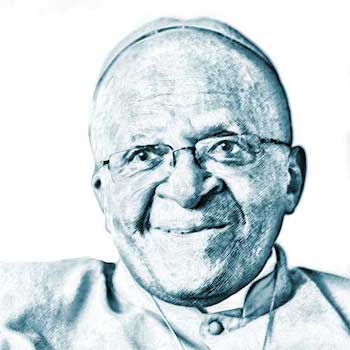
Desmond Tutu, human rights champion par excellence, is no more

December 29, 2021

Archbishop Emeritus Desmond Tutu, who was post-apartheid South Africa’s moral compass and the driver of its troubled reconciliation process, has died. He was 90 years old.

He is the laureate of at least 10 human rights awards: For the complete list, see:

https://www.trueheroesfilms.org/thedigest/laureates/3E4065ED-420D-D94E-ECB1-4A2C91FE3BE6

Andrew Donaldson in News24 of 26 December 2021 published an interesting obituary: A tireless social activist and human rights defender, Tutu not only coined the term “Rainbow Nation” to describe the country’s ethnic diversity but, after the first democratic elections in 1994, went on to become its conscience, using his international profile in campaigns against HIV/Aids, tuberculosis, poverty, racism, xenophobia, sexism, homophobia and transphobia, among others…

His was a powerful, forthright voice, one that irked both the Nationalist government and its successor, the African National Congress and its allies. He was, an activist noted, “given to expressing his opinion in ways that are guaranteed to be outside the realm of comfortable politics”. As Tutu himself put it, in 2007, “I wish I could shut up, but I can’t, and I won’t.“..

Both at home and abroad, Tutu’s opposition to apartheid, which he often likened to Nazism, was vigorous and unequivocal. The Nationalists twice revoked his passport, and he was briefly jailed in 1980 after a protest march. Many felt that his increasing international reputation and his advocacy of non-violence had spared Tutu from more harsh treatment by the government…

He was a born orator and, according to the journalist Simon Hattenstone, “a natural performer [with] his hands and eyes flying all over the place, his voice impassioned and resonant; a tiny ball of love.”

Tutu would often play down such adulation. “I was,” he once said of his reputation, “this man with the big nose and the easy name who personalised the South African situation.”…

Following the Soweto riots in 1976, Tutu became an increasingly vocal supporter of economic sanctions and a vigorous opponent of US president Ronald Reagan’s “constructive engagement” with the Nationalist government.

In 1978, he was appointed general secretary of the SACC, a position he used to further rally support, both local and international, against apartheid. He was just as harsh in his criticism of the violent tactics later used by some anti-apartheid activists, and was unequivocal in his opposition to terrorism and communism.

Tutu’s finest hour came when he chaired the Truth and Reconciliation Commission, which was set up to bear witness to, record and in some cases grant amnesty to the perpetrators of apartheid-relation human rights violations, as well as rule on reparation and the rehabilitation of victims…

See also: https://humanrightsdefenders.blog/2013/07/30/desmond-tutu-chooses-hell-over-homophobic-heaven/

He is survived by his wife, four children, seven grandchildren and great-grandchildren.

Desmond Tutu was responsible for countless notable quotes throughout his life as an activist and elder. TimesLive (Ernest Mabuza) of 26 December 2021 in “In his own words: Desmond Tutu’s unwavering stance on human rights” published 12 of his best:

https://www.news24.com/news24/Obituaries/obituary-desmond-tutu-tenacious-charismatic-and-a-thorn-in-the-national-party-and-ancs-side-20211226

https://www.timeslive.co.za/news/south-africa/2021-12-26-in-his-own-words-desmond-tutus-unwavering-stance-on-human-rights/

In memoriam John Ruggie, father of “Business and Human Rights”

September 28, 2021

On 22 September 2021, Harvard announced the death of Professor John Gerard Ruggie, last week.

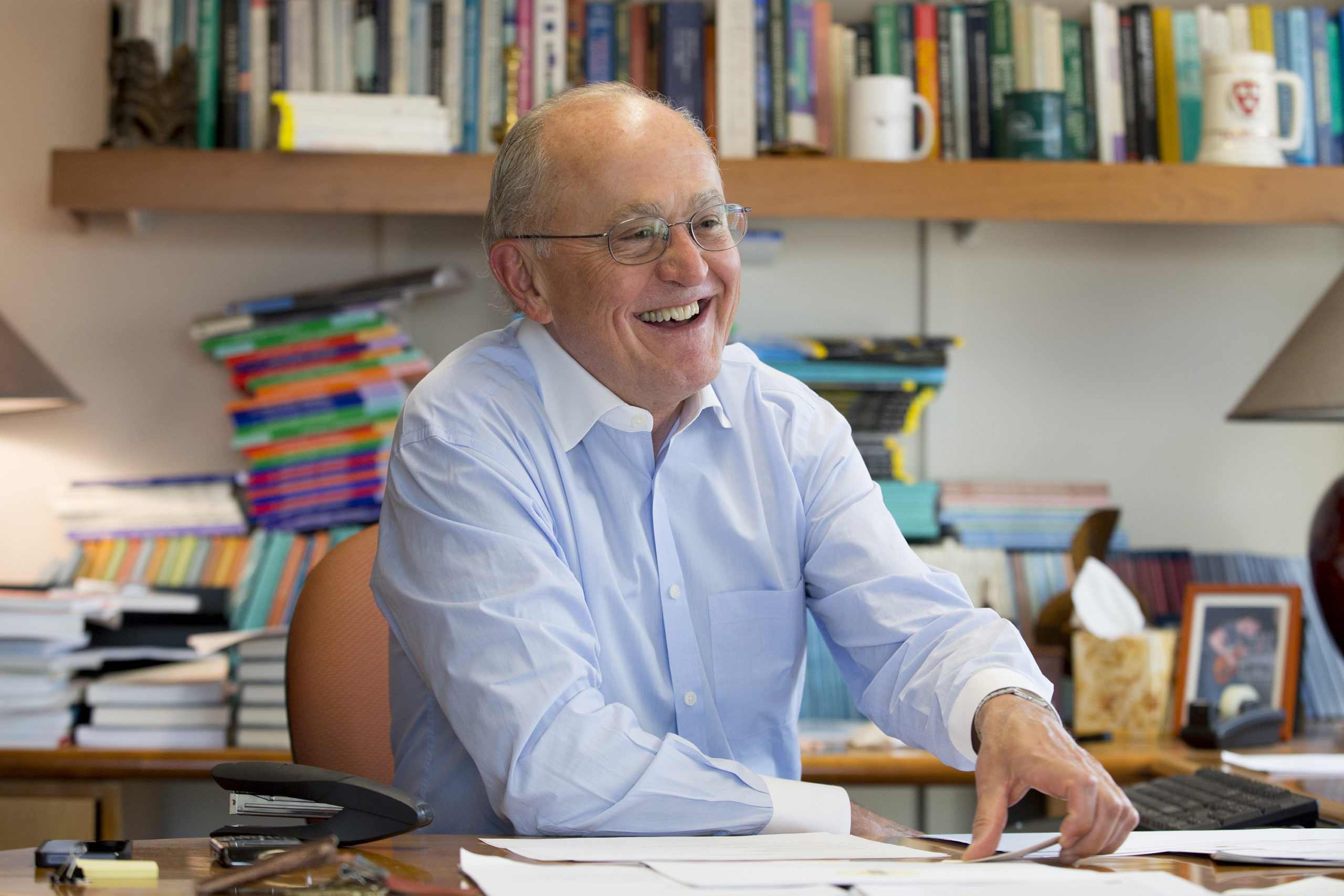
A post by Gerald L. Neuman describes him as a major figure in international relations and human rights. Ruggie was the Berthold Beitz Professor in Human Rights and International Affairs at Harvard’s Kennedy School of Government.  In the human rights field he is most famous for establishing a viable foundation for addressing the human rights responsibilities of business corporations, the UN Guiding Principles on Business and Human Rights (2011).  A brilliant strategist, Ruggie engaged in extensive consultation, study, analysis and persuasion to rescue the business-and-human-rights project from the polarized confrontation that had brought it to an impasse.  His invaluable book Just Business:  Multinational Corporations and Human Rights (2013) provides a model for the multi-dimensional negotiations that enable such achievements. John’s unique blend of kindness, rigour, insight, and attentive listening will be sorely missed.

Photo of John G. Ruggie sitting in his office.
John G. Ruggie is the Berthold Beitz Professor in Human Rights and International Affairs. Rose Lincoln/Harvard Staff Photographer

see also: https://humanrightsdefenders.blog/2014/07/11/more-on-un-process-toward-contentious-treaty-on-business-and-human-rights/

Remembering Suha Jarrar, young Palestinian Rights Defender

July 13, 2021

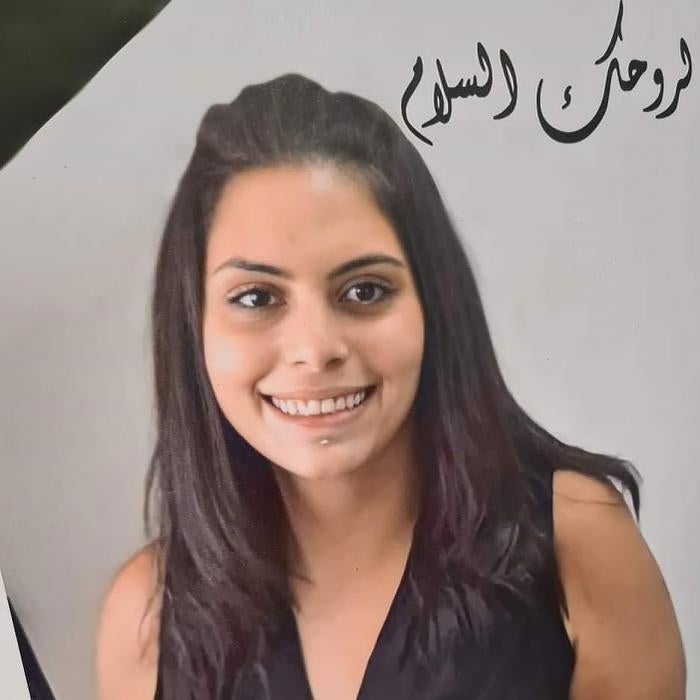
Omar Shakir wrote an obituary for Suha Jarrar, research and advocacy officer at Palestinian human rights organization al-Haq, who died at her home in Ramallah in the Israeli-occupied West Bank. Over her 31 years, Suha made an indelible impact on human rights advocacy in Palestine. He added that the Israeli Authorities should allow the detained mother, Parliamentarian Khalida Jarrar, to attend the funeral

A picture of Suha Jarrar and flowers prepared by the staff of the Palestinian human rights group al-Haq and displayed at a commemoration for Jarrar in Ramallah in the Israeli-occupied West Bank on July 12, 2021 
A picture of Suha Jarrar at a commemoration for Jarrar in Ramallah in the Israeli-occupied West Bank on July 12, 2021 © 2021 al-Haq

Suha conducted innovative research on the environmental impacts of the Israeli occupation, including a 2019 report arguing that discriminatory Israeli policies and practices impede the ability of Palestinians in the occupied West Bank to adapt to climate change. As point person on gender issues for al-Haq, she represented the organization when the United Nations Committee on the Elimination of Discrimination against Women deliberated on the situation of women in Palestine. She researched, advocated, and fearlessly pushed to mainstream within Palestinian civil society the full range of rights issues related to gender and sexuality, even where perilous and proscribed.

Suha died without her mother nearby, since Khalida Jarrar sits in an Israeli jail. For most of the last six years, Israeli authorities have detained Khalida, a 58-year-old elected member of the Palestine Legislative Council, over her political activism with the Popular Front for the Liberation of Palestine (PFLP). One of the more than 400 organizations that Israeli authorities have outlawed, the PFLP includes both a political party and an armed wing. The armed wing has attacked Israeli soldiers and civilians. Israeli authorities have never charged Khalida with involvement in armed activities.

Khalida spent long stretches, including between July 2017 and February 2019, in administrative detention without trial and charge. In March 2021, an Israeli military court sentenced her to two years in prison for “membership in an unlawful association,” based on a plea deal, with Israeli military authorities acknowledging that she “did not deal with the organizational or military aspects of the organization.” Detaining Khalida over her political activism violates her freedom of association, as Human Rights Watch has documented. The suspension of civil rights to the millions of Palestinians living in the Occupied Palestinian Territory is a central part of the Israeli government’s crimes against humanity of apartheid and persecution.

Suha’s infectious smile never faded, even though for much of her adult life, her mother was unjustly behind bars. Israeli authorities have reportedly denied a request for Khalida to attend Suha’s funeral. Having repeatedly detained Khalida in violation of her rights, Israeli authorities should at minimum allow her to say goodbye to her daughter.

https://www.hrw.org/news/2021/07/12/remembering-suha-jarrar-trailblazing-palestinian-rights-defender

Carmel Budiardjo: human rights defender from Indonesia dies

July 12, 2021

A leading human rights advocate and former political prisoner in Indonesia, Carmel Budiardjo, has died, aged 96.

Carmel Budiardjo played a leading role in reporting human rights violations in Indonesia, including in West Papua, Timor-Leste, and Aceh province. She had herself been jailed without trial in 1968 for three years under the government of General Suharto, while her Indonesian husband was jailed for twelve years. They had been caught up in an anti-communist purge led by Suharto, having been arrested in 1965 on charges of involvement in an attempted coup against his predecessor President Sukarno. See: https://www.trueheroesfilms.org/thedigest/laureates/3BDAA6C3-CFA6-444F-7F15-77D914ACFA8B

After being released she was deported to England, where in 1973 she founded TAPOL, which stands for ‘tahanan politik’ or ‘political prisoners’ in Bahasa Indonesian.

For decades, the NGO has campaigned for the release of poilitical prisoners in Indonesia, including many who have been incarcerated in Papua merely for exercising their basic rights such as to freedom of expression or assembly.

Over the next three decades, TAPOL’s work widened to also address broader wider issues of human and environmental rights, peace and democracy in Indonesia.

According to prominent journalist John Pilger, Budiardjo’s “tireless work saw the release of political prisoners in Indonesia and gave crucial support to the heroic (independence and human rights) struggles in East Timor and West Papua“.

Despite the brutal repression of human rights activism by Suharto’s New Order regime, Budiardjo and TAPOL built an extensive network and collaborated with brave human rights defenders and pro-democracy campaigners in Indonesia.

Budiardjo raised international attention towards the 2004 assasination of Indonesian human rights campaigner, Munir Said Thalib, after whose death a lethal dose of arsenic was identified in his body.

Around the same time she launched a campaign demanding an international embargo against the British government selling arms to Indonesia when Indonesian militrary forces had launched a major offensive to crush the Free Papua movement.

She remained an active campaigner well into her 90s, concerned with the plight of political prisoners in Papua and throughout the Indonesian republic

The author of several books, Carmel Budiardjo is remembered as an inspirational defender of human rights.

https://www.rnz.co.nz/international/pacific-news/446720/carmel-budiardjo-rights-defender-who-shone-a-light-on-papua

The intriguing case of Artur Ligęska who was in prison with Ahmed Mansoor in the UAE

June 9, 2021

Mirage news of 8 June 8, 2021 tells the sad story of Artur Ligęska, a 40-year-old Polish citizen who has spoken out widely about torture and ill-treatment in Emirati prisons. He was found dead in his apartment in Amsterdam, the Netherlands on May 26, 2021. The Gulf Centre for Human Rights and Human Rights Watch are deeply saddened by the news of his death and extend their sincere condolences to his friends and family.

Following his release from al-Sadr prison in May 2019, Artur dedicated himself to seeking justice for the abuse he and other prisoners suffered in prison, especially Ahmed Mansoor, an award-winning human rights defender who is on the advisory boards of GCHR and Human Rights Watch. [see: https://www.trueheroesfilms.org/thedigest/laureates/074ACCD4-A327-4A21-B056-440C4C378A1A]Artur was a uniquely valuable source of information on prison conditions in the United Arab Emirates (UAE).

He was an activist, author, and fitness expert and had recently celebrated the second anniversary of his acquittal on May 9. He had been sentenced to life in prison in the UAE following a deeply flawed trial on drug charges despite the absence of any evidence of drugs in his possession.

In a voice message to a friend at GCHR on May 9, Artur said, “My main wish for this new-life birthday is freedom for Ahmed Mansoor. I really do hope that this year will be special for him. I was thinking all day about him. I remember our last talk, and I was thinking about his wife and kids. …In the last days, Ahmed told me ‘Don’t forget about me.’

Artur said he was planning to organize a protest in The Hague soon to call for Ahmed’s release. Artur’s many actions to help Ahmed included advocacy with Polish and EU officials, providing human rights groups with information, taking part in human rights events, documentary films and TV appearances, and writing about Ahmed in his two books.

Artur first phoned GCHR staff in April 2019 to tell them that Ahmed was on a hunger strike and told them that he was worried that Ahmed might die because his health had deteriorated greatly. He told GCHR that Ahmed was being held in “terrible conditions” in a cell with no bed, no water, and no access to a shower. Ahmed today remains in a 2-by-2 meter isolation cell with no bed or mattress, serving a 10-year prison sentence for his human rights activities.

Despite suffering serious trauma after suffering abuse as a prisoner in the UAE, Artur again phoned GCHR to share the good news that human rights groups’ advocacy had been successful. Ahmed had ended his hunger strike after being allowed to phone his ill mother and to go outside to see the sun for the first time in two years. Artur sacrificed phone calls to his own family to make calls on behalf of Ahmed, referring to him as a brother.

Following his release, Artur was able to provide GCHR with more details about what he called the “medieval prison conditions” in al-Sadr prison, including periods when there was no running water despite extreme heat.

In a wide-ranging interview released by Human Rights Watch in January 2020, Artur described how he and Ahmed had become “prison mates in UAE hell.” Artur spent eight months in al-Sadr prison, in solitary confinement in a cell beside Ahmed’s. His friend suffered psychological torture from a near-total lack of human contact and access to the library, Artur said. See also: https://humanrightsdefenders.blog/2021/02/22/lawlor-urges-uae-to-free-ahmed-mansoor-mohamed-al-roken-and-other-hrds/

Artur told GCHR that after he left the UAE, he had undergone surgery and therapy to treat the damage done by the rape and psychological torture that he said he was subjected to but he was recovering well and taking classes to become a journalist and human rights professional.

On April 13, 17 European Parliament members wrote to the EU’s High Representative Josep Borrell to express their “deepest concern over the ongoing human rights violations in the United Arab Emirates, particularly with regards to the systematic crackdown on freedom of speech and expression and the subsequent retaliation received during detention.” The letter mentions Ahmed, and also refers to Artur, noting, “The use of torture has not been limited to Emirati nationals, as there have also been instances of EU citizens that have reported facing brutal torture at the hands of prison authorities.”

On October 22, 2020, Amnesty Westminster Bayswater and GCHR held an online event, The Prisoner and the Pen, featuring the writing, songs and poetry of prisoners who are human rights defenders and the work of writers and artists from the Middle East and North Africa region. The event, held on Ahmed ‘s birthday, included his poems. Artur read from his memoir, “The Sheikh’s Different Love,” published in 2019 in Polish. He has also written a second bestselling book in Poland, “Prison Diary.” His story is documented in a film by Hossam Meneai, Isolation Cell 32, which debuted at the Polish Film Festival in America in November. Artur also appears in an upcoming documentary about Ahmed Mansoor made by Manu Luksch.

Artur’s untimely and unexpected death comes as a great shock to those who knew him. The Dutch police are investigating the circumstances of his death.

https://www.miragenews.com/tribute-to-artur-ligeska-former-prisoner-in-uae-573024/

Human rights lawyer I.A. Rehman passes away in Lahore

April 12, 2021

In Dawn.com of 12 April, 2021 it is reported that Dawn columnist and human rights advocate I.A. Rehman passed away in Lahore on Monday at the age of 90.

See: https://www.trueheroesfilms.org/thedigest/laureates/F99462B1-2F8B-DFA2-A10E-7D0319CD0706

He was a founding member of the Pakistan-India People’s Forum for Peace and Democracy. As director of the Human Rights Commission of Pakistan (HRCP), he contributed to raising awareness about rights and fundamental freedoms. Rehman started working at a young age, according to human rights activist and former chairperson of the HRCP Zohra Yusuf. She said that Rehman worked as editor of the Pakistan Times before joining the HRCP in the early 90s, first as director and later as secretary general.

Human Rights Minister Shireen Mazari also expressed her condolences, saying Rehman was a “unique personality … who stood by & struggled steadfastly for what he believed in“.

He was an icon of integrity, standing steadfast for every single fundamental right, every single democratic value in the worst of times. Pakistan will not be the same without him,” PPP Senator Sherry Rehman said.

In a statement, the HRCP called Rehman a “titan of human rights” and said that his “conscience and compassion were unparalleled“. “Even after his retirement from the HRCP, he remained a constant source of wisdom and advice, and a mentor to many. We will carry his legacy forward as he would have wished us to” .

Journalist Syed Talat Hussain said Rehman was to journalism what “constitutions are to civilised countries”. “Every time we needed guidance we looked him up and he showed us the way. A beautiful soul, a great man,” he said.

Journalist Asad Hashim said Rehman was one of Pakistan’s “foremost human rights defenders and a key part of all of the incredible work that the HRCP does”. “A tremendous loss for all Pakistanis, not just progressives and those who work in the human rights space,” he said.

https://www.dawn.com/news/1617819

https://thewire.in/south-asia/pakistan-human-rights-advocate-i-a-rehman-passes-away