Sweden’s Ambassador to Cambodia Bjorn Haggmark (left) meets with Kem Sokha, leader of the dissolved main opposition CNRP, at Sokha’s home, in this photograph posted to Sokha’s Facebook page on May 19, 2020.
On 13 June 2020 this newspaper reported that Sweden said it would phase out bilateral development funding to Cambodia by the middle of next year in order to focus aid on promoting human rights, democracy and rule of law in the country following severe rights restrictions in recent years.
In a press statement on Friday, the Swedish Embassy in Phnom Penh said its government decided on Thursday to shift its funding away from bilateral aid to the Cambodian government and toward programs that aim to develop democracy in the Asia Pacific region, which would also aid Cambodia.
The statement said Sweden would still support civil society, human rights defenders and democracy advocates in Cambodia, though it did not clarify which organizations may qualify for assistance.
Courtesy of Reliefweb of 15 Jun 2020, here the introduction to the EU’s annual report on human rights
1. INTRODUCTION
The 2019 EU annual report on human rights and democracy in the world marks the final phase of implementation of the EU Action Plan on Human Rights and Democracy (2015-2019) 1 . It presents the progress achieved to date, by means of a comprehensive set of actions taken by the European External Action Service (EEAS), the European Commission and EU delegations and offices around the world. In 2019, the EU demonstrated once again that it is a reliable, cooperative and principled global player, working for a better world where all human rights are fully protected and respected.
However, in many parts of the world, challenges remain. Human rights defenders (HRDs), journalists and media workers are under threat and attack because of their daily work, civic and democratic space continues to be restricted, women’s and girls’ human rights are being violated, and vulnerable groups are often left behind and exposed to further discrimination and inequality.
Against this background, the international community celebrated in 2019 the 10th anniversary of the Charter of Fundamental Rights, the 30th anniversary of the UN Convention on the Rights of the Child, the 70th anniversary of the Council of Europe and the 100th anniversary of the International Labour Organisation. These anniversaries gave great impetus to the EU’s continuous efforts to translate its legal and policy frameworks on human rights into reality. The EU worked with all partners to turn challenges into opportunities for all human beings, at any time, in any place.
The 21st EU-NGO Forum on Human Rights, held in Brussels on 3-4 December, put the human rights and environment nexus in the spotlight as an emerging challenge and gained unprecedented traction. On 9 December 2019, the Foreign Affairs Council agreed on the political appropriateness of establishing an EU global human rights sanctions regime to tackle serious human rights violations worldwide committed by state and non-state actors.
In 2019, the first ever EU guidelines focusing on economic, social and cultural rights were adopted: the EU Human Rights Guidelines on safe drinking water and sanitation. These guidelines opened new horizons in promoting the indivisibility of civil, political, economic, social and cultural rights. The Council also adopted Guidelines on non-discrimination in external action and revised Guidelines on EU policy towards third countries on torture and other cruel, inhuman or degrading treatment or punishment. Moreover, the Council conclusions on Democracy adopted in October provided a comprehensive framework to advance democratic governance.
This report focuses on thematic issues, using a number of country-specific examples, and aims to be a practical tool for all stakeholders. Reporting on human rights and democracy at country level can be found on the EEAS2 and EU delegations’ webpages.
Chau Van Kham’s family has lost contact with him for nearly four months and fear the Australian government has ‘forgotten about him’ writes the Guardian on 6 June 2020.
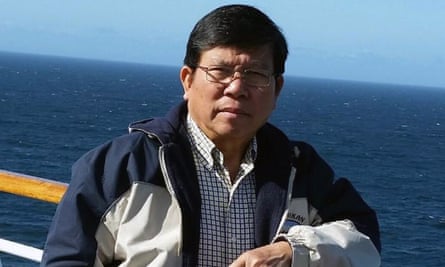
Vietnamese-born Australian, Chau Van Kham, was arrested in January 2019 and sentenced to 12 years imprisonment on ‘financing terrorism’ charges. Photograph: HRW/HANDOUT/EPA
Ben Doherty reports that the 70-year-old Australian Vietnamese-born Chau has “disappeared” inside Vietnam’s prison system and that no one from his family or the Australian government has been allowed to see or speak with him for nearly four months. Human rights advocates, lawyers and Chau Van Kham’s family said the charges against him are baseless and politically motivated, his single-day multiple-defendant trial was grossly unfair, and his failing health means his 12-year prison sentence is “effectively a death sentence”.
Chau’s son Dennis told the Guardian his family feared his failing health will be exacerbated by his isolation. Chau’s sister, who lives in Vietnam, had previously been allowed to visit once a month to give her brother money, medicine and letters from home. But she has been refused access and phone calls to him since 10 February. Consular visits scheduled for February, March, April and May were all cancelled out of concerns over the spread of Covid-19. Permission for a visit in June is pending.
“He has literally disappeared,” Australian lawyer Dan Phuong Nguyen, who is acting pro bono for the Chau family, told the Guardian.
[Chau, an Australian citizen, was born in Vietnam and served in the army of the Republic of Vietnam before 1975. After the war, he was sent to a re-education camp for three years before he fled Vietnam by boat, arriving in Australia in 1983. In Sydney, he worked as a baker for decades, rising before dawn to work at a modest suburban bakery. In 2010, he became a member of the Viet Tan pro-democracy organisation, and became a key Australian organiser of pro-reform rallies and an outspoken advocate for democratisation in Vietnam. The United Nations describes Viet Tan as “a peaceful organisation advocating for democratic reform”, but it was formally proscribed as a terrorist organisation by the Vietnamese government in 2016, which said it was “a reactionary and terrorist organisation, always silently carrying out activities against Vietnam.]
Chau sought to return to Vietnam in 2019 to meet fellow pro-democracy advocates but was refused a visa. He crossed into Vietnam via a land border with Cambodia in January, carrying a false identity document. He was arrested after meeting a democracy activist who, it is believed, was under surveillance, along with Vietnamese nationals Nguyen Van Vien and Tran Van Quyen, who were sentenced to 11 and 10 years prison respectively.
Chau was convicted and sentenced at his first appearance in the people’s court of Ho Chi Minh City after more than 10 months in detention.
The single-day judge-only trial, held simultaneously with four other people, saw him tried and convicted on charges of “financing terrorism”, and sentenced to 12 years in jail, all within four hours.
The court was effectively closed – open only for approved people, his family was excluded – for the entirety of the trial. Viet Tan condemned Chau’s hearing as a “sham trial” and said it would “continue to support human rights defenders on the ground”. Chau’s appeal was dismissed in March.
Dennis Chau told a human rights summit in Geneva this year: “With a 12-year sentence, [my father will] be 82 when he is released … I don’t believe I’ll ever see him alive, a free man. It’s effectively a death sentence.”
Maria Arena and Pier Antonio Panzeri – a MEP and former MEP – write in an opinion piece in the EU Observer of 13 April 2020 that “Covid-19 is a gift for authoritarians and dictators“.
…..However, even in this emergency, it is necessary to maintain a very high level of attention to what is happening to democracy in this historical phase. The fight against the pandemic cannot be used as a pretext for a global attack on human rights and democracy, as is unfortunately happening in several parts of the world. We are not ‘diverting attention’. Quite the opposite. While we are doing everything we can to stop the contagion and start thinking about how to get out of the pandemic socially and economically, we also need to assess the risks for democracy and human rights at a global scale. It is essential to take care ‘now’ also of democracy and rights, because ‘later’ there is a real risk of regression, and without them our future can only be darker.
Second, many countries, on the pretext of Covid-19, are quietly taking advantage of the lack of world public opinion reaction to restrict the space and quality of democracy and eliminate opponents and human rights defenders.….
Finally, refugees in camps, detainees in every country in the world, homeless people, who have the right to be protected and safeguarded as far as possible against the epidemic, must not be forgotten in the emergency. In this context, Europe cannot waive its leading role in the protection of human rights.
We therefore welcome the joint proposal presented last Wednesday, 25 March, by the EU High Representative for Foreign Affairs and the European Commission to the European Council to adopt a decision on the “EU Plan on Human Rights and Democracy 2020-2024“. This includes, inter alia, strengthening the EU’s leadership in promoting and protecting human rights and democracy around the world, and identifying priorities for action, maximising the EU’s role on the world stage by expanding the “human rights toolbox”. [see: https://humanrightsdefenders.blog/2020/03/27/new-eu-action-plan-for-human-rights-and-democracy-2020-2024/]
An important move was the proposal that issues relating to the EU’s human rights policy in the world should no longer be subject to unanimity but to qualified majority voting, in order to avoid vetoes and denials by countries now in dangerous drift.
Since the adoption of the EU strategic framework on human rights and democracy in 2012, the EU has adopted two EU Action Plans (2012-2014 and 2015-2019). The new proposal follows up on this, setting out the priorities for the period of 2020-2024.
This Action Plan identifies priorities around five mutually reinforcing lines of action:
Protecting and empowering individuals;
Building resilient, inclusive and democratic societies;
Promoting a global system for human rights and democracy;
New technologies: harnessing opportunities and addressing challenges;
Delivering by working together.
What is new in this Action Plan?
The new Action Plan builds on the previous action plans and continues to focus on some long-standing priorities, such as supporting human rights defenders and the fight against death penalty. More importance is given to empower people and defeat discrimination on all grounds. It also addresses more prominently the accountability gap, the erosion of rule of law and access to justice. This Action Plan takes account of today’s world new challenges and therefore focuses in particular on:
environmental challenges and climate change;
leveraging the benefits of digital technologies and minimising the risks of misuse in line with EU’s commitment to lead the transition to a new digital world;
stepping up economic, social and cultural rights;
more emphasis on democracy, including on the misuse of online technologies and shrinking civic and political space;
a stronger focus on human rights defenders;
strategic communication and public diplomacy.
How will the Action Plan be implemented?
The objectives under the Action Plan will be implemented at country, regional and multilateral level, taking account of local circumstances and specificities. The EU will leverage the broad range of policies, tools and political and financial instruments at its disposal to implement it, such as:
political, human rights and sectoral policy dialogues;
EU trade policies, including the EU’s generalised scheme of preferences;
thematic and geographical instruments under the 2021-2027 multiannual financial framework;
actions in multilateral and regional human rights fora;
communication activities and awareness‑raising campaigns;
dialogue with civil society, human rights organisations and the business sector.
The EU Action Plan provides guidance to over 140 EU Delegations and Offices as well as Member States embassies for targeted initiatives and actions at country level all over the world.
How will the Commission and the High Representative follow up on and monitor the implementation of this Action Plan?
Actions apply to all regions in the world taking into consideration local needs and specificities. The EU’s 142 Delegations and Offices will take a lead in reflecting the priority actions in initiatives at the country level including through the adoption of tailored-made strategies at a local level. The EU will also engage with different stakeholders on the overall implementation, and organise an annual meeting with civil society. The public EU annual report on Human rights and democracy in the worldis another effective tool to monitor the progress made in a transparent manner. A mid-term review of the implementation is foreseen.
What has the EU achieved on human rights and democracy worldwide so far?
Since 2015, more than 30 000 human rights defenders were protected by the EU via the dedicated mechanism ProtectDefenders.eu. In 2019 alone, the EU raised Human Rights Defenders cases in dialogues and consultations with over 40 countries.
The EU advocated for abolition of death penalty.
Between January 2015 and October 2019, the EU supported over 3 350 actions relevant to children’s rights in 148 third countries and territories. For example, under the global programme on Female Genital Mutilation (€11 million), 16 countries adopted action plans and 12 established national budget lines to put an end to Female Genital Mutilation.
In 2014-2019, the EU supported democracy in more than 70 partner countries with €400 million aiming at, for instance, contributing to the organisation of elections and supporting oversight bodies, independent media, parliaments and political parties to play their essential role in democratic societies. 98 EU Election Observation Missionswere deployed worldwide.
The General System of Preference contributed to the implementation of human rights and labour Conventions, including through monitoring missions in 11 countries in the last year. For example, this contributed to a reduction of child labour to 1% in Sri Lanka through pioneering ‘Child Labour Free Zones’.
Joint Proposal
…Article 22 of the Treaty on the European Union offers the European Council the possibility to adopt a unanimous Decision setting out the EU’s strategic interests and objectives in specific areas of the Common Foreign and Security Policy (CFSP). Once the European Council sets the strategic objectives, the Council would then be able to adopt by qualified majority (QMV) decisions implementing the European Council’s strategic decisions.
Why is this proposed now? In 2018, the Commission has proposed to move from unanimity to QMV in certain areas of the CFSP. The Von Der Leyen Commission recognises that to be a global leader, the Union needs to take decisions in a faster and more effective way and overcome unanimity constraints that hamper our foreign policy, as set out in the High Representative/Vice-President’s mission letter. The Joint Proposal adopted by the College today offers such a possibility, by proposing to take decision related to the implementation of the Action Plan by QMV.
Belarussian Human Rights CentreViasna(‘Spring’) has received the 2020 Democracy Defender Award of the OSCE. The award honours a person or group for exceptional contributions to the promotion of democracy and the defense of human rights in the spirit of Helsinki Final Act principles and other OSCE commitments. It was established in 2016 to recognize the contribution civil society makes to defending and promoting democracy. Earlier, the award was received by the Russian movement “Golos”, the Serbian non-governmental organization CRTA, and the Ukrainian activist Oleksandra Matviychuk. “Human Rights Centre Viasna receives the award this year for its mission of defending human rights in Belarus and building a just, free and democratic society for all its citizens,” the OSCE statement reads.
According to Viasna Chairman Ales Bialiatski[https://humanrightsdefenders.blog/2014/06/22/good-news-ales-bialiatski-belarus-best-known-human-rights-defender-freed-from-prison/], the award is a clear signal to the Belarusian authorities as an incentive to serious reforms in the field of human rights and a substantial improvement of the situation with the rights and freedoms of Belarusian citizens. “..The repressions against the Belarusian human rights defenders will not stop our work in support of democracy and human rights in our country. We are grateful to the OSCE member countries that nominated HRC Viasna. We believe that the courageous and persistent efforts by human rights defenders in the OSCE region, in spite of the obstacles, will help make our world a better place,” he stressed.
Active from 1996, the organisation was founded on the principle of respect for human rights, and its main goal is to contribute to the development of civil society in Belarus. HRC Viasna conducts research on the state of civil society and rule of law in Belarus, with the aim of improving implementation of human rights obligations and commitments, the OSCE notes.
AFP reported on 23 February 2020 that Thich Quang Do, a dissident Buddhist monk who has effectively been under house arrest since 2003 has died at the age of 93. Head of the banned Unified Buddhist Church of Vietnam, the vocal patriarch was born in 1928 in Thai Binh province and spent most of his life advocating for religious freedom and human rights in communist-run Vietnam. His staunch activism landed him under what was effectively house arrest in 2003 in Ho Chi Minh City, where he was under constant surveillance. Do died on Saturday night 22 February at Tu Hieu pagoda, UBCV announced on Sunday morning. According to his will signed on April 2019, Do requested a “simple funeral, not more than three days.” “After the cremation, my ashes will be scattered at sea,” said the statement quoting his will.
Do has long been a thorn on the side for communist-run Vietnam, and he has been nominated multiple times for the Nobel Peace Prize for his vocal advocacy for democracy. In 2001, he wrote an “Appeal for Democracy” and also called on northern and southern dissidents to drop their cultural differences and unite in 2005. He received Norway’s Rafto human rights award the following year for “his personal courage and perseverance through three decades of peaceful opposition against the communist regime in Vietnam.” He also won a Hellmann/Hammett grant in 2001 and the Homo Homini award in 2002.
The UBVC has been banned since the early 1980s, when it refused to join the state-sanctioned Vietnam Buddhist Church.
Cuban human rights defenders who participated to the project of presenting a report on EU’s agreement with Cuba. [Civil Rights Defenders]
The EU needs to change strategy if it wishes to stand for democracy in Cuba by opening up to independent civil society, write Anders L. Petersson and Erik Jennische (of the NGO Civil Rights Defenders) on 4 February 2020. On Saturday 1 February. five Cuban democracy activists were stopped at the airport in Havana as they were on their way to Brussels to speak at the European Parliament today. They were banned from leaving the country by the Cuban authorities. Instead, the seminar at the European Parliament was held with Cuban activists based outside the country, and five empty chairs – a vivid reminder of the current strategy’s shortcomings. [Instituto Patmos has shown that at least 226 activists were banned from travelling abroad during 2019]. The five democracy activists were supposed to present their ideas on what the EU could do to promote respect for human rights and democratisation in the country. Their proposals form part of a report by Civil Rights Defenders – a total 30 letters from Cuban democracy activists and organisations – as a contribution to the EU’s policy development.
Although the EU and Cuba in their Agreement recall “their commitment to the recognised principles of democracy”, Civil Rights Defenders regrets that the EU remained silent on the sham elections and the transfer of power that followed. Apparently, it was all acceptable under the new Agreement…..When Federica Mogherini visited Cuba for the last time as High Representative for Foreign Affairs in September 2019, she rather perplexingly concluded that “after completing its generational transition and adopting a new Constitution, Cuba now faces major challenges in carrying out its economic modernization”.
….Reflecting on the stories of harassed and imprisoned activists in Cuba, we cannot afford to make such surrender again. The EU needs to change strategy if it wishes to stand for democracy in Cuba. It needs to build a formal and open dialogue with Cuba’s independent civil society. Since the negotiations began on the Agreement in the spring of 2014, the EU has not invited civil society to a single formal discussion on the content of the Agreement or its implementation. When the EU and Cuba held its human rights dialogue in October 2019, the Cuban government took the liberty to decide which European and Cuban organisations could participate. The papers in the report of CRD hold a great number of proposals and ideas – the two core messages being:
That both European and Cuban civil societies need to be recognised as formal partners to the EU in its relations to Cuba.
That the EU needs to speak out on the absence of democracy in Cuba and denounce all human rights violations.
The EU can never contribute to positive change in Cuba via a dialogue with the Cuban government. The only way is to give legitimacy and support to the civil society that openly and peacefully supports democratisation. It is time for the EU to include civil society in its relations with Cuba.
One of the award-winning Cuban dissident who was detained this week announced that he has been released without charge but barred from a planned trip to Europe for a meeting on human rights. Guillermo Farinas, a 58-year-old psychologist, is a leading voice in the opposition to Cuba’s communist government and won the European Parliament’s Sakharov human rights prize in 2010. Farinas was arrested Tuesday in the central city of Santa Clara, where he lives, as he planned to go to the Spanish Embassy in Havana to pick up travel documents. He had been due to take part in a meeting of the human rights commission of the European Parliament. “The main reason for my arrest was to keep me from traveling to Europe,” Farinas told AFP.
The Guardian, Hong Kong, reported on 28 September 2019 that human rights defenders are calling for an investigation into the death of the Chinese democracy activist who was arrested for holding up a placard calling for Chinese President Xi Jinping to step down. Wang Meiyu, 38, was detained in July after he stood outside the Hunan provincial police department holding a sign that called on Xi and Chinese Premier Li Keqiang to resign and implement universal suffrage in China. He was later charged with “picking quarrels and provoking trouble,” a vague offense often given to dissidents.
According to Wang’s mother and lawyer, he died on Monday. Wang’s wife, Cao Shuxia, received a call from police notifying her that her husband had died at a military hospital in the city of Hengyang, where he had been held. The police officer on the telephone did not offer any explanation of the cause of death. According to Minsheng Guancha, a Chinese human rights group, Cao was later able to see Wang’s body and saw that he was bleeding from his eyes, mouth, ears and nose, and that there were bruises on his face. According to Radio Free Asia, Cao said police pressured her to accept their statement that Wang’s death had been an accident, but she refused. “The Chinese government must investigate allegations of torture and the death in detention of human rights activist Wang Meiyu and hold the perpetrators of torture and extrajudicial killing criminally accountable,” Chinese Human Rights Defenders (CHRD) said in a statement.
Since Monday, Wang’s family has been placed under house arrest, CHRD said. He has two young children. Others connected to his case have also come under pressure. Late on Wednesday, six armed police detained Xie Yang, a rights lawyer, and Chen Yanhui, an activist, who had met at a hotel to discuss Wang’s case. They were released on Thursday. See also: https://humanrightsdefenders.blog/2017/12/30/rsdl-chinas-legalization-of-disappearances/
Wang, who began his work as an activist when his home was forcibly demolished, had been detained and claimed to have suffered torture before. After he held up the placard calling for Xi’s resignation, he wrote online of how police stormed into his home, ordering him to write a confession letter and a statement promising he would stop. “These idiots. They can’t understand that even after these years of persecution, including being deprived of water for three days or suffering two hours of electrical needles that caused me to vomit blood, I won’t surrender,” he wrote.
A piece by Taylor McNeil in TuftsNow of 19 April 2019 is about Hurst Hannumand his latest book Rescuing Human Rights: A Radically Moderate Approach (Cambridge University Press). Disclaimer: he and I are old acquaintances but have not seen each other for decades. I agree with much of what he says.
Hannum, a Fletcher School professor of international law, argues for bringing human rights back to the center of law and politics, while at the same time trying to define their role more carefully. Too often, he says, human rights are linked to just about everything, from punishing international crimes to seeking redress for nefarious corporate behavior and environmental degradation. “Human rights have come to mean almost anything to anyone,” Hannum said. “If something means everything, it means nothing. What we risk losing is a much narrower but more universal approach, focusing on the basic rights—civil, political, economic, social, and cultural—that government should be responsible for.”
Since the United Nations Universal Declaration of Human Rights was set forth as “a common standard of achievement” every country in the world has ratified at least one human rights treaty, and most have ratified a half-dozen or more. Hannum is aware that implementation leaves much to be desired, but said that “continued emphasis on ensuring those rights that a country has already recognized is most likely to be the best way forward.”
….“While the contemporary world may seem bleak, apartheid is gone, authoritarian regimes have largely disappeared from eastern Europe and Latin America, and rights are more widely respected in countries as different as South Korea, Nepal, Tunisia, Taiwan, and Mongolia,” he said. “Many of these changes can be attributed at least in part to greater awareness of and demands for human rights, even though progress is often slow and difficult.” ..
Beginning with the Carter administration in the late 1970s, human rights became a focal point for U.S. foreign policy, “although they were never the only or most important factor in determining policy,” Hannum said. Since the Clinton presidency, the U.S. has focused increasingly on promoting democracy, not human rights per se. Hannum thinks that’s a mistake. “Obviously, democracy and human rights are related—all of the things that go into making a democracy are human rights,” he said. “But since the end of the Cold War, we’ve been pushing democracy as the solution to all problems, and it turns out that it’s not.”
Unrealistic expectations of what democracy or a free-market economy can achieve “may help to explain the recent success of nationalists and populists, who often define democracy simply as elections, ignoring the essential human rights components of freedom of assembly, association, and expression that give such elections legitimacy,” Hannum said.
He also takes aim at human rights advocates who claim more for human rights than they can deliver—especially those who “confuse human rights with outsiders intervening in all sorts of way to fix other countries,” he said. “Human rights are about persuading governments to institute reforms within their own countries, not about imposing them from the outside.”
While he fully understands the desire to expand human rights efforts to deal more directly with contemporary problems, “we can achieve more if the goals are modest,” Hannum said. Of course, he knows that “Let’s try to achieve moderate success!” is not going to be a popular rallying cry, but he argues that such an approach seems radical these days “only because it seeks to retain the consensus and universality on which human rights are based.”