Posts Tagged ‘Covid-19’

UN Special procedures discuss human rights and Covid-19

May 2, 2020

On 30 April 2020 the UN Human Rights Council held a virtual informal conversation on the human rights implications of the COVID-19 crisis with representatives of the Coordination Committee of Special Procedures mandate holders.

The special procedures of the Human Rights Council are independent human rights experts with the mandates to report and advise on human rights from a thematic or country-specific perspective. The Coordination Committee, composed of six Special Procedures mandate holders, aims to enhance coordination among mandate holders and to act as a bridge between them, the Office of the High Commissioner for Human Rights, the broader United Nations human rights framework and civil society.

….Anita Ramasastry, Chairperson of the Coordination Committee of Special Procedures, noted that the Coordination Committee had helped create a dedicated COVID-19 web page, which it hoped would become over time a living repository of guidance and advice to States on good practice. The Special Procedures mandate holders had risen to the challenge and through their powerful statements, actions and innovations promoted a human rights-based approach to addressing this crisis, said Ms. Ramasastry. They attempted to help States to ensure that policies and decisions taken during the crisis were consistent with human rights.

Dainius Pûras, Special Rapporteur on the right to health said advances in biomedical sciences were very important to realize the right to health during this pandemic, but equally important were human rights. The way to the effective management of the pandemic was the application of the principles of non-discrimination, participation, empowerment and accountability to all policies. He also stressed the importance of access to reliable and accurate information and the protection of the right to privacy, including in the use of technologies to track the spread of the virus.

In the ensuing discussion, speakers welcomed the guidance provided by the Office of the High Commissioner for Human Rights to ensure that States’ responses complied with human rights obligations. They asked what steps had been taken to ensure the lifting of unilateral and illegal coercive measures, which violated human rights. Any measures to counter the pandemic should be necessary and proportionate, pursue legitimate purposes, and comply with international norms. Respect for human rights was vital, not only for the emergency response phase, but also during the post-crisis recovery. Speakers noted that emergency powers had been used to enact repressive measures that may have the effect of silencing dissent. They stressed the importance of upholding economic, social and cultural rights, including issues related to access to housing and food. It was hard to find a more striking example of the interconnectedness of rights than this crisis.

In conclusion, Mr. Pûras said lessons still had to be drawn from this pandemic. However, lots of lessons learned from previous public health crises could be applied today to address the current crisis. The AIDS epidemic, for instance, had shown that a human rights-based approach was most effective. It should also be noted that the current crisis had revealed the weakness of healthcare systems, including in some developed countries, which would have to be addressed.

The webcast of this informal virtual conversation is available on demand on UN Web TV, while summaries of the discussion in English and French can be found on the United Nations Office at Geneva News and Media page.

https://reliefweb.int/report/world/human-rights-council-discusses-human-rights-implications-covid-19-crisis-its-special

COVID and Human Rights: Shifting Priorities also for Companies

April 29, 2020

Foley Hoag LLP - Corporate Social Responsibility

Isa Mirza for Foley Hoag LLP wrote an interesting overview piece with focus on how Corporate Social Responsibility fits in:

The COVID-19 pandemic is one of the most significant global public health crises since the Influenza Pandemic of 1918-20. The spread of the Coronavirus through every continent and major metropolis has led to unprecedented policy responses from governments both large and small. As a result, the human rights community is more closely scrutinizing the impact of these responses, while many company operations are more likely to overlap with the pandemic and evolving government policy in some way. The corollary of this dynamic could be considerable, not just in the near term, but for how rights are to be protected and respected in the future.

Governments Around the World Threaten Rights under Cover of COVID-19

………

Corporate Responses to COVID-19

Companies have also made changes to their operations and policies in response to the pandemic. Many businesses have waived fees and made it easier to obtain a refund, instituted emergency relief and exemptions for borrowers, revised their rules to make them more transparent and flexible, made multi-million dollar donations to support public health efforts, and redirected or repurposed some of their products to help boost the supply of medical equipment.

NGOs and watchdog groups, however, are increasingly concerned about possible situations where companies could be knowingly or inadvertently violating rights as they attempt to sharply attune their operations to COVID-19 and attendant government policies.

Some companies that provide teleconferencing services – a lifeline for families and business during the crisis – have been accused of instituting weak privacy protections and misleading users regarding the quality of their encryption technologies. Concern has also been raised that some social media platforms have been slow in removing hate speech and discriminatory content against groups stereotyped as vectors of the Coronavirus. Under certain conditions, the latter could lead to physical violence against members of populations most vulnerable during the crisis, such as ethnic and religious minorities, healthcare workers in close contact with COVID-19 patients, and individuals under quarantine order.

Corporate Responsibility and How Companies Can Respect Rights During COVID-19

Although companies cannot directly change government policies or be expected to contravene national laws, the current crisis does compel businesses to consider if their operations may be contributing to harmful impacts caused by states and how then they could be meaningfully addressed.

There are well-established international instruments, principles, and best practices that companies can follow when considering how best to respect human rights in the context of COVID-19.

The United Nations Guiding Principles on Business and Human Rights (“UNGPs”) set global human rights expectations for companies in the 21st Century. The UNGPs are designed to encompass the full ecosystem in which business enterprises conduct commercial transactions and maintain supply chains. The UNGPs are premised upon three pillars. The first pillar is that governments have a duty to protect human rights. The second pillar is that companies have a responsibility to respect human rights. The third pillar is that both governments and companies must provide a remedy when human rights are violated.

The corporate responsibility to respect human rights is primarily a responsibility to do no harm. This responsibility can be met in two ways. First, a company should avoid causing or contributing to adverse human rights impacts through its own commercial activities, and should address such impacts when they occur. Second, a company should seek to prevent or mitigate adverse human rights impacts to which it is directly linked. A business is deemed to be directly linked to a human rights impact when it has ties through its value chain to an entity that has caused an adverse human rights impact.

Companies can largely meet their responsibility to do no harm by reviewing their operations and supply chains to identify human rights risks; conducting human rights due diligence to prevent adverse human rights impacts arising from commercial activities; and mitigating, remedying, or otherwise addressing adverse human rights impacts that nonetheless occur.

Social media platforms, internet providers, teleconference service companies, and other ICT-based enterprises should also consider the standards set forth in the Principles on Freedom of Expression and Privacy of the Global Network Initiative (“GNI Principles”). Premised on international human rights norms, the GNI Principles provide member companies with non-binding standards and guidance for implementing them. Importantly, the GNI Principles state that member companies bear an express responsibility to respect and promote the freedom of expression and privacy rights of their users. In addition, GNI member companies should be able to demonstrate their efforts in this regard. ICT companies that are not GNI members would be best served by seeking to emulate these standards.

Companies can further fulfill their human rights responsibilities by publicly disclosing the steps they are taking to address challenges identified in their due diligence.

In addition to being integral aspects of the UNGPs, due diligence and public disclosure are salient precepts in other human rights standards. For example, The Voluntary Principles on Security and Human Rights – the only set of standards providing detailed guidance to natural resource companies regarding how to respect human rights in the provision of security at their operations – call on extractives companies to carry out regular due diligence on the potential human rights risks associated with the protection of natural resource assets. In addition, companies that implement the Voluntary Principles are encouraged, where possible, to publically disclose their efforts to address human rights issues that have been found through the due diligence process. Many governments are now also expecting companies to conduct some form of due diligence and commit to public transparency in order to enter into government contracts and partnerships.

In countries and regions where pandemic prevention policies have contributed to credible reports of human rights abuses, companies should be circumspect to ensure their local operations and supply chains are not contributing to those harms. When operational risks related to COVID-19 are determined to be likely, a company should be prepared to conduct targeted due diligence and a review of relevant policies. This could be complemented by public reporting on specific actions the company has taken to acknowledge and remediate COVID-related human rights challenges.

In addition, companies should consider taking the further step of discussing their due diligence efforts and findings with governments, human rights organizations, representatives of workers and vulnerable groups, and – where beneficial to public health planning – with the medical community.

The Coronavirus pandemic has stretched the resources of every institution across the globe. Governments bear primary responsibility for protecting human rights during the crisis, but their responses have also led to abuses. Although it may seem daunting for companies to factor their potential role in such abuses into their existing operations and policies, doing so will place them at the cutting-edge of best practice. It will also strengthen their capacity to adapt and respect rights in the face of future global crises.

See also: https://humanrightsdefenders.blog/2020/04/09/policy-response-from-human-rights-ngos-to-covid-19-the-business-and-human-rights-resource-centre/

https://www.jdsupra.com/legalnews/covid-19-and-global-human-rights-93783/

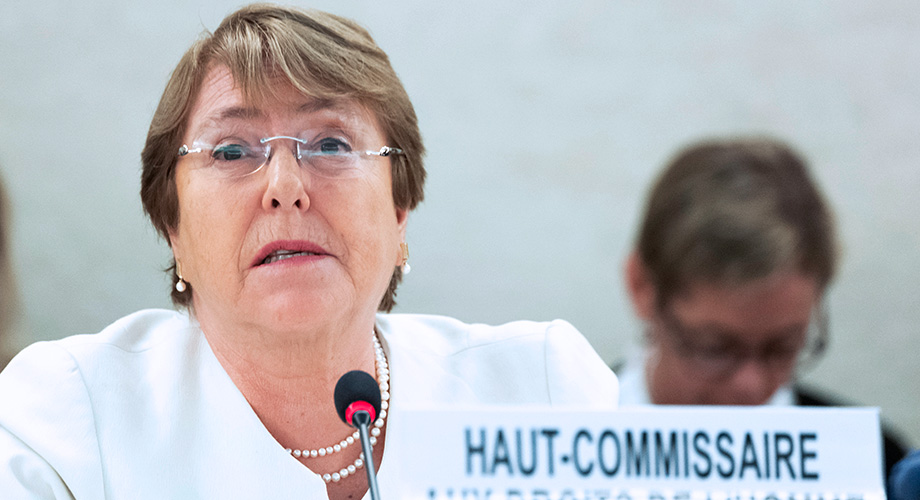
UN High Commissioner for Human Rights Bachelet calls for restraint in governments’ COVID emergency powers

April 29, 2020

UN rights chief calls for restraint in governments’ COVID-19 emergency powers

photo credit: UN

During the ongoing pandemic, the exercise of emergency powers has been used as an excuse for unlawful detention, restriction of movement and suppression of press freedoms, according to Bachelet. The International Press Institute (IPI), a press freedoms watchdog, reports that many nations have silenced journalists under the pretext of stifling “fake news.” The IPI maintains a list of international media freedom violations occurring as a result of emergency powers abuses.

In Cambodia the application of emergency powers in response to the COVID-19 pandemic have resulted in the unlawful detention of those who disobey the emergency measures for up to 10 years in a move Amnesty International called “a naked power grab which seeks to manipulate the COVID-19 crisis in order to severely undercut human rights.” Further human rights abuses are reported from El Salvador, where grocery shoppers were unlawfully detained when President Nayib Bukele defied a Supreme Court order in their defense. In Central Asia, Amnesty International reports massive expansion of police powers through emergency powers granted during the pandemic.

To guide responsible enacting of emergency powers, the UN has released a new set of policy guidelines that advise states to follow principles such as legality, proportionality and non-discrimination during “humane application of emergency powers,” pursuant to the International Covenant on Human Rights. See also: https://humanrightsdefenders.blog/2020/04/14/un-guidelines-for-use-of-emergency-powers-in-time-of-covid-19-pandemic/.

Given the exceptional nature of the crisis, it is clear States need additional powers to cope,” Bachelet’s statement concluded. “However, if the rule of law is not upheld, then the public health emergency risks becoming a human rights disaster, with negative effects that will long outlast the pandemic itself.”


Martin Ennals Award laureates rally to demand freedom for their imprisoned fellow award-winners

April 24, 2020

On 21 April 2020, – for the first time – a group of 14 former winners of the Martin Ennals Award for Human Rights Defenders rallied around their follow laureates lingering in jail.  They signed a joint letter to the Permanent Representatives to the UN of Bahrain, China, Iran and the United Arab Emirates:

Your Excellencies:

As the COVID-19 pandemic spreads, we the undersigned, winners of the Martin Ennals Award for Human Rights Defenders, are calling for the release of all imprisoned human rights defenders around the world, who are at tremendous risk due to the virus. We add our voices to the calls of international leaders, of hundreds of civil society organizations and thousands of mobilized citizens, to grant clemency towards vulnerable prisoners during this health crisis, including our fellow award-winners who are imprisoned for their defense of human rights in four countries:

…..

Today we are deeply concerned about the continued imprisonment of defenders across the world, despite their exposure to and high risk of contracting COVID-19. Numerous health authorities and human rights organisations have denounced the risks of COVID-19 for prisoners held in crowded conditions. …[ See e.g. also: https://humanrightsdefenders.blog/2020/04/23/civicus-and-600-ngos-dont-violate-human-rights-while-responding-to-covid-19/; https://humanrightsdefenders.blog/2020/04/14/un-guidelines-for-use-of-emergency-powers-in-time-of-covid-19-pandemic/%5D

Despite the tragedy of lives lost and significant economic damage, we believe this crisis will also present opportunities for a better world. Now is the time to remedy the unjust detention of these individuals. By releasing our brothers and sisters – Ilham, Ahmed, Nabeel, Abdullah, and Nasrin – the leaders of your nations would demonstrate their capacity for mercy and responsibility. We therefore call on your government to free our fellow Martin Ennals Award winners immediately, as well as all human rights defenders in detainment, so that their physical integrity is ensured, and they can receive appropriate medical and psychological support.

 Signed:

Huda al-Sarari
Yemen, Laureate 2020

Norma Librada Ledezma
Mexico, Finalist 2020

Sizani Ngubane
South Africa, Finalist 2020

Abdul Aziz Mohamat
Sudan, Laureate 2019

Eren Keskin
Turkey, Finalist 2019

Marino Córdoba
Colombia, Finalist 2019

Mohamed Zaree
Egypt, Laureate 2017

Karla Avelar
El Salvador, Finalist 2017

Asmaou Diallo
Guinea, Finalist 2015

Adilur Rahman Khan
Bangladesh, Finalist 2014

Mona Seif
Egypt, Finalist 2013

Bahrain Center for Human Rights, Finalist 2012

Arnold Tsunga
Zimbabwe, Laureate 2006

Clement Nwankwo
Nigeria, Laureate 1996

—-

https://www.martinennalsaward.org/the-mea-winners-are-calling-for-the-release-of-imprisoned-hrd-including-their-fellow-award-winner/

CIVICUS and 600 NGOs: “don’t violate human rights while responding to COVID-19”

April 23, 2020

Six hundred NGOs signed a statement saying “We are in this together, don’t violate human rights while responding to COVID-19“:

As governments are undertaking extraordinary measures to curb the spread of COVID-19, we recognise and commend the efforts states are making to manage the well-being of their populations and protect human rights, such as the rights to life and health. However, we urge states to implement these measures in the context of the rule of law: all responses to COVID-19 must be evidence-based, legal, necessary to protect public health, non-discriminatory, time-bound and proportionate.

All responses to COVID-19 must be deeply rooted in these cross-cutting principles: respect of human dignity, independence and autonomy of the person, non-discrimination and equality, and respect of diversities and inclusion. Any response must comply with international standards on emergency legislation and respect human rights and the rule of law. Extraordinary measures are legitimate only under exceptional circumstances, such as when there is an immediate threat to public health. These measures should be used in a necessary and proportionate manner and should be aligned to international human rights law.

To date, there are over two million confirmed cases of COVID-19 around the world. The next few weeks are crucial as measures put in place by states will determine the course of the pandemic. Resources will come under severe strain and there may be more shortages of personnel and protective equipment which will put countries under immense pressure. More cases may be reported which will lead to stricter measures being implemented by some states. Despite the challenges faced by governments across the globe, responses to the pandemic should not be used as a pretext to restrict civic space.

We are particularly concerned by states that are abusing emergency powers to place restrictions on fundamental rights, including freedom of expression and the right to access information. Across the globe, journalists, human rights defenders and other independent voices are threatened and punished for speaking out about the extent of the pandemic in their countries, or the measures adopted in response to COVID-19. These countries include Tajikistan, Niger, Egypt, Thailand, Saudi Arabia, El Salvador, Bangladesh and China. Other governments are adopting legislative measures to curtail fundamental freedoms, such as in Hungary, Armenia, Azerbaijan, and the Philippines. Some states are abusing their powers to suppress peaceful assemblies, including in Hong Kong.

Governments including India, Myanmar, and Bangladesh, have enforced internet restrictions and shutdowns which prevent many people from accessing vital information about how to protect themselves against the virus. These restrictions also negatively affect the growing number of people who are working remotely so that they can practice physical separation.

Access to information is critical in efforts to curb the spread of COVID-19. Governments must proactively share key information about the pandemic as soon as it is available, such as important decisions, the number of cases, availability of equipment and supplies, and clear advice. Information should be widely available to everyone, not just selected government officials or other intermediaries, as is the case in Uzbekistan. This ensures that individuals, communities and health workers can react quickly and responsibly to new information.

Migrants in detention centers, for example in Mexico and Greece, are living in dire conditions without access to adequate hygiene facilities. It is also impossible for them to practice physical distancing due to overcrowding. All asylum seekers who arrived in Greece since 1 March 2020 have been denied access to asylum. We commend states such as Portugal which have temporarily lifted restrictions on asylum seekers with pending applications. This ensures they have access to healthcare and social security in line with the rest of the population.

Women and children who experience or are at risk of domestic violence may be forced to remain in dangerous situations with an abusive partner or relative. At the same time, access to places of safety and support services may be reduced as shelters are impacted by public health measures and criminal justice resources are diverted.

We are concerned by governments confining persons with disabilities within institutions in several countries including France. This contravenes the UN Convention on the Rights of Persons with Disabilities and it places persons with disabilities at an increased risk of contracting COVID-19.

We are concerned by governments that have imposed restrictions leading to human rights violations against LGBT+ persons, including in Peru, Uganda, and Colombia. Governments need to ensure that their policies are inclusive and that all public officials are trained on LGBT+ rights.

Several countries have released prisoners as part of their response to curb the spread of the pandemic. These actions are commendable as congested detention facilities and prisons are high risk areas. We urge countries including Egypt, Bahrain, Kuwait, Iran, Israel, Libya, Morocco, Syria, Turkey, India, and the UAE to include human rights defenders, peaceful protesters and prisoners of conscience among those being released.

We are further concerned by the growing practice of monitoring and closely controlling people’s movements, even at the cost of their privacy. Efforts to contain the virus must not be used to expand systems of invasive digital surveillance. Israel and Taiwan are notable examples of how technological surveillance is being used in this context, and how disproportionate the impact of such measures may be when they are not strictly defined and limited.

The unprecedented challenges presented by COVID-19 present an opportunity for states and civil society organisations to work together to defeat the virus.

We urge states to be transparent and accountable: this will ensure that any measures adopted to prevent the spread of COVID-19 will be effective. Specifically, we urge states to:

    1. Ensure all measures adopted in relation to the COVID-19 pandemic fully comply with states’ international human rights obligations, and that any associated restrictions on human rights are necessary, proportionate, inclusive and time-limited. Also maintain regular contact with civil society to ensure that new measures are in line with international standards.
    2. Ensure that COVID-19 is not used as a pretext for imposing unjustified restrictions on civil society; it must not be used to target human rights defenders and journalists, and to facilitate authoritarian power grabs.
    3. Ensure the pandemic is not used as an excuse to impose forced returns or refoulement in violation of international human rights law; or as a pretext to suspend or derogate from the fundamental right to seek asylum.
    4. Ensure that the independent judiciary, and not other branches of government, decides on any measures limiting the access and operation of courts. Allow independent courts to evaluate any unlawful imposition or unjustified extension of emergency measures, or the unlawful curtailment of the rule of law.
    5. Ensure that judiciaries and other relevant state authorities give particular consideration to urgent cases, where delay is most likely to cause irreparable harm, or where protective measures are required. This refers to: migrants (including asylum-seekers and refugees as well as internal migrants), women and children, LGBT+ communities, older persons, persons with disabilities, religious minorities and other vulnerable groups.
    6. Release detainees; immediately and unconditionally release all human rights defenders and prisoners of conscience. This will ease pressure on the prison system and reduce the chance of the prison population, and the population more broadly, of contracting COVID-19.
    7. Pay special attention to traditionally marginalised or vulnerable groups and ensure access to appropriate support, resources and protection mechanisms. Be aware of any issues relating to stigmatisation, exclusion, violence, hatred, labelling and the targeting of victims of COVID-19.
    8. Ensure that no one is left behind in the national policies and strategies to deal with the COVID-19 pandemic. Make sure policies are inclusive and effectively protect against discrimination on any ground. Consider persons with a disability and make sure all information is delivered in accessible formats.
    9. Apply a gender perspective in all policies relating to the COVID-19 pandemic.
    10. Maintain reliable and unfettered access to the internet so that all have the right to access and share information. End all unjustified interference with internet connectivity.
    11. Protect the role of independent media outlets and public interest journalism. Ensure that measures to contain the virus, as well as the fight against disinformation, are not used as a pretext to muzzle the media or regulate media freedoms.
    12. Ensure any use of surveillance to track the spread of coronavirus is limited in purpose and time and abides by human rights safeguards. States should adhere to the rights of free expression, privacy, non-discrimination, confidentiality and protection of journalist sources.

To see the NGOs that have endorsed, follow the link below:

——–

See also:  https://humanrightsdefenders.blog/2020/04/10/policy-response-from-human-rights-ngos-to-covid-19-civicus-protocol/

https://www.civicus.org/index.php/media-resources/news/4379-civil-society-s-call-to-states-we-are-in-this-together-don-t-violate-human-rights-while-responding-to-covid-19

https://www.newsweek.com/governments-accused-using-pandemic-threaten-human-rights-1499469

Amnesty accuses Facebook of complicity in Vietnamese censorship

April 22, 2020

On 21 April, Reuters reported that Facebook has begun to significantly step up its censorship of “anti-state” posts in the country. This follows pressure from the authorities, including what the company suspects were deliberate restrictions placed on its local servers by state-owned telecommunications companies that caused Facebook to become unusable for periods of time. The next day Amnesty International demanded that Facebook reverses immediately its decision.  “The revelation that Facebook is caving to Viet Nam’s far-reaching demands for censorship is a devastating turning point for freedom of expression in Viet Nam and beyond,” said William Nee, Business and Human Rights Advisor at Amnesty International. “The Vietnamese authorities’ ruthless suppression of freedom of expression is nothing new, but Facebook’s shift in policy makes them complicit.

Facebook must base its content regulation on international human rights standards for freedom of expression, not on the arbitrary whims of a rights-abusing government. Facebook has a responsibility to respect freedom of expression by refusing to cooperate with these indefensible takedown requests.” The Vietnamese authorities have a long track record of characterizing legitimate criticism as “anti-state” and prosecuting human rights defenders for “conducting propaganda against the state.” The authorities have been actively suppressing online speech amid the COVID-19 pandemic and escalating repressive tactics in recent weeks.  “It is shocking that the Vietnamese authorities are further restricting its peoples’ access to information in the midst of a pandemic. The Vietnamese authorities are notorious for harassing peaceful critics and whistleblowers. This move will keep the world even more in the dark about what is really happening in Viet Nam,” said William Nee.

Facebook’s decision follows years of efforts by Vietnamese authorities to profoundly undermine freedom of expression online, during which they prosecuted an increasing number of peaceful government critics for their online activity and introduced a repressive cybersecurity law that requires technology companies to hand over potentially vast amounts of data, including personal information, and to censor users’ posts. “Facebook’s compliance with these demands sets a dangerous precedent. Governments around the world will see this as an open invitation to enlist Facebook in the service of state censorship. It does all tech firms a terrible disservice by making them vulnerable to the same type of pressure and harassment from repressive governments,” said William Nee…

In a report published last year, Amnesty International found that around 10% of Viet Nam’s prisoners of conscience – individuals jailed solely for peacefully exercising their human rights – were jailed in relation to their Facebook activity. In January 2020, the Vietnamese authorities launched an unprecedented crackdown on social media, including Facebook and YouTube, in an attempt to silence public discussion of a high-profile land dispute in the village of Dong Tam, which has attracted persistent allegations of corruption and led to deadly clashes between security forces and villagers.  The crackdown has only intensified since the onset of COVID-19. Between January and mid-March, a total of 654 people were summoned to police stations across Viet Nam to attend “working sessions” with police related to their Facebook posts connected to the virus, among whom 146 were subjected to financial fines and the rest were forced to delete their posts. On 15 April, authorities introduced a sweeping new decree, 15/2020, which imposes new penalties on alleged social media content which falls foul of vague and arbitrary restrictions. The decree further empowers the government to force tech companies to comply with arbitrary censorship and surveillance measures.

See also: https://humanrightsdefenders.blog/2020/02/10/28-ngos-ask-eu-parliament-to-reject-cooperation-deal-with-vietnam-on-11-february/

Re Facebook and content moderation see also the Economist piece of 1 February 2020: https://www.economist.com/business/2020/01/30/facebook-unveils-details-of-its-content-oversight-board

https://www.amnesty.org/en/latest/news/2020/04/viet-nam-facebook-cease-complicity-government-censorship/

2020 World Press Freedom Index is out…

April 21, 2020

The 2020 World Press Freedom Index has come out with as title: “Entering a decisive decade for journalism, exacerbated by coronavirus”. [For last year’s: https://humanrightsdefenders.blog/2019/04/20/the-2019-world-press-freedom-index-launched-on-18th-of-april/]


The 2020 World Press Freedom Index, annualy compiled by Reporters Without Borders (RSF), shows that the coming decade will be decisive for the future of journalism, with the Covid-19 pandemic highlighting and amplifying the many crises that threaten the right to freely reported, independent, diverse and reliable information.

This 2020 edition of the Index, which evaluates the situation for journalists each year in 180 countries and territories, suggests that the next ten years will be pivotal for press freedom because of converging crises affecting the future of journalism: a geopolitical crisis (due to the aggressiveness of authoritarian regimes); a technological crisis (due to a lack of democratic guarantees); a democratic crisis (due to polarisation and repressive policies); a crisis of trust (due to suspicion and even hatred of the media); and an economic crisis (impoverishing quality journalism).

These five areas of crisis – the effects of which the Index’s methodology allows us to evaluate – are now compounded by a global public health crisis.

“We are entering a decisive decade for journalism linked to crises that affect its future,” RSF secretary-general Christophe Deloire said. “The coronavirus pandemic illustrates the negative factors threatening the right to reliable information, and is itself an exacerbating factor. What will freedom of information, pluralism and reliability look like in 2030? The answer to that question is being determined today.”

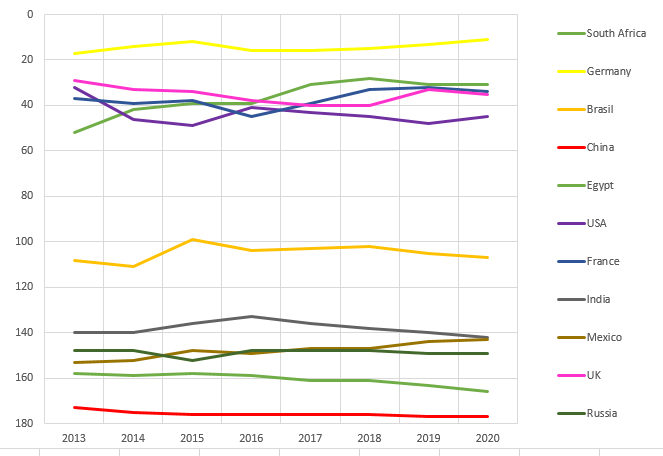
There is a clear correlation between suppression of media freedom in response to the coronavirus pandemic, and a country’s ranking in the Index. Both China (177th) and Iran (down 3 at 173rd) censored their major coronavirus outbreaks extensively. In Iraq (down 6 at 162nd), the authorities stripped Reuters of its licence for three months after it published a story questioning official coronavirus figures. Even in Europe, Prime Minister Viktor Orbán of Hungary (down 2 at 89th), had a “coronavirus” law passed with penalties of up to five years in prison for false information, a completely disproportionate and coercive measure.

“The public health crisis provides authoritarian governments with an opportunity to implement the notorious “shock doctrine” – to take advantage of the fact that politics are on hold, the public is stunned and protests are out of the question, in order to impose measures that would be impossible in normal times,” Deloire added. “For this decisive decade to not be a disastrous one, people of goodwill, whoever they are, must campaign for journalists to be able to fulfil their role as society’s trusted third parties, which means they must have the capacity to do so.”


Evolution of some countries ranked since 2013

The main findings of the 2020 Index: Norway tops the Index for the fourth year in a row in 2020, while Finland is again the runner-up. Denmark (up 2 at 3rd) is next as both Sweden (down 1 at 4th) and the Netherlands (down 1 at 5th) have fallen as a result of increases in cyber-harassment. The other end of the Index has seen little change. North Korea (down 1 at 180th) has taken the last position from Turkmenistan, while Eritrea (178th) continues to be Africa’s worst-ranked country.

Malaysia (101st) and the Maldives (79th) registered the biggest rises in the 2020 Index – 22nd and 19th, respectively – thanks to the beneficial effects of changes of government through the polls. The third biggest leap was by Sudan (159th), which rose 16 places after Omar al-Bashir’s removal. The list of biggest declines in the 2020 Index is topped by Haiti, where journalists have often been targeted during violent nationwide protests for the past two years. After falling 21 places, it is now ranked 83rd. The other two biggest falls were in Africa – by Comoros (down 19 at 75th) and Benin (down 17 at 113th), both of which have seen a surge in press freedom violations.

https://rsf.org/en/2020-world-press-freedom-index-entering-decisive-decade-journalism-exacerbated-coronavirus

Joint NGO statement on civil and political rights at First Virtual Informal Dialogue with the UN High Commissioner for Human Rights on COVID-19

April 15, 2020

In the context of policy response by Human Rights NGOs to COVID-19 this joint statement should not be missing: On 9 April 2020 Reliefweb published the Joint NGO statement on civil and political rights at First Virtual Informal Dialogue with the UN High Commissioner for Human Rights on COVID-19

This joint statement on the protection of civil and political rights in the context of the COVID-19 crisis was delivered on behalf of 33 non-governmental organizations (NGOs) during the first virtual informal briefing with the UN High Commissioner for Human Rights on 9 April 2020. It was delivered in conjunction with a separate joint statement on economic, social and cultural rights (IOR 40/2124/2020).

See also: https://humanrightsdefenders.blog/2020/04/14/un-guidelines-for-use-of-emergency-powers-in-time-of-covid-19-pandemic/

UN Guidelines for use of emergency powers in time of covid-19 pandemic

April 14, 2020
UN Special Rapporteur on Extra-Judicial Executions Agnes Callamard. Photo: Foreign and Commonwealth Office/Wikipedia.

a set of guidelines issued by the UN’s Human Rights’ Committee on Economic, Social and Cultural Rights (CESR), in whcih governments are urged to respect human rights across the spectrum, including economic and social rights, and civil and political rights as this would be fundamental to the success of the public health response.

The announcement shed light on the controversial decision by the Maltese government to close the country’s ports as migrant boats were stranded. The UN said it was aware that governments had to take difficult decisions in light of the coronavirus pandemic, but insisted measures should be proportionate. Emergency powers must be used for legitimate public health goals, not used as a basis to quash dissent or silence the work of human rights defenders or journalists.

This was also highlighted by Agnes Callamard, the UN Special Rapporteur on Extra-Judicial Executions, who said these emergency measures also had to be lifted when these were no longer necessary for protecting public health. People needed to be informed about the emergency measures, where these applied and for how long they were meant to be in effect. “As the crisis passes, it will be important for governments to return life to normal and not use emergency powers to indefinitely regulate day-to-day life, recognizing that the response must match the needs of different phases of this crisis,” the CESC said.

Unfortunately, several governments around the world – and in the EU – have taken advantage of the coronavirus pandemic to implement a series of measures that roll back human rights.

  • As people are being called upon to stay at home, governments must take urgent measures to help people without adequate housing. …The authorities should also take particular care to prevent more people from becoming homeless and implement good practices such as moratoriums on evictions, deferrals of mortgage or loan payments.
  • It was also important to keep in mind people who relied on community and home services to eat, dress and bathe – including people with a disability or the elderly.
  • The guidelines also refer to prisoners and those kept in detention, saying these were at a higher risk of infection in case of an outbreak. Social distancing was difficult to maintain in these places, which had a high risk of contamination. States should “urgently explore options for release and alternatives to detention to mitigate the risk of harm within places of detention,” it said.
  • The document also tackled the issue of migration, saying migrants and refugees also faced “particular risks” as these may be confined to camps and settlements, which might be overcrowded, overstretched and with poor sanitation. “It is also vital that any tightening of border controls, travel restrictions or limitations on freedom of movement do not prevent people who may be fleeing from war or persecution from accessing safety and protection,” the committee said.

This recommendation is the exact opposite of the decision taken by the Maltese government last week to close its ports, making it very clear that it would not be taking any more migrants as a measure to prevent the spread of COVID-19. This announcement came 24 hours after Italy closed all its ports, saying its harbours could not be considered safe. The decision was harshly criticised by more than 20 non-governmental organisations who called on the prime minister to ensure that all persons within Malta’s responsibility were rescued and their safety guaranteed. “The nation cannot quietly celebrate Easter while men, women and children are drowning on our doorstep. Saving lives and ensuring their disembarkation at a safe place is a fundamental legal obligation and also a moral imperative that can in no way be negotiated or renounced,” the NGOs said.

The guidelines called on governments to take “specific actions” to include migrants and refugees in national prevention and response campaigns by ensuring equal access to information, testing, and health care for all, regardless of their status. Earlier this month, the Maltese authorities put the Hal Far open centre under a two-week quarantine after eight migrants tested positive for coronavirus. The decision was slammed by local NGOs who said this would exacerbate the situation where the virus could potentially spread among the 1,000 residents.

On 14 April 2020 Clément Nyaletsossi Voule, the UN Special Rapporteur on the rights to freedom of peaceful assembly and of association, called on States not to use state of emergency declarations during the COVID-19 crisis to impose wholesale restrictions on freedom of peaceful assembly and association, and released detailed Guidelines governments and law enforcement agencies must follow to avoid human rights abuses.

No country or government can solve this health crisis alone and I am concerned about worrying trends and limitations emerging from civil society reports around the world, including on civil society’s ability to support an effective COVID-19 response,” said Clément Nyaletsossi Voule, the UN Special Rapporteur on the rights to freedom of peaceful assembly and of association. “Civil society organisations are key in helping States to frame inclusive policies, disseminate information, and provide social support to vulnerable communities in need,” he said.

In his 10 Guidelines, the expert said that where new laws or regulations are adopted, any limitations on rights imposed must adhere to the principles of legality, necessity and proportionality. Free-flow of information is crucial in times of crisis and laws criminalising ‘false news’, including those targeting human rights defenders, must be avoided. “It is inadmissible to declare blanket restrictions on human rights and fundamental freedoms,” Voule said. “Exemptions should be foreseen for civil society actors, particularly those monitoring human rights, trade unions, social services providing humanitarian assistance, and journalists covering the management of the crisis. “State of emergency does not halt the freedoms of peaceful assembly and of association,” the human rights expert said.

Voule said his Guidelines could help States reassess measures already in place to ensure compliance with their human rights obligations and to take citizens’ demands fully into account.

https://reliefweb.int/report/world/covid-19-restrictions-should-not-stop-freedom-assembly-and-association-says-un-expert

Coronavirus emergency measures must be timely and proportionate

Covid-19 a gift for authoritarians and dictators?

April 14, 2020

…..However, even in this emergency, it is necessary to maintain a very high level of attention to what is happening to democracy in this historical phase. The fight against the pandemic cannot be used as a pretext for a global attack on human rights and democracy, as is unfortunately happening in several parts of the world. We are not ‘diverting attention’. Quite the opposite. While we are doing everything we can to stop the contagion and start thinking about how to get out of the pandemic socially and economically, we also need to assess the risks for democracy and human rights at a global scale. It is essential to take care ‘now’ also of democracy and rights, because ‘later’ there is a real risk of regression, and without them our future can only be darker.

Three issues emerge among others:

First, we are witnessing the progressive “suspension” of democratic guarantees: while some measures restricting individual freedom or privacy can be justified and understood for health reasons, especially if they are temporary, others are unacceptable and very dangerous. The literal cancellation of democracy implemented by Orban can only be met by a vehement European reaction…. [see also: https://humanrightsdefenders.blog/2020/04/07/good-example-of-authoritarian-abuse-of-covid-19-emergency-hungary/%5D

Second, many countries, on the pretext of Covid-19, are quietly taking advantage of the lack of world public opinion reaction to restrict the space and quality of democracy and eliminate opponents and human rights defenders.….

Finally, refugees in camps, detainees in every country in the world, homeless people, who have the right to be protected and safeguarded as far as possible against the epidemic, must not be forgotten in the emergency. In this context, Europe cannot waive its leading role in the protection of human rights.

We therefore welcome the joint proposal presented last Wednesday, 25 March, by the EU High Representative for Foreign Affairs and the European Commission to the European Council to adopt a decision on the “EU Plan on Human Rights and Democracy 2020-2024“. This includes, inter alia, strengthening the EU’s leadership in promoting and protecting human rights and democracy around the world, and identifying priorities for action, maximising the EU’s role on the world stage by expanding the “human rights toolbox”.  [see: https://humanrightsdefenders.blog/2020/03/27/new-eu-action-plan-for-human-rights-and-democracy-2020-2024/]

An important move was the proposal that issues relating to the EU’s human rights policy in the world should no longer be subject to unanimity but to qualified majority voting, in order to avoid vetoes and denials by countries now in dangerous drift.

—–

https://euobserver.com/opinion/148007