Posts Tagged ‘Civil society’

UN Special Rapporteur on Human Rights Defenders wraps up his first mandate

February 22, 2017

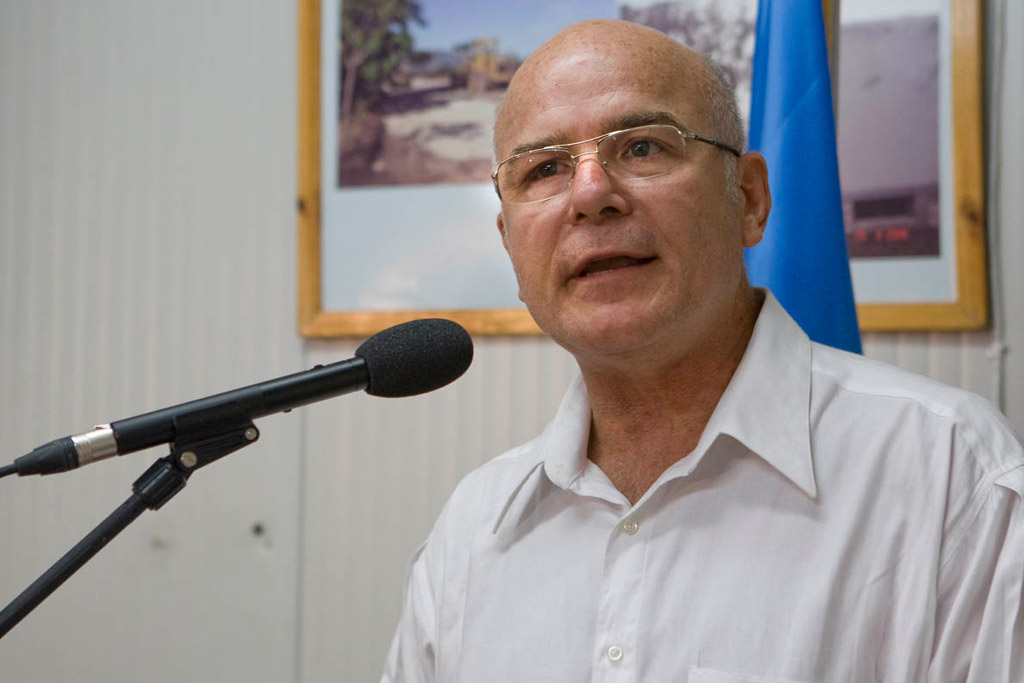
The UN Rapporteur on Human Rights Defenders, Michel Forst, has published his report (A/HRC/34/52) which covers the period of his first mandate:June 2014 and March 2017 [see also: https://humanrightsdefenders.blog/tag/mmichel-forst-2015-hrd-rapporteurichel-forst/  ].

In his report Michel Forst, provides a detailed summary of the activities he carried out during his first mandate, including statistics and trends based on the communications that he sent to States, his visits to a number of countries, the dialogues established with the authorities of various States, and the close cooperation developed with key stakeholders in the protection of human rights worldwide. The Special Rapporteur also presents the work in progress and the challenges and issues on which he plans to focus during his next mandate. The report includes suggestions for diversifying working methods, broadening the scope of cooperation with other key actors, and enhancing the visibility and accessibility of his mandate. Human rights defenders and the promotion of their work and their protection will remain at the core of the Special Rapporteur’s work.

After spending the past three years travelling around the world and documenting the situation of human rights defenders, the Special Rapporteur is more appalled than ever to see attacks against them multiplying everywhere, assailing bloggers, indigenous peoples, journalists, community leaders, whistle-blowers and community volunteers. Furthermore, the Special Rapporteur has become convinced that the incidents in question are not isolated acts but concerted attacks against those who try to embody the ideal of the Universal Declaration of Human Rights in a world free from fear and want. The Special Rapporteur is concerned by the lack of response to observations that have been made repeatedly since the establishment of the mandate.

We must be bolder and more creative in order to face up to threats that weigh heavily on civil society as a whole and on every individual fighting for fundamental rights and freedoms. The Special Rapporteur has also noted that intolerance thrives in part because people know little about their rights or the role of those who protect them. In that regard, it is more vital than ever to make the language of human rights accessible to all in order to ensure that civil society continues to enforce accountability.

As defenders face unprecedented attacks intended to undermine the legitimacy, credibility and sincerity of their commitment, it seems essential to quickly establish links between the specific actions undertaken by the Special Rapporteur and the pledges made at the United Nations when he was appointed in 2014. As populist, nationalist and fundamentalist movements of all kinds multiply, the Special Rapporteur remains convinced that more can be done under his mandate and that his office must continue to serve as a watchdog, a warning mechanism and a crucial resource for thousands of people. [Here he echoes sentiments expressed by others and referred to in this blog, see e.g. https://humanrightsdefenders.blog/2016/12/12/we-must-find-new-ways-to-protect-human-rights-defenders-and-to-counter-the-anti-human-rights-mood/ and the links to other such articles at the end of the post]

The report also identifies those areas in which, in view of the possible renewal of his mandate, the Special Rapporteur intends to become more involved so that his work remains relevant and responds as effectively as possible to defenders’ expectations.

I refer as source here not directly to the UN but draw attention to an excellent documentary service provided by RELIEFWEB:

Report of the Special Rapporteur on the situation of human rights defenders (A/HRC/34/52) – World | ReliefWeb

The Dictator Hunter works from home

February 21, 2017

This blog tries to stick as much as possible to the core issue of human rights defenders and leaves general activism (even when inspired by human rights concerns) to other blogs. Now I want to make an exception for a personal Call for Action issued on 12 February 2017 by my good friend and well-known human rights defender, Reed Brody [https://humanrightsdefenders.blog/tag/reed-brody/], who has earned his nickname The Dictator Hunter:

He passionately feels that we should all do more to stop Trump (and his admirers in Europe). Here the full text:

A letter from America to my friends abroad

Many of you are watching events in the United States and asking what is going on – and what you can do. 

Yes, this is the most dangerous moment for the US and for the world in my lifetime. A US president with total disregard for the foundations of a constitutional democracy – checks and balances, the independence of the judiciary, freedom of the press, the protection of minorities, reasoned debate – has near-complete control over the official levers of power: the executive branch (including the CIA, FBI, NSA), both houses of Congress, and perhaps soon the judiciary. 

On the other hand, I have never witnessed in my country the kind of mobilization we are seeing today. The nationwide Women’s Marches were the largest demonstrations in US history, but it was only the beginning. Each day brings new acts of resistance. When the “Muslim ban” was announced (a crude and cruel measure only designed to stoke fear and portray the president as the people’s protector), people spontaneously flooded the airports around the country, New York taxi drivers went on strike. When Uber tried to profit from the strike, 200,000 customers deleted their Uber accounts. Bodegas in New York closed to protest the ban. All around the country, citizens are packing elected officials’ town hall meetings, flooding Congress with petitions, postcards, and phone calls. The premier legal organization challenging Trump’s actions, the American Civil Liberties Union, raised $24 million in the days following the Ban. This week, 1,200 people crowded into my neighborhood synagogue to organize the next stages of the resistance in Brooklyn, and the same thing is happening all over the country. Everything is political. Sports. Oscars. Consumer choices. Companies are being forced to take stands, and many of them, particularly in high-tech and globalized industries, are opposing the president. 

It’s important to remember that WE are the majority. We are also the large majority in the places that matter most to the economy – New York, California, Washington DC, in almost all the nation’s cities.

This epic battle for the soul of my country is just beginning. The outcome is uncertain. The next terrorist attack, and the one after, will surely test us even more.

Ultimately it will be Americans who decide the fate of the US but there are many ways you can help.

-Protest, protest protest! People marched around the world marched with us on January 21, but it can’t stop there. The more organized protests at US embassies and symbols of US power the better. 

– Don’t give Trump the respect he doesn’t deserve. This week, the speaker of the House of Commons said that he would oppose having Trump address Parliament. Over 1.8 million Brits have signed a petition against any Trump visit. When Trump visits the UK, or anywhere, let him know how the people of the world feel. 

-Demand that your leaders stand up to Trump. Angela Merkel reminded Trump of the US’s obligations under the Refugee Convention. François Hollande has been outspoken. (Unlike Spain’s Rajoy who offered to be an “intermediary” for Trump in Europe and Latin America). 

-Like Canada’s Justin Trudeau, leaders should publicly welcome all people from all countries and specifically assure nationals of the 7 “banned” countries that they will be allowed in.

-Ask your country to rebuke Trump’s measures which violate international law such as the Muslim ban in international fora such as the UN Human Rights Council and the UN General Assembly. The ACLU and other groups are already challenging these actions before the Interamerican Commission on Human Rights.

-Remind non-US companies that they also have obligations, as US law professors did when they wrote to European air carriers https://www-cdn.law.stanford.edu/…/Stanford-Law-Professors-… to ensure the rights of travelers. 

-Academics, experts, companies and even countries can join litigation in the US with “amicus curaie,” or “friends of the court” briefs. The legal attack on the Muslim ban has been joined https://lawfareblog.com/litigation-documents-resources-rela… by hundreds of technology companies, professors, cities and states, but it would be important for foreign voices to be heard on this and (probably) forthcoming cases.

-Boycott Trump products. Like a third-word kleptocratic dictator (and I know a thing or two) Trump is openly mixing the public and the private. Hit him where it hurts – his brand, his ego and his pocketbook. Phone numbers of his hotels are here  https://twitter.com/billmckibb…/…/829412430157602816/photo/1 A list with retailers that do business with the Trump family and whose boycott is sought by #GrabYourWallet ( as in Grab her Pussy) here
https://grabyourwallet.org/Boycott%20These%20Companies.html

-Join the over 5 million people who have signed Avaaz’s Global Open Letter to Donald Trump. https://secure.avaaz.org/cam…/…/president_trump_letter_loc/…

-Watch the daily TV show Democracy Now on the internet – it’s where progressives in the US get their news and connect to all the struggles here and abroad. https://www.democracynow.org/

Even if you live abroad, you can join and give your support to the groups that are defending our liberties like the Center for Constitutional Rights, Planned Parenthood, Democracy Now, the ACLU. The Nation’s Katha Politt lists some groups here https://www.thenation.com/…/you-might-not-be-in-the-mood-t…/ Here is a longer list http://www.advocate.com/…/24-trump-fighting-charities-need-… – 

-If the travel ban, or some version of it, is reinstated, we will need volunteers and volunteer lawyers at airports around the world to help stranded travelers and to communicate with volunteers at US airports .

Trump (“Only America first”) doesn’t care about what the rest of the world thinks, but the US political and economic establishment on whose acquiescence he depends does care. Make clear that a racist islamophobic US government will not enjoy the same status and goodwill. 

Most important, don’t let what happened in the US happen in your country!! Trump “won” the US election (just as Brexit prevailed) by building the fear of foreigners and because too many people (white working class) did not see the political system as working for them. The Democratic Party essentially imposed a candidate who many saw as the embodiment of an out-of-touch elite. The same thing now threatens to happen in France, the Netherlands and elsewhere. Please don’t let it. We need you to make a better world together.

In Solidarity

Reed Brody
reedbrody@gmail.com
twitter @reedbrody
 

Camara Salimata SY talks about human rights of women in Mauritania

February 18, 2017

Camara Salimata SY, is the vice-president of Association des Femmes Chefs de Famille (AFCF – Association of female family heads). She talked to ISHR about her work on women’s rights and political participation in Mauritania. She also highlights the risks and challenges facing her and calls for more respect from the African Commission and African States for their human rights obligations.

The interview above is only available in French

Interview with human rights defender Victor Nanklan Touré of Ivory Coast (in French)

February 13, 2017

Victor Nanklan Touré is the president of NGO ‘Club Union Africaine Côte d’Ivoire’ which is mainly working on statelessness and land issues. A human rights advocate for over 15 years he participated in the civil society training organised in Banjul from 15 to 16 October 2016 by ISHR, the Office of the High Commissioner for Human Rights and the African Centre for Democracy and Human Rights Studies. On this occasion he presented his work to ISHR and shared a message towards African political leaders.

The interview mentioned above is unfortunately only available in French.

2017 (8): Human Rights Movement Must Come Together to Resist Trump’s Agenda

January 28, 2017
In the Huffington Post of 27 January 2017 David TolbertPresident of the International Center for Transitional Justice, wrote: “Human Rights Movement Must Come Together to Resist Trump’s Agenda”.  In the piece he says many useful things especially that “it is clear that a coalition of forces must emerge in American civil society to provide the backbone of resistance to the Trump agenda.” Here some excerpts:

(see also https://plus.google.com/+HansThoolen/posts/hNZtNKR5KKL)

….

– Trump has rushed headlong into creating further divisions and has begun an assault on human rights and basic decency — including a de facto ban on many Muslim refugees from entering the United States and the resurrection of CIA “black sites“ — and promises more to come. 

– The new president exalts torture, mocks the disabled, casts aspersions on those who defend human rights, appeals to racist sentiments through coded and not-so-coded language and denigrates women in both word and deed.

– He shows no regard for the Geneva Conventions or the painstaking work of generations of human rights activists, many of them American, to ensure that civilians are not abused in times of conflict and that the vulnerable are protected. 

– For good measure, he seems to demean virtually every restraint that protects the citizen from the state. His first call as president to a foreign leader was to President Abdel Fattah al-Sisi of Egypt, who crushed the protests against army rule, devastated Egypt’s civil society with draconian laws targeting human rights defenders and turned Egypt’s legal institutions into “kangaroo courts.” A chilling signal indeed.

Say what you will, Trump has clearly laid down the gauntlet that places the most powerful of nations on the side of the privileged and signals that human rights will be honored only in the breach. This can hardly be a surprise, given his campaign rhetoric that called openly for torture and other serious crimes that violate international and domestic law. 

…….

….. The whiff of McCarthyism is in the air for those of us who do not define ourselves as allegiant to Trump’s vision of America.

The inaugural speech and Trump’s first actions also send powerful messages regarding the struggle for human rights across the planet. The consequences of his dark vision will be dire. The record of the United States is patchy at best in terms of promoting human rights abroad, but it has played an important role in a number of areas, commencing with Eleanor Roosevelt’s work on the Universal Declaration of Human Rights. 

While its record in Latin America and the Middle East has been particularly deplorable, this country has supported civil society groups in a number of countries and other international initiatives that have promoted accountability for human rights violations. It has worked with other countries and the United Nations to advance the normative agenda that has enshrined human rights in international law and broadly supported the human rights movement in areas such as individual liberties and women’s rights. Mr. Trump will end these efforts in an obvious return to the old adage: “Governments can boil their own people in oil for all we care, as long as they support us.” 

This abdication of American support for human rights will not only undermine those countries that respect human rights but will also embolden those who seek to undermine the United Nations and other institutions that have advocated for and protected those rights. The emerging Trump-Putin partnership will mean that victims of human rights abuses around the world will have nowhere to turn to, as avenues to redress, accountability and acknowledgement of the violations close down.

The question is, what can we do? What is our responsibility as human rights defenders, but also as citizens of the United States and the world at large?

…..

While there is not a single “silver bullet” to take on what we will face ahead, we need to move past “conversations” and start organizing. It is hard to imagine — in this diverse and app-based world of today — that a single organization can take the lead in such a movement, like the Southern Christian Leadership Conference (with lots of allies and competition, of course) did for the Civil Rights Movement. However, it is clear that a coalition of forces must emerge in American civil society to provide the backbone of resistance to the Trump agenda. 

We cannot afford atomization along the lines of our specific causes, be they accountability for human rights violations, racial injustice, inequality, LGBTI rights, indigenous rights or other human rights causes we support. If we are to have a chance to stop Trump’s destructive agenda, we must unite and act as a movement as strongly against the Dakota Access Pipeline as against a registry for Muslims or systemic police violence against African-Americans. Our goals in protecting human rights in the United States must be as clearly defined as our actions must be coordinated. 

…..

The time for action and resistance is now. I and the organization that I lead, the International Center for Transitional Justice, have over the years had a great deal of experience in addressing the abuses of regimes across the world that disregard human rights and commit abuses. Once rights and the institutions built to protect them are pushed to the side and the strong man reigns, the path to violations becomes real and the difficulties of re-establishing the rule of law become very steep indeed. The warning signs here in the United States are now laid bare. They should be a call to action for us all.

Source: Human Rights Movement Must Come Together to Resist Trump’s Agenda | The Huffington Post

Civil Rights Defender of the Year Award 2017 goes to Edmund Yakani from South Sudan

January 25, 2017

On 24 January the Stockholm-based NGO Civil Rights Defender announced that human rights defender Edmund Yakani from South Sudan is recipient of the Civil Rights Defender of the Year Award 2017.
edmund-yakani

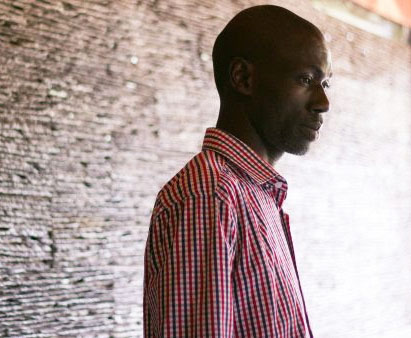
Edmund Yakani is the Executive Director of human rights organisation Community Empowerment for Progress Organisation (CEPO), based in South Sudan’s capital Juba. He is among the most tenacious and vocal voices in the country when it comes to defending and promoting human rights, democratic transition and justice. He particularly stands out in his effort to ensure respect for rule of law and justice, and the inclusion of civil society in the ongoing peace talks. “For me, this award symbolises motivation and recognition of the efforts and hard work to protect human rights defenders in South Sudan. This is a call for more efforts to engage in further protection for human rights defenders and their families”, said Edmund Yakani to Civil Rights Defenders.

South Sudan, the youngest country in the world, gained its independence as recent as in July 2011. By many social, economic and political standards, the country is among the poorest in the world. Respect for civil and political rights has never been established to the level its citizens wished for at independence. The situation for human rights worsened following the outbreak of inter-ethnic and armed conflicts in 2013. Since then, human rights defenders and outspoken critics have been increasingly targeted by the government, security forces and other armed actors, and Edmund Yakani has himself been threatened on several occasions due to his work. “State authorities see human rights work as part of a politically motivated agenda against them, and hence human rights defenders are seen as enemies of the state. In addition, the rule of law is compromised to the level that impunity has become a norm in the South Sudanese society”, said Edmund Yakani.

Edmund Yakani

Edmund Yakani has, on a countless number of occasions, demonstrated his commitment in promoting genuine dialogue and efforts among social and political actors. He is active in calling for a greater inclusion of civil society in the peace talks. His contribution in promoting human rights and its defenders has been of paramount importance, in particular as he is working in the context of weak institutions and ongoing conflict. I am proud to announce him as this year’s recipient of the Civil Rights Defender of the Year Award”, said Robert Hårdh, Executive Director of Civil Rights Defenders.

For last year’s award: https://humanrightsdefenders.blog/2016/04/08/released-intigam-aliyev-azerbaijan-civil-rights-defender-of-the-year-award/

Source: Civil Rights Defender Of The Year Award 2017 – Edmund Yakani > Gurtong Trust > Editorial

2017 (2): Why the Space for Civic Engagement Is Shrinking

January 11, 2017

This is the second item addressing the world of human right defenders in 2017. I do this with an ‘old piece’ by Chris Stone, President of the Open Society Foundations, dating back to 21 December 2015 saying that across the globe, governments are shutting down spaces for civic engagement. Something that indeed has become evident.

It starts with the short video clip above in which George Soros, Binaifer Nowrojee, Mburu Gitu, and other experts discuss why this is happening—and how civil society can unite to prevent it.

All around the world, active citizenship is under attack and the space for civic engagement is closing—not just in countries that have struggled under repressive or autocratic governments, but also in democracies with longstanding traditions of supporting freedom of expression. There are many different reasons for this shrinking of the public space.

In some countries, especially newer democracies or countries undergoing political transitions, those in power are fearful of civic activism. Seeing its power, officials in governments with no previous experience regulating political protests or public debates have come down with a heavy hand, erring on the side of preventing change rather than encouraging it.

In other countries, including France and the United States—partly in response to the fear of terrorism—well-established civil liberties have been suspended or cast aside in the name of security. Such measures, from mass surveillance to martial law, reduce the space for civic life, the space where citizens do the work of improving our communities and societies.

Civil society is enormous in its size and diversity. We are members of the media, for-profit businesses, volunteer associations, political parties, trade unions, faith communities, private foundations, and nonprofit organizations. If we are united at all, we are united by our work outside of government and the state to advance the common good—even though we have different ideas of what that looks like.

Because the space we need for this work is closing, we must come together, understand our mutual dependence and interrelatedness, and support each other in this work. We must forge a new solidarity.

Source: Why the Space for Civic Engagement Is Shrinking

see other posts:https://humanrightsdefenders.blog/tag/civil-society-organisations/ 

EU Mechanism held first meeting: Human Rights Defenders are not criminals

December 2, 2016

On 29 November 2016  ‘ProtectDefenders.eu’ – the EU Human Rights Defenders mechanism implemented by International Civil Society – concluded its first annual meeting of beneficiaries: human rights defenders at risk from all regions of the world who have benefited from the project gathered today in Brussels. The meeting aimed at reflecting on this first year of coordinated work to support defenders worldwide and at highlighting the worrying global phenomenon of criminalisation of human rights defenders.[see: https://thoolen.wordpress.com/2015/12/04/international-cooperative-consortium-protect-the-defenders-launched-on-2-december/]

To conclude the meeting, the twelve partner organisations of ProtectDefenders.eu have issued a public statement urging all national authorities to “publicly recognise the crucial role played by human rights defenders and protect them in all circumstances from any form of judicial harassment“. As stressed by Antoine Madelin, FIDH Director for International Advocacy and Chair of the Board of ProtectDefenders.eu, “Human Rights Defenders are the pillars of democracy and of the rule of law but are too often subjected to unfair criminal prosecution, in an effort to undermine their work in the defence of human rights.”

Since the launch of the project in October 2015, ProtectDefenders.eu has witnessed an increased criminalisation of defenders worldwide in reprisal to the conduct of legitimate human rights activities.

ProtectDefenders.eu held its meeting in Brussels under the motto “Defenders are not criminals” and brought together dozens of human rights defenders at risk supported by the EU mechanism during its first year of implementation, together with prominent representatives of NGOs, European institutions and Representatives of International and Regional Protection Mechanisms, including the United Nations Special Rapporteur on the situation of human rights defenders, Michel Forst. Participating defenders, coming from more than 20 countries such as Burundi, Honduras, Egypt, Bangladesh or the Russian Federation, shared their experiences of resilience in often dangerous and challenging situations and debated on the most effective strategies to counter criminalisation and pursue their work.

This meeting has also emphasised the main achievements and highlights of the first year of ProtectDefenders.eu. In the first twelve months, the EU Mechanism has provided more than 330 emergency grants to defenders at high risk, facilitating a rapid response to their legal, medical, security or emergency relocation needs in pressing circumstances. At the same time, ProtectDefenders.eu has successfully started and run a temporary relocation programme, disbursing more than 700,000 € in support of 74 temporary relocations in favour of 150 individuals, with the collaboration of host institutions worldwide and in the framework of the EU Temporary Relocation Platform.

The Project has also provided institutional and operational support to grassroots organisations, allocating more than 300,000 € through 32 grants. 1,300 defenders worldwide were trained to improve their security and protection in difficult contexts.

Finally, ProtectDefenders.eu has expanded its advocacy and outreach dimension, by conducting fact-finding missions and monitoring trials against defenders particularly in difficult countries, as well as carrying out initiatives to assist and connect isolated and vulnerable defenders throughout the world. ProtectDefenders.eu has coordinated more than 430 urgent alerts aimed at mobilizing the attention of concerned authorities, public and media on behalf of defenders at risk.

Human Rights defenders who attended the meeting positively assessed the first year of implementation of ProtectDefenders.eu. The twelve partners praised the EU strong support through the EIDHR of a project as ambitious and comprehensive as ProtectDefenders.eu. As pointed out by Andrew Anderson, Executive Director of Front Line Defenders and member of the Board of ProtectDefenders.eu, in the closing speech, “human rights defenders in danger around the world do benefit from this  strong coordination between international civil society organizations and the institutions of the European Union.”

[ProtectDefenders.eu, the European Union Human Rights Defenders mechanism, delivers emergency help and temporary relocation grants for activists at risk, who face threats due to their work and are in need of urgent support. It also provides training and capacity-building for human rights organisations. ProtectDefenders carries out monitoring, advocacy and lobbying to raise awareness about the situation of human rights defenders and their need for protection]

Source: Newsfeed – ProtectDefenders.eu

Today CIVICUS launches its worldwide Monitor to track civil space

October 24, 2016

Today, 24 October 2016, the NGO CIVICS has launched its Monitor. The CIVICS Monitor, in cooperation with 20 global research partners, rates countries based on how well they uphold the three fundamental rights that enable people to act collectively and make change: freedom of association, freedom of peaceful assembly, and freedom of expression. The CIVICUS Monitor is not the first to try and provide an overview of the human rights situation the world (see links below) but to my knowledge the first to do so online, in real-time on a global scale, making use of new digital possibilities. Read the rest of this entry »

UN Human Rights Council – How do the candidates for the 2017 elections rate?

September 13, 2016

The UN Human Rights Council – now in its 33rd session – has quite a few States on it that shouldn’t be there because of their own deplorable human rights record. In order to help influence the election process a number of procedures have been developed such as public pledges by the candidate States. NGOs, such as AI and the ISHR, have even organized public debates to which these States are invited [see: https://thoolen.wordpress.com/2014/07/17/some-states-have-the-courage-to-set-out-their-commitments-as-members-of-the-human-rights-council/]

The ISHR has now published ‘scorecards’ for each of the States seeking election to the UN Human Rights Council for 2017-2019. Read the rest of this entry »