Posts Tagged ‘Civil society’

Incredible number of NGOs (3700!!) condemn attacks on civil society in USA

October 9, 2025

Human Rights Watch stands with civil society and signed this letter, alongside more than 3700 other organizations, condemning the Trump administration’s attacks. It is a testament to our community’s solidarity.

“We are a coalition of nonprofit and nonpartisan organizations formed to champion causes dear to all Americans. We work in communities across the country to protect our air and water, our right to vote, to worship, and to organize; we fight for consumers, workers, and our children; we advocate for civil and human rights at home and abroad; we have made it safer to drive on our roads, easier to start a business, and healthier to live in our cities. We span the full ideological spectrum. And today, we stand together for our democracy and in solidarity with the nonprofit groups unjustly and illegally targeted by the Trump administration, including in a new September 25 presidential memorandum. 

We of course unequivocally reject political violence. But we won’t mince words. No president–Democrat or Republican–should have the power to punish nonprofit organizations simply because he disagrees with them. That is not about protecting Americans or defending the public interest. It is about using unchecked power to silence opposition and voices he disagrees with. That is un-American and flies in the face of the Constitution, including the First Amendment bar on targeting organizations for their advocacy. 

Charities perform crucial functions in every community across our country, including providing healthcare, housing, education, religious services, food and water, and so much more. Like other nonprofits, the organizations threatened by President Trump have a mission to serve the public good and are composed of everyday people fighting for dignity, safety, and opportunity. 

This attack on nonprofits is not happening in a vacuum, but as a part of a wholesale offensive against organizations and individuals that advocate for ideas or serve communities that the president finds objectionable, and that seek to enforce the rule of law against the federal government. Whether the target is a church, an environmental or good government group, a refugee assistance organization, university, a law firm, or a former or current government official, weaponizing the executive branch to punish their speech or their views is illegal and wrong. It is also an attack on the very notion that government power must serve the people, not those in office. 

Charitable organizations serve our communities in various ways, playing a central role in public protection, health, accountability, anti-discrimination, and in creating the moral fabric of our nation. That is, of course, precisely why this administration is targeting them. They know that the organizations they are attacking exist to lift up the voices of everyday Americans and shine the spotlight of accountability on those who seek to abuse power. 

Political violence is unacceptable. But efforts by the president of the United States to defund, discredit, and dismantle nonprofit groups he simply disagrees with are reprehensible and dangerous—a violation of a fundamental freedom in America. This Administration is trying to bully people into silence but speaking out is, and has always been, our collective mission. We stand with those wrongly targeted and with each other. No exceptions.”

https://www.hrw.org/news/2025/10/08/an-open-letter-rejecting-presidential-attacks-on-nonprofit-organizations

https://www.commondreams.org/news/letitia-james-indicted

Burkina Faso artist Fasky uses photography to promote engagement

December 12, 2024

On 8 December 2024 Global Voices tells this story:

One of Fasky’s photographs at sn exhibition showcasing his work during the Récréâtrales festival. In this photo, a young woman is weaving a traditional Burkinabe loincloth. Photo by Joel Hevi, used with permission.

Across Africa, art events serve as powerful platforms for activists seeking to raise awareness about social issues and human rights.

Zerbo Siaka, also known as Fasky, is a photographic artist from Burkina Faso operating at the intersection of artistic expression and activist movements. The artist is also the director of the association Photo’age. Through this association, he is dedicated to passing on his photographic expertise to the next generation. His exhibition at the 13th edition of the cultural festival ‘Les Récréâtrales’ — a pan-African space for writing, creation, research, and theatrical dissemination — exemplifies the positive impact art can have on society.

A long-time participant in this significant gathering, Fasky shared his perspectives with Global Voices during Les Récréâtrales, explaining how he uses his photography as a tool to foster resilience and encourage social engagement.

Fasky. Photo by Joel Hevi, used with permission.

Joel Hevi (JH): Could you tell us about what inspired your journey into photography and your role within the Photo’Age association?

Fasky (F): I am Zerbo Siaka, also known as Fasky, a photographer from Bobo-Dioulasso in Burkina Faso. My journey into photography happened by chance. Initially, I aspired to be a rapper, but my path changed when I discovered photography while accompanying some French friends who were part of an association in Burkina Faso. They gifted me a camera, and that’s when photography became my passion. Today, through Photo’Age, I share this art with the younger generation, including internally displaced children, helping them to express themselves and showcase their realities.

JH: You presented a series of portraits of women at Les Récréâtrales. What message are you hoping to share through these woman-centric pieces?

F: For four years now, I have taken part in Les Récréâtrales. During this time, I have been fortunate to build strong connections with the women I photograph, most of whom are internally displaced [due to the widespread violence caused by terrorist attacks]. The theme of my exhibition, ‘We Shall Overcome,’ reflects their resilience in the face of crisis. These are women who, despite everything, hold on to hope and fight for their dignity. Through their portraits, I invite visitors to witness their strength and vulnerability. My hope is that beyond their faces, one can see a moving and inspiring humanity.

JH: Do you hope to initiate a dialogue about gender equality? What potential impacts could arise beyond the aesthetic appeal of your work?

F: Definitely, photography is for me a political and social act. These portraits are a statement advocating for gender equality and a tribute to these strong women and their struggles. I hope to raise awareness, to showcase their strength, and to emphasize the urgency of achieving equality. If my photographs can spark a debate and motivate others to stand up for these women’s rights, they will have achieved their goal.

JH: Your photographic style conveys an intimate connection with your subjects. How do you manage to establish this trust, especially in often challenging situations?

F: Trust is at the heart of my work. The women I photograph know me; we have built relationships over time. The Terre Ceinte project allowed me to understand their lives and earn their trust. Before taking their pictures, I listen and respect their stories. This bond is reflected in their expressions in my photos — a sincerity that only patience and attentive listening can bring to life.

Kyrgyzstan (and Slovakia) on their way to emulate Russia with draft law on ‘foreign representatives (agents)’

March 24, 2024

On 21 March 2024, Nikkei Asia carried the story on Kyrgyzstan taking a page from Russia in pushing for a ‘foreign agents’ law

Kyrgyzstan: Veto the draft law on ‘foreign representatives’ - Civic Space

Kyrgyz President Sadyr Japarov faces a high-stakes decision on whether to sign new legislation that critics warn will significantly impair how human rights defenders and independent media, among others, can work in his mountainous Central Asian state. On March 14, Kyrgyzstan’s parliament voted overwhelmingly in favor of a “foreign agents” bill that mirrors legislation adopted in Russia over a decade ago. The law is designed to control the activities of nonprofit and nongovernmental organizations that receive funding from abroad by compelling them to register as “foreign representatives,” leading to closer scrutiny of their activities by the authorities.

Japarov has a month from that date to sign it into law. Many observers have been vocal in their opposition and are urging the president to veto the bill. Syinat Sultanalieva, Central Asia researcher at Human Rights Watch, told Nikkei Asia that this law “would see the further and sharper shrinking of civil society,” a sector that has been under attack in Kyrgyzstan for more than a decade. BUT see: https://www.aol.com/kyrgyzstan-adopts-law-targeting-foreign-100124498.html

In the meantime the Prague based NGO, People in Need, speaks out against the Slovakian government’s proposed measures to curb critical media and NGOs, which would mirror tactics employed by autocrats and dictators in places ranging from Russia to Latin America, It has raised concerns about the erosion of civil liberties and the stifling of dissent. In a move reminiscent of authoritarian regimes, officials seek to designate these entities as “foreign agents,” a term often utilised to suppress opposition voices. The Fico government has already taken steps to cut NGO funding, raising further alarms about the independence of civil society activities. Additionally, Culture Minister Martina Šimkovičová and Justice Minister Boris Susko have initiated cuts to subsidy programmes, redirecting funds away from NGOs to other areas, citing concerns about transparency and favouritism in grant allocation. The government’s actions have prompted backlash from NGOs, with 90 organisations signing a petition against the minister’s decisions. 

As an organisation with roots steeped in the freedom and civic movements of post-Cold-War Czechoslovakia, we are appalled to see the illiberal turn taken by the Slovak government. The Fico government’s proposal to impose a Russian-style foreign agents’ law is anathema to the shared goals of the Czech and Slovak people who fought to end the Russian subjugation of our homelands. This is of great concern and sadness to us at People in Need.  

https://www.peopleinneed.net/slovak-government-targets-ngos-with-proposed-foreign-agents-act-11299gp

On 21 March 2024, a large group of civil society organisations jointly called on the president of Kyrgyzstan, Sadyr Japarov, to veto the amendments to the Law on Non-commercial Organisations, known as the law on ‘foreign representatives’ which clearly violates the country’s international human rights obligations and would be a devastating blow the civil society. [see also: https://humanrightsdefenders.blog/tag/foreign-agent-law/]

We are writing to you on behalf of the undersigned civil society organisations from different countries to express support for Kyrgyzstan’s civil society and urge you to veto the amendments to the Law on Non-commercial Organisations, known as the law on ‘foreign representatives’, which parliament adopted on third reading on 14 March 2024. The proposed amendments fall seriously short of Kyrgyzstan’s international human rights obligations and risk delivering a devastating blow to its vibrant civil society. The amendments will impair civil society’s ability to carry out its important and legitimate work to the benefit of the people of Kyrgyzstan, and to promote public participation, transparency, accountability and good governance, thereby eroding democratic and human rights progress made by Kyrgyzstan with negative implications for its international reputation. Further, the proposed amendments will endanger international development and economic assistance programmes in the country, which will also undermine prospects for the achievement of sustainable development goals contrary to your government’s ambitious agenda in this area. Thus, we urge you to veto the amendments for the benefit of Kyrgyzstan and its people.

Both national and international human rights experts have concluded that the draft law on ‘foreign representatives’ clearly violates Kyrgyzstan’s international human rights obligations. For example, such conclusions were presented in a joint communication addressed to your government by three UN Special Rapporteurs, appointed by the UN Human Rights Council, of which Kyrgyzstan currently is a member. The three rapporteurs stated: ‘many provisions in the proposed law would be contrary to the international human rights obligations of the Kyrgyz Republic, including the right to the freedom of association, the right to freedom of opinion and expression, the right to non-discrimination and the right to privacy. If passed, this draft law could have a chilling effect on the operation of all associations in the Kyrgyz Republic, limiting their ability to advocate for human rights, provide social services, and contribute to the development of a robust and inclusive society.’

In an earlier legal assessment prepared at the request of Kyrgyzstan’s Ombudsperson, the OSCE Office for Democratic Institutions and Human Rights (ODIHR) found that the proposed provisions lack legitimate justification and do not meet the requirements of international human rights law for acceptable restrictions on the right to freedom of association. ODIHR also stressed that the key concepts of ‘foreign representatives’ and ‘political activities’ used in the draft law are inconsistent with the principle of legal certainty and predictability and ‘would allow unfettered discretion on the part of the implementing authorities’. ODIHR further found that the proposed provisions are contrary to the principle of non-discrimination and risk stigmatising organisations carrying out legitimate work and triggering mistrust, fear and hostility against them.

The draft law on ‘foreign representatives’ does not only violate your country’s international obligations but also contradicts provisions of the Constitution of the Kyrgyz Republic (including articles 36, 32, 24 and 29), which protect the right to freedom of association and other fundamental rights. In this way, the draft law challenges the legitimacy of the current Constitution, which was initiated by you and endorsed by citizens in a national referendum in 2021.

The proponents of the draft law on ‘foreign representatives’ have argued that it is aimed at ensuring the transparency of civil society organisations (CSOs). However, while transparency is an important issue, it is not a legitimate reason under international human rights law for imposing invasive, discriminatory, and stigmatising restrictions on CSOs. On the contrary, transparency can be ensured in ways that do not contradict international law nor hamper the work of CSOs. Moreover, all non-commercial organisations in Kyrgyzstan, including those that receive foreign funding, are already subjected to extensive state control and regularly report about their activities and finances to various state bodies, which ensures transparency of their work. In particular, amendments to the Law on Non-commercial Organisations, adopted in 2021, oblige non-commercial organisations to annually provide detailed information on their sources of funding, use of funds and assets for publication on the Tax Service’s website. This information is thus already publicly accessible.

Rather than increasing the transparency of non-commercial organisations, the draft law risks undermining civil society’s crucial role in assisting public bodies with the provision of support to vulnerable groups of the population, and also in promoting public sector transparency and accountability. Watchdog organisations have already warned of a significant decline in government transparency in Kyrgyzstan, preventing the exposure of wrongdoing and increasing the risk of corruption. This impairs foreign investments as well as economic growth and well-being in the country.

Kyrgyzstan’s international partners have warned that the adoption of the law on ‘foreign representatives’ would negatively affect development assistance programmes in the country. For example, in a joint statement issued on 14 March 2024, the Delegation of the EU to the Kyrgyz Republic and the Embassies of Canada, France, Germany, the United Kingdom, and the United States stated that the proposed provisions would ‘jeopardise our ability to provide assistance that improves the lives of the citizens and residents of the Kyrgyz Republic’. They stated that, if signed in its current form, the law ‘has the potential to hurt the most vulnerable who rely on the essential services – such as food, healthcare, and education – that non-profits and NGOs [non-governmental organisations] provide’. The UN Resident Coordinator in the Kyrgyz Republic pointed out that enacting the law would threaten civil society engagement in development initiatives and the achievement of UN Sustainable Development Goals (SDGs). Thus, the law contradicts the government’s aim of being among the top 30 countries in the realisation of SDGs by 2030.

The World Bank and the European Bank for Reconstruction and Development have also stressed the importance that they attach to CSO engagement for the success of their in-country operations, when commenting on NGO concerns about the draft law’s potential impact on the activities of international financial institutions in Kyrgyzstan.

As you know, as a beneficiary of the General Scheme of Preferences Plus (GSP+), the Kyrgyz Republic is required to effectively implement international human rights conventions, including the International Covenant on Civil and Political Rights (ICCPR) in return for trade benefits afforded by the EU. Thus, the adoption and enforcement of the law on ‘foreign representatives’ is likely to negatively affect these benefits. The European Commission’s recent GSP+ monitoring report on the Kyrgyz Republic highlighted shrinking space for civil society as a key area of concern and called for swift measures to reverse this negative trend in the light of the country’s ICCPR obligations. Moreover, in its resolution adopted in July 2023, the European Parliament called for a reassessment of Kyrgyzstan’s GSP+ benefits in view of recent developments, in particular draft legislation that runs counter to the country’s international human rights obligations.

We are aware that proponents of the draft law on ‘foreign representatives’ have argued that it is similar to the US Foreign Agent Registration Act (FARA). However, FARA differs from the proposed legislation in Kyrgyzstan in crucial respects. In particular, FARA is not targeted at non-commercial organisations that receive foreign funding. Instead, FARA requires persons who conduct certain activities ‘at the order’ or ‘under the direction or control’ of a foreign government or other foreign entity to register as an ‘agent of a foreign principal’ and periodically file supplementary information about their activities in this capacity. The purpose of FARA is to ensure the public disclosure of such information rather than to subject those registered under it to ongoing, invasive state control.

President Japarov, when you consider whether or not to sign the draft law on ‘foreign representatives’, you are deciding the fate of civil society in Kyrgyzstan. Will you opt for the path taken by authoritarian countries, where similar legislation has been used in campaigns to systematically dismantle independent civil society, with negative implications for the reputation, prosperity and well-being of these countries? Or for a more forward-looking, inclusive, and democratically-oriented approach under which CSOs are treated as important, respected partners who can work together with state bodies in addressing societal problems, and international partners retain their confidence in Kyrgyzstan’s commitment to sustainable development?

For the reasons outlined above, we urge you to refrain from signing the draft law on ‘foreign representatives’ and ensure that any new legislation impacting non-commercial organisations reflects Kyrgyzstan’s international human rights obligations and undergoes thorough and inclusive consultations with civil society, as well as national and international experts. When elaborating this type of legislation, it is crucial to take the opinions of CSOs directly affected by it into account.

Signed by the following organisations (listed in the order of signature):

International Partnership for Human Rights (IPHR), Belgium

IDP Women Association Consent, Georgia

Norwegian Helsinki Committee

Hungarian Helsinki Committee, Hungary

Legal Policy Research Centre, Kazakhstan

Public Association “Dignity”, Kazakhstan

Netherlands Helsinki Committee

Civil Rights Defenders, Sweden

Protection of Rights without Borders NGO, Armenia

Swedish OSCE-network

Helsinki Citizens’ Assembly – Vanadzor, Armenia

Center for Civil Liberties, Ukraine

Public Verdict, Russia

Turkmen Helsinki Foundation, Bulgaria

Crude Accountability, USA

Freedom Files, Poland

Human Rights Center “Viasna”, Belarus

Center for Participation and Development, Georgia

Human Rights Defence Center Memorial, Russia

Civic Assistance Committee, Russia

Austrian Helsinki Association

Bulgarian Helsinki Committee

Human Rights Center (HRC), Georgia

Macedonian Helsinki Committee

Sova Research Center, Russia

Promo LEX Association, Moldova

Helsinki Foundation for Human Rights, Poland

ARTICLE 19 Europe

FIDH (International Federation for Human Rights), within the framework of the Observatory for the Protection of Human Rights Defenders

World Organisation Against Torture (OMCT), within the framework of the Observatory for the Protection of Human Rights Defenders

Amnesty International

https://asia.nikkei.com/Politics/Kyrgyzstan-takes-page-from-Russia-in-pushing-foreign-agents-law

CIVICUS annual report 2023; PEOPLE POWER UNDER ATTACK: the good, the bad and the ugly:

February 12, 2024

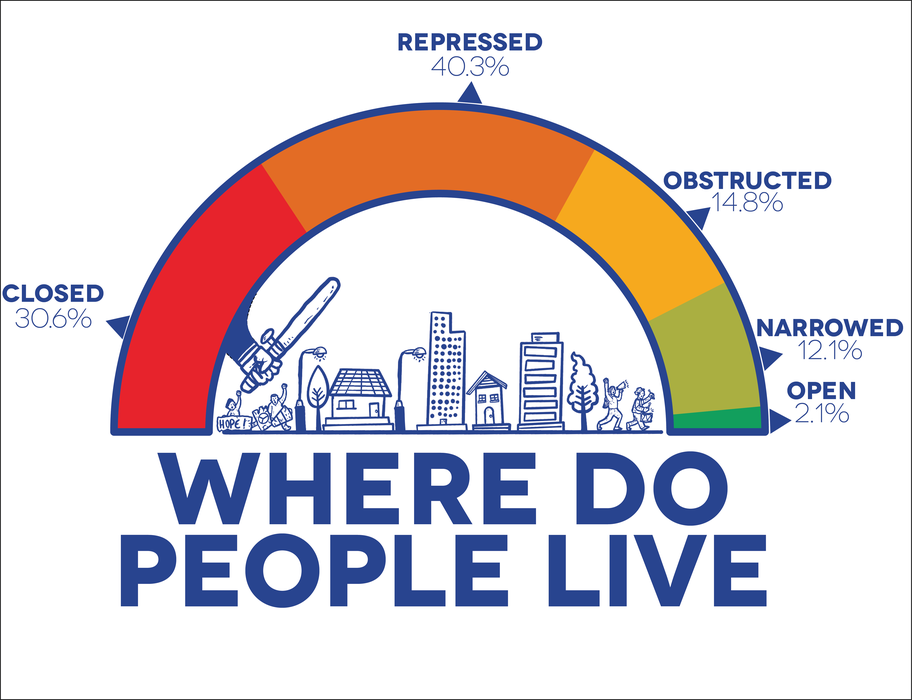
Almost a third of the world’s population now lives in countries with closed civic space. This is the highest percentage since 2018, when CIVICUS began systematically tracking civic space conditions around the world. This startling decline – from 26 per cent living in closed countries in 2018 to 30.6 per cent today – points to a major civic space crisis that requires immediate, global efforts to reverse. This year we also recorded the lowest percentage of humanity living in open countries, where civic space is both free and protected. Today, just two per cent of the world’s population enjoys the freedom to associate, demonstrate and express dissent without significant constraints, down from almost four per cent just five years ago.

Since the previous edition of this report, which covered 2022, civic space ratings have changed for 12 countries over the last year, worsening in seven countries and improving in five.

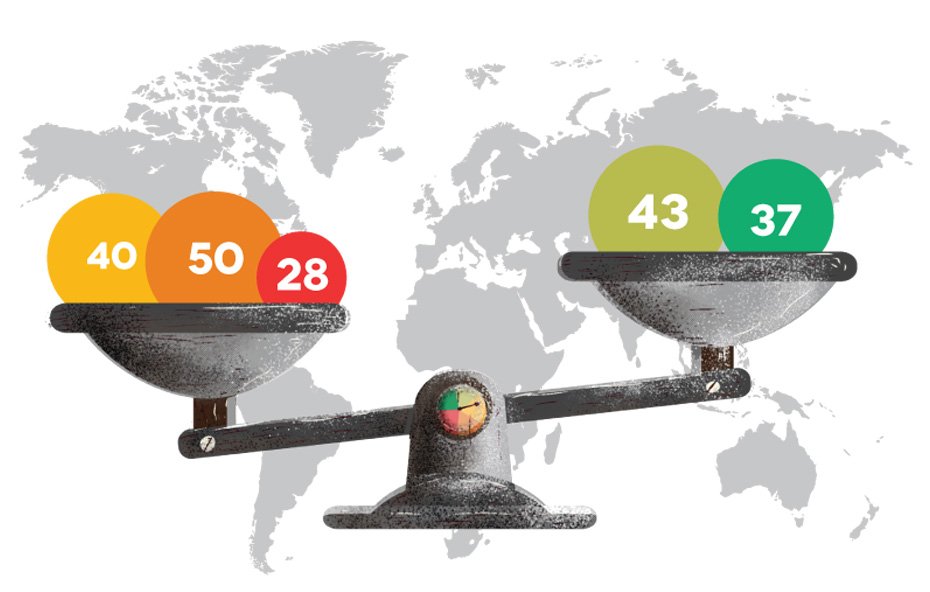
The latest CIVICUS Monitor country ratings update in December 2023 indicates that civil society faces an increasingly hostile environment. There are now 28 countries or territories with closed civic space, 50 with repressed civic space and 40 with obstructed civic space, meaning that 118 of 198 countries and territories are experiencing severe restrictions in fundamental freedoms. In comparison, 43 countries have narrowed civic space and just 37 have an open rating.

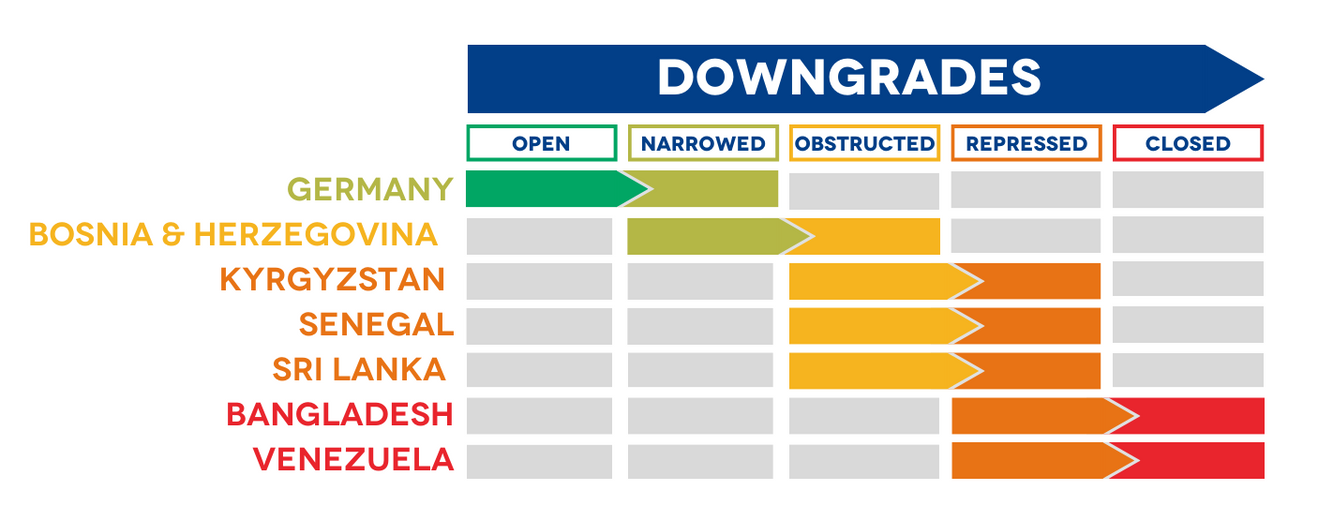
The severity of the civic space deterioration is exemplified by the number of countries moving to the repressed or closed category. Of the seven countries being downgraded, five moved to the two worst categories. Bangladesh and Venezuela are now rated as closed and Kyrgyzstan, Senegal and Sri Lanka are downgraded to the repressed rating as conditions for civil society continue to worsen.

Europe continues to add to the list of downgraded countries, with Bosnia and Herzegovina now placed in the obstructed category and Germany moving from an open to a narrowed rating. Over the past six years, 12 European countries have seen their ratings downgraded due to deteriorating civic space conditions.

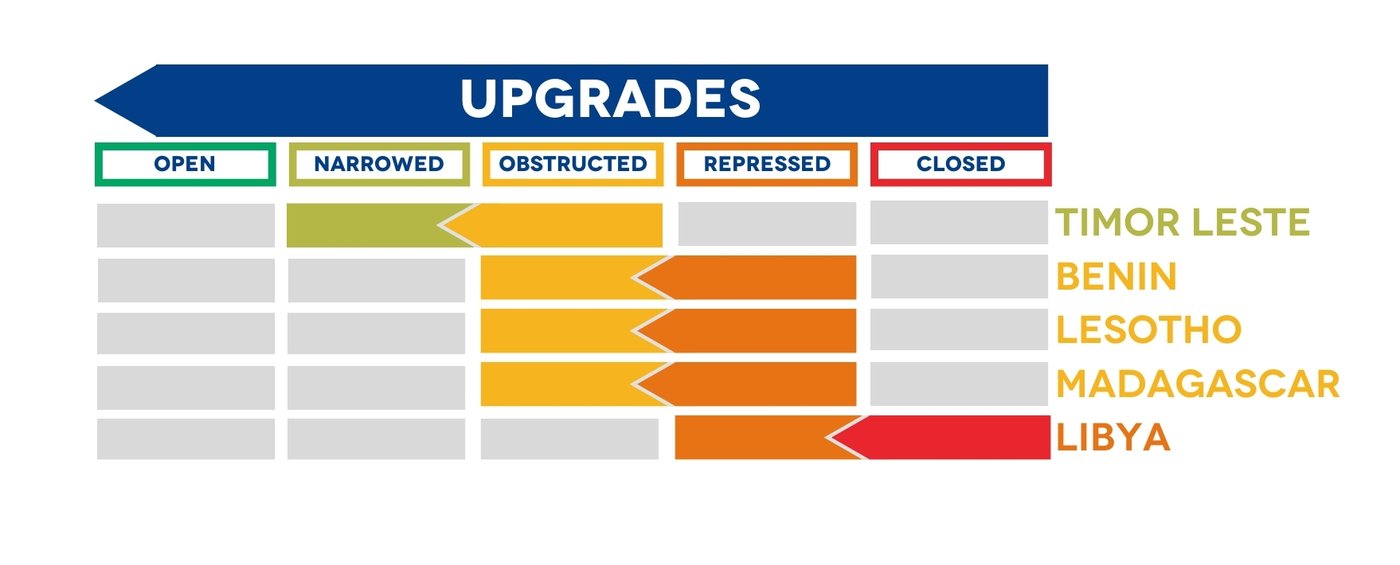
Five countries have upgraded ratings in 2023, although, as in previous years, the situation for civil society in these countries continues to be challenging. Libya moved from the closed to the repressed category. Benin, Lesotho and Madagascar have moved from the repressed to the obstructed category. Notably, Timor-Leste has joined the narrowed category. Regional sections describe the conditions that led to ratings changes.

Compare last year: https://humanrightsdefenders.blog/2022/06/29/civicus-state-of-civil-society-report-2022/

https://monitor.civicus.org/globalfindings_2023

UN experts urge reforms in Bangladesh

January 31, 2024

AFP on 25 January, 2024 reported that UN experts urge Bangladesh to carry out major human rights reforms to reverse “repressive trends” following controversial elections that were boycotted by the opposition.

Bangladeshi Prime Minister Sheikh Hasina was sworn in for a fifth term on January 11. Her ruling Awami League party won nearly three-quarters of elected seats in parliament, with allied parties and friendly independent candidates making up nearly all the remainder.

Hasina has presided over breakneck economic growth in a country once beset by grinding poverty, but her government has been accused of rampant human rights abuses and a ruthless crackdown on dissent.

The UN experts said they were “alarmed” at reports of “widespread attacks, harassment and intimidation of civil society, human rights defenders, journalists and political activists, which marred the recent elections”. See also my earlier posts on Bangladesh: https://humanrightsdefenders.blog/tag/bangladesh/.

The experts called on the Government to:

  1. Immediately and unconditionally release all civil society and political activists detained without charge or on charges inconsistent with international human rights law; and ensure fair public trials in accordance with international human rights standards for those charged with criminal offences.
  2. Institute urgent and substantial reforms to guarantee the integrity and independence of the judicial system.
  3. Guarantee the free and unobstructed exercise of freedom of expression, association and peaceful assembly, refrain from imposing undue restrictions on protests and political rallies, and ensure effective accountability for serious violations of these fundamental freedoms.
  4. Respect the independence, freedom, diversity, and pluralism of the media, and ensure the safety of journalists from threats, physical and online violence, or judicial harassment and criminal prosecution for investigative and critical reporting.

The experts included the special rapporteurs on freedom of assembly, on the independence of judges, on human rights defenders and on freedom of opinion: Mr. Clément Nyaletsossi Voule, Special Rapporteur on the rights of freedom of peaceful assembly and of association, Ms. Margaret Satterthwaite, Special Rapporteur on the independence of judges and lawyers, Ms Mary Lawlor, Special Rapporteur on the situation of human rights defenders, Ms Irene Khan, Special Rapporteur on the protection and promotion of freedom of opinion and expression, Ms. Priya Gopalan (Chair-Rapporteur), Mr. Matthew Gillett (Vice-Chair on Communications), Ms. Ganna Yudkivska (Vice-Chair on Follow-Up), Ms. Miriam Estrada-Castillo, and Mr. Mumba Malila – Working Group on arbitrary detention.

https://www.brecorder.com/news/40285577

https://www.ohchr.org/en/press-releases/2024/01/bangladesh-government-must-prioritise-human-rights-its-fourth-term

https://www.omct.org/en/resources/statements/bangladesh-arbitrary-detention-and-impunity-for-torture-continues-after-elections

Today: International Human Solidarity Day

December 20, 2023

UN experts today emphasised the need for the international community to support civil society groups expressing international solidarity in pursuit of peace and social justice and not to conflate international solidarity with antisemitism or islamophobia. It is a remarkably large group of UN experts (see below). They have issued the following statement:

We would like to raise public awareness about the need to support concrete actions by civil society groups that express international solidarity in our pursuit of peace and social justice.

The Universal Declaration of Human Rights, Article 1 establishes universal solidarity as the foundation for human rights: “All human beings are born free and equal in dignity and rights. They are endowed with reason and conscience and should act towards one another in a spirit of brotherhood [and sisterhood].”

Around the world, civil society groups have expressed international solidarity in marches and social media campaigns to call for peace and the protection of civilians in armed conflict. Moreover, they have also expressed international solidarity in pursuit of non-discrimination and equality (the core elements of positive peace) by advocating access to justice, truth, protection, and humane treatment for: children, women, members of the LGBTAIQ+ community, persons affected by leprosy (Hansen’s disease), persons with disabilities, racialized, indigenous groups, and other minorities subjected to violence, hate speech, and discrimination, families of disappeared persons, refugees and migrants, victims of terrorism/violent extremism and counter-terrorism/violent extremism measures, and the environment.

The recent significant engagement of people of all ages and diverse backgrounds in the expression of international solidarity is a powerful affirmation of the value of human rights as a narrative of emancipation in response to violence, oppression, and marginalisation.

It is imperative that civil society actors not be subject to censorship and reprisals for their expression of international solidarity, including loss of funding, loss of employment, arrest, attack, harassment, persecution, criminalisation, or other forms of penalisation.

Actions and expressions that promote transnational unity, empathy, tolerance, and cooperation are the elements of a strong culture of international solidarity in support of peace and social progress.

The most striking impact of the contemporary expressions of international solidarity is their embrace of the principle of humanity – the demand to protect life and alleviate human suffering. The combination of these two universal principles underscores the priority of exhausting peaceful dispute resolution mechanisms before using force.

We call on the international community to encourage International Solidarity expressions of civil society groups and human rights defenders that acknowledge that everyone should enjoy human rights without discrimination of any type. States should open civic spaces and refrain from criminalising non-violent actions and expressions that promote international solidarity. International Solidarity should not be conflated with antisemitism, islamophobia, or other movements that are examples of exclusionary, segregated unitary orientations which violate non-discrimination and equality principles.

International Solidarity promotes inclusion through bridge-building and invites everyone to stand up for peace as a fundamental premise for the enjoyment of human rights.”

The experts: Cecilia M. Bailliet, Independent Expert on human rights and international solidarity; Aua Baldé (Chair-Rapporteur), Gabriella Citroni (Vice-Chair), Angkhana Neelapaijit, Grażyna Baranowska, Ana Lorena Delgadillo Pérez, Working Group on enforced or involuntary disappearances; Reem Alsalem, Special Rapporteur on violence against women and girls, its causes and consequences;Tomoya Obokata, Special Rapporteur on contemporary forms of slavery, including its causes and consequences; Irene Khan, Special Rapporteur on the protection and promotion of freedom of opinion and expression; Farida Shaheed, Special Rapporteur on the right to education; Livingstone Sewanyana, Independent Expert on the promotion of a democratic and equitable international order; Alice Jill Edwards, Special Rapporteur on Torture and other Cruel, Inhuman or Degrading Treatment or Punishment; Paula Gaviria BetancurSpecial Rapporteur on the human rights of internally displaced persons;  Ben SaulSpecial Rapporteur on the promotion and protection of human rights and fundamental freedoms while countering terrorism; Graeme Reid, Independent Expert on protection against violence and discrimination based on sexual orientation and gender identity; Marcos OrellanaSpecial Rapporteur on toxics and human rights ; Alioune Tine, Independent Expert on the situation of human rights in Mali; Mama Fatima Singhateh, The Special Rapporteur on the sale, sexual exploitation and sexual abuse of children; Michael Fakhri, Special Rapporteur on the right to food; Beatriz Miranda GalarzaSpecial Rapporteur on the elimination of discrimination against persons affected by leprosy and their family members; Clément Nyaletsossi Voule, Special Rapporteur on the rights to freedom of peaceful assembly and of association.;  Dorothy Estrada Tanck (Chair), Claudia Flores, Ivana Krstić,  Haina Lu, and Laura Nyirinkindi, Working Group on discrimination against women and girls;  Damilola Olawuyi (Chairperson), Robert McCorquodale (Vice-Chairperson), Elżbieta Karska, Fernanda Hopenhaym, and Pichamon Yeophantong, Working Group on the issue of human rights and transnational corporations and other business enterprises; Carlos Salazar Couto  (Chair-Rapporteur), Sorcha MacLeod, Jovana Jezdimirovic Ranito, Chris M. A. Kwaja, Ravindran Daniel, Working Group on the use of mercenaries; Javaid Rehman, Special Rapporteur on the situation of human rights in the Islamic Republic of Iran; Gehad Madi, Special Rapporteur on the human rights of migrants; Richard Bennett, Special Rapporteur on the situation of human rights in Afghanistan; Tlaleng Mofokeng, Special Rapporteur on the right of everyone to the enjoyment of the highest attainable standard of physical and mental health; David BoydSpecial Rapporteur on the issue of human rights obligations relating to the enjoyment of a safe, clean, healthy and sustainable environmentAlexandra Xanthaki, Special Rapporteur in the field of cultural rights;  Priya Gopalan (Chair-Rapporteur),  Matthew Gillett (Vice-Chair on Communications),  Ganna Yudkivska (Vice-Chair on Follow-Up), Miriam Estrada-Castillo, and Mumba Malila, Working Group on arbitrary detention; Ms Attiya Waris, Independent Expert on the effects of foreign debt and other related international financial obligations and human rights.

https://www.ohchr.org/en/statements/2023/12/support-civil-societys-international-solidarity-efforts-peace-un-experts

ISHR launches its 2023 Annual Report, highlighting ‘wins’

April 25, 2023

Human rights defenders around the world are coming together in powerful coalitions and turning to international human rights laws and systems to achieve justice and accountability. And while the threats and challenges remain enormous, we’re starting to win! says ISHR in its latest annual report, outlining key impacts during the last year and its vision for 2023 and the years ahead.

Here are just a few examples:  In July 2022, a coalition of more than 1200 NGOs from almost 150 countries secured a win for equality with the renewal of a vital international mechanism to combat violence and discrimination on the grounds of sexual orientation or gender identity. Just a few weeks later, land, environment and indigenous rights defenders secured a win for climate justice with the landmark recognition of the right to a clean, healthy and sustainable environment at the UN General Assembly. Wins for accountability were achieved in April and October when international, regional and national civil society organisations coordinated successful campaigns to suspend Russia from the UN Human Rights Council and establish an independent international expert monitoring mechanism on the human rights situation in the country. International human rights organisations and Uyghur communities came together to score a win against impunity in August by securing the release of a landmark UN Rights Office report on the human rights crisis in Xinjiang, as well as the first ever formal initiative on China at the Human Rights Council just weeks later in September.

See more achievements by visiting the website!
In a recent conversation with Björk, environmental activist Greta Thunberg reflected that hope is not something you feel, but something you do. ‘When people act,’ she said, ‘they create hope’. In 2023, fuelled by indignation and sustained by hope, ISHR’s commitment is to provide solidarity to defenders, contribute to positive momentum and, with your support, achieve even more significant human rights wins!

https://mailchi.mp/ishr/ishrs-human-rights-council-monitor-june-33837?e=d1945ebb90

The 2023 CIVICUS State of Civil Society Report is out

March 30, 2023

On 30 March 2023 the CIVICUS State of Civil Society Report 2023 was published. This is the world as captured by the report:

[for last year’see: https://humanrightsdefenders.blog/2022/06/29/civicus-state-of-civil-society-report-2022/]

Vast-scale human rights abuses are being committed in Ukraine, women’s rights have been trampled on in Afghanistan and LGBTQI+ people’s rights are under assault in Uganda, along with several other African countries. Military rule has been normalised in countries such as MaliMyanmar and Sudan, and democracy undermined by autocratic leaders in El SalvadorIndia and Tunisia, among others. Even supposedly democratic states such as Australia and the UK are undermining the vital right to protest.

But civil society continues to strive to make a crucial difference to people’s lives. It’s the force behind a wave of breakthroughs in respecting abortion rights in Latin America, most recently in Colombia, and in making advances in LGBTQI+ rights in countries as diverse as BarbadosMexico and Switzerland. Mass protests in response to the high cost of living have won concessions on economic policy in countries including Ecuador and Panama, while union organising has gained further momentum in holding big-brand companies such as Amazon and Starbucks to account. Progress on financing for the loss and damage caused by climate change came after extensive civil society advocacy. The events of the past year show that civil society – and the space for civil society to act – are needed more than ever.

Key findings

  • Civil society is playing a key role in responding to conflicts and humanitarian crises – and facing retaliation

Civil society is playing a vital role in conflict and crisis settings – including in conflicts in Ethiopia, Syria and Ukraine – providing essential services, helping and advocating for victims, monitoring human rights and collecting evidence of violations to hold those responsible to account. But for doing this, civil society is coming under attack.

  • Catastrophic global governance failures highlight the urgency of reform

Too often in the face of the conflicts and crises that have marked the world over the past year, platitudes are all international institutions have had to offer. Multilateral institutions have been left exposed by Russia’s invasion of Ukraine. It’s time to take civil society’s proposals to make the United Nations more democratic seriously – starting with the appointment of a civil society champion.

  • People are mobilising in great numbers in response to economic shock – and exposing deeper problems in the process.

As it drove a surge in fuel and food prices, Russia’s war on Ukraine became a key driver of a global cost of living crisis. This triggered a mass wave of protests in at least 133 countries – from Argentina to Indonesia and from Ghana to Kazakhstan – demanding economic justice. Civil society is putting forward progressive economic ideas, connecting with other struggles for rights, including for climate, gender, racial and social justice.

  • The right to protest is under attack – even in longstanding democracies

Many states, unwilling or unable to concede the deeper demands of protests have responded with violence, including in IranSierra Leone and Sri Lanka. The right to protest is under attack all over the world, including when people are mobilising to seek economic justice, democracy, human rights and environmental action. Civil society groups are striving to defend protest rights.

  • Democracy is being eroded in multiple ways – including from within by elected leaders

Economic strife and insecurity are providing fertile ground for the emergence of authoritarian leaders. In more democratic contexts, there are distinct trends of a further embrace of far-right extremism, and of the rejection of incumbency. In volatile conditions, civil society is working to resist regression and keep making the case for inclusive, pluralist and participatory democracy.

  • Disinformation is skewing public discourse, undermining democracy and fuelling hate

Disinformation is being mobilised, particularly in conflicts and during elections, to sow polarisation, normalise extremism and attack rights. Powerful authoritarian states and far-right groups are key sources, and social media companies are doing nothing to challenge a problem that’s good for their business model. Civil society needs to forge a joined-up, multifaceted global effort to counter disinformation.

  • Movements for women’s and LGBTQI+ rights are making gains against the odds

In the face of difficult odds, civil society continues to drive progress on women’s and LGBTQI+ rights. But breakthroughs have made civil society the target of a ferocious backlash. Civil society is working to resist attempts to reverse gains and build public support to ensure that legal changes are backed by shifts in attitudes.

  • Civil society is the major force behind the push for climate action

Civil society continues to be the force sounding the alarm on the triple threat of climate change, pollution and biodiversity loss. Civil society is urging action using every tactic available, from street protest and direct action to litigation and advocacy in national and global arenas. But the power of the fossil fuel lobby remains undimmed and restrictions on climate protests are burgeoning. Civil society is striving to find new ways to communicate the urgent need for action.

  • Civil society is reinventing itself to adapt to a changing world

In the context of pressures on civic space and huge global challenges, civil society is growing, diversifying and widening its repertoire of tactics. Drawing on its special strengths of diversity, adaptability and creativity, civil society continues to evolve. Much of civil society’s radical energy is coming from small, informal groups, often formed and led by women, young people and Indigenous people. There is a need to support and nurture these..

Interviews For more information or to arrange an interview, please contact: media@civicus.org 

https://www.civicus.org/index.php/media-resources/news/6339-civil-society-in-a-world-of-crisis-2023-civicus-state-of-civil-society-report

Foreign Agent law in Russia from bad to worse

December 12, 2022

A new law entered into force in Russia that drastically expands the country’s oppressive and vast “foreign agents” legislation, Human Rights Watch said on 1 December 2022. The law is yet another attack on free expression and legitimate civic activism in Russia, and should be repealed:

Adopted in July 2022, the law’s entry into force was delayed until December 1. The law expands the definition of foreign agent to a point at which almost any person or entity, regardless of nationality or location, who engages in civic activism or even expresses opinions about Russian policies or officials’ conduct could be designated a foreign agent, so long as the authorities claim they are under “foreign influence.” It also excludes “foreign agents” from key aspects of civic life. 

“For more than a decade, Russian authorities have used ‘foreign agents’ laws to smear and punish independent voices,” said Rachel Denber, deputy Europe and Central Asia director at Human Rights Watch. “This new tool in the government’s already crowded toolbox makes it even easier to threaten critics, impose harsh restrictions on their legitimate activities and even ban them. It makes thoughtful public discussion about Russia’s past, present, and future simply impossible.” See also: https://humanrightsdefenders.blog/2022/05/21/kasparov-and-khodorkovsky-are-now-also-foreign-agents/

In Russia, the term “foreign agent” is tantamount “spy” or “traitor.” The foreign agent designation remains extra-judicial, with no possibility to contest it in court before the designation is made. Those designated must comply with all requirements the day after the authorities add them to the registry, even if they challenge the designation in court.

When the first foreign agent law was adopted in 2012, only registered organizations could be designated “foreign agents.” Successive amendments gradually expanded the application from registered organizations, to media, to other categories of individuals, and to associations without legal entities.

The July law, On Control Over Activities of Entities/Persons Under Foreign Influence, replaces these with a consolidated, simplified, but endlessly broad definition to cover any person – Russian, foreign or stateless; any legal entity, domestic or international; or any group without official registration, if they are considered to have received foreign support and/or are considered to be “under foreign influence” and engaged in activities that Russian authorities would deem to be “political.” It also covers anyone who gathers information about Russia’s military activities or military capabilities, or creates or publicly disseminates information or funds such activities.

The law defines “foreign influence” as “support” from foreign sources that includes funding, technical assistance, or other undefined kinds of assistance and/or open-ended “impact” that constitutes coercion, persuasion, and/or “other means.”

Under this definition, any interaction with a foreign element can potentially be construed as “foreign influence,” Human Rights Watch said. There is also no requirement for any causal link between “foreign influence” and the “political” or other activities for the designation to be applicable.

Foreign sources include not only foreign states or foreign entities, but also international organizations, presumably including such multilateral organizations as the United Nations. The law considers Russian nationals or organizations “foreign sources” if they are respectively considered by the Russian authorities to be under “foreign influence” or to be beneficiaries of “foreign funding.”

To avoid the “foreign agent” label, an organization needs to ensure that no source of any donation was at any stage “tainted” by “foreign influence,” including indirectly.

In defining what constitutes “political” activities of a foreign agent, the law consolidates provisions of earlier iterations of “foreign agent” amendments to include “opinions about public authorities’ decisions or policies.” For example, a journalist who publishes a commentary about urban development plans could fall under the definition of foreign agent activity.

The new law also excludes “foreign agents” from key aspects of public life. These include bans on joining the civil service, participating in electoral commissions, acting in an advisory or expert capacity in official or public environmental impact assessments, in independent anti-corruption expertise of draft laws and by-laws, or electoral campaigns or even donating to such campaigns or to political parties.

Foreign agents are also banned from teaching or engaging in other education activities for minors or producing informational materials for them. They cannot participate in organizing public assemblies or support them through donations and are barred from a number of other activities.

The law expands the notion of a person or entity affiliated with a “foreign agent,” which was first introduced in 2021 in relation to electoral candidates. A person remains “affiliated” up to two years after they sever ties with the foreign agent, even if the “affiliation” started before the law entered into force, and even if the “affiliation” started before the entity was designated a foreign agent.

Since the adoption of the first “foreign agents” law, hundreds of civic groups and activists, including those that work on human rights, the environment, election monitoring, and anti-corruption, have been designated “foreign agents.” A large number of organizations had to close down because they either sought to avoid the toxic label or were unable to bear the hefty fines imposed for not complying with the law’s burdensome, arbitrary labelling and reporting requirements. The authorities used the “foreign agents” law as a legal pretext to close down other groups, such as the human rights group Memorial, one of the 2022 Nobel Peace Prize laureates. See also: https://humanrightsdefenders.blog/2021/12/29/russias-supreme-court-orders-closure-emblematic-memorial/

This new ‘foreign agents’ law is an unrestrained attack on Russian civil society aimed at gagging any public criticism of state policies,” Denber said. “It should be scrapped.”

https://www.hrw.org/news/2022/12/01/russia-new-restrictions-foreign-agents

CIVICUS STATE OF CIVIL SOCIETY REPORT 2022

June 29, 2022

This year’s report published at the halfway point of 2022 shines a light on a time of immense upheaval and contestation. The report finds hope, however, in the many mobilisations for change around the world: the mass protests, campaigns and people’s movements for justice, and the many grassroots initiatives defending rights and helping those most in need.

The report identifies five key current trends of global significance:

  1. Rising costs of fuel and food are spurring public anger and protests at economic mismanagement
  2. Democracy is under assault but positive changes are still being won
  3. Advances are being made in fighting social inequality despite attacks
  4. Civil society is keeping up the pressure for climate action
  5. Current crises are exposing the inadequacies of the international governance system.
  1. Governments around the world are failing to protect people from the impacts of massive price rises worsened by Russia’s invasion of Ukraine. Public anger at a dysfunctional economic system, poverty and economic inequality and corruption is rising. Mass protests are the result. In Sri Lanka, widespread protests against economic mismanagement led to resignation of the prime minister. In Iran people are demanding fundamental change as food prices soar. In Kazakhstan over 200 people were killed with impunity following protests over fuel price rises. But people will continue to protest out of necessity even in the many countries where fundamental freedoms are repressed and state violence is inevitable.
  1. Institutions and traditions of democracy are under increasing attack. Coups are imperilling hard-fought gains. The military has gained power in multiple countries, including Burkina Faso and Sudan. In several others, including El Salvador and Tunisia, elected presidents are removing democratic checks on power. Entirely fraudulent elections have been held in countries as different as Nicaragua and Turkmenistan. Autocratic nationalists have triumphed in elections in countries including Hungary and the Philippines. But at the same time there have been successful mobilisations to defend democracy, not least in theCzech Republic and Slovenia, where people voted out political leaders who fostered divisiveness in favour of fresh and broad-based alternatives. Progressive leaders promising to advance social justice have won power in countries such as Chile and Honduras. In many contexts, including Costa Rica andPeru, a prevailing sentiment of dissatisfaction is leading to a rejection of incumbency and willingness to embrace candidates who run as outsiders and promise disruption.
  1. In politically turbulent times, and despite severe pushback by anti-rights groups, progress has been achieved in advancing women’s and LGBTQI+ rights. The USA, where neoconservative forces are emboldened, is ever more isolated on sexual and reproductive rights as several other countries in the Americas, including Colombia and Mexico, have eased abortion restrictions following civil society advocacy. Opportunistic politicians continue to seek political advantage in vilifying LGBTQI+ people, but globally the normalisation of LGBTQI+ rights is spreading. Most recently, the people of Switzerland overwhelmingly voted in favour of an equal marriage law. Even in hostile contexts such as Jamaica important advances have come through civil society’s engagement in regional human rights systems. But when it comes to fighting for migrants’ rights, only Ukrainian refugees in Europe are being received with anything like the kind of compassion all such people deserve, and otherwise the dominant global sentiment is hostility. Nonetheless, a new generation is forging movements to advance racial justice and demand equity for excluded people.
  1. A young and diverse generation is the same social force that continues to make waves on climate change. As extreme weather gets more common, the brunt of the climate crisis continues to fall disproportionately on the most excluded populations who have done the least to cause the problem. Governments and companies are failing to act, and urgent action on emissions cuts to meet the size of the challenge is being demanded by civil society movements, including through mass marches, climate strikes and non-violent civil disobedience. Alongside these, climate litigation is growing, leading to significant legal breakthroughs, such as the judgment in the Netherlands that forced Shell to commit to emissions cuts. Shareholder activism towards fossil fuel firms and funders is intensifying, with pension funds coming under growing pressure to divest from fossil fuels.
  1. Russia’s war on Ukraine is the latest crisis, alongside recent conflicts in the Sahel, Syria and Yemen, among others, to expose the failure of global institutions to protect people and prevent conflict. The UN Security Council is hamstrung by the veto-wielding role of Russia as one of its five permanent members, although a special session of the UN General Assembly yielded a resolution condemning the invasion. Russia has rightly been suspended from the UN Human Rights Council, but this peak human rights body remains dominated by rights-abusing states. If the UN is to move from helping to prevent crises rather than trying to react to them, effective civil society engagement is needed. The world as it stands today, characterised by crisis and volatility, needs a UN prepared to work with civil society, since civil society continues to seek and secure vital progress for humanity.

See also: https://humanrightsdefenders.blog/2021/05/26/10th-edition-of-civicuss-state-of-civil-society-report-2021/

See also the IPS post: https://www.ipsnews.net/2022/06/five-takeaways-2022-state-civil-society-report/?utm_source=rss&utm_medium=rss&utm_campaign=five-takeaways-2022-state-civil-society-report