The 2024 Asia Democracy and Human Rights Award (ADHRA) will be awarded to Odhikar in recognition of “the civil and political rights advocacy they have carried out and expanded in Bangladesh for three decades, despite challenges such as harassment, imprisonment, and surveillance,” TFD said in a press release.
It is hoped that the award will “encourage their work and those in the same field” so they “realize their efforts and perseverance have not gone unnoticed,” said the TFD, a nonprofit organization funded by Taiwan’s government.
Founded in 1994, the group has “deepened democracy and human rights in Bangladesh” through research, advocacy, and training, as well as government oversight efforts, the foundation said.
Odhikar, which means “rights” in Bengali, was founded by human rights activist Adilur Rahman Khan, who currently serves as the group’s secretary.
According to its website, Odhikar’s principal objectives include raising awareness of human rights and its various abuses, and promoting a vibrant democratic system through election monitoring in Bangladesh.
The Bengali group has issued annual reports since 1996 that document human rights abuses, extrajudicial killings, involuntary disappearances and other violations, the TFD said.
The TFD also highlighted Odhikar’s role in urging the Bengali government to ratify the Rome Statute for the International Criminal Court in 2010, which subsequently led the country to contribute to investigations into the persecution of the Rohingya people.
TFD’s award ceremony will be held in Taipei on Dec. 10, the foundation said, adding that the award winner would receive a trophy and a grant of US$100,000.
Established jointly by the Ministry and Nobel Peace Prize laureate Dmitry Muratov in 2023 this prize honors the work of reporters and photojournalists who are continuing their vital mission of spreading free, reliable, quality information in crisis and conflict areas. Journalist Anna Politkovskaya was working in Russia for Novaya Gazeta, whose investigations into corruption, attacks on human rights and the war in Chechnya cost the lives of six of its reporters. Despite the threats she received, she never stopped working to inform the public. Despite the risk to his life, AFP reporter and photojournalist Arman Soldin helped inform the entire world about the reality of the Russian aggression in Ukraine through the photos he took on the front lines of the conflict, starting in February 2022.
The second Anna Politkovskaya-Arman Soldin Prize in 2024 has been awarded to Israeli journalist Yuval Abraham and Palestinian journalist Basel Adra for their whole body of work on the Israeli occupation and settlement-building in the West Bank and in Palestinian territories.
Yuval Abraham and Basel Adra belong to an Israeli-Palestinian collective that made the documentary, No Other Land, which won an award at the 2024 Berlinale. In it, the Palestinian journalist Basel Adra filmed evictions of Palestinians in the West Bank over five years and meets the Israeli journalist Yuval Abraham. The film tells the story of their friendship that was built over the years of their collaboration.
The first 2023 Anna Politkovskaya-Arman Soldin Prize for Courage in Journalism, was awarded to the Mexican journalist Marcela Turati for her commitment to reporting on violence related to drug trafficking and the social consequences of the war waged against cartels, despite the risks that have often cost Mexican journalists their lives.
A Kenyan newspaper reported on 8 November 2024 something unusual with regard to human rights awards: Police officer Jackson Kuria, aka Shakur the cop, was nominated for the african Human Rights Defenders Awards. The outspoken police officer is the first uniformed officer ever nominated for this prestigious award In an interview with TUKO.co.ke, Shakur emphasised that police officers are meant to protect civilians and their rights. Jackson Kuria Kihara, aka @Shakurthecop, publicly opposed the Finance Bill 2024 and protested against it. Cop Shakur is the first uniformed officer nominated for Human Rights Defenders Award.
The newspaper adds: Did Cop Shakur merit the award? This is a huge milestone for the police officer, as he has made history as the first uniformed officer to be considered for the award.
The Lorenzo Natali Journalism Prize, sponsored by the European Commission (EU), is inviting applications that recognise excellence in writing, radio, and broadcast journalism on the theme of development, democracy, and human rights around the world. Sewe: https://www.trueheroesfilms.org/thedigest/awards/D49ECF35-4B42-444D-B4FA-F7ACE2BF65BC
This year’s contest is focused on related issues of gender equality, human development, climate, environment and energy, digital and infrastructure, sustainable growth and jobs, youth, migration and forced displacement, peace, and governance.
The application encouraged journalists committed to defending democracy and human rights can enter a competition.
The contest has four award categories: Best Emerging Journalist, Investigative Journalism, Feature Journalism, and Special Photojournalism.
Works must have been published or broadcast between May 30, 2023, and May 24, 2024.
On 11 June 2024 it was revealed that Professor Pumla Gobodo-Madikizela has been awarded the Templeton Prize, an honour that commends those who have used their scholarly paths to explore “the deepest questions about humanity and the universe”,
The South African professor, psychologist, has been commended for career-defining victories including winning the Harry Oppenheimer Fellowship Award (2020) and a fellowship at Harvard University’s Radcliffe Institute, not to mention the leadership positions she hold. Professor Gobodo-Madikizela is the SARChi Chair for Violent Histories and Historical Trauma, the Founding Director of the Centre for the Study of the Afterlife of Violence and the Reparative Quest (AVReQ). Notably, she was also an influential member of the Truth and Reconciliation Commission.
Through her work, the professor has been imperative to knowledge on the transgenerational impact of historical traumas. The John Templeton Foundation’s president, Heather Dill spotlighted Prof Gobodo-Madikizela as “a guiding light within South Africa as it charts a course beyond apartheid, facilitating dialogue to help people overcome individual and collective trauma.”
For the acclaimed professor, the Templeton Prize is a gracious gift (it is a prize of £1.1 million: “I am excited that I can use the Templeton Prize to help fund our postgraduate students and postdoctoral fellows at a time of reduced funding all-round,” said the professor who has pledged to donate R8 million to Stellenbosch University.
Now in its 18th year, the Secretary of State’s IWOC Award recognizes women from around the globe who have demonstrated exceptional courage, strength, and leadership in advocating for peace, justice, human rights, gender equity and equality, and the empowerment of women and girls, in all their diversity – often at great personal risk and sacrifice. The 2024 awardees and many earlier laureates can be found via the Digest link above.
USAID Administrator Samantha Power had the following to say: It has always taken bravery and stubbornness to stand up for human rights. But today the threats that human rights activists and defenders face – from threats to their families to legal retribution to imprisonment and outright violence at the hands of those who would prefer to see them silenced – those threats are grave, and sadly they are growing. In 2022, more than 400 human rights defenders were murdered, the highest number ever recorded in a single year. I am in awe of the women we are honouring today for their courage.
They refuse to back down because of a shared conviction captured by Fatima Corazon, one of the women we are recognizing today. As she puts it, courage, even in the face of danger and fear is the driving force to achieve positive change. The women we are honoring live this conviction every minute of every day. They have been unjustly imprisoned, they have been driven from their homes or trapped inside their homes, they have seen their families and their colleagues attacked, or they have received death threats and been assaulted themselves.
But they do not relent. They go on fighting, they fight for the rights of political prisoners, they organize movements to bring services to marginalized communities, they publish articles, they host rallies, and they call out injustice wherever they can. Even in the most dangerous places against all odds, they are continuing their work demonstrating incredible, inspiring courage and putting their lives on the line to defend human rights.
Benafsha Yaqoobi has dedicated her life to defending the rights of women and girls in Afghanistan. A former attorney and member of the Afghanistan Independent Human Rights Commission, she has helped women escape violence and visually impaired children attend school. Today, she continues to fight for the future of Afghanistan – one that respects human rights and human dignity.
Born in Isla Luis Vargas Torres, one of the most violent enclaves within Esmeraldas, Ecuador, Fátima Corozo has put her life on the line to draw hundreds of young people away from rising gang violence and help them get the education and job opportunities they need to build the futures they want for themselves.
Martha Beatriz Roque Cabello was the only woman amongst 75 people imprisoned during the black spring, Cuba’s crackdown on dissidents two decades ago, Martha was jailed for her activism. After her release, she continued to fight for the rights of political prisoners documenting fraudulent court hearings and supporting activists and their families. Unfortunately, as the Secretary relayed, the Cuban government is preventing Ms. Roque Cabello from leaving the country. So she is not here to accept the award, but let us give her a heartfelt round of applause.
As a result of Fariba Balouch’s outspoken activism for the rights of women and systematically oppressed ethnic minorities in Iran’s poorest province of Sistan and Baluchestan, Iranian authorities have threatened her life. And after she escaped to London, they detained her son and brother in a further attempt to intimidate her. Yet, Ms. Balouch believes the only way forward is resistance, and she continues to advocate for marginalized communities in Iran refusing to be silenced.
With the March 1 deadline swiftly approaching, the window to nominate for the 2024 Right Livelihood Award is closing fast! This is your opportunity to nominate individuals and organisations striving for social and environmental justice. The nomination process is open to the public— we invite you to elevate those making a significant impact through their courageous efforts. While submissions are encouraged in English, we also welcome nominations in French and Spanish via our online form. If you have questions about the nomination process, do not hesitate to contact us via email at research@rightlivelihood.org or by phone at +41 (0)22 555 0943. NOMINATE NOW
Since 1980, Right Livelihood has celebrated the courageous and the visionary with its annual awards. It’s not just an award; it’s a global recognition of those who dare to envision and take action to create long-term social change. The Right Livelihood Award defies categories. This means the Laureates work in diverse fields across the world. Spanning from journalists who have brought truth to light to entomologists safeguarding biodiversity and poets who touch hearts and minds, the Award demonstrates that impactful work can come from anyone, anywhere.
After 4.5 years, Isabel de Sola is getting ready to leave her position as Director of the Martin Ennals Foundation by the end of January. The Project Coordinator is envisioned to take over a sub-set of her responsibilities while collaborating with other members of the staff and Jury organizations.
The Award is approaching its 30th anniversary in 2024 – a moment which calls for a celebration of past achievements, as well as for some reflection on the future. The objective of the MEA 30th Anniversary project is to rally the Award’s friends and partners in Geneva to reinforce the message that protecting and bolstering HRDs is fundamental to the realization of UDHR and the HRDs Declaration.
The Martin Ennals Foundation is hiring a Project Coordinator to deliver on the 30th Anniversary project in 2024 and renew the Award for 2025. The Project Coordinator will be at the center of the Award’s activities, providing an essential link between the Board, Jury members, donors, consultants, and partners to the celebration in 2024-2025. An estimated 60% FTE is envisioned for this role, with peak periods at the nominations and Ceremony stages.
The Project Coordinator’s main responsibilities include:
Primary responsibility for the nominations process and coordination of the Jury for the selection of the 2024 Laureate. Maintenance of the Martin Ennals Award nominations database and oversight of the Jury voting process. Preparing and follow-up to Jury meetings – two or three during the year, as necessary.
Primary responsibility for the development and execution of the annual Award Ceremony. Liaises with the Ville de Geneve on a concept for the 2024 Ceremony, a new graphic identity, and the agenda of the event. Oversees organizational aspects of the Ceremony in consultation with the Ville de Geneve and event consultants.
Collaborates with consultants in the development and execution of an Award communication strategy aimed at raising the visibility of the Laureates and celebrating the MEA’s 30 years’ history.
Facilitates conduct of financial and administrative aspects of the Award project, including fundraising and advocacy-related activities together with the heads of departments and the Program Officer.
Supports fundraising for 2024-2025 and donor management, in collaboration with the relevant departments.
Supports the Program Officer in executing an advocacy strategy for MEA Laureates within Geneva-based advocacy and human rights policy development.
Contributes to monitoring and evaluating the 30th anniversary project, and annual narrative reporting for donors.
The Foundation is looking for a versatile and experienced project-manager who is passionate about human rights and rigorous in their planning and management style. The ideal candidate would bring inter alia, the following qualities and skills:
A master’s degree or +8 years of work experience in international relations, sustainable development, human rights, security policy, or related fields.
Familiarity with the international relations, human rights advocacy, and development cooperation ecosystem of Geneva.
Bilingual or professional fluency in both English and French.
A track-record in management of complex projects with many moving pieces. Ability to oversee several service providers and consultants simultaneously. Ability to budget and keep-track of financial aspects of the project.
Event planning experience.
Exposure to fundraising, monitoring and evaluation, or general reporting on projects.
The Project Coordinator will be offered a two-year contract with possibility of renewal.
To apply, please send your CV, a motivation letter, and a 300-word response to the following question to the MEF Board at barbara-lochbihler@gmx.de by February 2nd, 2024 cob:
“For the 30th anniversary celebration of the Award, the Martin Ennals Foundation and the City of Geneva will conduct a call-for-tender to identify a provider who can deliver a new graphic design for the Ceremony. How would you go about this task? Describe the steps you would take, a check-list of important items to consider, or your overall approach.”
Only short-listed candidates will be contacted for an interview in the month of February.
On 29 December 2023 Akram Miknas posted a piece on gdnonline attacking the Nobel Peace Prize. It is not my role to “defend” the Peace Prize, but the misconception underlying much of the piece is such that it is worth putting the record straight:
“Wish it were feasible to revoke the Nobel Peace Prize! Especially when some individuals upon whom this supreme honour is bestowed, show, by their subsequent actions and behaviour, that they are more suited to a ‘prize’ or ‘badge’ of shame associated with war and destruction or violence and bloodshed“
The author then raises the cases of Menachem Begin, Shimon Peres, and Aung San Suu Kyi, who are seen as violators. He could have added others such as Le Duc Tho, de Klerk, Arafat and Kissinger or more recently Abiy Ahmed Ali.
…”These examples make us question the logic of bestowing the Nobel on individuals or groups for peace, when their actions are anything but peaceful! In fact, after having received this honour, they have been involved in terrible acts that have stained them with the blood of their victims.”
…..Indeed, many of these Nobel Peace Prize laureates, are, in reality, perpetrators of war crimes. As far back as 2012 I published a piece ‘Nobel Prize is for Peace not necessarily Human Rights‘ which states that the Prize is a PEACE prize and was in certain cases awarded ‘merely’ because they stopped violating human rights. See: https://www.comminit.com/content/nobel-prize-peace-not-necessarily-human-rights
The author makes the sensible point of asking for a critical reassessment of the award selection process: “One key criterion should be that recipients must refrain from intertwining human rights advocacy with political activities. Failure to adhere to this condition should warrant the withdrawal of the award in the future. This measure ensures that the accolade is granted solely based on an individual’s commitment to human rights without any influence from political affiliations or perspectives.”
The author’s call to “to establish alternative awards that are …specifically designed to champion the causes of the vulnerable. It should recognise individuals who are committed to tirelessly working for peace, justice and the promotion of humane values within societies. These awards should gain appreciation and support from individuals and organisations dedicated to fostering positive change in oppressed communities.” is fine but hardly necessary as there are at least 200 such awards, see: https://www.trueheroesfilms.org/thedigest.
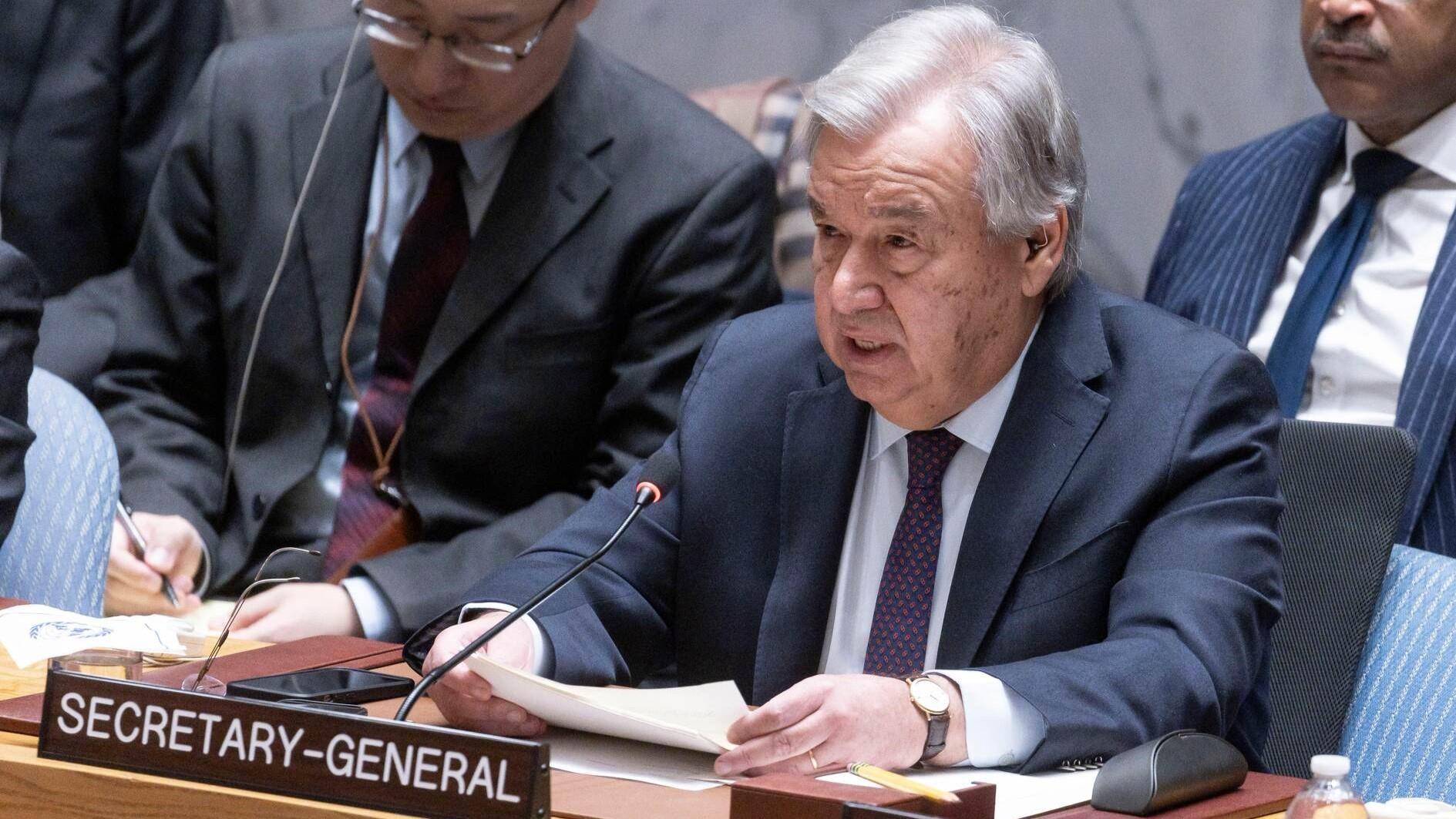
It is a pleasure to join you to honour the achievements of human rights defenders across the globe. Three quarters of a century ago, in a world decimated by war, the United Nations General Assembly proclaimed that: “All human beings are born free and equal in dignity and rights”.
The Universal Declaration of Human Rights is a clarion call to act in accordance with a fundamental truth: that each of us is an equal member of a single human family.
Seventy-five years on, the world must recall that wisdom. And it must act on it. Because human rights are under attack around the world. Conflicts are raging, with appalling consequences for civilians as we are dramatically witnessing every single day with immense death and suffering in Gaza after the horrors of the 7 October attacks. Inequalities are deepening. Hunger and poverty are rising. Women’s rights are stalling, and in some cases, going into reverse. Civic space and media freedom is being rolled back.
New threats are blossoming – from catastrophic climate disasters, to artificial intelligence, which holds the potential for immense possibility, but also for immense peril. And age-old hatreds are resurging with a vengeance – from racism, to xenophobia, and religious intolerance. People are being violently targeted solely for their religion, their ethnicity or who they love.
But across the world, human rights defenders are lights in the darkness.
They are changing lives:
Fighting, educating, and holding power to account, to make human rights a living, breathing reality. This is deeply dangerous work. Last year, almost 450 human rights defenders, journalists and trade unionists were killed. Forty percent more than the previous year. Thirty-three vanished without a trace – a staggering three hundred percent increase from 2021.
In this context, today’s Human Rights Prize is all the more important. This prize has recognized the achievements of human rights defenders since 1968. It has honored luminaries such as Nelson Mandela, Malala Yusafzai and the International Committee of the Red Cross. See: https://www.trueheroesfilms.org/thedigest/awards/74A3B502-F3DF-4DDB-8D6F-672C03B4A008.
Julienne Lusenge from the Democratic Republic of the Congo;
Julio Pereyra from Uruguay;
The Amman Center for Human Rights Studies;
The Human Rights Center “Viasna”, working in Belarus;
And the Global Coalition of civil society organizations, Indigenous Peoples, social movements and local communities for “the universal recognition of the right to a clean, healthy and sustainable environment”.
Congratulations to you all. And thank you for everything you are doing. I would also like to pay tribute tonight to the thousands of unsung human rights defenders around the world.
Leaders of all kinds must take inspiration from you – our prize recipients today –and defend all human rights – political, civil, social, economic, and cultural.
The world needs leaders of countries, corporations, political parties, religious and civil organizations and beyond, to speak out against antisemitism, anti-Muslim bigotry, attacks on minority Christian communities, and all forms of hate and abuse. It needs them to protect human rights defenders, and bring those who threaten them to justice.
It needs them to embrace our common norms and values, to act on them, and be guided by the spirit of humanity and dignity embodied by the Universal Declaration – to prevent conflict, protect the planet and heal divides.
And to place human rights at the front and centre of efforts to update our international institutions at the Summit of the Future next September.
..
As we celebrate the 75th anniversary of the Universal Declaration of Human Rights, we need leaders of all kinds to embrace their role as human rights defenders too.