Barbora Cernusakova (Amnesty International’s Poland researcher) posted in Euronews on 4 April 2019 a piece entitled “When Polish judges become human rights defenders”.
“There is a danger when politics enters the judiciary,” warned Judge Sławomir Jęksa in his summing up of his decision to accept the appeal of a woman who had been charged for using offensive language at a rally. She had, he reasoned, not only been entitled to express herself in the way that she did, especially since she was expressing genuine concerns about the encroachment on human rights in Poland. Days after his ruling, Judge Jęksa found himself at the receiving end of just the sort of political interference of which he had warned. The Disciplinary Prosecutor started proceedings against him on the grounds that his ruling was an “expression of political opinions” and “an offence against the dignity of the office of the judge.”
Judge Jęksa does not have much faith in the disciplinary procedure which will take place in the Disciplinary Chamber of the Supreme Court. The Disciplinary Chamber is a special body whose members were chosen by a body formed of politicians from the governing party. He is just one of several judges facing similar pressures. More than a dozen judges have faced disciplinary proceedings since last autumn. These may result in sanctions, including their dismissal from office.
Some of the more outspoken judges who publicly expressed their opposition to the government’s interference with the judiciary have even received death threats…..
This is all happening in the context of a wider smear campaign against judges that have upheld decisions in defence of human rights that began in 2017. Judges are constantly portrayed as “enemies of the people” who “damage the interests of Poland.” Pro-government media and social media accounts have gone as far as invading their privacy by regularly publishing their personal information, including details about their sick leave and their trips abroad.
Despite this, judges in Poland continue to organise and collectively resist the pressures from the government. “For the first time in our careers we have to stand our ground and show we are not just civil servants, but the authority that protects legal order,” Judge Dorota Zabłudowska told me.
But the ongoing struggle over the independence of the judiciary in Poland is not only about them. It is a fight for human rights that ultimately affects everyone in the country and indeed in Europe. In a significant move yesterday, the European Commission launched an infringement procedure to protect judges in Poland from political control. …The chilling effect of the abuse of this already flawed disciplinary system is real and this has now been called out by the Commission. Member states should back this step and call on Poland in the General Affairs Council next week to end the harassment and intimidation of judges.
This decision draws an important line in the sand and makes clear that interfering with the independence of the judiciary cannot and will not be tolerated. Allowing one member state to operate outside the rule of law would be to allow the entire system to be contaminated…
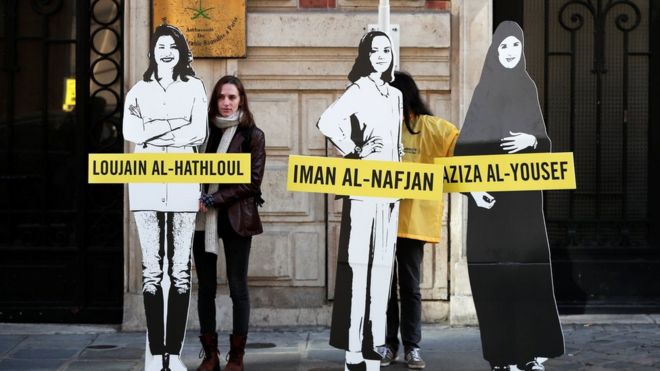
Amnesty International and UK-based Saudi rights organisation, ALQST, named the women as Eman al-Nafjan, Aziza al-Yousef and Roqaya al-Mohareb. Saudi state media said the releases were only provisional. Lynn Maalouf from Amnesty welcomed the releases but said it should not be on a temporary basis. “They have been locked up, separated from their loved ones, subjected to torture and threats for simply peacefully calling for women’s rights and expressing their views,” she said.
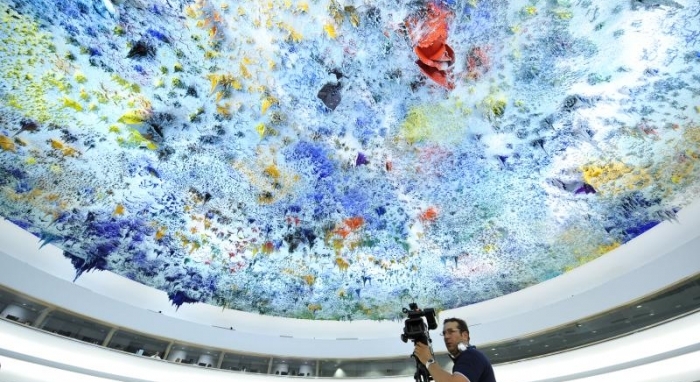
In two statements delivered to the 40th Session of the Human Rights Council, ISHR and Amnesty International reacted to the latest Joint Communications Report of the UN Special Procedures – independent human rights experts, appointed to monitor and report on human rights violations and to advise and assist in promoting and protecting rights. The report cites nine cases of reprisals against human rights defenders cooperating with the UN, and reveals that 95 states have not responded to letters from the UN experts concerning human rights violations.
There are two, related issues at stake here: (1) non-response to letters from the UN, and even worse (2) reprisals against human rights defenders who cooperate with the UN.
As Helen Nolan of ISHR explains, 35 States have recently failed to respond to two or more of these letters. 13 of these nations are members of the Council. ‘Repeat offenders are a particular concern,’ says Nolan. ‘India has failed to reply to a staggering 8 communications, Mexico 6, Italy 5, and Bangladesh and Nepal 4 each.’ Nolan emphasises that a failure to reply is a failure to cooperate, and welcomes the fact that the recently published report of the Annual Meeting of Special Procedures focuses on non-cooperation, including ‘more subtle forms’, such as selective cooperation with particular mandates. ‘To encourage cooperation, the Council must make non-cooperation more costly,’ says Nolan. ‘We urge the President of the Council to work closely with the Coordinating Committee of the Special Procedures to find ways to do this,‘ adds Nolan.
ISHR and Amnesty International’s second statement noted that under GA Resolution 60/251, Council members must ‘fully cooperate with the Council.’ Yet, the report cites nine cases of reprisals involving these members:
China sought to revoke the Society for Threatened Peoples’ ECOSOC status after vexatiously alleging that a person accredited by them, Dolkun Isa, participated in incitement and funding of separatism and terrorism, in retaliation for cooperation with the UN;
Egypt carried out forced evictions, and violations of the rights to physical integrity, liberty and security against individuals who cooperated with the Special Rapporteur on the right to adequate housing during her recent visit;
Iraq carried out unlawful arrest, enforced disappearance and torture against Imad Al Tamimi and intimidated and threatened Israa Al Dujaili for cooperating with the UN;
Libya arrested an individual in retaliation for taking steps to clarify the fate and whereabouts of his father, including with UN mechanisms;
The Philippines labeled defenders “terrorists” in reprisal for their engagement with the UN;
Russia surveilled, intimidated and harassed Yana Tannagasheva and her husband, for speaking out about impacts of coal mining on indigenous people in Siberia and in possible reprisal for their communication with UN mechanisms;
Turkmenistan carried out reprisals against a defender and her husband for her cooperation with the UN; and
In Yemen, forces loyal to President Hadi and the Saudi-led coalition detained human rights defenders Radhya Al-Mutawakel and Abdulrasheed Al-Faqih for cooperating with the UN.
The report lists 50 countries worldwide where anti-NGO laws have been implemented or are in the pipeline
Governments around the world are stepping-up their attacks on civil society organisations and human rights defenders, according to a new Amnesty International report. On 21 February 2019 RTE Ireland summarizes it as follows: It says governments are creating laws that subject non-governmental organisations and their staff to surveillance, bureaucratic hurdles and the threat of imprisonment.The international human rights group says the global assault on NGOs has reached a crisis point as new laws curb vital human rights work. The report, Laws Designed to Silence: The Global Crackdown on Civil Society Organisations, lists 50 countries worldwide where anti-NGO laws have been implemented or are in the pipeline.
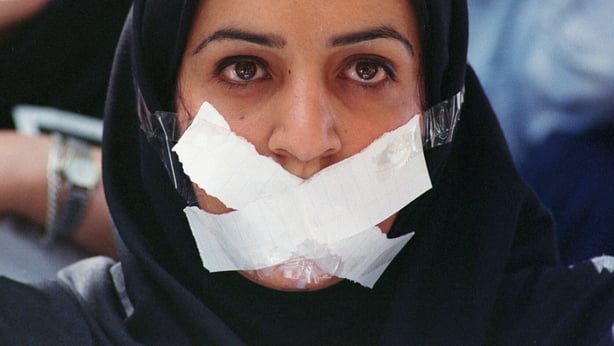
Amnesty International says these laws commonly include implementing ludicrous registration processes for organisations, monitoring their work, restricting their sources of resources and, in many cases, shutting them down if they do not adhere to the unreasonable requirements imposed on them.[see also: https://humanrightsdefenders.blog/2018/12/07/global-statement-on-the-20th-anniversary-of-the-un-declaration-on-human-rights-defenders/]“We documented how an increasing number of governments are placing unreasonable restrictions and barriers on NGOs, preventing them from carrying out crucial work,” said Kumi Naidoo, Secretary General of Amnesty International. “In many countries, organisations who dare to speak out for human rights are being bullied into silence. Groups of people who come together to defend and demand human rights are facing growing barriers to working freely and safely. Silencing them and preventing their work has consequences for everyone.” SEE ALSO NAIDOO’S OP-ED: http://news.trust.org//item/20190220144717-jcwuf/https://www.amnesty.org/en/latest/news/2019/02/global-assault-on-ngos-reaches-crisis-point/
Danna Ingleton, Deputy Director of Amnesty Tech, said: “Novalpina’s executives have serious questions to answer about their involvement with a company which has become the go-to surveillance tool for abusive governments. This sale comes in the wake of reports that NSO paid private operatives to physically intimidate individuals trying to investigate its role in attacks on human rights defenders – further proof that NSO is an extremely dangerous entity.
“We are calling on Novalpina to confirm an immediate end to the sale or further maintenance of NSO products to governments which have been accused of using surveillance to violate human rights. It must also be completely transparent about its plans to prevent further abuses.
“This could be an opportunity to finally hold NSO Group to account. Novalpina must commit to fully engaging with investigations into past abuses of NSO’s spyware, and ensure that neither NSO Group nor its previous owners, Francisco Partners, are let off the hook.”
The signatories to the letter are:
Amnesty International
R3D: Red en Defensa de los Derechos Digitales
Privacy International
Access Now
Human Rights Watch
Reporters Without Borders
Robert L. Bernstein Institute for Human Rights, NYU School of Law and Global Justice Clinic, NYU School of Law
That human rights NGOs are severely criticized is nothing new but that it comes from its own staff is rare. Still here is a report that states that “Amnesty International has had a “toxic” working environment going back as far as the 1990s”. This does not mean that AI is specially bad compared to other larger NGOs, just that there are very few other such public reports.
Brent Patterson posted on Rabble.ca on 4 February, 2019 a piece entitled: “Impunity for human rights violations must be challenged from Guatemala to the Wet’suwet’en territories“. It looks at the concept of impunity, especially in the context of indigenous people in Latin America and..Canada.Read the rest of this entry »
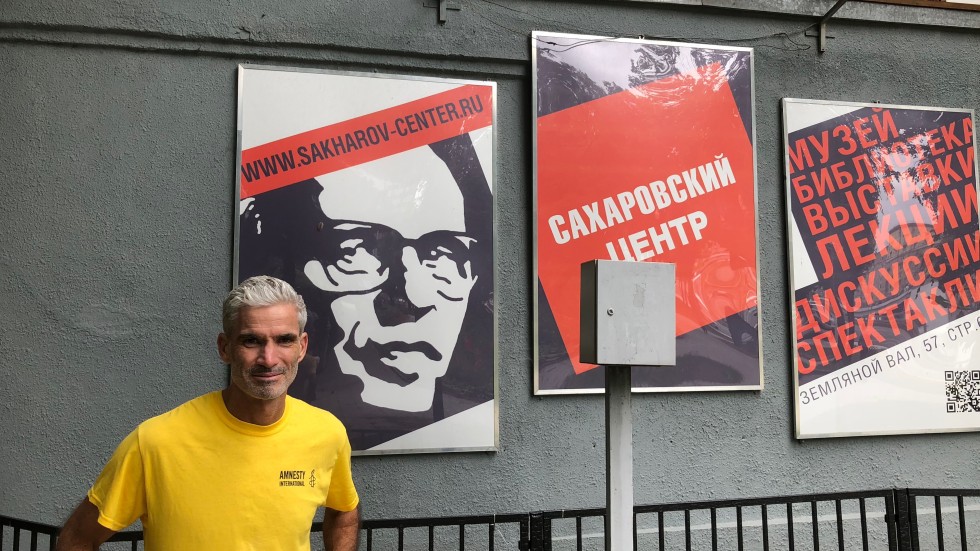
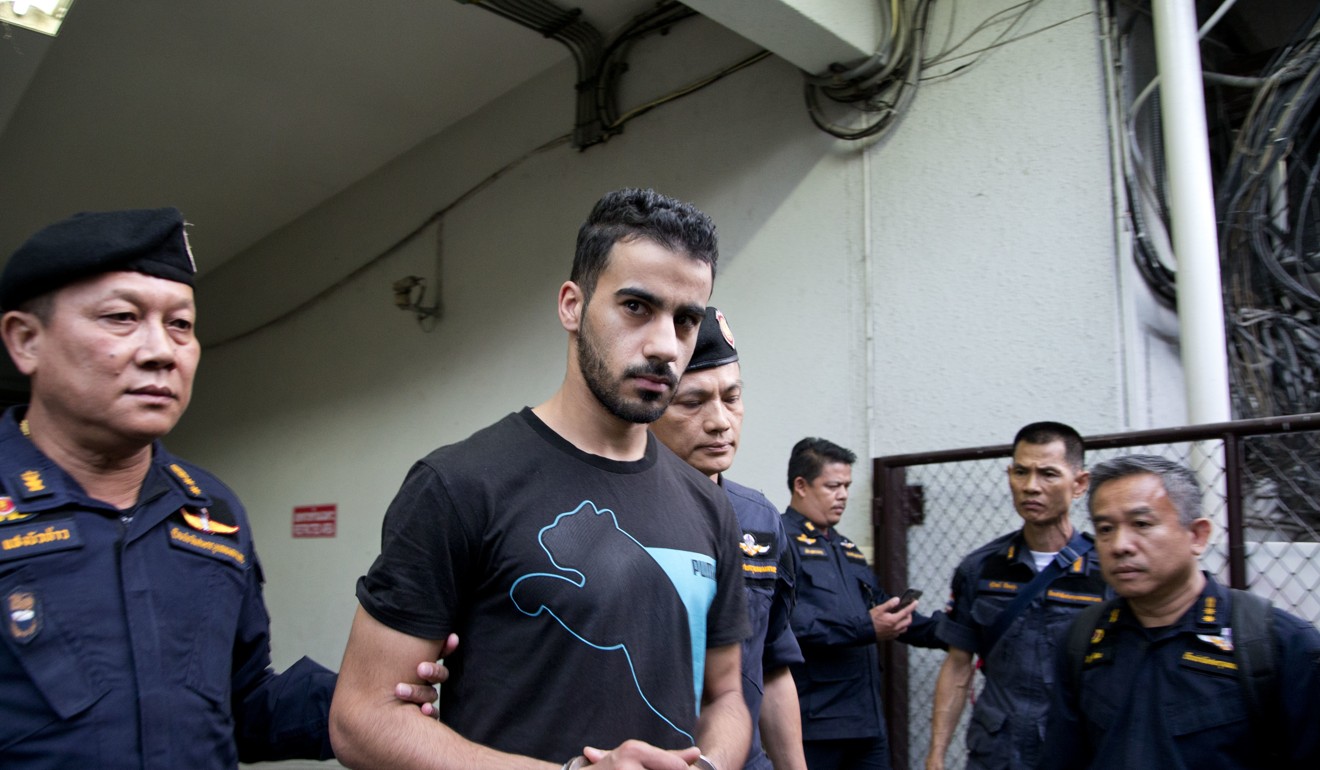
Football’s power to fight injustice motivates Craig Foster. The former Socceroos captain who played for Hong Kong’s Ernest Borel in the early ’90s is a broadcaster in Australia and also works for Amnesty International as a human rights and refugee ambassador. He is among the most vocal of activists in calling out human rights transgressions in football and sport and is one of the many prominent figures fighting for the release of Bahrain’s Hakeem al-Araibi, an Australia-based refugee footballer who is in a Thai jail awaiting extradition to his home country where he fears torture and persecution. [For some of my other posts on football and human rights, see: https://humanrightsdefenders.blog/tag/football/]
On Tuesday, 01 January, 2019, Nazvi Careem wrote a long piece about Craig Foster’s work and dedication:
And if he ever doubted just how powerful this sport can be, he only needs to recall the heartbreaking words of a young African refugee who had lost everything – fleeing his war-torn homeland after his parents, sibling and other members of his family were killed. “He was involved in a football programme over a period of time. He was very, very quiet and said very little,” said Foster. “He was in a new country and was experiencing psychological difficulties, which is totally understandable. “When he was asked why he liked the programme, he simply said: ‘The only thing that still exists in my life is football. It is the only thing that hasn’t been taken away from me’. And he was crying when he said it.
…Since retiring as a player in 2002, Foster became involved in social issues related to football, working with disadvantaged, minority and indigenous communities in a variety of programmes. “I’m just finishing my law degree, which has given me some further insight into the challenges of human rights and international refugee law. I feel strongly about these issues and in football, we are at an advantage because we are the most diverse, multicultural community in Australia.
…..Foster, who played for Portsmouth and Crystal Palace in England and also had a stint in Singapore, said he felt an obligation to give something back to the sport. As an ex-player and a broadcaster with the SBS organisation in Australia, Foster is in an ideal position to reach out to the masses. At the same time, he puts his contribution to social issues in perspective, admitting that he is in a position of comfort compared with activists whose lives are on the line in their efforts to effect change.
“Of course, you can’t fight every battle, but there are key ones which take a huge amount time. But the people I have immense respect for are the human rights defenders in their countries….In Australia we have serious human rights issues, with indigenous Australians and also in terms of refugees and arrivals.
(This article appeared in the South China Morning Post print edition as: using football to fight injustice)
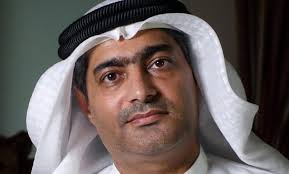 Award-winning rights human rights defender Ahmed Mansoor, jailed in the UAE for “publishing false information”, has launched a hunger strike in protest against prison conditions, Amnesty International said Tuesday. Mansoor, whom Amnesty says is a prisoner of conscience, has been on hunger strike for over three weeks to protest detention conditions and his unfair trial in the UAE. the London-based group noted. For more on Mansoor see: https://humanrightsdefenders.blog/2019/01/02/happy-new-year-but-not-for-ahmed-mansoor-and-nabeel-rajab-in-the-gulf-monarchies/