A new study from the United Nations Educational, Scientific and Cultural Organization (UNESCO) underscores the risks that journalists face, showing that almost 90 percent of those found responsible for the deaths of more than 1,100 reporters and journalists, between 2006 and 2018, have not been convicted.
The report, called Intensified Attacks, New Defences, covers the period 2014-2018. It assesses trends in the safety of journalists and media professionals around the world and provides an update on the status of journalist killings, based on condemnations issued by the Director-General and recorded in the UNESCO Observatory of Killed Journalists. 2Key findings include the rise in the number of journalist killings and other attacks, as well as the continued trend of widespread impunity. The report highlights the changing nature of violence against journalists, with more and more journalists being killed outside of conflict areas, and the growing prevalence of threats and harassment in the online sphere. It also highlights the specific risks being faced by women journalists, including online where they are disproportionately targeted by harassment and abuse. The intensified attacks against journalists are being met with a growing commitment to monitoring, protection, prevention and prosecution mechanisms for the safety of journalists. New coalitions, involving Members States, civil society, the media and academia reflect a stronger and more coordinated response to the protection of journalists, in line with the logic of the UN Plan of Action on the Safety of Journalists and the Issue of Impunity.
The report also notes that killings of journalists have risen by about 18 percent in the past five years (2014-2018), compared to the previous five-year period.
The deadliest countres for journalists, according to the statistics, are Arab States, where almost a third of the killings took place. The Latin American and Caribbean region (26 percent), and Asian and Pacific States (24 per cent) are the next most dangerous. Journalists are often murdered for their reporting on politics, crime and corruption, and this is reflected in the study, which reveals that, in the past two years (2017-2018), more than half of journalist fatalities were in non-conflict zones. In his statement, the UN Secretary-General noted the rise in the scale and number of attacks on journalists and media workers, as well as incidents that make their work much harder, including “threats of prosecution, arrest, imprisonment, denial of journalistic access, and failures to investigate and prosecute crimes against them”….“Without the ability to protect journalists, our ability to remain informed and contribute to decision-making, is severely hampered.”
India has similarly horrifying stories to tell, where the brutal murder of Bangalore-based journalist Gauri Lankesh in 2017 made headlines. Lankesh, the editor of Kannada weekly Lankesh Patrike, was shot dead in cold blood by religious activists at her residence, allegedly because of her liberal views. Though one of the six arrested gang members confessed to the crime last year, no convictions have been secured in the case. [see https://humanrightsdefenders.blog/2018/05/27/un-rapporteurs-ask-india-to-protect-journalist-rana-ayyub-and-refer-to-fate-of-gauri-lankesh/]
This year UNESCO has launched the #KeepTruthAlive social media campaign, which draws attention to the dangers faced by journalists close to their homes, highlighting the fact that 93 percent of those killed work locally, and featuring an interactive map created for the campaign, which provides a vivid demonstration of the scale and breadth of the dangers faced by journalists worldwide.
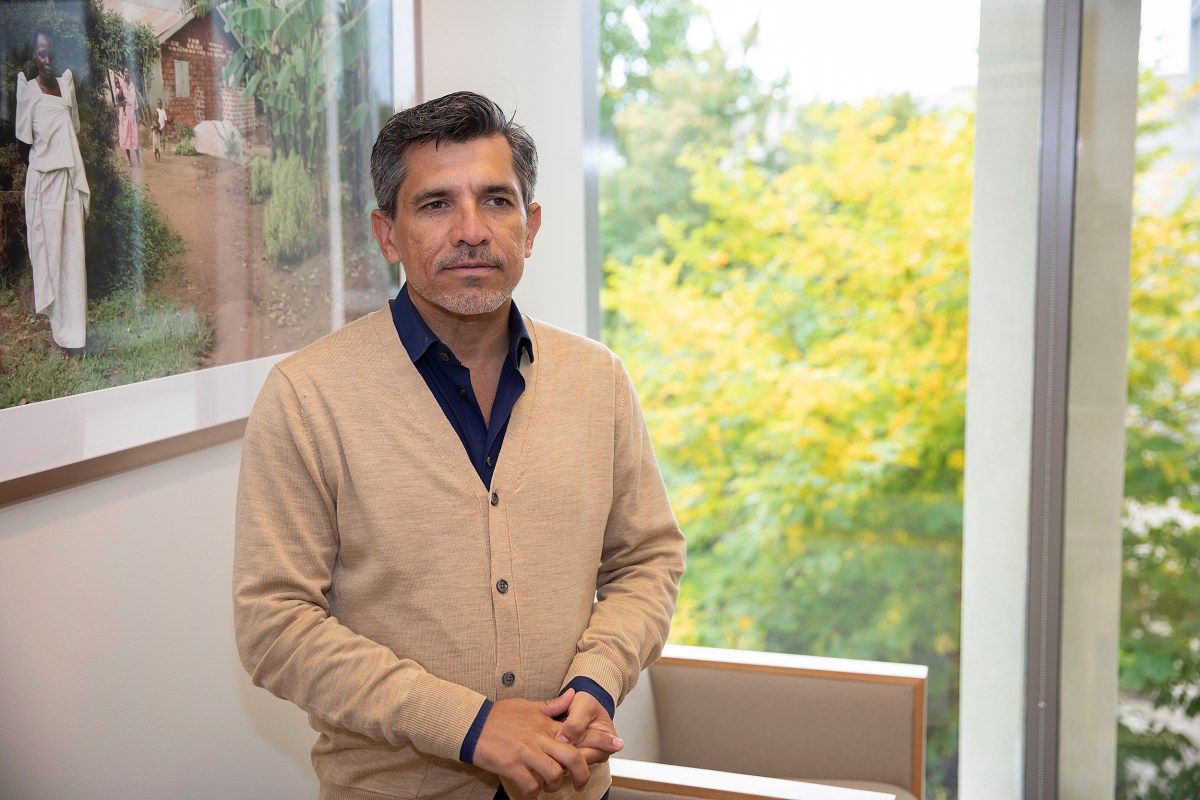
Victor Madrigal-Borloz, the U.N. independent expert, is now in residence at Harvard Law School. Kris Snibbe/Harvard Staff Photographer
Liz Mineo,Harvard Staff Writer, published on 22 October the following interview with Victor Madrigal-Borloz, the U.N. independent expert’ who examines root causes and highlights danger spots and progress
Costa Rican magistrate Victor Madrigal-Borloz has served for the past 21 months as the U.N. independent experton protection against violence and discrimination based on sexual orientation and gender identity. The Gazette interviewed Madrigal-Borloz, who is the Eleanor Roosevelt Senior Visiting Researcher with the Human Rights Program at Harvard Law School, to talk about his work and his hopes for the future:
GAZETTE: Why did you decide to take on this role?
MADRIGAL-BORLOZ: I have been working in the field of human rights for over 20 years and I saw the possibility to bring about substantial change. The topic bears a lot of significance to me, as a gay man myself. I have been working on these issues for over a decade, first at the Inter-American Commission [on Human Rights] and now at the global level. I have seen many people suffer as a result of stigma and discrimination, and this was a once-in-a-lifetime opportunity to do something about it and put my skills at the service of a cause.
GAZETTE: What did your report find in terms of the root causes of violence and discrimination against LGBT people?
MADRIGAL-BORLOZ:There are primary and secondary root cases. First, there is the notion that societies are structured around certain power relations, which have been designed in relation to a person’s sex. Your role in society is determined by your genital configuration. That’s a very basic construction, and all forms of violence and discrimination come from a defense of those power relations. The other factors come from mechanisms that aim to protect those power relations, such as the idea that gay, lesbian, or trans people don’t exist, and the stigma around them, which is enabled through the message that gay, trans, bisexual, and lesbian people are sick or mentally ill. The other aspect is criminalization. Same-sex relations are still criminalized in 69 countries, which means that, as of today, over 2 billion people live in countries where being gay or lesbian is illegal. Another factor is demonization expressed in the notion that somehow LGBT lives are sinful, immoral; that gays or lesbians cannot be good citizens. The idea is that at the end of the day, there’s something immoral about our existence, and that’s what all of us need to fight against.
GAZETTE: Of your findings, which ones struck you the most?
MADRIGAL-BORLOZ:What disturbs me is that in 2019 there are countries that are considering bringing back the death penalty for same-sex relations. There was a discussion in Uganda about it, and early this year Brunei Darussalam enacted legislation allowing the stoning of gay men. That, to me, is shocking. What I also find surprising is that there are environments that are actually extremely progressive when it comes to gender identity, but can be very restrictive when it comes to sexual orientation and vice versa. In Pakistan, for example, there is an extremely forward legislation on the recognition of gender identity, but sexual orientation is very much criminalized. Sexual orientation has always been a more challenging notion for societies, which in general have used the notion of a traditional binary, hetero-parental family as the nucleus of society, and this has been recognized in public discourse and in the law. But what we also know is that homosexuals, lesbians, and bisexuals have existed and sought happiness all throughout history.
GAZETTE: What policies or practices have been the most successful in the protection of LGBT rights?
MADRIGAL-BORLOZ: Anti-discrimination legislation with the words sexual orientation and gender identity is very important because it allows for all actors in the system to understand that a red line has been drawn and that shouldn’t be crossed. This creates the belief that lesbian, gay, trans, bisexual, or gender-diverse people are entitled to protection. Other good practices are policies aiming at promoting integration of LGBT people in society and campaigns to change hearts and minds.
Let me give you an example. About a year ago, the Inter-American Court of Human Rights issued an advisory opinion, OC-24, which determined that Costa Rica and other countries in the continent must implement same-sex marriage, and it gave a time frame for that. Despite the fact that this created great polarization in Costa Rica, the Costa Rican state has now put together a campaign called “Yes, I do,” or in Spanish, “Si, Acepto,” which focuses on the parents of gay and lesbian children and their reasons why they support gay marriage and why their children are entitled to happiness.
Another good measure is access to justice, and this means that judges have to actively seek to implement the principle of nondiscrimination when it comes to LGBT rights. That’s what the Supreme Court of India, the Supreme Court in Botswana, and the High Court in Trinidad and Tobago did when they voted to decriminalize gay sex in their respective countries.
GAZETTE:How do you explain the dramatic advances in the protection of LGBT rights in regions such as Latin America, where same-sex marriage is now legal in five countries?
MADRIGAL-BORLOZ:It’s the work of civil society and human-rights defenders and advocates who have fought relentlessly for their rights. I began working on these issues over a decade ago, and at that time the trans movement in South America was strong. An extraordinary trans activist in Argentina, Lohana Berkins, used to say that trans women must expose the audacity of their bodies to the society that fails to understand the fragility of their lives. The average life expectancy of a trans woman in Latin America is 35 years, and that’s what Berkins was talking about. It was her voice and those of other great fighters in the LGBT movement that forced people to see their humanity, and ensured that Argentina, Uruguay, and other countries in the continent have the most advanced legislation on legal recognition of gender identity.
GAZETTE:Which countries are the worst and best performers in terms of LGTB rights?
MADRIGAL-BORLOZ:I have a lot of resistance to ranking countries, because things change very fast. Most of these rights are not necessarily enshrined or written in stone; there are forces in societies that are quite keen on seeing them taken back. We live in times in which rising populism uses certain categories of people, such as LGBT communities, as pawns for their political objectives. But I can say that the most problems arise in the countries where gay sex is criminalized, and they are roughly distributed along the Caribbean, sub-Saharan Africa, some regions of Asia, and the Middle East. It’s not a small part of the world. Criminalization forces people to live underground, and often the situation of those whose existence is considered criminal is devastating. The killing of trans women, for example, has been invisible from public records because they are classified as men. And the levels of violence against lesbian women and gay men all over the world is worrisome.
GAZETTE: Why have there been more gains in protection of sexual orientation than gender identity, and what does it say about the possibility of social change?
MADRIGAL-BORLOZ:There is a certain concentration of power and influence within gay and lesbian, or cisgender, urban populations. They have been able to represent their valid agendas in the political debate. On issues of concern for the gay and lesbian urban upper and middle class, there has been more progress than on those concerning trans women or trans men coming from the countryside. But those gains show that social change is possible within one generation. Those of us who were born in the ’60s have seen the world change from a majority of countries criminalizing and pathologizing LGBT identities to a majority of countries embracing the richness that comes from diversity.
Social change is possible when the prime minister of Luxembourg speaks at the General Assembly last week, and declares “I was never hoping to be the gay prime minister. I just happen to be the gay prime minister.” When political leaders take part in a pride parade, they are changing the views that people have about LGBT people. I’ve had the honor of marching alongside Justin Trudeau in Vancouver, and the first lady of Costa Rica in pride parades. That makes me hopeful, but also the fact that the new generations have changed their paradigm of thinking; they embrace the notion that their existence is not determined by rigid notions of gender. That is a great source of inspiration.
But I worry that for some, the change will not come fast enough. Elderly LGBT people are suffering enormous health disparities, and after living their lives in inclusive environments, they are being forced to go back into the closet as they move to retirement communities that are not prepared to cater for their needs. They deserve happiness now.
GAZETTE: What would you like to see happening before your tenure as the U.N. independent expert ends in 2020?
MADRIGAL-BORLOZ:My dream is to see a world free of criminalization of same-sex relations by 2030. Given the fact that international human rights law considers criminalization of same-sex relations a violation of human rights, I see no reason why states would actually get away with continuing this practice past 2030. That’s what I like to dream about.
Andrew Smith and Matt Pollard in JustSecurity of 30 October 2019 publilshed a long article on the travails of the mandate “Human Rights and Counter-Terrorism” in the United Nations.
Background: In March 2018 at the Human Rights Council in Geneva, two resolutions of separate lineage were merged: a resolution on “protecting human rights and fundamental freedoms while countering terrorism,” led by Mexico for many years with consensus support; and a resolution presented by Egypt since 2015, on “effects of terrorism on the enjoyment of human rights,” which was deeply divisive. Parallel resolutions at the General Assembly were also merged in December 2018. Both merged resolutions were adopted by consensus. For several years, Egypt has been seeking to undermine longstanding consensus on norms for human rights in countering terrorism, in both Geneva and New York. Ben Saul chronicles well how this originated and spread in “United Nations Backslides on Human Rights in Counterterrorism” (Lawfare, Oct. 16, 2019), Civil society organizations including those of the authors, ARTICLE 19 and the International Commission of Jurists, have worked to turn back Egypt’s destructive efforts, with occasional — albeit limited — success. As Saul explains, the main effect of the merger has been to shift focus away from the Mexican-led resolution’s emphasis on human rights violations in the context of countering terrorism and the human rights of victims of terrorism, towards the Egyptian emphasis on impacts of terrorism on government finances and macro-economic conditions as well as a reaffirmation of states’ authority to impose counter-terrorism measures.
For states to treat Egypt as a reliable partner by allowing it joint leadership on the UN resolutions on human rights and terrorism only helps to provide cover for and perpetuate this egregious pattern, with serious consequences for the lives and dignity of Egyptians seeking to exercise their fundamental rights. The 74th session of the UN General Assembly Third Committee is an important opportunity for states to not only end their misguided acquiescence in Egyptian efforts to undermine UN work on terrorism and human rights, but also to restore the long legacy of Mexican leadership on the resolutions. In addition to the reasons identified in Saul’s Lawfare piece (which we won’t repeat here), several factors make this particular General Assembly resolution potentially an even more impactful moment.
…
In this moment, member states should recognize that a continuation of a Mexico-Egypt merged resolution on “terrorism and human rights” holds no promise of positive results for human rights. Now is the time for UN members to turn the tables and take a principled and strategic position: if Egypt will not agree to restoring key normative provisions previously lost, vigorously reinforcing rather than eroding support for the existing focus of the Special Rapporteur mandate, and laying the appropriate groundwork for a strong GCTS review in 2020, then states should insist that the merger be brought to an end and go back to the consensus text of resolution A/72/180.
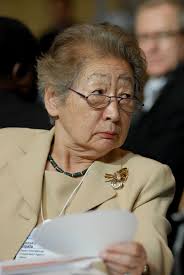
Sadako Ogatathe first woman to head the UN High Commissioner for Refugees has died at the age of 92 on 22 October 2019. I served under her for many years and have the greatest admiration for her. Sadako Ogata worked on some of the largest crises of the decade during her time in service from 1991 to 2000, including the Kurdish refugees fleeing from Iraq after the 1991 Gulf War, the Balkans War and the Great Lakes region of Africa. Before joining the UN, she was an academic – serving as dean of the faculty of foreign studies at Sophia University in Tokyo in 1989, where she had been a professor since 1980. She was well respected by UN staff and world leaders alike, and was described by her colleagues as a “five-foot giant” for her formidable negotiating skills and ability to confront hostile factions. From 2003 to 2012, Ogata was the head of the Japan International Cooperation Agency, overseeing efforts to provide assistance to those in developing countries.
Back in Japan, she also criticised her country’s low acceptance of refugees. “Japan has to set up a situation to welcome people… those who are in need, in serious need… I think we should be open to bringing them in,” she said in a Reuters interview in 2015. “[To say] Japan does not have resources, that’s nonsense.”
She rightly received a lot of recognition while alive, including:
1994 Franklin Roosevelt Four Freedoms Award
1994 Prize for Freedom (Liberal Int’l)
1994 International Human Rights Law Group Award
1995 Liberty Medal
1995 Freedom Award (refugees)
1997 Ramon Magsaysay Award for Community Leadership
On 18 October 2019 the UN High Commissioner for Human Rights urged Egypt to immediately release scores of citizens who have been arrested in connection with recent anti-government demonstrations in several cities. Civil society groups report more than 2,000 people were detained before, during and after the protests on 20 September, which prompted the UN High Commissioner for Human Rights, Michelle Bachelet, to express concern about reports of lack of due process. On Friday her office reported that the arrests are continuing, with a number of well-known and respected civil society figures affected, some of whom have been accused of terrorism. “Once again, we remind the Egyptian Government that under international law people have a right to protest peacefully, and a right to express their opinions, including on social media. They should never be arrested, detained – let alone charged with serious offences such as terrorism – simply for exercising those rights”, spokesperson Ravina Shamdasani told journalists in Geneva.
The abduction, arbitrary detention and torture of human rights defender and journalist Esraa Abdelfattah is another indication that Egyptian authorities are stepping up brutality against human rights defenders in a bid to ‘terrorize’ critics and opponents, said Amnesty International today. Esraa Abdelfattah was assaulted and abducted by security forces in plainclothes on 12 October. The next day she described to the Supreme State Security Prosecution how she was tortured by officers who beat her, attempted to strangle her and forced her to stand for nearly eight hours. “Esraa Abdelfattah’s account of torture, coming just days after the prominent activist and blogger Alaa Abdel Fattah described a similar ordeal in custody, is an alarming indication that Egypt’s authorities are stepping up their use of brutal tactics to crack down on human rights defenders,” said Najia Bounaim, North Africa Campaigns Director at Amnesty International.
Prominent blogger Alaa Abdel Fattah as well as his lawyer, Mohammed El-Baqer are currently being held at the Tora Maximum Security Prison, south of Cairo. Both have been accused of belonging to a terrorist group, funding terrorism, spreading false news that undermines national security and “using social media to commit publishing offices”, the UN human rights office said. [see also: https://humanrightsdefenders.blog/2019/01/08/bloggers-and-technologists-who-were-forced-offline-in-2018/]
On 28 September the High Commissioner had already urged the “authorities to radically change their approach to any future protests’.
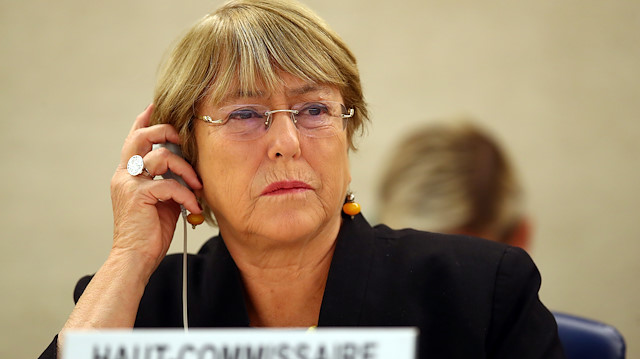
U.N. High Commissioner for Human Rights Michelle Bachelet Photograph: DENIS BALIBOUSE
More than 2,000 people were detained, including lawyers, human rights defenders, political activists, university professors and journalists on 20-21 September, she said. The Egyptian Foreign Ministry spokesperson stressed that there no citizen in Egypt is arrested or prosecuted for carrying out legitimate activities or criticizing the Egyptian government, but for violating the law. He added that the right to peaceful demonstration is guaranteed in accordance with the Constitution and the law. Hafez stressed that the OHCHR report was based on undocumented information, which only leads to falsehoods as the allegations contained in it are based on wrong ideas, and this hasty judgment reflects a lack of professionalism. He added that any actions taken against any person is done in accordance with the law and through sound legal procedures, all carried out with transparency and clarity.
In addition on 3 October 2019 it was reported in the New York Times that a series of sophisticated cyberattacks targeting Egyptian journalists, academics, lawyers, opposition politicians and human rights activists has been traced to Egyptian government offices, a cybersecurity firm has found. The attackers installed software on the targets’ phones that enabled them to read the victims’ files and emails, track their locations, identify who they contacted and when, according to a report to be published Thursday by Check Point Software Technologies, one of the biggest cybersecurity companies in the world, with headquarters just south of San Francisco and in Tel Aviv.
The cyberattack began in 2016, according to the Check Point report. The number of victims is unknown but Check Point identified 33 people, mostly well-known civil society and opposition figures, who had been targeted in one part of the operation. “We discovered a list of victims that included handpicked political and social activists, high-profile journalists and members of nonprofit organizations in Egypt,” said Aseel Kayal, a Check Point analyst.
Several activists targeted by the cyberattack were arrested as part of a crackdown on antigovernment protests. They include Hassan Nafaa, left, a political scientist at Cairo University, and Khaled Dawoud, a former journalist and leader of the secular Constitution Party. CreditAgence France-Presse — Getty Images
“We are witnessing an increase in xenophobia, hate speech, push-backs on women’s equality and the rights of minorities,” warned Michelle Bachelet, United Nations High Commissioner for Human Rights, also highlighting the ever-widening gaps in global wealth and access to resources. Moreover, underfunding has hampered the growing workload of the entire treaty body system, she said. Committees do not have adequate resources to carry out inquiries into grave or systematic violations. This results in a “credibility crisis” for all treaty bodies — and a denial of justice for the victims of human-rights violations.
Among the day’s three other briefers was Obiora Chinedu Okafor, Independent Expert on human rights and international solidarity, who focused on the issue of human-rights based solidarity in global refugee protection. The current refugee “crisis” was not caused by large numbers of refugees, but rather by States’ unwillingness to accept refugees into their countries — evading their responsibilities. Moreover, the rise of extremist political parties is complicating the issue, he said, as the “alternative right” and other racist civil society groups target any kind of solidarity with refugees. Echoing those words, the Russian Federation’s delegate noted that certain extremist political parties are impeding the entry of refugees into the European Union, and that the Independent Expert’s report lay the blame for this squarely at the feet of foreign interference in internal State affairs.
In his presentation, Michel Forst, Special Rapporteur on the situation of human-rights defenders, highlighted that 431 defenders were killed in 2017 and 2018. With that in mind, combating impunity is not only a legal obligation of States, but also a moral one. He further noted that “98 per cent of the killings of rights defenders remain unpunished” and that unless impunity is ended, the violence against them will continue. A zero-tolerance policy towards such attacks must be adopted, and the lack of political will — and of State recognition of rights defenders — addressed. Reacting to those comments, several delegates raised questions about digital attacks on human-rights defenders, with Germany’s representative underscoring that female defenders of human rights often face particular threats, such as the publication of private information. Mr. Forst responded that he has found research by the Special Rapporteur on freedom of association and the Special Rapporteur on freedom of expression helpful in this context, with a particular focus on advocating for social network businesses to provide better protections. To concerns raised by an observer for the State of Palestine and the representative of Georgia, he noted that his subsequent report will make specific proposals to assist defenders living in fragile States, as well as those living in conflict or post-conflict situations. On defenders who live in isolated areas, he said they are often not given sufficient attention by the international community. Ambassadors should leave their capitals and go into these far-flung areas to see where these defenders work, he said. Those who work on sexual and reproductive health and rights often bear the brunt of attacks, while those working on gender identity are harassed and threatened
The Special Rapporteur on the rights to freedom of peaceful assembly and of association, Clément Nyaletsossi Voulé, also presented his report.
Activists have responded with outrage after Venezuela won a fiercely contested vote for a seat on the UN’s human rights council on Thursday, despite its well-documented record of human rights abuses.
Opposition activists, journalists and human rights defenders are often jailed, while security forces loyal to Maduro commit abuses with impunity. “The inclusion of Venezuela and Brazil to the human rights council marks a backwards step in the advancement of human rights in the region,” said Rodolfo Montes de Oca, a lawyer at Provea, a Venezuelan rights group.
Maduro’s regime will probably be emboldened by his country’s new post at the UN. “They can say they were elected to the human rights council and from there have a voice to push back on their critics,” said David Smilde, an analyst at the Washington Office on Latin America, a thinktank. “It’s shameful, a travesty,” said Vanessa Neumann, Guaidó’s ambassador to the UK, who added that the vote will do little to silence Maduro’s critics. “Ultimately the march of history’s harsh judgment on Maduro and his regime will not be stopped by this.”
Earlier this year, the UN human rights chief, Michelle Bachelet, issued a scathing report on Venezuela, which described widespread cases of torture, extrajudicial killings and withholding food and medicines from civilians.
The UN General Assembly’s Third Committee will run for eight weeks from 1 October to 21 November this year. The International Service for Human Rights, which follows the UN human rights bodies diligently, put out an Alert for this 74th Session on 1 October 2019.
The Third Committee brings together a wide array of Special Procedures mandate holders, including Special Rapporteur, independent experts, and chairs of working groups that are mandated by the Human Rights Council to discuss some of the most pressing human rights concerns and present findings and recommendations to the Third Committee. These findings should in turn play a role in shaping the focus of resolutions negotiated at this session.
Third Committee is expected to consider approximately 60 resolutions on a range of topics, including:
the advancement of women
the rights and protection of children
the rights of refugees
the elimination of racism
self-determination
and social development, amongst others.
ISHR will be closely monitoring the work of the Third Committee as well as relevant developments in the plenary of the General Assembly and will report on key developments. Follow them on Twitter at @ISHRglobal using #UNGA74 for the latest updates.
Overview of Key Resolutions
Human Rights Defenders (Lead Sponsor: Norway) – This year Norway will present the biennial resolution on human rights defenders. One year after the twentieth anniversary of the UN Declaration on Human Rights Defenders, implementation of the Declaration unfortunately remains far from adequate in a number of States. ISHR therefore welcomes the resolution’s continued focus on the Declaration’s implementation and urges States to ensure that the resolution includes calls for concrete activities and mechanisms to monitor and facilitate the implementation of the Declaration and previous resolutions on human rights defenders.
Terrorism and Human Rights (Lead Sponsors: Mexico and Egypt) – The Third Committee will consider a resolution relating to Terrorism and Human Rights. Previous resolutions on the topic have condemned terrorist acts as criminal and unjustifiable, and expressed concerns about their detrimental effects on the enjoyment of all human rights. The resolution is the result of the combination of two previously separate resolutions on the “Protection of human rights and fundamental freedoms while countering terrorism” and the “Effects of Terrorism on the Enjoyment of Human Rights” led by Mexico and Egypt, respectively. Civil society remains concerned that the combined resolution compromises language on State obligations to protect human rights by prioritising the impact of terrorism on human rights. ISHR hopes that language in the original resolution led by Mexico is not compromised and that this resolution upholds State responsibility and the rights of victims.
Safety of Journalists (Lead Sponsors: Greece, Argentina, Austria, Costa Rica and France) – A resolution on the safety of journalists is expected to be advanced at this session. ISHR will be watching this negotiation closely and hopes the resolution will be used to expand, rather than restrict, space for civil society and strengthen protections for human rights defenders.
Several country resolutions are expected again this session. For the 17th year, Canada will present a draft resolution on the Situation of human rights in the Islamic Republic of Iran spotlighting the continued dismal human rights situation and lack of progress over the last year. The European Union will again lead on a resolution on the Democratic People’s Republic of Korea, similarly underlining the lack of human rights progress. Ukraine will again present a draft resolution condemning Russia’s activities in Crimea. Resolutions on the human rights situation in Myanmar and Syria are also expected to be led by the Organisation of Islamic Cooperation and Saudi Arabia respectively.
ISHR remains concerned that China will again attempt to insert the seemingly harmless language of ‘win/win’ language in resolutions, which in fact focuses only on intergovernmental dialogue and cooperation, rather than actual human rights violations or accountability. This language risks shrinking space for civil society and roll back human rights norms across a number of resolutions.
Several resolutions are expected to become battle grounds regarding references to gender, and sexual and reproductive health and rights, including resolutions on the Improvement of the situation of women and girls in rural areas, Violence against women migrant workers, Rights of the Child, The girl child, The human rights to safe drinking water and sanitation,
Elections for the Human Rights Council are set to take place in mid-October as part of the General Assembly. ISHR is once again disappointed that this year a number of regions have presented closed slates. ISHR has published ‘scorecards‘ for each of the States seeking membership. These provide a brief overview of their human rights records, cooperation with civil society, past roles in the Council, and past engagement with UN human rights mechanisms.
Overview of Reports and Dialogues with UN Experts:
The UN Special Procedures – Special Rapporteurs, independent experts, and working groups – will report to the Third Committee and hold interactive ‘dialogues’ with member States. Several of this year’s reports reflect concerns about increased attacks on human rights defenders and emphasise the critical importance of creating and maintaining space for civil society. Click here for a list and schedule of dialogues.
Report of the Special Rapporteur on the Situation of Human Rights Defenders – Combatting the currently widespread impunity for human rights violations that target human rights defenders is, according to Special Rapporteur Michel Forst’s report (A/74/159), “an essential prerequisite to guarantee human rights and to advance towards equal societies that are free from fear and violence.” He outlines a regulatory framework on the right to access to justice, including due diligence in investigations and elaborates on the de facto and legal barriers to access to justice. He offers essential guidelines for ensuring due diligence in the investigation of such violations. Good practices implemented by States and civil society are also described. He will present his report and an interactive dialogue will be held on 15 October 2019 at 3pm.
Report of the Special Rapporteur on the situation of human rights in the Islamic Republic of Iran – At least 32 Iranians have been arrested as a result of viral social media campaigns against compulsory veiling laws, such as the #whitewednesdays and “Girls of Revolution Street.” Human rights lawyer and defender Nasrin Sotoudeh was sentenced to 148 lashes and 38 years in prison last March for defending some of these women. BBC Persian staff have suffered reprisals for engaging with UN human rights mechanisms. These are only some of the attacks on human rights defenders that Special Rapporteur Javaid Rehman flags in his report (A/74/188), which calls on Iran to stop violating the rights of human rights defenders through intimidation, harassment, arbitrary arrest, deprivation of liberty, among other arbitrary sanctions. The Special Rapporteur will present and discuss his report on 23 October 2019 at 10am.
Report of the Independent Expert on protection against violence and discrimination based on sexual orientation and gender identity – In his report (A/74/181), Independent Expert Victor Madrigal-Borloz exposes the ways in which socio-cultural norms and discriminatory laws continue to marginalise and exclude LGBTI persons. In order to become fully inclusive of LGBTI individuals, he stresses that States cannot overlook the “vital role” of partnerships with civil society. He cites a number of partnerships in the fight against HIV/AIDS as particularly strong examples of this. Independent Expert Madrigal-Borloz will present his report and hold an interactive dialogue on 24 October 2019 at 10am.
Report of the Special Rapporteur on the promotion and protection of human rights and fundamental freedoms while countering terrorism – How can States truly integrate human rights into the global fight against terrorism that is increasingly shaped by elusive norms of ‘soft law’? According to Special Rapporteur Fionnuala Ní Aoláin’s report (A/74/335), one of the keys is for States to engage with and create space for civil society, non-governmental organisations, and human rights defenders to participate in the shaping of these counter-terrorism norms. Her report maps out how civil society access to these processes can be transformed from “ad hoc and inconsistent” to consistent and meaningful, ensuring that soft-law counter-terrorism norms are not at odds with human rights. The Special Rapporteur’s report will be presented and discussed on 16 October 2019 at 10am.
Report of the Special Rapporteur on the issue of human rights obligations relating to the enjoyment of a safe, clean, healthy and sustainable environment – Special Rapporteur David R. Boyd clarifies the obligations of States and businesses under a human-rights based approach to climate change in his report (A/74/161). These obligations include providing strong protections for environmental and environmental defenders who work on issues relating to climate change. In addition, the report examines how UN human rights mechanisms can be empowered to better address climate change. The Special Rapporteur will present his report and an interactive dialogue will be held on 24 October 2019 at 3pm.
Report of the Special Rapporteur on Freedom of Religion or Belief – Special Rapporteur Ahmed Shaheed expresses alarm in his report (A/74/358) about the rise of anti-Semitism around the world and the ways in which the underreporting of these hate crimes and lack of mechanisms to monitor them enable anti-Semitic hate crimes. The report finds that a lack of Jewish civil society engagement with UN human rights monitors only exacerbates this issue and calls on States to work more closely with Jewish communities and organisations to create mechanisms that fill this void. Special Rapporteur Shaheed ends his report with the recommendation that the Office of the UN Secretary-General appoint a senior-level focal point specifically responsible for monitoring and engaging with Jewish communities on this issue. He will present his report and hold an interactive dialogue on 17 October 2019 at 3pm.
Report of the Special Rapporteur on violence against women, its causes and consequences – In her report (A/74/137), Special Rapporteur Dubravka Šimonović stresses the need to address mistreatment and violence against women in reproductive health services from a human rights perspective. The report therefore calls for the creation of human rights-based accountability mechanisms and greater State collaboration with civil society organisations to address violence and mistreatment in reproductive and obstetric care. The Special Rapporteur will present her report and hold an interactive dialogue with the Third Committee on 4 October 2019 at 10am.
Venezuela on the Brink: The urgency of an appropriate international response to the crisis, where Eleanor Openshaw will be discussing the implications of Venezuela being re-elected to the Human Rights Council. 2 October at 10am in the Church Center, 777 UN Plaza.
Breakfast reception to mark the launch of URG’s new yourHRC.org Guide to the 2019 Human Rights Council Elections, where Madeleine Sinclair will be discussing ISHR’s ‘scorecards’ for each of the States seeking election to the UN Human Rights Council for 2020- 2022. October 10 at 8:30 am in Conference Room 6, UNHQ.
Venezuela’s abusive government is unfit to serve on the United Nations Human Rights Council, and UN member states should defeat its candidacy, Human Rights Watchsaid on 4 October 2019. For years, Venezuela’s authorities have led a vicious crackdown on dissent and failed to address a self-inflicted humanitarian emergency that has sent more than 4.3 million Venezuelans fleeing the country.
“United Nations member countries should send a clear message to the Nicolás Maduro administration that they will not reward cruel and abusive policies that have destroyed the lives of millions of people with a seat on the UN’s top human rights body,” said José Miguel Vivanco, Americas director at Human Rights Watch. “Venezuela’s election would be an insult to a body whose members are supposed to uphold the highest human rights standards.”
On October 17, 2019, the UN General Assembly will elect 14 new members of the 47-country Human Rights Council for a three-year term beginning in January 2020. Until October 3, the Latin American and Caribbean regional group at the UN was offering only two candidates for two council seats – Venezuela and Brazil – virtually assuring them both of victory. With Costa Rica announcing on October 3 that it would compete for one of the two seats, members of the 193-nation General Assembly have an opportunity to deny a seat to Maduro’s representatives, Human Rights Watch said.
On September 27, the Human Rights Council adopted a resolution to create an independent fact-finding mission to investigate extrajudicial executions, enforced disappearances, arbitrary arrests, torture, and other cruel, inhumane, or degrading treatment committed in Venezuela since 2014. The resolution was put forward by Argentina, Brazil, Canada, Chile, Colombia, Guatemala, Guyana, Honduras, Paraguay, and Peru – members of the Lima Group that have led international efforts to pressure Venezuelan authorities to curb abuses. Human Rights Council members have a duty to cooperate with the UN rights body, but Venezuela has already said that it rejects this resolution – a further demonstration that it is not fit for a council seat, Human Rights Watch said. [https://humanrightsdefenders.blog/2019/10/02/result-of-the-42nd-session-of-the-un-human-rights-council/]
In announcing his country’s candidacy, Costa Rican President Carlos Alvarado Quesada tweeted on October 3 that, “Due to the serious violations against human rights evidenced by the report of the High Commissioner for Human Rights, the Venezuelan regime is not the suitable candidate for the UN #HumanRights Council. #CostaRica is proposed as an alternative.”
“Not all Human Rights Council members are exemplary – far from it – but Venezuela is clearly beyond the pale,” Vivanco said. “Inviting Maduro’s representatives to undermine the Human Rights Council from within would be an affront not only to his government’s victims, but also to victims of human rights violations worldwide.”
Callamard is speaking on the subject at Columbia University.
Stéphanie Fillion in PassBlue reports on Agnès Callamard asking the UN to step up its action with regard to the murder of Jamal Khashoggi. Exactly a year after Jamal Khashoggi, was murdered in the Saudi consulate in Istanbul, the United Nations’ special rapporteur on extrajudicial, summary or arbitrary executions, Agnès Callamard, remains categorical: UN Secretary-General António Guterres can and should do more about the murder, and so should member states. “I am asking the secretary-general of the United Nations, the various heads of states, including in Europe, Canada and Australia, to speak publicly about the situation and to do so in places and circumstances where it is difficult to do it,” Callamard told PassBlue. “The demand I am making should not carry a heavy political cost if it is done in a more collective fashion.”In her June report investigating the murder of Khashoggi — the only official UN word on the matter — Callamard called on Guterres and UN member countries to launch an international criminal investigation and asked heads of state to rally against Saudi Arabia’s blatant attack on freedom of the press. See https://humanrightsdefenders.blog/2019/06/19/news-un-expert-agnes-callamard-says-saudi-arabia-is-responsible-for-extrajudicial-killing-of-khashoggi-and-calls-it-international-crime/
Callamard also explored other options to hold the perpetrators accountable in Turkey and in the US, saying in the report, “The killing of Mr Khashoggi thus constitutes an international crime over which other states should claim universal jurisdiction.”
Callamard supports the notion of a Security Council resolution — which are legally binding — to call on countries around the world to unite behind a push to resolve the murder. But that’s easier said than done. Saudi Arabia, an influential, oil-rich country in the troubled Middle East, has a record of human-rights abuses, but it is often left alone by the UN Human Rights Council (of which it is currently a member) and other nations, including democratic ones in the West. Amal Clooney, Britain’s special envoy on media freedom, told The Guardian on Oct. 1 that “she expected a specialist legal panel, set up by the UK government and due to report soon, to champion a new standing UN investigatory mechanism into such killings.” It is unclear if other permanent members of the Security Council besides Britain — China, France, Russia and the US, some of them close allies and big suppliers of weapons to Saudi Arabia — are willing to stick their necks out to defend press freedom and pursue the gruesome murder of a 59-year-old journalist who worked for one of America’s most prestigious newspapers.
Hatice Cengiz, Khashoggi’s fiancée, has traveled the world to ask countries to help resolve the murder. She was warmly greeted in many of them, she said at a conference at Columbia University, in New York, on Sept. 27, speaking through an interpreter. But not only did they resist her request for action, “they never said anything negative against Saudi Arabia.” Even members of the European Union, known to be outspoken about human-rights violations, have shown no formal or informal support to act.
Callamard, who is French and directs the Global Freedom of Expression project at Columbia University, said that she, too, traveled to many European countries during her investigation, and while they cooperated with her, none offered to help.She said she hoped that European and other Western countries, including the US and Canada, would unite to denounce Saudi Arabia’s crime in a more concerted way. (The US did denounce the murder but left it to the Saudi government to handle the case.)She worries that letting the case go will set a precedent, sending the message that persecuting journalists is something any country is free to do with impunity.


 Hans Thoolen on Human Rights Defenders and their awards