

share information on human rights defenders, with special focus on human rights awards and laureates
 Secretary of State Pompeo and Nikki Haley, the US envoy to the UN at the time, announcing the US withdrawal from the Human Rights Council, June 19, 2018.
For the last decade, Western democracies and human-rights defenders have been locked in a tense struggle with authoritarian great powers at the United Nations. Since 2009, Russia and China have waged a highly successful campaign to dismantle the international human-rights system, particularly through the Human Rights Council. The two countries have made strides especially after the Trump administration withdrew the United States from the Council in 2018….
The campaign has been led by China, which has attacked the international human-rights system since its re-election to the Human Rights Council in 2013 for consecutive three-year terms that ended in 2019. Russia has preferred to work behind the scenes, particularly since its bid for election to the Council failed in 2016….
Both countries have also operated as part of what is called a like-minded group, a powerful international coalition that includes Algeria, Belarus, Cuba, Egypt, Pakistan, Philippines, Sri Lanka, Sudan, Venezuela and Vietnam. The group has challenged the UN’s human-rights mechanisms by emphasizing cooperation and dialogue over country-specific measures that name and shame abusing states, denigrating the relevance of civil and political rights while prioritizing economic and social rights and stressing the importance of sovereignty and nonintervention. Since 2013, Russia and China have played a key role in coordinating the group’s effort to undermine international human-rights protections.
In March 2018, for example, China presented a resolution to the Human Rights Council titled “Promoting Mutually Beneficial Cooperation in the Field of Human Rights,” which aimed to discard country-specific mechanisms that name and shame countries for their rights abuses. [see also: https://humanrightsdefenders.blog/2018/03/07/china-and-the-un-human-rights-council-really-win-win/]. No less significant was the like-minded group’s support for China during its last Universal Periodic Review session in November 2018. The review took place amid escalating human-rights violations inside China, including the death in custody of Liu Xiaobo, a prominent activist and Nobel Prize laureate, and the mass internment of more than a million ethnic Uighur Muslims in so-called political re-education camps in the remote province of Xinjiang.
…..
An important factor contributing to the success of China and Russia in undermining the international human-rights system has been the withdrawal of the US from the Human Rights Council in June 2018. By leaving the Council, the US has created a leadership void that Russia, China and their allies have exploited to consolidate their grip on power. Just weeks after the US withdrew, Russia and China successfully lobbied to slash funding for key human-rights posts in UN peacekeeping missions that protect civilians from violence in some of the most vulnerable countries in the world, including Haiti, the Democratic Republic of the Congo and South Sudan. Worse, the like-minded group bolstered its influence over the global human-rights system when Venezuela, one of the world’s most flagrant violators of international human-rights norms, was elected to a three-year term to the Human Rights Council in October 2019. Having left the Council, the US was unable to sway the vote.
With the lack of US leadership, the European Union has struggled to push back against Russia and China’s growing influence at the UN. In July 2019, the European Union issued a joint statement with several other Western democracies, including Australia, Japan, New Zealand and Switzerland, condemning China’s mass detention of Muslims in Xinjiang. In reply, more than a dozen members of the Organization of Islamic Cooperation, a powerful group of countries that includes Egypt, Saudi Arabia, Algeria and Qatar, signed a declaration praising China’s policies in the region. [see also: https://humanrightsdefenders.blog/2019/07/20/china-coalition-anti-human-rights-un/]
Most worrisome, countries that once looked to the US for leadership in advancing human rights may now be looking to Russia, China and their allies for guidance in an international arena increasingly dominated by autocrats and aspiring despots.
https://www.passblue.com/2020/02/24/how-the-us-enabled-aggressions-by-china-and-russia-at-the-un/
As if to show thagt there is truth in the assertions above, the Russian Foreign Minister Sergey Lavrov on 25 February 2020 decried what he terms the “double standards” employed at the U.N. Human Rights Council in favor of Western democratic values, at the expense of what he calls the legitimate sovereign rights of nations that do not fall within the Western orbit. Lavrov did not hide his disdain Tuesday at the so-called country-specific resolutions adopted by the Council, saying the resolutions had become an increasingly popular pretext to interfere in the internal affairs of sovereign states.
https://www.voanews.com/europe/russia-accuses-un-human-rights-council-pro-western-bias
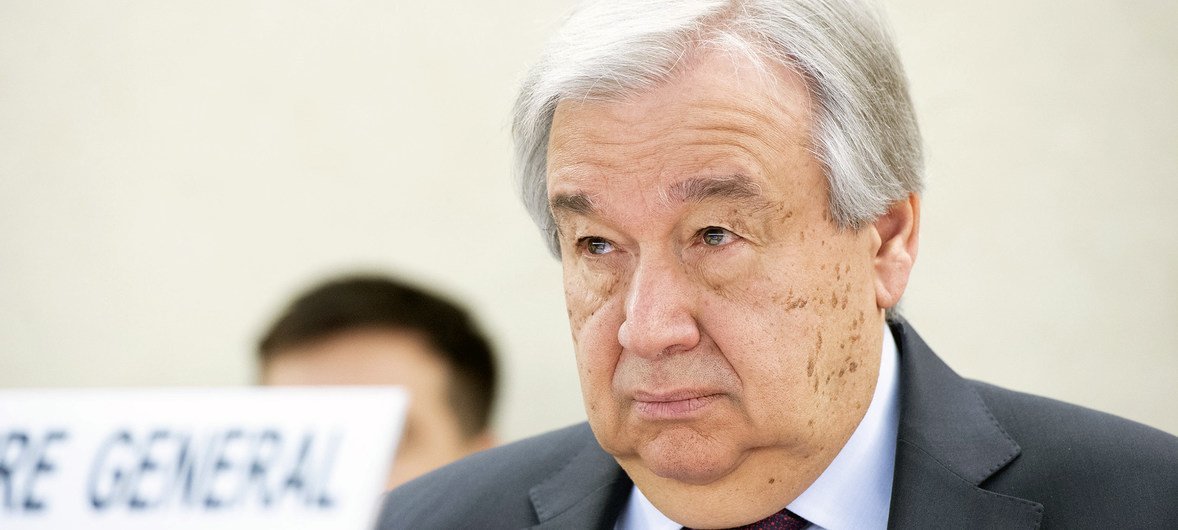
In his speech he detailed a seven-point blueprint for positive change and issued an appeal for solidarity. “People across the world want to know we are on their side,” he said. “Whether robbed of their dignity by war, repression of poverty, or simply dreaming of a better future, they rely on their irreducible rights – and they look to us to help uphold them.” Echoing the call for change, High Commissioner for Human Rights Michelle Bachelet said that although threats to human rights, development and peace were on the rise, so were the practical, actionable solutions to these issues.
In his pledge to utilize the full weight of his office and the UN family to fulfil the Call to Action, Mr. Guterres highlighted the enduring value of the Universal Declaration of Human Rights.
Highlighting the document’s proclamation that human rights are ‘humanity’s highest aspiration’, Mr. Guterres insisted that all States had a responsibility to protect and promote people’s “dignity and worth”. National sovereignty “cannot be a pretext for violating human rights”, Mr. Guterres insisted, while also maintaining that greater equality “strengthens States and societies, thereby reinforcing sovereignty”.
Positive change is possible, the UN chief insisted, recalling his own experience living under dictatorship in Portugal, which finally gave way to a democratic movement when he was 24 years old. Other “human rights struggles and successes inspired us”, the UN chief said, noting how these had secured the end of apartheid in South Africa and colonial rule. One billion people have also been lifted out of poverty in a generation, he continued, and there have also been major advances in improving access to drinking water, along with big declines in child mortality. ..
Chief among these challenges are several protracted, unresolved conflicts that have left families trapped in war-torn enclaves, “starved and bombed in clear violation of international law”, he said. Human trafficking also affects “every region of the world”, the UN chief noted, leaving women and girls “enslaved, exploited and abused”, unable to realise their potential. Journalists and civil society are also under threat, with activists jailed, religious groups and minorities – including indigenous peoples, migrants, refugees and the LGBTI community – persecuted under “overly broad definitions of national security”.
Global hunger is also increasing, Mr. Guterres said, before highlighting a series of 21st century issues linked to huge problems that affect all countries: the climate crisis, population growth, urbanization and the dark underbelly of technological progress. “People are being left behind. Fears are growing. Divisions are widening,” he said. “Some leaders are exploiting anxieties to broaden those gaps to breaking point.”
Introducing his Call to Action blueprint, Mr. Guterres explained that its aim was to “transform the ambitions of the Universal Declaration into real-world change on the ground”.
Heading the seven-point protocol is a call to put human rights at the core of sustainable development – a reference to the 17 Sustainable Development Goals (SDGs), agreed to by the international community in 2015 under the Agenda 2030 banner. “The vast majority of the goals and targets correspond to legally binding human rights commitments made by every Member State,” Mr. Guterres said. “When we help lift people out of abject poverty – when we ensure education for all, notably girls – when we guarantee universal healthcare…we are enabling people to claim their rights and upholding the core pledge of the 2030 Agenda to leave nobody behind.”
Among the other priorities, the UN Secretary-General highlighted that much more needs to be done to prevent violence against women. “Violence against women is the world’s most pervasive human rights abuse,” he said, in a call to “every country” to support policies that promote gender equality, repeal discriminatory laws…ensure sexual and reproductive health and rights, and strive for women’s equal representation.
Turning to 21st century challenges, Mr. Guterres reiterated that the climate crisis was “the biggest threat to our survival”. It has already threatened human rights around the world and would continue to do so in future, he noted, before underscoring people’s right to a safe, clean, healthy and sustainable planet that the Call to Action is designed to achieve. Young people will be empowered to participate in this process, the UN chief insisted, so that they do “not simply speak, but to participate and shape decisions that will affect their future”.
Finally, on the challenges posed to human rights by new technology, Mr. Guterres explained that progress in this field “are too often used to violate rights and privacy through surveillance, repression and online harassment and hate”. Facial recognition and robotics should never be used to deepen inequality, he insisted, while also reiterating his call for online-ready human rights norms such as the Internet Governance Forum.
Following this announcement Netsanet Belay, Amnesty International’s Research and Advocacy Director, said: “…We hope this will translate to a genuine, effective and coordinated UN response to address ongoing human rights crises around the world – from the ethnic cleansing of the Rohingya in Myanmar, to the systematic targeting of human rights defenders in Saudi Arabia and the mass internment of almost one million Uighurs in China – and to hold states to account. “We welcome any initiative that seeks to put human rights front and centre at the UN across its operations. To ensure the success of this initiative, the Secretary-General must lead by example in his willingness to speak up when abuses are taking place, and must ensure adequate funding for the protection of human rights within the UN. Mr. Guterres has described his new initiative as a call for action. Now we need to see the action.”
https://www.amnesty.org/en/latest/news/2020/02/un-action-plan-on-human-rights-bold-leadership/
On 17 February 2020 the International Service for Human Rights (ISHR) published – as usual – its excellent “HRC43 | Key issues on agenda of March 2020 session”. Here some excerpts that relate directly to human rights defenders in the 43rd session of the UN Human Rights Council, which runs from 24 February to 20 March 2020. If you want to stay up-to-date: with all issues follow @ISHRglobal and #HRC43 on Twitter.
Protection of human rights defenders including women human rights defenders. The Council will consider a resolution, presented by Norway, to renew the mandate of the Special Rapporteur on the situation of human rights defenders. The mandate gathers and responds to information on the situation of defenders around the world, engages constructively with governments and non-State actors and provides recommendations to promote the effective implementation of the Declaration on human rights defenders. In 2019, the Council and the General Assembly unanimously affirmed the vital work defenders play. The Council recognised the critical role of environmental human rights defenders in protecting vital ecosystems, addressing climate change, attaining the sustainable development goals (SDGs). The General Assembly passed by consensus a resolution focusing on implementation of the Declaration and some key elements of protection policy; the resolution also attracted a record number of co-sponsors. The Special Rapporteur on the situation of human rights defenders will present his report on human rights defenders operating in conflict and post-conflict situations on 4 March, and country visits to Colombia and Mongolia.
Reports of cases of intimidation and reprisal against those cooperating or seeking to cooperate with the UN not only continue, but grow. Intimidation and reprisals violate the rights of the individuals concerned, they constitute violations of international human rights law and undermine the UN human rights system. [for some of my ealrier posts on reprisals, see: https://humanrightsdefenders.blog/tag/reprisals/]. During the 42nd session, the Council adopted a resolution which listed key trends such as the patterns of reprisals, increasing self-censorship, the use of national security arguments and counter-terrorism strategies by States as justification for blocking access to the UN. The resolution also acknowledged the specific risks to individuals in vulnerable situations or belonging to marginalised groups, and called on the UN to implement gender-responsive policies to end reprisals. The Council called on States to combat impunity and to report back to it on how they are preventing reprisals, both online and offline. [see also: https://humanrightsdefenders.blog/2019/11/08/michel-forst-in-last-address-to-general-assembly-pleads-to-fight-reprisals/]. Item 5 of the Human Rights Council’s agenda provides a key opportunity for States to raise concerns about reprisals, and for governments involved in existing cases to provide an update to the Council on any investigation or action taken toward accountability to be carried out.
At this 43rd session, the Council will discuss a range of economic, social and cultural rights in depth through dedicated debates with mandate holders alongside the annual report of the Secretary-General on the realisation of economic, social and cultural rights globally. These include interactive dialogues with the following:
The Council will discuss a range of civil and political rights through dedicated debates with the mandate holders, including interactive dialogues with:
China Confronted with mounting evidence of serious human rights violations in China, specifically the mass internment, ‘re-education’, surveillance and harassment of Turkic Muslims in the western province of Xinjiang, the view of many parts of the UN is incontrovertible. Beginning with a major UN review in August 2018, the UN High Commissioner has pressed for access, while the Special Procedures have expressed serious concerns about protection of freedom of religious belief, the impacts of counter-terrorism and counter-extremism measures, and the imposition of the death penalty in at least one case, that of university president Tashpolat Tiyip. In light of these concerns and the continued deterioration of the situation for human rights lawyers and defenders; the attacks on cultural rights and other freedoms in Tibet; and criminalisation of peaceful assembly and excessive use of police force in Hong Kong, it is high time for the Council to act. Member States should take concrete steps to call for independent, expert monitoring and reporting on the situation in Xinjiang, including access to the region, and urge accountability for actions by public authorities. [see also: https://humanrightsdefenders.blog/2019/07/12/joint-letter-by-22-states-to-human-rights-council-re-chinas-uighurs/ and https://humanrightsdefenders.blog/2019/07/20/china-coalition-anti-human-rights-un/]
Saudi Arabia The Council’s action on Saudi Arabia has contributed to the provisional release of at least seven women’s rights activists from detention. However, they are still facing trial and many remain in detention. Recent revelations of phone hacking, surveillance and possible blackmail and extortion of the owner of the Washington Post demonstrate the measures that the State is prepared to take to silence any form of criticism or dissent. The joint statement delivered by Australia in September sets out benchmarks for the Saudi government to take to demonstrate its willingness to improve the human rights situation. These benchmarks have not been met. States should ensure that Council scrutiny is maintained and in particular establish a monitoring and reporting mechanism over the situation. [for other posts on Saudi Arabia, see: https://humanrightsdefenders.blog/tag/saudi-arabia/]
Egypt The lack of action by the international community has emboldened the Egyptian government to continue to violate fundamental rights of its citizens. Special Procedures have rung the alarm bell regarding the pattern of reprisals against individuals and groups who sought to or engaged with the UN. In the last quarter of 2019 alone, more than 3,000 people were arbitrarily arrested and prosecuted under counter-terrorism laws in a nationwide crackdown against all forms of peaceful expression. The Committee against Torture has found that torture in Egypt is widespread and systematic and the situation meets all of the objective criteria for situations requiring the Council’s attention. States should initiate Council action on the situation before it further deteriorates. [see also: https://humanrightsdefenders.blog/tag/egypt/ ]
India The High Commissioner expressed concern over India’s Citizenship (Amendment) Act 2019 (CAA) for being ‘fundamentally discriminatory’ as it fails to extend protections to Muslim asylum seekers. Nationwide demonstrations and protests have been met with police brutality and arbitrary detentions. Vigilante groups allegedly affiliated with right-wing Hindu nationalist groups close to the government have physically attacked student protestors. Human rights defenders involved in organising peaceful assemblies have been detained and faced online harassment. ISHR calls on States to raise these concerns in their national statements including during the high level segment. [See also: https://humanrightsdefenders.blog/2019/06/27/ngos-come-out-in-support-of-indias-lawyers-collective/]
Burundi. At the last Council session, the Council renewed the mandate of the Commission of Inquiry on Burundi, which will present its oral briefing on 10 March at 10:00. ISHR remains highly concerned about the human rights situation in Burundi and its refusal to cooperate with the Council’s mechanisms. For more information on the situation of human rights defenders in Burundi, check ISHR Briefing Paper for the UPR here. See also: https://humanrightsdefenders.blog/2019/03/29/ngo-statement-condemns-new-irregularities-in-the-case-of-germain-rukuki-burundi/
Sri Lanka. Civil society groups are concerned over the backsliding on the commitments made by Sri Lanka in Human Rights Council Resolution 30/1. The recently elected president, Gotabaya Rajapaksa, along with his brother Mahinda Rajapaksa, who has been appointed prime minister, have been implicated in war crimes and numerous human rights violations when they were defence secretary and president respectively from 2005 to 2015. The new Government has made clear its intention to walk away from the Council process on Sri Lanka, a process that is currently the only hope for victims of human rights violations that truth, justice, reparations, and guarantees of non-recurrence are possible. [see https://www.nwaonline.com/news/2020/feb/23/sri-lanka-details-un-case-pullout/] Meanwhile, the relatively open climate for human rights defenders and journalists of the past few years seems to be rapidly closing. More than a dozen human rights and media organisations have received intimidating visits by members of law enforcement and intelligence agencies, while death threats against journalists have resumed. ISHR calls on States to urge for continued cooperation of the Government of Sri Lanka with OHCHR and the Special Procedures. The Council should reiterate the reference in Resolution 40/1 to “the adoption of a time-bound implementation strategy” for implementation of all elements of Resolution 30/1. [see also: https://humanrightsdefenders.blog/2020/01/22/sri-lankan-government-accused-of-embarking-on-process-to-silence-critics/]
Other country situations:
During this session, the Council will adopt the UPR working group reports on Italy, El Salvador, the Gambia, Bolivia, Fiji, San Marino, Kazakhstan, Angola, Iran, Madagascar, Iraq, Slovenia, Egypt and Bosnia and Herzegovina. This session of the Council will provide an opportunity for Angola, Egypt and Fiji to to accept recommendations made in relation to human rights defenders, as proposed in ISHR’s briefing papers.
The President of the Human Rights Council will propose candidates for the following mandates:
Some resolutions werealready announced (States leading the resolution in brackets):
Newly appointed members of the Bureau for the 14th cycle comprises of the following Ambassadors:
During each Council session, panel discussions are held to provide member States and NGOs with opportunities to hear from subject-matter experts and raise questions. All panel discussions will be broadcast live and archived on http://webtv.un.org. Four panel discussions are scheduled for this upcoming session:
NOTE: The UN’s liquidity crisis is having a serious impact on this session and the next one (44th in June) and ISHR – jointly with 26 other NGOs – have expressed their concerns to the UNSG that in light of the special emergency measures and ongoing budget constraints, further measures may be imposed to restrict civil society participation at the Council. Despite the adoption of a number of measures by the Council over the years to address the budgetary constraints faced by the United Nations Office at Geneva (UNOG), the Director General of UNOG informed the Council’s President that the Council may not be able to carry out all its mandated activities in 2020. This is due to the special emergency measures instituted by the UNSG to respond to the UN’s liquidity crisis which prohibit all lunch-time meetings, thus making it impossible for UNOG to provide conference services to all the Council’s required meetings. The President of the Council requested the UNSG to issue an exemption of these measures to ensure that the Council can hold all its meetings. The UNSG issued an exemption for meetings during the High-level Segment and voting on resolutions, but not for other meetings in the March session. [see also: https://humanrightsdefenders.blog/2019/05/20/lack-of-funds-forces-lack-of-oversight-by-un/]
For more information contact: Salma El Hosseiny at s.hosseinyATishr.ch
For a survey of the 42nd session, see: https://humanrightsdefenders.blog/2019/10/02/result-of-the-42nd-session-of-the-un-human-rights-council/
See also CIVICUS advisory on this Council session: https://www.civicus.org/index.php/media-resources/news/united-nations/geneva/4282-advocacy-priorities-at-43rd-session-of-un-human-rights-council
https://www.ishr.ch/news/hrc43-key-issues-agenda-march-2020-session
Christof Heyns (University of Pretoria; Member of the UN Human Rights Committee.) and Frans Viljoen (Director, Centre for Human Rights, University of Pretoria) reported on 11 February 2020 in Global Rights on the progress being made in a new, global academic study to answer the question “What difference does the UN human rights treaty system make, and why?”.
An comprehensive research project on the impact of the treaty system, which started some years ago, is now being expanded into a global study….The first steps of the study were taken two decades ago by a team of researchers coordinated from the University of Pretoria, in collaboration with the UN Human Rights Office (OHCHR). …..The researchers documented numerous instances of impact, and we were in a position to draw general conclusions, published as a book and an article. This included that the evidence showed that the treaty system has had an enormous impact on the protection of human rights on the ground, in particular through the—recognized or unrecognized—incorporation of treaty norms into domestic law.
The following factors were found to be among those that have enhanced its impact: a strong domestic constituency for specific treaties; national action plans; and the windows of opportunity that comes with a change to democracy. We also laid strong emphasis on a greater emphasis on the role of national human rights institutions in mediating impact, and for them to do follow-up.
Factors found to have limited the impact of the system included the following: concerns for State sovereignty; a lack of knowledge of the system; the absence of a robust domestic human right culture; ineffective coordination between governmental departments; an ad-hoc approach to reporting; federalism; reprisals against human rights defenders; a preference for regional systems; and weak follow-up by treaty bodies.
We reported a rallying cry from many far-flung countries that ‘Geneva is very far’—not only in terms of geography but also in terms of accessibility and psychological ownership. And we proposed that the treaty bodies should consider holding some of their meetings away from UN headquarters in Geneva.
Now, twenty years later, we are reviewing the same 20 countries, again with the help of researchers based in the respective countries, and again in collaboration with the OHCHR. We are asking the same questions. This study is now nearing completion, and we plan to publish it in the middle of next year, this time, with Professor Rachel Murray from Bristol University as co-editor. The data from the more recent study is still coming in. So far, the results provide further evidence of the strong impact of the system in most countries. However, a systematic analysis will only be possible once all the data has been gathered.
In the meantime, some of the issues identified up in the earlier study have been taken up within the system. There is for example a much stronger recognition of the role of national implementation and monitoring mechanisms. The Disability Rights Convention adopted in 2007, explicitly calls for creation of national ‘focal points’ and the designation of national human rights institutions to promote, protect and monitor implementation of the Convention….
The need to ‘bring the system closer to the ground’ is now recognized by a range of NGOs in preparation for the 2020 review of treaty bodies. The idea of treaty body meetings outside Geneva was advanced again by Heyns and Gravett in a blog two years ago, also on the basis of the regional experience, and the first such meeting for a UN treaty body is now being planned for 2020.
During the course of these two studies, we became very aware of the importance of getting a clear picture of the impact of the system, but also of the limitations of what we were doing. With only 20 countries covered, the sample size is quite limited; and, providing a snapshot at a particular moment in those countries means they are quickly overtaken by events. Following wide consultation, we are currently in the process of setting up an online database, where information on the impact of the system in all UN member states will be posted. The 20 country studies mentioned above, as well as the supporting documentation, will for a start be posted on a website. In the meantime, clinical groups are being formed at universities around the world, where international students are gathering the relevant information on their home countries, to be posted on the website. We anticipate that up to 50 new countries will be covered per year and ones covered earlier will be updated. In an era of crowd-sourcing, contributions from all interested parties—NGOs, individual researchers etc.—will be solicited.
This will be a large-scale and long-term research project, but hopefully it will help to allow the collective wisdom of people anywhere in the world to ensure that the treaty system remains as effective and as responsive to the needs of our time as is possible. It is also intended, in some way, to be a response to the lament that ‘Geneva is very far’ and to ensure that the treaty system is brought closer to the actual rights-holders, even if only virtually.
The treaty system has played a pivotal role in developing the substantive norms of the global human rights project over the last six decades. The future of the treaty system depends on whether it will continue to lead the way on substance, but more is required: it will have to enhance its visibility and broaden its ownership to a global audience, and treaty norms will have to find their way into domestic law and practices. This is the gap that the new study aims to help fill.
https://www.openglobalrights.org/what-difference-does-un-human-rights-treaty-system-make/
On 10 February 2020 the Office of the United Nations High Commissioner for Human Rights (OHCHR) invited applications for its Minorities Fellowship Programme, a training programme for human rights and minority rights defenders belonging to national or ethnic, religious and linguistic minorities. During the Programme, human rights defenders will get an opportunity to establish contacts with other activists from different parts of the world.
Applicants of the fellowship must belong to a national, ethnic, linguistic or religious minority group. Selected persons will get a ticket from the country of residence to Geneva and stipend.
The application form for the fellowship can be download from the website of OHCHR (click here). Applications form along with the relevant documents can be sent to email id minorityfellowships@ohchr.org or by post to “Mr. Morse Caoagas Flores Coordinator, Indigenous & Minorities Fellowship Programmes Indigenous Peoples and Minorities Section Office of the High Commissioner for Human Rights 48, Avenue Giuseppe-Motta, Office 2-05 CH-1211 Geneva 10, Switzerland”. The deadline is 28 February 2020.
https://www.siasat.com/ohchrs-minorities-fellowship-programme-applications-invited-1821299/
As Turkey underwent its third Universal Periodic Review (UPR) before the UN Human Rights Council in Geneva on Tuesday 28 January 2020, Human Rights Watch (HRW) issued a review of the situation in Turkey and the country’s dramatic erosion of its rule of law framework. [see: https://humanrightsdefenders.blog/2020/01/22/side-event-preparing-the-upr-process-on-turkey/]
Over the past four years, Turkish authorities have detained and prosecuted perceived government opponents, journalists, activists and human rights defenders on broad and vague terrorism and other charges for peacefully exercising their freedom of expression and other non-violent activities. The rights to assembly and association have been severely curtailed across the country, and the government has exerted heavy political control over the courts, whose judges have all too easily handed down convictions and harsh sentences in defiance of human rights norms, HRW said in a statement on Monday.
“The huge number of journalists, politicians, and perceived government critics in prison and on trial flies in the face of the Turkish government’s public statements about the state of human rights in the country,” said Hugh Williamson, Europe and Central Asia director at HRW. “Countries at the UN review should urgently press Turkey to address the sharp decline in respect for fundamental rights and freedoms and to carry out real reform.”
In the post-coup period, President Erdoğan has assumed greater powers with the introduction of a presidential system that removes checks and balances and brings the judiciary under executive control. HRW said UN member states participating in Turkey’s UPR review should urge President Erdoğan’s administration to end the arbitrary and prolonged detention of activists, politicians, human rights defenders, journalists and writers and prosecutions based on their non-violent activities instead of credible evidence of criminal activities; ensure an impartial judiciary; remove political pressure on judges and prosecutors and put laws in place that protect human rights; end the use of blanket bans to impose arbitrary and disproportionate restrictions on the right to peaceful assembly; carry out the European Court of Human Rights’ rulings that jailed businessman Osman Kavala (see more below) and jailed Kurdish politician Selahattin Demirtaş be immediately released from their prolonged and arbitrary detention; and review all articles of the Turkish Penal Code, the Anti-Terror Law and other laws that are used to restrict the rights to freedom of expression, association and assembly and the right to access to information, with a view to repealing or amending them to comply with international human rights standards.
“Turkey’s disregard of human rights is a disservice to its citizens, who deserve to live with dignity and freedom,” Williamson said.
———–

Kavala and 15 other civil society activists are accused of supporting anti-government protests in 2013 against then-Prime Minister Recep Tayyip Erdogan, who is now president. The protest action came to be known as the Gezi movement, named after an Istanbul park where the unrest started. Prosecutors are calling for life imprisonment without parole. The ECHR condemned the case, calling for an end to Kavala’s more than two years in prison and describing it as “arbitrary” and “politically motivated.”
The Istanbul court ruled Tuesday the ECHR decision was provisional because Ankara was appealing the verdict and that Kavala should remain in jail. The court’s decision is flawed because the European Court ruling was clear in its call for Kavala’s immediate release,” said Emma Sinclair Webb, Turkey researcher for New York-based Human Rights Watch.
“We saw multiple signs of how unfair this trial is,” said Webb, speaking after attending Tuesday’s court hearing. “The lawyers for Kavala raised many objections to the way witness evidence is used in this case. The court turns a deaf ear to all objections. It’s a shocking indication that once again, Turkey’s judiciary seems to be under heavy pressure of the executive.”
Tuesday’s court hearing was marred by chaos, with Kavala’s lawyers challenging the judge’s decision to hear some witnesses without their presence, prompting the lawyers to walk out of the room. Ankara strongly rejects the ECHR verdict, maintaining that the judiciary is independent. But observers note the case has strong political undertones. Three months ahead of Kavala’s prosecution, Erdogan accused him of “financing terrorists” and that Kavala was a representative for “that famous Jew [George Soros,] who tries to divide and tear up nations.” Erdogan did not elaborate on the comments about George Soros, who is an international philanthropist. Erdogan’s allegations against Kavala resemble the prosecution case against the jailed activist. Kavala is a pivotal figure in Turkey, using his wealth to help develop the country’s fledgling civil society after a 1980 military coup.
“Osman Kavala is very prominent within the civil society in this country,” said Sinan Gokcen, Turkey representative of Swedish-based Civil Rights Defenders. “He is not a man of antagonism; he is a man of preaching dialogue, a man of building bridges.”….
With the U.N. having few tools to sanction Turkey, the European Union is seen as offering the best hope by human rights advocates of applying pressure on Ankara. Turkey’s EU membership bid is already frozen, in part due to human rights concerns. But Ankara is seeking to extend a customs union, along with visa-free travel for its citizens with the EU. “It’s time all European countries should be speaking out very loud and clear on cases like this [Kavala],” said Sinclair-Webb. But even high-profile cases like Kavala’s have seen Brussels offer only muted criticism of Ankara. German Chancellor Angela Merkel’s visit to Istanbul Friday for talks with Erdogan saw little criticism of Turkey’s human rights record. Instead, discussions focused on Ankara’s recent deployment of soldiers to Libya and the upholding of an EU-Turkish agreement controlling migrants entering Europe. “There are many issues to talk about with Turkey,” said Sinclair Webb. “Syria, Libya, Turkey, hosting so many refugees from Syria, and this often takes priority over Turkey’s domestic human rights crisis. This means there isn’t sufficient clarity on cases like this. What we are seeing is Turkey defying Europe’s human rights court.” Some analysts suggest Brussels could yet be lobbying behind the scenes for Kavala’s release, tying Ankara’s calls for extra financial assistance for refugees to gestures on human rights.
https://www.forum-asia.org/?p=30836
https://www.voanews.com/europe/turkish-court-defies-europe-leaves-philanthropist-behind-bars
In the framework of the 35th session of the Universal Periodic Review, Press Emblem campaign (PEC) and International Observatory for Human Rights (IOHR) are organising a side event entitled ‘Information meeting on the UPR process in Turkey‘ within the Palais des Nations on Monday, 27 of January, Room XXV from 1 to 2.30 pm.
Key Note Speaker:
Ambassador Stephen Rapp Former United States Ambassador-at-Large for War Crimes Issues in the Office of Global Criminal Justice
Panel 1: Press Freedom
Guest Speakers
Mr Yavuz Baydar: Editor-in-Chief of Ahval
Ms Evin Barış Altıntaş: Journalist & Blogger
Mr Massimo Frigo: Senior Legal Advisor for International Commission for Jurists
Panel 2: Human Rights Defenders
Guest Speakers
Şebnem Korur Fincancı – President of the Human Rights Foundation of Turkey
Nurcan Baysal – Award-winning Turkish Human Rights Defender & Journalist [see: https://humanrightsdefenders.blog/2018/05/18/breaking-news-five-front-line-award-winners-2018-announced/]
Anne van Wezel – Former Co-Chair, EESC EU-Turkey Joint Consultative Committee
Moderator: Louise Pyne Jones, Head of Research, IOHR
The United Nations’ mission chief told the Security Council on Monday 13 January that Colombia will not achieve peace “if the brave voices of social leaders continue to be silenced” and urged government action. In his address to the council, UN mission chief Carlos Ruiz dismissed President Ivan Duque‘s recent claim that violence against human rights defenders and community leaders dropped 25% last year. In the course of 2020, already 15 social leaders have been assassinated in an exceptional spike in political killings, according to independent think tanks. “On December 23, artist and social leader Lucy Villareal was killed in the Nariño department after conducting an artistic workshop for children and the killings of former FARC-EP combatants resumed on the very first day of the year with the death in the Cauca department of Benjamin Banguera Rosales,” Ruiz highlighted. Ruiz additionally warned that “the pervasive violence in conflict-conflicted areas continues to threaten the consolidation of peace as illustrated by several profoundly worrying developments in the last few weeks.”
According to conflict expert Camilo Gonzalez of think tank Indepaz, 368 community leaders and human rights defenders have been assassinated since Duque took office in August 2018. Gonzalez confirmed social organizations’ claims that “there is an omission or even complicity by elements of the public force, by agents of the state” with illegal armed groups accused of many of the killings. While Duque has blamed drug trafficking for the killings, think tanks and the United Nations have said that also land disputes and mining are among the main motives for the killings.
——-
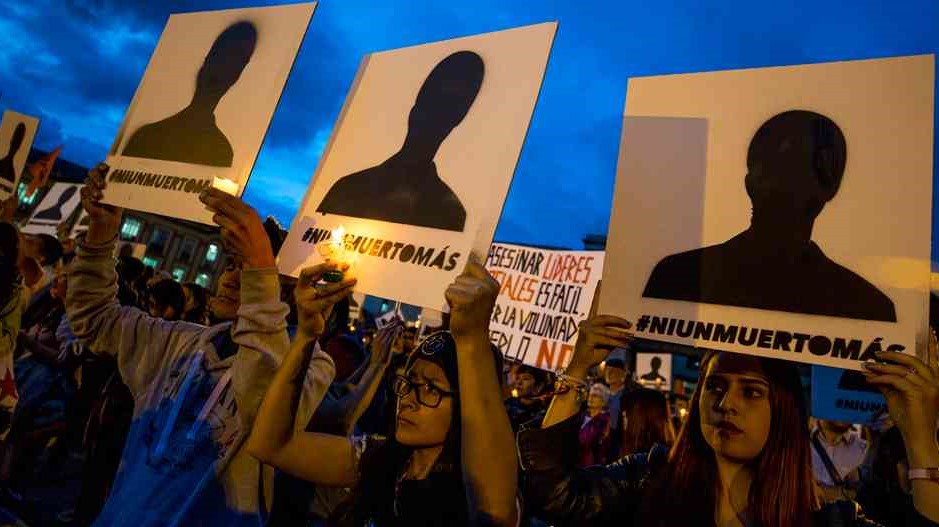
Newsclick of 20 January 2020 says the “Colombian tragedy continues without an end in sight“: The last two weeks have seen a worrying surge in assassinations of social leaders, human rights defenders and ex-combatants. 19 such leaders have been assassinated since the turn of the decade. The demand by organizations and movements for protection and justice for the leaders – 800 of whom have been assassinated since 2016 – are being ignored. Meanwhile, in the first week of January, the news magazine Semana released an extensive exposé revealing that the Colombian army was illegally listening to and indulging in surveillance of journalists, politicians and judges, including a Supreme Court judge. Law and order, protection and guarantee of the most basic rights remain elusive in Colombia. It lists many of the victims:
22 year-old Cristian David Caicedo was assassinated in execution style on January 3 by a group of armed men in the rural area of Guapi, Cauca. Caicedo was the son of a well-known regional Black leader who was the legal representative of the Community Council Guapi Abajo and a member of the National Space of Prior Consultation of Black Communities.
Anuar Rojas Isaramá was a 29-year-old member of the Indigenous guard from the Agua Blanca community in Nuquí, Chocó and was assassinated by armed men on January 5, but the crime was only reported by the public institutions on January 9. According to the mayor of Nuquí, the assassination of Isaramá caused the displacement of 28 families (123 people) who are currently taking refuge nearby.
An Indigenous Nasa elder, Virginia Silva of the El Canelo Reservation in Páez, Cauca was assassinated at her home in front of her husband on January 7. She was 71 years old. According to Sonia Hurtado Ducue, president of the Association of Nasa Cxha cxha Cabildos, Silvia had received death threats from armed groups before her assassination.
37-year-old Gloria Ocampo, who lived in the rural region of Puerto Guzmán, was assassinated in her home along with her neighbor on January 7. Ocampo was an important leader in promoting crop substitution on a departmental level and within her community and worked on developing alternative options for production and commercialization despite lack of support from the government.
Peasant leaders Óscar Quintero and Gentil Hernández were both assassinated on January 8 in Puerto Guzmán. In the case of Quintero, armed men arrived at his house, dragged him out and assassinated him in front of his wife.
The same day, Mireya Hernández Guevara, the former treasurer of a Community Action Board, was shot and killed in Algeciras, Huila.
On January 10, a total of six assassinations took place in different regions of the country. Amparo Guejia Mestizo, Nasa Indigenous leader and founder of the Landless Workers Movement – Grandchildren of Quintin Lame – was assassinated along with her son Juan Pablo Dicué in Caloto, Cauca. The organization is affiliated to the national platform of social movements, the Patriotic March. Also in Cauca, human rights defender Nelson Enrique Meneses, 29, was shot and killed in his home in front of his wife and 3-year-old daughter in the municipality of Inza. He was a member of the Peasant Association of Inzá Tierradentro, part of the National Association of Zones of Peasant Reserve and the Patriotic March.
In Chiriguaná, Cesar, unidentified armed men killed the leader of a community action board, Henry Cuello. Tulio César Sandoval, who was part of the Coordinator of Coca, Marijuana and Poppy Growers and the Patriotic March in the Catatumbo region of North Santander, was also violently assassinated in his home in front of his family members on January 10. In Turbo, Antioquia former council member Sergio Narváez was assassinated in his home.
The next day, January 11, John Freddy Álvarez was assassinated in Algeciras, Huila. He was the president of the Association of Peasant Workers in Algeciras, Huila and a member of the Patriotic March.
Jorge Luiz Betancourt was shot dead by armed men on January 13 inside his home in Montelíbano, Córdoba while he was with his family. According to the Cordobexia Foundation, Betancourt was a community and sports leader…
The rise in the assassination of peasant leaders, Indigenous leaders, human rights defenders and others has shaken Colombian society. According to these numbers, the genocide of social leaders in the country is no where near stopping and may even get worse this year.
…..social movements, Indigenous, Afro Descendant and peasant organizations, trade unions, and human rights organizations are preparing for a national strike on January 21. The mobilization will commemorate two months since the beginning of the wave of mobilizations, strikes, cacerolazos and other protest actions against the government of far-right Ivan Duque and its war-mongering, neoliberal policies. One of the principal demands of the strike is that the government act to stop the genocide of social leaders, human rights defenders and ex-combatants in the country. The social movement platform, the People’s Congress, released a statement expressing solidarity with the Patriotic March and condemning the increased violence against social leaders. They also called on the people of Colombia to “take to the streets to protest as part of the mobilizations that will begin on January 21.”
See also on 21 January: https://colombiareports.com/colombias-peaceful-anti-government-protests-marred-by-violent-incidents-in-bogota-and-medellin/
https://reliefweb.int/report/colombia/security-council-press-statement-colombia-3
UN mission chief says Colombia should ‘urgently’ and ‘fully’ implement peace deal
https://www.newsclick.in/colombia-stories-pain-and-resistance
Colombia’s human rights defender Leyner Palacios threatened by armed group
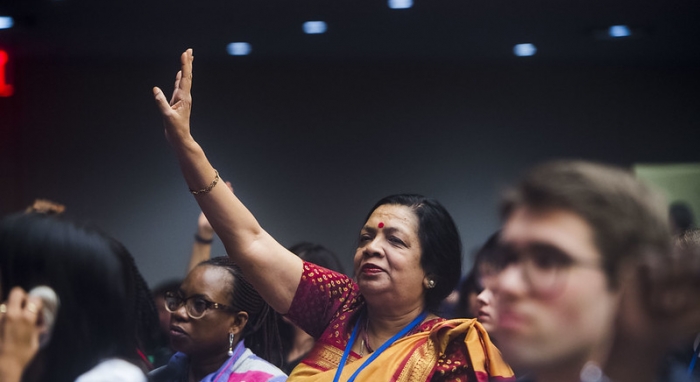
The Office of the High Commissioner for Human Rights (OHCHR) is inviting civil society globally to assist them in defining guidelines on how the UN can best contribute to promoting and safeguarding civil society space. The aim is to define guidelines to encourage an effective and consistent approach across UN agencies and inform the methods of work of mechanisms. This initiative was given a boost by the UN Secretary General who, in a recent audit of the work of the UN in regard to human rights defenders, called for the definition of ‘a system-wide approach to strengthen civil society space’ and ‘guidance on United Nations engagement with and support for human rights defenders.’ The consultation process will be held online from the 13-24 January 2020 on the Global Dev Hub platform.
‘This is a moment for all civil society players who see the value of greater and more effective engagement with UN agencies and bodies, to provide input on how best this should be done,’ said ISHR’s Eleanor Openshaw. ‘There are no national-level consultations being held to our knowledge, but a full week of online consultations will, hopefully, provide many of us with the opportunity to participate,‘ she added. The UN is seeking thoughts on a series of questions related to three key areas: partnership and participation, the protection of civil society actors, and the promotion of and advoacy for civic space.
For further information and the key questions, see the UN consultation invitations in English
 Hans Thoolen on Human Rights Defenders and their awards