Archive for the 'OHCHR' Category

Monday 2 March, start of the #idefend campaign

February 28, 2015

On Monday 2 March 2015 starts the “#idefend – Making sure civil society has its voice” campaign. It is an initiative of the Delegation of the European Union to the UN in Geneva in partnership with the Office of the High Commissioner for Human Rights and the Permanent Missions of Brazil, the Republic of Korea and Tunisia.

The #idefend campaign takes a public stance to support the voices of civil society.#idefend aims at expressing solidarity with all those human rights defenders and civil society actors, whose dedication and everyday work improve the human rights of people in every corner of the world. Join the campaign and help empower those who speak up for human rights!

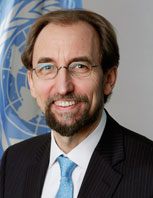
Human rights defenders are not violent seditionists, criminals, nor bloody revolutionaries, as so many governments like to portray them. They are the best of us, all of us. And they have a message. To all governments, we say: focus on their message. Listen to what they are saying. Understand the message, talk to them about it, be persuaded or persuade, without violence, instead of silencing them, punishing them, their families, and their communities.
Zeid Ra’ad Al Hussein, UN High Commissioner for Human Rights

Sadly, over the past years, we have observed a worrying trend at the Human Rights Council: Human Rights Defenders and civil society representatives are hampered from speaking at the Council, sometimes they are harassed upon their arrival to Geneva, or subject to reprisals in their home country upon their return. This is not acceptable.
Peter Sørensen, Head of the EU Delegation to the United Nations

#idefend | Making sure civil society has its voice.

Treaty bodies case law database saved and resurrected by UN

February 17, 2015

For someone who 25 years ago (!!) started the development of legal databases on human rights (specifically the legal protection of refugees) and wrote articles about it (e.g Int J Refugee Law (1989) (1):89-100.doi: 10.1093/ijrl/1.1.89Pp. 89-100, see ABSTRACT below), the news that the UN has now published, on-line, a database of case law on human rights is exciting and it should be for all practitioners.

The new site http://juris.ohchr.org/ contains all case law issued by the UN human rights expert committees, the Treaty Bodies.

The database was developed using data from the Netherlands Institute of Human Rights (SIM) of Utrecht University School of Law (of which I had the honor to be the first Director). Since the mid-1990s, SIM had developed a comprehensive record on the jurisprudence stemming from the decisions by four Treaty Bodies on complaints brought by individuals.  Over 20 years, academics compiled and indexed Treaty Bodies’ case law, making the SIM database the most authoritative online resource on this. Due to budget restrictions, SIM stopped updating the database  from 1 January 2014 and took it offline on 1 January 2015. However, SIM offered its data free of charge to the UN Human Rights Office.

This allowed us to build our own database, with an expanded remit and search capability, and we aim to continue developing it. It is an important part of our efforts to make the work of the Treaty Bodies more visible and accessible, and we hope it will benefit a range of users all over the world,” said Mr. Ibrahim Salama Director of the UN Human Rights Treaties Division. .

There are 10 Treaty Bodies that review and monitor how States that have ratified a particular treaty are implementing the rights contained in it. Eight (listed below) can also consider complaints by individuals who believe their rights have been violated and who have exhausted all the legal steps in their own country.

The site http://juris.ohchr.org contains case law indexed by various categories, including State, date, subject and keywords, which can all be used as search criteria. Users can submit their comments on the functioning of the database as part of ongoing efforts to improve it.

The Committees that can receive and consider individual complaints are:

  • Human Rights Committee (CCPR)
  • Committee against Torture (CAT)
  • Committee on the Elimination of Discrimination against Women (CEDAW)
  • Committee on the Elimination of Racial Discrimination (CERD)
  • Committee on the Rights of Persons with Disabilities (CRPD)
  • Committee on Enforced Disappearances (CED)
  • Committee on Economic, Social and Cultural Rights (CESCR)
  • Committee on the Rights of the Child (CRC)

Abstract of 1989 article on the development of legal databases: “Today’s information technology can be used to improve the legal protection of refugees, by providing information relevant to the asylum procedure, and laying the foundation for progressive development at the international level. The positive potential of legal databases is only now beginning to be realised, thanks to pioneering efforts within human rights and related documentation centre networks. UNHCR is helping to set up a case law database, in co-operation with non-governmental organizations. A database on national legislation is also planned, as is a full text database of international legal instruments database. Legal literature continues to be covered by the database REFLIT (REFugee LITerature) of UNHCR’s Centre for Documentation on Refugees (CDR/UNHCR). This article examines two basic kinds of information-retrieval systems, ‘free text’, and ‘indexed’, and considers their different structures, uses and search procedures, with reference to work on a forthcoming refugee thesaurus. The author calls attention to the need for standard formats, such as those of HURIDOCS, and to problems of scope and coverage. He suggests that information and documentation are areas in which practical co-operation between the UN, governments and non-governmental organizations could be implemented to advantage.”

DisplayNews.

Solomon Islands: selection of human rights defender for training in Geneva makes news

February 15, 2015
When a human rights defender from a small nation, such as the Solomon islands, is selected for fellowship programme with the United Nations, it makes a story. Teddy Kafo writes in the Solomon Star of 14 February how Watson Puiahi of the local NGO “I Lukim Sustainability Solomon Islands (ISSI)” was chosen to participate in the ‘2015 Indigenous fellowship Program’ of the Office of the High Commissioner for Human Rights in Geneva.

Read the rest of this entry »

OHCHR gives preview of new report on Libya in 2014

February 10, 2015

The Office of the UN High Commissioner for Human Rights [OHCHR] published today (10 February) a report, which will be formally presented to the Human Rights Council only in March, describing the situation of human rights in Libya during 2014. It paints a bleak picture of increasing turmoil and lawlessness, fanned by a multitude of heavily armed groups amid a broadening political crisis. Rampant violence and fighting, including in the country’s two biggest cities, Tripoli and Benghazi, as well as many other cities and towns across the country, is badly affecting civilians in general and particularly cases of harassment, intimidation, torture, numerous abductions, and summary executions of human rights defenders, civil society activists, journalists and other media professionals, as well as members of the judiciary, politicians and law enforcement officers.

The report, produced in conjunction with the UN Support Mission in Libya (UNSMIL), also describes numerous incidents of violence against women over the past year, including reports of threats, attacks and killings of female human rights defenders, politicians and other women in public positions. Minority groups, including Egyptian Coptic Christians, have also been increasingly targeted. The report also highlights the extremely vulnerable situation of migrants.

Thousands of people remain in detention – mostly under the effective control of armed groups – with no means of challenging their situation as prosecutors and judges are unable or unwilling to confront the armed groups. UN human rights staff have received reports of torture or other ill-treatment in many places of detention. The deteriorating security environment has impacted heavily on the justice system, which is no longer functioning in parts of the country. Prosecutors and judges have frequently been subjected to intimidation and attacks, in the form of court bombings, physical assaults, abduction of individuals or family members and unlawful killings.

The report highlights the need to strengthen State institutions, ensure accountability for human rights violations and support the ongoing political dialogue.

The full report can be found here: http://www.ohchr.org/EN/HRBodies/HRC/RegularSessions/Session28/Documents/A_HRC_28_51_ENG.doc

via: OHCHR PRESS BRIEFING NOTES – (1) Libya, (2) Malaysia, (3) Thailand, (4) Venezuela – Press releases – News – StarAfrica.com.

UN High Commissioner for Human Rights writes about Women’s Human Rights Defenders

December 8, 2014
UN HCHR Al Hussein

On 5 December 2014, Zeid Ra’ad Al Hussein, United Nations High Commissioner for Human Rights, wrote a piece in the Huffington Post in which he eloquently calls on all to ‘Stand in Solidarity With Courageous Women’s Human Rights Defenders’. 

In the article he explains that his Office has decided to launch a campaign to pay tribute to women and men who defy stereotypes and fight for women’s human rights. The campaign runs from Human Rights Day, December 10 this year, to International Women’s Day, March 8, 2015. We encourage everyone to join the ranks of these strong and inspiring advocates, on social media (#reflect2protect) and on the ground. Below the text in full:


Almost two decades ago, in Beijing, 189 countries made a commitment to achieve equality for women, in practice and in law, so that all women could at last fully enjoy their rights and freedoms as equal human beings.

They adopted a comprehensive and ambitious plan to guarantee women the same rights as men to be educated and develop their potential. The same rights as men to choose their profession. The same rights to lead communities and nations and make choices about their own lives without fear of violence or reprisal. No longer would hundreds of thousands of women die every year in childbirth because of health care policies and systems that neglected their care. No longer would women earn considerably less than men. No longer would discriminatory laws govern marriage, land, property and inheritance.

In the years that followed, the world has witnessed tremendous progress: the number of women in the work force has increased; there is almost gender parity in schooling at the primary level; the maternal mortality ratio declined by almost 50 percent; and more women are in leadership positions. Importantly, governments talk about women’s rights as human rights, and women’s rights and gender equality are acknowledged as legitimate and indispensable goals.

However, the world is still far from the vision articulated in Beijing. Approximately 1 in 3 women throughout the world will experience physical and/or sexual violence in their lifetime. Less than a quarter of parliamentarians in the world are women. In over 50 countries there is no legal protection for women against domestic violence. Almost 300,000 women and girls died in 2013 from causes related to pregnancy and childbirth. Approximately 1 in 3 married women aged 20 to 24 were child brides. In many parts of the world, women and girls cannot make decisions on their most private matters — sexuality, marriage, children. Girls and women who pursue their own life choices are still murdered by their own families in the dishonorable practice of so-called honor killings. All of our societies remain affected by stereotypes based on the inferiority of women, which often denigrate, humiliate and sexualize them.

Today we have the responsibility to protect the progress made in the past 20 years and address the remaining challenges. In doing so, we must recognize the vital role of women who defend human rights, often at great risk to themselves and their families precisely because they are viewed as stepping outside socially prescriptive gender stereotypes. We must recognize the role of all people, women and men, who publicly call for gender equality and often, as a result, find themselves the victim of archaic and patriarchal, but powerful, threats to their reputations, their work and even their lives. These extraordinary individuals — women’s human rights defenders — operate in hostile environments, where arguments of cultural relativism are common and often against the background of the rise of extremist, misogynistic groups, which threaten to dismantle the gains of the past.

Attacks against women who stand up to demand their human rights and individuals who advocate for gender equality are often designed to keep women in their “place.” In some areas of the world, women who participate in public demonstrations are told to go home to take care of their children. Consider the recent example of a newspaper publishing naked photos of a woman, claiming she was a well-known activist — an attack designed to shame this defender into silence. In other places, when women claim their right to affordable modern methods of contraception, they are labelled as prostitutes in smear campaigns seeking to undermine their credibility. Online attacks against those who speak for women’s human rights and gender equality by so-called “trolls” — who threaten heinous crimes — are increasingly reported.

These attacks have a common thread — they rely on gender stereotypes and deeply entrenched discriminatory social norms in an attempt to silence those who challenge the age-old system of gender inequality. However, these defenders will not be silenced, and we must stand in solidarity with them against these cowardly attacks.

This is why my Office has decided to launch a campaign to pay tribute to women and men who defy stereotypes and fight for women’s human rights. The campaign runs from Human Rights Day, December 10 this year, to International Women’s Day, March 8, 2015. We encourage everyone to join the ranks of these strong and inspiring advocates, on social media and on the ground.

As we approach the 20-year anniversary of Beijing, discrimination and violence against women, and the stereotypes that confine them into narrowly fixed roles must end. Women have the right to make their own decisions about their lives and their bodies. Guaranteeing and implementing these rights are non-negotiable obligations of all States. Women human rights defenders were instrumental in securing the ambitious program laid out in Beijing. Their work, their activism and their courage deserve our recognition, our support and our respect.”
Stand in Solidarity With Courageous Womens Human Rights Defenders | UN Women.

Register for the 3rd annual Forum on Business and Human Rights: 1 to 3 December 2014

November 17, 2014

The Office of the United Nations High Commissioner for Human Rights (OHCHR) organises the third annual Forum on Business and Human Rights, from 1 to 3 December 2014 in the Palais des Nations, Geneva.humanrightslogo_Goodies_14_LogoVorlagen

The Forum will last three days and focus on trends and challenges in the implementation of the “Guiding Principles on Business and Human Rights” and in implementing the United Nations “Protect, Respect and Remedy” Framework (A/HRC/17/31) and promote dialogue and cooperation on issues linked to business and human rights. The Forum is under the guidance of the Working Group on the issue of human rights and transnational corporations and other business enterprises, and open to multi-stakeholder participation, including States, business, civil society, and affected individuals and groups. See also my earlier posts: https://thoolen.wordpress.com/tag/business/

Registration for the 2014 Forum is currently open via the online registration system:http://www.ohchr.org/EN/Issues/Business/Forum/Pages/2014FBHRParticipation.aspx.

The draft programme of the Forum is now available at:www.ohchr.org/Documents/Issues/Business/ForumSession3/DraftProgramme.pdf

For further information about the Forum, please see the Forum website:www.ohchr.org/EN/Issues/Business/Forum.


Retaliation now reaches even Human Rights Commissioners in the Maldives: UN deeply concerned

October 19, 2014

(Ravina Shamsadani, Spokesperson for the Office of the UN High Commissioner for Human Rights. Photo: UN Multimedia)

On 17 October 2014 the United Nations High Commissioner for Human Rights felt duty bound to express deep concern about a criminal case initiated by the Supreme Court of the Maldives against members of the country’s own official Human Rights Commission!

The Office of the High Commissioner for Human Rights (OHCHR), noted that five members of the Human Rights Commission of the Maldives were now facing “serious criminal charges” following the submission of their written contribution to their country’s second Universal Periodic Review (UPR), presented to the UN Human Rights Council (the actual UPR of the Maldives is scheduled to be held between April and May 2015). “The Government has a responsibility to ensure a safe operating space for the Commission and for civil society actors in the country, so that they are able to coöperate with UN human rights mechanisms without fear of reprisals.” the spokesperson stated.

[It is not the first time the Supreme Court of the Maldives has come under rebuke from OHCHR. In 2013, former High Commissioner for Human Rights Navi Pillay called for reforms to the judiciary to safeguard the rule of law following the Supreme Court’s repeated interventions in the presidential election process in the Maldives which, she said, were undermining the country’s democracy. In that specific case, the Court had nullified the first round of the election on the basis of irregularities in the process, despite conclusions by national and international observers that the election was free and fair.]

United Nations News Centre – Maldives: UN ‘deeply concerned’ as Supreme Court prosecutes rights advocates.

Mexican laureate MEA, Alejandra Ancheita, pictured with UN High Commissioner

October 15, 2014

I have written about this wonderful woman, the Laureate 2014 of the MEA, before but did not yet have this nice picture with the UN High Commissioner for Human Rights Zeid [https://thoolen.wordpress.com/2014/10/10/dont-miss-the-high-commissioners-words-at-mea-2014-ceremony/]


See more at: http://www.ohchr.org/EN/NewsEvents/Pages/MartinEnnals2014.aspx#sthash.Y5CTi7Ug.dpuf

Mexican attorney receives top human rights defender award.

Less veto in mass atrocities can save lives including those of human rights defenders

September 29, 2014

In an important statement to a Ministerial meeting of the General Assembly on Regulating the veto in the event of mass atrocities, the new High Commissioner for Human Rights, Zeid Ra’ad Al Husseinmade some crucial points. He said that in recent years, the Security Council‘s “inability to take decisive action regarding a number of appalling crises has led to enormous, avoidable, human suffering. It has shaken confidence in our own institutions. It has granted time and space to the perpetrators to commit more violations, and made them far less likely to provide access to UN officials or to respond to their concerns.” Therefore, he added, “From the human rights perspective, the adoption of a code of conduct on use of the veto, in very specific circumstances where well-founded facts demonstrate that international crimes are occurring or about to occur, would demonstrate on the part of the permanent members of the Council that quality of leadership and responsibility which our world so badly needs.

Full text: http://www.ohchr.org/EN/NewsEvents/Pages/DisplayNews.aspx?NewsID=15103&LangID=E 

ISIL kills human rights defender Sameera Salih Ali Al-Nuaimy

September 26, 2014


Sameera Salih Ali Al-Nuaimy

The United Nations human rights High Commissioner for human rights today condemned the recent brutal, cold-blooded slaying by the Islamic State of Iraq and the Levant (ISIL) of Iraqi human rights defender Sameera Salih Ali Al-Nuaimy, as well as the continuing detention, sexual exploitation and sale of hundreds of women and girls in areas captured by the militant group. Read the rest of this entry »