Archive for the 'OHCHR' Category

Theo van Boven reflects on 70 years United Nations

December 16, 2015

Theo van Boven – former Director of the UN Human Rights Division – was asked by the United Nations Association of the Netherlands to express his personal views of the UN and his role in the development of the human rights sector. Under the title “THE UNITED NATIONS AT THE AGE OF 70″ he said inter alia the following: 

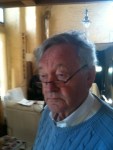
Theo van Boven 2011

Theo van Boven 2011

Read the rest of this entry »

Burundi: what more ‘early’ warning does one need?

November 10, 2015
Pierre Claver Mbonimpa is President of the Association for the Protection of Human Rights and Detained Persons (APRODH) in Burundi. He was the Laureate of the MEA 2007 and on 27 October 2015 he received the Pan African Human Rights Defenders Network’s East Africa Shield Award. What happened to him in the last months is telling (for earlier items see: https://thoolen.wordpress.com/tag/pierre-claver-mbonimpa/):

MEA Laureate Mbonimpa, Burundi

MEA Laureate Mbonimpa, Burundi

  • On 3 August 2015, prominent human rights defender Pierre Claver Mbonimpa – laureate of the MEA 2007 – was shot in the face and neck. He was forced to seek medical treatment abroad.
  • His son-in-law, Pascal Nshimirimana, was shot dead outside his home in Bujumbura on 9 October.
  • On 6 November, the body of Welly Nzitonda, the son of Mbonimpa, was found dead a few hours after he was arrested in the Mutakura neighborhood of Bujumbura where protests have taken place.
  • Just before that – on 3 November – Mbonimpa spoke out on a video message from the place where is recovering: https://www.defenddefenders.org/2015/11/voices-that-cannot-be-silenced-pierre-claver-mbonimpa-speaks-out-on-burundi/

On 9 November 2015 eleven leading human rights NGOs addressed an Open Letter to the UN Human Rights Council urging them to organize a special session to prevent (further) atrocities in Burundi.

Read the rest of this entry »

New website devoted to mandate UN Rapporteur on Human Rights Defenders

October 24, 2015

The UN Special Rapporteur on Human Rights Defenders, Michel Forst, has taken the initiative to set up a website devoted to his mandate. Check out: https://www.protecting-defenders.org.

You can subscribe to a newsletter to be kept informed.

Reprisals against Human Rights Defenders continue says UN report

September 17, 2015

Reprisals against human rights defenders continue and the UN High Commissioner for Human Rights (fortunately) continues to give it prominence. A newly released United Nations report names 20 nations that have taken action against rights defenders and activists over the past year. Here the version of the New York Times (Nick Cumming) of 15 September 2015:

Those who give evidence to United Nations human rights investigators are facing increasingly severe reprisals, the United Nations Human Rights Council said Tuesday in a report naming 20 countries that took action against rights defenders and activists in the past year. The instances included intimidation and reprisals against the council’s commissions of inquiry on Eritrea and the 2014 war in Gaza, as well as people cooperating with United Nations investigators and staff monitoring human rights developments, the council’s president, Joachim Rücker, reported. “The types of acts reported seem to have become more varied and severe over time, targeting not only the individuals or groups concerned, but also their families, legal representatives, nongovernmental organizations and anyone linked to them,” he said in the report, which covers events in the year up to the end of May. The penalties it cited ranged from threats and travel bans to imprisonment, torture, sexual violence and disappearance. The list was not exhaustive, leaving out cases where naming individuals might endanger them.

In a statement to the council, Zeid Ra’ad al-Hussein, the United Nations’ High Commissioner for human rights, expressed concern on Monday about China’s detention of more than 100 lawyers and Russia’s stigmatization of nongovernment organizations getting overseas funding, but the report includes only one example of intimidation in each country.

It describes the torture of Sadriddin Toshev, a prisoner in Tajikistan, beaten in front of other inmates by prison officials who cited his interaction with a United Nations investigator on torture. Mr. Toshev was later charged with fraud, accused of deliberately wounding himself to discredit prison officials and of distributing false information, the report said.

Among other cases, the report cites a five-year prison sentence which it says was imposed in Iran on Mohammad Ali Taheri for cooperating with the United Nations expert monitoring human rights there. It also describes the violent arrest of a human rights defender in Myanmar by 10 plainclothes security men as he was on his way to provide evidence to the council-appointed expert assessing developments there.

“Such acts not only show a complete disregard for the functioning of the United Nations as a whole but also highlight the fact that, despite repeated calls for action by states to end all such violations, impunity continues to surround them,” the report said.

Having written so often about this topic, a link to previous posts is all this is needed: https://thoolen.wordpress.com/tag/reprisals/ 

Source: Retribution Increases Against Those Aiding Human Rights Inquiries – The New York Times

The remarkable crackdown on lawyers in China in July 2015

July 29, 2015

On 10 July 2015 over 250 lawyers and support staff were detained or questioned by the police in China in one of the largest crackdowns in recent years. Many newspapers and NGOs have reported on this phenomenon. This is the situation on 29 July: Read the rest of this entry »

Human rights defenders and their organizations are at the heart of the protection of natural resources

June 19, 2015

The link between human rights defenders and the exploitation of natural resources was the focus of this year’s report (18 June 20150 by the United Nations Special Rapporteur on the rights to freedom of peaceful assembly and of association, Maina Kiai. He called for a new treaty binding businesses to respect fundamental human rights, and for States and corporations to fully engage with civil society organizations in the context of natural resource exploitation.

Corporations play an outsized role in the decision-making processes about exploitation of natural resources. But they are not subject to legally binding human rights obligations,” Mr. Kiai told the UN Human Rights Council during the presentation of his latest report. “It is time to address this issue more robustly; corporations must not escape responsibility to safeguard human rights.

I am aware that some would rather strengthen compliance with the Guiding Principles than have a binding treaty. But this should not be an either/or matter: Both should be pursued to protect human rights.”

The Special Rapporteur also highlighted States’ responsibility to recognize civil society organizations, including affected communities, as key actors in the context of natural resource exploitation.  “Authorities endeavour to silence individuals and associations that express opposition to natural resource exploitation processes,” the independent expert said.

In his report, the Special Rapporteur argues that States’ and corporations pervasive disregard of communities and associations’ input in the natural resources sector is counterproductive and divisive, and is likely contributing to an erosion of confidence in the world’s prevailing economic system.

The rights to freedom of peaceful assembly and of association are instrumental in achieving sustainable and mutually beneficial exploitation of natural resources,” he said. “These rights help foster increased transparency and accountability in the exploitation of resources and inclusive engagement throughout the decision-making chain.”

During his presentation, Mr. Kiai also warned that authorities have increasingly sought to stifle expressions of criticism and opposition by cracking down, often with unnecessary force, on peaceful protests; arresting, harassing, prosecuting and imprisoning human rights defenders; enacting restrictive legislation on associations; and interfering with the operations of civil society organizations.

Peaceful protests are banned from sites where natural resource exploitation takes place and the situation is not any better in relation to the right to freedom of association,” he noted. “Individuals and associations who express opposition to natural resource exploitation processes are vilified as ‘anti-development’, ‘unpatriotic’, and even as ‘enemies of the State’”.

“This intolerance is reflected in countries in the global North, and the global South,” the Special Rapporteur said. “Nevertheless, I remain optimistic because of the incredible courage and determination of activists and ordinary people who refuse to be cowed or defeated, even if it means paying with their lives.”

The Special Rapporteur’s full report (A/HRC/29/25/Add.3) is at: http://ap.ohchr.org/documents/dpage_e.aspx?m=189

For the UN Guiding Principles on Business and Human Rights: http://www.ohchr.org/EN/Issues/Business/Pages/Tools.aspx


Natural resources sector: UN expert calls for binding human rights treaty for corporations.

Israel refuses entry to UN special rapporteur Wibisono

June 15, 2015

Unfortunately, Israel joined the countries that think non-cooperation with the UN pays: last week it refused entry to Makarim Wibisono, the UN special rapporteur on human rights in the Palestinian territories, who is working on a report on rights violations in east Jerusalem, the West Bank and Gaza. “Since taking up his mandate in June 2014… Wibisono has sought Israel’s cooperation with his mandate, including access to the occupied Palestinian territory and meetings with Israeli officials. His requests to access Israel and the occupied Palestinian territory in order to carry out his mandate have not received a formal response from the government of Israel,” said Xabier Celaya, from the media unit of the Office of the High Commissioner for Human Right.

The Israeli Foreign Ministry justified its decision by saying that “Israel cooperates with most human rights mechanisms of the UN. Israel does not cooperate with unfair and unbalanced mandates such as the… rapporteur’s mandate, and consequently his entry to Israel is not allowed.

[Israel remains the only country for which a special investigator is permanently assigned. The position of special investigator to the Palestinian territories was first created in 1993 and that Wibisono of Indonesia is the sixth person since then to hold that post.]

Earlier in the month, Wibisono spoke out against Israeli plans to relocate Palestinian Beduin communities in the West Bank “I am alarmed at indications that the rollout of plans, which in their full effect are believed to entail the forced eviction and forcible transfer of thousands of people, contrary to international human rights law and international humanitarian law, now appears imminent,” Wibisono said

https://thoolen.wordpress.com/2014/06/23/non-cooperation-from-some-states-with-the-un-human-rights-council-is-persistent/

via Israel refuses entry to UN special investigator Wibisono – Arab-Israeli Conflict – Jerusalem Post.

Panel on Human rights defenders and the rule of law – 8 June Geneva

May 29, 2015

The International Service for Human Rights and United Kingdom Mission in Geneva are organising a panel discussion on “Human rights defenders and the rule of law” on Monday, 8 June 2015, 16.30-18.00 (followed by a reception) at the Graduate Institute, Maison de la Paix (Auditorium 2), Genève, Switzerland.

This event will discuss the importance of the rule of law in safeguarding the rights to freedom of expression, association and assembly for human rights defenders and activists, and the vital role of human rights defenders and international mechanisms in establishing, maintaining and promoting the rule of law. It will also explore the notion that respect for the rule of law requires respect for the rule of international law and national law that is in conformity with international law.

Panelists:

  • Olga Abramenko, Director, ADC Memorial (Russia)
  • Ruki Fernando, Human Rights Advisor, INFORM Human Rights Documentation Centre (Sri Lanka)
  • Mona Rishmawi, Chief of the Rule of Law, Equality and Non-Discrimination Branch with the Office of the High Commissioner for Human Rights
  • Phil Lynch, Director, International Service for Human Rights

Moderator: Julian Braithwaite, UK Permanent Representative to the UN in Geneva

If you want to attend please contact before 3 June: anne.jahren@fco.gov.uk

For those unable to attend, you can follow the event on Twitter through @UKMissionGeneva and @ISHRGlobal.

Human rights defenders and the rule of law: panel discussion on 8 June.

UN Rapporteur urges Nauru to revoke measures that affect human rights defenders and asylum seekers

May 25, 2015

Credit: OHCHR
Where possible I like to extend coverage to countries that normally do not figure highly in the news. This press statement of 22 May 2015 from the UN Human Rights Office provides the occasion to zoom in on the Pacific island of Nauru.

Voicing concern over recent amendments to the Criminal Code in Nauru which “unduly restrict” freedom of expression, a United Nations expert on the issue today urged the Government to revoke such measures to fulfil its human rights obligations. “These new laws could be used to muzzle dissenting opinions and deter human rights defenders, academics, journalists, students, politicians and civil society members”, David Kaye, the UN Special Rapporteur on freedom of opinion and expression, warned.

Ambiguous and imposing harsh penalties, the amended Criminal Code also includes up to seven years in prison for a wide range of legitimate expression, according to Mr. Kaye. Nauru has also curtailed the freedom of press. It imposed a prohibitive $6,500 fee for a single entry visa for foreign journalists in 2014.

Nauru should allow free space for expression without fear of criminal prosecution,” he said, adding that “it should lift all restrictions to access internet and social media, and facilitate access to the media in the country.” Since April, the authorities have blocked access to social media and internet to prevent pornography and “cyberbullying” and to protect the national culture. These restrictions, however, are “designed to prevent asylum seekers and refugees in the country from sharing information on their situation,” stressed the independent expert.

United Nations News Centre – UN rights expert urges Nauru to revoke measures that could ‘muzzle’ dissent.

UN consultation on space for civil society

May 19, 2015

The High Commissioner for Human Rights is putting together a report of practical recommendations on how to create and maintain the space for civil society to work freely and independently. The freedom of expression, association, peaceful assembly etc are at the heart of civic activity and good laws and rules to guarantee public freedoms, as well as ways to monitor and protect them are of course a necessary condition. But also needed are:

  • a political and public environment that values civil society’s contributions
  • free flow of information
  • long-term support and resources
  • space for dialogue and collaboration

The OHCHR is interested to hear from you about your experience.  Please share:

  1. your examples and illustrations of these and other ways to maintain space to work
  2. if there are limitations, how do you continue to carry out your activities
  3. useful links, tools, resources, guides (whatever the language)

And forward this Note to others who should know about it!!

Please send information before 30 June 2015 by email to: civilsociety@ohchr.org, with in the subject heading “Civil Society Space Report – Input”.

For the full text of the resolution of the UN Human Rights Council, see: http://ap.ohchr.org/documents/dpage_e.aspx?si=A/HRC/RES/27/31

Consultation – updated 21 April 2015.doc – Google Docs.