Archive for the 'organisations' Category

NGO Statement on outcomes of the UNGA 78 Third Committee

November 23, 2023

14 NGOs that closely follow and engage with the General Assembly Third Committee have published a joint statement on outcomes of this 78th sessionp

The undersigned civil society organisations mark the conclusion of the UN General Assembly’s (GA) 78th Third Committee session with the following observations on both thematic and country-specific outcomes. We urge all States to implement the commitments they have made during this session to their full extent.

We welcome the joint statement on reprisals, led by Ireland and Uruguay and joined by a cross-regional group of countries. The statement called on all States and the UN to prevent, respond to, and ensure accountability for cases of intimidation and reprisals against those who engage or seek to engage with the UN. Once again, 80 States signed on to the statement, and affirmed their commitment to freedom of expression and association; solidarity with defenders, civil society and victims of violations; and contributed to ensuring that UN bodies and processes are informed by, and respond effectively to, the needs of communities on the ground. We urge more States to sign on to future such statements. 

We welcome the adoption of the biennial resolution on human rights defenders focusing on the 75th anniversary of the Universal Declaration on Human Rights and the 25th anniversary of the UN Declaration on Human Rights Defenders. The resolution included strengthened language on women human rights defenders, defenders in conflict and post conflict situations and children defending human rights; as well as multiple and intersecting forms of discrimination and defenders’ work to develop new human rights ideas. We welcome calls on States to refrain from internet shutdowns and restrictions including digital technologies, as well as on OHCHR to collect information on threats, attacks and cases of arbitrary detention. We now look to all States to implement these commitments and meaningfully progress the protection of human rights defenders.        

We welcome the adoption of a strong resolution on the safety of journalists. This resolution adds new commitments for States on a wide range of issues, including on strategic lawsuits against public participation (SLAPPs), journalists covering protests, and gender-based harassment and abuse. The resolution also recognised the growing threat of generative artificial intelligence to the safety of journalists. We urge all States to translate these renewed international commitments into allocation of resources and political will at the national level to prevent, protect and remedy all human rights violations against journalists.

A new resolution on the promotion and protection of human rights in the context of digital technologies was adopted, advancing discussion on artificial intelligence at a critical time as the Global Digital Compact attempts a similarly comprehensive exercise. The text brings the omnibus coverage of the various Human Rights Council resolutions to the Third Committee, highlighting intersections of digital technologies, human rights, security and sustainable development, and crucially recognising that certain applications of digital technologies are incompatible with international human rights law. The text included language on racial and gender-based discrimination, business and human rights, privacy, targeted surveillance, data protection, freedom of expression, censorship and internet shutdowns. We hope to build on this broad foundation and strengthen elements on targeted surveillance, commercial spyware, biometric data in digital public infrastructure, and applications of artificial intelligence in future resolutions.

The resolution on terrorism and human rights adopted by consensus underscores the importance of the promotion of human rights and meaningful participation of all of society in counter-terrorism efforts nationally and globally. This resolution offered an opportunity to reflect on changes in State violations in the name of counter-terrorism or national security, and to build on language on gender inclusivity, civil society engagement and the importance of international humanitarian law and humanitarian access included in the recent UN Global Counter-Terrorism Strategy and report by the Special Rapporteur on human rights and counter terrorism. However, as the resolution was a technical rollover from GA76, we regret that this opportunity was not seized this session and hope that future resolutions will build upon these advancements.

We welcome the adoption of the resolution on strengthening the role of the UN in the promotion of democratization and enhancing periodic and genuine elections, focusing on media freedom and freedom of expression, presented by the US. The role of human rights defenders, as well as States’ obligation to ensure the right of all to participate in elections and to take steps to eliminate policies and practices discriminating on various grounds was maintained in the text. Critically, for the second time, the text recognised women and girls in all their diversity, and listed sexual orientation and gender identity as prohibited grounds of discrimination; despite votes being called to amend those references. Consensus was broken on the resolution for the first time, but was ultimately adopted by an overwhelming majority. 

We welcome the adoption by consensus of the resolution on the rights of Indigenous Peoples. We specifically welcome calls on States to ensure the protection and safety of indigenous human rights defenders, and to prevent and investigate human rights violations, killings, reprisals and abuses against them.

The rights of the Child resolution, focusing on the digital environment, was adopted by consensus. Despite the timeline precluding a full consideration of the lengthy text and risking an imbalanced update, we welcome the co-facilitators’ decision to open the full text for negotiation, to include updates related to the theme and references to General Comments 25 and 26 of the Committee on the Rights of the Child. We welcome retention of agreed language, and updates, including: bridging digital divides; protection from violence, harassment and abuse in the digital environment; access to information and impacts of digital acceleration on education access; sexual and reproductive health; multiple and intersecting forms of discrimination; and private sector responsibilities. We are disappointed however by decisions to delete agreed language on the full, equal and meaningful participation of girls, delete paragraphs on COVID-19 that resulted in lost language on children’s rights, to remove language on specific challenges facing girls, and to include new non-agreed language on the common responsibilities of parents.

Gender related resolutions

The resolution on policies and Programmes Involving Youth presented by Cabo Verde, Kazakhstan and Portugal, was adopted by consensus. The zero-draft was slimmed down in a streamlining exercise, leading to the exclusion of human rights frameworks and a focus on reinserting previously agreed language. We are pleased that references to multiple and intersecting forms of discrimination, sexual and gender based violence, sexual and reproductive health services, menstrual health, comprehensive education and human rights frameworks were retained.  However we regret that despite significant support from Member States, agreed language from the previous resolution on sexual and reproductive health and rights, menstrual hygiene management, marginalised persons and situations, comprehensive sexuality education, as well as references to adolescents were not included in the final text.

We welcome the adoption by consensus of the resolution on the human rights to safe drinking water and sanitation (WASH), presented by Germany and Spain, that included new references to menstrual health and hygiene management, sexual and reproductive health-care services, and sexual and gender-based violence. Language was maintained on the stigmatising effect of lack of menstrual health and hygiene management on young women and girls; as well as inequalities caused by COVID-19 in accessing adequate WASH services especially for women, girls and persons in vulnerable situations, adversely impacting gender equality and women’s empowerment. We regret that, despite significant support, references to multiple and intersecting forms of discrimination and sexual and gender-based violence were either omitted or diluted in the final text, neglecting the need to comprehensively address various forms of violence and discrimination women and girls face when accessing water and sanitation. 

We welcome the adoption by consensus of the violence against women migrant workers resolution presented by Indonesia and the Philippines. The resolution includes new references to gender-based violence through digital technologies, particularly impacting women migrant workers in transit and in destination countries; as well as root causes of migration, including climate change, the availability of equitable work and inequitable ownership of local resources, which undermine women’s empowerment. Strengthened recognition of domestic and care migrant workers as a particularly vulnerable group who can face exploitation, violence, and abuse due to the informal nature of their employment was included. We regret that despite significant support, additional references to sexual and reproductive health, intimate partner violence, and multiple and intersection forms of discrimination were omitted in the final text. We echo the resolution’s call to all Member States to protect all migrant women from harassment and violence, regardless of migration status.

The resolution on the Girl Child, presented by the Southern African Development Community (SADC), was adopted by consensus. We welcome the retention of agreed language, as well as the theme proposed for the Secretary General’s Report to the eightieth GA session on the impact of digital technologies on girls, and related language updates. However, we deeply regret   that the circulation of the text did not allow sufficient time for a comprehensive and substantive update. We are disappointed that the only other update to the text was the unprecedented inclusion of language on family-oriented and family-policies. In the absence of references to other policies that aim to realise the rights of girls in all their diversity, this new inclusion results in an imbalanced text that fails to fully recognize and address the challenges they face. Given the rapidly changing global landscape for girls and that last substantive revision of this text was in 2017, a comprehensive update to this resolution remains crucial.

The resolution on rural women was adopted by consensus and co-sponsored by more than 60 Member States. We welcome the retention of agreed language that recognizes the impact of historical and structural power relations, gender stereotypes and negative social norms on the achievement of gender equality and the empowerment of women and girls, particularly those living in rural areas. We also welcome that the resolution urges Member States to implement policies and programs that promote and protect the human rights of women and girls, address sexual and gender-based violence and multiple intersecting forms of discrimination, and strengthen measures to ensure universal access to sexual and reproductive health and reproductive rights. We, however, deeply regret that several proposals to further strengthen the resolution that were supported by many Member States were not retained in the final draft including on the particular challenges women and girls living in rural areas face in accessing sexual and reproductive health services, and references to women and girls in all their diversity. 

The resolution on follow up to the Beijing Declaration and Platform for Action presented by Bangladesh was adopted by consensus. We welcome the text, which includes new references to the high-level meeting on universal health coverage, the universality of the 2030 agenda and their role in achieving gender equality, and to the UN system-wide Knowledge Hub on addressing sexual harassment. It also calls for a high-level meeting at the 80th General Assembly to celebrate the 30th anniversary of the Fourth World Conference on Women, and to accelerate the realisation of gender equality and the empowerment of all women and girls. We regret that proposed text on multiple and intersecting forms of discrimination and on the importance of the realisation of sexual and reproductive health and reproductive rights was not included in the final document. 

COUNTRY SITUATIONS

The joint statement on the human rights situation in Xinjiang, China delivered by the UK on behalf of a cross-regional group of 51 countries is a strong message to Chinese authorities regarding growing concerns about abuses against Turkic Muslim communities. This year, there are new signatories from several regional groups. The statement emphasises the serious human rights violations Uyghurs and other Turkic Muslim communities continue to suffer in Xinjiang, and echoes the UN Office of the High Commissioner for Human Rights’ August 2022 report, which concluded that the abuses ‘may constitute international crimes, in particular crimes against humanity.’ The statement notes that a year has passed since the release of the OHCHR report, and China has yet to engage constructively with its findings. It urges China to end its human rights violations, engage constructively with the OHCHR, and fully implement the reports’ recommendations. With only one more State signature than the 2022 joint statement, work remains to be done to ensure broader support from Member States to hold China accountable for its human rights violations including from Muslim-majority countries.

Resolutions 

While we support the below resolutions that highlight violations of human rights in specific countries, we acknowledge the existence of human rights violations in many other countries that also merit the attention of the UN General Assembly and look forward to a time when they are also considered in the Third Committee.

The resolution on the human rights situation in the Islamic Republic of Iran was adopted following a vote (80 in favour; 65 against; 29 abstentions). Initiated by Canada and a core group and cosponsored by 50 countries, this comprehensive resolution calls on Iran to uphold the rights of all citizens. It specifically calls on Iran to prohibit child, early and forced marriage, female genital mutilation, children being subject to the death penalty, torture and other inhuman treatment. It condemns fundamental rights violations, the frequent imposition of the death penalty, intensified and targeted repression of women and girls, the use of surveillance and force against non violent protesters, and poor prison conditions. It also calls for an end to all discrimination and violations against ethnic, linguistic and other minorities as well as recognized and unrecognised religious minorities, including Baha’is who continue to suffer various violations including persecution, mass arrests, lengthy prison sentences. 

We welcome the adoption of the resolution on the situation of human rights in the Syrian Arab Republic. We particularly welcome new references to the victim- and survivor-centric Independent Institution on Missing Persons, a mechanism established by the UN General Assembly this June, to help clarify the fate and whereabouts of all missing persons in Syria. However, we are disappointed that the resolutions’ co-sponsors orally amended the text to remove a critical paragraph that would have mandated a regular report on humanitarian access in the country. Not only would this report have specifically highlighted instances where humanitarian access was not full, timely, unrestricted or sustained; it would have filled a gap left by the failure to renew the Security Council-mandated cross-border humanitarian mechanism earlier this year. 

The consensus adoption of the resolution on the human rights situation in the Democratic People’s Republic of Korea (DPRK) demonstrates that Member States remain deeply concerned about the appalling abuses committed by the DPRK authorities. We welcome in particular the inclusion of language on accountability. We also welcome language stressing the linkages between the human rights situation in the country, including with respect to the rights of women and girls, and the continuing diversion of DPRK’s resources to pursuing nuclear weapons and ballistic missile programmes over the welfare of its people. 

The resolution on the situation of human rights of Rohingya Muslims and other minorities in Myanmar, which was adopted by consensus, once again does not reiterate key elements of the 2021 UNGA resolution which followed the military coup in February 2021. The resolution fails to comprehensively address ongoing and escalating human rights violations by the military, despite the Special Rapporteur on Myanmar’s warning that a ‘raging fire of brutality’ is engulfing the country. The resolution however recognizes the impacts of militarization aggravated by the continued access to arms from abroad, reiterates protection needs of the Rohingya and calls for all necessary measures to be taken to provide justice to victims and ensure accountability.

The resolution on the situation of human rights in the temporarily occupied territories of Ukraine, including the Autonomous Republic of Crimea and the city of Sevastopol was adopted by vote. The resolution strongly condemns intensifying crackdowns against journalists and other media workers, human rights defenders and civil rights activists, as well as forcible transfers of Ukrainian children and other civilians to the temporarily controlled or occupied territories of Ukraine and their deportation to the Russian Federation. The resolution further calls on Russia to cease all violations and abuses, including discriminatory measures and practices, arbitrary detentions and arrests within the framework of the so-called filtration procedures, enforced disappearances, torture, sexual and gender-based violence, including compeling apprehended persons to self-incriminate or ‘cooperate” with law enforcement, ensure fair trial, and revoke all discriminatory legislation.

CIVIL SOCIETY ACCESS While we welcome the action by some States to invite civil society organisations to join informals as observers this session, it was disappointing that only a few States extended this invitation. This year, once again, civil society encountered challenges in staying informed about informal negotiations. The schedule of these informal sessions, previously available in the UN journal until 2019, was once again absent from the said journal. Instead, it was exclusively published on the e-deleGATE platform, to which civil society does not have access.These critical barriers to civil society access to Third Committee negotiations deprive the Committee of civil society’s technical expertise and mean that its outcomes fail to leverage the contributions of a crucial stakeholder in promoting the implementation of human rights.

SIGNATORIES

Access Now 

Amnesty International

ARTICLE 19

Association for Progressive Communications – APC

Center for Reproductive Rights 

CIVICUS

Fòs Feminista

Global Centre for the Responsibility to Protect

Human Rights in China

Human Rights Watch

International Center for Not-for-Profit Law

International Service for Human Rights

Outright International

Women Deliver
https://ishr.ch/latest-updates/joint-civil-society-statement-on-outcomes-of-the-unga-78-third-committee/

Soltan Achilova – finalist MEA 2021 – denied travel to Geneva Human Rights Week

November 21, 2023

On 21 November, 2023 the Martin Ennals Foundation, joined by HRW and the ISHR, issued the following statement:

The Martin Ennals Foundation condemns the harassment of Soltan Achilova and her daughter by government authorities at Ashgabat airport and calls for Turkmen authorities to stop their reprisals against journalists for their human rights work.

In the early hours of November 18th, 2023, Mrs. Soltan Achilova and her daughter were stopped by Turkmen government officials from boarding their flight for Switzerland. A customs official took their passports, wet them with a damp rag and declared the passports to be ruined, effectively obstructing Soltan from traveling to Geneva where she would feature as a keynote speaker at the University of Geneva’s Human Rights Week 2023.

This act of harassment and denial of freedom of movement is particularly reprehensible in that it comes only a few days after Turkmenistan’s 4th Universal Periodic Review, during which high-level government representatives expressed their “support for …the promotion and protection of fundamental freedoms and human rights“, giving multiple examples of their progress in terms of respect for freedom of expression.

Soltan Achilova believes she was not allowed to leave the country because of the authorities’ fear that negative information might be heard during the Human Rights week in Geneva. Yet, the obstruction from travel of an internationally recognized human rights defender is more striking evidence of the lack of freedoms in the country and the bad faith with which the Turkmenistan government engages with the Human Rights Council.  

Turkmenistan is one of the most repressive and isolated countries in the world, ranking 176th out of 180 countries in terms of press freedom and working conditions for journalists. Soltan has been reporting about her country for more than a decade. Her pictures of daily life are one of the few sources of documentation of human rights violations occurring in this most secretive nation. In 2021, Soltan was recognized by the Martin Ennals Award for her documentation of land grabs and forced evictions of ordinary citizens in Ashgabat.

Soltan has not been allowed to travel freely outside of her country on several occasions. She is under constant surveillance by Turkmen authorities and has suffered numerous incidents of harassment, intimidation, and threats. Despite the challenges, Soltan persists in her human rights work, regularly sending information and pictures  outside of the country so that government authorities are held to account.

We renew calls for Turkmenistan to fully implement their human rights obligations, including, inter alia, allowing human rights defenders and journalists to conduct their work peacefully. We invite Member States accompanying the 4th Universal Periodic Review of Turkmenistan to strongly sanction the silencing of Soltan Achilova and other Turkmen journalists.

For more on Soltan: https://youtu.be/7xkSvMXaZUU?si=JhWOrMxs4yQQ2wz8

https://www.hrw.org/news/2023/11/21/turkmenistan-journalist-prevented-travelling-abroad

https://www.frontlinedefenders.org/en/statement-report/turkmenistan-whrd-soltan-achilova-denied-travel-geneva-human-rights-week

https://www.rferl.org/a/turkmenistan-achilova-stopped-flying-europe/32692666.html

Defamation indictment for Fatia Maulidiyanti and Haris Azhar, two human rights defenders in Indonesia

November 14, 2023

Responding to the indictment of two prominent human rights defenders, Fatia Maulidiyanti and Haris Azhar, Amnesty International Indonesia’s Executive Director Usman Hamid said on 13 November 2023:

This disgraceful indictment will have a destructive effect on the work of human rights defenders in Indonesia. Instead of protecting the right to freedom of expression, the Indonesian authorities are obliterating civic space. These alarming indictments illustrate the increasing oppression faced by activists who express dissenting opinions. We urge the Indonesian authorities to immediately release Fatia Maulidiyanti and Haris Azhar. The right to freedom of expression must be respected and guaranteed.” See also: https://humanrightsdefenders.blog/2021/10/15/indonesia-human-rights-defenders-under-pressure/

The prosecutor demanded that Fatia should be imprisoned for three years and six months, and Haris for four years. They were deemed guilty after being sued by the Coordinating Minister for Maritime Affairs and Investment, Luhut Binsar Pandjaitan. The minister filed a defamation case against Fatia and Haris in September 2021. Both were charged by the police on 17 March 2022 with defamation under Article 27 section (3) of the Electronic Information and Transactions (EIT) Law. Amnesty International Indonesia has voiced concerns related to problematic provisions in Indonesian EIT Law, including this provision.

The police investigation relates to a YouTube video of a conversation between the two human rights defenders where they discussed the findings of a report on the alleged involvement of several military figures in the mining industry.

Amnesty International Indonesia has recorded that at least 1,021 human rights defenders were prosecuted, arrested, attacked and intimidated by various actors from January 2019 to December 2022. Meanwhile, there are at least 332 people that have been charged under the EIT Law, most of them accused of defamation, between January 2019 and May 2022.

https://www.amnestyusa.org/press-releases/alarming-defamation-indictment-for-two-human-rights-defenders-in-indonesia/

Others also came out in support:

https://www.frontlinedefenders.org/en/statement-report/solidarity-human-rights-defenders-fatia-maulidiyanti-and-haris-azhar

But then on 8 January 2024 comes the good news: https://www.straitstimes.com/asia/se-asia/two-activists-cleared-of-defaming-indonesian-senior-cabinet-minister-luhut-pandjaitan

And on 21 March 2024: https://www.ucanews.com/news/indonesian-court-scraps-defamation-laws/104540

https://forum-asia.org/?p=38920

Also worth reading on this topic: https://www.icj.org/indonesia-criminalization-of-disinformation-threatens-freedom-of-expression/

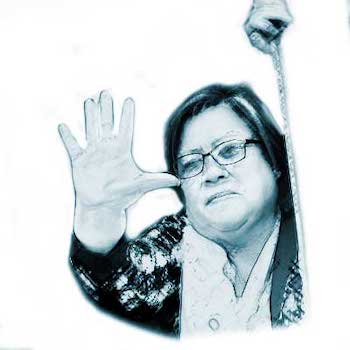
Senator Leila de Lima finally granted bail

November 13, 2023

In response to the news that the court granted former Philippine Senator Leila de Lima bail for the third and last drug-related charge against her, Butch Olano, Amnesty International’s Philippines Director, said: “This is a welcome development and a step towards justice.

Leila has been detained for nearly seven years during which she was subjected to verbal and physical attacks. Evidence, including various witnesses retracting their statements implicating her in the illegal drug trade, shows that the charges were fabricated. See: https://humanrightsdefenders.blog/2023/05/25/acquittal-of-de-lima-and-other-human-rights-defenders-in-the-philippines

As a human rights activist and former Senator, she has been one of the staunchest critics of the human rights violations under the administration of former President Rodrigo Duterte. Since her arrest, Amnesty alongside many other organisations have repeatedly said that the charges against her were fabricated and that the testimonies by witnesses against her were manufactured. See: https://www.trueheroesfilms.org/thedigest/laureates/35cd51c0-93fb-11e8-b157-db4feecb7a6f

The authorities arrested de Lima after she sought to investigate violations committed in the context of the so-called “war on drugs” under the former Duterte administration, including the extrajudicial execution of thousands of people suspected of using or selling drugs, which Amnesty has said may amount to crimes against humanity. As in the case of de Lima, there has been almost no justice or accountability for the victims of these abuses and their families.

Court proceedings against de Lima in the last six years have been marked by undue delays, including the repeated failure of prosecution witnesses to appear in court and changes in judges handling the cases against her. In 2018, the UN Working Group on Arbitrary Detention concluded that the detention of de Lima was arbitrary because of the lack of legal basis and the non-observance of international norms relating to the right to a fair trial.

The arbitrary detention of de Lima reflects the broader context of increasing impunity for human rights violations in the Philippines. These violations include killings, threats and harassment of political activists, human rights defenders, members of the media and other targeted groups.

https://www.philstar.com/headlines/2023/11/13/2311201/de-lima-walks-free-rights-defenders-declare-times-accusers-jailers

https://www.amnesty.org.uk/press-releases/philippines-granting-leila-de-lima-bail-step-towards-justice

https://www.philstar.com/headlines/2023/11/15/2311553/international-community-welcomes-de-limas-release-jail

HRW submission to Special Rapporteur focuses on child and youth human rights defenders

November 13, 2023

Human Rights Watch’ submission discusses the risks climate activists have faced in Australia, India, and Uganda. It focuses on examples of activists under age 32, as requested by the UN Special Rapporteur on Human Rights Defenders.

Australia

Following increased climate protest activity in New South Wales (NSW), the government in March 2022 established a new police unit known as the Strike Force Guard. The unit is designed to “prevent, investigate and disrupt unauthorized protests across the state.” On April 1, the state parliament introduced new laws and penalties specifically targeting protests that blocked roads and ports. Protesters can now be fined up to AU$22,000 (US$15,250) and be jailed for up to two years for protesting without permission on public roads, rail lines, tunnels, bridges, and industrial estates.

In 2022, Human Rights Watch interviewed three climate protesters who had been arrested and charged under the new laws. These cases indicate that climate protesters are being targeted for disproportionate punishment.

Violet (Deanna) Coco, a 31-year-old activist, took part in a climate protest on April 13, 2022, that stopped traffic in one lane on the Sydney Harbor Bridge. Coco climbed on the roof of a parked truck and stood holding a lit emergency flare. After approximately 25 minutes, NSW police forcibly removed her and the other protesters from the road. Coco was charged with disrupting vehicles, interfering with the safe operation of a bridge, possessing a bright light distress signal in a public place, failing to comply with police direction, and resisting or hindering a police officer. She was also charged under explosives regulations for holding the emergency flare; with an incitement offense for “encouraging the commission of a crime” by livestreaming the protest on Facebook; and for uploading a video of a climate protest she took the previous week, and with disrupting traffic during three previous protests.

Coco pleaded guilty to two charges – blocking traffic and failing to comply with police direction – and not guilty to the other charges. She was released on AU$10,000 (US$6,940) bail, but the magistrate ordered her not to leave her apartment for any purpose except for emergency medical assistance or to attend court. She was also ordered not to associate with any other Fireproof Australia member. Coco spent 21 days under what amounted to house arrest. On May 5, 2022, a magistrate amended her bail and, while she was allowed to leave her property, the authorities imposed a curfew banning her from leaving her address before 10 a.m. and after 3 p.m.

In March 2023, Coco was issued with a 12-month conditional release order after a district court judge heard she had been initially imprisoned on false information provided by the New South Wales police.

In August 2022, the state of Victoria followed New South Wales with harsh new measures targeting environmental protesters at logging sites with up to 12 months in jail or $21,000 in fines. In Tasmania, environmental activists now face fines of $13,000 or two years in prison, while nongovernmental organizations that have been found to “support members of the community to protest” face fines of over $45,000.

On May 18, 2023, the South Australia government introduced harsh new anti-protest measures in the South Australian lower house in the morning and then rushed them through after lunch with bipartisan support after just 20 minutes of debate and no public consultation. The bill would increase the punishment for “public obstruction” 60-fold, from $750 to $50,000 or three months in jail, with activists also potentially facing orders to pay for police and other emergency services responding to a protest or action. On May 30, the laws were passed after a 14-hour debate in the South Australian upper house.

India

In February 2021, Indian authorities arrested Ravi who was sent to police custody for five days. Indian authorities also issued arrest warrants against Nikita Jacob, a lawyer, and Shantanu Muluk, an activist, who were granted pre-arrest bail. The authorities alleged Ravi was the “key conspirator” in editing and sharing an online toolkit shared by the Swedish Fridays for Future founder Greta Thunberg on social media, including Twitter, aimed at providing information to those seeking to peacefully support ongoing farmers protests. In granting bail to Ravi, the Delhi court said the evidence on record was “scanty and sketchy,” and that citizens cannot be jailed simply because they disagreed with government policies. It added: “The offense of sedition cannot be invoked to minister to the wounded vanity of governments.”

The Indian government has enforced Information Technology Rules that allow for greater governmental control over online content, threaten to weaken encryption, and seriously undermine media freedoms, rights to privacy, and freedom of expression online. These rules put youth and other human rights defenders and journalists at further risk of being targeted by the authorities for their online content.

Uganda

Young people from across Uganda have faced reprisals for fighting for climate justice. On September 25, 2020, Ugandan police arrested and detained for eight hours eight youth climate activists while participating in the global climate strike in Kampala. The police told them election campaigns were not allowed, although the activists repeatedly explained that they were an environmental—not a political—movement. The activists, only two of whom were above the age of 18, were detained in a room for eight hours, questioned, and then allowed to leave.

Human Rights Watch published a report that documented a range of restrictions on freedom of expression, association, and assembly related to oil development, including the planned East African Crude Oil Pipeline (EACOP) by the government. Civil society organizations and environmental defenders regularly report being harassed and intimidated, unlawfully detained, or arbitrarily arrested. Human Rights Watch interviewed 31 people in Uganda between March and October 2023, including 21 environmental defenders, and several of whom were under 32 years old.

Many student climate activists protesting EACOP have been arrested and charged with various offences in Kampala since 2021. These protests have been largely peaceful and usually small in scale. Since 2021, there have been at least 22 arrests, largely of students, at anti-EACOP protests in Kampala. Nine students were arrested in October 2022 after demonstrating support for the European Parliament resolution on EACOP and charged with “common nuisance.” Their case was finally dismissed on November 6, 2023, after more than 15 court appearances. Another four protesters were arrested on December 9, 2022, as they marched to the National Environmental Management Authority (NEMA) to demand a re-evaluation of the environmental damage caused by EACOP. One of the detainees was kept at an unknown location until the morning of December 12 when all four were released.

Another protesting student was arrested in Kampala on June 27, 2023, after trying to deliver a petition to the Speaker of the House of Uganda’s parliament. He told Human Rights Watch he was taken to an unlawful place of detention known as a “safe house” with his hands tied behind his back, questioned by plain-clothed security officials about who was providing the funding for the protests, before he was knocked to the floor. He said he awoke two days later in the hospital with serious injuries. On July 11, 2023, five individuals were arrested after protesting EACOP in downtown Kampala.

On September 15, 2023, four student protesters were arrested after a “Fridays for Future” and “StopEACOP” joint protest at the Ugandan parliament as part of the “Global Fight to End Fossil Fuels,” a global mobilization and day of action. They were released on bond five days later and have been charged with “common nuisance.” Their next hearing is scheduled for November 27, 2023. One of the students described to Human Rights Watch being held in a room inside parliament and beaten by uniformed parliamentary security officials and others in civilian clothes with “batons, gun butts, and using their boots to step on our heads” before being taken to Kampala’s Central Police Station (CPS). At the CPS he described plainclothes intelligence officers asking: “Who are your leaders? Among us, who is your leader? How many are you? Who are your leaders in different universities? Who is managing your social media accounts?” They then described being beaten further in CPS cells by other prisoners, one of whom said, “We have order from above to discipline you. You need to stop working on EACOP.”

See also: https://globalpressjournal.com/africa/uganda/ugandan-pipeline-project-begins-landowners-navigate-crooked-road-compensation/

Human Rights Watch encourages the Special Rapporteur to call on governments to:

  • Promote and protect universally recognized human rights and fundamental freedoms, respect, and protect the work of climate activists, in line with their human rights obligations.
  • Publicly condemn assault, threats, harassment, intimidation, and arbitrary arrests of activists, and direct security and other government officials to stop arresting, harassing, or threatening activists for protesting or on false accusations.
  • End arbitrary arrests and prosecutions of human rights defenders, anti-EACOP activists, and peaceful protesters.
  • Respect and protect the rights of all human rights defenders and civil society organizations to exercise freedoms of association, assembly, and expression, in accordance with international human rights norms.
  • Where applicable, ratify and implement regional human rights agreements to ensure public participation in environmental decision-making and to protect environmental defenders.

Submission to the Special Rapporteur on the situation of human rights defenders

Environmental defenders call for better protection by the African Commission

November 11, 2023

The Environmental Rights Agreement Coalition called on the African Commission on Human and Peoples’ Rights to develop an environmental rights agreement to increase public participation and protect environmental rights defenders. The Environmental Rights Agreement (ERA) Coalition organised, on 21 October 2023, a side event on the margins of the 77th Ordinary Session of the African Commission on Human and Peoples’ Rights (African Commission).

Participants shared information on the movement for an environmental rights legal framework for Africa, lessons learned and generated wider support for the ERA movement. Joseph Burke, Head of Universal Rights Group Africa noted some progress in the protection of the environment globally such as the African Leaders Nairobi Declaration on Climate Change and Call to Action, Paris Agreement and the Regional Agreement on Access to Information, Public Participation and Justice in Environmental Matters in Latin America and the Caribbean (ESCAZU Agreement). However, environmental rights defenders continue to face significant barriers to the conduct of their activities. According to Global Witness, one environmental defender was killed every two days in 2022 while the rest were subjected to violence, harassment and criminalisation. In its statement before the African Commission, ISHR reiterated this worrisome trend on the African continent.

Rights of Indigenous communities not recognised

Two panellists reviewed national trends in Kenya and Tanzania on the protection of environmental rights and public participation. In Kenya, Emily Kinama, Research and Litigation Associate at Katiba Institute stated that there do not exist laws which cater for environmental rights in Kenya. Civil society organisations have used public interest litigation to challenge laws that criminalise environmental and land rights defenders but the impact of these actions has, at times, been marginal because of strategic lawsuits against public participation. ‘Indigenous peoples’ rights are not recognised despite the African Court on Human and Peoples’ Rights’ judgment in the Ogiek case reiterating the obligations of Kenya to promote and protect their rights. This judgement has not been implemented by Kenya, six years after it was handed down’, said Kinama. She concluded by stating that ‘Kenya should continue to recognise their rights and pass laws and processes following the historical injustice stage and ensure the participation of Indigenous population in the protection of the environment given that Indigenous peoples have been protecting it since time immemorial’. 

The relevance of inclusive participation

In her presentation, Miriam Tikoine, from the Maasai Women Development Organization, highlighted the necessity to involve the Maasai, and other pastoral communities in environmental and climate change debates, and to raise their awareness on environmental matters for them to understand the importance of protecting the environment.

Farmers should be trained on how to face climate change issues and adapt their farming practices; youth, traditional leaders and women should understand carbon credit-related concerns so that they can take action. If everyone is not involved, climate change and environmental concerns will remain a matter of just a few.

Litigating environmental rights

The African Commision’s Special Rapporteur on Human Rights Defenders and Focal Point on Reprisals, Commissioner Remy Lumbu, called on States to strengthen human and environmental rights education, transparency and accountability in extractive industries to prevent leonine contracts which only benefit powerful businesses and sacrifice the interests and rights of present and future generations. Environmental rights defenders raise their voices against such contracts and stand against State and business’ practices which endanger the planet. Commissioner Lumbu said that this role played by environmental defenders has been recognised by the African Commission which has established this mechanism to remind States of their obligations, send urgent appeal letters or publish press releases when environmental defenders are in danger. These efforts must be honed by increased litigation activism, before national and African human rights bodies, on the part of NGOs. 

We have not had enough communications on environmental rights concerns. NGOs must start challenging behaviours of States before the African Commission or the Court. If 40 NGOs decide to work on one case each, we will have 40 environmental rights-related cases before the African Commission in one year.

The need for an environmental rights instrument

The Coalition called the Special Rapporteur, and the African Commission as a whole, to champion a process geared towards the development and the adoption of an environmental rights instrument.

The impact of businesses has crossed on people leading them into poverty. As civil society organisations, we have realised we need to protect our resources and planet and those who put their lives at risk. Environmental rights defenders are at the forefront but have been victims of several human rights violations including arbitrary killings. With the massive onslaught of business in Africa, our resources and individuals protecting them must be protected by a tailor-made legal instrument as other regions have done.

https://ishr.ch/latest-updates/achpr77-environmental-defenders-call-for-better-protection-by-the-african-commission/

Burkina Faso: Emergency Law Targets Dissidents

November 10, 2023

On 8 November, 2023 Human Rights Watch reported that Burkina Faso’s military junta is using a sweeping emergency law against perceived dissidents to expand its crackdown on dissent. Between November 4 and 5, 2023, the Burkinabe security forces notified in writing or by telephone at least a dozen journalists, civil society activists, and opposition party members that they will be conscripted to participate in government security operations across the country.

The transitional military authorities assert that the conscription orders are authorized under the April 13 “general mobilization,” part of a plan to recapture territory lost to Islamist armed groups, which control roughly half of the country. The plan seeks to create a “legal framework for all actions” to be taken against insurgents and gives the president extensive powers to combat the insurgency, including requisitioning people and goods and restraining civil liberties.

The Burkina Faso junta is using its emergency legislation to silence peaceful dissent and punish its critics,” said Ilaria Allegrozzi, senior Sahel researcher at Human Rights Watch. “The government should not respond to the abusive Islamist armed groups with further human rights abuses but should instead strengthen efforts to protect civilians and uphold basic rights to freedom of expression and speech.

By targeting individuals who have openly criticized the junta, the conscription undertaken in Burkina Faso violates fundamental human rights, Human Rights Watch said. The recent notifications for conscriptions targeted, among others, Bassirou Badjo and Rasmane Zinaba, members of the civil society group Balai Citoyen; Daouda Diallo, prominent rights defender, secretary-general of the Collective Against Impunity and Stigmatization of Communities (Collectif contre l’Impunité et la Stigmatisation des Communautés, CISC), and laureate of the 2022 Martin Ennals Award for Human Rights Defenders [see: https://www.trueheroesfilms.org/thedigest/laureates/ca7f1556-8f73-4b48-b868-b93a3df9b4e1]; Gabin Korbéogo, president of the Burkina Faso Democratic Youth Organization (Organisation Démocratique de la Jeunesse du Burkina Faso, ODJ); and the journalists Issaka Lingani and Yacouba Ladji Bama.

Domestic civil society groups, media organizations, and trade unions have strongly condemned what one called the “selective and punitive” application of the “general mobilization” decree. In a November 6 statement, the Burkinabe Movement of Human and Peoples’ Rights (Mouvement Burkinabè des Droits de l’Homme et des Peuples, MBDHP) said the general mobilization “has been specifically designed and adopted not to contribute to the fight against terrorism,” but to repress critical opinions.

Human rights activists and journalists told Human Rights Watch they feared being conscripted. “This wave of notifications is affecting people’s mental wellbeing,” said an independent journalist living in Ouagadougou, Burkina Faso’s capital. “I am asking myself if I will be next.”

Some said they decided not to publicly criticize the conscriptions to be able to continue their work. “A human rights defender is useful to others only if he is alive and free,” an activist from the North region said. “I need to keep working and serve my community, and I cannot do so if I am sent to the front.”

..

While governments are empowered to conscript members of the civilian population over age 18 for the national defense, there are limits that the junta has far overstepped. Human Rights Watch takes the position that conscription should not take place unless it has been authorized and is in accordance with domestic law. The conscription law needs to meet reasonable standards of fairness in apportioning the burden of military service. It needs to be carried out in a manner that gives the potential conscript notice of the duration of the military service and an adequate opportunity to contest being required to serve at that time. Conscription also needs to be carried out according to standards consistent with non-discrimination and equal protection under law.

Since it took power in an October 2022 coup, the military junta has increasingly cracked down on the media and peaceful dissent, shrinking the civic space in Burkina Faso.

National and international journalists face increasing harassment, threats, and arbitrary arrests. In April, the military authorities expelled two journalists working for the French newspapers Libération and Le Monde following their reports on human rights abuses by the army. In August, Burkinabe military authorities suspended the independent radio station Radio Omega for one month after it broadcasted an interview with supporters of Niger’s ousted president, Mohamed Bazoum. In September, the junta suspended the Paris-based news outlet Jeune Afrique, accusing it of publishing “misleading” articles seeking “to discredit” the national armed forces.

In late October, at least 15 civil society organizations and trade unions called for a mass meeting in Ouagadougou to commemorate the popular uprising of October 30 and 31, 2014, that ended the power of then-President Blaise Compaoré. The groups also challenged the transitional government about the deterioration of the security situation, high cost of living, poor governance, and corruption. On October 28, the Ouagadougou mayor called on the organizers to cancel their meeting due to potential “disturbances to public order.” The meeting did not take place.

“Providing security for the people of Burkina Faso demands a long-term commitment to promote respect for human rights,” Allegrozzi said. “Using conscription to silence dissent will neither advance the junta’s efforts against the Islamist insurgency nor improve the deteriorating rights situation in the country. The government should immediately end this misuse and abuse of conscription.”

https://www.hrw.org/news/2023/11/08/burkina-faso-emergency-law-targets-dissidents

https://reliefweb.int/report/burkina-faso/burkina-faso-emergency-law-targets-dissidents

Human rights NGOs use Financial Action Task Force (FATF) review to help human rights defenders in India

November 7, 2023

Amnesty International, C&SN and HRW accuse Indian government of harassing human rights activists and NGOs; the organisations seek FATF’s intervention days before the India’s performance with respect to action taken against money laundering and terrorist funding is up for review

On 6 November 2023, The Hindu newspaper (TH) reports that NGOs are accusing the Indian government of prosecuting, intimidating, and harassing human rights defenders, activists, and non-profit organisations on the pretext of countering terrorist financing, Thus Amnesty International, Charity & Security Network (C&SN), and Human Rights Watch (HRW) have sought the intervention of the Financial Action Task Force (FATF).

FATF mutual evaluations are in-depth country reports analysing the implementation and effectiveness of measures to combat money laundering, terrorist and proliferation financing. The reports are peer reviews, where members from different countries assess another country. Mutual evaluations provide an in-depth description and analysis of a country’s anti-money laundering and counter-terrorist financing system, as well as focused recommendations to further strengthen its system. During a mutual evaluation, the assessed country must demonstrate that it has an effective framework to protect the financial system from abuse.

The FATF conducts peer reviews of each member on an ongoing basis to assess levels of implementation of the FATF Recommendations, providing an in-depth description and analysis of each country’s system for preventing criminal abuse of the financial system.

The joint statement of the 3 NGOs came on November 3, days before the start of FATF’s periodic review of India’s performance with respect to the action taken against money laundering and terrorist funding. They have accused the authorities of exploiting FATF’s recommendations “to restrict civic space and stifle the rights to freedom of expression, association, and peaceful assembly”. “Draconian laws introduced or adapted to this end include the Foreign Contribution (Regulation) Act (FCRA), the Unlawful Activities (Prevention) Act (UAPA), and the Prevention of Money Laundering Act (PMLA)…,” the groups said. See also: https://wordpress.com/post/humanrightsdefenders.blog/22074

“During its third FATF review, in 2010, the Indian government itself recognised the risk posed by the non-profit sector as ‘low’. However, since the Bharatiya Janata Party (BJP) came to power in 2014, the authorities have used overbroad provisions in domestic law to silence critics and shut down their operations, including by cancelling their foreign funding licences and prosecuting them using counterterrorism law and financial regulations,” the groups alleged.

https://www.thehindu.com/news/national/amnesty-international-csn-and-hrw-accuse-indian-govt-of-harassing-human-rights-activists-and-ngos/article67504479.ece

https://www.fatf-gafi.org/en/topics/mutual-evaluations.html

Human Rights Defender Advocacy Programme 2024: applications now open

November 7, 2023

Are you a human rights defender keen to use the UN to push for change at home? If so, apply for the 2024 edition of ISHR’s flagship training, the Human Rights Defender Advocacy Programme (HRDAP)!

After a successful hybrid programme launched  in 2023, ISHR is pleased to launch the call for application for the 2024 edition of the Human Rights Defender Advocacy Programme (HRDAP), which will again take place both remotely and in Geneva! Below are some important dates to take into account before applying:

  • Mandatory distance learning course: 8 April – 3 June 2024 (part time)
  • In-person course in Geneva: 5- 15 June 2024 (full time)
  • Deadline to apply: 10 January 2024, midnight CET (Geneva Time)
  • Programme description with all the information can be downloaded here.
  • Application form can be found here.

The course equips human rights defenders with the knowledge and skills to integrate the UN human rights system into their existing work at the national level in a strategic manner, and provides an opportunity for participants to prepare for and engage in advocacy activities at the UN with the aim to effect change back home.

Defenders will complete a 10-week hybrid learning programme, online and offline, which will include:

  • Access to the HRDAP Platform, where they can complete e-learning courses on each key UN human rights mechanism and on advocacy strategies, access interactive learning materials and case studies on the ISHR Academy
  • Take part in live Q&A sessions with human rights experts
  • Receive a continuous advocacy support and coaching in order to develop concrete advocacy objectives to make strategic use of the international human rights system
  • Build networks around the world, and learn from peers from a range of regions working on a range of human rights issues
  • Apply their knowledge to case-studies scenarios and enhance their advocacy toolbox according to their specific needs
  • Receive support and advocacy accompaniment to conduct activities during the 56th and 57th Human Rights Council sessions and other relevant opportunities.

Participants will have the unique opportunity to apply their knowledge and skills while being in Geneva and practice, meet and share with their peers and experts. The blended format of the course allows defenders to continue their vital work on the ground, while diving into the inner workings of each key UN human rights mechanism, and gaining first-hand experience from advocates and UN staff on how civil society can strategically engage in the international human rights space.  

By participating in HRDAP, defenders:

  1. Gain knowledge and tools, which they can use to ensure their voice is central in international human rights decision-making
  2. Explore and compare the benefits of engagement with the Human Rights Council, the Special Procedures, the OHCHR, the Universal Periodic Review and the Treaty Bodies, and examine how they can use them to bolster their work at the national level
  3. Develop strategies and lobbying techniques to increase the potential of their national and regional advocacy work

Could you be one of our 2024 participants?

This programme is directed at experienced human rights defenders working in non-governmental organisations, with existing advocacy experience at the national level and some prior knowledge of the international human rights system.

ISHR supports, and promotes solidarity with and between, defenders working in the following areas or contexts, which we recognise as intersectional and interdependent:

  1. Equality, dignity and non-discrimination
  2. Environmental justice and sustainability
  3. International accountability for the repression of human rights defenders
  4. Transparency and rule of law

The hybrid programme will bring together around 16 committed human rights defenders from different backgrounds, who work on a wide range of areas that are linked with our programmes to ensure a sustainable collaboration. This can include, but is not limited to, defenders working on the following thematics: women rights; business, environment and human rights; the human rights of LGBTIQ+ persons; anti-racism; reclaiming civil society space and increasing protection of human rights defenders. 

What do former HRDAPers say?

16 human rights defenders from 15 countries took part in the last edition, HRDAP23. At the end of the training, 98% of the participants were either extremely satisfied or very satisfied with the programme and also felt that they would be able to apply what they learnt to their own day-to-day work. Find out more about the outcomes of HRDAP23 and where they are four months later, here.

See also: https://humanrightsdefenders.blog/2023/07/26/the-story-of-camila-zuluaga-hrd-from-colombia/. More testimonials from HRDAP23 here

How to apply?

First, download and read carefully the HRDAP 2024 Programme Description to find out more about modalities, requirements and funding. If you meet the criteria, take some time to apply using this online form before midnight Geneva time on Wednesday 10 January 2024!

As only a limited number of human rights defenders are able to participate in HRDAP each year, in addition to our range of guides and handbooks, ISHR has developed an e-learning space in English, French and Spanish to help human rights defenders strengthen their advocacy skills with the UN for greater impact on the ground: the ISHR Academy. The learning modules demystify the UN human rights system and build capacity to push for change. Discover new tools, insider tips, defender stories, and more!

For more information, please contact us : training@ishr.ch 

https://ishr.ch/latest-updates/hrdap-2024-apply-now-for-ishrs-hybrid-training-for-human-rights-defenders/

Tanzanian civil society validates a human rights defenders policy

November 7, 2023

On 19 October, with the support of ISHR, the Tanzanian Human Rights Defenders Coalition organised a one day event with defenders from all around the country to reflect on the 25th anniversary of the UN Declaration on human rights defenders and validate the civil society led draft on the promotion and protection of the rights of defenders in Tanzania.

The Tanzanian Human Rights Defenders Coalition (THRDC) gathered defenders from all regions of the country to celebrate the 25th anniversary of the UN Declaration, discuss its implementation in the country and the needs to strengthen their legal framework for the promotion and protection of the rights of defenders through the adoption of a policy on human rights defenders.  This is an interesting case as “human rights defenders policies” are usually to be found in the West; see: https://humanrightsdefenders.blog/2016/12/13/canada-joins-select-group-of-governments-with-guidelines-on-human-rights-defenders/.

The event was attended by Minister of Constitutional and Legal Affairs Hon. Dr. Pindi Chana who highlighted notable human rights achievements under the ongoing leadership of Honourable President Samia Suluhu Hassan such as the opening of legal aid services in all regions of the country and the establishment of a special commission which will work with various stakeholders to achieve the necessary reforms to better protect and promote human rights in the country. 

Discussing and reflecting on the advancement in Africa since the adoption of the UN Declaration on human rights defenders (‘the Declaration’), speakers highlighted the numerous legislative progress in some countries and the increase in legislative restrictions in others. 

The legal recognition and protection of human rights defenders is crucial to ensure that they can work in a safe, supportive environment and be free from attacks, reprisals and unreasonable restrictions. The legal recognition and protection of defenders also contributes to the broader goals of upholding human rights, and promoting democracy, good governance, sustainable development and respect for the rule of law. In Africa, in the past ten years, 5 countries adopted specific laws protecting the rights of defenders, recognising the need and obligations that follow the adoption of the UN Declaration.

Speakers also highlighted the importance to recognise that while the adoption of the Declaration was an incredible progress, defenders still face a high number of violations for enjoying their right to defend rights.  

It is not easy to be a defender, especially in Africa,’ said Washington Katema, Executive Director of the Southern Africa Human Rights Defenders Network. ‘Defenders must be safe and not silenced. Defending human rights is not a crime and, to our colleagues from the Government, defenders are not the enemy of the State, rather, they stand for those who can not stand for themselves. Defenders are everywhere, so as we reflect on the 25th anniversary of the UN Declaration on defenders, let’s also reflect on the Africa we want. An Africa where defenders are free from reprisals, arrests, intimidations and assassinations’ . 

The draft policy was then presented to the participants. Among other things, it includes important principles and rights such as the right to freedom of expression, freedom of peaceful assembly, ensuring that decisions on registration, suspension and de-registration of organisations are taken by a mechanism the majority of whose members are from civil society or that organisations shall be self-governing and free to determine their internal management structures. The policy also provides for State obligations such as the need to ensure an enabling environment for defenders or that laws and administrative measures adopted by the government should protect, not impede the peaceful activities of defenders. Furthermore, defenders discussed the importance of sensitising the authorities to the specificities of the violations faced by vulnerable groups such as Indigenous and LGBTIQ+ defenders. 

As Tanzania embarks on this journey, it is important that the ownership of this process goes beyond this assembly. It is important that marginalised and discriminated-against groups, such as women defenders, are included in this process.

Finally, the draft policy was adopted by civil society and a commitment was made by the office of the Minister of Constitutional and Legal Affairs to kickstart the process with a particular attention given to the needs expressed by defenders. 

https://ishr.ch/latest-updates/achpr77-tanzanian-civil-society-validates-a-human-rights-defenders-policy/