Archive for the 'MEA' Category

Fly Emirates? If the Emir lets you!

September 15, 2015

The Emirates proudly sponsor major clubs such as AC Milan, Real Madrid, Benfica, Paris Saint-Germain and Arsenal, but when it comes to flying out of the country there is a problem for those who do not toe the line. A case in point is Ahmed Mansoor, one of 3 finalist for the 2015 Martin Ennals Award for Human Rights Defenders.

Today – 15 September 2015 – the 10 international NGOs on the Jury of the MEA (see list below) came out with an exceptional joint statement calling on the United Arab Emirates (UAE) authorities to lift the travel ban imposed on Ahmed Mansoor and to issue him a passport before the ceremony on 6 October in Geneva (in which the United Nations High Commissioner for Human Rights participates).

Widely respected as one of the few voices within the UAE to provide a credible independent assessment of human rights developments, Ahmed Mansoor regularly raises concerns regarding arbitrary detention, torture or degrading treatment, and failure to meet international standards of fair trial. He also draws attention to other human rights abuses, including against migrant workers. As a result, Ahmed Mansoor has faced repeated intimidation, harassment, and death threats from the UAE authorities or their supporters, including arrest and imprisonment in 2011 following an unfair trial. He and four other activists who called for democratic rights in the UAE were jailed in 2011 on the charge of “insulting officials”. Although pardoned and released later that year, Ahmed Mansoor has been banned from travel and had his passport confiscated.

Martin Ennals Award for Human Rights Defenders

Martin Ennals Award for Human Rights Defenders

The Martin Ennals Award Jury today said: “Ahmed Mansoor’s absence at the ceremony would mark a very disappointing position for the UAE, which is a country that prides itself as one of the hubs of international business and tourism in the Middle East, as well a safe haven in the region. As a member of the UN Human Rights Council, which is running for a second term, we expect the UAE authorities to honour their obligations to uphold human rights and protect human rights defenders. The UAE government must match its rhetoric on the international stage with meaningful actions at home, starting with immediately lifting the travel ban on Ahmed Mansoor, to returning and renewing his passport, and allowing him to travel to Geneva for the ceremony.

see also: https://thoolen.wordpress.com/2015/04/29/the-emirates-not-a-paradise-for-human-rights-defenders/


 Jury:
–    Amnesty International,
–    Human Rights Watch,
–    Human Rights First,
–    Int’l Federation for Human Rights – (FIDH)
–    World Organisation Against Torture – (OMCT)
–    Front Line Defenders,
–    International Commission of Jurists,
–    EWDE Germany,
–    International Service for Human Rights,
–    HURIDOCS.

for the full text of the statement see: www.martinennalsaward.org or those of the NGOs on the Jury.

MI5 spying on Martin Ennals: what’s new?

August 21, 2015

On Friday, 21 August, the Guardian reported on MI5 spying on Dorris Lessing but also on Martin Ennals. [“The files released on Friday reveal that MI5 also kept a close watch on prominent figures of the left who were never members of the Communist party. They include the brothers David and Martin Ennals..the latter became general secretary of the National Council of Civil Liberties, a founder member of the Anti-Apartheid Movement and secretary general of Amnesty International…. [Shortly after the end of the second world war] MI5 replied that its files on the Ennals brothers had been “in great demand recently”. MI5 was concerned that UN groups, in which it said both brothers were involved, might be infiltrated by the Communist party. MI5 noted that Martin was “well known to Special Branch for his activities in the Anti-Apartheid Movement”.

However, nine months ago (25/26 October, 2014) the Daily Mail had already referred to this issue under the title: “Revealed: How Special Branch spied on leading anti-apartheid activist“.

The Government is facing calls to reveal the truth about a spying operation on one of Britain’s most respected human rights activists. Previously secret documents show the late Martin Ennals was put under years of surveillance by Special Branch. He was a key figure at Amnesty International and the National Council for Civil Liberties – now known as Liberty – and a leading campaigner against apartheid. Details of his marriage, family and holiday destinations were recorded. His luggage was also regularly searched as he made trips to and from Britain. But the files, released by the Metropolitan Police under the Freedom of Information Act, have been heavily redacted.

His son Marc, who is mentioned in the files, added: ‘If they were doing this to him, they must have been doing this to millions of others who were essentially much more of a threat. He was just fighting for human rights.’” Marc Ennals said it was ‘frustrating’ that so much material from the files had been redacted and the freedom of expression group Article 19, which Martin Ennals helped found in the 1980s, called on the Government to ‘come clean’.

Whether that is now the case I cannot judge, but as founder of the Martin Ennals Award for Human Rights and a close personal friend of Martin Ennals, I can hardly be surprised by the ‘revelations’. Martin told me from the first day we met that I would alway have to assume that conversations and documents would be overheard or read. That he was accused of communist sympathies was also not a secret as he had taken a very public anti-McArthy stand in UNESCO as explained in the biography I wrote for the Encyclopedia of Human Rights, OUP, 2009, Vol 2, pp 135-138 (ed. David P. Forsythe). Perhaps the most ‘shocking’ is the normalcy of the assumption that anti-apartheid activities are (were) a valid source of concern!

http://www.martinennalsaward.org/index.php?option=com_content&view=article&id=98&Itemid=74&lang=en

http://www.dailymail.co.uk/news/article-2807885/How-Special-Branch-spied-leading-anti-apartheid-activist.html

MI5 spied on Doris Lessing for 20 years, declassified documents reveal | Books | The Guardian.

US State Department 2014 Human Rights Defender Award to Azimjon Askarov and Foro Penal

July 23, 2015

On 16 July 2015 Assistant-Secretary of State for Democracy, Human Rights, and Labor – Tom Malinowski – presented the 2014 Human Rights Defenders Award to Azimjon Askarov of Kyrgyzstan and Foro Penal, a NGO from Venezuela, in the Treaty Room at the U.S. Department of State.

For more information on this award see:  http://www.brandsaviors.com/thedigest/award/freedom-defenders-award-us-state (note: the name varies).

Azimjon Askarov is known for trying to bring together people of all ethnicities especially Uzbeks and Kyrgyz. He is serving a life sentence for alleged involvement in the killing of a police officer. He won the 2010 Homo Homini award and was a Final Nominee for the MEA in 2011. Due to Mr. Askarov’s imprisonment, his son, Sherzod, accepted the award on his behalf.

Foro Penal, a Venezuelan pro-bono network of over 200 lawyers and 1,000 human rights defenders, advocates for human rights and rule of law in Venezuela and abroad. With severe restrictions on the media and internet access, Foro Penal provided timely, critical, and independent information during the 2014 protests, and continues to defend and promote human rights despite risk of government suppression. Founder and Director Gonzalo Himiob and Executive Director Alfredo Romero accepted on behalf of Foro Penal.

For the backlash created in the case of Mr Askarov see my next post.

2014 Human Rights Defender Award Ceremony for Azimjon Askarov and Foro Penal.


BREAKING NEWS: FINAL NOMINEES MARTIN ENNALS AWARD 2015 JUST ANNOUNCED

April 22, 2015


new MEA_logo with text

Being the award of the global human rights community (for Jury see below) today’s announcement (22 April 2015) deserves special attention:

The Final Nominees of Martin Ennals Award for Human Rights Defenders 2015 are:

Robert Sann Aung (Myanmar)

Since his first year of University in 1974, Robert Sann Aung has courageously fought against human rights abuses. He has been repeatedly imprisoned in harsh conditions, physically attacked as well as regularly threatened. His education was interrupted numerous times and he was disbarred from 1993 – 2012. In 2012 he managed to regain his license to practice law. Since then he has represented jailed child soldiers, those protesting at a contested copper mine, peaceful political protesters, those whose land has been confiscated by the military, as well as student activists. Throughout his career he has provided legal services, or just advice, often pro bono, to those whose rights have been affected.

Upon receiving the news of his selection, he stated, “I feel humble and extremely honored to be nominated for this prestigious award. This nomination conveys the message to activists, human rights defenders and promoters who fight for equality, justice and democracy in Myanmar that their efforts are not forgotten by the world. And this is also the nomination for the people in Myanmar who stand together with me, who struggle with me, for the betterment of citizens so that they can live in dignity, under the just law, in conformity with the principles of UN human rights declaration.”

Asmaou Diallo (Guinea)

Her human rights work started following the events of 28 September 2009 when the Guinean military attacked peaceful demonstrators. Over 150 were killed, including her son, and over 100 women raped. Hundreds more were injured. She and l’Association des Parents et Amis des Victimes du 28 septembre 2009 (APIVA), which she founded, work to obtain justice for these crimes and to provide medical and vocational support to victims of sexual assault, many of whom cannot return to their homes. She has worked to encourage witnesses to come forward and supported them as they provided information and testimony to court proceedings. As a result, eleven people have been charged, including senior army officers.

Upon receiving the news of her selection, she stated, “As a human rights defender in Guinea, I am very comforted to be among the nominees for the Martin Ennals Foundation, this prize encourages me to continue my fight for the protection and promotion of human rights in Guinea. I trust that this award will have a positive effect on the legal cases concerning the events of the September 28, 2009, and will be a lever for all defenders of human rights in Guinea

 Ahmed Mansoor (United Arab Emirates)

Since 2006, he has focussed on initiatives concerning freedom of expression, civil and political rights. He successfully campaigned in 2006-2007 to support two people jailed for critical social comments. They were released and the charges dropped. Shortly after, the Prime Minister of UAE issued an order not to jail journalists in relation to their work. He is one of the few voices within the United Arab Emirates who provides a credible independent assessment of human rights developments. He regularly raises concerns on arbitrary detention, torture, international standards for fair trials, non-independence of the judiciary, and domestic laws that violate international law. He was jailed in 2011 and since then has been denied a passport and banned from travelling.

Upon receiving the news of his selection, he stated, “I’m very pleased to be nominated for the Martin Ennals award. This recognition indicates that we are not left alone in this part of the world and that our voices resonate and our efforts are appreciated by a well-informed people. I hope this nomination sheds further light on the human rights issues in the UAE. It is not just full of skyscrapers, big malls and an area attractive to businesses, but there are other struggles of different sorts beneath all of that.”

The Martin Ennals Award for Human Rights Defenders (MEA) is a unique collaboration among ten of the world’s leading human rights organizations to give protection to human rights defenders worldwide. The Jury is composed of:

  • Amnesty International,
  • Human Rights Watch,
  • Human Rights First,
  • Int’l Federation for Human Rights,
  • World Organisation Against Torture,
  • Front Line Defenders
  • International Commission of Jurists,
  • EWDE Germany,
  • International Service for Human Rights
  • HURIDOCS

An electronic version with Bios, Photos, and Video can be found at: http://bit.ly/1DYqlFn

For last year’s nominees see: https://thoolen.wordpress.com/2014/06/22/announcement-ceremony-of-the-martin-ennals-award-2014-on-7-october/

For further information: Michael Khambatta +41 79 474 8208, khambatta@martinennalsaward.org or visit http://www.martinennalsaward.org

Mutabar far from her Uzbekistan continues her struggle

March 27, 2015

Today , 27 March 2015, the FIDH published a moving portrait of Mutabar Tadjibaeva, the well-known Uzbek human rights defender, under the title “If I were told that I only have one day left to live, I would spend it fighting for human rights.” A statement that in her case is not an exaggeration!

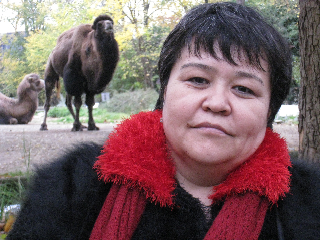
mutabar in berlin zoo Duco oct 2008

“If I were told that I only have one day left to live, I would spend it fighting for human rights,” says Mutabar Tadjibaeva, President of the organization Fiery Hearts Club. The 52-year-old Uzbek journalist and activist arrived in France in 2009 as a political refugee. She is no longer welcome In her native country, which has been governed for a quarter of a century by the dictator Islam Karimov. In Uzbekistan, Mutabar investigated drug trafficking, corruption and human rights violations. She endured threats, prison, torture and rape; her fight came at a high price.

In 2002, while this activist was fighting to make publicly known the case of Alimuhammad Mamadaliev, who had been tortured and killed by the police, she herself ended up behind bars for several days. In April 2005, was kidnapped by secret service agents and subjected to horrific treatment. These men would never worried about having to answer for their deeds. But even in the face of such injustice, Mutabar Tadjibaeva continued her activism and journalism until she was imprisoned three years later, on 7 October 2005, just before boarding a plane headed for Dublin where she was to participate in an international conference on human rights. She was arrested by police and, a year later, sentenced to eight years in prison, where she was subjected to torture. She was accused of engaging in illegal activities against the State during demonstrations where several hundred people had lost their lives in May 2005 in Andijan, an industrial city. It is clear to Mutabar that her arrest was for purely political reasons. She was one of many victims of State repression that followed the events of 2005.

“I know very well what prison in Uzbekistan is like and the torture. That is why I have decided to devote me life to fighting for human rights. When I was in jail, I dreamt that one day I would be free. I would tell the prison guards that I would get out of there and write a book on what I had lived through,” she recalls. On 18 May 2008, while still in prison, she was granted the Martin Ennals Award for human rights defenders. She was released a few months later and, on 10 December of that same year, Mutabar Tadjibaeva came to Paris where she accepted the Liberté, Égalité, Fraternité Award on behalf of the Fiery Hearts Club. Banned from Uzbekistan for almost ten years, the organisation took shelter in France in 2011. It will celebrate the 15th year of its existence this year. Every day, dozens of people come to her in search of assistance. She seeks out lawyers and funding, prepares reports and files individual complaints to the UN. Despite the modest means at her disposal and a state of health weakened by the torture she suffered, Mutabar wants to help those who are in same situation as she was in ten years earlier. Her wish is that human rights defenders take more of an interest in the situation in Uzbekistan. Mutabar Tadjibaeva has enjoyed the support of FIDH, and her organisation is now officially a member. “It is thanks to the support of the FIDH that I was able to keep my promise, that is, write my book entitled “Prisoner of the Island of Torture.” I worked with an Uzbek journalist and it is thanks to those recordings that I was able to tell my story. Otherwise, it would have been too hard psychologically,” Mutabar recalls. In the book, which has been published in Uzbek, Russian, French, and English, she shares her memories of prison and decries the cruelty of the regime.

For Mutabar, the challenge lies not in Karimov’s departure, but in regime change. “His departure could set off a war among the clans. The country is corrupt, there is no respect for the law. Karimov the dictator is not the only one to blame for the fact that people are being killed in prisons and tortured; the politicians who support the regime are also to blame. I want Uzbekistan to become a democratic country and dissidents like me to be able to return there and live,” she said. However, as Mutabar sees it, a return to her country is not within the realm of the possible.

On 29 March, Islam Karimov will be running for President for the fourth time, thereby violating Article 90 of the Constitution, which does not allow more than two terms. Mutabar Tadjibaeva and her friends have set up a virtual electoral commission to organise a vote on the Internet. This alternative platform has rejected the candidacy of the president.
 
“When I decided to come to France as a political refugee,” she concluded, “I was afraid that I would not be able to do anything for my country remotely. But, now I see that if you are motivated and supported, anything is possible.”

“If I were told that I only have one day left to live, I would (…).


for more on Mutabar, see: https://thoolen.wordpress.com/tag/mutabar-tadjibayeva/

Webinar on Haiti with Author Fran Quigley and Mario Joseph on 12 February

February 6, 2015
Mario Joseph, Final Nominee MEA 2013, will be able to join the webinar, si Dye vle. on Thursday, 12 February at 8pm EST with author Fran Quigley and IJDH Director Brian Concannon. Fran published How Human Rights Can Build Haiti: Activists, Lawyers, and the Grassroots Campaign in September 2014. The book profiles Brian, BAI’s Managing Attorney Mario Joseph, and many other human rights defenders in their fight for justice in Haiti.


Webinar with Author Fran Quigley — by IJDH Boston.

Adilur Rahman Khan speaks out against torture

December 2, 2014

Coinciding with the 30th anniversary of the UN Convention against torture, the OMCT HAS launched its Campaign “10 Days of Activism against torture and ill-treatment” from the 1st to the 10th of December 2014. This is the first episode figuring human rights defender Adilur Rahman Khan, from Bangladesh. He was one of the 3 final nominees of the MEA 2014.

https://thoolen.wordpress.com/tag/adilur-rahman-khan/


Special Rapporteur in Burundi: respect the work of Human Rights Defenders like Mbonimpa!

November 25, 2014

(Independent Expert on Human Rights Michel Forst. Photo: Jean-Marc Ferré)

On 25 November 2014 the United Nations Special Rapporteur on the situation of human rights defenders, Michel Forst, expressed regret today that defenders in Burundi are deemed to be political opponents, saying that in reality they are activists working to promote and protect human rights and civil liberties. In a press release issued by the UN Office of the High Commissioner for Human Rights, Michel Forst, emphasized that threats and defamation campaigns by certain media outlets weigh on human rights defenders, who also report a high number of cases of physical threats, anonymous phone calls, assaults, arbitrary arrest and judicial harassment.

Read the rest of this entry »

Martin Ennals Award Jury expresses its concern about Loun Sovath, Martin Ennals Award Laureate 2012

November 22, 2014

On 24 November 2014 the Jury of the Martin Ennals Award for Human Rights Defenders (MEA) published a letter expressing concern by all 10 NGOs on the Jury about the charges against its 2012 Laureate. Here is the text:

new MEA_logo with text The Martin Ennals Award Jury (Listed Below) is extremely concerned about the flawed and protracted judicial proceedings being used to threaten renowned human rights defender (HRD) Venerable Loun Sovath. He is scheduled to face trial on November 25, 2014. Venerable Sovath is internationally known as the “multimedia monk,” and his efforts to voice the human rights abuses suffered by land communities and HRDs in Cambodia have been recognized globally. The charges brought against Venerable Sovath are groundless and must be dropped immediately. 

Venerable Sovath was awarded the 2012 Martin Ennals Award for Human Rights Defenders. The award was created in 1993 to honor and protect individuals who demonstrate exceptional courage in defending and promoting human rights.

Despite international recognition Venerable Sovath has continually been targeted by religious and legal authorities in Cambodia. He has been subjected on numerous occasions to threats of imprisonment, verbal abuse, death threats, and defrocking, among others.

As part of a wave of arrests, trials, and convictions of social activists and peaceful demonstrators, this case is the renewal of an old case in which Venerable Sovath was charged with incitement to commit a felony [1] for allegedly inciting and leading demonstrations by victims of land conflicts against government authorities in Chi Kreng, Siem Reap, and Boeung Kak lake, Phnom Penh. The trial is now scheduled for November 25, 2014. If convicted, Venerable Sovath faces up to two years in prison and a fine of US$1,000, equivalent to over 4,000,000 Cambodian Riels.

….. The vagueness of the charges and lack of clarity surrounding the legal process raise significant concerns. The Martin Ennals Award Jury calls on the Government of Cambodia to ensure any legal processes are handled in accordance with the principles of the rule of law.

Martin Ennals Award Jury:

– Amnesty International,

– Human Rights Watch,

– Human Rights First,

– Int’l Federation for Human Rights (FIDH),

– World Organisation Against Torture (OMCT),

– Front Line Defenders,

– International Commission of Jurists,

– EWDE Germany,

– International Service for Human Rights,

– HURIDOCS.

[1] Cambodia Criminal Code, Article 495 (imposing criminal liability for “Incitement to commit a felony or to disturb social security…”).

see also: https://thoolen.wordpress.com/2014/11/05/cambodian-mea-laureate-2012-luon-sovath-charged-with-incitement/


No more double speak for Peña Nieto’s Mexico

November 21, 2014

On 21 November 2014 Ben Leather (Advocacy and Communications Manager at the International Service for Human Rights, who was previously Advocacy Coordinator for Peace Brigades International’s Mexico Project) published an extensive and fascinating piece on Mexico’s double talk when it comes to human rights defenders: “No more doble-cara: it’s time for Peña Nieto to practise what he preaches”.

(In Mexico, 43 students remain missing. How is this possible in a country known for its UN human rights advocacy? Demotix/Hugo Ortuño – Some rights reserved)

The key notion of the article in Open Democracy is summarized in the phrase: “How can Mexico lead the way internationally, when it cannot protect the basic rights of its own people?“. A contradiction laid bare also by Alejandra Ancheita’s Martin Ennals Award for Human Rights Defenders in October this year [https://thoolen.wordpress.com/2014/10/07/breaking-news-alejandra-ancheita-is-the-2014-mea-laureate/].

On September 26, I delivered the final NGO statement to the United Nations Human Rights Council’s 27th session, celebrating some of the key resolutions passed after weeks of diplomatic arm-wrestling. As in previous experiences advocating at the UN since swapping Mexico City for Geneva, I observed Mexico’s firm commitment to strengthening international human rights norms through its diplomats’ constructive initiatives.

Yet that very same night, I also learned that Mexican police forces were suspected of disappearing 43 student protesters from Ayotzinapa college, after murdering six others at the scene. A month later, those students remain missing, while the role of Mexican officials in human rights violations is becoming increasingly apparent.

These contrasts are a microcosm of Mexico’s perverse doble-cara, or two-facedness, which has exasperated its civil society for decades. They demonstrate the schizophrenia of a reputed international human rights promoter that is also proven to repress, torture, disappear and kill at home. How can Mexico lead the way internationally, when it cannot protect the basic rights of its own people?

This contradiction was underscored when Alejandra Ancheita, Director of the Mexican human rights group ProDESC, won the acclaimed Martin Ennals Award and denounced the risks facing Mexican human rights defenders. Mexican journalist Lydia Cacho then visited the UN to put her own case of arbitrary detention and torture to its Human Rights Committee. She highlighted Mexico’s exemplary efforts to strengthen its own legal framework, but lamented appalling implementation. She also emphasised the role of corruption, drugs and people traffickers—in exacerbating the context of abuses.

The schizophrenia’s causes therefore, are complex. However, the cases of Ayotzinapa, Alejandra and Lydia are not only emblematic of the Mexican human rights paradox, but also of two crucial factors which prevent its cure: blanket impunity and unbridled risks for human rights defenders.

Mexico: la doble-cara of human rights

None of this, of course, is new. In the 1960s and 70s, successive Mexican presidents opened the doors to political refugees fleeing persecution in Europe and Latin America, while simultaneously disappearing, torturing andmassacring student activists, political opponents and guerrilla groups in theDirty War.

Under former president Felipe Calderón, Mexico became a member of the UN’s Human Rights Council, where it led and lobbied for resolutions on women’s, migrant and indigenous rights. It consistently promoted the protection of human rights defenders, and voted for UN action worldwide. Yet this was all happening while the Mexican State was failing to prevent systemic femicide, migrants were denouncing abuses by public security forces colluding with organised crime, and indigenous activists were condemning attacks by the army.

Calderón promulgated some excellent human rights policies, including a Constitutional Reform guaranteeing the domestic legal transcendence of international treaties. On the ground, however, the abuses multiplied: 80,000 people were killed and over 27,000 disappeared in six years of the “War on Drugs”. In many cases, there is considerable evidence that Mexican State actors were involved, but the lack of sufficient investigation leaves most perpetrators free and unidentifiable.

Under current President Peña Nieto, with his emphasis on structural economic reforms and on international investment, Mexico’s progressive reputation at the UN and the Organization of American States has consolidated. Time magazine’s controversial front page this February was emblematic of the international community’s willingness to overlook Mexico’s human rights abuses in return for business opportunities. However, the disappearance of 43 students in Ayotzinapa, along with the attempted cover-up of 22 civilians killed by Mexican soldiers in the town of Tlatlaya this June, mean that—like the mass graves in Guerrero State—Mexico’s human rights reality is being exposed.

Impunity: green light for human rights abusers

In December 2011, I participated in Peace Brigades International’s meetings with Guerrero Governor Angel Aguirre and federal authorities to demand accountability for the killing of two students from Ayotzinapa shot by police at a protest, with others arbitrarily detained and tortured. Aguirre promised justice, while Mexico’s Human Rights Commission deemed authorities at all levels guilty of abuses. Nevertheless, the local Attorney only imprisoned a handful of local policemen, who were soon released.

Exacerbating the large number of crimes in Mexico is the fact that 98% of them remain unsolved. The impunity of 2011 joined a longer list of unsolved violations and, echoing in a weak international response, sent a message that resonated with grave implications this September: in Mexico, you can murder and abuse activists without consequence.

The relevance of widespread impunity becomes even clearer when one realises that Aguirre last governed Guerrero when the 1998 El Charco Massacre saw the army open fire on indigenous community activists, killing 11. His predecessor had stood down following another massacre of activists, just as Aguirre did this October. Nobody was punished for either crime. Meanwhile Peña Nieto himself has been criticised for the excessive use of force, torture and sexual abuse by police officers against protesters in San Salvador Atenco, when he was governor of the state of Mexico. Impunity prevails.

Silencing those who dare to speak out

Alejandra Ancheita has faced defamation, threats and attacks for her work. Yet this is par for the course in Mexico, with at least 25 human rights defenders killed and 29 disappeared in the first 18 months of Peña Nieto’s government, which began—in December 2012—with the arbitrary detentions and excessive use of force by Mexico City police against those protesting alleged electoral fraud. The UN Office of the High Commissioner for Human Rights has documented that activists face threats, attacks, criminalisation, harassment and killings for their work, with aggressions carried out by a range of state, non-state and unidentified actors. Members of the ruling party have proposed a lawto jail protesting teachers.

In 2012, Mexican activists successfully lobbied for the passage of the Law for the Protection of Human Rights Defenders and Journalists, which reflects civil society input and international best practise. Yet the law’s implementation has been consistently undermined by administrative flaws, a lack of resources and—crucially, as identified by NGOs on the ground—an absence of political will at all levels. Government officials have not implemented the preventative organ promised by law, staff constantly rotate, and some activists complain that the same police forces attacking them are sent to protect them.  

A shared schizophrenia

It is not only Mexico’s doublespeak that compromises global human rights protection. If the international public is appalled by abuses in Mexico, then it is time their political and diplomatic representatives began to condition aid, trade and political support on the evidence of real change on the ground. While the EU and the US have established human rights dialogues with their Mexican counterparts, activists complain that these serve only to legitimise, rather than impact, the free trade agreements with what the EU calls its “strategic partner”.

Meanwhile in Mexico, Peña Nieto must use Ayotzinapa as a catalyst to ensure his federal officials are clean, competent and accountable, and that they use their power to investigate and punish local level officials suspected of human rights violations. Ongoing abuses undermine not only the valuable efforts of Mexico’s diplomats, but the international system itself.

Resolutions and laws are not enough: those with leverage must demand implementation and otherwise attach a real political cost. By protecting human rights defenders and ensuring justice, Mexico can take steps towards safeguarding not only human rights on the ground, but the integrity of the entire human rights system.”

No more doble-cara: it’s time for Peña Nieto to practise what he preaches | openDemocracy.