 Malaysiakini wrote on the International Commission of Jurists (ICJ) on the authorities to stop their investigations against activists engaging in peaceful protests. The call came after police today probed Ambiga Sreenevasan, Marina Mahathir, and numerous others over peaceful assemblies in Dataran Merdeka and outside the Sogo shopping centre over the weekend. The protests were held over the political turmoil which saw the collapse of the Pakatan Harapan government. “These investigations have the effect of harassing and intimidating human rights defenders and pro-democracy activists, and look worryingly like a new crackdown on dissent,” said ICJ Asia Pacific director Frederick Rawski. Read the rest of this entry »
Archive for the 'ICJ' Category
ICJ calls on Malaysia to finally abolish laws restricting freedom of expression and assembly
March 5, 2020Chilean human rights defender, José (Pepe) Zalaquett, no more
February 22, 2020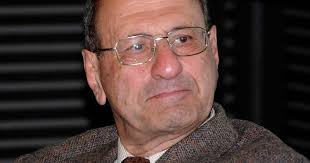
José Zalaquett was a prominent lawyer and academic, who fought for human rights, truth and justice worldwide.
Amnesty International and others announced on 17 February 2020 the passing of José Zalaquett (Pepe), one of the leading lights of the human rights movement in the last quarter of the 20th century.
He was born on 10 March,1942 and died on 15 February 2020. He initiated his human rights work as a law student campaigning for Salvador Allende in Chile. Upon Allende’s election as president in 1970, José Zalaquett served as cabinet minister, which he left for a post at the university. In 1973, General Augusto Pinochet launched a violent military coup which forcibly ousted the elected government of Allende and imposed a military dictatorship from 1973 to 1990. In that period, thousands of people were arrested, imprisoned, tortured, and killed. In the aftermath of the coup, José Zalaquett founded the Committee for Peace to help the victims of the military regime. Under Zalaquett’s leadership, the committee, later known as the Vicaría de la Solidaridad, was the foremost human rights organization operating in Chile throughout the dictatorship. The Vicaría defended hundreds of detainees and helped family members of the disappeared to demand legally the whereabouts of their loved ones. In retaliation for his work, José Zalaquett was imprisoned in 1975 and 1976, and sent into exile in 1976.
He left Chile with two military officers walking him all the way to his plane, where they sat him down and buckled his seatbelt. He moved first to France and then to the USA, where he joined Amnesty International to demand with many other Chilean exiles an end to Pinochet’s dictatorship and raise awareness internationally about the situation in his home country. Pepé, as he was known, became Chair of the International Executive Committee of Amnesty International, and later its Deputy Secretary General.
José Zalaquett was a prominent human rights lawyer who leaves behind an enormous legacy. His time with Amnesty International, as a Chair of the international Board and later as a Deputy Secretary General, was a gift for us. His wisdom and passion to fight for the rights of people have been an inspiration for Amnesty’s movement
Ten years later, he returned to Chile. In 1990 José Zalaquett was appointed to the National Commission on Truth and Reconciliation, and with his nine colleagues wrote a report on the fate of the victims of the Pinochet regime. As such, he became an internationally respected authority on truth and reconciliation, advising similar human rights commissions on three continents. From 2001-2005 José served as a Commissioner at Inter-American Commission on Human Rights, including a term as its Chairman. He was also member of the International Commission of Jurists and of the Presidential Advisory Commission on Transparency and Public Probity, and a board member of the Chilean chapter of Transparency International. José Zalaquett conducted human rights missions to numerous countries in Africa, the Americas, the Middle East and Southeast Asia, working on transitional justice issues. He wrote extensively about human rights in books, specialized journals and newspapers.
He was a prominent professor at different universities. José Zalaquett received honorary doctorates from the University of Notre Dame and the City University of New York. His awards include a MacArthur Foundation award (1990 to 1995), the UNESCO Prize for the Teaching of Human Rights (1994), the B’nai B’rith Human Rights Award, and the National Prize for Humanities and Social Sciences (Chile, 2003).
“José Zalaquett was a prominent human rights lawyer who leaves behind an enormous legacy. His time with Amnesty International, as a Chair of the international Board and later as a Deputy Secretary General, was a gift for us. His wisdom and passion to fight for the rights of people have been an inspiration for Amnesty’s movement,” said Sarah Beamish, Amnesty International’s Chair of the International Board.
Side event preparing the UPR process on Turkey
January 22, 2020In the framework of the 35th session of the Universal Periodic Review, Press Emblem campaign (PEC) and International Observatory for Human Rights (IOHR) are organising a side event entitled ‘Information meeting on the UPR process in Turkey‘ within the Palais des Nations on Monday, 27 of January, Room XXV from 1 to 2.30 pm.
Key Note Speaker:
Ambassador Stephen Rapp Former United States Ambassador-at-Large for War Crimes Issues in the Office of Global Criminal Justice
Panel 1: Press Freedom
Guest Speakers
Mr Yavuz Baydar: Editor-in-Chief of Ahval
Ms Evin Barış Altıntaş: Journalist & Blogger
Mr Massimo Frigo: Senior Legal Advisor for International Commission for Jurists
Panel 2: Human Rights Defenders
Guest Speakers
Şebnem Korur Fincancı – President of the Human Rights Foundation of Turkey
Nurcan Baysal – Award-winning Turkish Human Rights Defender & Journalist [see: https://humanrightsdefenders.blog/2018/05/18/breaking-news-five-front-line-award-winners-2018-announced/]
Anne van Wezel – Former Co-Chair, EESC EU-Turkey Joint Consultative Committee
Moderator: Louise Pyne Jones, Head of Research, IOHR
ICJ Report on freedom of information in South East Asia especially on-line
December 23, 2019
Malaysian cartoonist Zunar helps launch a report by the International Commission of Jurists at the Foreign Correspondents’ Club of Thailand. (Photo by Osama Motiwala/ICJ))
On 16 December 2019 Dave Kendall wrote in the Bankok Post about the International Commission of Jurists(ICJ), having released a report called Dictating the internet: Curtailing free expression, opinion and information online in Southeast Asia. The report was presetned at the Foreign Correspondents’ Club of Thailand, where some of the human rights defenders featured in the case studies participated in a panel discussion. The Malaysian cartoonist Zunar, [https://humanrightsdefenders.blog/2019/07/18/fight-through-cartoons-zunar/] drew a cartoon live on stage; it showed a government figure placing handcuffs around the two ‘O’s in the word Google.
The ICJ has a slightly different take from other non-governmental organisations that seek to protect freedom of speech. For the ICJ, the law is both the problem and the solution: Southeast Asian governments use existing laws and draft new ones to stifle dissent, violating international statutes upholding freedom of expression that they themselves have signed onto. The report calls for governments in Southeast Asia to “repeal, amend or otherwise rectify existing legal and regulatory frameworks to bring them in line with their international obligations” — and argues that “legislation framed in human rights terms is also the best and most effective way to protect against the very real threats posed by the spread of hate speech, disinformation online, cyber-attacks and other cybercrimes.”

From left: ICJ director of Asia and the Pacific Frederick Rawski, Myanmar surgeon Ma Thida, human rights defender Sutharee Wannasiri, Singaporean activist Jolovan Wham and Malaysian cartoonist Zunar (Photo by Dave Kendall)
“It’s not a pretty picture,” Frederick Rawski, ICJ director of Asia and the Pacific told the forum. “Laws are used to harass and threaten human rights defenders, lawyers, journalists and others…New legal frameworks are being seen as an opportunity to consolidate and protect political power.” Corporations, too, have joined the party. “Businesses are using strategic lawsuits to avoid criticism, claiming they are protecting their businesses interests,” Sutharee Wannasiri told the audience. [https://humanrightsdefenders.blog/2019/05/04/international-civil-society-week-3-human-rights-defenders-engaging-business/]. The human rights activist is out on bail.
Governments have often cited vague concepts of “national security” and “public order” to justify using disproportionate means to shut down opposing views, sometimes even when privately expressed. “I was sentenced to 23 years in prison in 1993,” said Dr Ma Thida, a Myanmar surgeon, writer, and human rights activist. “The first charge was ‘endangering national serenity’.” She said the use of speech-suppressing colonial-era laws such as the National Secrets Act has actually increased since Aung San Suu Kyi joined the Myanmar government.
Governments across Southeast Asia vary in the subtlety — or otherwise — they employ in using the law to stifle dissent. “The police were very nice to me,” recalled Jolovan Wham, a Singaporean civil and labour rights activist [https://humanrightsdefenders.blog/2019/02/24/human-rights-defender-jolovan-wham-in-singapore-sentenced-ngos-dismayed/]. “They asked me, ‘Is the room too cold? Would you like some biscuits?’ Singapore introduced its Protection from Online Falsehoods and Manipulation Act this year. “Singapore has a very good PR machine… they use democratic processes for authoritarian ends,” said Mr Wham. “They made a show of democratic consultation to justify this repressive law.”
The ICJ report was welcomed by Sutawan Chanprasert, the founder of DigitalReach, a new organisation campaigning to protect digital rights in Southeast Asia. “The report shows that while technology gives more opportunities for people to express themselves on social media, the state is moving to control the online space too,” she told the Bangkok Post. “Under repressive ‘fake news’ laws, any content can be interpreted as ‘fake’, ‘false’ and ‘misleading’. And tech has provided a new kind of threat to freedom of expression– digital surveillance of political dissidents.”
How human-rights defender Idris Khattak went ‘missing’ in Pakistan
November 25, 2019On 23 November 2019 Francesca Marino, in a personal blog post in the New Kerala wrote a short story “How human-rights activist Idris Khattak went ‘missing’ in Pakistan“. It reads like the scenario for a film but it is the horrible truth:
November 13, on the Islamabad-Peshawar motorway. It is around five o’clock in the afternoon, there’s a long queue at the toll plaza. The man and his driver are stuck in the queue like many others. An ordinary afternoon in an ordinary day, it seems. But there’s nothing ordinary in what’s going to happen. The moment the car stops at the toll plaza to pay the fare, a couple of guys in plain clothes approach the car forcing the two men to go out. The man and his driver are handcuffed, their faces covered with masks and they are thrown into another car. Nobody complains nobody says anything. The people at toll plaza let the car go without any payment. An ordinary afternoon, in an ordinary day. In a couple of minutes, the void replaces the space occupied by the two men. The void, an ordinary entity in today’s Pakistan. The man taken by the ‘unknown’ people in plain clothes is Idris Khattak, and is not an ordinary man. Because fighting for the rights of citizens, in Pakistan, is not an ordinary thing to do. Not anymore.
Idris had worked for Amnesty International and for Human Rights Watch on various human rights issues including, ironically, the issue of enforced disappearances in the country. His last post on Facebook, before he disappeared, was in fact on disappearances that, according to Amnesty International and other international organisations has become a common practice in Pakistan in the last few years.
Idris is an easy target. He has been an active member of left-wing politics and progressive circles since his student days and an important member of the Democratic Student Federation. Lately, he joined the National Party, serving as its General Secretary in Khyber Pakhtunkhwa. The usual ‘unknowns’ had called him many times in the past threatening him and ‘gently advising’ him not to cross the limits in criticising the military.
A couple of days later, another lot of people in plain clothes shows up at Idris’ house. They tell the family they are children of Idris’ friends and need to take his laptop and his hard disk. They call a number Idris is on the phone, telling his family to give laptop and hard disks to the guys. Just this and the call is cut.
Meanwhile, after three days, the driver reappeared. He is shaken and terrified. He has been kept for three days in a basement, with his warden telling him he was clear and would be released soon. During those three days, he never saw Idris and has no idea of what happened to him.
An FIR and a habeas corpus have been filed in Peshawar High Court by Latif Afridi Advocate, but unfortunately is not going to make any difference. The rule of law, in this case like in many other cases before Idris, counts nothing.
Reading from the latest Amnesty Report “The groups and individuals targeted in enforced disappearances in Pakistan include people from Sindhi, Baloch, Pashtun ethnicities, the Shia community, political activists, human rights defenders, members and supporters of religious and nationalist groups, suspected members of armed groups, and proscribed religious and political organisations in Pakistan. In some cases, persons are openly taken into custody by the police or intelligence agencies, and families trying to find out where they are held are denied information by the authorities. Some victims are eventually released or their whereabouts are disclosed to their families but they continue to be held in arbitrary detention including in internment camps. Those forcibly disappeared are also at risk of torture and death during captivity.”
The bloggers, who disappeared a few years ago, have been brutally tortured and still carry physical and mental symptoms related to their detention. According to Amnesty International “The disappeared are at risk of torture and even death. If they are released, the physical and psychological scars endure. Disappearances are a tool of terror that strikes not just individuals or families, but entire societies. Enforced disappearance is a crime under international law and, if committed as part of a widespread or systematic attack, they constitute a crime against humanity”.
Defence of Human Rights, a non-governmental organisation working for the recovery of disappeared people, laments that more than 5,000 cases of enforced disappearance have remained unresolved till date in Pakistan.
According to the International Commission of Jurists (ICJ), the Commission of Inquiry on Enforced Disappearance established in 2011 under international pressure hasn’t made any significant progress. The ICJ says the practice of enforced disappearances in Pakistan is no longer restricted to conflict zones alone. “It has become a tactic for suppressing dissenting voices wherever they are present.” Adding that “The practice has now become a national phenomenon” in Naya Pakistan.
Ironically, Imran Khan had committed to criminalise the practice of enforced disappearances under his government; useless to say, nothing has been done. And to add insult to irony, the Minister for Human Rights Shireen Mazari has stated that the government wants to sign the International Convention for Protection of All Persons from Enforced Disappearances. Meanwhile, the practice continues and the impunity and the arrogance of ISI and its thugs grow every day. Grows like the void, the void left where they were people once. And dreams, and hopes. The dreams and hopes to live in a civilised country, where dissent and protests are part of the democratic process and citizens have civil and human rights. An ordinary country.
ICJ says human rights defenders alarmed over election results in Sri Lanka
November 19, 2019 Sri Lanka’s newly elected president, Gotabaya Rajapaksa and his Government must demonstrate that they will uphold human rights and rule of law, and ensure that Sri Lanka sustains its international obligations and commitments to justice and accountability, said the International Commission of Jurists (ICJ) on 19 November 2019. “The election of Gotabaya Rajapaksa, after a highly polarizing campaign, has alarmed human rights defenders in Sri Lanka and abroad, who have little reason to believe that someone facing such serious allegations of perpetrating human rights violations can be relied upon to meet the country’s obligations under international law,” said Frederick Rawski, ICJ Asia Pacific Director.
Gotabaya Rajapaksa, who won the presidency with 52.25% of votes, served as Sri Lanka’s Secretary of the Ministry of Defence from 2005 to 2015 during the tenure of his brother Mahinda Rajapaksa, at the height of the armed conflict against the Liberation Tigers of Tamil Eelam (LTTE). Gotabaya Rajapaksa faces credible allegations of involvement in war crimes and crimes against humanity that took place during the country’s armed conflict.
International condemnation of atrocities committed during the conflict led to the UN Human Rights Council demanding that the Sri Lankan government commit to a process of transitional justice, in view of the systematic failures of accountability mechanisms in Sri Lanka in the past, as documented by the ICJ in its submission to the Human Rights Council, and others. Despite commitments from the Sri Lankan government, the transitional justice process has effectively stalled and impunity has prevailed.
“The ICJ is deeply concerned that even the limited strides made over the past five years in Sri Lanka on transitional justice, positive constitutional amendments and institutional reform will be reversed,” said Rawski. The ICJ urged the Government to deliver on its commitment to the transitional justice process, including by holding those responsible for human rights violations and abuses accountable, and complying with the obligations set out in United Nations Human Rights Council Resolutions 30/1, 34/1 and 40/1.
In Tajikistan lawyers have to be human rights defenders
September 29, 2019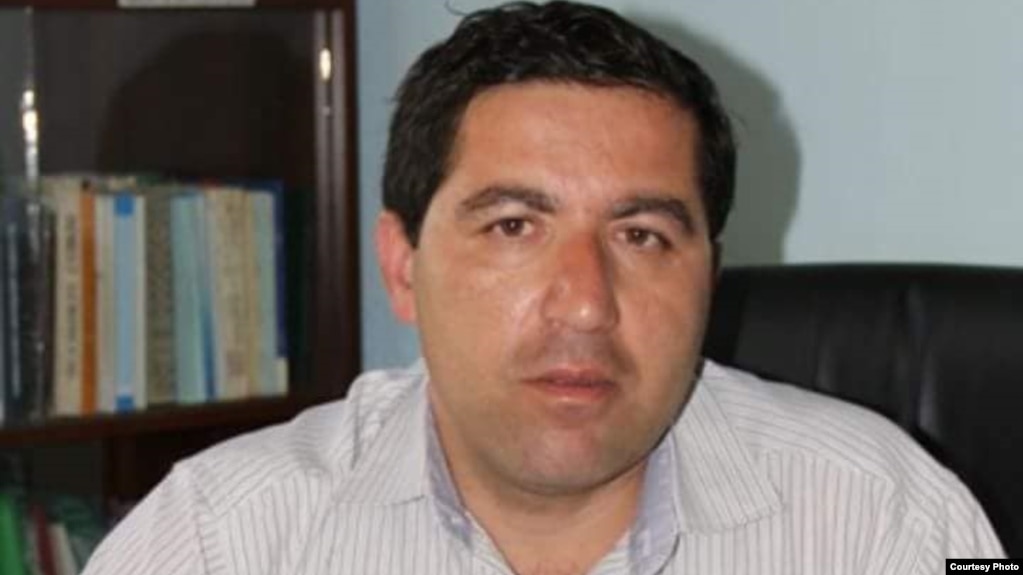
In June, the United Nations Working Group on Arbitrary Detention declared the detention of Buzurgmehr Yorov a violation of international law.
For more than five years now, lawyers’ ranks have been thinned as the Tajik authorities imposed new rules to disbar lawyers and, in some cases, brought criminal cases against lawyers who defended political opponents. According to RFE/RL’s Tajik Service, known locally as Ozodi, there are only around 850 lawyers in Tajikistan, a country of more than 9 million people. Yorov’s situation is one of the best-known. He had taken on clients who were almost surely targeted by the government. In 2015, Tajik authorities withdrew the registration of and then banned the country’s leading opposition party, the Islamic Renaissance Party of Tajikistan (IRPT), then later declared it an extremist group and claimed it was behind what the government said was a coup attempt. There is scant evidence to support the claim of an attempted coup and even less evidence connecting the IRPT to the purported coup’s alleged mastermind, who was killed by Tajik security forces. More than a dozen senior IRPT leaders were detained at the end of September 2015. Yorov said he would defend them in court, meeting with one of them on September 26. Two days later, he said publicly that his client was being tortured; shortly after that, Yorov was himself taken into custody.
In October 2016, Yorov and fellow rights lawyer Nuriddin Makhamov were found guilty of fraud and inciting national, racial, local, or religious hatred. Yorov was sentenced to 23 years in prison, but additional time was added to his sentence in two successive trials. At one of those trials, Yorov was given two extra years for contempt of court for quoting 11th-century poet Ibn Avicenna.*
On September 18, the Association of Central Asian Migrants announced Yorov was being given the first Fayziniso Vohidova award. The prize is named after a rights lawyer who died earlier this year. Yorov’s brother, Jamshed, accepted the award on his behalf. Buzurgmehr Yorov has since been shortlisted for the Vaclav Havel Human Rights Prize, whose winner should be announced on September 30. [see: https://humanrightsdefenders.blog/2019/08/29/ilham-tohti-one-of-the-finalists-for-the-vaclav-havel-human-rights-prize/]
A September 10 statement by the Geneva-based International Commission of Jurists expressed concern about the Tajik Anti-Corruption Agency’s “acts of intimidation” against a group of lawyers. The statement mentions Abdulaziz Abdurahmonzoda, a member of the independent Lawyers Union of Tajikistan.
Abdurahmonzoda is being charged with fraud. Prosecutors allege that he demanded a $500 bribe from a man named Saidmurod Saidov, who came seeking Abdurahmonzoda’s legal services.
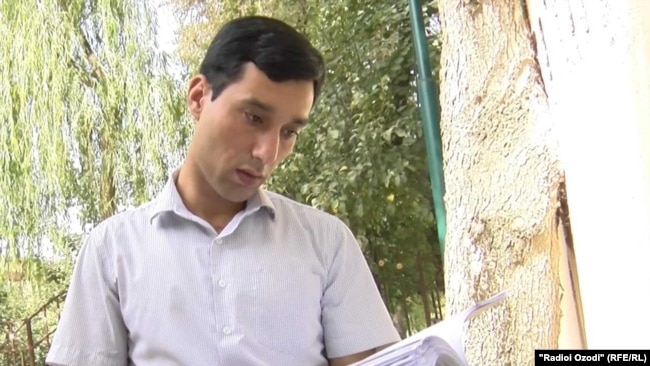
According to the International Commission of Jurists, “Following the initiation of the inquiry of the allegations of ill-treatment, the head of the Anti-Corruption Agency of Dushanbe allegedly sent requests to a number of district courts of Dushanbe to obtain information about civil and criminal cases in which Saidbek Nuriddinov had participated as a lawyer.” Saidbek Nuriddinov is the chairman of the Lawyers Union of Tajikistan.
In 2013, Yorov, Fakhriddin Zokirov, Ishoq Tabarov, and Shukrat Kudratov were the defense attorneys for Zayd Saidov, a successful and former minister of industry who suddenly faced charges ranging from financial crimes to sexual relations with a minor and polygamy, after he declared earlier in the year that he planned to establish a new political party. In December 2013, Saidov was found guilty and sentenced to 26 years in prison (three more years were added in a later trial).
In June, the United Nations Working Group on Arbitrary Detention declared the detention of Buzurgmehr Yorov a violation of international law. Rights groups including Human Rights Watch, Freedom Now, and Lawyers for Lawyers have repeatedly called for an end to the crackdown on lawyers in Tajikistan and the release of those who have been imprisoned.
https://www.rferl.org/a/finally-a-defense-of-tajikistan-s-lawyers/30185435.html
International Commission of Jurists tries fundraising Gala in Geneva
September 25, 2019The ICJ is organizing its first fundraising Gala concert on Monday 14 October at 7:30pm in the Palais Eynard, 4 rue de la Croix Rouge, Geneva. The event will support the ICJ and its fight for the defense of the Rule of Law in the world and marks the end of the series of events we organized for our 60th anniversary in the city of human rights. The theme of our Gala will be: “Geneva, the Defense of the Rule of Law: What can I do?”
After a welcome from the Mayor of Geneva and an introduction from Me Pierre de Preux, former Bâtonnier of the Geneva Bar, ICJ Commissioners including Sir Nicolas Bratza (former President of the European Court of Human Rights), Dame Silvia Cartwright (former Judge and Governor General of New Zealand), Professor Bob Goldman (ICJ President and former President of the Inter-american Commission on Human Rights) and Ms Roberta Clarke (ICJ Executive Chair, UN Women’s Regional Office for Asia and the Pacific) will give concrete answers to this question. The evening is also to enjoy a Concert of the ‘Soloists of the Menuhin Academy’ and the cocktail after that.
Third Anniversary of Kem Ley’s Murder in Cambodia: the real culprit?
July 12, 2019
Mourners observe Kem Ley’s funeral procession in Phnom Penh, July 24, 2016.- AP Photo
Two dozen nongovernmental organizations on Tuesday 9 jult 2019 demanded that Cambodia’s government establish an independent and impartial commission to investigate the murder of prominent political commentator and rights campaigner Kem Ley, a day ahead of the third anniversary of his death. Kem Ley was shot to death in broad daylight on July 10, 2016 while having a morning coffee at a Caltex gas station in the capital Phnom Penh, days after publicly criticizing Prime Minister Hun Sen and his family for abuse of power.
Authorities charged a former soldier named Oeuth Ang with the murder and sentenced him to life in prison in March 2017, but many in Cambodia do not believe the government’s story that Kem Ley was killed by the man over a debt. In May, Cambodia’s Supreme Court rejected Oeuth Ang’s appeal for reduction of sentence and upheld his life imprisonment term. The day of Oeuth Ang’s sentencing, Geneva-based International Commission of Jurists (ICJ), New York-based Human Rights Watch and London-based Amnesty International highlighted multiple issues they said had not been adequately investigated during his trial and called for a probe into Kem Ley’s killing that adheres to international standards.
On Tuesday, 21 other groups joined the three NGOs in reiterating that call and questioning why the government had failed to take meaningful action in the case. “It has been three years since significant gaps were highlighted in the investigation and trial of Kem Ley’s case, which need to be remedied through an independent, impartial and effective investigation,” said Frederick Rawski, ICJ’s director for Asia and the Pacific.
The 24 NGOs noted in Tuesday’s statement that 164 organizations had signed a joint letter to Cambodia’s Deputy Prime Minister Sar Kheng calling for the creation of an independent Commission of Inquiry into Kem Ley’s case, citing the “flawed investigation” into his killing and “lack of progress in subsequent investigations” of suspected accomplices.
Soon after Kem Ley’s funeral, and fearing for their safety, his wife Bou Rachana—then pregnant—fled with her children from Cambodia to neighboring Thailand to seek asylum in a third country. They spent over a year and a half in Thailand before being granted permission to settle in Australia in February last year.
Debbie Stothard, the secretary-general of Paris-based International Federation for Human Rights (FIDH), said: “The Cambodian authorities’ ongoing failure to identify and prosecute the masterminds behind Kem Ley’s murder shows that an independent investigation is urgently needed to deliver justice to his family and to make progress towards ending impunity for the killing of human rights defenders in Cambodia,” she said.
Tuesday’s statement called Kem Ley’s killing “an alarming reminder of Cambodia’s culture of impunity” in cases of killings and harassment of rights defenders, labor leaders, journalists, members of the political opposition and others critical of Hun Sen’s regime.
Sok Ey San, spokesman of Hun Sen’s ruling Cambodian People’s Party (CPP), dismissed Tuesday’s statement as “politically motivated” and said it was “filled with groundless allegations.”
The call by the 24 NGOs came as police in Phnom Penh charged youth activist Kong Raiya and three of his family members with “incitement of social unrest” after arresting them for selling T-shirts bearing Kem Ley’s portrait and urging people to wear them on Wednesday to mark the anniversary of his murder. Am Sam Ath, deputy director of the Cambodian rights group LICADHO, told RFA’s Khmer Service that police arrested Kong Raiya, his wife and his parents-in-law on Tuesday along with his six-month-old baby, who was later released to family members.
See also Global Voices of 17 July: : https://globalvoices.org/2019/07/17/cambodian-activists-arrested-for-commemorating-the-anniversary-of-political-analyst-kem-leys-death/
https://www.rfa.org/english/news/cambodia/probe-07092019170518.html

