While human rights organizations and the media around the world were remembering Egypt‘s Tahrir Square [https://thoolen.wordpress.com/2016/01/28/five-years-after-tahrir-square-there-is-stability-in-egypt-but-do-not-ask-at-what-price/] the space for demonstrations in Egypt itself was minimal. But a huge exception was made on 13 February 2016 when some 10.000 people gathered at noon in front of the Doctors Syndicate in Cairo. Heartening to see that the doctors have the courage to take up the case against police brutality. But you are unlikely to hear about this from an Egyptian human rights defender in person as they are systematically banned from traveling. Read the rest of this entry »
Archive for the 'HRW' Category
Egypt: doctors protest police brutality but no human rights defenders can come and tell about it
February 15, 2016On Assange: there is more to the decision than knee-jerk reactions
February 7, 2016The recent ruling by the UN Working Group on Arbitrary Detention has created quite a storm in and outside the human rights world. At first sight it would indeed seem almost ridiculous to maintain that Julian Assange, who is in ‘sel-imposed’ exile in the Ecuadorian Embassy, is being arbitrary detained. But a bit of reflection (which is not what the UK, Sweden practiced) would in order, especially as the countries involved still have a chance to comment the decision.
The General Council of the US-based NGO Human Rights Watch, Dinah PoKempner, wrote a clarifying piece on 5 February 2016 under the title: “On Assange, Following the Rules or Flouting Them?“. It does certainly help to see the decision in this context, in particular the consideration that Assange (whether one likes it or not) was recognized as a refugee by Ecuador and thus should be free to move.
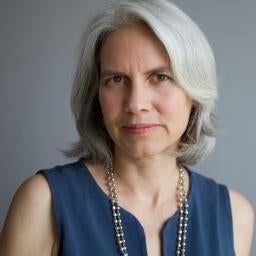
It should not have been terribly surprising to Sweden or the United Kingdom that the United Nations Working Group on Arbitrary Detention found that the various forms of confinement suffered by WikiLeaks founder Julian Assange violate his human rights. The Working Group has many times warned that it is unlawful to force someone to choose between liberty and a fundamental right, such as asylum, which Assange now enjoys only so long as he stays inside the walls of the Ecuadorean embassy.
What is news are the deplorable rhetorical parries from the UK and Swedish governments, who both stated not just disagreement, but that the Working Group opinion would have absolutely no effect on their actions. This is not what one expects from democratic governments who usually support the UN mechanisms and international law.
“This changes nothing,” declared the UK Foreign & Commonwealth Office. The foreign secretary diplomatically called the ruling “frankly ridiculous,” disparaging the Working Group as “a group of laypeople, not lawyers” (in fact, many of the experts are professors of law or human rights or both – see below). Sweden managed to avoid imprecation, but was no less unreceptive. The Foreign Ministry declared that the Working Group had no right to “interfere in an ongoing case handled by a Swedish public authority” and continued to insist that “Mr. Assange is free to leave the Embassy at any point.” As for the Prosecutor’s Office, it declared the UN body’s opinion “has no formal impact on the ongoing investigation, according to Swedish law.”
While the Working Group does not have the authority to force governments to heed its decisions, it is the authoritative voice of the UN on the issue of arbitrary detention, and its opinions are given great weight as interpretations of binding international law obligations. The Office of the UN High Commissioner for Human Rights today attempted to remind Sweden and the UK of that in a discrete Note to Editors, saying the opinions should be taken into consideration as they are based on international human rights law that binds the relevant states.
Not much consideration appears to be happening. The UK has said that it will arrest Assange if he leaves the shelter of the embassy, either because of the European arrest warrant the Swedish prosecutor issued to investigate allegations of sexual offenses, or because he violated the conditions of his house arrest by going directly from his last UK court appearance to the Ecuadorean embassy in London to apply for asylum.
The Working Group found that Assange’s confinement – first in a UK prison, then under house arrest, and now in the embassy – violated his human rights. Given that Assange has claimed political asylum, a claim Ecuador recognizes but the UK and Sweden have not taken into account, the Working Group said his freedom of movement and security as a refugee should be respected, and compensation awarded.
Both Sweden and the UK are parties to the International Covenant on Civil and Political Rights, the treaty on which much of the decision rests, and are bound by other customary international law against returning refugees to locations where they risk persecution. Their failure to give due consideration to these international rights and obligations is what drove the conclusion that Assange’s confinement is “arbitrary.”
Let’s be clear: the issue is not Assange fleeing Swedish justice; he has continually expressed his willingness to be investigated by Sweden. What he won’t do is risk eventual extradition to the United States, which would like to prosecute him under the Espionage Act.
That is because WikiLeaks revealed the embarrassing diplomatic cables that Chelsea Manning leaked. And if you look at Manning’s fate, Assange has plenty to fear. Manning was abused in pretrial detention, denied the defense that the public interest justified her disclosures, and sentenced to 35 years. A secret US grand jury has been investigatingAssange on related Espionage Act charges for close to five years. Neither Sweden nor the UK will promise Assange he won’t be extradited, and both are close US allies in national security and intelligence affairs.
So who are the losers? Assange, who has already been confined longer than the maximum term he would serve in a Swedish prison were he found guilty, and the Swedish women who made the original allegations, and whose government won’t pursue the matter if it means protecting Assange from extradition to the US.
And now the UK and Sweden are big losers as well. Their fatuous dismissal of the Working Group won’t impugn this necessary and neutral body that was established by the world’s governments to uphold rights. But both have severely damaged their own reputation for being so ready to dismiss upholding inconvenient human rights obligations and their credibility as global advocates for rights by refusing to respect the institution of asylum.
Source: On Assange, Following the Rules or Flouting Them? | Human Rights Watch
Russian Foreign Agents Law starts to affect monitoring in detention centers
February 4, 2016
reports that on 26 January 2016, the Russian Duma (lower chamber of Parliament) adopted at first reading amendments to the law regulating the work of Public Monitoring Commissions (PMCs). There is serious concern that if passed, the draft amendments will put an end to the independent and effective monitoring of places of detention by excluding the many human rights defenders labeled as foreign agents. Read the rest of this entry »
One of Azerbaijan’s key human rights defenders, Leyla Yunus, freed – now the others
December 10, 2015
Many NGOs have welcomed as a good Human Rights Day present the announcement of the freeing of Leyla Yunus in Azerbaijan. Here the views of the Deputy Director, Europe and Central Asia Division of Human Rights Watch, Rachel Denber:
Another Egyptian journalist detained on unknown charges
December 1, 2015
Ismail’s wife, Khadeega Gafar, rings alarm bell [Khadeega Gafar]
Ismail Alexandrani was detained after flying back from Berlin, where he attended counter-terror summit. The Egyptian investigative journalist and human rights activist was arrested after being questioned at Hurghada International Airport, his wife said, adding that the accusations or charges against him have still not been revealed.
Since 2013, Egyptian authorities have cracked down on freedom of expression after the ouster of Mohamed Morsi of the Muslim Brotherhood. Angelita Baeyens, programmes director at the Robert F. Kennedy Human Rights organisation in Washington DC, said that Egypt’s crackdown on free speech is of “deep concern”.”Although the charges against Alexandrani, if any, and the particular circumstances of his detention have not yet been made clear,” she said, “the ongoing harassment of activists, independent journalists, and human rights defenders in Egypt remains a deep concern and raises serious questions about the country’s commitment to respecting the rights of its citizens to freedom of expression and association.”
“Some members of the Muslim Brotherhood attended [the Berlin conference], but Ismail is critical of the Muslim Brotherhood,” Khadeega Gafar said “The security services know this. He’s criticised them [the Muslim Brotherhood] on social media. he is anti-Muslim Brotherhood”
A state security prosecution hearing is expected in New Cairo on Tuesday morning, added Gafar, who is in touch with human rights organisations and lawyers. “How can I express how I am feeling? I am not in a good state,” she said. “I am not in communication with him, so every piece of information comes to me with a contradiction. I have no life for now. It’s just about finding out where he is, whether he is OK, and what he is accused of.”
According to Human Rights Watch, more than 3,700 civilians have been charged in military courts since October 2014, when President Abdel Fattah el-Sisi expanded the jurisdiction of military courts for a two-year period. Many of those civilians were charged in the military courts “for acts related to protesting and [alleged affiliation with] the Muslim Brotherhood”.
Source: Award-winning Egyptian reporter held on unknown charges
Tunisian national dialogue quartet laureates of 2015 Nobel peace prize
October 9, 2015The Tunisian national dialogue quartet, a coalition of civil society organisations, has won the 2015 Nobel peace prize. The quartet is comprised of four NGOs in Tunisian civil society: the Tunisian General Labour Union, the Tunisian Confederation of Industry, Trade and Handicrafts, the Tunisian Human Rights League [the national affiliate of the FIDH – see press link below] and the Tunisian Order of Lawyers.
Kaci Kullmann Five, the chairman of the Norwegian Nobel committee, said the quartet had formed an alternative peaceful political process in 2013 when the country was on the brink of civil war and subsequently guaranteed fundamental rights for the entire population. Committee says the prize awarded for quartet’s decisive contribution to the building of a pluralistic democracy in Tunisia in the wake of the 2011 Jasmine Revolution
The Tunisia director of Human Rights Watch, Amna Guellali said the prize was being seen in the country as a reward for sticking with democratic principles. “The Quartet enabled the democratic process to go ahead, it was a political crisis that could have led to civil war,” she said. “People here will hope the award is not just a token celebration, but will bring Tunisia real help.”
https://www.fidh.org/en/region/north-africa-middle-east/tunisia/national-dialogue-quartet-in-tunisia-2015-peace-nobel-prize-mabrouk
(French:) https://www.fidh.org/fr/regions/maghreb-moyen-orient/tunisie/le-quartet-tunisien-prix-nobel-de-la-paix-2015-mabrouk
Source: Tunisian national dialogue quartet wins 2015 Nobel peace prize | World news | The Guardian
Syria: Mazen Darwish free after 3 years, but still to be acquitted
August 12, 2015Yesterday I reported on Human Rights Watch honoring Yara Bader as the representative of the Syrian Centre for Media and Freedom of Expression. Now I am catching up on the release of her husband and the founder of the Centre, Mazen Darwish, after more than three years in jail. A verdict in his case is expected later this month. Darwish was arrested, along with two colleagues, in February 2012 during a raid. Hussein Ghreir and Hani al-Zaitani were freed last month (17 July and 18 July 2015, respectively) as part of an amnesty that was to have included Darwish, but his release was delayed.
Many NGOs (i.a. Frontline, the Observatory, AI and HRW) and Governments have welcomed the release but warn that Mazen Darwish, and his colleagues Hussein Ghrer and Hani al-Zaitani, have been charged with “publicising terrorist acts” and are still to be tried before the Syrian Anti-Terrorism Court. They invariably call for all charges against them to be dropped. “Mazen, Hussein and Hani are not terrorists, they are human rights defenders,” FIDH President Karim Lahidji said “All charges against them must be dropped immediately”. “We urge the Syrian Anti-Terrorism Court to acquit them during the verdict hearing on August 31, as their judicial harassment has only been aimed at sanctioning their human rights activities”, OMCT Secretary General Gerald Staberock concluded.
[On May 15, 2013, in its Resolution 67/262, the UN General Assembly called for the release of the three defenders. In January 2014, the UN Working Group on Arbitrary Detention also found that the three defenders had been arbitrarily deprived of their liberty due to their human rights activities and called for their immediate release. Finally, UN Security Council Resolution 2139, adopted on February 22, 2014, also demanded the release of all arbitrarily detained people in Syria.]
Syria: Finally free, Mazen Darwish must now be acquitted.
https://www.frontlinedefenders.org/mazendarwish
http://tvnewsroom.org/newslines/world/syria-releases-award-winning-activist-mazen-darwish-79643/
4 Human Rights Defenders receiving the Alison des Forges Award 2015
August 11, 2015
2015 Alison Des Forges Award Honorees. Top: Khadija Ismayilova (Azerbaijan), Yara Bader (Syria), Father Bernard Kinvi (CAR – 2014 winner). Bottom: Nicholas Opiyo (Uganda), Nisha Ayub (Malaysia), Dr. M.R. Rajagopal (India – 2014 winner). © Jahangir Yusif, Francesca Leonardi (Internazionale), 2014 Human Rights Watch, 2015 Rebecca Vassie, 2015 Nisha Ayub, Paramount Color Lab, Ulloor, Trivandrum
Human Rights Watch just announced that its Alison Des Forges Award winners 2015 come from Uganda, Syria, Malaysia and Azerbaijan:
Nisha Ayub, Malaysia
For over a decade, Nisha Ayub has championed the rights of transgender people in Malaysia through support services, legal and policy analysis, and public outreach. Human Rights Watch honors Nisha Ayub for challenging the discriminatory laws that prevent transgender people in Malaysia from living free of violence, fear, and oppression.
Yara Bader, Syria
Yara Bader, a journalist and human rights activist, works to expose the detention and torture of activists – including her husband, Mazen Darwish recently released – in war-torn Syria. She has experienced first-hand how the Syrian government uses its security and intelligence agencies to brutally crack down on independent voices. Human Rights Watch honors Yara Bader for her tremendous courage in speaking out on behalf of Syrian detainees despite grave risks to her safety.
Khadija Ismayilova, Azerbaijan
Khadija Ismayilova, a prominent investigative journalist in Azerbaijan, has dedicated her life to the fight against corruption, for human rights, and for freedom for political prisoners in a country under increasingly harsh authoritarian rule. Human Rights Watch honors Khadija Ismayilova for her extraordinary courage as a journalist and human rights activist in the face of an escalating crackdown on freedom of expression in Azerbaijan. She is currently behind bars. see also: https://thoolen.wordpress.com/2014/12/11/khadija-ismayilova-azerbaijan-is-not-deterred/
Nicholas Opiyo, Uganda
Nicholas Opiyo is a leading human rights lawyer and founder of Chapter Four Uganda, a human rights organization. He has successfully argued several high-level constitutional challenges, including to the notorious Anti-Homosexuality Act of 2013, which was declared null and void in August 2014. Human Rights Watch honors Nicholas Opiyo for his unfaltering dedication to upholding the human rights of all Ugandans by promoting universal access to justice.
The award is named for Dr. Alison Des Forges, senior adviser at Human Rights Watch for almost two decades, who died in a plane crash in New York State on February 12, 2009. For more on the award, see: http://www.brandsaviors.com/thedigest/award/alison-des-forges-award-extraordinary-activism. See also: https://thoolen.wordpress.com/2015/04/19/events-in-memory-of-alison-des-forges-at-buffalo-university/
The four 2015 honorees will be honored at the Voices for Justice Human Rights Watch Annual Dinners held in more than 20 cities worldwide in November 2015 and March-April 2016. Also two 2014 recipients of the award, Father Bernard Kinvi from the Central African Republic and Dr. M.R. Rajagopal from India will included in this series of events:
Father Bernard Kinvi, Central African Republic
Father Bernard Kinvi is a Catholic priest who directs the hospital at the Catholic mission in Bossemptele, Central African Republic. In early 2014, when sectarian violence devolved into coordinated violence targeting Muslim civilians, Kinvi saved the lives of hundreds of besieged Muslims, whom he gathered from their homes and sheltered in the Catholic church. Despite repeated death threats, Kinvi persisted in protecting those in his charge until they could be taken to safety. Human Rights Watch honors Father Bernard Kinvi for his unwavering courage and dedication to protecting civilians in the Central African Republic.
Dr. M. R. Rajagopal, India
Dr. M. R. Rajagopal is a leading palliative care physician from India who, for more than 20 years, has battled conditions that cause patients to suffer severe pain unnecessarily. As clinician, academic, and activist, Rajagopal is a global force behind efforts to promote and put into practice palliative care as a human right. He built the world’s most successful community-based palliative care program, and he and his organization, Pallium India, played a key role in convincing India’s government to make morphine accessible. Human Rights Watch honors Dr. M. R. Rajagopal for his efforts to defend the right of patients with severe pain to live and die with dignity.
 Hans Thoolen on Human Rights Defenders and their awards