Amnesty International will soon (31 May 2020) challenge in a Jerusalem court a travel ban that the Israeli government imposed on its campaigner for Israel and Palestine, Laith Abu Zeyad.
On 26 May 2020 a group of local NGOs (Adalah – The Legal Center for Arab Minority Rights in Israel, B’Tselem, Bimkom – Planners for Planning Rights, Breaking the Silence, Gisha, HaMoked: Center for the Defence of the Individual, Ir Amim, Haqel – In Defense of Human Rights, Human Rights Defenders Fund, Physicians for Human Rights – Israel, The Association for Civil Rights in Israel, The Public Committee Against Torture in Israel Torat Tzedek, Yesh Din, Zazim – Community Action) issued a joint statement against the restrictionon movement of Laith Abu Zeyad, AI’s campaigner for Israel and Palestine: We stand in solidarity with our colleague from Amnesty International, Laith Abu Zeyad, and demand that Israel lift the movement restrictions barring him from leaving the Occupied Territories. His petition against the restrictions imposed upon him will be heard on 31 May 2020. Targeting Abu Zeyad is yet another example of Israel’s increased persecution and punishment of human rights organizations in recent years. This includes preventing international activists and human rights workers from entering the country and forming a ministry that creates blacklists and engages in censorship. Imposing draconian restrictions and denying millions of Palestinians freedom of movement have been a routine part of Israel’s occupation policy for 53 years. Israel comprehensively violates Palestinians’ right to travel abroad, while regarding its citizens’ rights to do so as fundamental. If it looks like political persecution and sounds like political persecution – it is political persecution, and it must stop.
In remarkable solidarity Omar Shakir, Human Rights Watch’ Israel and Palestine Director, wrote about the case in detail:
As a Palestinian from the West Bank, Abu Zeyad must obtain an Israeli-issued permit to enter significant parts of the West Bank under Israeli control, including East Jerusalem, and Israel itself. Yet Palestinians applying for permits face what the Israeli rights group B’Tselem describes as an “arbitrary, entirely non-transparent bureaucratic system.” Most can travel abroad only by land via Jordan through the Israeli-controlled Allenby Crossing. Israeli authorities denied Abu Zeyad a permit in September 2019 to enter occupied East Jerusalem, where he had hoped to accompany his mother, who needed cancer treatment, to a hospital just three kilometers from his home but on the other side of the separation barrier. She died there in December without her son by her side.
In October 2019, Israeli authorities at the Allenby Crossing barred Abu Zeyad from traveling to Jordan to attend a relative’s funeral, citing undisclosed “security reasons,” despite his never having been convicted for a security offense. Authorities provided no further information and designated the evidence as “secret,” meaning even his attorney will not be able to see it in court. And of course, without a permit to enter Jerusalem, Abu Zeyad cannot attend his own court hearing.
New Defense Minister and Alternate Prime Minister Benny Gantz, who warned in his campaign that the previous government’s attacks on independent institutions jeopardized the country’s future, can signal a new direction by lifting Abu Zeyad’s travel ban. He is empowered to do so as he holds the defense portfolio. Israel’s international friends should also find their voice. A government that kicks out a Human Rights Watch director and bans an Amnesty International campaigner from traveling without disclosing the reasons will not hesitate to go after others, much less end systematic rights abuse, unless there is greater global pressure.
On March 11, 2020, the World Health Organization (WHO) declared that an outbreak of the viral disease COVID-19 – first identified in December 2019 in Wuhan, China – had reached the level of a global pandemic. Citing concerns with “the alarming levels of spread and severity,” the WHO called for governments to take urgent and aggressive action to stop the spread of the virus.
International human rights law guarantees everyone the right to the highest attainable standard of health and obligates governments to take steps to prevent threats to public health and to provide medical care to those who need it. Human rights law also recognizes that in the context of serious public health threats and public emergencies threatening the life of the nation, restrictions on some rights can be justified when they have a legal basis, are strictly necessary, based on scientific evidence and neither arbitrary nor discriminatory in application, of limited duration, respectful of human dignity, subject to review, and proportionate to achieve the objective.
The scale and severity of the COVID-19 pandemic clearly rises to the level of a public health threat that could justify restrictions on certain rights, such as those that result from the imposition of quarantine or isolation limiting freedom of movement. At the same time, careful attention to human rights such as non-discrimination and human rights principles such as transparency and respect for human dignity can foster an effective response amidst the turmoil and disruption that inevitably results in times of crisis and limit the harms that can come from the imposition of overly broad measures that do not meet the above criteria.
This document provides an overview of human rights concerns posed by the coronavirus outbreak, drawing on examples of government responses to date, and recommends ways governments and other actors can respect human rights in their response.
Intentionally shutting down or restricting access to the internet violates multiple rights and can be deadly during a health crisis such as the COVID-19 pandemic, Human Rights Watch said on 31 March 2020. Governments that are currently imposing an internet shutdown, such as Bangladesh, Ethiopia (it just announced restoring service), India, and Myanmar, should lift them immediately to save lives. During a health crisis, access to timely and accurate information is crucial. People use the internet for updates on health measures, movement restrictions, and relevant news to protect themselves and others.
“Internet shutdowns block people from getting essential information and services,” said Deborah Brown, senior digital rights researcher and advocate. “During this global health crisis, shutdowns directly harm people’s health and lives, and undermine efforts to bring the pandemic under control.” For people around the world staying at home, either willingly or because of government restrictions, the internet is critical to communicate with doctors, family, and friends. For many children and others seeking an education, it is needed to continue learning as schools shutter around the world.
[Internet shutdowns have become increasingly common in recent years, usually during tense periods, such as elections, anti-government protests, or armed conflicts. Thirty-three countries enforced 213 internet shutdowns in 2019, according to Access Now. Government justifications ranged from a need to combat fake news to public safety and national security.[
On 27 March 2020 HRW Europe said that people in immigration detention in European countries pending deportation should be given alternatives to detention amid the COVID-19 pandemic. “While entire societies learn to live under lockdown, we shouldn’t forget about people locked up because they have the wrong papers,” said Judith Sunderland, associate Europe and Central Asia director at Human Rights Watch. “Authorities across Europe should take measures to protect the health and rights of detainees and staff in immigration detention centers, including by releasing people and finding alternatives to detention.” ….As travel bans increasingly prevent forced returns and courts limit their activities, the reason that thousands of people across the EU and other European states may be held in detention – imminent deportation – is no longer justified. The EU Returns Directive allows detention pending deportation for up to 18 months, but stipulates that if “a reasonable prospect of removal no longer exists…detention ceases to be justified and the person concerned shall be released immediately.”
Amnesty International issues a call for action re Greece: While the world is facing the crisis of COVID-19 pandemic, the risks for refugees in the Greek islands are multiplying by the hour. Thousands of older people, people with chronic diseases, children, pregnant women, new mothers and people with disabilities are trapped there in dangerously overcrowded conditions. Now, they also face the threat of the COVID 19 pandemic, the consequences of which would be catastrophic for those confined in camps. In addition to protecting the rest of the population, the Greek Government must take immediate measures to protect refugees from the pandemic and move them to safety.
…In a statement of principles on the treatment of prisoners and detainees amid the COVID-19 crisis, the European Committee for the Prevention of Torture, a body of the CoE, asked authorities to use alternatives to detention “and refrain, to the maximum extent possible, from detaining migrants.” On March 25, its sister body, the UN Subcommittee on the Prevention of Torture urged all states to reduce populations in detention centers and refugee camps “to the lowest possible level.” The same day, UN High Commissioner for Human Rights Michelle Bachelet said governments should “work quickly to reduce the number of people in detention” to mitigate the risk of COVID-19 “rampaging through such…extremely vulnerable populations.” On March 26, Council of Europe Commissioner for Human Rights Dunja Mijatović echoed the call to release detainees from immigration detention to the extent possible.
Moroever, we should not forget that more than three quarters of refugees live in developing countries in the Americas, Africa, the Middle East and Asia. As the Reuters and Al-Jazeeraa stories (link below) makes clear, a COVID-19 outbreak would put extraordinary strain on fragile local health-care services and likely result in avoidable suffering and death. Preventing or delaying outbreaks, particularly among the most vulnerable, is the most important action we can take right now.
The speaker was: Paola Salwan Daher, Center for Reproductive Rights:
…….International human rights mechanisms have a key role to play in reflecting and amplifying the demands coming from feminist and women’s rights movements. The respect, protection and fulfilment of the human rights of women and girls, which includes the full realization of women’s and girls’ sexual and reproductive health and rights (SRHR), is at the heart of gender equality, and without which it cannot be achieved.Treaty Monitoring Bodies and Special Procedures alike, informed by the work of women’s rights and feminists groups and individuals, have repeatedly recognized that women experience intersectional discrimination and that States have an obligation to address the particular needs of marginalized groups of women and girls such as adolescents, women living with HIV, women living in poverty, minority women, rural women, migrant and refugee women, women from LBTIQ communities and women with disabilities.
States have an obligation to address underlying structural factors which negate their autonomy in decision-making regarding their own lives, health and bodies, to ensure that their agency and right to substantive equality are respected in all aspects of their lives.
Accountability is central to the realization of human rights and is a core demand of women human rights defenders. Accountability includes ensuring participation, transparency, empowerment, sustainability, and non-discrimination as well as meaningful and effective remedies to victims and survivors of violations, including of women human rights defenders (WHRDs), including young women.
As 19th century feminist activist Emma Goldman famously stated, ‘This is not my revolution if I can’t dance to it’. Contemporary social movements have demonstrated the incredible power of feminist mobilization: as we commemorate International Women’s Day, let us celebrate the creativity, resilience, sense of strategy, solidarity and political savviness of women human rights defenders throughout the world, and commit to ensuring a meaningful place at the table, and in the streets, for all women in all of our diversity.
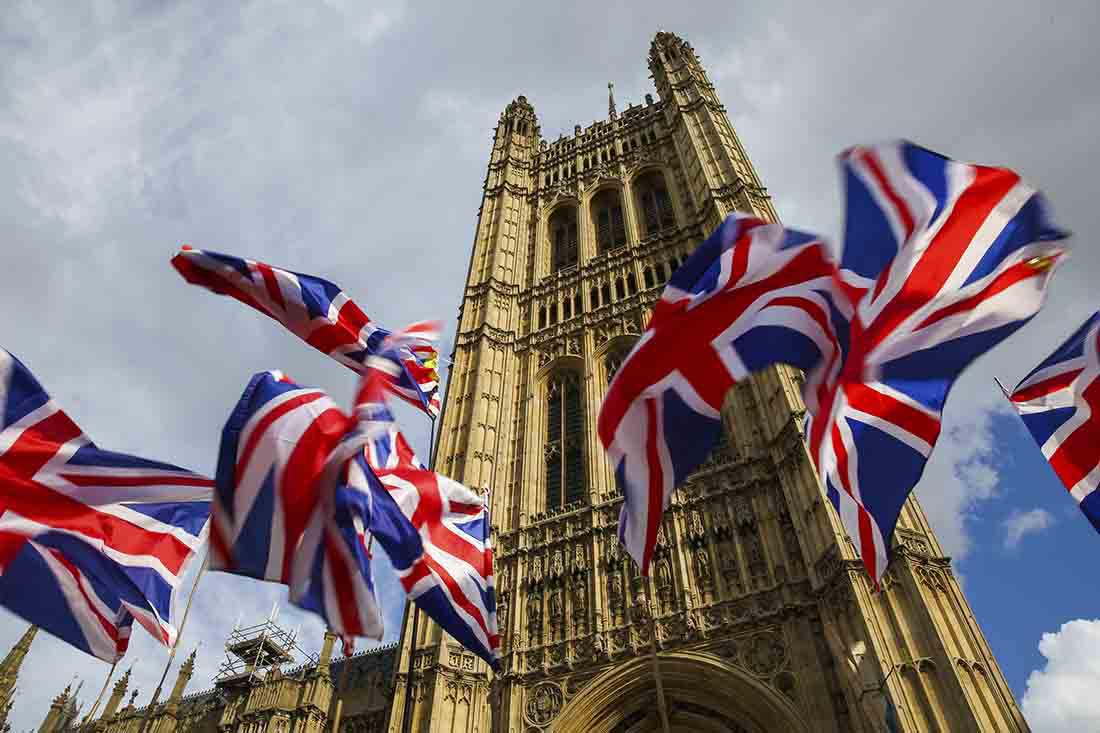
With Brexit a number of commentaries have appeared about the UK‘s human rights stance in the future. Here two examples:
Maria Arena wrote on 3 February 2020 in Feature about the Parliament’s Subcommittee on Human Rights (DROI), saying it will continue to keep a critical eye on the EU’s external policies while playing a constructive role in upholding international law and human rights standards. She is the Chair of the Subcommittee. It reads almost as of no Brexit has taken place……
The issue of business and human rights is currently one of the most high-profile areas of attention, with a focus on moving towards more responsible business conduct globally, through the introduction of new voluntary standards as well as compulsory company due diligence. Compulsory due diligence at EU level was a key European Parliament demand during the previous parliamentary term and we are determined to deliver on this. There is also a clear need to face up to new challenges and threats such as climate change. Migration linked to serious human rights violations and conflicts continues to be a global challenge. DROI members are keen to continue their task of scrutinising all new EU policy developments, particularly the recently announced EU human rights sanctions regime; legislation repeatedly called for by Parliament.
As the Subcommittee’s chair, I am also determined to look for new and more effective ways to protect human rights defenders. I must emphasise right at the outset: the Subcommittee cannot do this alone. This is a task for Parliament as a whole. One of our biggest challenges is upholding European ambitions on universal values and human rights standards, against the backdrop of a weakened multilateral system. We need to work towards safeguarding and improving the EU’s credibility in the world as an actor that recognises human rights and a rules-based international system as a strategic interest, not as a distraction from other foreign policy objectives.
..There can be no progress without injecting human rights into the policy debates about development, empowering women and civil society, as well as contributing to a stable and democratic neighbourhood for the EU….Citizens’ expectations are clear: people across the EU want us to stand up for universal values and deliver active and effective EU external action that protects and promotes human rights. I will never side with those who say that security or economic interest should trump human rights. …“One of our biggest challenges is upholding European ambitions on universal values and human rights standards, against the backdrop of a weakened multilateral system”
…… The EU should not shy away from establishing redress and complaints mechanisms. We need to deliver true and measurable improvements on the ground before granting trade preferences and should raise the bar on implementing international commitments with our partners. I also think we should be more ambitious about understanding the full environmental and human rights impact of our trade relations and perhaps be more vigilant about inward investment to the EU.
Benjamin Ward, UK Director (Acting) & Deputy Director, Europe & Central Asia Division of HRW, wrote in Euronews of 3 February 2020 that “Britain Should Stick To Its Principles For Brexit Success“
When the United Kingdom left the European Union last Friday evening, it marked the biggest shift in Europe’s political geography since 2004 when 10 former Eastern Bloc countries simultaneously joined the EU….
After Brexit, the UK will need to forge trade relationships with countries around the world instead of jointly through the EU. The worry is that in doing so, the UK will no longer insist on respect for human rights and rule of law, and thereby undermine its ability to promote those values in its foreign policy. There are some encouraging signs: the UK has maintained human rights clauses when renewing previous EU trade arrangements with some countries. And its establishment of a new “Magnitsky” mechanism to sanction people implicated in serious human rights abuses is welcome. But the real test will be when the UK enters trade negotiations with powerful countries with large economies, and in how the UK responds when its trade partners breach human rights clauses in their agreements. The EU and UK will need to ensure there are binding human rights clauses in their own new trade agreement…
The UK plays a positive role on the UN’s Human Rights Council and showed leadership by speaking out at the UN General Assembly over China’s abuses against Uyghur Muslims in Xinjiang province. Its record at the UN Security Council is mixed, however. While it has pushed for accountability in Syria, it failed to do much in its lead role on Myanmar to halt atrocities against the Rohyinga.
The UK also needs to publicly renew its support for the Council of Europe, the region’s main human rights body, which the UK helped to found, and its European Convention and Court on Human Rights. The Convention protects people’s rights across Europe, while the Court offers a chance for justice for victims of human rights abuses – including in the UK – when their own governments fail them.
The UK government has already said it will continue to support human rights for people globally, including a commitment to girls’ education, support for media freedom and human rights defenders, and efforts to prevent sexual violence in conflict. Yet, talk without action – or proper funding – is meaningless. Protecting journalists and activists only works if the UK is willing to publicly speak out when individuals face persecution or jail for their work. For example, if the UK is not willing to denounce Saudi Arabia’s jailing of women’s activists or publicly press for real justice for the state-sanctioned murder of journalist Jamal Khashoggi, its commitments will ring hollow.
More than anything, the UK should lead by example. That means redoubling its commitment to human rights at home.
Here, the signs are worrying. Since Boris Johnson’s government took power in mid-2019, it has displayed an alarmingly cavalier attitude towards democratic institutions; unlawfully suspending parliament and threatening to ignore court rulings and to break the law, for instance. No wonder there are grave concerns about the government’s plans to look into changing the Human Rights Act – the law that protects people’s human rights in the UK – and plans to give British courts less power to review decisions made by the government. Both changes could leave people with nowhere to turn if the government trampled on their rights.
…. There are also fears that the government could water down environmental protections currently linked to EU law – putting air quality and the countryside at risk – and weaken workers’ rights that protect pregnant women and part-time workers. It has refused so far to make any legally binding commitment to keep the current level of protection of these rights.
If the UK really wants to make a success of Brexit, it needs to make human rights values a cornerstone of its engagement with the world – and continue to defend them at home as well.
Miriam Jackson writes for the Union Journal of 7 28 NGOs on Tuesday 5 February prompted the European Parliament to delay permission for the EU-Vietnam Free Trade Agreement (EVFTA) and Investment Protection Agreement (IPA) until Vietnam’s federal government agrees to protect the rights of workers and implement certain civils rights. The FTA must be approved by the European Parliament on Tuesday 11 February.
The signing NGOs include Human Rights Watch, Defend the Defenders, The 88 Project, and the Independent Journalists Association of Vietnam.
“There are notable precedents of the European Parliament setting human rights benchmarks to be met before giving their consent to bilateral deals in order to promote human rights progress,” the NGOs claim pointing to a 2016 case in Uzbekistan and the EP’s rejection in March 2019 of the EU-Turkmenistan Partnership and Cooperation Agreement. “The European Parliament needs to take the exact same strategy with Vietnam, withholding Parliament’s permission and authorizing an identical resolution outlining the civils rights problems that Vietnam must satisfy for MEPs to greenlight the offer,” the NGOs claimed.
Only once a series of human rights concerns have been duly addressed by the state authorities, MEPs should give their consent to the deals.
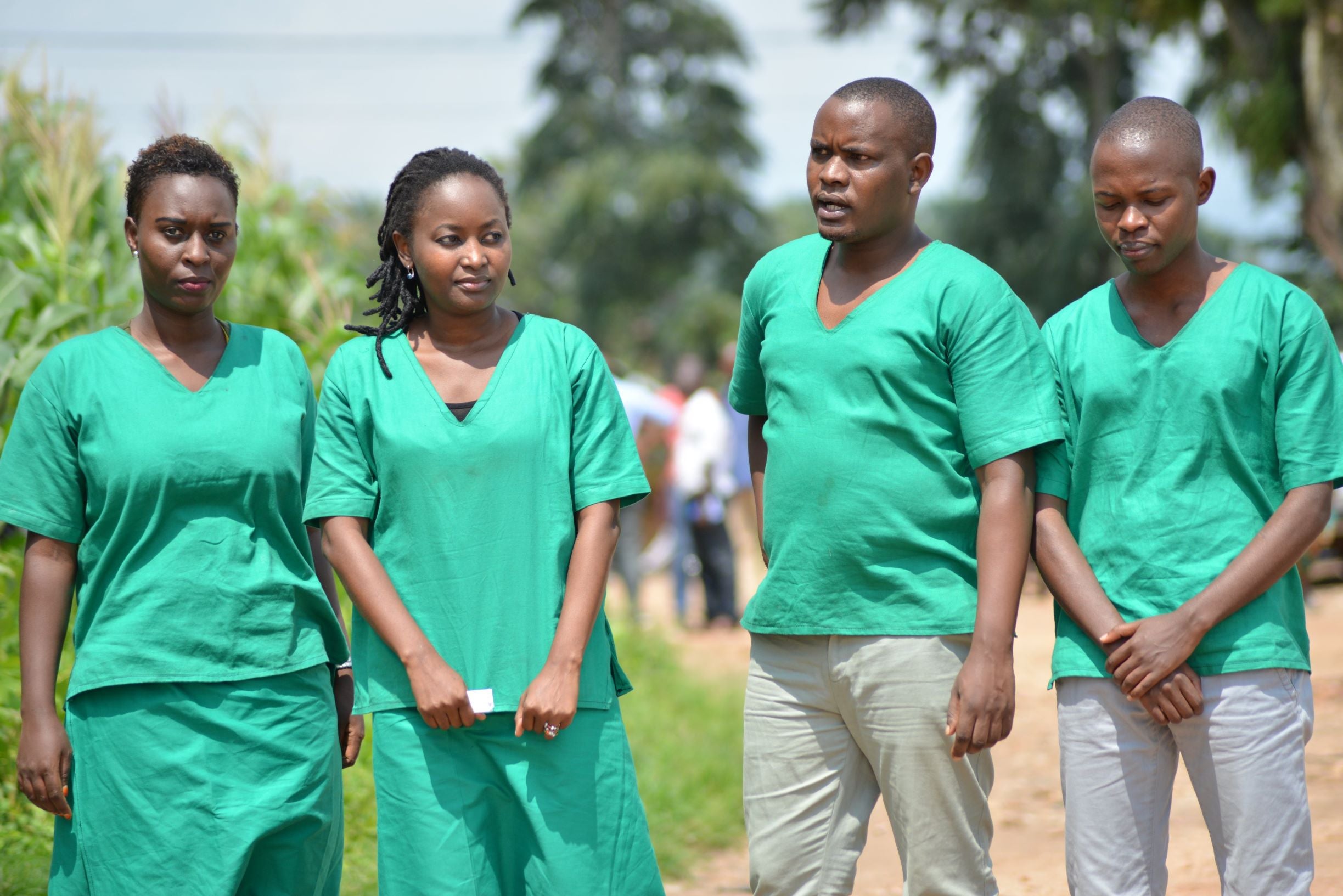
The conviction of four Burundian journalists in a flawed trial on January 30, 2020 is a clear example of the misuse of the justice system to stifle freedom of expression, Human Rights watch said on 4 February 2020.
The High Court of Bubanza, in western Burundi, convicted Christine Kamikazi, Agnès Ndirubusa, Egide Harerimana, and Térence Mpozenzi – all of whom work for the country’s last remaining independent newspaper, Iwacu – and sentenced them to two and half years in prison and a fine of approximately US$530. Although they were charged with complicity in threatening the internal security of the state, they were ultimately convicted of attempting to commit the crime, a lesser criminal offense against which, their lawyers say, they were not allowed to defend themselves in court. They will appeal the conviction.
“Reporting on issues of public interest should not result in a criminal prosecution,” said Lewis Mudge, Central Africa director at Human Rights Watch. “The authorities are leading an assault on free expression in the months before the country’s 2020 elections.” These proceedings lay out in stark terms the politicization of the judiciary in Burundi, Human Rights Watch said.
The court acquitted Masabarakiza, who had already been released from pretrial detention. The judge ordered that the phones, camera, company car, recorders, and notebooks seized from the convicted journalists should be returned to Iwacu. Neither the accused nor representatives of the diplomatic community in Burundi were present when the verdict was announced. On January 16, 2020, the European Parliament adopted a resolution calling on Burundi’s authorities to drop charges and immediately and unconditionally release the four journalists and all others arrested for exercising their fundamental rights. It also called for European diplomats in Burundi to attend trial proceedings of journalists, human rights activists, and political prisoners, and to visit them in prison, in line with the EU Guidelines on Human Rights Defenders. The diplomatic community in Burundi should publicly show its solidarity with the Iwacu journalists by attending the appeals hearings and visiting them in prison.
The convictions form part of a pattern of government repression of people attempting to expose abuse or report on sensitive issues. They take place against a backdrop of an increasing crackdown on perceived government critics, in advance of elections scheduled to begin in May. Prosecutions, threats, and intimidation have forced many activists and journalists to stop working on sensitive political or human rights issues, or leave the country. [see also: https://humanrightsdefenders.blog/2019/03/05/un-human-rights-office-in-burundi-formally-closed/]
OMCT in the meantime published on 6 February 2020 an urgent appeal re judicial harassment against twelve Burundian human rights defenders in exile (in French)
Over the past four years, Turkish authorities have detained and prosecuted perceived government opponents, journalists, activists and human rights defenders on broad and vague terrorism and other charges for peacefully exercising their freedom of expression and other non-violent activities. The rights to assembly and association have been severely curtailed across the country, and the government has exerted heavy political control over the courts, whose judges have all too easily handed down convictions and harsh sentences in defiance of human rights norms, HRW said in a statement on Monday.
“The huge number of journalists, politicians, and perceived government critics in prison and on trial flies in the face of the Turkish government’s public statements about the state of human rights in the country,” said Hugh Williamson, Europe and Central Asia director at HRW. “Countries at the UN review should urgently press Turkey to address the sharp decline in respect for fundamental rights and freedoms and to carry out real reform.”
In the post-coup period, President Erdoğan has assumed greater powers with the introduction of a presidential system that removes checks and balances and brings the judiciary under executive control. HRW said UN member states participating in Turkey’s UPR review should urge President Erdoğan’s administration to end the arbitrary and prolonged detention of activists, politicians, human rights defenders, journalists and writers and prosecutions based on their non-violent activities instead of credible evidence of criminal activities; ensure an impartial judiciary; remove political pressure on judges and prosecutors and put laws in place that protect human rights; end the use of blanket bans to impose arbitrary and disproportionate restrictions on the right to peaceful assembly; carry out the European Court of Human Rights’ rulings that jailed businessman Osman Kavala (see more below) and jailed Kurdish politician Selahattin Demirtaş be immediately released from their prolonged and arbitrary detention; and review all articles of the Turkish Penal Code, the Anti-Terror Law and other laws that are used to restrict the rights to freedom of expression, association and assembly and the right to access to information, with a view to repealing or amending them to comply with international human rights standards.
“Turkey’s disregard of human rights is a disservice to its citizens, who deserve to live with dignity and freedom,” Williamson said.
———–
The same day – 28 January, 2020 – Dorian Jones for the Voice of America reports that an Istanbul court has defied the European Court of Human Rights, ruling in favor of the continued detention of philanthropist Osman Kavala. In December, the European Court demanded the immediate release of Kavala, who is on trial for sedition.
A journalist stands in front of a poster featuring jailed philanthropist Osman Kavala, during a press conference given by his lawyers, in Istanbul, Turkey, Oct. 31, 2018.
Kavala and 15 other civil society activists are accused of supporting anti-government protests in 2013 against then-Prime Minister Recep Tayyip Erdogan, who is now president. The protest action came to be known as the Gezi movement, named after an Istanbul park where the unrest started. Prosecutors are calling for life imprisonment without parole. The ECHR condemned the case, calling for an end to Kavala’s more than two years in prison and describing it as “arbitrary” and “politically motivated.”
The Istanbul court ruled Tuesday the ECHR decision was provisional because Ankara was appealing the verdict and that Kavala should remain in jail. The court’s decision is flawed because the European Court ruling was clear in its call for Kavala’s immediate release,” said Emma Sinclair Webb, Turkey researcher for New York-based Human Rights Watch.
“We saw multiple signs of how unfair this trial is,” said Webb, speaking after attending Tuesday’s court hearing. “The lawyers for Kavala raised many objections to the way witness evidence is used in this case. The court turns a deaf ear to all objections. It’s a shocking indication that once again, Turkey’s judiciary seems to be under heavy pressure of the executive.”
Tuesday’s court hearing was marred by chaos, with Kavala’s lawyers challenging the judge’s decision to hear some witnesses without their presence, prompting the lawyers to walk out of the room. Ankara strongly rejects the ECHR verdict, maintaining that the judiciary is independent. But observers note the case has strong political undertones. Three months ahead of Kavala’s prosecution, Erdogan accused him of “financing terrorists” and that Kavala was a representative for “that famous Jew [George Soros,] who tries to divide and tear up nations.” Erdogan did not elaborate on the comments about George Soros, who is an international philanthropist. Erdogan’s allegations against Kavala resemble the prosecution case against the jailed activist. Kavala is a pivotal figure in Turkey, using his wealth to help develop the country’s fledgling civil society after a 1980 military coup.
“Osman Kavala is very prominent within the civil society in this country,” said Sinan Gokcen, Turkey representative of Swedish-based Civil Rights Defenders. “He is not a man of antagonism; he is a man of preaching dialogue, a man of building bridges.”….
With the U.N. having few tools to sanction Turkey, the European Union is seen as offering the best hope by human rights advocates of applying pressure on Ankara. Turkey’s EU membership bid is already frozen, in part due to human rights concerns. But Ankara is seeking to extend a customs union, along with visa-free travel for its citizens with the EU. “It’s time all European countries should be speaking out very loud and clear on cases like this [Kavala],” said Sinclair-Webb. But even high-profile cases like Kavala’s have seen Brussels offer only muted criticism of Ankara. German Chancellor Angela Merkel’s visit to Istanbul Friday for talks with Erdogan saw little criticism of Turkey’s human rights record. Instead, discussions focused on Ankara’s recent deployment of soldiers to Libya and the upholding of an EU-Turkish agreement controlling migrants entering Europe. “There are many issues to talk about with Turkey,” said Sinclair Webb. “Syria, Libya, Turkey, hosting so many refugees from Syria, and this often takes priority over Turkey’s domestic human rights crisis. This means there isn’t sufficient clarity on cases like this. What we are seeing is Turkey defying Europe’s human rights court.” Some analysts suggest Brussels could yet be lobbying behind the scenes for Kavala’s release, tying Ankara’s calls for extra financial assistance for refugees to gestures on human rights.
Teresa Donnelly, who leads the LSO’s Human Rights Monitoring Group, spoke at the Osgoode Hall event in Toronto commemorating International Day of the Endangered Lawyer 2020.
When supporting colleagues abroad, lawyers should consider offering behind-the-scenes support as well as making public statements, a Pakistan-based journalist told an audience at the Law Society of Ontario last week. “What has to be really kept in mind is how that support is voiced and contextualized,” said Beena Sarwar. “If it takes a simplistic view or plays into anti-Pakistan rhetoric …. it’s so easy to make Pakistan a scapegoat and target.” Sarwar, whose blog has gained international acclaim for its coverage of freedom, human rights, peace and even influential jurists, was one speaker at the Law Society of Ontario’s International Day of the Endangered Lawyer 2020, hosted at Osgoode Hall in Toronto on 24 January by the Lawyers’ Rights Watch Canada,Human Rights Watch and Amnesty International.
This year, lawyers organized a protest at the Pakistani embassy at the Hague. Past events focused on Egypt, Turkey, China and Honduras, among others.
The LSO’s Human Rights Monitoring Group has issued several statements about treatment of lawyers in Pakistan over the past few years. In the aftermath of the Kasi attack, the LSO urged the Pakistani government to “put an end to all acts of violence against lawyers and human rights defenders in Pakistan,” and “ensure that all lawyers can carry out their legitimate activities without fear of physical violence or other human rights violations.”
Other incidents that have been condemned by the LSO are the 2015 murder of Samiullah Afridi (a lawyer who defended a doctor that allegedly assisted CIA agents with their hunt for al Qaeda leader Osama bin Laden); and a suicide bomb attack on the Pakistani judiciary.
“Over the past decades, lawyers in Pakistan have been subjected to acts of mass terrorism, murder, attempted murder, assaults, (death) threats, contempt proceedings, harassment and intimidation, as well as judicial harassment and torture in detention, merely for engaging in their professional duties as lawyers,” a letter from Lawyers’ Rights Watch Canada said earlier this month. “Their families also have been targeted, and some have even been murdered. Some lawyers have also been threatened with disbarment and/or had their homes and offices raided by the police.”
At the event, bencher Teresa Donnelly read a letter the law society had received from a Pakistani lawyer. Lawyers cannot become “heroes,” Donnelly recounted from the email. Instead, she said, the writer felt the role of lawyers was to “focus on their work improving the justice system.” While support is needed for the Pakistani bar, Sarwar explained that Western organizations must be careful not to jump to issue statements that play into conspiracy theories about Western involvement. Abdul (Hamid) Bashani Khan, a lawyer at the Abdul Hamid Khan Law Office in Mississauga, also spoke on the panel, where speakers highlighted some of the common misunderstandings of the situation in Pakistan, particularly amid anti-Muslim rhetoric publicized in the post-911 era. For example, panelists said the bench and bar are portrayed as both very strong — given the influence of the lawyers’ movement of Pakistan — and also very weak, in the fight for judicial independence and public support. In 2014, a lawyer was killed after representing a high-profile professor charged with blasphemy.
To mark the Day of the Endangered Lawyer, the International Bar Association’s Human Rights Institute released a toolkit to help the legal community navigate the complex task of protecting lawyers at risk. The three-part kit includes supports for risk management, human rights mechanisms, emergency protocols, legal frameworks, international protection, security plans and response chains.



 Hans Thoolen on Human Rights Defenders and their awards