On 8 February 2022, the Martin Ennals Foundation published an opening for a communication officer.
The Martin Ennals Foundation is a small organization run by a highly motivated staff, Board and Jury. At different points in the year, its work will be fast-paced, intense and challenging. The Communications Officer and Programme Officer work closely together. An entry-level position to support both communications and programmatic activities will be opened in 2022. Several interns complete the team. The Communications Officer reports to the Director of the Foundation. The Communications Officer will also have frequent contact with members of the Board, with colleagues of the Jury organisations, and with MEA winners themselves. The Communications Officer will oversee service providers to the Foundation.
JOB DESCRIPTION: The Communications Officer is responsible for formulating and leading the MEF communications strategy in support of the organisation’s mission, which includes corporate communication elements and the delivery of a high-quality outreach campaign for the annual MEA ceremony. The Communications Officer provide supervision to the Programs and Communications Associate and interns. The Communications Officer’s tasks include:
Designing and delivering MEA’s corporate communications, regularly adapting social media activity, our website and newsletter to Foundation activities and current events.
Designing and delivering an outreach strategy for the annual MEA ceremony:
Overseeing the production of bespoke films about MEA winners
Collaborating with the City of Geneva in the production of marketing material for the MEA campaign (posters, flags, banners, etc.
Overseeing the production and dissemination of digital social media assets (both visual and editorial content)
Organizing a press conference to announce the winners of the Award
Producing and disseminating press material and other written and audio-visual products on our website and social media channels
Enhancing the impact of MEF’s advocacy activities with targeted communications strategies.
Monitoring and evaluating the performance of the Foundation’s communication strategy and its contributions to our annual objectives.
Requirements:
7-10 years of relevant work experience in a communication function;
Familiarity with traditional media, media monitoring and media relations;
Strong background in digital communications (professional knowledge with WordPress, Mailchimp, Hootsuite, Canva, Tweedeck and Google analytics an asset);
Fluency or professional proficiency in both English and French;
A degree or work experience in journalism, communications, political science, international relations, law, or relevant subject;
Ability to work across organizations and collaborate easily with colleagues;
Ability to multi-task and coordinate the delivery of tasks by junior colleagues, service providers, or peers;
Ability to cope with pressure and challenging work periods. Self-starters, entrepreneurs, determined and creative types are welcome to apply.
Conditions of the position
Indefinite term contract at 40%
A competitive salary
Flexible working arrangements
25 days’ vacation pro-rata
Preferred start date: mid-March
To apply, please send your CV, a cover letter, and an example of your work to info@martinennalsaward.org by end of day, Sunday March 6th 2022.
Two years ago it was reported that an Indian “hack-for-hire group” had targeted journalists and human rights defenders [see: https://humanrightsdefenders.blog/2020/06/10/after-nso-now-indian-based-hacking-group-targets-ngos/], but on 11 February 2022 Steve Zurier in SC Magazine reported that researchers discovered an advanced persistent threat group that targeted Indian dissidents and remained undetected for a decade or more, starting with simple phishing lures some 10 years ago and then graduating to providing links to files hosted externally in the cloud for manual download and execution by the victims.
In a blog post, SentinelLabs researchers reported on ModifiedElephant, which has been operating since at least 2012. The researchers said the threat group operates through the use of commercially available remote access trojans and has ties to the commercial surveillance industry.
The threat actor uses spearphishing with malicious documents to deliver malware such as NetWire, DarkComet, and simple keyloggers with infrastructure overlaps that helped the researchers connect the dots to previously unattributed malicious activity.
ModifiedElephant’s activities have been traced to long-standing political tensions in India, which exploded on Jan. 1, 2018, when critics of the government clashed with pro-government supporters near Bhima Koregaon. Later in 2018, raids conducted by police led to several arrests and the seizure of computer systems, which revealed incriminating files that pointed to an alleged plot against Indian Prime Minister Narendra Modi.
Thanks to the public release of digital forensic investigation results by Arsenal Consulting and those detailed in SentinelLabs blog, the researchers allege that ModifiedElephant compromised the computers that were later seized, planting files that were used as evidence to justify the imprisonment of the defendants. Over a decade or more, the group targeted human rights activists, human rights defenders, academics, and lawyers across India with the objective of planting incriminating digital evidence — and they are still operating today.
The case has become part of a larger trend of private and commercial company’s copying government and nation-state methodologies, persistently looking to penetrate into politically involved individuals, said Gadi Naveh, cyber data scientist at Canonic. Naveh said although most of the tools described aren’t top grade, continuous fueling of the attack eventually gets the target and larger funding gets even better tools, as was implied by Amnesty International.
“We assume these tools and methods that move from nation-states to commercial organizations will keep answering the demand and available funds for getting data,” Naveh said. “The move of data to the cloud makes the top-tier actor act there, but as with RATs and keyloggers, we are seeing the same military-grade tools moving after the new data sources in the cloud.”
Daniel Almendros, cyber threat intelligence analyst at Digital Shadows, added that he and his team view ModifiedElephant as a fascinating, albeit dangerous actor. Almendros said ModifiedElephant has a wide range of tools in its arsenal that it uses to target a large number of victims. They use a blend of off-the- shelf tools (NetWire and DarkComet RATs), paired with spearphishing emails related to the sensitive 2018 Bhima Koregaon affair.
“The phishing lures have improved in subtlety as well as boldness, they have shifted from fake double extension file names to commonly used Office filenames,” Almendros said. “In one instance, an assassination attempt story was added to provoke the user to click on the phishing lure. These emails were distributed to many different users. The group likely has a connection with Indian state espionage. Because most APT attention stems from China and Russia-based threats, ModifiedElephant was initially overlooked for years. In addition, the group’s specific targeting and use of commodity malware helped the group evade detection for a prolonged period.”
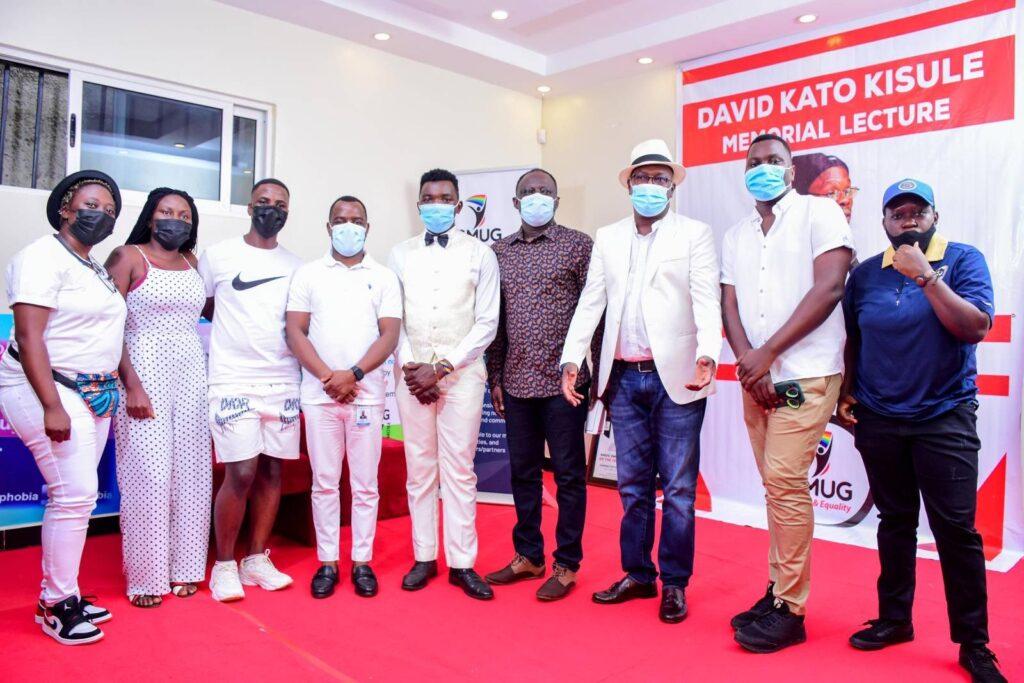
Human rights defenders pose at Kuchu Remembrance Day on Jan. 26, 2022, in honor of LGBT people killed. The event marked the launch of the planned David Kato Memorial Lectures in Kampala, Uganda. (Photo courtesy of Frank Mugisha)
The future “David Kato Memorial Lectures” were launched on 26 January 2022, during an event in Kampala organized by Hassan Shire, executive director of Defend Defenders, and Clément Nyaletsossi, United Nations Special Rapporteur on the Rights to Freedom of Peaceful Assembly and of Association. That date, the anniversary of Kato’s death, has been commemorated by Ugandan LGBT people since 2020 as Kuchu Remembrance Day, a day to remember the lives of LGBT activists who have been killed because of their activism and sexuality.
David Kato was considered a father of Uganda’s gay rights movement and described as “Uganda’s first openly gay man.” He became highly involved with the underground LGBT rights movement in Uganda, eventually becoming one of the founding members of Sexual Minorities Uganda (SMUG) in 2004.
On 26 January 2011, Kato was murdered in his home in Bukusa, Mukono Town, by a man who hit him twice in the head with a hammer. Kato died en route to hospital. Nsubuga Enoch, the man who confessed to murdering Kato, was found guilty at Mukono High Court and sentenced to 30 years with hard labour on 10 November 2011.
In October 2010, Kato was among the 100 people whose names, addresses, and photographs were published by the Ugandan tabloid newspaper Rolling Stone in an article which called for the murder of homosexuals. Kato and two other SMUG members who were listed in the article – Kasha Nabagesera and Pepe Julian Onziema – sued the newspaper to force it to stop publishing the names and pictures of people it believed to be gay or lesbian. The petition was granted on 2 November 2010, and the court later ordered the newspaper to pay Kato and the other two plaintiffs 1.5 million Ugandan shillings each (approx. US$450 as of May 2012).
Giles Muhame, the paper’s managing editor, was defiant at the time. “I haven’t seen the court injunction but the war against gays will and must continue. We have to protect our children from this dirty homosexual affront,” Muhame said of the court’s decision against his paper.
Several homophobic attacks have happened since Kato’s murder, resulting in deaths, body injuries, property damage and displacement. In memory of Kato, his former colleague Frank Mugisha, the executive director of SMUG, released a video on Twitter in which he pays him tribute. “The memorial lecture will bring out the core values that Kato stood for,” Mugisha says.
In a tweet about the David Kato memorial lectures, SMUG writes:
“It’s been 11 years since we lost David Kato due to homophobia and transphobia. Today we remember and celebrate the life of a remarkable man, an outstanding Human Rights activist.”
Mexican journalist Lourdes Maldonado dedicated her last program to a fellow journalist one day after he was gunned down outside his home, and then she described her own vulnerability covering the violent border city of Tijuana. She blasted Mexico’s corruption and accused a state official of drug ties before telling her viewers she had been under state government protection for eight months. “They take good care of you,” she said on her internet radio and television show called “Brebaje” or “Potion.” “But no one can avoid—not even under police supervision—getting killed outside your house in a cowardly manner.”
Her words eerily predicted her fate. Five days later, Maldonado was shot outside her home at 7 p.m. in the evening. She was the third journalist this year to be killed in Mexico. Their deaths over the span of a month is an unusually high toll in such a short period even in Mexico and drew the largest protest yet over the killings with thousands demonstrating nationwide on Tuesday. The murders have left journalists working in the most dangerous place for their trade in the Western Hemisphere — feeling angry and hopeless. See also: https://humanrightsdefenders.blog/2020/08/24/killing-of-journalists-in-mexico-juan-carlos-morrugares-the-latest-victim/
And just now arrives the news that a fourth journalist has been killed:
Roberto Toledo, a journalist with an online news outlet was preparing to record a video interview Monday when he was shot by assailants, becoming the fourth journalist killed in less than a month in Mexico, the outlet’s director said. Roberto Toledo had just arrived at the law offices of the deputy director of the outlet, Monitor Michoacan, when three armed men shot him, said Monitor director Armando Linares, who had also planned to be there. See: https://www.sandiegouniontribune.com/news/nation-world/story/2022-01-31/another-journalist-slain-in-mexico-the-4th-this-month
On Friday, a day after Maldonado’s funeral, President Andrés Manuel López Obrador returned to criticizing the press. He said that his government guarantees free speech but “very few journalists, women and men, are fulfilling their noble duty to inform. Most are looking to see how we fail.”
“[T]he discrediting by the president is seen by others as permission to attack,” media advocate Leopoldo Maldonado (no relation to Lourdes Maldonado) says. Leopoldo Maldonado’s anger is shared by many in Mexico, as frustration and grief over their ever-growing number of dead peers pushes journalists to call for change. And despite promises by politicians like A.M.L.O., the government can do much more than conduct a simple investigation, because the inaction of the Mexican government is at the heart of the issue. Journalist violence isn’t solely the result of powerful cartels. Rather, journalist violence in Mexico is symptom of poor government policy, which creates dangerous social conditions, fails to hold perpetrators of violence accountable or build systems that protect journalists, and both directly and indirectly creates policies that hinder journalists.
On top of this on 28 January 2022 Mexican anti-femicide activist Ana Luisa Garduno Juarez was found dead by local authorities of southern Morelos state of Mexico in the early hours of Friday. Police reports said that a call was placed over gunfire inside a bar in Morelos’ Temixco city, on Thursday night. By the time authorities arrived, Garduno was found dead suffering gunshot wounds on her body. in this context, see also: https://www.amnesty.org/en/latest/news/2022/01/dignified-justice-women-human-rights-defenders-mexico/
Burkina Faso military officers responsible for the January 2022 coup should ensure the protection of human rights and a swift transition to democratic rule, Human Rights Watch said today. The authorities should give priority to the humane treatment of people in custody, respect freedoms of the media and rights defenders, and ensure that counterterrorism operations respect basic rights. ..
“The Burkina Faso military coup occurred in a country with weak democratic institutions amid a brutal armed conflict and a growing humanitarian crisis,” said Corinne Dufka, Sahel director at Human Rights Watch. “The military authorities now in control need to act urgently to protect people’s rights and ensure they don’t make a bad human rights situation even worse.”
During a January 24 news conference, the self-proclaimed Patriotic Movement for Safeguard and Restoration led by Lt. Col. Paul-Henri Sandaogo Damiba, announced the suspension of the constitution, the dissolution of the government and national assembly, and a nationwide curfew. The movement’s spokesperson said elections would be held “within a reasonable time frame” and pledged to respect Burkina Faso’s international commitments, notably including human rights.
The coup leaders claimed the coup took place “without bloodshed.” However, there is uncertainty about the safety of President Kaboré and his close associates, amid reports of potential injuries and deaths during the military takeover. The MPSR should publicly account for the whereabouts and condition of government officials in custody and allow the Office of the United Nations High Commissioner for Human Rights, the national human rights commission, and independent human rights monitors to visit Kaboré and any other detainees. All those detained should be promptly brought before a judge and charged or be released.
The coup occurred within the context of a marked deterioration in the country’s human rights and security situation over the past year as attacks and atrocities by armed Islamist groups surged and the humanitarian situation worsened. Burkina Faso was already struggling to ensure justice for hundreds of unlawful killings by all sides, and to uphold the civil and political rights of its population.
During 2021, armed Islamist groups killed at least 250 civilians and scores of security force members during attacks in several provinces. Since 2018, Human Rights Watch has documented that government security forces and pro-government militias allegedly summarily executed hundreds of suspects, mostly in the country’s northern regions. Virtually none of these attacks have resulted in investigations and prosecutions.
Burkinabé rights defender, Dr. Daouda Diallo, secretary-general of the Collective Against Impunity and Stigmatization (CISC), and laureate of the 2022 Martin Ennals Award for Human Rights Defenders, told Human Rights Watch that he hoped the military authorities would “address Burkina Faso’s deepening social divisions, and ensure crucially needed protection for all civilians at risk from conflict, while scrupulously respecting international humanitarian law.” See also: https://www.trueheroesfilms.org/thedigest/laureates/ca7f1556-8f73-4b48-b868-b93a3df9b4e1
The military authorities should also ensure respect for freedom of expression. In late 2021 and early 2022, the government shut down internet services in a move to quell protesters who had taken to the streets to demand an end to the violence and to protest rising food prices. A 2019 law criminalizing some aspects of reporting on security force operations dampened media freedom, with journalists reluctant to report on allegations of abuses by pro-government forces. Further, in 2021, the government implemented a de facto ban on visits by journalists to internally displaced camps. After taking power, the MPSR issued a warning against the communication of “false news.”..
Military takeovers in Africa in the past year occurred in Chad, Guinea, Mali, and Sudan. Coup leaders have often taken advantage of social unrest, grievances about corruption, and the failure of governments to respect basic rights, uphold constitutional obligations, and carry out promised reforms. Democratically elected governments need to look beyond elections as a marker of democratic progress, and focus on upholding human rights, strengthening the rule of law, and building credible, independent institutions, Human Rights Watch said…
“Burkina Faso’s military leadership should not allow the political upheaval created by the coup to lead to a vacuum in the protection of basic rights,” Dufka said. “The military authorities need to maintain discipline within the security forces and ensure that the human rights of all Burkinabé are respected, including their right to vote freely in elections.”
The Scholars at Risk Media Review of January 2022, carries an in-depth article about a university funding row which has raised fears of Chinese influence, written by Yojana Sharma on 26 January 2022:
The Free University of Amsterdam (Vrije Universiteit Amsterdam or VU Amsterdam) in the Netherlands has said it will return Chinese funding for its Cross Cultural Human Rights Centre (CCHRC) after an embarrassing row over Chinese influence on academia when it emerged that several of the centre’s academics publicly denied China oppresses Uyghur peoples. See also: https://chinachange.org/2020/04/30/one-chinese-gongos-war-against-global-human-rights/
But the row in the Netherlands amid other recent controversies over Chinese funding of university centres and Confucius Institutes in Germany and the United Kingdom has also made university disclosure of foreign funding more urgent, academics said. In 2018, 2019 and 2020, the CCHRC at VU Amsterdam received a subsidy of between €250,000 (US$282,000) and €300,000 (US$339,000) from the Southwest University of Political Science and Law in Chongqing, China.
According to documents obtained by Dutch broadcaster NOS, the Chinese university was the sole financial contributor to the CCHRC during those years, which has raised eyebrows.
VU Amsterdam has said it would return the money it had already received from China for this year, NOS revealed last week. But the university only backed down after the damaging revelations prompted a public outcry and strong statements by the Dutch education minister and others condemning the activities of the centre.
On Wednesday NOS said the activities of the Centre were being suspended, with all its lectures for students cancelled, ascribing the decision to the executive board and deans of the university. The Centre’s activities were already in doubt after the return of funds, making it dependent on the university or other donors for its continued survival.
The row blew up just as the Dutch education ministry is due to present its National Guidelines on Knowledge Security on 31 January and to announce its ‘Government-wide knowledge security front-office’, which is expected to have an advisory role and support universities in identifying risks.
It also followed the publication last week of the European Commission ‘toolkit’ for universities on how to deal with foreign interference.
Dutch Education Minister Robbert Dijkgraaf responded swiftly and unequivocally to the report, saying he was “very shocked” that the funding arrangement signalled possible academic dependence.
“It is urgent and sensible that the Free University now takes action quickly. Scientific core values such as academic freedom, integrity and independence must always be guaranteed,” he said in a statement.
The minister added: “It is important that Dutch knowledge institutions are and remain alert to possible risks of undesired influence by other countries and that they take adequate measures to safeguard academic core values, especially when it comes to universal values like human rights.”
The centre runs an academic journal and organises conferences. Its mission, laid down in the financing agreement with the Chinese university, is to draw attention to a “global view of human rights”, and specifically to the way in which non-Western countries such as China view human rights.
University’s lukewarm initial response
After a lukewarm initial response when the university merely underlined that “as befits the Free University, the research of the CCHRC is independent, interdisciplinary, dialogical and socially relevant”, it added to its statement just hours later, saying “even the appearance of dependence is unacceptable” and announced that it was “taking appropriate measures”, including halting the funding from China.
The university said it has not yet decided whether it will also refund subsidies from previous years, but it said it would first conduct an investigation to determine “whether the independence of the institute’s research has been safeguarded on all fronts”.
The CCHRC website noted in October 2020 that a delegation of people affiliated to the centre ‘recently’ visited the western Chinese region of Xinjiang… the CCHRC website noted: “The situation we encountered in the four cities in this trip did not reflect the grim situation as depicted in the Western reports. There is definitely no discrimination of Uyghurs or other minorities in the region.”
CCHRC Director Tom Zwart, professor at Utrecht University, who is also a frequent guest at Chinese state events and on Chinese state television, told NOS any similarities between the centre’s positions online and those of the Communist Party were “coincidental” and were not steered by any direct influence. Zwart described the CCHRC website as a place for “uncensored free thought”, ascribing the comments on its webpages to individuals “who do not represent the organisation as a whole”.
On 26 January CCHRC released a new statement on its website saying the website would be “temporarily taken offline” in order “to check whether a sufficiently clear distinction is made between statements made on behalf of the Centre and opinions and observations made in a personal capacity.”
It added: “[The] Centre explicitly endorses the conclusions of the United Nations regarding the systematic violation of the Uyghur human rights. In this vein, the Centre’s director, in the presence of members of the Chinese State Council and the Politburo, called on 8 April 2021 to respect and protect the rights of Uyghurs and stop repressive anti-terrorism policies.”
Ingrid d’Hooghe, an expert on China-Europe relations and senior research fellow at the Leiden Asia Centre, Leiden University in the Netherlands, said: “The director of the Centre said in an interview which was also on TV that they were fully independent, there was nothing that made them say what they were saying. But apparently it did not cross their mind that even if they are independent, it doesn’t look like it.”
Dutch academic Lokman Tsui, a researcher on digital freedoms and a former assistant professor at the Chinese University of Hong Kong, said via Twitter: “Important to note: until this year, they [the university in Chongqing] were the only funder. Problematic, because it’s hard to be independent if your research centre relies on one single funder. Problematic also, because public universities in China are closely affiliated with the Chinese Communist Party.”
Tsui added: “But whether the research centre is independent or not is also beside the question. The more important question is: Why is the university allowing its integrity and its reputation to be compromised by accepting money meant to validate China’s atrocious human rights record?”
Need for disclosure legislation
“We need legislation that universities have to make funding public,” Fulda said, pointing to Section 117 of the United States Higher Education Act which requires universities that receive foreign gifts of US$250,000 or more within a calendar year to file a disclosure report to the government.
Other draft foreign influence bills, including the Senate Bill S.1169 in the US, are currently attempting to tighten those rules, including reducing the amount that has to be declared by institutions and individuals if the funding comes from certain countries such as China, after a number of universities failed to report substantial foreign gifts under Section 117.
An amendment to the UK Higher Education Bill tabled on 12 January in the House of Commons would require disclosures of foreign funds of £50,000 (US$68,000) going back 10 years.
“The question is, if the Dutch government or other governments in Europe issued new regulations where universities were forced to make these contracts public, whether it would change things, and I think it would,” said Fulda.
Leiden Asia Centre’s d’Hooghe said: “There is no regulation that forces people to register somewhere what kind of collaboration they have. With new regulations in Australia and, to a certain extent, in the US and Canada, you have to become public with that kind of information. Not so in the Netherlands.”
“It’s not necessarily that people want to keep it a secret, it’s just not something that is done routinely. So at top levels in the university, but often even at the faculty level, the departments don’t have a good overview of exactly what kind of research is being done with whom, and how this is financed,” she said
The Association of Universities in the Netherlands (VSNU) published a “Framework for Knowledge Security” in July 2021 that outlined risks and the need for monitoring research collaboration, as well as recommending that universities set up their own internal ‘knowledge security advisory team’ to include experts such as cybersecurity specialists.
The focus is on building risk awareness but does not go as far as requiring disclosure of foreign funding. Some universities have pointed out that they cannot ‘police’ research or researchers on behalf of the government.
Who will investigate?
The Netherlands Inspectorate of Education has not indicated that it will carry out a broader investigation into China influence at universities in the country, saying in a statement following the VU Amsterdam row: “No other signals about Chinese influence are known to the inspectorate.”
Sophie Richardson, China director at Human Rights Watch, said in a statement that the Inspectorate of Education “would be wise to do more homework in this area”.
“In a decade of documenting Chinese government threats to academic freedom around the world, Human Rights Watch has found threats at universities from Australia to the United States, and proposed a code of conduct to help mitigate these risks.
“One key step: universities should publicly disclose all direct and indirect Chinese government funding and a list of projects and exchanges with Chinese government counterparts on an annual basis,” she said.
“In showing its permeability to Chinese government influence, the Free University shouldn’t limit its response simply to returning the funding. It should urgently assess whether students and scholars of and from China on its campus are subjected to harassment or surveillance,” which she noted had been well documented elsewhere, notably in Australia, Canada, the UK and the US.
“University leadership and scholars should assess whether censorship and self-censorship have eroded the curriculum or classroom debate,” Richardson added.
“The Free University should also join forces with counterparts across Europe – from Berlin to Cambridge to Budapest – who have faced similar problems, and agree to share information and adopt common standards with the goal of collectively resisting Beijing’s efforts to curtail academic freedom. The list of potential participants – supposedly ‘free’ universities – is disturbingly long.”
EU toolkit for universities: will it make a difference?
The EU issued a toolkit for universities on 18 January. Although it is comprehensive, d’Hooghe noted that “these rules are not binding because the EU has no competence in the area of education”. Universities are outside Brussels’ remit.
She saw it more as a “service to EU member states who still don’t have national rules, who find it very difficult to develop them or don’t have the capacity to develop them”.
While many ongoing collaboration projects with Chinese universities continue, despite academics and researchers being unable to travel due to pandemic restrictions, d’Hooghe said she knew of many who “are staying away” from starting new projects with China, in part due to risks, including reputational risks.
But she noted that legislation on a national level regarding foreign influence could be tricky. “University autonomy is regarded as an important value and very important for science to advance, so universities are very reluctant to be limited by binding regulations.”
Nominations can be submitted in either in English, French or Spanish, through the dedicated forms below.
Please note: Each individual may only submit one nomination per year.
Please reach out to Submittable’s Customer Support team with any technical questions at support@submittable.com
For further information, please visit the website and for any questions directly relating to process or information required, please contact the research team by email: research@rightlivelihood.org.
Their key point is worth noting: The problem for human rights defenders in the Gulf region and neighbouring countries is that states have exploited the opportunity to align their cybercrime laws with European standards to double-down on laws restricting legitimate online expression BUT without any of the judicial safeguards that exist in that region.
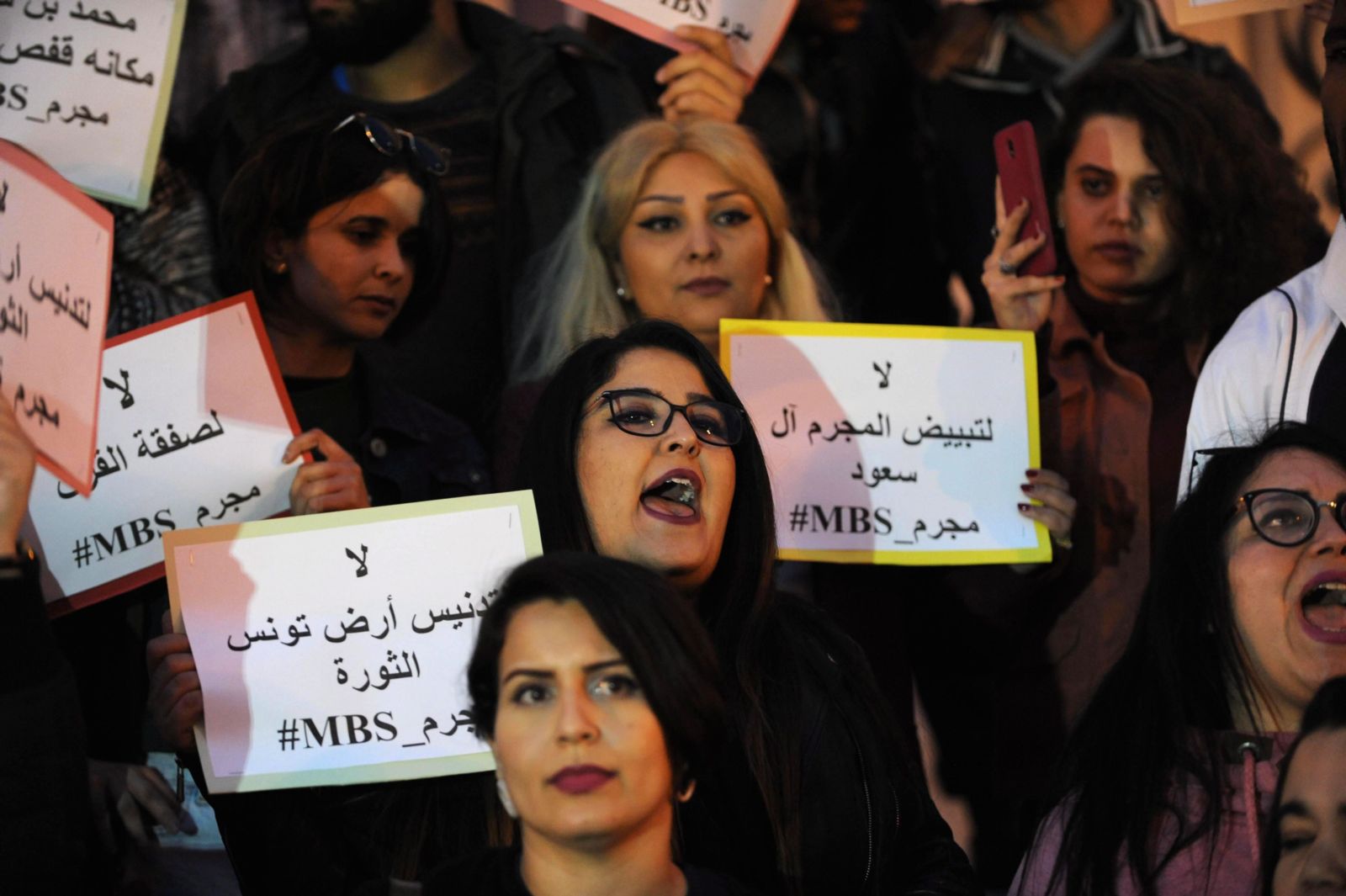
Several women take part in a protest, using a hashtag, against Saudi Crown Prince Mohamed bin Salman’s visit to the country in Tunis, Tunisia, in November 2018. EFE / Stringer
Governments in every region of the world are criminalizing human rights activism. They do it by prosecuting protest organizers, journalists, internet activists, and leaders of civil society organizations under laws that make it a crime to insult public figures, disseminate information that damages “public order,” “national security,” and “fake news.”
In the Gulf region and neighbouring countries, oppressive governments have further weaponized their legal arsenal by adopting anti-cybercrime laws that apply these overly broad and ill-defined offline restrictions to online communications.
In an age when online communications are ubiquitous, and in societies where free press is crippled, laws that criminalize the promotion of human rights on social media networks and other online platforms undermine the ability to publicize and discuss human rights violations and threaten the foundation of any human rights movement.
In May of 2018, for example, the Saudi government carried out mass arrests of women advocating online for women’s right to drive. Charged under the country’s cybercrime law including article six which prohibits online communication “impinging on public order, religious values, public morals, and privacy,” these human rights activists were detained, tortured, and received multi-year sentences for the “crime” of promoting women’s rights.
There is certainly a necessity to address the prevalence and impact of cybercrimes but without criminalizing people who speak out for human rights.
European countries and the United Nations (UN) have encouraged states to adopt a standard approach to addressing crimes committed with online technologies ranging from wire fraud to financing terrorist groups. The Council of Europe issued a 2001 regional convention on cybercrime, to which any state may accede, and the UN is promoting a cybercrime treaty.
Common standards can prevent the abuse of online technologies by enabling the sharing of online evidence and promoting accountability since the evidence of online crimes often resides on servers outside the country where the harm occurred or where the wrongdoers reside.
The problem for human rights defenders in the Gulf region and neighbouring countries is that states have exploited the opportunity to align their cybercrime laws with European standards to double-down on laws restricting legitimate online expression.
European countries have robust human rights oversight from the European Court of Human Rights, which ensures that limitations on freedom of expression online meet stringent international standards. There is no comparable human rights oversight for the Gulf region. Without adequate international judicial review, governments can successfully exploit international processes to strengthen their ability to stifle online expression.
The regional model cybercrime law drafted by the United Arab Emirates and adopted by the Arab League in 2004, follows international guidance. However, it incorporates a regional twist and includes provisions that criminalize online dissemination of content that is “contrary to the public order and morals,” facilitates assistance to terrorist groups, along with disclosure of confidential government information related to national security or the economy.
UN experts reviewed the UAE law and gave it a seal of approval, noting it complied with the European convention, ignoring the fact that UN human rights experts have documented repeatedly that governments use such restrictions to crack down on dissent. A UN-sponsored global cybercrime study, published in 2013, similarly soft-pedaled the threat of criminalizing online dissent by noting that governments had leeway to protect local values. Such protection does not extend to speaking up for universal rights like equality and democracy.
Actually, the universal right to freedom of expression protects online content, and limitations must meet international standards of legality, legitimacy, necessity, and proportionality. In our recent report on the use of anti-cybercrime legislation throughout the Gulf region and neighbouring countries, we found that over an 18-month period (May 2018-October 2020), there were 225 credible incidents of online freedom of expression violations against activists and journalist in ten countries: Bahrain, Iran, Iraq, Jordan, Kuwait, Oman, Qatar, Saudi Arabia, Syria, and the UAE. Each country has adopted anti-cybercrime laws except Iraq, where lawmakers’ drafts of proposed legislation have been met with stiff opposition from domestic and international human rights groups.
The international community needs to increase pressure on the Gulf region and neighboring countries to comply with their international obligations to protect freedom of expression off and online. Turning away from the clear evidence that oppressive governments are expanding the reach of criminal law to stifle online human rights activism undermines legitimate international efforts to address cybercrime.
How can we trust the UN to safeguard the voices advocating online for human rights and democracy in a region that so desperately needs both, if it fails to insist human rights safeguards be written into the regional and national cybercrime laws it champions?
In the age of the internet, online human rights activism needs to be supported—and protected—as a vital part of the cybercommunications ecosystem. In the Gulf region, defenders of human rights pay an untenable price for their work, risking arrest, torture, and even death. It is time to reverse the trend while there are still defenders left.
One of the women human rights defenders in Saudi Arabia said before she was imprisoned, “If the repressive authorities here put behind bars every peaceful voice calling for respect for public freedoms and the achievement of social justice in the Gulf region and neighboring countries, only terrorists will remain out.” History has proven the truth of her words, as most of the individuals who led terrorist groups with a global reach have come from this region and have caused, and still cause, chronic problems for the whole world.
The important lesson that we must learn here is that repressive governments foster a destructive dynamic of expansion and intensification of human rights violations. Repressive governments cooperate with and look to one another for strategies and tactics. Further troubling is that what we see in the Gulf region is enabled by the essentially unconditional support provided by some Western governments, especially the US and UK. This toxic template of Western support to governments that oppress their own people constitutes a threat to world peace and prosperity and must be addressed.
On 25 January 2022 important Research by Jon Vrushi and Roberto Martínez B. Kukutschka of Transparency International (which just published it 2021 Corruption Perceptions Index) shows a perhaps not surprising but undoubted link between human rights and corruption. They say: Corruption enables both human rights abuses and democratic decline. In turn, these factors lead to higher levels of corruption, setting off a vicious cycle.
…While all states have a responsibility to respect, protect and fulfil the human rights of all people, the presence of corruption can weaken a government’s ability to do so by undermining the overall functioning of the state – from the delivery of public services, to the dispensation of justice and the provision of safety for everyone.
More specifically, the duty to respect means that the state must not act in violation of human rights, for example, by using violence against peaceful demonstrators. Corruption can undermine this obligation when, for example, the government instrumentalises the police or judiciary to unfairly detain, arrest or intimidate opponents or dissidents. Corruption in law enforcement can jeopardise people’s safety and victims’ access to justice. On the one hand, corruption in law enforcement can drive human right violations such as ill-treatment or torture in the hands of officers including in detention settings or through police practices. In other cases, corruption might permeate the administration of justice including by slowing investigations into human rights violations and affecting due process.
What is more, corruption and impunity contribute to an unsafe climate for human rights defenders to operate in. Having examined the data collected by Frontline Defenders, we found that out of the 331 cases of murdered human rights defenders in 25 countries in 2020, 98 per cent of those deaths occurred in 23 countries with high levels of public sector corruption, or a CPI score below 45. Moreover, at least 20 of all cases were registered as killings of human rights defenders dealing with anti-corruption issues.
The second state obligation, to protect, means that governments should ensure that no one infringes the rights of its people. Corruption can also undermine this obligation. Organised criminal groups routinely murder journalists and human rights defenders and the state often fails to protect their safety. Similarly, private actors can rely on bribery and/or personal connections to ensure that the state turns a blind eye to human rights abuses. If the state fails to prevent a company, which has made a large campaign donation, from polluting a water source on which people depend on and puts their health at risk, the state is effectively failing in its obligation to protect.
Finally, corruption can directly undermine a government’s ability to fulfil its human rights obligations to take positive actions to guarantee the enjoyment of basic human rights. When states allow the embezzlement of public funds meant to be spent on providing healthcare or when rigged public procurement processes fail to deliver the necessary goods and services for education, states fail in their responsibility to fulfil the rights to health and education.
While all three obligations are equally important, state failure to respect human rights can lead to catastrophic consequences for democracy and the rule of law, as it can subvert fundamental rights which are critical for government accountability, such as freedom of expression, assembly and association. This, in turn, makes it harder to keep corruption in check and can lead to a vicious cycle of corruption, human rights abuses, and democratic decline.
The graph below shows how corruption and abuse of civil liberties go hand-in-hand. The civil liberties score, a dimension of the Democracy Index from the Economist Intelligence Unit, contains indicators on freedom of expression, association, assembly, personal safety and access to justice, among others. What we observe is that there is a strong and positive correlation between good governance and the respect of human rights and that very few countries have managed to establish effective control of corruption without also respecting human rights. This relationship holds even when controlling for the level of development (see Annex).
Keeping corruption out of the public eye is essential to ensure that those who participate in it face no consequences. Restricting freedoms of expression, association and assembly is thus a popular tactic to weaken societal checks on corruption, reducing the chances of being denounced for engaging in corruption and facing consequences. Simultaneously, this helps to perpetuate corrupt networks and practices. To ensure they face no legal consequences, in some cases corrupt officials also capture the judiciary and independent oversight institutions. To prevent loss of their privileges, corrupt and their cronies often resort to oppressive measures, curtailing civil liberties.
Take Nicaragua, for example, where President Daniel Ortega has ruled since 2007 and the country has experienced democratic decline, along with restrictions to fundamental freedoms and rampant corruption. Nicaragua is one of the significant decliners on the 2021 CPI, having dropped from a score of 29 in 2012 to 20 in 2021.
Nicaragua now ranks in the bottom 20 countries on the Index. At the same time, Nicaragua’s scores on V-Dem’s “Freedom of Expression”, “Freedom of Association” and “Access to Justice” indicators have dropped to record low levels. Corruption in the justice system and total capture of the courts by the executive means that human rights abuses go unchecked, providing no access to justice or remedy for victims in the country. At the same time, politically motivated corruption charges against opposition figures.
further impinge on political rights and liberties while government officials face virtually no accountability for acts of corruption. This climate of total impunity allows the government to further restrict fundamental rights, like freedom of expression, association and assembly. In some cases, they become direct attacks.
In 2019, one of the oldest newspapers in Nicaragua, El Nuevo Diario, reported that it was forced to close after authorities prevented it from obtaining newsprint and ink. Furthermore, between March and July 2020, Nicaragua’s Observatory of Aggressions on the Independent Press reported 351 attacks including unjust prosecutions, arbitrary detentions and harassment of media workers and their families. Human rights abuses continue, including bans on protests, attacks on freedom of expression, and the stigmatisation and persecution of journalists and human rights defenders.
Attacks on checks and balances as well as on civil liberties do not only occur in countries with systemic corruption and weak democratic institutions, but also in consolidated democracies. Hungary serves as a cautionary tale where following corruption and full capture of the state, the country has fallen to the lowest score in the Freedom in the World Index since the end of the communist regime in 1989. The abuse of media, civic space and the judiciary by democratic governments alleged to be involved in corruption has also been prevalent in Czechia, Slovenia and Brazil, among others.
What is more, not everyone is equally able to challenge corruption. Repressive officials or those seeking to silence anti-corruption campaigners are less likely to fear being held to account when they target individuals from marginalised groups. People from discriminated groups are therefore more exposed to potential backlashes and human rights abuses when they try to make their voices heard. The enhanced level of danger also applies to anti-corruption campaigners who champion the cause of discriminated groups, such as Transparency International’s chapter in Guatemala, which seeks to uncover and challenge acts of collusive corruption between state officials and mining companies that harm Indigenous Peoples.
Transnational corruption as enabler of human rights abuses
Various actors in the top-scoring countries are all too eager to help authoritarian and kleptocratic regimes clean their reputations – not just their money.
The case of Kazakhstan and the United Kingdom shows this corrupt backscratching at work. The heavy-handed response to protests in the country in early January made international headlines, echoing events of the Zhanaozen massacre from 10 years ago. Nursultan Nazarbayev, the country’s president at that time turned to the UK’s former prime minister Tony Blair to help him with his image. In a leaked letter Blair reportedly advised and provided Nazarbayev with talking points on how to handle critical questions about Zhanaozen. Months later, the government jailed an opposition leader for allegedly orchestrating the events. Blair continued to defend Kazakhstan’s regime on various occasions.
More international coordination is needed to ensure that foreign dictators and western enablers do not circumvent anti-money laundering and sanctions regimes.
Transnational corruption enables human rights abuses and exacerbates repression by allowing autocrats to:
Enjoy looted funds and reward cronies. Without the help of professional enablers like complicit bankers, lawyers, accountants, real-estate brokers etc, kleptocrats would not be able to enjoy their funds and pay off those who support them. In turn this means that they can stay in power by buying support and dispensing patronage to cronies.
Launder their reputation abroad. By employing western public relations firms, lobby professionals and even funding universities kleptocrats and autocrats ensure that little pressure will come to bear from the international community on their human rights abuses record.
Evade accountability. By hiding their financial transactions, autocrats make it almost impossible for law enforcement or judicial bodies, at home or abroad, to find traces of their malfeasance, ensuring they stay in power and unscathed. They can also bypass sanctions regimes, such as those aimed directly at human rights abusers through the Global Magnitsky Act or similar legislation.
In 2017, the Azerbaijani Laundromat investigations found how a network of slush funds financed Azerbaijan’s bribe-induced foreign policy and reputation. Three Spanish delegates to the Parliamentary Assembly of the Council of Europe (PACE) are suspected of benefiting from the Laundromat. In return, they allegedly watered down the human rights body’s criticism of events in Azerbaijan under the country’s repressive authoritarian regime. In 2021, authorities in Germany expanded their previous investigations into the Azerbaijani Laundromat. Another (now former) German parliamentarian is under investigation for similar reasons. Transnational corruption schemes allowed the Azerbaijani government to conduct a type of caviar diplomacy, bribing abroad and shoring up support from cronies at home.
Effects on democracy and corruption
Civil and political rights including freedom of expression, freedom of association and assembly, as well as access to justice are integral to healthy democracies. They guarantee the participation of citizens and groups in democratic and policy processes and can help keep corruption in check. The current wave of autocratisation is not primarily driven by coups and violence, but rather by efforts to undermine democracy gradually. The descent into authoritarianism usually begins with violations to people’s civil and political rights, attacks on civil and political rights, efforts to undermine the autonomy of oversight undermining election management bodies, and trying to control or directly attack the media to help disseminate the regime’s ideology while supressing criticism.
The case of Belarus, which this year fell 6 points in the CPI score this year, perfectly illustrates the limits of this top-down model and how the apparent successes in controlling corruption can quickly prove illusory where they are subject to the whims of a dictator or a regime that does not allow criticism, opposition or political competition. The country also serves as a cautionary tale for similar regimes.
While examples of successful top-down anti-corruption reforms exist in countries like China, Cuba and Singapore. These efforts are few and far apart. Furthermore, some of the most successful anti-corruption reforms that started with top-down interventions, eventually had to incorporate more bottom-up approaches to ensure their sustainability. Hence, sustainable anti-corruption strategies go hand in hand with the protection of universal human rights and fundamental freedoms.
For these reasons, in its Strategy 2030, Transparency International recognises that corruption cannot be countered without fundamental human freedoms to organise, associate, access information and speak up as well as a free and independent media.
To end the vicious cycle of corruption, human rights violations and democratic decline, people should demand that their governments:
Uphold the rights needed to hold power to account. Governments should roll back any disproportionate restrictions on freedoms of expression, association and assembly introduced since the onset of the pandemic. Ensuring justice for crimes against human rights defenders must also be an urgent priority.
Restore and strengthen institutional checks on power. Public oversight bodies such as anti-corruption agencies and supreme audit institutions need to be independent, well- resourced and empowered to detect and sanction wrongdoing. Parliaments and the courts should also be vigilant in preventing executive overreach.
Combat transnational forms of corruption. Governments in advanced economies need to fix the systemic weaknesses that allow cross-border corruption to go undetected or unsanctioned. They must close legal loopholes, regulate professional enablers of financial crime, and ensure that the corrupt and their accomplices cannot escape justice.
Uphold the right to information in government spending. As part of their COVID-19 recovery efforts, governments must make good on their pledge contained in the June 2021 UNGASS political declaration to include anti-corruption safeguards in public procurement. Maximum transparency in public spending protects lives and livelihoods.
The Berlin-based nongovernmental organisation surveys business leaders and experts to assign scores to 180 countries and territories on their perceived levels of public sector corruption. Using a scale from 0 to 100 (with 100 being very clean and 0 ranking as highly corrupt), the 10th annual report found that two-thirds of countries scored below 50. The average score was 43 out of 100. Overall, the fight against corruption is having mixed results – with some nations making gains and others falling behind. “Since 2012, 25 countries significantly improved their scores, but in the same period 23 countries significantly declined,” the report said.
It also found that despite increased momentum to end the abuse of anonymous shell companies, many high-scoring countries with relatively clean public sectors continue to enable corruption. A shell company does not have a physical location, employees, products or revenue. It is used to store money, help facilitate tax avoidance and, in some cases, deal in illegal activity such as money laundering. Some high-ranking countries such as Switzerland have been called tax havens in part due to their tolerance of shell companies.
Human Rights Careers carried an unattributed post: “What Are Human Rights Cities?” I reproduce it here in full as it gives some interesting points:
Urbanization is on the rise. According to the United Nations Population Fund, more than half of the world’s population lives in towns or cities. By 2030, that number could reach 5 billion people. This is significant because inequality often slices cities into divisions of wealth and poverty. A human rights approach can address this problem and promote cities as spaces of equality, inclusion, and empowerment. When different stakeholders in a city – the local government, civil society, and private sector – come together to adopt human rights principles and laws, a human rights city is born.
The history of human rights cities
The impact of cities on human rights is not new considering how cities can be home to high levels of poverty, inequality, environmental decay, and so on. The organization the People’s Movement for Human Rights Learning (formerly known as the People’s Decade for Human Rights Education and still known by the abbreviation PDHRE) launched the more formal understanding of human rights cities. It was just after the 1993 World Conference on Human Rights in Vienna, Austria, which represented a reinvigorated commitment to implement human rights instruments. The PDHRE’S Human Rights Cities initiative sought to mobilize communities to engage in dialogue and take action on improving life and security for people based on a human rights standard.
The first Human Rights City
Rosario is the biggest city in the central Argentinian province of Sante Fe and the third-most populous city in the country. Tourists are drawn to its centuries-old architecture in the neoclassical, Art Nouveau, and Art Deco styles, as well as its many museums. Football legend Lionel Messi is from Rosario. In June of 1997, more than 100 people, including groups representing women, children, the academic community, and indigenous people, met with the municipality at City Hall. The executive director of PDHRE was there, too. The groups signed a proclamation committing to turn Rosario into a “human rights sensitive city” that would promote equity, peace, and respect for human rights.
Rosario drew up plans to implement the proclamation. All sectors of society were represented on a Citizen’s Committee, which began analyzing how human rights violations were connected and initiating neighborhood dialogues about a human rights framework. A sub-committee looked at the government’s obligations under international law and solutions to poverty, violence against women and the LGBTQ community, police brutality, poor education, and more. Human rights experts, educators, lawyers, and media members made a supporting volunteer group while trainings were held for and by police, judges, business people, teachers, and others. Specific principles guided the process: transparency, participation, accountability, reciprocity, and a commitment to eliminate poverty.
Other Human Rights Cities
Other areas embraced the concept of human rights cities. In 2000, Saint-Denis in France adopted the European Charter for the Safe Guarding of Human Rights in the City. In 2009, Gwangju in South Korea established a human rights municipality and in 2011, held the 1st World Human Rights Cities Forum. The event is held annually and is an essential gathering for the human rights cities movement. The forum defined human rights cities as “both a local community and a socio-political process in a local context where human rights play a key role as fundamental values and guiding principles.”
There are currently human rights cities in Asia, Africa, Europe, Canada, the United States, and Latin America. Examples include Timbuktu, Mali; Nagpur, India; Nuremberg, Germany; Madrid, Spain; Seattle, United States; and Winnipeg, Canada.
How do cities become “human rights cities?”
There is no standardized process for a city to become a “human rights city.” According to the Human Rights Cities Network, an online platform that promotes the development of human rights cities, there are two processes: an informal one and a formal one. The informal process is when a city promotes human rights at a local government level without officially labeling itself a “human rights city.” These cities embrace concepts like sustainability (“going green”), welcoming refugees, being inclusive to all genders and sexualities, and so on. The success of these cities varies widely; cities often make big promises they don’t keep. Some cities have embraced human rights agendas and implemented norms, but haven’t adopted broader declarations. Chicago, Illinois is one example. The City Council passed a resolution in 2009 supporting the UN Convention on the Rights of the Child.
For the formal process, a city announces itself as a “Human Rights City” and makes an official commitment. They often adopt the Universal Declaration of Human Rights as their norm of governance and establish a process where the community and municipality cooperate on implementing a human rights approach. Implementing a specific human rights framework for governance sets true human rights cities apart from cities that enjoy a human rights label, but aren’t going to take real action. Every city’s process looks a bit different based on relevant issues, government structure, and so on. The key is that policies and governance center residents’ human rights as described in the UDHR.
When taken seriously, human rights cities rely on a framework based on human rights principles like equality, participation, transparency, and accountability. This framework is essential because it guides decision-making on every level, ensuring a systemic shift in how cities conduct business. We can see these principles in the Gwangju Guiding Principles for a Human Rights City (2014):
Non-discrimination and affirmative action
Social inclusion and cultural diversity
Social justice, solidarity, and sustainability
Effective institutions and policy coordination
Human rights education and training
Participatory democracy and accountable governance
Let’s consider that last principle more closely: participatory democracy and accountable governance. Democracy, which is a structure that gives power to the people either directly or through elected representatives, creates the best environment for human rights to flourish. Why? Governance guided by a democratic human rights approach doesn’t allow an elite group to call the shots with no participation or accountability from the rest of the community. All city residents – not just a few – are involved in public policy-making and given the space to voice their interests and ideas. If the government fails in its responsibilities, mechanisms allow people to hold them accountable and prioritize (and empower) the most vulnerable. That’s an essential benefit to human rights cities.
Challenges that face human rights cities
Enforcing a human rights approach is arguably the biggest challenge facing human rights cities. It’s a problem consistent with human rights law and practice in general. While the United Nations represents the closest thing to a global enforcer, its powers are severely limited. The institution can draw attention to human rights progress and violations, but its ability to hold States and abusers accountable has earned the UN much criticism. There’s even less oversight of private actors like multinational corporations. Most enforcement falls to individual States and local governments, which often have scant resources or weak political will for strong human rights policies.
The lack of a standardized definition for human rights cities (an issue that Deklerck Jasmien discusses in their thesis Human Rights Cities: “Walking the Walk” or “Talking the Talk”) also makes enforcement a very tricky prospect. There aren’t clear measurements that determine whether human cities are successful. These limitations make it difficult to hold human rights cities responsible for their actions (or lack of actions) regarding human rights. This isn’t to say all human rights cities are doomed to fail. Some cities are better than others at establishing monitoring procedures and enforcement mechanisms, but again, without a clear definition and recognized standards, human rights cities won’t achieve the level of success supporters hope for.
Are human rights cities worth it?
While the values behind human rights cities aren’t new, the implementation is fairly recent. Is it worth the effort? Are the cities working? Let’s look at the city of Gwangju for a case study. Gwangju, South Korea has a history of oppressive governments. In 1980, government troops attacked university students demonstrating against the martial law government. A group of citizens armed themselves in what became known as the Gwangju Uprising. The event is recognized as a symbol of resistance against authoritarianism. Given the area’s history and track record of democratic movements, making Gwangju a human rights city made sense to many progressive residents. Human rights ordinances were established in 2007 and 2009. In 2010, the government established a human rights department. In 2011, the first World Human Rights Cities Forum took place.
According to a 2019 conference paper, human rights indicators show a steady improvement in the city’s human rights levels. Achievements in human rights education (which includes HRE for all government officials) are considered the city’s biggest wins. Issues remain, especially in housing, public safety, and school violence. The paper also points out problems with collaboration between the government’s different departments.
Gwangju has a blend of successes and limitations. That’s likely true for all human rights cities. Is the idea of the “human rights city” worth attempting? It is if it’s taken seriously. Human rights principles like democracy and accountability are essential to the long-term health and success of cities, which are home to billions. The Sustainable Development Goals can’t be achieved without cities, but cities first need to embrace a human rights approach.



 Hans Thoolen on Human Rights Defenders and their awards