It is clearly election time in Zimbabwe! This blog has reported previously on a number of intimidations and threats against human rights defenders. Now Front Line Defenders informs us that on 21 February 2013, the offices of Zimbabwe Election Support Network (ZESN) in Masvingo were raided for the second time this week and several items were stolen. The incident follows a raid on ZESN’s offices in Masvingo and Harare on 18 and 19 February respectively, during which confidential material was stolen. Established in 2000, ZESN is a coalition of 31 non-governmental organisations promoting democratic processes, in particular free and fair general elections.
Mexico’s security forces have participated in widespread enforced disappearances, Human Rights Watch said in a special report released on 20 February 2013. Virtually none of the victims have been found or those responsible brought to justice, exacerbating the suffering of families of the disappeared, Human Rights Watch found. The 176-page report, “Mexico’s Disappeared: The Enduring Cost of a Crisis Ignored,” documents nearly 250 “disappearances” from December 2006 to December 2012. In 149 of those cases, Human Rights Watch found compelling evidence of enforced disappearances, involving the participation of state agents.
“President Peña Nieto has inherited one of worst crises of disappearances in the history of Latin America,” said José Miguel Vivanco, Americas director at Human Rights Watch. “While his administration has announced some important measures to assist victims, it has yet to take the steps necessary to ensure that those responsible for these horrific crimes are brought to justice.”
Human Rights Watch found evidence that members of all branches of the security forces carried out enforced disappearances: the Army, the Navy, and the federal and local police. In some cases, such as a series of more than 20 enforced disappearances by Navy personnel in June and July 2011 in Nuevo León and Tamaulipas, the common modus operandi of the crimes, the scale of the operations, and the inconsistent accounts by the Navy suggest the crimes may have been planned and coordinated. In over 60 cases, Human Rights Watch found evidence that state agents collaborated directly with organized crime groups to “disappear” people and extort payments from their families. For example, evidence indicates that local police in Pesquería, Nuevo León arbitrarily detained 19 construction workers in May 2011 and handed them over to an organized crime group. The men have not been seen since….. Read the rest of this entry »
Human Rights Watch Uploaded on this video some time back on 20 April 2011, but I had missed it. Insiders will recognize the face and voice of Reed Brody, who has made chasing dictators (such as Baby Doc and Hissene Habré (see below) his life’s vocation.Read the rest of this entry »
On 17 February 2013 I wrote about the case of Eynulla Fatullayev, editor of the website Haqqin.az, a former AI prisoner of conscience and winner of press freedom awards (see also quote at the end of this post) who seems to have taken a more apologetic stand with regard to violations in his home country Azerbaijan. Just a few days before – 11 February – the NGO Civil Rights Defenders had published a piece under the title: ‘New crackdown on human rights activities in Azerbaijan’. There seems to be no stand taken by Fatullayev (at least not in English).
Avaz Zeynalli, chief editor of Khural newspaper, charged for tax evasion and corruption.
The Azeri government is putting new pressure on the country’s already repressed civil society. NGOs that receive even minor funds can be severely punished, according to a new draft law. The draft follows a series of repressions of media workers and civil activists. According to the proposed amendments NGOs receiving donation over the equivalent of 190 euro without a proper agreement, face up to 3500 euro and confiscation of property. This increases the authorities’ control over NGOs. The violations have grown in the beginning of 2013. Media workers that have been covering demonstrations and riots have been arrested, questions and in some cases beaten. At the same time the homes of journalists and civil activists have been searched, detained, subjected to gas attacks, put under surveillance and in other ways obstructed in their work. Read the rest of this entry »
The Pastoral Land Commission (CPT), which has for years campaigned to advance social justice and the rights of small farmers and the landless in Brazil, suffered three attacks on its headquarters in the state of Acre in this year alone. It is suspected that these attacks are reprisal attacks on CPT, which recently denounced irregularities in forest management and land ownership in the states of Acre and Amazonas. The CPT was awarded the Right Livelihood Award Foundation (http://www.rightlivelihood.org/), in 1991. Read the rest of this entry »
Human rights defenders Messrs He Jun Ling, Gao Yue Qiang, Liu Xiangying, and Wang Xian Jie will go on a joint trial from 4 to 8 March 2013, reports Front Line Defenders.He Jun Ling, Gao Yue Qiang Liu Xiangying, and Wang Xian Jie are human rights defenders who were employed by the state controlled public transport operator SMRT Ltd. More than 100 mainland Chinese bus drivers refused to report for duty on the 26th of November 2012. It took some time for authorities to label the stoppage an ‘illegal strike’. Once that happened, things moved quickly. 29 drivers accused of participating in the action were swiftly rounded up and deported. Five men were also arrested. One has already been tried, jailed and sent back home. The others – He Jun Ling, Gao Yue Qiang, Liu Xiang Ying and Wang Xian Jie – are waiting for their cases to be heard. They are currently facing charges of inciting an illegal strike among bus drivers, and could be sentenced to a fine of 2,000 Singapore dollars (approx €1,250), a 12-month prison sentence or both.He Jun Ling and Liu Xiangying revealed last week that were assaulted by police officials while they were held in custody in December 2012. According to the information received, He Jun Ling was interrogated from 5am to 1pm, during which time he was locked in a small room, handcuffed, and beaten in the stomach. Liu Xiangying reported that an official threatened him, stating that “they can dig a hole and bury him. No one will be able to find him.” He was also handcuffed to a chair and beaten in his neck and the left side of his body. Read the rest of this entry »
Mr. Khalil Maatouk is a human rights lawyer who has defended numerous prisoners of conscience before Syrian courts. He was arrested with a friend by armed men on October 2, 2012 (!!) at a checkpoint in Sahnaya (in the countryside outside of Damascus). Since then, 139 days later, no further information could be obtained regarding his situation and whereabouts. Neither of the men has been seen since, although even the already extensive period of legal custody of 60 days elapsed. Despite repeated requests by his relatives and lawyers, the Syrian authorities have failed to provide information on Mr. Khalil Maatouk’s fate and whereabouts and did not allow him to contact his family and lawyers. While two witnesses claimed having seen Mr. Maatouk in a detention centre, the judicial authorities have recently denied holding him in custody.
The Turkmen authorities have long used the judicial system and long-term imprisonment to suppress civic activism and settle political scores. So while we celebrate Amanklychev and Khajiev’s long overdue freedom, the pressing question remains, how many others still languish behind bars on wrongful charges? said Rachel Denber of HRW. Read the rest of this entry »
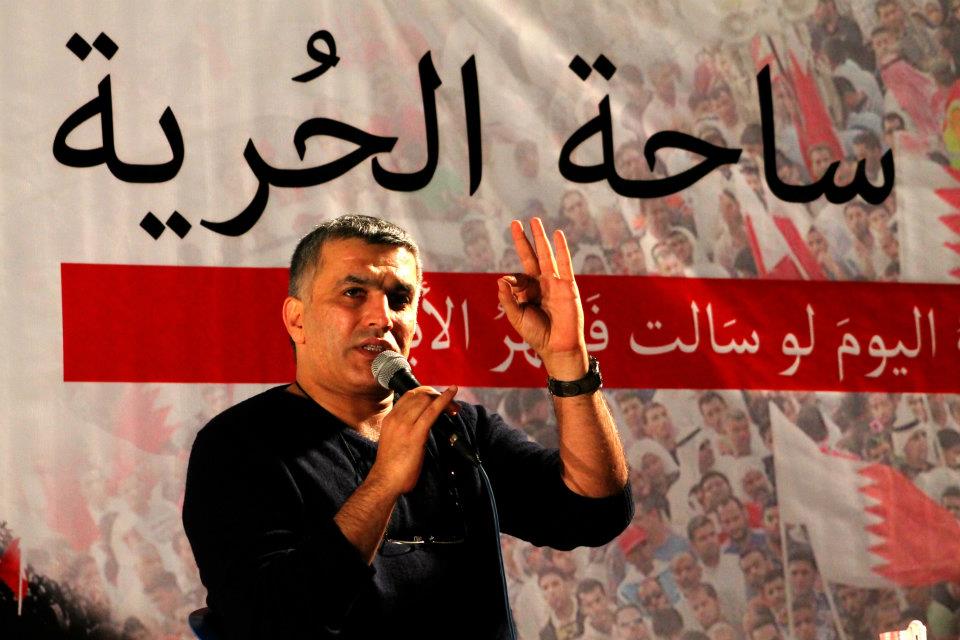
The Observatory for the Protection of Human Rights Defenders, a joint programme of the International Federation for Human Rights (FIDH) and the World Organisation Against Torture (OMCT), published on 14 February 2013 a report, which presents the findings of a judicial observation mission conducted on the trial in appeal of prominent human rights defender Nabeel Rajab. The report concludes that a series of violations of the right to fair trial marred the judicial process and that Nabeel Rajab is suffering judicial harassment (and was sentenced to 2 years imprisonment) for merely advocating for and exercising the right to peaceful assembly in Bahrain. The report is available in English and Arabic.
Nabeel Rajab is President of the Bahrain Centre for Human Rights (BCHR) and Director of the Gulf Centre for Human Rights (GCHR), Deputy Secretary General of FIDH, and the BCHR was 2012 nominee for the MEA. Read the rest of this entry »
On 15 February 2013 News.az (an Azeri news agency) distributed under the title “Western human rights defenders’ silence shows double standards” a bit of a rambling attack on western-based international organizations and human rights defenders for using double standards by being quickly critical of repression of journalists in the ‘new democracies’ such as Azerbaijan and being silent with regard to similar repression in western Europe.
The 15 February piece is mostly based on an interview with Eynulla Fatullayev, editor of the website Haqqin.az, who stated that the case of journalists from News of the World is a high-profile case, and certainly should be considered in the plane of restrictions on the rights of journalists to work freely. What the article does not state is that on 22 January of this year Amnesty International has announced the termination of its collaboration with Eynulla Fatullayev, a former prisoner of conscience, and head of the Public Association for Human Rights in Azerbaijan. Amnesty International believes that Fatullayev, and in particular, his site Haqqin.az, is used by the Government of Azerbaijan to discredit European criticism of human rights violations in Azerbaijan. In 2011 Amnesty International had issued a “mass tweet” on Fatullayev’s behalf; Fatullayev attributed his release inter alia to the work of Amnesty International activists.
In the interview Eynulla Fatullayev states among others the following:“I am more than sure that if a similar event occurred in Azerbaijan or in another state, located in the zone of the new democracies, it would be followed by statements by most international organizations condemning the policy of the authorities to the persecution of media. Why in the case of the United Kingdom or other EU countries, all these organizations remain strangely silent?” Read the rest of this entry »







 The 15 February piece is mostly based on an interview with Eynulla Fatullayev, editor of the website Haqqin.az, who stated that the case of journalists from News of the World is a high-profile case, and certainly should be considered in the plane of restrictions on the rights of journalists to work freely. What the article does not state is that on 22 January of this year Amnesty International has announced the termination of its collaboration with Eynulla Fatullayev, a former prisoner of conscience, and head of the Public Association for Human Rights in Azerbaijan. Amnesty International believes that Fatullayev, and in particular, his site Haqqin.az, is used by the Government of Azerbaijan to discredit European criticism of human rights violations in Azerbaijan. In 2011 Amnesty International had issued a “mass tweet” on Fatullayev’s behalf; Fatullayev attributed his release inter alia to the work of Amnesty International activists.
 Hans Thoolen on Human Rights Defenders and their awards