Things are clearly changing in Iran. It is too early to think that human rights defenders can all safely go back, but the fact that Arseh Sevom – a moderate and informative blog voice on Iran – devotes a part of today’s post by Peyman Majidzadeh to this question is telling. Here are some excerpts: Read the rest of this entry »
The Information and Communications Amendment Bill of 2013 was passed in Kenya by parliament on October 31, 2013, but has not yet been signed by the president. Another problematic draft law, the Media Council Bill, is due to
be debated in parliament in the coming weeks. Moreover, on October 30 the attorney general also proposed controversial new provisions regulating the work of nongovernmental organizations (NGOs), including a proposed cap at 15 percent of foreign funding. “These new laws are an attempt to undermine freedoms of expression and association in Kenya,” said Daniel Bekele, Africa director of Human Rights Watch on 12 November. “Kenya’s leaders should act swiftly to prevent these bills from becoming law and focus on the country’s real challenges, like police reform and accountability.”
The new idea of restricting (foreign) funding follows similar efforts by an increasing number of other countries, signaling a dangerous trend:
On October 30, the office of the attorney published in the official gazette – the mandatory first step before a bill is introduced to parliament – the Miscellaneous Amendment Bill of 2013. This bill includes provisions that would grant broad discretionary powers to a new government body to regulate nonprofit organizations and would limit access to foreign funding for these groups. The amendment would empower a new government body, the Public Benefits Organizations Authority, to “impose terms and conditions for the grant of certificates of registration, permits of operation, and public benefit organization status.” The chairperson would be appointed by the president, increasing executive powers over nongovernmental groups. Critics of the law fear that the wide powers vested in the executive branch could be used to restrict nongovernmental organizations or even penalize organizations that fall out of favor with the Kenyan authorities.
The amendment would also introduce new limits on funding for nongovernmental organizations. It states that “a public benefit organization shall not receive more than 15 percent of its total funding from external donors,” unless otherwise approved by the minister for finance. Funding to nonprofits would be channeled through a new Public Benefits Organizations Federation rather than directly from donors – which could create new operational difficulties for nongovernmental organizations and delays in their projects.
“This new law requiring nongovernmental organizations to raise 85 percent of their funding locally may well have the effect of weakening independent voices,” Bekele said. “As we have seen elsewhere in the region, including in Ethiopia, these laws are an assault on basic freedoms and Kenya’s citizens and leadership should soundly reject them.”
Today, 18 November, a group of 14 Africa-based NGOs came out with a strong statement supporting the ICC which has its annual meeting coming up 20-28 November in the Hague: “African governments should reject special exemptions for sitting officials before the International Criminal Court (ICC)“, African organizations and international organizations with a presence in Africa said in a document released today. The ICC faces important challenges in Africa. In October the African Union said that the trials of Kenya’s president and vice president, Uhuru Kenyatta and William Ruto, should be suspended
On 13 November 2013 Ambassador Remigiusz Henczel, President of the Human Rights Council, made his statement to the 68th session of the General Assembly in New York. It contains an important section on the issue of reprisals against human rights defenders which this blog has repeatedly referred to:
“Let me now turn to the role of civil society in the proceedings of the Council. Active participation and contribution of civil society organizations is central to the work of the Human Rights Council and makes it a unique forum among other UN intergovernmental organs. It is therefore essential that representatives of civil society operate in a free, open and safe environment that protects and promotes their own human rights. I have personally condemned acts of reprisals in the context of Council and UPR sessions and have repeatedly stated that any acts of intimidation or reprisals against individuals and groups who cooperate or have cooperated with the United Nations and its representatives are unacceptable and must end. It is the Council’s and its President responsibility to address effectively all cases of intimidation or reprisals and to ensure an unhindered access to all who seek to cooperate with the UN mechanism. In this regard, Council resolution 24/24 adopted last September on cooperation with the United Nations in the field of human rights is of utmost importance. It requests the Secretary-General, in cooperation with the High Commissioner for Human Rights, to designate a United Nations-wide senior focal point on reprisals and aims at promoting the prevention of, protection against and accountability for reprisals and intimidation related to cooperation with the United Nations.“
(Minister Eamon Gilmore at the 13th annual NGO Forum on Human Rights, on 13 November)
Irish Minister of Foreign Affairs, Eamon Gilmore, announced at the 13th annual NGO Forum on Human Rights in Dublin [this year’s forum was on “Ideals and Interests: the place of human rights in foreign policy”] that he had initiated a complete review of Ireland’s foreign policy and external relations – the first such audit to be carried out in nearly two decades. This is important as Ireland – although a small nation – is one of the few with an explicit policy to support human rights defenders.
An interesting example of how human rights defenders should tackle the pernicious issue of islamic opposition to human rights progress comes from Malaysia:
According to Bar Council member Andrew Khoo, Muslim-majority countries were among those which have asked Malaysia to obey international human rights standards in the United Nations’ Universal Periodic Review (UPR) last month. “These are not Western, European-centric recommendations… For anyone to attempt to say this is a Western agenda, sorry you’re barking up the wrong tree,” said Khoo, who is the co-chairman of the Bar Council’s Human Rights Committee. Read the rest of this entry »
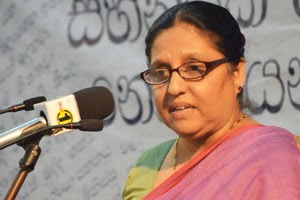
The Observatory for the Protection of Human Rights Defenders, a joint programme of the World Organisation Against Torture (OMCT) and the International Federation for Human Rights (FIDH), expresses its great concern about the smear campaign and threats suffered by Ms. Nimalka Fernando, attorney-at-law, women’s rights activist and President of the International Movement Against All Forms of Discrimination and Racism (IMADR) in Sri Lanka. [Ms. Fernando was also a convener of the alternative summit to the Commonwealth Heads of Government Meeting (CHOGM), which is taking place in Sri Lanka from November 10 to 17, 2013 amid strong criticism of the country’s human rights abuses.] Read the rest of this entry »
While the appeal of human right defender Naji Fateel in Bahrain is due to start tomorrow, 18 November, a group of five human rights NGOs regrets the lack of cooperation by Bahraini authorities to allow access to the country for a trial observation mission. The Arabic Network for Human Rights Information, the Cairo Institute for Human Rights Studies, Front Line Defenders, the Gulf Center for Human Rights, and the Observatory for the Protection of Human Rights Defenders (a joint programme of the International Federation for Human Rights – and the World Organisation Against Torture), had mandated – with support from IFEX – a lawyer to observe the trial, but their request remains unanswered.
[Naji Fateel, co-founder of the Bahrain Youth Society for Human Rights and a blogger, was sentenced on September 29, 2013 to 15 years in prison for “the establishment of a group for the purpose of disabling the constitution” under Article 6 of the Terrorism Act.]
This presentation produced by Breakthrough on 11 May 2012 had escaped me and may have escaped others. It is part of the Tribute to Feminist and Women Human Rights Defenders who are no longer with us, which took place at the AWID Forum in Istanbul Turkey, 19-22 April, 2012. The exhibit featured Women Human Rights Defenders who died, were killed, or were disappeared since the last AWID Forum in 2008.
In the presence of the UN Rapporteur on Human Rights Defenders, the MEA Laureates of 2013: the Joint Mobile Group, the family of Werner Lottje (his wife Margit and the children) and some 90 other participants we had on 13 November 2013 the first WERNER LOTTJE LECTURE in Berlin. It was an impressive affair and the organisers, Bread for the World and the German Institute for Human Rights, can look back on a successful launch of this annual event. There were many good tributes to Werner’s life and contribution. Igor Kalyapin of the JMG explained the terrible conditions under which his team has to operate in Russia and Margaret Sekaggya concluded with a wide-ranging overview of obstacles that HRDs all over the world face. A short, impressive film brought the person of Werner to life.
Here I am providing you the full text my own speech on this occasion, not only because I have it handy but because it concerns mostly the international part of his work:
“Thinking outside the box – Werner Lottje as an international networker”

 be debated in parliament in the coming weeks. Moreover, on October 30 the attorney general also proposed controversial new provisions regulating the work of nongovernmental organizations (NGOs), including a proposed cap at 15 percent of foreign funding. “These new laws are an attempt to undermine freedoms of expression and association in Kenya,” said
 Hans Thoolen on Human Rights Defenders and their awards