Archive for the 'human rights' Category
March 16, 2016
On 7 March 2016 the ISHR held a joint side event on the protection needs of human rights defenders working on economic, cultural and social (ESC) rights [http://wp.me/pQKto-1ZJ]. Here a report and some more:
Panellists spoke about the crucial work of ESC rights defenders in their countries, including defenders in Ethiopia protesting illegal land grabs to prevent the displacement of communities; defenders in Malaysia working towards inclusive and sustainable development and to oppose corruption; and defenders in Guatemala working to protect indigenous rights and ensuring that companies consult with affected communities.
Read the rest of this entry »
Posted in human rights, Human Rights Defenders, ISHR, UN | Leave a Comment »
Tags: Allo Awol, Berta Cáceres, enabling environment, environmental activists, ESC rights, Geneva, Human Rights Defenders, International Covenant on Economic, ISHR, land rights, Michel Forst, Navi Pillay, side event, Social and Cultural Rights, social and economic rights, UN Council of Human Rights, UN Resolution
March 16, 2016
Posted in human rights, Human Rights Defenders | 1 Comment »
Tags: Agua Zarca, Berta Cáceres, dam, environmental issues, Finland, Guatemala, Honduras, Indigenous People, killings, land rights defender, Ministry of Foreign Affairs Netherlands, Panama, Peter Bosshard, UN Guiding Principles on Business and Human Rights, woman human rights defender
March 15, 2016
Movies that Matter supports human rights film screenings in developing countries and countries where press freedom is at stake. Applications are welcome for mobile cinema projects, human rights film festivals, film outreach projects or other innovative cinema projects to stimulate the discussion on human rights, social justice and freedom of expression?
Starting this year, Movies that Matter offers two types of grants to stage human rights film festivals and screenings in Africa, Asia, Eastern Europe, Latin America and the Middle East:
a) start-up grants (max. EUR 7,500); and b) impact grants (max. EUR 10,000).
Please note that Movies that Matter does not support film production!
The application deadline is 17 April 2016.
See the website for more information about these types of grants, the selection criteria and how to apply:
http://www.moviesthatmatter.nl/english_index/international/support_programme
For inspiration, read about Movies that Matter’s earlier grantees here:
http://www.moviesthatmatter.nl/english_index/international/support_programme/supported_projects
http://www.moviesthatmatter.nl/
P.O. Box 1968, 1000 BZ, Amsterdam, The Netherlands
Phone: +31 20 7733630
Posted in films, human rights | Leave a Comment »
Tags: Civil society, Documentary film, freedom of expression, funding, human rights film festivals, human rights films, images, Movies that Matter
March 15, 2016
Yesterday, 14 March 2016 was the second anniversary of the death of Cao Shunli, a Chinese human rights defender who was detained and denied adequate medical treatment in police custody for five months, before dying in a military hospital in Beijing in 2014. This happened shortly after she was shortlisted for the Martin Ennals Award in that year. [see also https://thoolen.wordpress.com/2016/02/12/cao-shunli-a-profile-and-new-award-in-her-name/]. Has the situation improved…? Read the rest of this entry »
Posted in Front Line, human rights, Human Rights Defenders, THF | 1 Comment »
Tags: Cao Shunli, China, detention, Documentary film, Front Line Defenders, Guo Feixiong, Human Rights Defenders, human rights lawyers, remembrance, reprisals, THF, UPR, video, Wang Yu, woman human rights defender
March 7, 2016
A major new report by the UN Special Rapporteur on human Rights Defenders, Michel Forst, documents good practices and policies in the protection of defenders and makes concrete recommendations to States, business enterprises, national human rights institutions, donors, civil society organisations and other stakeholders to ensure a safe and enabling environment for defenders’ work (A/HRC/31/55).
Key among these is a recommendation that, in consultation with civil society, States should develop and implement specific national laws and mechanisms to protect defenders and to investigate and ensure accountability for threats and attacks against them. [ISHR’s work to develop a model national law on the recognition and protection of human rights defenders is specifically referenced in this regard.] [see also: https://thoolen.wordpress.com/2014/03/05/two-more-side-events-on-human-rights-defenders-on-10-and-12-march/]
In addition to enacting laws, the Special Rapporteur recommends that States establish and adequately-resourced protection mechanisms, in consultation with civil society.
Through the report, the Special Rapporteur endorses a ‘holistic’ approach to the protection of defenders, engaging the responsibility of a range of actors. Key insights and recommendations included in the report include that:
- States should publicly recognise the vital and legitimate work of human rights defenders, disseminate and raise awareness about the Declaration and actively respect and protect ‘the right to defend rights’.
- National human rights institutions should develop concrete action plans to support and protect defenders and establish focal points to ensure effective implementation and evaluation of such plans.
- Business enterprises have an important and influential role to play in protecting defenders and should be engaged in this regard: ‘The condemnation of violations by members of the business community not only legitimises defenders’ concerns but also builds opposition to bad business practices,’ the report says. ‘In addition, due to their economic and political influence, the support of business leaders can draw in wider support of society.’
- Donors should provide long-term, sustainable, flexible financial support to defenders and their organisations and networks, providing for their ‘holistic protection’.
- The UN itself should strengthen the protection of defenders and prevent violations against them, including through the ‘Rights Up Front’ initiative and the Sustainable Development Goals, and by strengthening its institutional response to cases of reprisals against those who for cooperate with UN human rights mechanisms. The need to prevent and ensure accountability for reprisals is particularly important given the Special Rapporteur’s finding that international and regional human rights mechanisms are increasingly being turned to and relied upon by defenders either to complement and strengthen domestic advocacy efforts, or because democratic institutions and the rule of law are weak or non-existent at the national level. [see also my ‘old’ post: https://thoolen.wordpress.com/2014/03/13/zero-tolerance-for-states-that-take-reprisals-against-hrds-lets-up-the-ante/]
In addition to making concrete recommendations, the Special Rapporteur also articulates 7 key principles for all stakeholders that he considers should inform and underpin all policies and practices namely:
- Principle 1: They should adopt a rights-based approach to protection, empowering defenders to know and claim their rights.
- Principle 2: They should recognise that defenders are diverse and come from different backgrounds, cultures, and belief systems.
- Principle 3: They should recognise the significance of gender in the protection of defenders and apply an intersectionality lens to the assessment of risks and to the design of protection initiatives.
- Principle 4: They should focus on ‘holistic security’ of defenders, including physical security, digital security, and psychosocial wellbeing.
- Principle 5: They should not focus on the rights and security of individual defenders alone, but also include the groups, organisations, communities, and family members who share their risks.
- Principle 6: They should involve defenders in the development, choice, implementation and evaluation of strategies and tactics for their protection. The participation of defenders is key to their security.
- Principle 7: They should be flexible, adaptable, and tailored to the specific needs and circumstances of defenders.
http://www.ohchr.org/Documents/Issues/Defenders/A-HRC-31-55_en.pdf
See more at: http://www.ishr.ch/news/good-practices-protection-human-rights-defenders-major-new-report#sthash.VjHvu4uZ.dpuf
Posted in books, human rights, Human Rights Council, Human Rights Defenders, ISHR | 1 Comment »
Tags: Civil society, enabling environment, good practices, Human Rights Defenders, Human Rights Up Front, ISHR, legal protection, Michel Forst, national institutions, reprisals, UN Human Rights Council, UN Special Rapporteur on Human Rights Defenders
March 7, 2016

has now launched RightDocs [see announcement https://thoolen.wordpress.com/2016/02/25/huridocs-launches-rightdoc-to-improve-access-to-un-human-rights-documents/] You can try it out yourself: #RightDocs. This tool is a work in progress, so in addition to adding new features, the website and experience will improve over time. Your feedback is welcome: feedback@right-docs.org.
Source: RightDocs – Where human rights resolutions count
Posted in books, human rights, Human Rights Defenders, HURIDOCS, UN | 1 Comment »
Tags: documentation tools, human rights documentation, HURIDOCS, information technology, internet, retrieve, RightDocs, UN Resolution
March 4, 2016
Severe time restraints made that several NGOs could not make their oral statement on 4 March 2016 during the Interactive Dialogue with the United Nations Special Rapporteur on the Situation of Human Rights Defenders in the UN Human Rights Council [see: https://thoolen.wordpress.com/2016/02/25/preview-of-the-upcoming-session-of-the-un-human-rights-council/].
Here follows the text of the statement that the World Organisation Against Torture (OMCT) and FIDH, within the framework of the Observatory for the Protection of Human Rights Defenders, would have delivered:
Read the rest of this entry »
Posted in FIDH, human rights, Human Rights Council, Human Rights Defenders, Observatory for the Protection of Human Rights Defenders, OMCT | Leave a Comment »
Tags: FIDH, Human Rights Defenders, intervention, Michel Forst, Observatory for the Protection of Human Rights Defenders, OMCT, oral statement, Special Rapporteur on Human Rights Defenders, stigmatization, UN Human Rights Council
March 3, 2016
A sad day for Honduras and all human rights defenders: today, 3 March 2016, Berta Cáceres was murdered by as yet unknown assailants who broke into her home in the city of La Esperanza in the early hours of the morning. One week prior to her assassination, the defender had denounced the killing of 4 leaders of her community as well as threats against her and other human rights defenders, at a press conference.

Berta Cáceres was one of the most prominent human rights defenders in Honduras and a Lenca indigenous woman who, for the past 20 years, had been defending the territory and rights of the Lenca people. In 1993, she co-founded the Consejo Civico de Organizaciones Populares e Indígenas de Honduras – COPINH (http://www.copinh.org/) (Civic Council of Popular and Indigenous Organisations of Honduras), which led fierce campaigns against illegal logging and mega-projects for their detrimental effects on the rights of indigenous peoples in the country. She faced off – and often won – against illegal loggers, plantation owners, multinational corporations, and dam projects that would cut off food and water supplies to indigenous communities. (e.g. https://thoolen.wordpress.com/2014/01/28/berta-caceres-in-honduras-continues-to-be-harassed-in-spite-of-court-order).
The human rights defender was a finalist for the 2014 Front Line Defenders Award [https://www.frontlinedefenders.org/es/programme/fld-award] and in 2015 she received the Goldman Environmental Prize. She had been a beneficiary of precautionary measures granted by the Inter-American Commission on Human Rights (IACHR) since 2009. Her harassment was followed closely by Front Line and others.
Other human rights defenders (including members of COPINH) have been targeted in the past. The killing of human rights defenders and impunity for the perpetrators have been documented by many organizations. In this blog alone:
https://thoolen.wordpress.com/2016/01/29/assassination-of-human-rights-defenders-proceed-in-honduras-venezuela-peru-colombia-and-the-philippines/
https://thoolen.wordpress.com/2016/02/27/alarming-criminalisation-of-human-rights-defenders-in-latin-america/
“the most dangerous place to be an environmental activist was actually Honduras, according to Global Witness” [https://thoolen.wordpress.com/2015/04/24/killings-of-environmental-human-rights-defenders-up-again-compared-to-last-year/]
Honduras: Berta Caceres, human rights defender & indigenous leader who opposed Agua Zarca dam, assassinated | Business & Human Rights Resource Centre
Posted in awards, Front Line, human rights, Human Rights Defenders | 3 Comments »
Tags: assassination, Berta Cáceres, COPINH, Front Line (NGO), Global Witness, Goldman Environmental Prize, Honduras, indigenous groups, judicial harassment, killing, land rights defender, woman human rights defender
March 3, 2016
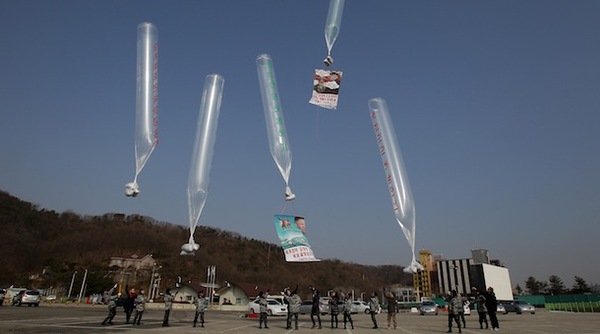
On 2 March 2016) South Korea’s legislature passed the North Korean Human Rights Act. The new law mandates the promotion of freedom in North Korea by funding North Korean defector and and refugee organizations, creating a North Korean human rights foundation, and establishing an archive of human rights violations perpetrated against the North Korean people by the Kim regime. The US-based Human Rights Foundation welcomed the Act as the NGO has advocated for such an action and in 2015 established the Global Coalition for the North Korean Human Rights Act.
“This is an astonishing moment. The Republic of Korea has taken its head out of the sand and has finally confronted the cruelty and horror of the North Korean dictatorship. It is a victory for all who support human rights and human dignity,” said HRF chairman Garry Kasparov. “We in the Global Coalition are delighted that the South Korean government will—for the first time ever—finance the defector organizations that send films, e-books, radio broadcasts, and educational materials to the North Korean people.”
The North Korean Human Rights Act also establishes a public campaign to raise awareness about North Korea’s human rights violations and takes steps to ensure that South Korean humanitarian aid is not misused by the Kim regime. The goal of establishing the human rights archive, inspired by the post-war German model, is to monitor and document the crimes of the North Korean dictatorship. It is vital to note that no such archive or record has ever existed in South Korea.
The law’s passage comes at a time when the rest of the world unanimously agrees on the extent and gravity of the crimes of the North Korean dictatorship. Earlier today, the U.N. Security Council voted 15-0 to toughen sanctions on the regime. “People inside the North will know about the law’s enactment and it will put considerable pressure on the political elite in Pyongyang,” said South Korean politician Kim Moon-soo, who first drafted the law in 2005.
For more information contact: Noemi Gonzalo-Bilbao, (212) 246-8486, noemi@hrf.org
Source: North Korea: HRF Celebrates Overdue South Korean Law Promoting Human Rights
See also: https://thoolen.wordpress.com/2015/05/29/north-korean-defector-ji-seong-ho-in-video-talk/
Posted in human rights, Human Rights Defenders, Human Rights Foundation | Leave a Comment »
Tags: defectors, documentation, freedom of information, Garry Kasparov, Human Rights Defenders, Human Rights Foundation, Ji Seong-ho, North Korean Human Rights Act, refugees
March 3, 2016
On 2 March 2016 the ISHR published a profile of human rights defender Park Lae-goon who promotes freedom of assembly and association while combating against State impunity. With 28 years of experience, he has been detained multiple times for participating in demonstrations demanding justice. Mr Park has become a symbolic figure fighting for victims of State violence in South Korea. In my next post I will devote attention to the new South Korean Act on Human Rights which aims more on North Korea. Read the rest of this entry »
Posted in human rights, Human Rights Defenders, ISHR | Leave a Comment »
Tags: criminalisation, detention, freedom of assembly, freedom of demonstration, Human Rights Defenders, ISHR, Korea, Maina Kiai, Park Lae-goon, profiles, South Korea
 Hans Thoolen on Human Rights Defenders and their awards