Archive for the 'human rights' Category

Global Witness report 2018 on environmental defenders: bad (but 2017 was worse)

January 9, 2019

This morning I blogged about Front Line Defenders Global Analysis 2018 report which notes a record number of human rights defenders killed in 2018 with the majority being environmental defenders [see: https://humanrightsdefenders.blog/2019/01/09/front-line-defenders-says-record-number-of-activists-killed-in-2018/]. On 24 December 2018 referring to a preliminary Global Witness report, wrote that – while the numbers were still being finalized – the death toll for this group in 2018 was slightly lower than in 2017 (“For embattled environmental defenders, a reprieve of sorts in 2018”). This is most likely due to definition issues.

Read the rest of this entry »

Bloggers and technologists who were forced “offline” in 2018

January 8, 2019

Read the rest of this entry »

LinkedIn reverses censorship position re Zhou Fengsuo’s profile

January 7, 2019

Zhou Fengsuo –  Getty Images

On 3 January, LinkedIn sent Zhou a message saying his profile and activities would not be viewable to users in China because of “specific content on your profile” (without saying which content!). Hours later, Microsoft-owned LinkedIn reversed its decision, apparently after South China Morning Post reporter Owen Churchill brought attention to the case. See the exchange below:

————-

China and its willingness to detain anyone anytime should generate more reaction

January 4, 2019

Michael Caster, human rights advocate and author of The People’s Republic of the Disappeared, is co-founder of the human rights organisation Safeguard Defenders. He wrote in the Guardian of Friday 4 January 2019 “China thinks it can arbitrarily detain anyone. It is time for change”

Canada’s foreign minister, Chrystia Freeland, has called China’s detention of Canadian citizens Michael Kovrig and Michael Spavor a “worrying precedent” but for many China watchers it is all too familiar. It reminds us of the detentions of other foreign citizens, such as Canadian Kevin Garratt, Briton Peter Humphrey, Sweden’s Gui Minhai, or Taiwanese Lee Ming-che, and that over the years China has institutionalised arbitrary and secret detention affecting innumerable Chinese citizens, and with little international consequence. China feels emboldened to place literally anyone under arbitrary and secret detention, regardless of citizenship. It is now long overdue for the world to stand up. While Kovrig and Spavor have been granted consular access, it is reportedly limited to one visit a month. Consular access, like access to a lawyer, is a procedural safeguard against abuse in custody. In China, where abuse in custody, especially in the first few weeks of detention, is well documented, the importance of consular or legal access cannot be over emphasised. There are reports Kovrig is being denied access to a lawyer.

China routinely denies such fundamental rights through its system for arbitrary and secret detention. This includes residential surveillance at a designated location (RSDL) [see: https://humanrightsdefenders.blog/2018/01/10/more-on-residential-surveillance-in-a-designated-location-rsdl-in-china/]….

Canadian Michael Spavor
Pinterest Canadian Michael Spavor is one of the latest victim of China’s system of arbitrary detention. Photograph: AP

…Conditions are less severe for foreigners than for Chinese citizens, but they are never free from abuse. Sadly, reports indicate Kovrig is being interrogated morning, noon, and night, and subjected to sleep deprivation. Because of such abuse, the United Nations committee against torture, as early as 2016, called on China, as a matter of urgency, to repeal domestic provisions allowing for RSDL and other forms of secret detention. Earlier this year, human rights groups Safeguard Defenders, the International Service for Human Rights, Network for Chinese Human Rights Defenders, and Rights Practice sent a submission on RSDL to the UN. In their response, experts from the Human Rights Council noted that RSDL exposes its victims to torture and that exceptions in the law make it tantamount to an enforced disappearance, grave crimes under international law.

…..In each case where China has not been held accountable, it virtually guarantees the next.

Any country that systematically denies the rights of its own citizens, and flaunts international norms, should worry us all because such abuses, as we are increasingly seeing, don’t stop at the colour of one’s passport. That China has now arbitrarily detained several Canadian citizens in thuggish pursuit of Communist party interests should clearly be denounced, and their immediate release demanded, but it should surprise no one considering China has institutionalised just this type of abusive behaviour with effectively no international repercussions. It is time for change.

And then there is the remarkable reaction by the same Government when it concerns a Chinese citizen as in the case of Huawei’s Meng Wanzhou: https://humanrightsdefenders.blog/2018/12/06/chinese-government-quote-of-the-year/

https://www.theguardian.com/world/2019/jan/04/china-thinks-it-can-arbitrarily-detain-anyone-it-is-time-for-change

Progress report on “I Defend Rights” project in 2018

January 4, 2019

In 2018 the Norwegian Human Rights Fund and Memria continued their partnership on the unique I Defend Rights initiative, an audio archive of hundreds of stories told by human rights defenders. The purpose of this listening project is to commemorate and celebrate the important roles that human rights defenders have by recording, archiving and sharing their experiences and contributions. The platform includes personal accounts of 188 human rights defenders. This are some of the highlights in 2018:

March
We had the first open call for stories on our site (English version).  Within the first three months, over 50 human rights defenders spoke about why they defend rights. These stories were published on the platform and shared on social media. 

May
Official launching of Yo Defiendo Derechos and Je Defénds le Droits, the archives for Spanish and French-speaking communities.

August
We held a sensemaking workshop in New York with key stakeholders and partners including communication experts to analyze a sample of the archive and think about next steps for the project.

September
Our team participated in a community fair at Forum Asia’s 8th Asian Regional Human Rights Defenders Forum in Bali and engaged with human rights defenders from the region

October
We attended the Human Rights Defenders World Summit in Paris and installed our first storytelling booth. With the help of volunteers, we collected 65 stories in three days. 

A HRD recording his message at the HRD World Summit in Paris, October 2018

November 
We collected more stories and created an exhibition at the Nobel Peace Center in Oslo during the Norwegian Human Rights Fund 30th Anniversary Conference. (Listen to the NHRF Conference and the panel on new tools with the participation of I Defend Rights).

LOOKING FORWARD TO 2019

The gathering will continue during 2019 with an emphasis on dissemination. Our main channels will be social media, a new website, and an exhibition. We want to do this in collaboration with our partners. We hope to have our new website by February, one that reflects our new image and lets us showcase the amazing stories from so many wonderful human rights defenders on our platform.
We are also joining forces with designers to create an exhibition with the voices of the rights defenders. We will be working with libraries, universities, museums and unexpected venues to reach a diverse audience.

Follow them on twitter and facebook.

https://mailchi.mp/9649638e13d0/happy-new-year-from-the-i-defend-rights-team?e=0c88049d46

Happy New Year, but not for Ahmed Mansoor and Nabeel Rajab in the Gulf monarchies

January 2, 2019

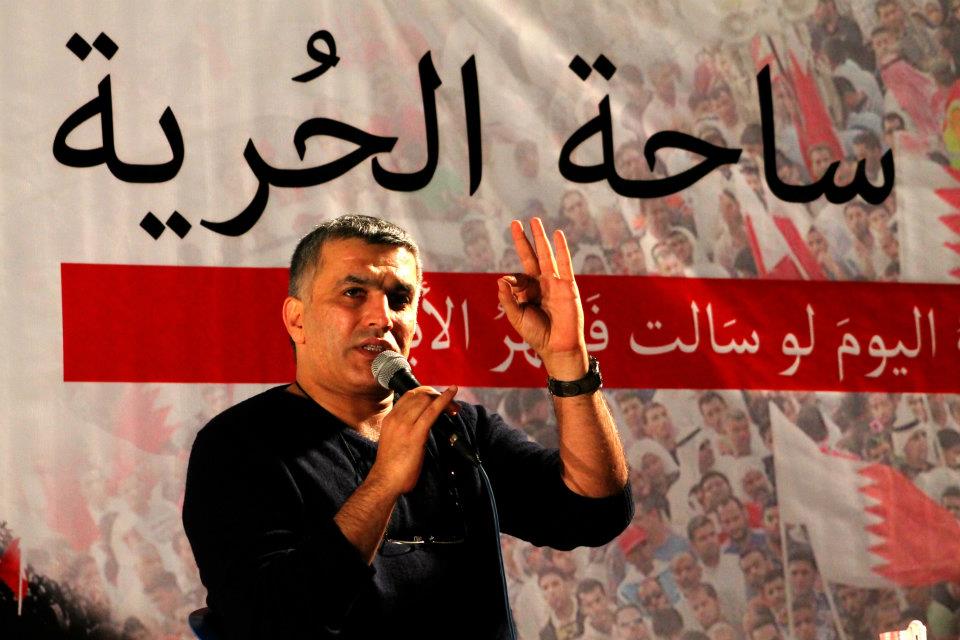
First of all I wish my readers a happy 2019. Unfortunately this year augurs badly for two human rights defenders who have figured frequently in this blog: Ahmed Mansoor [https://humanrightsdefenders.blog/tag/ahmed-mansoor/] and Nabeel Rajab [https://humanrightsdefenders.blog/2015/01/20/video-statement-of-troublemaker-nabeel-rajab-who-is-on-trial-today/]. Courts in the United Arab Emirates and Bahrain on Monday upheld the convictions of these two prominent human rights defenders serving lengthy prison terms for expressing anti-government dissent on social media. They have no right to further appeal. On 4 January 2019 there UN joined the critics of these sentences.

Nabeel Rajab, Final Nominee MEA 2012


https://www.washingtonpost.com/world/uae-and-bahrain-uphold-stiff-prison-sentences-for-human-rights-activists/2018/12/31/a31a3cf2-0d1b-11e9-8f0c-6f878a26288a_story.html?utm_term=.b3d062a3f670

http://icfuae.org.uk/news/uae-10-year-prison-sentence-upheld-ahmed-manoo

https://www.frontlinedefenders.org/en/profile/ahmed-mansoor

https://www.denverpost.com/2018/12/31/emirati-court-upholds-10-year-sentence-against-cu-boulder-grad-for-criticizing-government/

https://www.ifex.org/bahrain/2018/12/31/nabeel-condemn-sentence-upheld/

https://news.un.org/en/story/2019/01/1029832

Barbara von Ow-Freytag argues (well) for a new communication-based approach

December 26, 2018

As the Universal Declaration of Human Rights turns 70 – is it time for a new approach? asks Barbara von Ow-Freytag, Journalist, political scientist and adviser, Prague Civil Society Centre, in the World Economic Forum.This piece is certainly worth reading as a whole. It is close to my heart in that it stresses the need to have a hard look at how young human rights defenders  focus their energy where they can achieve real, concrete change within their own communities. Their campaigns are grassroots-led and use local languages and issues their communities understand. They often use technology and creative formats, with a heavy dose of visual and artistic elements. Where the international scene seems to stagnate and even backpedal, better use of communication skills and tools (such as images) are certainly part of the answer:

As the Universal Declaration of Human Rights turns 70, a new generation of human rights defenders are reinventing themselves to fight for old rights amid a new world order. Based not on declarations, charters and international bodies, but on the values which underpin them – justice, fairness, equality – they shun the language of their predecessors while embracing the same struggle…However, in the new realities of the 21st century, the mechanisms to promote human rights that grew out of the Universal Declaration are showing their age. Authoritarianism is on the rise across the world, with popular leaders cracking down on human rights defenders.

Freedom House found 2018 was the 12th consecutive year that the world became less free. Civicus, which specifically monitors the conditions for civil society activists and human rights defenders, found civil society was “under attack” in more countries than it wasn’t, with all post-Soviet countries (except Georgia) ranging between “obstructed” and “closed”.

Image: Freedom House

Troublingly, both the willingness and the ability of Western bastions of human rights are also on the wane. Inside the EU, talk of illiberal democracy gains traction, and internal crises divert attention away from the global stage. Perhaps unsurprisingly, throughout Eastern Europe and the former Soviet Union, younger activists and civil society are giving up on western governments and international organizations to advocate on their behalf. Pavel Chikov, director of the Agora group, said recently that, “Russian human rights groups no longer have a role model,” calling the liberal human rights agenda “obsolete”.

Growing disillusionment has led many rights groups to shift away from appealing to outsiders for support. Younger campaigners no longer frame their work in the traditional language of human rights, and many do not even consider themselves human rights defenders. Instead of referring to international agreements violated, they focus on solving practical problems, or creating their own opportunities to advance values of equality, justice and fairness.

Formats too have changed. Throughout the region, tools used by civil society to raise social consciousness are becoming diverse, dynamic and smart. Instead of one-person legal tour de forces, genuinely grassroots, tech-powered, peer-to-peer or horizontal networks are proving effective. Media, music, art, film, innovative street protests, urbanism and online initiatives focused on local communities are coming to replace petitions and international advocacy.

Team 29, an association of Russian human rights lawyers and journalists, is among the most successful of this new generation. It has repositioned itself as part-legal aid provider, part-media outlet. Its website offers a new mix of news on ongoing trials, animated online handbooks for protesters, videos on torture and a new interactive game telling young people how to behave if they are detained by police.

What may look like PR-friendly add-ons are actually core to their operation. Anastasia Andreeva, the team’s media expert, says: “Before, we consulted some 30 clients, now we reach tens of thousands of people.”

Azerbaijani activist Emin Milli also embodies this journey of wider civil society – turning away from the international towards local solutions. In the early 2000s, he was a traditional human rights defender, successfully using international mechanisms, such as the Council of Europe to assist political prisoners.

After his own arrest and return to activism, Milli changed tack. “When I was in jail, I had a lot of time to think,” he told the Oslo Freedom Forum. “I decided to do something that will give voice to millions.” His idea? Meydan TV – an online-only independent TV channel, targeting a young audience, which now reaches more than 500,000 people inside Azerbaijan through its Facebook page.  [see also: https://humanrightsdefenders.blog/2013/03/07/azerbaijan-harasses-human-rights-defenders-even-the-recipient-of-the-homo-homini-award/]

The key to Meydan’s success is its accessibility. Milli says: “We do stories about ordinary people. Real Azeris who have everyday problems.” Through its smart coverage, investigating and highlighting how injustice affects these ordinary people, and not referring to UN-enshrined rights and responsibilities, Meydan is “giving a voice to people who fight for women’s rights, people who fight for political rights, for civil liberties, and everybody who feels they are voiceless”.

Music, too, is increasingly being used as a vehicle to realize human rights. Though he might shun the label, Azeri rapper Jamal Ali is perhaps one of the country’s most well-known “human rights defenders”. His songs about injustice and corruption regularly go viral, raising national and international awareness in the same way a statement at the UN General Assembly might have done three decades ago.

In a 2017 hit, he highlighted how two young men had been tortured by police and faced 10 years in prison for spraying graffiti on a statue of former president Heydar Aliyev. In response, the regime arrested Ali’s mother, demanding that he remove the video from YouTube, only to ensure that Ali’s song went even more viral among Azeri youngsters.

Gender equality and women’s rights is also being advanced through unexpected new champions. In Kyrgyzstan, 20-year-old singer Zere Asylbek sparked a feminist shockwave earlier this year with her video Kyz (“Girl”). “Don’t tell me what to wear, don’t tell me how to behave,” she sings, bearing her top to reveal her bra. Seen by millions, the Kyrgyz-language feminist anthem has set off a new #MeToo debate in the Central Asian country, where many young women are still abducted, raped and forced to marry.

In the wake of the video, a first “feminist bar” is about to open in Bishkek. Other feminist videos have been used to directly address the issue of bride-kidnapping, with animated cartoons being used as part of local campaigns to change mindsets in a conservative society.

Perhaps most excitingly, an all-female team of 18 to 20-year-olds is building the country’s first micro-satellite. “Girls taking us into space is the best message against sexism,” says Bektour Iskender, whose news site Kloop initiated the project. He says the girls’ project has a deep social mission, promoting national pride and the country’s return to advanced technological development.

These examples – and countless more – show that civic groups see no value in lobbying an increasingly disinterested West and sluggish international organizations. Instead they focus their energy where they can achieve real, concrete change within their own communities. Their campaigns are grassroots-led and use local languages and issues their communities understand. They target specific audiences, often using technology and creative formats, with a heavy dose of visual and artistic elements.

Addressing discrimination, environmental protection, corruption, health issues, women’s rights, they speak not about the failure of their states to abide by international accords, but about common dignity and life opportunities, addressing people on a direct human level.

Clearly, the values of the Universal Declaration of Human Rights are still valid, but their approach and the packaging have changed. “We all want to change the world,” says Sergey Karpov of the Russian online media and philanthropic platform Takie Dela. “Today communications are the best way”.

https://www.weforum.org/agenda/2018/12/universal-declaration-of-human-rights-70-is-it-time-for-a-new-approach/

Human rights treaties promised a better future. Why did they fail?

December 26, 2018

The end of the year is a good time to reflect on trends that affect human rights defenders. I have referred to several main pieces in the course of this year [e.g.: https://humanrightsdefenders.blog/2018/08/01/human-rights-in-crisis-here-the-last-word-before-the-summer/]. On 20 December 2018, James Loeffler, the Jay Berkowitz chair in Jewish history at the University of Virginia, tried his hands at the the question: “Human rights treaties promised a better future. Why did they fail?” The author argues that the non-binding character of the UDHR, while politically understandable, carried the seeds of its failure: “The strategic decision to sidestep hard law in favor of soft norms yielded a new universal moral language. That success, however, came at the cost of a more comprehensive legal system that could withstand politics and compel states to do the right thing. In a world sorely lacking in global leadership, the champions of human rights stand poised to earn only the hollowest of victories.


Turkey, led by President Recep Tayyip Erdogan, experienced the fastest decline in liberty in the last year, according to the Freedom House rankings. (Adem Altan/AFP/Getty Images)

…….In 2018, however, the declaration [UDHR] remains an unfulfilled promise. Progressives fault the human rights movement for ignoring global economic inequality, and regimes like Iran and Venezuela have cynically weaponized human rights to score propaganda victories at the United Nations while shielding themselves from international scrutiny. But the real problem is less overt politicization or selective implementation than poor design. The truth is that its authors, by crafting a voluntary declaration instead of an international law, left it toothless to protect humans around the world whose rights it sought to enshrine. And in doing so, they laid out a pattern for future failures. Governments might do a much better job of safeguarding the integrity of their citizens today if only the framers in 1948 had insisted that U.N. member-states immediately accept binding rules instead of unenforceable norms.

……..Eleanor Roosevelt clashed with her Soviet counterparts, who opposed trade unions and the right to private property. Latin American representatives wanted God mentioned and abortion prohibited. The Saudis opposed freedom of religion and freedom of marriage as antithetical to Islamic views. The Americans worried about criticism over racial segregation, while the British and the French feared any provisions that might undermine their colonial empires.

What emerged from these debates was a surprisingly modest vision. The goal of the Universal Declaration was not to end state sovereignty or to level the playing field of global justice. Rather, its drafters forged a legal compact in which nation-states would commit to an internal baseline of freedom and welfare for their own citizens. In fact, the final text of the Universal Declaration is remarkably neutral on many core questions of modern politics. It does not demand democracy or proscribe autocracy. It is fully compatible with communism, capitalism and even colonialism.

Most strikingly, it is technically not law at all, but only a statement of nonbinding principles. Originally, the United Nations announced the creation of an International Bill of Rights akin to a global constitution. But over the course of 1947 and 1948, the document’s framers made the fateful decision to separate the declaration from a binding legal covenant, or international treaty, that U.N. member-states could eventually sign into law. At the time, the absence of an enforcement mechanism was viewed as a necessary price to pay for global consensus. Many also assumed that this move would suffice, since Western superpowers would backstop the system with their global clout through the Security Council.

But enumerating rights without obligating states to recognize them left international human rights as soft legal rhetoric bereft of hard legal authority. States could voice selective support for norms without any independent judiciary to verify their claims or provide a forum for injured individuals.

Sharp-eyed observers said as much at the time. In 1947, Hersch “Zvi” Lauterpacht, a leading expert on international law, objected in a BBC radio lecture that “to a lawyer, the enunciation of a right without the provision of a remedy is a juridical heresy . . . What is required at this juncture of history is not the recognition and not even the formulation of inalienable human rights but their effective protection.” A year later, he added, “It is clear to me that the declaration does not carry things further and that in some important respects has put the clock back.”

Lauterpacht was prophetic, for the U.N. Commission on Human Rights, the body of elected country delegates and U.N. bureaucrats charged with supervising the Universal Declaration, quickly showed itself unwilling or unable to respond to requests for help. Between 1947 and 1957, roughly 65,000 letters arrived at its doorstep from individuals alleging human rights violations in their countries. The avalanche of mail powerfully testified to the fact that the Universal Declaration had alerted people to the ideals of human rights. Yet the commission declined to investigate these complaints; neither great powers nor small ones wanted it determining when they’d broken the rules.

In the 1960s and 1970s, the gap between the stirring language of the Universal Declaration and its actual effectiveness only expanded. When new African states entered the U.N. ranks after 1960, many veteran human rights activists hoped they would use their political clout on behalf of the long-planned legal treaties related to the Universal Declaration. They did so in 1966, ushering in two major treaties designed to implement the declaration. This eventually led to other human rights treaties, addressing issues such as racial discrimination and women’s rights, along with the controversial International Criminal Court.

Yet the patchwork nature of this new system of laws made it vulnerable to intense politicization. Worse still, the new postcolonial states proved just as determined as their former Western rulers to guard their sovereignty and pick and choose which rights to observe. In 1968, when the United Nations hosted a conference in Tehran to celebrate the 20th anniversary of the Universal Declaration, Western diplomats came away dismayed by how human rights activism in the developing world had devolved into ideological score-settling. “Many of those who attended the Conference felt that this would be an occasion for mutual backslapping,” wrote Rabbi Maurice Perlzweig of the World Jewish Congress. “As it turned out, it proved to be an occasion for mutual nose-punching.”

Curiously, the political controversy over human rights at the United Nations did not stop a growing interest in the Universal Declaration itself. If anything, disillusionment with the limits of human rights law only increased reliance on the text as a norm. Across the 1970s and 1980s, as human rights grew from an elite U.N. legal project into a grass-roots movement, groups like Amnesty International routinely invoked the Universal Declaration to mobilize public opinion. In the absence of international legal enforcement, popular culture, media and protest politics could be used to name and shame states. The climax came in 1988, when Amnesty International sponsored a series of rock concerts around the world to celebrate the declaration’s 40th anniversary. Leading musicians like Sting, Peter Gabriel, Tracy Chapman and Bruce Springsteen took the stage to promote human rights awareness — along with Amnesty’s own brand and that of its corporate sponsor, Reebok.

The end of the Cold War in the 1990s brought a burst of U.N. efforts to reverse-engineer some of the pieces missing from its half-built legal architecture. The General Assembly launched the Office of the High Commissioner for Human Rights in 1993 to serve as a neutral legal ombudsman, while world leaders gathered in Rome in 2002 to revive the old idea of an International Criminal Court. At the behest of the United States, the rights commission was restructured and renamed as the Human Rights Council in 2006 to depoliticize its work. Yet these institutional developments still do not make up a full legal system that can truly enforce the Universal Declaration as global law.

Last year, the Office of the High Commissioner for Human Rights launched a 70th-anniversary hashtag, #standup4humanrights, and a website that insists “we can all be Human Rights Champions.” All it takes, apparently, is posting individual stories online and recording an article of the declaration in one’s own language. There is hardly any mention of law or politics; it suffices to “promote, engage and reflect.” That lofty rhetoric neatly captures how human rights remain captive to their flawed postwar origins. The strategic decision to sidestep hard law in favor of soft norms yielded a new universal moral language. That success, however, came at the cost of a more comprehensive legal system that could withstand politics and compel states to do the right thing. In a world sorely lacking in global leadership, the champions of human rights stand poised to earn only the hollowest of victories.

https://www.washingtonpost.com/outlook/human-rights-treaties-promised-a-better-future-why-did-they-fail/2018/12/20/bfd843ec-ffc0-11e8-83c0-b06139e540e5_story.html?utm_term=.862e2d5e78fb

Friedhelm Weinberg reflects on HURIDOCS highlights in 2018

December 26, 2018

For those who like to reflect on what was achieved in 2018, here the self-report of one of the smaller, specialized NGOs, HURIDOCS:

At HURIDOCS, we work with  human rights organisations to preserve documentation for memory, advance accountability for abuses and bring key information on human rights at our fingertips. As we are nearing the end of 2018, I want to look back at some of the highlights that shaped our year.

Personally, I have been thrilled to see how much more human rights information we supported to become truly open, across the globe. Next to sustaining our flagship collaborations – the African Human Rights Case Law Analyser, SUMMA and RightDocs – we have supported more than ten collections to be launched this year alone. Together, these collections cover more than 10,000 documents of precedent decisions, resolutions and reports.

This includes pioneering work on digital rights with CYRILLA, economic and social rights with Resourcing Rights, minority issues with minorityforum.info – to only name a few. This is only possible thanks to the excellent collaborations with our partners that curate the collections, and our team that has developed Uwazi to be a flexible and adaptable tool. Together, we make human rights information accessible, as a fundament for activists and advocates to press for change.

Similarly, we have worked with partner organisations to strengthen their capacity to document and investigate human rights violations. Much of this work is sensitive, so it is not prudent for us to celebrate it here, but you can see a glance of just how important it is by reading about our recently completed work with Migrant Forum Asia (MFA), a network of more than 50 local organisations in Asia and the Gulf, on the Hamsa database and accompanying mobile application. This is a comprehensive solution for recording, managing, analysing, and sharing information on labour migration rights. Hamsa currently covers more than 4,500 cases, which were recorded by the MFA network.

Next year, we will also see even more of this work, as our newest tool, Uwazi Reveal, matures through our collaborations with our partners. Their realities and unique contexts shape the development of the tool as a community-sustained resource…

Friedhelm Weinberg

Applications welcome for “Cinema without Borders” workshop

December 20, 2018

Are you into screening films on human rights in Africa, Asia, Eastern Europe, Latin America or the Middle East, and would you like to learn more about programming, organisational matters and attracting new audiences? Then apply for Cinema without Borders, a workshop and networking programme on how to organise a human rights film festival. The five-day programme, which takes place during the Movies that Matter Festival 2019 in The Hague, brings together starting and more experienced film festival professionals from all over the world. See call for proposals here.

More info Cinema without Borders >

See also: https://humanrightsdefenders.blog/2018/09/28/start-up-or-impact-grants-available-for-human-rights-film-festivals/