Archive for the 'human rights' Category

Amnesty International calls on golfers not to play the Saudi propaganda game

January 31, 2019
Rose during the pro-am at Royal GreensRose during the pro-am at Royal Greens
Golf’s world number one Justin Rose should use his profile to highlight human rights issues and counter the “propaganda value” of this week’s Saudi International, according to Amnesty International.

The tournament has attracted a star-studded field despite the killing of journalist Jamal Khashoggi last year [see: https://humanrightsdefenders.blog/tag/jamal-khashoggi/]

Rose has defended his participation by the lame response: “I’m not a politician, I’m a pro golfer“. Human rights violating countries are well aware of the ‘sports-washing’ value of international sporting events, and the players need to understand this too. [ just see some the posts: https://humanrightsdefenders.blog/tag/sports-and-politics/]

AI UK’s director Kate Allen said. “We haven’t called on golfers to pull out of the Royal Greens event and it’s not for us to say who should be playing in these tournaments or whether countries like Saudi Arabia should be hosting them“.

The point with this, like other sporting events in countries with atrocious human rights records, is to fully understand the context…By hosting the European Tour, Saudi Arabia is almost certainly hoping to use the glamour of elite golf and the lush panorama of the Royal Greens course to subtly rebrand the country.” 

AI makes the concrete suggestion:”If each member of the European Tour tweeted their support for Loujain al-Hathloul and the other jailed women’s rights activists in Saudi Arabia, they could go a long way to countering their propaganda value to the Saudi government.”

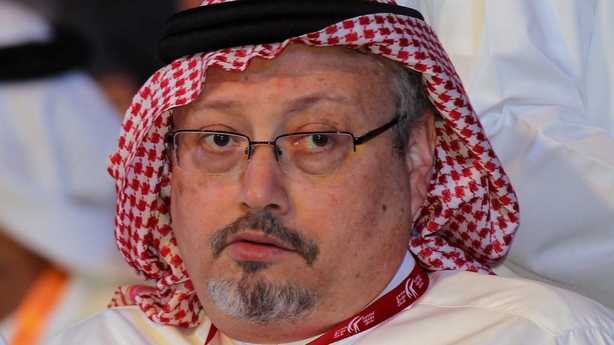
Jamal Khashoggi was murdered by the Saudi regime


See also my: https://humanrightsdefenders.blog/2018/10/19/novak-djokovic-and-rafael-nadal-have-a-chance-to-score-a-point-for-human-rights-defenders/


https://www.rte.ie/sport/golf/2019/0130/1026532-amnesty-calls-golfers/

Tang Jitian receives his French Republic Human Rights prize in Beijing

January 31, 2019

On 10 December, 2018, on the occasion of the 70th anniversary of the Universal Declaration of Human Rights and the 20th anniversary of the United Nations Declaration on Human Rights Defenders, the French National Consultative Commission on Human Rights (La Commission nationale consultative des droits de l’homme) has awarded the annual French Republic Human Rights Prize to six personalities or organizations that have distinguished themselves in their country for the defense and promotion of human rights, and Chinese human rights lawyer Tang Jitian was one of them. He was unable to travel to France to receive the prize. On January 14, 2019, the French Ambassador to China, Mr. Jean-Maurice Ripert, presented him the award in Beijing. For more on this another awards: http://www.trueheroesfilms.org/thedigest/awards/prix-des-droits-de-lhomme-de-la-republique-francaise.

Excerpts from his Acceptance Speech:

Ladies and Gentlemen: 

……Since entering the legal profession, especially after coming to Beijing in 2007, I was determined to use the law to help those who had suffered injustices. In addition to handling human rights cases, I also participated extensively in social actions, one of which was an effort in 2008-09, together with a cohort of lawyers to promote direct elections of the Beijing Lawyers’ Association. This action infuriated the Chinese government, and in April 2010, my license to practice law was revoked. Even though I suffered this blow of losing my normal legal practitioner’s identity, it didn’t stop me from engaging in rights defense work. On the contrary, I threw myself into the work even more actively, including the struggle for lawyers’ own rights and interests. And despite having suffered numerous rounds of forced disappearance and arbitrary detention, accompanied by torture, I nonetheless still had the same intention as before –– to continue to be active in the field of rights defense in China.

Although I’ve been restricted from exiting the country for nearly 10 years, making it impossible for me to fully communicate and work together with the outside world, my view was not completely limited. I still have friends from certain countries who have facilitated my work to varying degrees.

……..Contemporary mainland China has reached a critical juncture: whether to embrace civilization or choose barbarism; whether to practice universal values ​​or push the rules of the jungle; whether to preserve and strengthen the outdated totalitarianism or move toward a new democratic politics –– there is not much time left to waver.  

As a member of civil society, I look forward to China getting on the right track as soon as possible, but those selfish and greedy officials in the government are trying to pull the people back into barbarism. It is difficult to imagine what things would be like to have a China with 1.3 billion people suspended alone for a long period of time outside the civilized world: the deteriorating human rights situation in mainland China is not only a nightmare for the Chinese, but will also be a misfortune for all of humanity.

In the face of this grim situation, groups upon groups of Chinese people eager to live with dignity have fought for their rights and interests in various ways, so that future generations can live in a normal environment, and the Chinese nation will not become a burden to the world. Human rights defenders, including human rights lawyers, are to some extent shouldering a historical responsibility. As one of them, I hope they will receive more understanding, attention, support, and assistance from the international community.

……I will work together with other human rights defenders, from a new starting point, to make a due contribution to the protection of human rights and the advancement of the rule of law...


https://chinachange.org/2019/01/30/acceptance-speech-for-the-2018-french-republic-human-rights-prize/

NGOs express fear that new EU ‘terrorist content’ draft will make things worse for human rights defenders

January 31, 2019

On Wednesday 30 January 2019 Mike Masnick in TechDirt published a piece entitled: “Human Rights Groups Plead With The EU Not To Pass Its Awful ‘Terrorist Content’ Regulation“. The key argument is that machine-learning algorithms are not able to distinguish between terrorist propaganda and investigations of, say, war crimes, It points out that as an example that Germany’s anti-“hate speech” law has proven to be misused by authoritarian regimes. Read the rest of this entry »

Eren Keskin, MEA nominee 2019, speaks out fearlessly: Turkey more oppressive today than ever

January 29, 2019

Turkey‘s anti-democratic mentality has not changed since its foundation, but it has never been as oppressive as today, said Turkish human rights defender Eren KeskinOver the years, Keskin played a vital role in strengthening civil society awareness in Turkey. She became involved with the Human Rights Association (IHD) three years after its 1986 founding and headed its Istanbul branch for years. She has been arrested and imprisoned numerous times, accused of terrorist ties for defending Kurdish rights, and won several awards including the Aachen Peace Award, the Theodore Haecker Prize, the 2018 Helsinki Civil Society Award, the 2018 Anna Lindh Prize, and the 2017 Hrant Dink Award. A new travel ban is likely to stop her from coming to the Martin Ennals Award ceremony on 13 February 2019.

Turkey’s undemocratic mentality has not changed since its foundation,” said Keskin. “There is no change in the mind or understanding of the state. I have been part of the struggle for human rights for nearly 30 years. I have not experienced a period in which freedom of thought and freedom of expression have been contravened this much. Turkey is more oppressive today than ever.

Keskin said she had been brought before the courts more than 100 times and convicted on numerous occasions.

I see the struggle for the defence of human rights as respect for those who have died. It is out of respect for them that I am part of the struggle for human rights,” she said. “We experienced a lot of pressure, but our friends were killed. They were killed fighting for human dignity. I am lucky to be alive…I was assaulted twice with firearms, imprisoned and threatened with death, but never gave up.”

…Keskin became the editor-in-chief of the Kurdish Özgür Gündem newspaper from 2013 to 2016 as part of a solidarity campaign after Turkish authorities arrested its journalists. She was prosecuted for a number of articles that appeared in the newspaper as, under Turkish law, editors-in-chief can be indicted when the authors cannot be held to account. Keskin said 143 criminal cases had been brought against her for her time working at Özgür Gündem. “I have already been sentenced to 12-and-a-half years in prison, a 450,000 lira ($85,000) fine and travel ban,” she said. A court in October lifted the ban on Keskin travelling abroad, but last week she realised she had been given another one when authorities refused to issue her a passport. She had been nominated for the Martin Ennals Award for Human Rights Defenders and was planning to attend the award ceremony in Switzerland. [see: https://humanrightsdefenders.blog/2018/10/24/breaking-news-ennals-award-announces-its-3-finalists-for-2019/]

People ask, ‘How do you live? How do you endure it?’” Keskin said. “For me, the job we do is a way of life and I have never regretted it.”

https://ahvalnews.com/human-rights/turkey-more-oppressive-ever-rights-activist

Guatemala’s slide into violence passes through killings of human rights defenders

January 29, 2019

….Indigenous citizens, many dressed in colorful traditional clothing, came out partly to protest the Guatemalan president’s recent expulsion of a United Nations-backed commission investigating corruption in the country. Since 2007, the International Commission against Impunity in Guatemala, known by its Spanish initials CICIG and funded by the U.N., the United States and the European Union, has worked with Guatemalan justice agencies to target corrupt officials.

In the highly unequal society that is Guatemala, many Maya believe any strengthening of the justice system will protect indigenous rights granted under the country’s constitution and peace accords.

The country’s indigenous people therefore have a strong motivation to lobby for the rule of law. Maya communities bore the brunt of almost four decades of a civil war that ended in 1996, leaving over 200,000 casualties, the majority indigenous Guatemalans, according to the United Nations. Now the mostly Maya organizations and many human rights groups worry that the violence is making a comeback: In just the last year, 26 members of mostly indigenous campesino organizations have been killed.

Guatemala is on the verge of a major human rights catastrophe,” says Jo-Marie Burt, a professor at George Mason University in Fairfax, Va., and a senior fellow at the Washington Office on Latin America, an independent research and advocacy center. According to Burt, the Guatemalan Union of Human Rights Defenders has tallied over 200 attacks against human rights defenders in Guatemala in the last year….Guatemala is close to falling into the violence that gripped the country 30 years ago, which the United Nations and some Guatemala courts say led to a genocide of the country’s indigenous citizens.

One of the killings took place in July, in the province of Quiché, one of the areas hardest hit by the civil war……Hundreds attended her wake and funeral, where a leader of the Campesino Development Committee said the organization would not be intimidated. Indigenous, human rights and international organizations expressed outrage for Raymundo’s murder.

Indigenous scholar and commentator Irma Alicia Velásquez Nimatuj wrote in her column in the newspaper El Periódico, “After having lived through a genocide, we should have learned the lesson that no one in Guatemala, regardless of ethnicity, gender or class, should be killed for thinking differently … or for dreaming of a different future.

According to Velásquez, Guatemala has entered “a new stage of repression”one focused on “assassinating community leaders who defend their territories from invasion by transnational companies bent on depriving indigenous peoples of the resources they have in the soil and the subsoil.

Numerous conflicts over land and mineral rights have surfaced in indigenous communities throughout Guatemala.

…..On Aug. 5, shortly after Raymundo’s killing, the respected sociologist Edelberto Torres-Rivas provided historical context for the attacks on rural leaders in a long opinion piece for El Periódico. …. He went on to warn that “In Guatemala there is a return of those who’ve carried out crimes in the recent past … and if the authorities don’t take care … there could be a reaction.”…..

——-

https://www.npr.org/2019/01/22/685505116/killings-of-guatemalas-indigenous-activists-raise-specter-of-human-rights-crisis?t=1548231003780

https://www.aljazeera.com/indepth/opinion/attacks-indigenous-rights-defenders-181206094334223.html

https://reliefweb.int/report/guatemala/iachr-expresses-alarm-over-increase-murders-and-aggressions-against-human-rights

https://www.telesurenglish.net

Three NGOs urge you to nominate Ilham Tohti for the Rafto Prize

January 29, 2019
Photo courtesy of the Radio Free Asia

On 28 January, 2019, the Unrepresented Nations and Peoples Organization (UNPO), the World Uyghur Congress (WUC) and Norwegian Uyghur Committee (NUK) announced that they have nominated the Chinese human rights defender Ilham Tohti for the Rafto Prize. With the completion of five years of his arrest, the organisations believe his peaceful trajectory in defense of the freedom and fully enjoyment of human rights by the Uyghur population in China is deserving of this prestigious prize. See also: https://humanrightsdefenders.blog/2018/01/15/today-ilham-tohti-completes-his-fourth-year-in-chinese-detention/.

[Ilham Tohti served as a professor of economics at Minzu University in Beijing where he specialized in research focused on Uyghur-Han relations, China’s ethnic policies and East Turkistan. Alongside his scholarship and teaching, Ilham is revered for establishing and maintaining Uyghur Online, a website dedicated to promoting Uyghur human rights and improved relations between Uyghur and Han Chinese people. Professor Tohti criticised oppressive policies against Uyghurs and wrote extensively on constructive approaches to overcome unequal treatment between ethnic groups. Notably, he called for dialogue and reconciliation, using his web platform as the primary vehicle. For his efforts, he was arrested by Chinese authorities on January 15, 2014. Despite the UN Working Group on Arbitrary Detention finding his detention to be arbitrary in March 2014, Tohti was sentenced to life in prison in September of that year on charges of “separatism” after just a two-day trial. The legal process involving Tohti was met with significant issues throughout. His lawyers were unable to meet him for six months following the initial arrest, his defense team was not provided with complete evidence by the prosecutor, nor were their requested witnesses allowed to testify during the trial. Ilham has been serving his life sentence since December 2014 at Urumqi’s No. 1 Prison. Since then, he has been allowed very few visits from his family. Complicating this has been his continued detention in Urumqi, despite his family living in Beijing – a likely punitive move from Beijing. ChinaChange has noted that Tohti has been held in solitary confinement until at least early 2016 and has been denied the right to communicate with family and friends aside from minimal visits. The WUC gathered 132 scholars and 19 civil society organisations in an open letter to urge the Chinese government to release Ilham Tohti from his arbitrary detention of the five-year anniversary of his arrest in January 2019.]  

In 2014 Mr. Tohti was awarded the PEN/Barbara Goldsmith Freedom to Write Award. On October 11, 2016, Tohti was awarded the Martin Ennals Award for Human Rights Defenders. In 2017 he received the Weimar Prize (https://humanrightsdefenders.blog/2017/07/05/uyghur-human-rights-defender-ilham-tohti-wins-also-weimar-human-rights-prize/). He was also nominated for the European Parliament’s Sakharov Prize in 2016. See also: https://humanrightsdefenders.blog/2016/10/15/martin-ennals-award-2016-relive-the-ceremony-in-13-minutes-or-in-full/

The WUC,the UNPO and the NUK encourage scholars and organisations to join in nominating Ilham Tohti. The deadline for nominations is Friday, February 1st. As the situation in East Turkistan continues to deteriorate, with more than one million innocent Uyghurs arbitrarily detained in internment camps and the Uyghur people facing unparalleled repression, Ilham Tohti’s life and work stands as an inspiration to continue the peaceful struggle for peace, understanding

https://unpo.org/article/21350


Internet shutdowns to silence opposition – what to do?

January 28, 2019

“African governments use Internet shutdowns to silence opposition more and more —what can people do?” askson EuroNews of

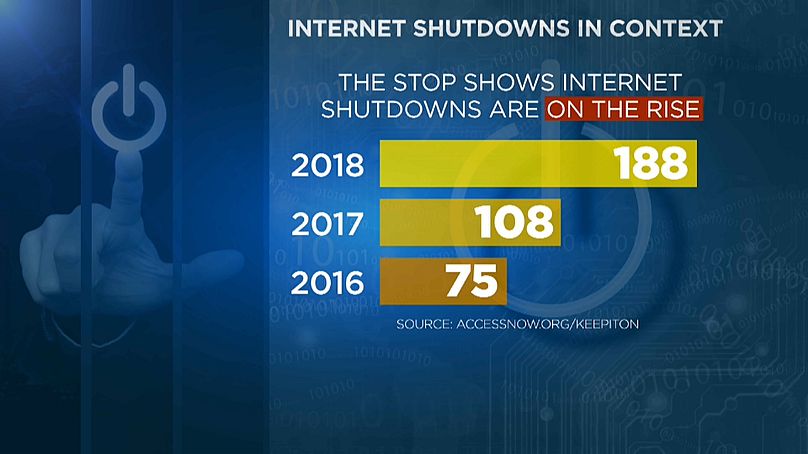
What would you do if your government decided to intentionally shut down your access to the Internet? Millions of people around the world have had to answer this question time and time again over the past few years, as government-mandated Internet blackouts are on the rise. Less than a month into 2019, Sudan, the Democratic Republic of Congo, Gabon and Zimbabwe have experienced government crackdowns on Internet connections.

From 2016 to 2018, 371 separate cases of Internet shutdowns were documented around the world. More than half of them occurred last year alone, according to international non-profit organisation Access Now.

Authorities have used a number of reasons to justify the blackouts, including public safety, national security and stopping the dissemination of rumors and illegal content. However, advocacy groups investigating governmental tendencies to exert control over the flow of information don’t buy it. They claim it has more to do with silencing opposition movements and protests and trying to limit political instability.

They harm everyone: businesses, emergency services, journalism, human rights defenders, and demonstrators. They don’t help victims or restore order,” Access Now’s website reads.

In the past few weeks, several African governments have turned to partial or complete shutdowns in attempts to control the public discussion.

Sudan doubled down on social media amid widespread anti-government protests, with Access Now and the #KeepItOn coalition calling on network operators to fight back against state pressure — but it wasn’t the only African country to do so.

Zimbabwean authorities were quick to gag social media — including Facebook and Whatsapp — as soon as civil unrest over rising fuel prices spread in Harare and other major cities, and the DRC also ordered a full blackout following recent elections…..

From 2016 to 2018 alone, Africa witnessed 46 Internet shutdowns,…….Chad, Sierra Leone, Ethiopia, Somaliland, Algeria, Togo, Cameroon, Gambia, Uganda, Gabon, Algeria, Morocco, Lybia, Tunisia, and Algeria have all cracked down on their citizens’ access to the Internet in the past.

How did citizens react to Internet or social media shutdowns?

People always find a way”, Zimbabwean analyst Alexander Rusero told Euronews. “But it {VPN} doesn’t work for everyone”, Rusero pointed out. “Usually the ones in Harare, at the centre of the country, manage to”.

The analyst was quick to underline the issues behind similar crackdowns…”During the Internet blackout there were a lot of lies and rumors — they spread faster than you would believe. Media relies on social media, and so do critical opinion leaders. Outside those platforms, fake news manifest”.

Jean-Hubert Bondo, a journalist from the Democratic Republic of the Congo, doesn’t believe the problems end here. “Many Congolese families live off their small cybercafés. Also, we are in a country where there are not enough physical libraries. Students and researchers use the Internet to research their work at the university. Young people animate pages on Facebook and WhatsApp”, he told Euronews. “To deprive us of the Internet is to take us back to antiquity”. As for the VPNs Rusero mentioned — the most common ways to avoid Internet censorship worldwide — Bondo said that, during the latest shutdown, they failed to work. “In response to what is being perceived as a violation of human rights, Bondo reported that several Congolese civil society organisations have now lodged a complaint against the main telecommunication companies.

In Uganda, a crackdown on Twitter, Facebook, WhatsApp, YouTube, and mobile money apps in February 2016 as citizens were heading to the polls sparked a legal case that will be discussed in court in February 2019. “Shutdowns may not silence people, but they do hinder communication”, said Ugandan blogger Ruth Aine Tindyebwa….

https://www.euronews.com/2019/01/26/african-governments-use-internet-shutdowns-to-silence-opposition-more-and-more-what-can-pe

https://www.dailynews.co.zw/articles/2019/01/27/ed-justifies-internet-shutdown

Other members of the UN’s Khashoggi investigation team named

January 26, 2019
The United Nations’ human rights office in Geneva confirmed on Friday a Reuters report that three-member team of international experts would conduct an inquiry into the murder of Saudi journalist Jamal Khashoggi. [https://humanrightsdefenders.blog/2019/01/26/u-n-rapporteur-agnes-callamard-to-investigate-kashoggi-murder/]. The other two panel members – in addition to Agnes Callamard – are British barrister Helena Kennedy and Duarte Nuno Vieira, a pathology expert and professor at the department of legal and forensic medicine and ethics and medical law at Coimbra University, Portugal.

The trio will visit Turkey from Jan 28-Feb 3 and plan to report to the U.N. Human Rights Council in June, it said.

There was no word on whether the panel would seek access to Saudi Arabia or whether the kingdom would cooperate. The Saudi diplomatic mission in Geneva did not respond to inquiries. On 29 January Human Rights Watch stated that the team has in fact requested to visit Saudi Arabia. HRW added that” Once Callamard presents her findings to the Human Rights Council, UN member states should explore avenues for holding to account everyone responsible for Khashoggi’s murder, from the operatives who dismembered him with a bone saw to any officials who ordered or organized the killing.”

Read more at https://www.channelnewsasia.com/news/world/un-names-members-of-international-inquiry-on-khashoggi-murder-11166718

https://www.hrw.org/news/2019/01/29/un-rights-expert-independently-investigates-khashoggi-murder

U.N. Rapporteur Agnes Callamard to investigate Kashoggi murder

January 26, 2019
A UN special rapporteur told Reuters on Thursday 24 January 2019 she will travel to Turkey next week to head an “independent international inquiry” into the murder of Saudi journalist Jamal Khashoggi. [see also: https://humanrightsdefenders.blog/2018/12/18/in-spite-of-khashoggi-riyadh-wants-to-be-the-capital-of-media/]

Earlier on Thursday, Turkish Foreign Minister Mevlut Cavusoglu said it was time for an international investigation and that President Erdogan had ordered preparations to be made. “I will be heading an independent international inquiry into the killing of Saudi journalist Mr. Jamal Khashoggi, commencing with a visit to Turkey from 28 January to 3 February 2019,UN Special Rapporteur  on extrajudicial, summary or arbitrary executions Agnes Callamard said in an email reply to Reuters in Geneva.

My findings and recommendations will be reported to the U.N. Human Rights Council at the June 2019 session,” she said.

[Callamard, a French academic who is director of the Columbia Global Freedom of Expression initiative at Columbia University in New York, reports to the U.N. Human Rights Council in Geneva and has a global mandate to investigate executions. See also: https://humanrightsdefenders.blog/tag/agnes-callamard/]

New imagination needed to understand global human rights situation says AHRC

January 25, 2019

During the last years I did quite a few posts on the changing ‘mood’ if not reality of the international human rights movement and the place of human rights defenders in it. [e.g.https://humanrightsdefenders.blog/2017/02/24/2017-10-need-to-reset-for-human-rights-movement; /https://humanrightsdefenders.blog/2018/04/25/has-the-human-rights-movement-failed-a-serious-critique/, and https://humanrightsdefenders.blog/2018/08/01/report-of-meas-25thanniversary-event-human-rights-in-a-changing-world-30-may-2018/].

Now the NGO “Asian Human Rights Commission” (AHRC) published its own view in a Statement of 23 January 2019 entitled :  “New imagination needed to understand global human rights situation.“.

Read the rest of this entry »