On 4 August 2023 UN High Commissioner for Human Rights, Volker Türk, expressed deep regret at the closure of his office in Uganda, following the Government’s decision not to renew the Host Country Agreement. The office in Kampala will officially cease its operations on Saturday. Sub-offices in Gulu and Moroto closed on 30 June and 31 July. See also: https://www.hrw.org/news/2023/02/15/uganda-threatens-close-un-human-rights-office
“I regret that our office in Uganda had to close after 18 years, during which we were able to work closely with civil society, people from various walks of life in Uganda, as well as engaging with State institutions for the promotion and protection of the human rights of all Ugandans,” said Türk.
“Much progress has been made in the country over the years, but serious human rights challenges remain in the path to full enjoyment of human rights for all,” the High Commissioner said.
Türk expressed particular concern about the human rights situation in Uganda ahead of the 2026 elections, given the increasingly hostile environment in which human rights defenders, civil society actors and journalists are operating.
He noted that most of the 54 NGOs that were arbitrarily suspended in August 2021 remain closed. The High Commissioner also expressed concerns that the amended Computer Misuse law may further erode free expression.
Türk warned against retrogression from Uganda’s commitments under the international human rights treaties it has ratified, including in the passage of the deeply discriminatory and harmful anti-homosexuality law, that is already having a negative impact on Ugandans.
Türk urged the Government to ensure the national human rights body can function effectively and independently, as the the main body tasked with human rights oversight in Uganda.
“The Uganda Human Rights Commission, our long-standing partner in the protection and promotion of human rights in the country, is chronically under-funded and under-staffed, and reports of political interference in its mandate undermine its legitimacy, independence and impartiality,” he said.
“I urge the Ugandan government to provide the Commission with adequate human, technical and financial resources so that it may more effectively execute its important mandate.”
“On our part, the UN Human Rights Office remains committed to working on human rights in Uganda, in line with my global mandate,” he added.
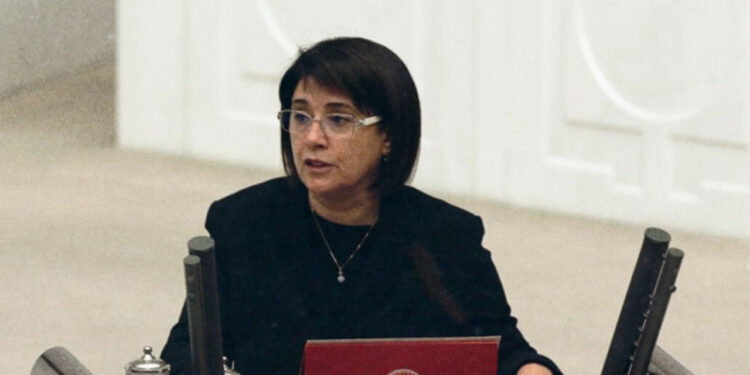
Leyla Zana, a renowned Kurdish politician and human rights activist, and the first Kurdish female member of the Turkish parliament, will face prosecution on 7 September 2023, with her international awards being cited as “criminal evidence” in the indictment.
Former Member of Parliament Leyla Zana is due to stand trial in a Turkish court on 7 September 2023, facing accusations of “terrorist propaganda” in her speeches and charges of accepting international awards, deemed as “crimes” under Article 325/1 of the Turkish Penal Code. The penal code article, titled “Acceptance of Titles and Similar Honours from the Enemy,” stipulates that a citizen who accepts academic degrees, honours, titles, medals, or other honorary ranks from a state at war with Turkey could face imprisonment from one to three years.
Zana’s lawyer, İbrahim Çeliker, has questioned the basis of the charges, asking, “Which awards received by Ms. Zana could be a source of crime? Which country has Turkey declared war on? These need to be clarified. The awards in question that Ms. Zana received are awards given from European countries and America on human rights,” Çeliker stated. [see: https://www.trueheroesfilms.org/thedigest/laureates/82F7AAA5-88D1-47E8-8B62-4EBC66D1602D]
Zana is internationally recognised for her human rights work and political activism. Her accolades include the Thorolf Rafto Memorial Prize, the Sakharov Prize for Freedom of Thought, the Aachen Peace Prize, the Bruno Kreisky Prize, and the Freedom Medal by the American Human Rights Association. One should add the Juan Maria Bandres Prize for Human Rights and Refugee Protection in 2008. She has also been awarded the Silver Medal of the City of Paris and has been recognised as an “Honorary Citizen” by the cities of Paris and Geneva.
The indictment also implicates pro-Kurdish Democracy Party (DEP) former MP Orhan Doğan and Vedat Aydın, the People’s Labour Party (HEP) Diyarbakır (Amed) Provincial Chairman who was killed in 1991, citing their participation in memorial programmes as criminal. Çeliker responded to this, stating, “The prosecutor considers Orhan Doğan and Vedat Aydın as members of the PKK [Kurdistan Workers’ Party]/KCK [Kurdistan Communities Union]. He sees the mention of these names as a criminal element. However, Orhan Doğan is a Kurdish politician who spent years in prison with Leyla Zana and served as an MP. Vedat Aydın is a Kurdish intellectual who fell victim to an unsolved murder.”
Çeliker also emphasised that the indictment targets freedom of speech, stating, “The main point that the prosecutor focuses on is Ms. Zana’s speaking in Kurdish. There is a special clause in the indictment about her speaking in Kurdish. He emphasises this as a fault and evidence of the alleged crime; the crime of making terrorist propaganda. There are expressions picked out from speeches made in the fields of peace, brotherhood, and democracy … Ms. Zana has never praised violence, she has fought for peace to come, she is a politician who has paid the price.”
“Activism is not terrorism” . . . five Filipino indigenous peoples’ leaders and advocates have been branded as “terrorist” individuals and their property and funds have been frozen. Image: CIVICUS
On 28 July, 2023 CIVICUS, a global alliance of civil society organisations, has protested to Philippine President Ferdinand “Bongbong” Marcos Jr in an open letter over the “judicial harassment” of human rights defenders and the designation of five indigenous rights activists as “terrorists“.
CIVICUS, representing some 15,000 members in 75 countries, says the harassment is putting the defenders “at great risk”.
It has also condemned the “draconian” Republic Act No. 11479 — the Anti-Terrorism Act — for its “weaponisation’ against political dissent and human rights work and advocacy in the Philippines.
The CIVICUS open letter said there were “dire implications on the rights to due process and against warrantless arrests, among others”.
The letter called on the Philippine authorities to:
Immediately end the judicial harassment against 10 human rights defenders by withdrawing the petition in the Quezon City Regional Trial Court Branch 84;
Repeal Resolution No. 35 (2022) designating the six human rights defenders as terrorist individuals and unfreeze their property and funds immediately and unconditionally;
Drop all charges under the ATA against activists in the Southern Tagalog region; and
Halt all forms of intimidation and attacks on human rights defenders, ensure an enabling environment for human rights defenders and enact a law for their protection.
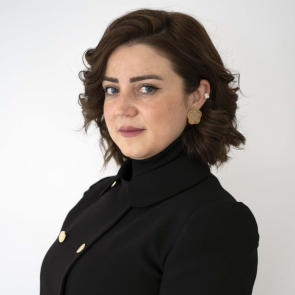
On 26 July 2023 Front Line Defenders stated that it stands in solidarity with Hiba Ezzideen Al-Hajji, and calls on the de facto authorities in Idlib to put an end to the targeting of the Syrian woman human rights defender.
Despite the efforts of human rights organisations, women human rights defenders in Syria continue to face many forms of restrictions and threats. In this context, Hiba Ezzideen Al-Hajji, a woman human rights defender and CEO of the feminist organisation Equity and Empowerment, has recently been targeted by a malicious online defamation campaign because of her work on women’s rights and democracy in Syria. On 4 July 2023, Hiba Ezzideen Al-Hajji received death threats from unknown individuals who disagreed with her advocacy efforts for “equality and democracy,” asserting that such work went against the teachings of Islam. Subsequently, the Facebook page of her organisation Equity and Empowerment was overwhelmed with hateful comments and threats, further escalating the distressing situation.
Those behind the defamation campaign are believed to be Jihadists operating in Idlib, northwestern Syria, where the woman human rights defender conducts her human rights work. The woman human rights defender has previously reported that these radical groups were responsible for similar threats, indicating a pattern of persecution and harassment against her and other human rights defenders in the area.
The attacks have also manifested in offline harm. On 18 July 2023, a family member of the woman human rights defender was insulted by a stranger who threatened them saying that if Hiba Ezzideen Al-Hajji does not stop her work, one of her family members will be killed. The defamatory narrative against Hiba Ezzideen Al-Hajji aims at inciting further hatred and violence against her, all in an effort to undermine her human rights work.
On 21 July 2023, an imam in the countryside outside of Idlib gave a sermon which mentioned the woman human rights defender Hiba Ezzideen Al-Hajji and the organisation Equity and Empowerment. The sermon called for the organisation to be closed, incorrectly mentioning its links to western states as a means of discrediting its work.
On 2 March 2020, Ahmed Shaheed, the UN Special Rapporteur on freedom of religion or belief declared that they “firmly reject any claim that religious beliefs can be invoked as a legitimate ‘justification’ for violence or discrimination against women or girls.”
The campaign has taken place over various online platforms, including WhatsApp, Facebook, Twitter and Telegram, using fake and verified accounts to post derogatory fake images of the human rights defender along with hateful captions. In addition to this, she has been subjected to death threats, harassment, and incitements against her and her family, along with doxing, deep fakes, threats of rape and sexual slurs.
Front Line Defenders believes that the defamation campaign is directly related to Hiba Ezzideen Al-Hajji’s work in defence of human rights, in particular her work towards the promotion of women’s rights in Syria. Front Line Defenders strongly condemns the defamation campaign against the woman human rights defender Hiba Ezzideen Al-Hajji. It calls on the de facto authorities in Idlib to put an end to the targeting of the woman human rights defender, including the defamation campaign, and demands that Hiba Ezzideen Al-Hajji’s safety and well-being be protected as well as that of all women human rights defenders facing similar threats and attacks in the country.
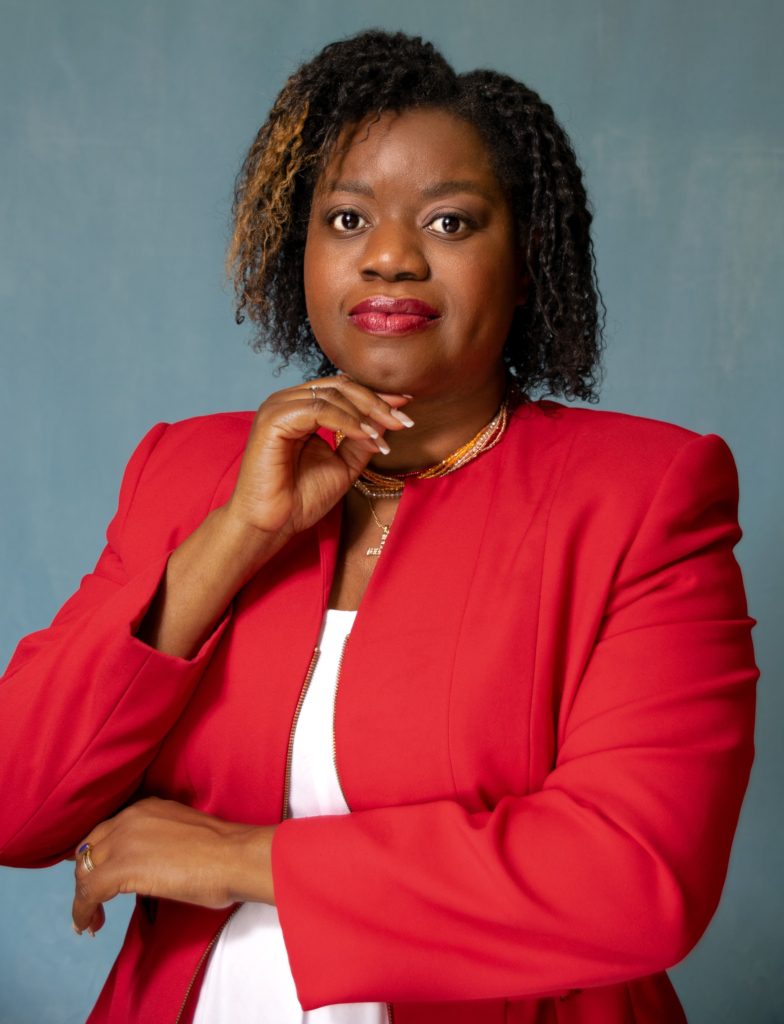
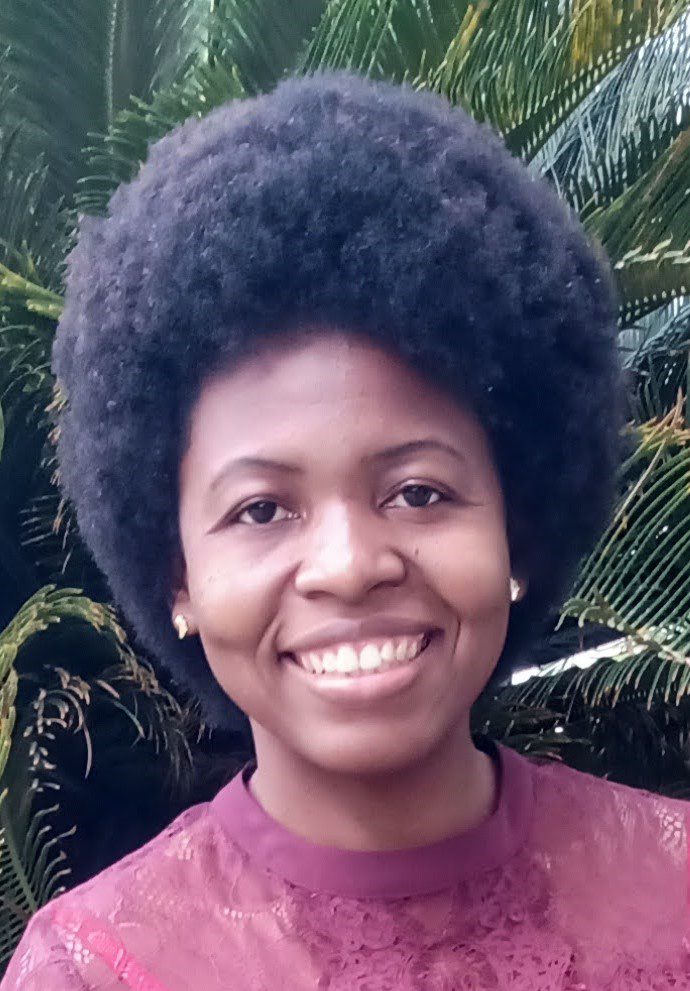
On 25 July, 2023 – International Afro-Latina, Afro-Caribbean and Diaspora Women’s Day, – Amnesty International highlighted nine defenders and collectives who have devoted their lives to ending inequality and violence, advocating a dignified life for all people because their work deserves the recognition, visibility, protection and resources necessary for it to continue to spread.
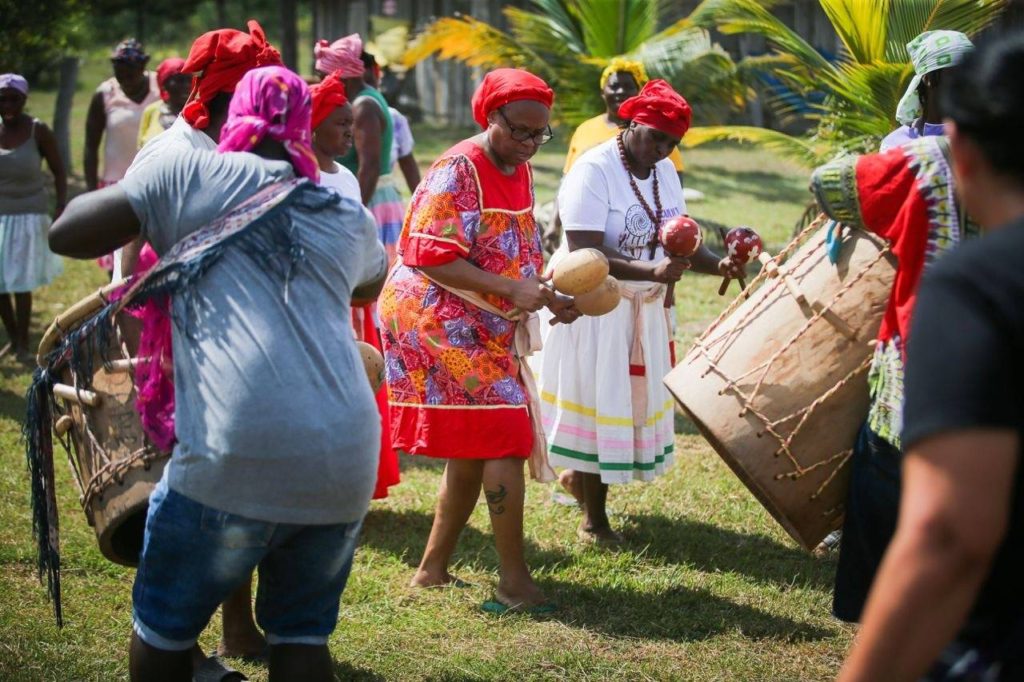
Rede Vozes Negras pelo Clima, Brazil
Rede Vozes Negras pelo Clima is an initiative of 11 Black Brazilian women who are working in their respective territories to protect human rights, confront climate racism and promote anti-racist socio-environmental justice. They belong to traditional, riverine quilombola communities. They are also activists and leaders of communities that live on the margins of large urban centres, communities that are being directly affected by the consequences of the climate crisis and development projects that fail to take into account the rights of local populations.
They are thus fighting for anti-racist adaptation policies and an energy transition that will guarantee the promotion of human rights and nature. Mitigation initiatives need to incorporate the ancestral knowledge and wisdom of traditional peoples and communities and ensure the participation of those people affected by extreme weather events when decisions are being made as to the investments that need to be made to repair losses and damage.
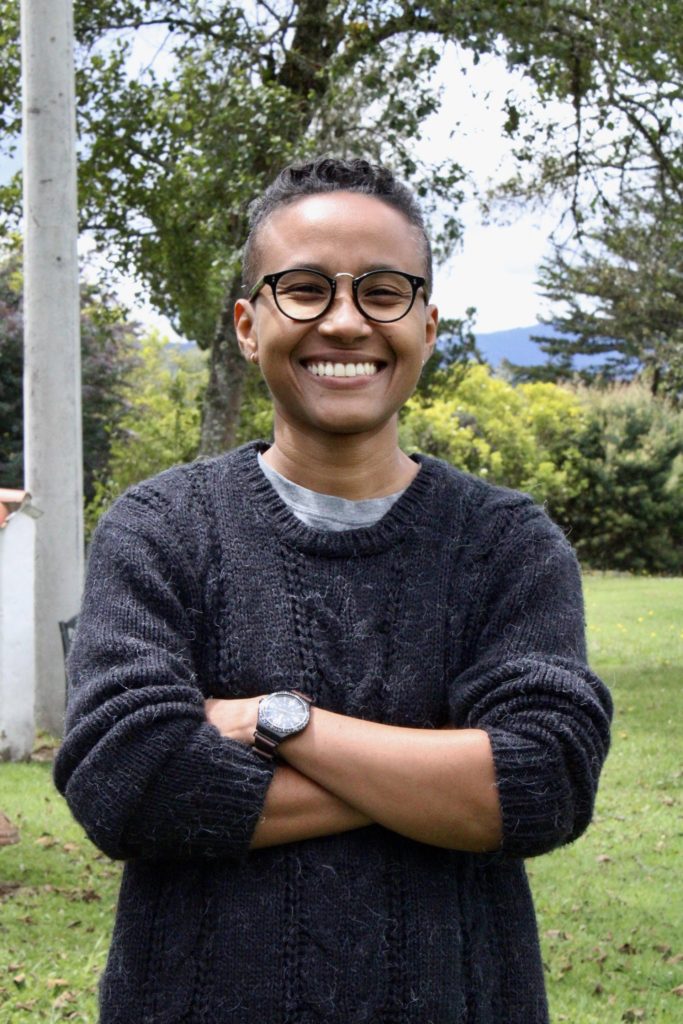
Dayana Blanco Acendra, Colombia
Dayana Blanco is a renowned Colombian lawyer who heads ILEX Acción Jurídica, an Afro-Colombian and Afro-LGBTQI+ organization committed to racial justice in Colombia, Latin America and the Caribbean. According to Blanco, “Racial justice in Colombia requires all of society to commit to combatting the historical inequality that has affected the Afro-descendant population. This means actions to address social and economic inequality.”
With an outstanding academic background and experience in different sectors, Dayana has promoted innovative research on racist police violence, statistical invisibility in the systematization of violence against Afro-descendant leaders and economic and social rights. In addition, together with her team and in coordination with other civil society organizations, she has obtained notable rulings in defence of Afro-Colombian midwifery, overcoming the statistical invisibility of the Afro-descendant population, among others, and demonstrating her dedication to the struggle for equality and justice.
Under her leadership, ILEX has – through legal mobilization, research and strategic communications – become a reference for promoting the rights of the Afro-descendant population. Dayana and her team highlight the importance of addressing social and economic inequality as a fundamental element of racial justice in Colombia, calling on the whole of society to unite in the struggle and build a more equitable future for all.
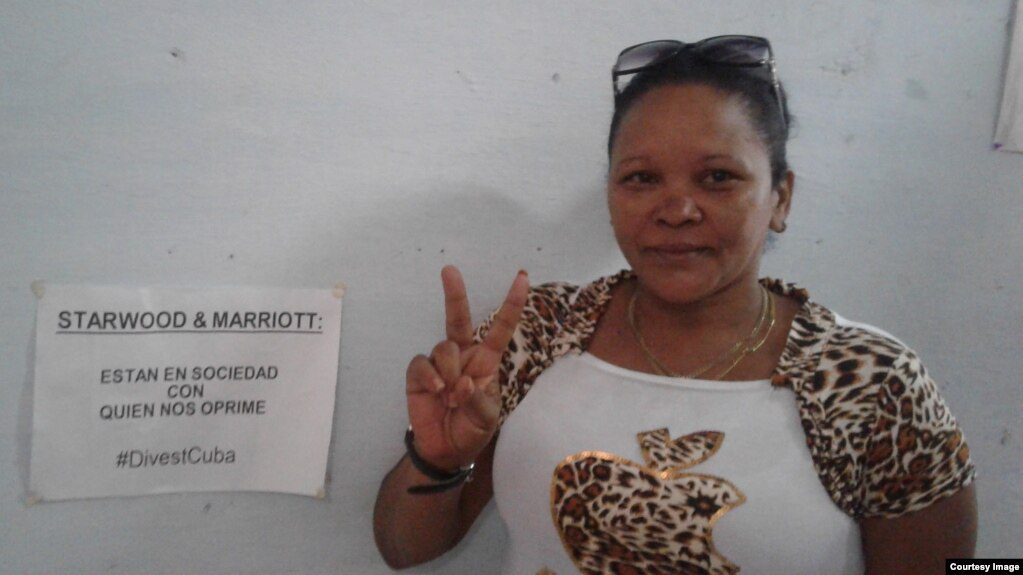
Donaida Pérez Paseiro, Cuba
Donaida Pérez Paseiro is a Black activist, religious leader and president of the Asociación Yorubas Libres de Cuba. Yoruba is a religion of the African diaspora that is practised in many countries, including Cuba. Donaida was arrested on 16 July 2021 and sentenced in February 2022 to eight years’ imprisonment by the Santa Clara Municipal People’s Court for “public disorder”, “contempt” and “attacking” an official. According to the information available to Amnesty International, Donaida should never have been charged with these crimes.
The charges of “contempt” and “public disorder” are frequently used in Cuba to limit the right to freedom of expression and peaceful assembly. Both she and her husband, Loreto Hernández García, were tried along with 14 other protesters in what appears to have been an unfair trial.
Donaida is the wife of Yoruba leader and activist Loreto Hernandez Garcia who was unjustly sentenced to seven years in prison for demanding respect for human rights in Cuba during the 11 July 2021 demonstrations.
Donaida is an example of courage and perseverance in the resistance against repression in Cuba. Her commitment has manifested itself in numerous peaceful marches and protests. According to her family, she was a freelance journalist and founded the Laurel Express press agency, where she gave visibility to the injustices and challenges faced by her community in the city of Placetas. Her activism spans multiple spheres, having been a member of the Orlando Zapata Tamayo resistance front and the central opposition coalition. Donaida’s legacy transcends borders and leaves a profound inspiration for those who seek a Cuba without repression.
Guerline M. Jozef, Haiti
Guerline M. Jozef is the founder and executive director of the Haitian Bridge Alliance, the only Black and Haitian women-led organization serving migrants on both sides of the U.S.-Mexico border. Named one of the most influential people in 2021 on racial issues by Politico, she is also co-founder of the Black Immigrants Bail Fund and the Cameroon Advocacy Network.
The Haitian Bridge Alliance (HBA), also known as “the Bridge,” is a grassroots community-based organization that advocates for just and humane immigration policies and provides migrants and immigrants with humanitarian, legal and social services, with a special focus on Black migrants, the Haitian community, women and girls, LGBTQIA+ people, and survivors of torture and other human rights abuses. HBA also seeks to highlight issues specific to Black migrants and encourages solidarity and collective action to bring about policy changes. Through her work, Guerline reminds us that together, Anpil men, chay pa lou! Many hands lighten the load!
Miriam Miranda, Honduras
An Afro-indigenous Garífuna leader from Honduras, Miriam Miranda stands out as a courageous defender of human and environmental rights. As coordinator of the Organización Fraternal Negra Hondureña (OFRANEH), she has carried out invaluable work to protect and defend the rights of the Garífuna people in Honduras. Her tireless work, lucidity and commitment have earned her the recognition of prestigious awards, such as that of the Friedrich Ebert Foundation, as well as the Carlos Escaleras and Oscar Romero awards.
Miriam’s struggle is deeply rooted in the Garífuna territory of Honduras and is manifested through the history of OFRANEH, an organization through which these people are building their dignity and their future. The land and the sea, as an indispensable part of their identity, determine an essential struggle to preserve the natural assets of their territory.
Miriam is a highly respected thinker and leader within the social movement. She has an enormous capacity to devour books and mobilize energies from all sides to defend her people. She is one of those people who make life possible, whose words always point forward and who finds strength in the deep roots of her origin, where her future of freedom was born. As the daughter of Barauda (representing Garífuna female strength, Barauda is an historical character who pushed the Garífuna hero Sathuye to continue the struggle for the liberation of his people), Miriam has turned her critical eye to the source of it all: the predatory civilization of consumerism.
Her tireless work and courage inspire others to keep fighting. Her contribution and leadership have already left an indelible mark on the history of Honduras and global struggles for territory. [see also: https://humanrightsdefenders.blog/tag/miriam-miranda/]
Shackelia Jackson, Jamaica
The extrajudicial killing of her brother, Nakiea Jackson, in 2014 pushed Shackelia Jackson into a life of activism. Since then she has been healing, evolving, learning and gathering the tools with which to reconcile her conflicting realities. A political science scholar and communicator, Shackelia is the mother of an empathetic child, who longs with innocence to experience the world. Despite challenges and setbacks, Shackelia remains dedicated to the wider struggle, supporting causes that prevent the institutionalization and normalization of practices that violate human rights and erode the sanctity of life.
Through her grassroots organizing efforts in Jamaica, she has raised funds to support back-to-school initiatives and education programmes, recognizing the importance of empowering the younger generation. Shackelia’s work has gone far beyond her local community. She has become a global force, lending her voice and expertise to international platforms. As keynote speaker at an Amnesty International event in London, she captivated the audience with her powerful words, urging them to stand up and take action. In 2017, Shackelia also participated in roundtable discussions at Amnesty International events in Brazil and the United States, amplifying the voices of the oppressed and demanding accountability.
It was on this journey that Shackelia realized that change starts with each individual. She has encouraged others to join her in writing for rights, and to use their words as weapons against injustice. “Let us write until we are heard, let us write until justice is done,” she said.
Ivana C. Fred Millán, Puerto Rico
Ivana Fred is a prominent Black and transgender activist, writer and leader from Puerto Rico. She has dedicated her life to fighting for human rights and equality for transgender people in her country. Her passion for justice has made her an influential figure and a powerful voice in Puerto Rican society.
Since her first steps into activism in 1999, Ivana has formed part of pioneering projects aimed at trans people and has used her voice and pen to amplify the stories and needs of trans people.
As she says: “Life put me in a place where I could develop as a leader, the ‘Ponte el Sombrero’ project gave me the tools to empower and educate socially disadvantaged and discriminated populations. That was how I came to understand that to exist is to resist”.
Ivana has also made her mark in the media, writing for the Metro newspaper and participating in acclaimed documentaries and films such as “Mala Mala” and “Las Muchachas”. Her presence and perspective have helped generate greater visibility and understanding of transgender experiences in Puerto Rico.
Ivana Fred is currently one of the directors of the organization Trans Goofy Games, where she continues to lead and support initiatives that promote transgender inclusion and empowerment. With unwavering commitment, Ivana has remained a visible leader and loyal activist. From her early days of activism to the present day, her voice has been resolute in seeking dignity and respect for all transgender people.
With her courage and determination, Ivana has shown that to exist is to resist and has paved the way for a more inclusive and respectful future in Puerto Rico and beyond. Her legacy as a visible leader and her tireless activism inspire us all to continue fighting for a world where everyone can live with equality and dignity.
Elena Lorac, Dominican Republic
Elena Lorac is a prominent activist and advocate for human rights in the Dominican Republic, especially on the part of Dominicans of Haitian descent. As national coordinator of the Movimiento Reconoci.do, she has led the fight for the right to nationality and full integration of this community into Dominican society.
With more than 12 years’ experience, Elena has worked to strengthen community leadership and empower black women in the country’s bateyes [sugar mill settlements]. She also provides support to Haitian migrants and Venezuelan migrants and refugees, and is known for her community-based approach.
Elena is also a nationally and internationally renowned speaker, speaking on issues such as nationality, discrimination and racism, and raising awareness of policies that affect Dominicans of Haitian descent in the Dominican Republic. Her tireless work has been instrumental in promoting human rights and achieving the real inclusion of this community in Dominican society.
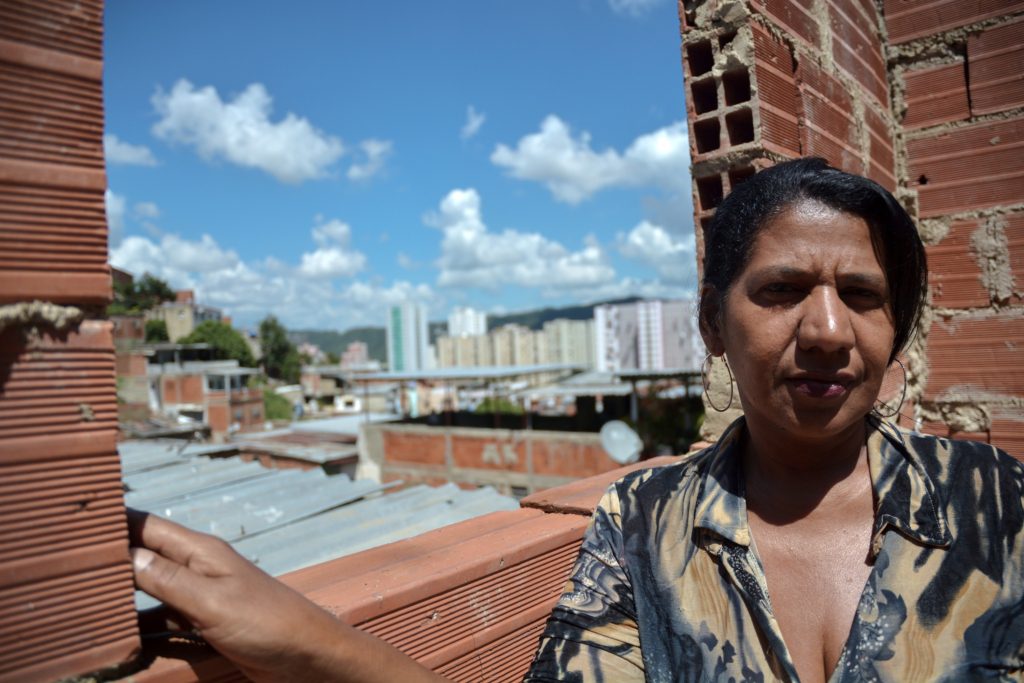
Aracelis Sánchez, Venezuela
Aracelis Sánchez, a human rights defender and the founder of Organización de Familiares de Víctimas de Violación de Derechos Humanos (Orfavideh), is promoting solidarity and demanding justice together with more than 200 mothers of victims of extrajudicial executions in Venezuela.
Aracelis, who lost her son Darwilson Sequera, has been fighting for more than 10 years to get cases of human rights violations committed by Venezuelan state security forces investigated. Orfavideh provides human rights training workshops for mothers, equipping them with tools with which to demand guarantees and use the mechanisms of justice in Venezuela.
Aracelis stresses that when victims are empowered and able to put pressure on prosecutors, their cases are investigated. She believes that support and empowerment are essential to transform grief into positive action and thus achieve justice for victims and their families.
Camila Zuluaga is an international advocacy lawyer at the Colombian Commission of Jurists (CCJ). She spoke to ISHR about her hopes for Colombia, which she hopes to make a safer country for human rights defenders. Camila was also one of the participants to ISHR’s flagship training course, the Human Rights Defender Advocacy Programme (HRDAP).
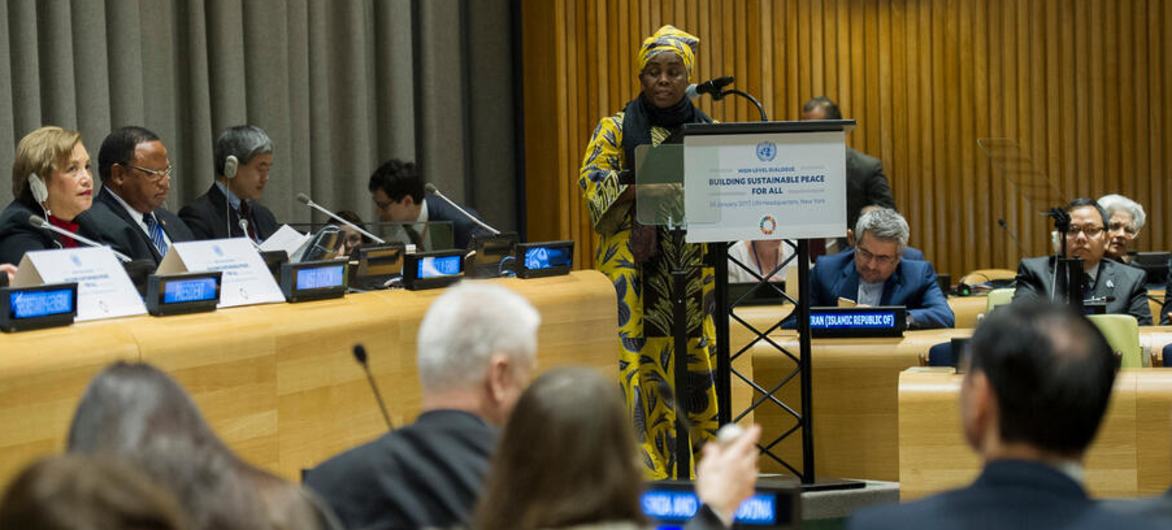
Julienne Lusenge, one of the 2023 UN Human Rights Prize winners, speaking at the General Assembly high-level dialogue on “Building Sustainable Peace for All” earlier this year. UN Photo/Manuel Elías
On 20 July 2023 the President of the General Assembly Csaba Kőrösi announced the winners of the United Nations Prize in the Field of Human Rights for 2023.
This year’s winners were the Human Rights Center “Viasna”, based in Belarus, Julienne Lusenge from the Democratic Republic of the Congo [see also: https://humanrightsdefenders.blog/2021/10/11/congolese-julienne-lusenge-wins-1-million-2021-aurora-prize/], Amman Center for Human Rights Studies from Jordan, Julio Pereyra from Uruguay and the Global Coalition of civil society organizations, Indigenous Peoples, social movements and local communities.
The Committee is chaired by the President of the General Assembly, and its members include the President of the Economic and Social Council, the President of the Human Rights Council, the Chair of the Commission on the Status of Women, and the Chair of the Advisory Committee of the Human Rights Council.
The Office of the UN High Commissioner for Human Rights (OHCHR) provided support to the special committee. The award ceremony for the 2023 Prize will take place at UN Headquarters in New York in December 2023, as part of activities to commemorate Human Rights Day.
The members of the Special Committee also acknowledged the important role played by human rights defenders and activists, praising them for their courage and dedication while strongly condemning any attempts to “silence and intimidate” them.
They expressed solidarity with those who are detained in retaliation for their work in defending human rights and pursuing the implementation of all the provisions of the Universal Declaration of Human Rights, marking it’s 75th birthday this year.
On 18 July 2023 Front Line Defenders reported that on 4 July, a court of appeal in Algiers confirmed the three-year prison sentence of human rights defenders Slimane Bouhafs and Kamira Nait Sid, in addition to confirming the fine of DZD 100,000 (approx. EUR 660). The charges against both human rights defenders include “belonging to a terrorist organisation”; “receiving funds from abroad for the purpose of political propaganda”; “hate speech and discrimination”; “use of technology to spread false information”; and “conspiracy”, among others.
Slimane Bouhafs is a human rights defender advocating for freedom of expression and democracy in Algeria through social media. He is the Chairman of the St. Augustine Coordination of Christians in Algeria which defends minority rights and freedom of religion in the country. Kamira Nait Sid is a woman human rights defender and co-president of the World Amazigh Congress (WAC), an international NGO defending the rights of the Amazigh people. The mission of the WAC is to ensure the defence and promotion of political, economic, social, cultural, historical and civil rights of the Amazigh people.
The human rights defender Slimane Bouhafs, who was granted refugee status in Tunisia before being illegally transferred back to Algeria, received the same three-year prison sentence as the one previously handed down at the first instance. Meanwhile, the woman human rights defender Kamira Nait Sid received a three-year prison sentence, which was a two-year reduction of the original sentence handed down by the court of first instance.
Both Slimane Bouhafs and Kamira Nait Sid reject and deny all the charges against them and maintain that they have been targeted because of their peaceful human rights work and advocacy for freedom of expression and belief. The defence counsel, which represented both human rights defenders, reportedly emphasised the lack of due process and fair trial guarantees during the trial and the appeal processes, including a lack of evidence supporting the charges.
In December 2022, Slimane Bouhafs and Kamira Nait Sid were sentenced to three and five years respectively by the court of first instance mainly on the basis of an alleged association with the Movement for the Autonomy of Kabylie (MAK), classified as a terrorist group by the Algerian authorities. The human rights defenders continue to deny any involvement with the MAK group.
The two human rights defenders have been arbitrarily detained since the summer of 2021. On 25 August 2021, the human rights defender Slimane Bouhafs was abducted, subjected to ill-treatment and forcibly returned to Algeria from Tunisia, where he had been granted refugee status, in a gross violation of international law. On 24 August 2021, the woman human rights defender Kamira Nait Sid was also abducted by Algerian security forces from her home in Draa-Ben-Kheddaas in northern Algeria and detained at an unknown location. On 1 September 2021, the two human rights defenders appeared before an investigating judge in an Algerian court to be charged with several terrorism-related accusations based on an alleged connection with the MAK.
Front Line Defenders condemns the confirmation of the sentence of human rights defenders Slimane Bouhafs and Kamira Nait Sid and calls on the authorities of Algeria to immediately release them and quash their conviction as it believes that it is solely motivated by their legitimate and peaceful work in the defence of human rights. It urges the authorities to guarantee the physical and psychological security and integrity of the human rights defenders while in detention.
Front Line Defenders also calls on the authorities to cease targeting all human rights defenders in Algeria and guarantee in all circumstances that they are able to carry out their legitimate human rights activities without fear of reprisals and free of all restrictions including judicial harassment.
On 13 July 2023 the ITUC has protested to the Hong Kong authorities, the ILO and the UN over its deep concern about the escalation in the climate of fear, intimidation, arrests, arbitrary prosecutions, threats for the exercise of trade union rights and civil liberties in Hong Kong.
In particular, the disproportionate and unwarranted extra-territorial application of the National Security Law to target trade unionists, human rights defenders and pro-democracy advocates by the Authorities of the Hong Kong Special Administrative Region (HKSAR) undermines its commitment to fulfil their international obligations.
The ITUC has called on the HKSAR Chief Executive Officer to respect and fully implement the conclusions and recommendations of ILO supervisory bodies and UN Human Rights bodies, in law and practice, including those regarding the National Security Law.
And he has been urged to release all those arrested and imprisoned for allegations related to the exercise of civil liberties including freedom of assembly, expression, press and association and those participating in pro-democracy activities.
On 4 July 2023, the HKSAR authorities announced, under the National Security Law, the issuance of arrest warrants against eight human rights defenders and pro-democracy advocates and placed a bounty of HK$ one million on each of their heads.
ITUC Acting General Secretary Luc Triangle said: “We unequivocally deplore the HKSAR authorities’ criminalisation and securitisation of trade union and democracy-promoting activities. We consider it particularly egregious, especially given the risks to life and safety faced by trade unionists, human rights defenders and pro-democracy advocates around the world for their legitimate activities, that the HKSAR authorities approved and announced a bounty on the heads of these eight people for exercising their civil liberties or trade union rights.
“As a special administrative region of a member State of the ILO, China, the HKSAR is also obliged to respect and promote the fundamental principles and rights at work including freedom of association and treat with the utmost regard, the authoritative guidance of the ILO’s supervisory bodies.”
The ITUC letter of protest sets out the recent findings of the ILO and other UN bodies on the abuse of workers’ and trade union rights by the HKSAR. It says that seeking to apply the National Security Law in an extraterritorial manner and placing a bounty on the heads of pro-democracy advocates and human rights defenders for alleged crimes related to the exercise of civil liberties and trade union rights is an overreach and certainly not proportionate – its coercive and chilling effective is wide ranging. With the use of the National Security Law in this disproportionate and arbitrary manner, the HKSAR authorities are violating their obligations under the Constitution of the ILO and Convention 87.