Archive for the 'Human Rights Defenders' Category

Duterte: there is no ‘war’ on human rights defenders – only on criminals

March 2, 2019

Gillan Ropero, ABS-CBN News, reported on 28 February 2019 that the Malacañang Palace on Thursday slammed as a “rehash of old issues” the latest report of The Observatory for the Protection of Human Rights Defenders alleging that President Rodrigo Duterte was waging war against human rights defenders: While it is true that the President’s words may be hurtful to some quarters, including human rights defenders, they are actually zeroed in on those who mock and derail the President’s efforts towards creating a society free from drugs, crime and corruption,” ,,,,”We reiterate that there is no such thing as a war against human rights defenders. There is only one against criminals, including drug pushers, and their protectors.”

In its 40-page report, the Observatory said at least 76 land and environmental rights defenders, 12 journalists, and 8 labor rights activists were murdered from July 2016, when Duterte ascended to power, to November 2018. The title is: “Philippines: I’ll kill you along with drug addicts – President Duterte’s war on human rights defenders in the Philippines”. [see also https://humanrightsdefenders.blog/2018/03/10/there-seems-to-be-no-limit-to-what-duterte-is-willing-to-say-and-may-get-away-with/]

The report also cited government’s alleged harassment of the Commission on Human Rights and the justice department’s pursuit of criminal charges against a number of Duterte’s political opponents who have taken strong pro-human rights views, such as Sen. Leila de Lima, currently detained on drug charges.

Spokesperson Panelo urged the International Federation for Human Rights (FIDH) and World Organization Against Torture (OMCT) to file their cases against the Philippine government to “settle this matter once and for all.” “File all cases and let’s be done with it. In the absence of this, the allegations will remain unfounded and politically motivated untruths aimed at shaming the Philippine government before the international community,” he said. “Sans this, the report is but recycled rubbish based on information peddled by the usual critiques of government, such as Karapatan, who must do so to remain relevant and to generate funds to exist from gullible sources abroad.

The President is facing complaints at the International Criminal Court over the drug war killings. He has ordered the country’s withdrawal from the tribunal.

http://www.omct.org/human-rights-defenders/reports-and-publications/philippines/2019/02/d25257/

:https://thedailyguardian.net/opinion/red-tagging-a-vicious-form-of-fake-news/

https://news.abs-cbn.com/news/02/28/19/palace-no-such-thing-as-war-vs-human-rights-defenders

https://aliran.com/civil-society-voices/casualties-rise-in-dutertes-war-on-rights-defenders-new-report/

MEA laureate Abdul Aziz addresses UN Human Rights Council on off-shore refugee policy

March 2, 2019
Abdul Aziz Muhamat.
Abdul Aziz Muhamat. Source: UN

SBS news reports that award-winning Manus Island detainee Abdul Aziz Muhamat has spoken before the United Nations Human Rights Council over Australia’s ‘cruel’ asylum seeker policy. Speaking on behalf of the Human Rights Law Centre, the 25-year-old said: “After 6 years, we deserve our lives back and a future. We urge your mandates to take this up with the Australian government, which deserves to be held accountable by this Council.” [see also: https://humanrightsdefenders.blog/2019/02/18/aziz-thank-you-for-the-attention-but-now-i-have-go-back-to-detention/]

https://www.facebook.com/plugins/video.php?href=https%3A%2F%2Fwww.facebook.com%2FHumanRightsLawCentreHRLC%2Fvideos%2F2138107972933595%2F&show_text=0&width=560

We have no rights. We are not safe. We cannot go to Australia, or elsewhere, because the Australian Government will not allow it. We cannot go home, as it is unsafe. We are all sick and we have lost hope. We are in limbo.” He said the impact of six years of Australia’s offshore detention policy had exacted a physical and mental toll.

As the Australian Government sits on the UN Human Rights Council, professing its commitment to human rights, it is indefinitely imprisoning nearly 1000 men and women in offshore refugee camps on Nauru and Manus,” said HRLC Legal Director Edwina MacDonald.

CIVICUSat the 40th Human Rights Council: counter-terrorism, environmental defenders and more

February 28, 2019
During the 40th session of the UN Human Rights Council, the NGO CIVICUS will be presenting research and conducting advocacy activities and is organising a number of side events, issuing advocacy statements and supporting our members engage in official proceedings, where they can inform government and UN officials on the state of civic space conditions in their countries.

Panel discussions CIVICUS will be co-organising:

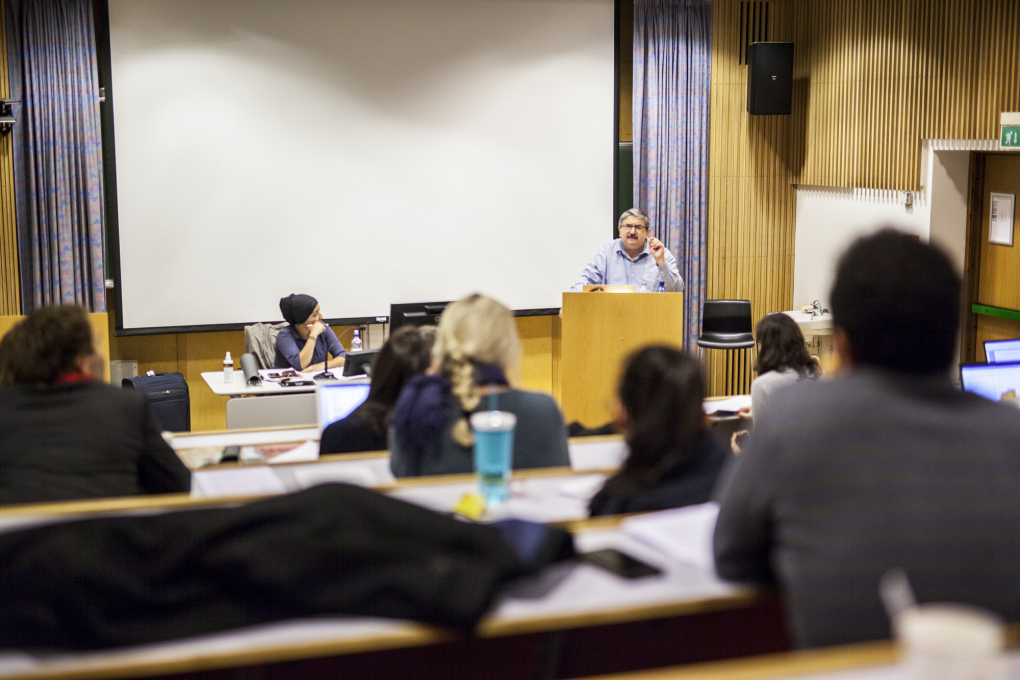
Friday, 1 March, 13:00-14:00 (Room XXVII) | The Role of Counter-Terrorism Laws in the Closing of Civic Space | Civic Space Initiative (Article 19, CIVICUS, ECNL, ICNL, World Movement for Democracy)

This event will examine the misuse of counter-terrorism laws by States to target government critics and human rights defenders. The panel will look at how states are abusing security legislation to curtail civic freedoms. See full invitation. Speakers include:

Tuesday,  5 March, 13.00-14:00 (Room XXVII) | Escazú and Beyond: Strengthening the Global Normative Framework on Protecting Environmental Defenders | Article 19, Centre for Environmental Rights, CIVICUS, Defend Defenders, Frontline Defenders, Global Witness, Ground Work, Human Rights Watch,  International Land Coalition

This side event will review State obligations for protecting the rights of environmental defenders and how the recently adopted Escazú Agreement can inform the work of the Human Rights Council. The panel will look at how the standards of the regional Escazú Agreement in Latin America and the Caribbean can support global efforts to end the widespread attacks against environmental and land rights activists. See full invitation. Speakers include:

  • Leiria Vay, Comité de Desarrollo Campesino, CODECA Guatemala
  • Matome Kapa, Attorney, Centre for Environmental Rights, South Africa
  • Marcos Orellana, Director Human Rights and Environment Division, HRW
  • David Boyd, UN Special Rapporteur on Human Rights and the Environment
  • Moderator: Natalia Gomez, Advocacy & Network Engagement Officer, CIVICUS

Other events that CIVICUS is co-sponsoring at the 40th Session of the Human Rights Council, include:

  • 5 March (10:00-11:00) | The case for international action on Bahrain | Room XV
  • 6 March (11:00-12:00) | Women Human Rights Defenders: Local Realities & Shared Global Challenges | Room XXI
  • 8 March (12:00-13:00) | East and Horn of Africa Human Rights Defenders Project – Human Rights in South Sudan | Room XXVII

CIVICUS will be live-streaming events through its Facebook page and posting updates on Twitter.

https://www.civicus.org/index.php/media-resources/news/united-nations/geneva/3753-civicus-at-the-40th-human-rights-council

International Women’s Human Rights Week: two events in Geneva along UN Human Rights Council

February 28, 2019

During International Women’s Week there are two events focusing on Women Human Rights Defenders:


March 1, 2019
 11:30-13:00 Room XXV Palais des Nations, Geneva

Women human rights defenders are on the front lines of struggles to attain peace, security, dignity and sustainable development for all. They work diligently to advance justice, freedom and equality to meet the ultimate goals of the Universal Declaration of Human Rights. Yet, State and non-State actors, in the majority of cases involving violations against these defenders, have experienced widespread impunity including at the international level. Women human rights defenders met in New York at a high-level event at the UN Headquarters in July 2018 to send a strong message: “we’ve had enough!”

Join us in Geneva parallel to the 40th session of the UN Human Rights Council where women human rights defenders will present how the shortcomings and gaps of the UN system with regards to women human rights defenders protection can be filled.

Panellists: 

  • Michel Forst, UN Special Rapporteur on the situation of human rights defenders
  • Rogeria Ferreira Peixinho, WHRD from Brazil
  • Brenda Valladares, WHRD from USA
  • Lucy Mazingi, WHRD from Zimbabwe
  • Cindy Aung, WHRD from Myanmar
  • Alda Facio, member of the UN Working Group on discrimination against women in law and practice

Moderator :

Veronica Vidal, Association for Women’s Rights in Development (AWID)

Cosponsors: ISHR, Amnesty International, Asian Forum for Human Rights and Development (FORUM-ASIA) Association for Women’s Rights in Development (AWID), Gulf Centre for Human Rights, Mesoamerican Initiative for Women Human Rights Defenders (IM-Defensoras), Urgent Action Fund for Women’s Human Rights and Just Associates (JASS). All are members of the Women Human Rights Defenders International Coalition. (https://mailchi.mp/ishr/749qlxejj6-32017?e=d1945ebb90)

For some of my older posts on WHRDs: https://humanrightsdefenders.blog/tag/women-human-rights-defenders/page/5/


The Geneva Gender Debate: 6 March 18h30 – 20h00 Auditorium Ivan Pictet, Maison de la Paix, Geneva

In the tradition of the Oxford Union debates, the Graduate Institute and the International Gender Champions are hosting their 3rd Annual Geneva Gender Debate during International Women’s Week.

This year’s topic: Gender & Language

The motion: This house believes gender neutral language is not a necessity for gender equality.

Introductory remarks: Philippe Burrin, Director, the Graduate Institute, Geneva

The debaters for the House:

  • Arancha Gonzalez, Executive Director, International Trade Centre
  • Michael Gaffey, Ambassador, Permanent Mission of Ireland to the UN and other International Organizations in Geneva

The debaters against the House Motion:

  • Inger Andersen, Director General, International Union for Conservation of Nature
  • Elhadj As Sy, Secretary-General, International Federation of Red Cross and Red Crescent Societies

Moderator: Caitlin Kraft-Buchman, Executive Director and Founder, Women@theTable

This debate is organised in partnership with the International Gender Champions and the Gender Centre of the Graduate Institute. To register: http://graduateinstitute.ch/events/_/events/corporate/2019/the-geneva-gender-debate-2019


The UN Environmental Rights Initiative interviews Donald Hernández Palma

February 26, 2019

On 26 February 2019 the UN Environmental Rights Initiative (launched in Geneva last year during the UN Human Rights Council). The aim is to ensure that human rights defenders can carry out their activism safely, defend their local environments and the planet. 

However, alarming statistics on killings have been reported over the past few years—especially regarding the targeting of indigenous groups. Latin America has seen the highest number of murders in recent years, accounting for almost 60 per cent of the global total in 2016. In Honduras, 128 defenders are estimated to have been murdered since 2010—the world’s worst rate. UN Environment reached out to Donald Hernández Palma, a Honduran lawyer and human rights defender, for his take on the situation facing environmental and human rights defenders. [see also: https://humanrightsdefenders.blog/2014/11/28/peace-brigades-international-officially-launches-its-country-chapter-in-ireland/ ]

Donald specializes in criminal and environmental law, with a particular focus on mining. He is a member of the Latin American Lawyers’ Network, which works against the negative impacts of transnational extractive companies in Latin America. Since 2010, Donald has worked for the Honduran Centre for the Promotion of Community Development as coordinator of its legal department. He is also the coordinator of the Human Rights and Environmental Department.

Could you tell us a little about yourself, where you come from and how you became part of the environmental advocacy movement?

I am the son of peasant parents who cultivated coffee. I grew up in a remote village in Honduras. I studied in a school that only went up to sixth grade and had to walk almost 20 kilometres a day to go to class. Later, I studied agronomy, a profession I practiced for more than 10 years, in direct contact with peasant families across Honduras. I have directly witnessed the serious subsistence difficulties faced by my countrymen far from government aid.

Since graduating in criminal law in 2007, have been working on environmental protection issues in rural communities. In 2010, I began my work at the Honduran Centre for the Promotion of Community Development, allowing me to work in the defence of human rights for the same populations I had known for many years before.

What situations help explain the kinds of challenges environmental human rights defenders face in Honduras?

Different forms of political and economic corruption in Honduras have compromised – and in some cases denied – local communities’ access to natural resources. Many people have resisted mining, hydro and logging projects, and because of this resistance, have found themselves criminalized and harassed—even killed. Honduras is today considered one of the most dangerous countries for those who defend their land and territories.

What kind of resources are being exploited in your country and how is it affecting land, water, air and biodiversity?

Currently, 302 mining concessions have been approved by the Honduran Government for open-pit mining. Projects are awarded to national and international businesses on thousands of hectares of land, affecting populations that are rarely consulted. Meanwhile, rivers are being appropriated in many regions of the country to generate electricity. Projects are also often granted without consultation to business families, as a payback for favors made for political campaigns.

Also, thousands of hectares of land are being used to plant African palm, transgenic corn and sugar cane for biofuels. This is displacing traditional agriculture, and also causing displacement of populations from their territories to urban centres within and outside the country. Laws have also been passed in Congress to privatize criollo seeds, removing the right of indigenous peoples and peasant peoples to trade their seeds as they have been doing for thousands of years.

What has been done to address these problems?

Organizations like ours do permanent research on the concessions of common goods. This information is very difficult to obtain because it is hidden from the people. There is a law on access to public information that is not respected. We give this information to the affected peoples, whom we also organize and train on human rights and indigenous law, among other issues. We also carry out public protests, present unconstitutionality appeals before the Supreme Court of Justice and carry out legal defence actions when the leaders are criminalized for defending their territory.

What kind of national laws have been enacted? Do international laws help you in any way?

We have a mining law that is highly harmful to the population, a plant breeders’ law that harms people’s rights over seeds, and energy laws that facilitate the implementation of electrical projects that avoid environmental impact prevention processes. In addition, the modification of the criminal code criminalizes public protest. It is precisely international law that allows us to exercise defensive actions in favor of indigenous peoples and peasants, since Honduras has been found not to comply with the international treaties that bind the Honduran state to respect human rights defenders.

Are you working with any NGO groups? 

I am the facilitator at The National Coalition of Environmental Networks and Organizations Honduras (CONROA), a joint space that brings together more than 30 organizations.

Has the newly-signed treaty by 24 Latin American and Caribbean countries, formally called the Regional Agreement on Principle 10, provided any protection on people’s rights in Honduras

Unfortunately, the Honduran state was one of the countries in the region that did not sign this important treaty.

Have you encountered any successes, and is attention increasing on this issue on the ground? 

Unfortunately, an advocate such as Bertha Cáceres, our comrade in this struggle, had to die so that the eyes of the world could return to the terrible situation due to the contempt of the state against those who defend common goods. The visits of the rapporteurs (Michel Fort) and the rapporteur of indigenous peoples have been very important in forcing the Honduran State to respect human rights defenders.

Opening Statements at 40th session of UN Human Rights Council

February 25, 2019

Also the UN High Commissioner for Human Rights, Michelle Bachelet, gave an opening statement which was of a remarkably ‘soft’ tone.  Here some excerpts:

..Today, we sometimes hear human rights being dismissed as supposedly “globalist” – as opposed to the patriotic interest of a sovereign government. But how can any State’s interests be advanced by policies that damage the well-being of all humans?….

Human rights-based policies are effective. They deliver better outcomes for people – people across the social and economic spectrum, and beyond borders. They prevent grievances, conflicts, inequalities, and suffering and discrimination of all kinds….Steps to ensure the authorities engage in respectful dialogue with civil society make for much better, broader development – and I want to emphasise this point: there cannot be optimal, sustainable or inclusive development when the voices of civil society are absent.

…..In today’s currents, in this uncharted storm of heavy winds and rising seas, careless leadership could carry our countries into catastrophe. Or we can use fundamental principles to steer our vessels to safety in more peaceful waters. Every day, we deal with many challenges across the planet. The world’s eyes have been on Venezuela, especially in the last few days. Just yesterday my Office issued a statement regarding the situation: we hope violence will end, and that respect for human rights will be part of the solution.

This Council, the Treaty Bodies and my Office, including its 72 field presences around the world, are honoured with the mandate to stand up for human rights. I want to emphasise my admiration for the Council’s record in effecting early warning, and in naming experts to issue detailed guidance. The Special Procedures and Universal Periodic Review have become essential human rights tools. We need now to ensure not just early warning, but early action to prevent conflict and human rights violations.

I also take this opportunity to emphasise the importance of the Treaty Bodies, whose recommendations are often profoundly relevant.  Mindful of the need to avoid overburdening States with numerous and overlapping recommendations, we will continue working to help decision-makers devise appropriate policy responses.

My Office is sustained by the United Nations principles of impartiality, independence and integrity, and I view it as an essential springboard for the well-being and freedom of women and men across the world.

We will continue to engage with States and forge partnerships with UN agencies, regional and global bodies, business and other stakeholders. We will do our best to strengthen all the international human rights institutions with a sense of common purpose, and coordinated action.
And we will continue to amplify the needs and demands of civil society, to advance the principles of dignity, equality and justice.

——–

https://www.bostonglobe.com/news/world/2019/02/25/chief-warns-that-human-rights-are-losing-ground-world/BrFFZ4IXPpiN4QMc4j6TWO/story.html

https://www.ohchr.org/EN/NewsEvents/Pages/DisplayNews.aspx?NewsID=24203&LangID=E


Human Rights Defender Jolovan Wham in Singapore sentenced – NGOs dismayed

February 24, 2019

The five undersigned human rights organisations, strongly condemn the prosecution of Singaporean human rights defender Jolovan Wham. After convicting Wham in January 2019 of “organising a public assembly without a permit,” the State Court sentenced him, on 21 February, to a fine of S$3,200 (US$2,367), or by default, 16 days in prison.  [see: https://humanrightsdefenders.blog/2018/01/05/international-commission-of-jurists-joins-criticism-of-singapore-for-harassment-of-human-rights-defender-jolovan-wham/]

Big Brother Awards try to identify risks for human rights defenders

February 24, 2019

Angela Davis and Birmingham human rights award: reversal reversed…

February 22, 2019
Angela Davis speaks at press conference during the 2012 Toronto International Film Festival, Sept. 10, 2012. (Jemal Countess/Getty Images)

The Jewish Telegraphic Agency reports on 25 January 2019 that Angela Davis will in the end be honored by the Birmingham Civil Rights Institute (Fred Shuttlesworth Human Rights Award), after first rescinding its award to Davis allegedly due in part to complaints from Jewish leaders. [https://humanrightsdefenders.blog/2019/01/08/birmingham-civil-rights-institute-in-alabama-rescinds-honor-for-political-activist-angela-davis/]

“This update follows a BCRI Board of Directors January 14 public apology for its missteps in conferring, then rescinding, its nomination of Dr. Angela Y. Davis in early January,” the institute said Friday in a statement.

(Davis wrote that her pro-Palestinian activism was the reason for the original withdrawal, as did Birmingham Mayor Randall Woodfin. But local Jewish leaders declined to comment, and no concrete evidence emerged that Jewish complaints were the deciding factor. Three BCRI board members resigned over the controversy. On Friday, Richard Friedman, the executive director of the Birmingham Jewish Federation, told JTA he was “digesting the implications” of the reversal. His federation had previously praised the decision to rescind the award.)

Davis also is controversial for declining to speak out on behalf of dissidents in communist-era Europe.

https://www.jta.org/quick-reads/angela-davis-will-get-award-as-birmingham-civil-rights-body-reverses-course-again

Call for nominations MEA 2020 (deadline 26 March 2019)

February 22, 2019

Martin Ennals Award for Human Rights Defenders

 CALL FOR NOMINATIONS – 2020 


The award aims to recognize individuals, or exceptionally an organisation, who are working in conditions hostile to fundamental human rights, are at risk, and in need of protection. 

For more information on this and other awards for human rights defenders, see: http://www.trueheroesfilms.org/thedigest/awards/martin-ennals-award-for-human-rights-defenders


 Nominees must be currently active in the promotion and protection of human rights. 

 Nominations are welcome from all regions, genders, and human rights related themes. We take a broad view of what a human rights defender is. Nominations of women are particularly encouraged. 

 Special account is taken of those who combat human rights violations by courageous and innovative means. 

Three finalists are selected and will be announced in October 2019. The laureate is selected from among them, and all three are invited to participate in the ceremony hosted by the City of Geneva, in February 2020. 

Submit a nomination at:  http://www.martinennalsaward.org/nominate-candidate-2020-martin-ennals-award/ 

Deadline: 26 March 2019