Archive for the 'Human Rights Defenders' Category

UK criticised for selling spyware and wiretaps to 17 repressive regimes including Saudi Arabia and China

July 13, 2020

Jon Stone in the Independent of 13 july 2020 wrote about the UK Government being urged to explain £75m exports to countries rated ‘not free’. The British government is providing more than a dozen repressive regimes around the world with wiretaps, spyware and other telecommunications interception equipment they could use to spy on dissidents, public records show. Despite rules saying the UK should not export security goods to countries that might use them for internal repression, ministers have signed off more than £75m in such exports over the past five years to states rated “not free” by the NGO Freedom House.

The 17 countries include China, Saudi Arabia and Bahrain, as well as the United Arab Emirates, which was the biggest recipient of licences totalling £11.5m alone since 2015….One such beneficiary of the UK’s exports is Hong Kong, which had a £2m shipment approved last year despite ongoing repression of pro-democracy protests. The Philippines, where police extrajudicial killings are rampant, has also provided steady business for British firms hawking surveillance systems.,,

A government spokesperson said blandly : “The government takes its export responsibilities seriously and assesses all export licences in accordance with strict licensing criteria. We will not issue any export licences where to do so would be inconsistent with these criteria.” But Oliver Feeley-Sprague, Amnesty International UK’s programme director for military, security and police affairs, said the UK did not seem to be undertaking proper risk assessments when selling such equipment and said the government’s controls were becoming “notorious” for their “faulty decision-making”

With numerous human rights defenders arrested and jailed in countries like Saudi Arabia, the UAE and Turkey in the past five years, there’s a greater need than ever for the UK to be absolutely scrupulous in assessing the risk of UK telecoms technology being used unlawfully against human rights activists, journalists, and peaceful opposition figures.

“It’s just not clear that the UK is undertaking proper risk assessments when selling this equipment, and it’s not clear whether UK officials are making any effort to track how the equipment is used in one, two or three years’ time.

This week international trade secretary Liz Truss announced the UK would be resuming arms exports to Saudi Arabia, after a court had previously ordered that they were suspended. The government said it had reviewed claims that Saudi forces in Yemen had breached international humanitarian law and said any possible breaches were “isolated incidents” because they had happened in different places and different ways.

Andrew Smith of Campaign Against Arms Trade said the sale of the spying equipment raised “serious questions and concerns”.
See also: https://humanrightsdefenders.blog/2019/05/14/beyond-whatsapp-and-nso-how-human-rights-defenders-are-targeted-by-cyberattacks/

https://www.independent.co.uk/news/uk/politics/uk-spyware-wiretaps-saudi-arabia-china-bahrain-uae-human-rights-a9613206.html

China: Five years after major crackdown, international community must support to human rights lawyers

July 12, 2020

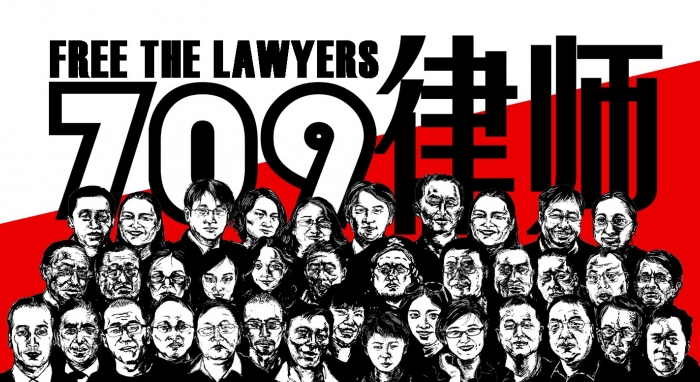
On 9 july 2020 the International Service of Human Rights came out with a good overview of what has happened to the Chinese lawyers since the crackdown five year ago [see: https://humanrightsdefenders.blog/2015/07/29/the-remarkable-crackdown-on-lawyers-in-china-in-july-2015/]. Human rights lawyers are a cornerstone of China’s human rights movement: they represent victims of abuses, promote compliance with international law, and strive for human rights change inside the system.

In the weeks following 9 July 2015, over 300 Chinese weiquan (‘rights defence’) lawyers and legal activists were harassed, detained and disappeared, in a nationwide police sweep that came to be known as the ‘709 Crackdown’. Five years later, these lawyers and their families still face a range of restrictions and rights violations aimed at silencing their efforts for a more just and rights-compliant society.

Disbarment, secret detention, disappearances, harassment of relatives, stigmatisation: the ‘systematic crackdown on lawyers’ denounced by UN experts has changed in form but not in its scale or scope.

Despite the risks, they strive to uphold the fundamental rights of all Chinese citizens, guaranteed under China’s Constitution and international treaties. They represent the most vulnerable and unjustly accused: those who have been evicted from their land or are victims of police abuse; minorities criminalised for their religious belief or ethnicity; human rights defenders and those expressing opinions different from the official Party line.

Without independent lawyers, there can be no rule of law,’ says Sarah M Brooks, ISHR Asia Advocate.

And when the rule of law is weaponised – as we saw last week with the imposition of the National Security Law in Hong Kong – lawyers are on the front lines of defending rights and freedoms. The least we can do – as individuals and as a global community – is to stand with them.

In a defiant act of reclaiming, 9 July is now recognised by the human rights movement as ‘China Human Rights Lawyers Day’. To highlight this important day, ISHR has produced a bilingual information flyer on the patterns of repression against Chinese human rights lawyers, and action by the international community. The information flyer is available in English and Chinese.
请点击此处下载中文版
For more information, please contact Raphael Viana David at r.vianadavid@ishr.ch or on Twitter at @vdraphael.

See also: https://humanrightsdefenders.blog/tag/china-change/

https://mailchi.mp/ishr/alert-to-the-human-rights-councils-35th-session-32794?e=d1945ebb90

Turkey engages in abduction of Turkish nationals living abroad through secret agreements with other states according to UN letter

July 11, 2020

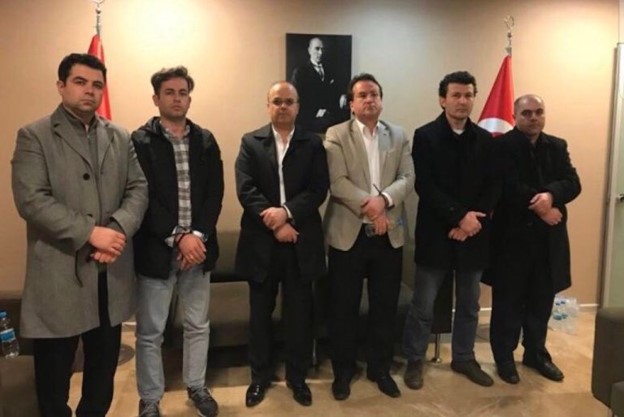
Turkish nationals who were abducted in Kosovo were kept for a time at the Turkish embassy premises.

On 9 July 9, 2020 the Nordic Monitor higlighted the shocking news that the Turkish government has signed bilateral security cooperation agreements with multiple states that were phrased ambiguously to allow for the expulsion or abduction of Turkish nationals living abroad, This is based on a joint UN letter on 5 May 2020.

Four UN rapporteurs/experts sent a joint letter to the Turkish government to express their concern about the “systematic practice of state-sponsored extraterritorial abductions and forcible return of Turkish nationals from multiple States to Turkey.

Joint UN letter on systematic practice of state-sponsored extraterritorial abductions and forcible return of Turkish nationals from multiple States to Turkey, see: https://spcommreports.ohchr.org/TMResultsBase/DownLoadPublicCommunicationFile?gId=25209

The Government of Turkey, in coordination with other States, is reported to have forcibly transferred over 100 Turkish nationals to Turkey, of which 40 individuals have been subjected to enforced disappearance, mostly abducted off the streets or from their homes all over the world, and in multiple instances along with their children,” the letter said.

Nordic Monitor previously reported how the content of Turkey’s security agreements has changed in parallel to the transformation of national legislation and that the new documents contained ambiguous copy-paste phrases designed to suppress government opponents outside the country.

[The Turkish] Government has signed bilateral security co-operation agreements with multiple States allegedly containing broad and vague references to combatting terrorism and transnational crime. Sources claim that the agreements have been phrased ambiguously to allow for expulsion or abduction of anyone deemed to be a ‘security risk’ from third countries party to the agreements. There appears to be a clear link in the timing of the alleged operations – most, if not all, have been carried out within two years since the agreements entered into force. For instance, allegations are made that Turkey has signed secret agreements with several States, including Azerbaijan, Albania, Cambodia and Gabon, where several operations are reported to have taken place,” the letter stated….

Furthermore, rapporteurs, with reference to statements by Turkish officials, exposed the fact that over 100 alleged members of the Gülen movement have been abducted abroad by Turkish intelligence and brought back to Turkey as part of the Turkish government’s systematic global manhunt.

“Turkish authorities have not only acknowledged direct responsibility in perpetrating or abetting abductions and illegal transfers, but have also vowed to run more covert operations in the future. On September 21, 2018, it is alleged that Turkey’s Presidential Spokesperson stated during a press conference that the Government would continue its operations against the Hizmet Movement, similar to the one in Kosovo (March 29, 2018).”….

We note in this respect that deprivation of nationality for the sole purpose of facilitating expulsion or removal goes against international law norms and standards. Finally, we wish to highlight that violations of international human rights obligations resulting from these agreements engage Turkey’s responsibility under international law as well as the third countries parties to the agreements” the letter said….

https://www.nordicmonitor.com/2020/07/turkey-signed-secret-agreements-with-several-states-to-conduct-state-sponsored-extraterritorial-abductions-a-joint-un-letter-underlines/

That Turkey takes an aggressive stand on anything that smacks like terrorism was made clear again on 7 July 2020 when Turkey’s Foreign Ministry slammed recent remarks by Sweden’s foreign minister against Turkey’s military operation in northeastern Syria while meeting via videolink with members of the PYD/YPG/PKK terrorist organization.  

Essentially this meeting was not the first in which Ann Linde came into contact with members of the terrorist organization. She previously held talks with members of the terrorist organization and participated in activities organized by people associated with the terrorist organization,” the ministry said late Thursday in a statement.

It is a shame that so-called human rights defenders, who are becoming an instrument to the terrorist organization’s smear campaign, ignore the massacres, crimes and oppression…committed by these terrorists in Syria,” it stressed. [what the term “human rights defenders” here means is not clear] – https://www.aa.com.tr/en/turkey/turkey-slams-swedish-fm-for-meeting-with-terror-group/1905510

Nordic countries take up the human rights torch?

July 11, 2020

In an interesting article published on 10 july 2020, Bruno Stagno Ugarte – Deputy Executive Director for Advocacy of Human Rights Warch sees encouraging signs of a revival of the leading role of the Nordic countries when it comes to international human rights policy.

…There are encouraging signs these countries might be ready to re-engage in denouncing grave abuses and lead international efforts for country-specific scrutiny and accountability.

And it all started with the smallest of the lot, Iceland. [Philippines, see: https://humanrightsdefenders.blog/2019/07/22/why-iceland-led-the-un-resolution-on-the-philippines/ and Saudi Arabia, see: https://humanrightsdefenders.blog/2019/03/08/saudi-arabia-for-first-time-openly-criticized-in-un-human-rights-council/ ]…..

..If Iceland with a population of 365,000, found the bandwidth to lead on two issues simultaneously, its larger Nordic neighbors can surely match both its courage and performance.

There are reasons to be encouraged on that front. In June, Finland supported the creation of a Libya investigation by the Human Rights Council to document violations committed by all parties and preserve evidence. Denmark, currently a member of the Council, is considering addressing ongoing rights violations by Saudi Arabia. And now that Norway has been elected to a non-permanent seat on the United Nations Security Council for the 2021-22 term, we hope it will become a principled voice for human rights and lead on country-specific situations.

In the absence of leadership by larger states, it is incumbent on smaller states, individually and collectively, to ensure that multilateral tools remain relevant to address dire human rights situations. The Nordic countries have done so in the past; it is time for them to do so again.

https://www.hrw.org/news/2020/07/10/nordic-comeback-human-rights

Shalini Randeria’s lecture on Press Freedom in the time of Coronavirus

July 10, 2020

On 30 April 2020 at the occasion of World Press Freedom Day the Graduate Institute in Geneva organised a lecture by Shalini Randeria Professor, Anthropology and Sociology and Director of the Albert Hirschman Centre on Democracy, on “Defending Press Freedom in the Time of Coronavirus“. Even after 6 weeks it is still valid, here in full:

See also: https://humanrightsdefenders.blog/2020/05/03/world-press-freedom-day-2020-a-small-selection-of-cases/ and https://humanrightsdefenders.blog/2020/05/04/world-press-freedom-day-2020-a-few-more-links/

The coronavirus crisis has provided a welcome pretext for soft authoritarian regimes the world over to strengthen their hold on power, with their declared states of exception potentially becoming the new normal. Curbing press freedom was among illiberal rule’s casualties even prior to the pandemic; attacks against independent newspapers and TV channels have not been limited to the Trump Presidency, which is notorious for its charge of “fake news” against critical reporters. But neutrality of the press can be a risky principle in the face of “alternative facts” such as Trump’s recent home remedies for the coronavirus.

The USA was ranked 45th out of 180 countries for its hostility towards news media in Reporters without Borders’ recently published World Press Freedom Index, with China (ranked 117th), Iraq and Iran among the countries mentioned for censoring coverage of the COVID-19 outbreak.

Instead of suppressing the spread of COVID-19, placing limits on press freedom could backfire, not only by reducing public awareness about the grave risks of the virus, but also preventing public debate about steps needed to mitigate the risks.

Moreover, this gag on press freedom compounds an unprecedented lockdown in which parliaments – even in liberal democracies – are hardly functioning, courts are not in regular session, street protests are impossible due to restrictions on the right to assembly, elections have been cancelled (for the most part), and universities are closed.

Under these circumstances, a free press is the only institution of countervailing power that could hold a government to account.

A widespread anti-press sentiment along with the detention, intimidation and jailing of activists and journalists, has become the order of the day in Turkey and India, to name but a few of the countries witnessing systematic assaults on press freedom in recent years, assaults that have escalated under the conditions created by the curtailment of civil liberties due to the threat of coronavirus.

Hungary suspended its parliament and further curbed freedom of expression, giving Prime Minister Orban unfettered emergency powers to rule by decree. China expelled American journalists for reporting on the dangers of the virus, while Iraq temporarily withdrew Reuter’s license after it published a story on the government’s under-reporting of COVID-19 cases.

On 10 April 2020, The New York Times reported that 28,000 workers at news companies in the USA had lost their jobs since the start of the pandemic. It is unlikely that the news industry will receive the federal aid that it is pleading for to prevent further job losses and closures.

What Buzzfeed has called “media extinction” comes in the wake of decades of layoffs and the shutting down of small local and regional newspapers, but also of large, progressive news sites, such as ThinkProgress in 2019. Fox News, however, continues to gather strength, posting record ratings in the first quarter of this year.

The commercialisation of the public sphere, along with the enormous concentration of power in the hands of very few media companies, which are closely linked to politicians in many a liberal democracy, spells danger for press freedom, as does repression by authoritarian governments. Both trends result in a near monopoly over information.

The WHO’s Director-General alerted us recently that the pandemic is also an “infodemic”, one that has given a fillip to spurious conspiracy theories circulating widely in various social media: “fake news” spread not only by ill-informed private individuals or ill-intentioned groups but also by governments.

But it has drawn attention once again to the dangers of “dead” or “buried” news suppressed by those in authority along with the deployment of all kinds of strategies to control information and mute public debate.

The rhetoric of the pandemic as “war” against an invisible enemy employed in France, as much as in China and the US, serves the same function.

Liberal democracies need strong civil society organisations that can mobilise public opinion and foster public debate, monitor the functioning of institutions, and hold politicians and public officials responsible.

In the absence of the freedom of the press, neither protest nor dissent can be voiced. The COVID-19 crisis may have accelerated the speed of the movement towards the slippery slope of dismantling democracy and human rights in many parts of the world.

https://graduateinstitute.ch/communications/news/defending-press-freedom-time-coronavirus

UN Rapporteur and Amnesty seek freedom for those “punished for daring to drive.”

July 9, 2020

On 9 june 2020 Agnes Callamard, the UN special rapporteur on extrajudicial, summary or arbitrary executions, urged member states to pressure Saudi Arabia to free women activists before a G20 nations summit which Riyadh will be hosting in November. At least a dozen prominent women’s rights activists were arrested in Saudi Arabia in 2018 as it lifted a ban on women driving cars, a step that many of the detainees had long campaigned for. The women were rounded up as part of a broader crackdown on dissent that extended to clerics and intellectuals.

Several of the arrested women have alleged torture and sexual assault in detention. Saudi officials deny this and said the detainees were suspected of having harmed Saudi interests and offered support to hostile elements abroad.

Some of the activists are now on trial, but few charges have been made public. Charges against at least some of the activists relate to contacts with foreign journalists, diplomats and human rights groups. Their prosecution has drawn global criticism, particularly following the 2018 murder of journalist Jamal Khashoggi by Saudi agents inside the kingdom’s Istanbul consulate. (as Rapporteur Agnes Callamard also dealt with Khashoggi’s killing: https://humanrightsdefenders.blog/2019/12/23/the-unsatisfactory-end-to-the-khashoggi-investigation/)

The families of some of the activists, included Loujain al-Hathloul, raised concerns earlier this year when they were unable to contact their detained relatives in prison for several weeks. Contact was eventually restored. [https://humanrightsdefenders.blog/2019/10/07/lina-al-hathloul-speaks-out-for-her-sister-loujain-imprisoned-in-saudi-arabia/].

Earlier Amnesty International had called on Saudi Arabian authorities to immediately release women human rights activists, including those who are “being punished for daring to drive.“…. Amnesty UK has launched a “Beep for freedom” campaign in support of the persecuted women’s rights defenders. The campaign involves supporters sharing photos of themselves behind the wheel of a car or sharing the campaign’s “Beep For Freedom” car horn symbol, with an appeal to the Saudi authorities to “immediately and unconditionally” release the activists and drop all charges against them.

https://www.dailystar.com.lb/News/Middle-East/2020/Jul-09/508775-un-investigator-calls-on-saudi-arabia-to-free-female-activists.ashx

https://www.aa.com.tr/en/middle-east/amnesty-intl-urges-sarabia-to-release-female-activists/1889626

Andy Hall finally acquitted of criminal defamation in Thailand

July 9, 2020

This case has dragged on [see: https://humanrightsdefenders.blog/tag/andy-hall/] but has finally come to a good end thanks to strong international pressure. The Supreme Court’s decision on June 30, 2020 to acquit Andy Hall for criminal defamation and computer crimes offenses was welcome news, finally bringing an end to a seven-year legal battle that represented just how far some companies are willing to go to silence activists who expose modern slavery.

Hall’s case even attracted the attention of UN human rights experts, who criticized the lawsuits brought against him, saying that they were an example of Strategic Lawsuits Against Public Participation (SLAPPs). SLAPPs related to defamation have been increasingly used in recent years in Thailand by companies linked to forced labor and labor rights violations as a means to silence critics. [see also: https://humanrightsdefenders.blog/2020/06/08/defending-defenders-challenging-malicious-lawsuits-in-southeast-asia/]

In response to the Supreme Court’s ruling, Andy Hall said: “I welcome today’s final ruling in this case. But after years of ongoing judicial harassment that has taken a heavy toll on me, my family and my colleagues, the verdict does not feel like a victory. My activism for over a decade in Thailand was intended only to promote and uphold the fundamental rights of millions of migrant workers in the country.

These workers continue to find themselves without a voice in high risk situations of forced labor and subject to systemic human and labor rights violations in global supply chains. I remain open to reconciliation to put an end once and for all to this continued irrational cycle of litigation against me and my colleagues that remain in Thailand.

https://www.freedomunited.org/our-impact/drop-the-charges-against-andy-hall-now/?trk_msg=LQOEF4L1AQI4V652RVLH5UQ0CS&trk_contact=T46EA44M5JFSJ08T6GG4H5M16S&trk_sid=EU95E36VVONCSO7PCAVA00BB90&utm_source=Listrak&utm_medium=email&utm_term=Read+the+field+report&utm_campaign=FU-EN-8JULY-ANDY-HALL-WIN-prospect&utm_content=FU-EN-8JULY-ANDY-HALL-WIN-prospect

https://www.jpost.com/middle-east/article-870260

New EU Toolkit on Women Human Rights Defenders

July 8, 2020

On 7 July 2020 Front Line Defenders made public the toolkit on woman HRDs, a companion to the EU Guidelines of Human Rights Defenders (2004) which provide practical actions for EU staff in Brussels and in human rights defenders’ (HRDs) home countries to support and protect HRDs.

While useful, the Guidelines do not contain recommendations or actions that consider the varied experiences of women human rights defenders (WHRDs) with regard to gender, sexuality, race, class, family life, etc. This EU Toolkit on WHRDs provides practical steps for the EU to better meet the needs of WHRDs, from a gendered, intersectional perspective.

You can Download the EU Toolkit on WHRDs here.

As outlined in the UN Resolution on Women Human Rights Defenders, WHRDs experience violence in differentiated ways because of the work they do and who they are, as women. The UN Special Rapporteur on HRDs reports that “women defenders often face additional and different risks and obstacles that are gendered, intersectional and shaped by entrenched gender stereotypes and deeply held ideas and norms about who women are and how women should be.” In addition, there are many economic, social, cultural and geographical factors that affect how WHRDs experience violations. These factors include class, religion, age, language, sexual orientation, location, race and ethnicity. The UN calls all actors to develop specific gendered protection measures, and the inclusion of WHRDs in their design and implementation. The need for the toolkit has arisen because many protection measures are difficult to access for WHRDs as they face not only societal barriers to their work, but also in accessing the international community. The toolkit will help bridge that divide.

Following consultations with international WHRD networks, the EU Office of Front Line Defenders drafted a Toolkit for diplomats on how to address the specific protection needs of women human rights defenders at risk. It was presented to the EU Council Working Group on Human Rights, bringing together the EU institutions and diplomats from the 28 Member States, in Helsinki in October 2019, and shared again on occasion of the preparation of the Guidance Note for Delegations and Embassies by the EU Council Working Group on Human Rights. There are plans to have it tested in collaboration with WHRDs and diplomats in one or two countries per continent; the goal is to have this Toolkit adopted as an annex to the EU Guidelines on HRDs.

https://www.frontlinedefenders.org/en/resource-publication/eu-toolkit-whrds

Film “USA v Scott”: Humanitarian Aid Is Not a Crime

July 8, 2020

Murat Oztaskin – a member of The New Yorker’s editorial staff – wrote on 8 july 2020 a rich piece on the case of Scott Warren who was prosecuted for bringing water to migrants in the desert [https://humanrightsdefenders.blog/2019/05/29/also-in-usa-helping-migrants-is-criminalised-scot-warren-in-court-on-29-may/ ] He does so in reaction to the short documentary “USA v Scott”…

Warren was charged with one count of conspiracy to transport illegal aliens and two counts of harboring, and faced up to twenty years in prison. The lead-up to his first trial, in May, 2019, is chronicled in the short documentary “USA v Scott.”….

“USA v Scott” is directed by Ora DeKornfeld, a twenty-nine-year-old filmmaker, and Isabel Castro, a thirty-year-old multimedia journalist who was born in Mexico. “I think we were both fundamentally inspired” to make the film, Castro told me, “because we saw it as such a seminal case.” In 2017 and early 2018, several No More Deaths volunteers, including Warren, were charged with federal misdemeanors for “littering” and “trespassing”—that is, for leaving water and other supplies along crossing routes in federal wildlife areas. But Warren’s arrest at the Barn proved a turning point in immigration enforcement. In early 2017, Jeff Sessions, Donald Trump’s first Attorney General, directed federal prosecutors to use the law against harboring unauthorized migrants as a tool to help enforce the Administration’s zero-tolerance immigration agenda—until then, the law had been used almost exclusively against smugglers who trafficked migrants for profit. Warren was charged by Michael Bailey, the U.S. Attorney for the District of Arizona, a Trump appointee.

The film, which has screened at the Tribeca and Mountainfilm festivals, largely skirts politics, focussing instead on how the situation raised “moral questions for people who were living in Arizona,” Castro said. Warren frequently hosts roundtable discussions on immigration in Ajo, and the film opens on one such meeting. “Borders are supposed to keep us safe,” one member of the community says. “And now I have fear.” Another says, “My thing is, they wanna come here, they wanna come here for a better life so badly, but then they also wanna say, ‘Well, do it my old-country way.’ ” Warren listens patiently, nods. “Thank you for sharing that,” he says. The film also shows individual interviews with residents of Ajo. “To us, it’s normal,” one man says. “We’ve lived with [crossing migrants] all of our lives. It was never a big deal. And then the government stepped in and made a big deal out of it.”

Warren’s felony trial began in May, 2019. The documentary shows the tense months leading up to it, as he remains calm and diligently continues his work with No More Deaths. “We saw in Scott . . . someone who was doing very radical work but who was carrying himself in a very open and mild-mannered way,” DeKornfeld told me—someone who “could potentially connect not only with people who already agree with his politics but also those who don’t.” The trial ended, in June, in a hung jury.

Because the prosecution declined to drop all charges against Warren, the case went to a second trial, in November, where Warren was tried on the harboring charges. (The conspiracy charge was dropped, and the judge ruled that no mention of the Trump Administration’s policies could be included in the arguments.) The jury found him not guilty. After the verdict, Warren said, “The government failed in its attempt to criminalize basic human kindness.” Although Warren was vindicated, the fate of Sacaria-Goday and Perez-Villanueva remains unknown.

https://www.newyorker.com/culture/the-new-yorker-documentary/usa-v-scott-and-the-fight-to-prove-that-humanitarian-aid-is-not-a-crime

Appeal to support human rights defender Waldo Albarracín in Bolivia

July 8, 2020

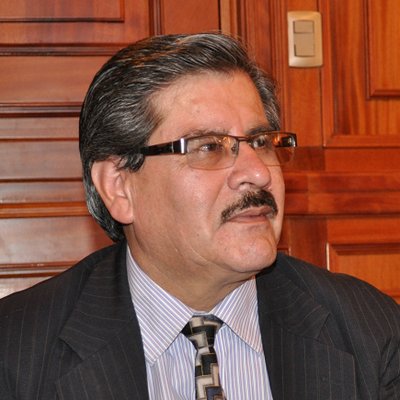
Human rights defender Waldo Albarracín continues to be the subject of death threats and may be the target of surveillance, as a result of his work in Bolivia. Since October 2019, the defender has been targeted on a regular basis with threatening messages via his Facebook account by known and unknown individuals. The messages include threats to incriminate him and to set his house on fire.

Waldo Albarracin

About Waldo Albarracín: Waldo Albarracín is a well established and widely recognised human rights defender in Bolivia. He was the President of the Permanent Assembly of Human Rights of Bolivia (APDHB) from 1992 to 2003 and the Bolivian Ombudsman from 2004 to 2010. He is the current Rector of Universidad Mayor de San Andrés in La Paz and President of the National Committee for the Defence of Democracy (CONADE), a civil platform defending political rights.

1 July 2020 Front Line Defenders called for urgent action. Those of you who want to take action in this and other cases of threatened HRDs, should subsctibe to Front Line’s almost daily information.

Download the Urgent Appeal

In May 2020, Waldo Albarracín was mentioned as a target in a threatening video posted and circulated on social media by the illegal armed group Resistencia Juvenil Cochala. At 1:10 in the video, one man of a group of six men, hooded and armed, stated: “Resistencia Juvenil Cochala will fight on behalf of the Bolivia against Waldo Albarracín and Bolivian political leaders.” The armed group currently exceeds 5,000 members online and describes itself as a citizen’s platform, formed to fight against tyranny and in promotion of democracy in Bolivia. According to the group, it has no one leader.

In June 2020, the Fake Antenna Detection Project, an initiative established by the South Lighthouse organisation, released its findings that Waldo Albarracín, along with a number of human rights organizations and academic entities, may have had their mobile phones intercepted. The study identified 24 suspicious antennas, capable of interfering with mobile phones, some of which were located by the Office of the Permanent Assembly of Human Rights in Bolivia and also by the University Mayor de San Andres, both places where Waldo Albarracín works from. It has been suggested by local media that the interceptions were orchestrated by the military and government authorities, however the authorities are yet to comment publicly on the existence of the antennas and how permanent they are. South Lighthouse researches and monitors surveillance activities and abusive technological practices threatening human rights, security, and privacy in Latin America and other parts of the world.

Front Line Defenders has previously expressed concern regarding the risks faced by Waldo Albarracín. Although the human rights defender has faced risks since 2004 as a result of his human rights work, there has been a worrying escalation since the protests in 2019 regarding the results of the presidential election. On 10 November 2019, the defender’s house was set on fire by a crowd of around 500 people, whilst his family were still inside.

..Front Line Defenders believes he is being targeted solely as a result of his peaceful and legitimate human rights activities.

https://www.frontlinedefenders.org/en/case/ongoing-death-threats-against-and-potential-surveillance-waldo-albarracin