Archive for the 'Human Rights Defenders' Category

Loujain al-Hathloul and her health singled out by CEDAW

November 6, 2020

On 5 November 2020 the UN’s Committee on the Elimination of Discrimination against Women (CEDAW) expressed concern at the deteriorating health condition of detained Saudi women’s rights activist Loujain al-Hathloul.

Al-Hathloul, 31, has been on a hunger strike since Oct. 26 against Al-Hair prison authorities. The prison approximately 25 miles (40 kilometers) south of Riyadh is Saudi Arabia’s largest detention center. [see also: https://humanrightsdefenders.blog/2020/10/23/saudi-arabia-uses-women-to-spruce-up-its-image-2-efforts/]

The committee is seriously concerned by recent information concerning the conditions of Ms. Al-Hathloul’s prolonged detention, including reports that she is not allowed regular contact with her family,” read the statement.

Her case was singled out in a call by the CEDAW to release all detained women human rights defenders ahead of International Women Human Rights Defenders Day to be observed on Nov. 29.

Al-Hathloul was involved in promoting women’s rights in her country, including campaigns to allow women to drive and end male guardianship laws. She met the CEDAW in Feb. 2018 to speak on the state of women’s rights in Saudi Arabia.

On May 15, 2018, she was arrested on the pretext of national security, which allows arbitrary arrest and detention. “In February 2020, the Kingdom of Saudi Arabia assured the committee that Ms. Al-Hathloul’s trial would take place in March 2020. However, it has been postponed several times since then,” said the CEDAW.

The committee said it “is alarmed” by the recent information concerning Al-Hathloul’s prolonged detention conditions, which have prompted her to start a hunger strike.

Unlike other detainees, and contrary to UN Rules 26 and 42 that stipulates the treatment of women prisoners and non-custodial measures for women offenders, Ms. Al-Hathloul is neither allowed to have regular contact with her family nor to exercise activities, according to reports received,” CEDAW said.

Human rights defenders are entitled to “free and unhindered access” to communication without “fear or retribution”, CEDAW recalled. The Committee called these women “key partners in the dissemination, implementation and follow up of its recommendations”, and expressed concern over the situation of those facing reprisals in many parts of the world. MW 

In the meantime Lewis Hamilton has been urged to speak out against Saudi Arabia’s “appalling” human rights record after it was announced that the country will stage its first Formula One race in 2021.

Exactly because 13 women’s rights defenders are currently on trial in Saudi Arabia, Amnesty International thinks that the sports washing efforts of Saudi Arabia should be countered. [see also: https://humanrightsdefenders.blog/2020/01/15/dakar-rally-sports-washing-par-excellence/]

Ahead of the last race in Italy, six-time world champion Hamilton wore a T-shirt with the message: “Women’s rights are human rights.

https://www.aa.com.tr/en/latest-on-coronavirus-outbreak/un-group-concerned-at-saudi-rights-activists-health/2033523#

https://news.un.org/en/story/2020/11/1076942

https://www.romseyadvertiser.co.uk/sport/national_sport/18850770.lewis-hamilton-urged-take-stand-formula-one-heads-saudi-arabia/

Profile interview with Ahmer Khan, a journalist from J&K with a mission

November 4, 2020

On 18 October 2020 the Week published an interesting interview with Ahmer Khan, an award winning multimedia journalist under the title: “Covering other humanitarian stories helped me process the trauma of J&K, my homeland’’

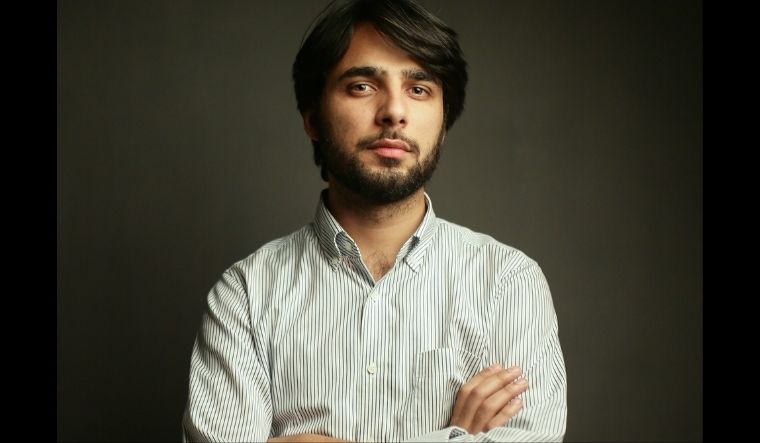
ahmer-khan Ahmer Khan, multimedia journalist from Kashmir
Ahmer Khan is an award-winning, multimedia journalist from Kashmir. He was nominated for the Emmys 2020 for the Vice News film, India Burning, which focused on the plight of the 200 million Muslims in the country after the rise of Hindu nationalism. Khan is also the recipient of numerous awards, including the Lorenzo Natali Media Prize by European Commission 2018, AFP Kate Webb Prize 2019, and the Human Rights Press Award 2020. He is also among the finalists for the Rory Peck Award 2020. He has contributed to major international publications such as The New York Times, The Guardian, TIME, Al-Jazeera, Radio France International,, The Christian Science Monitor and Vice News, among others. Khan talks to THE WEEK about his career and what it is to be a journalist in Kashmir.

Edited excerpts:

Was it the camera or telling stories through visuals that you were attracted to? 

Well, it was a little bit of both. Kashmir and photography are directly proportional to each other. First, I used to click pictures with a Sony Ericson handset. But I always knew what I was going to do in future. So I studied journalism and worked simultaneously.   

What exactly did your work consist of in ‘India Burning’? 

..I was a local producer of the film and I shot some parts of the film as well. My responsibility was to take care of everything in Assam. From set-up to the execution.

Is there a reason why you work with international media rather than the national media?  

Yes, of course. I have never worked with any Indian organisation purposely. I did not want my stories to get distorted and manipulated the way editors of most of the Indian organisations do. I am grateful that I have found work elsewhere because there is too much saturation and it is hard for stories to get accepted anywhere now.  

How did you establish your name in the industry? 

I think I chose to report outside Kashmir from the beginning. I didn’t restrict myself to Kashmir or even India. I have reported from Nepal, Sri Lanka, Bangladesh and Afghanistan. That is something not everyone does.  

Has living amidst the conflict in Kashmir, in any way, affected you as a person and as a journalist?

Our home is a dystopian state. We all have had encounters affecting our lives forever. My father passed away when I was 10 years old. I think every job/assignment in Kashmir is scary. The fear of uncertainty is always there. 

You deal with more humanitarian stories, you are always in the middle of conflict and turbulence, you report on natural disasters and political disruptions. What is it that drives you to this beat? 

It all comes from the basic human tendency of wanting to explore more of what you have grown up seeing. I grew up in the ’90s in Kashmir when the turmoil was at its peak and then I witnessed the uprising from 2008, 2010 and the following years. I, like any other Kashmiri, witnessed young Kashmiris being killed, tortured and extreme human rights violations on the streets. It is too much to handle and process, but when one looks at the other side of the world, we see pain everywhere and start being grateful for what we have. I think for me, covering other humanitarian stories helped me process the daily trauma of my own homeland.  

How is covering stories in Kashmir different from other places in India?

In Kashmir, everything is way too personal. At times, we have to cover the stories while looking at the dead bodies of our own people. It is hard to keep aside your human side. But covering other human rights stories elsewhere and in mainland India, including Assam and Delhi has surely strengthened me more. Although, in Kashmir, it is getting extremely difficult to work freely as days pass. There is a constant fear of being muzzled for telling the truth. And, I think it’s happening across the South Asian countries.

You deal with a lot of life-threatening situations, you have also been harassed by the authorities. How does that make you feel? 

Most people in the media in Kashmir have faced harassment and intimidation by the state. We have recently seen journalists being booked in stringent terror laws. We are living through one of the most dangerous periods of all times for the Kashmiri press to work. It is natural to feel worried. There is a continuous fear of life for all of us. .. 

You identify yourself as a multimedia journalist. How is covering a story through writing, photography and videography different? 

I am quintessentially a photographer and videographer. I started writing because I know the media nowadays is shrinking into one multimedia space. One skill isn’t enough. So the work adds. When you go to cover the story, you have to shoot, take quotes, video interviews and also make sure that you have got all aspects of the story in terms of text, video and photos. It is hard work but satisfactory in many ways. I also do radio stories. In fact, my Lorenzo Natali Media award was for my first radio story for Radio France International. Being a freelance journalist, you have to keep up with the demands of editors as there is a lot of uncertainty. 

What do you have to say about the mainstream journalism that is turning blasphemous? 

What they are doing is not journalism. It is dangerous and authoritarian. If a journalist does not report about the oppressed, undermined or underprivileged, he or she is just doing PR. …

https://www.theweek.in/leisure/society/2020/10/18/covering-other-humanitarian-stories-helped-me-process-the-trauma-of-jandk-my-homeland.html

Cypher Comics no 4 is out

November 3, 2020

Front Line Defenders has released the fourth edition of the monthly digital magazine, Cypher <http://www.frontlinedefenders.org/cypher> , featuring stories of the 2020 Front Line Defenders Regional Award Winners – HRDs from Mauritania, Sri Lanka, Colombia, Armenia and Iraq.

In July 2020, Front Line Defenders launched Cypher (@cypher_comics on Instagram). See: https://humanrightsdefenders.blog/2020/07/23/new-cypher-comics-for-human-rights-defenders/

If you are interested in an annual subscription to receive printed editions of Cypher, please email campaigns@frontlinedefenders.org, with ‘Subscription’ in the subject line, and you will be sent more information about options.

Download Cypher Edition 04 (PDF)

Download Cypher Edition 04 (Epub)

https://www.frontlinedefenders.org/en/resource-publication/cypher-comics

BBC podcast on the framing of video monk Luon Sovath

November 2, 2020

On 31 October 2020 the BBC published a very interesting podcast on Luon Sovath, the Buddhist monk who has long been a thorn in the side of the Cambodian governmen and has been targeted by a state-sponsored disinformation campaign. [see: https://humanrightsdefenders.blog/2020/08/23/more-details-about-luon-sovaths-framing-and-facebooks-role/] The podcast is presented by Reha Kansara.

https://www.bbc.co.uk/sounds/play/w3cszvsm

For the film on the MEA 2012 laureate, see:

https://www.bbc.co.uk/sounds/play/w3cszvsm

Russian resolution on participation of women in activities promoting global peace defeated in Security Council – explanation

November 2, 2020

Yoy may have read in the news that on Friday 30 October 2020 the U.N. Security Council defeated a Russian resolution to commemorate the 20th anniversary of a U.N. measure demanding equal participation for women in activities promoting global peace. The email vote on the resolution was 5-0, with 10 countries abstaining, far less than the minimum nine “yes” votes required for adoption. [see also: https://humanrightsdefenders.blog/2020/08/03/roadmap-to-women-peace-and-security-wps-agenda-2020/]

The Russian draft was supported by Russia, China, Vietnam, Indonesia and South Africa. The countries that abstained were the United States, United Kingdom, France, Belgium, Dominican Republic, Germany, Estonia, Niger, Saint Vincent and the Grenadines, and Tunisia. The opponents were objecting to its failure to adequately address human rights and the key role of civil society in pushing for gender equality. If you are puzzled by this outcome the attached statement by CARE explains:

https://apnews.com/article/china-germany-europe-russia-united-nations-e67b5b5856a20d5601294dfdcd12252a

https://reliefweb.int/report/world/care-statement-failure-russia-s-draft-resolution-women-peace-and-security

Fikile Nsthangashe: “I will die for my people” and she did..

November 2, 2020

Portrait of a Community Activist

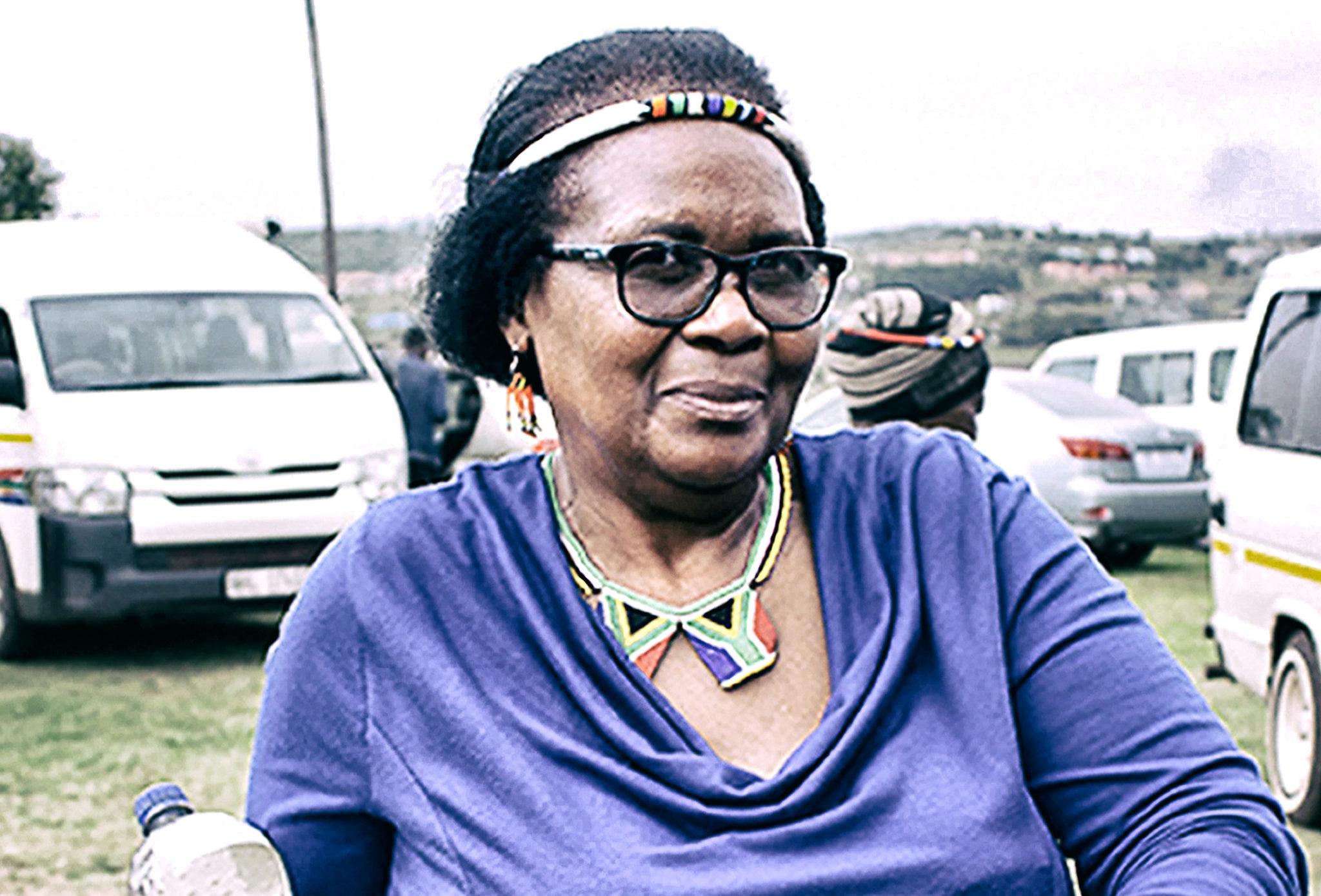
In the Daily Maverick of 1 November 2020 Estelle Ellis tells the sad story of murdered land rights defender Fikile Ntshangase in South Africa

A strongly worded statement from a large number of civil society organisations in South Africa has condemned the death of KwaZulu-Natal community activist Fikile Ntshangashe who was gunned down in her home last week as lawyers were preparing for a groundbreaking appeal fighting an order that her community organisation and those who assisted them should pay for a failed attempt to stop further mining operations in the area.

I refused to sign. I cannot sell out my people. And if need be, I will die for my people.” This was the quote that activists remembered Mama Fikile Nsthangashe by after she was gunned down in her home at Ophondweni near Mtubatuba on 22 October 2020.

As the vice-chairperson of a sub-committee of the Mfolozi Community Environmental Justice Organisation (MCEJO), she was deeply involved in the challenge against the further expansion of a large coal mine at Somkele in KwaZulu-Natal by Tendele Coal Mining (Pty) Ltd. She was described by her fellow activists as a strong, passionate and principled leader.

On Tuesday the Supreme Court of Appeal will hear one of Nsthangashe’s final stands – an appeal in the case brought by MCEJO to stop the mining operations in the area.

According to a joint statement issued by environmental rights NGO Groundworks; Earthlife Africa; Global Environmental Trust, Mining Affected Communities United in Action, the Mfolozi Community Environmental Justice Organisation, the Southern Africa Human Rights Defenders Network and Women Against Mining United in Action the South African Police were called on to act swiftly and arrest those responsible for her death.

The statement alleges that four gunmen arrived at Ntshangashe’s home on 22 October 2020 at about 18:30. Her 11-year-old grandson was with her. She was shot five times and died at the scene.

“Tendele’s coal mining operations have caused untold destruction of the environment and the homes and livelihoods of the residents of Somkhele,” the statement reads. “Over the past few months, tension has been rising in the community over the proposed expansion of Tendele’s operations, and [her organisation’s] opposition to that expansion … Recently, Tendele was pushing for an agreement to be signed between MCEJO and Tendele to the effect that MCEJO would withdraw its Court challenges of Tendele’s expansion of its coal mine at Somkhele. Mama Ntshangase refused to sign the agreement, which certain of her fellow sub-committee members signed, purportedly doing so on behalf of the organisation … She warned sub-committee members that they had no power to make decisions on behalf of MCEJO and that the agreement only benefited Tendele. She also refused to attend any of the secret meetings that other sub-committee members held with Tendele. Days before her brutal killing, Mama Ntshangase stated her intention to write an affidavit, revealing that sub-committee members had spoken to her of a payment of R350,000 in return for her signature,” she added.

According to the statement the expansion of the mine would require the relocation of 21 families (19 of them MCEJO members) from their ancestral land. Many of these families have lived on their land for generations.

We mourn the senseless tragedy of Mama Ntshangase’s murder, and condemn her killing. We call on the South African Police Service to act swiftly to arrest and prosecute her murderers,” the statement concluded.

Martin Mosweu from the Southern Africa Resource Watch said he was deeply saddened and angered by the killing of Ntshangase.

She was hailed as a courageous human rights defender by her community for standing against the Tendele Coal Mine expansion in violation of the right to a safe environment. The murder of Fikile Ntshangase is a cause of concern to the work of human rights defenders in South Africa and in the SADC region. Governments are failing in their international obligations to the Declaration of Human Rights by not protecting and supporting human rights defenders in the context of their work. In Southern Africa, people who live near mines continue to face threats of violence and intimidation from mining companies who blatantly disregard their socio-economic, land, and environmental rights. Human rights defenders continue to be threatened and killed for standing up against powerful mining companies that violate human rights, often with impunity and tacit support from governments. This is why many mining communities throughout the region are now taking a stand and demanding a new order, insisting on extractive projects that secure a beneficial win-win relationship, free and prior informed consent in involuntary displacements, and community engagement in all stages of the mining cycle for inter-generational sustainable livelihoods,” he added.

Papers filed at the Supreme Court of Appeal for a hearing on Tuesday, in one of the last battles that Ntshangase had been passionately fighting on behalf of her community, has painted a stark picture of the conflict in the area.

The appeal, brought by MCEJO and the Global Environmental Trust is against the refusal by the Pietermaritzburg High Court to issue an interdict to stop mining operations in the area.

The community claimed that the mine did not have the necessary environmental authorisation, lacked land use authorisation, had not removed or altered the traditional graves in the area according to law and had failed to comply with the Waste Act.

The mine, however, argued that it had all the valid mining rights and permissions to carry on with its operations. In papers filed at court, lawyers for Tendele, stressed that their operations were conducted in terms of valid Mining Rights and Environmental Management Programmes granted and approved by the Department of Mineral Resources in 2006 and that while the legislative framework had changed there were transitional measures put in place for mines like Tendele.

This, according to papers before court included the waste management at the mine.

According to papers filed at the Supreme Court of Appeal the Centre for Environmental Rights (CER), represented by advocate Max du Plessis SC; intervened in the matter because of its concerns that the judgment opened the door for mining companies to operate illegally. The CER also expressed its concern over a cost order made in the original case as this “would discourage communities from approaching the courts to defend their constitutional rights through the fear of being debilitated by having to pay the legal costs of industry and the state”.

For another land issue in South Africa, see: https://humanrightsdefenders.blog/2020/01/30/rural-women-in-south-africa-win-landmark-case-in-court/

Sierra Leone anti-FGM activist Rugiati Turay wins German human rights prize

October 30, 2020

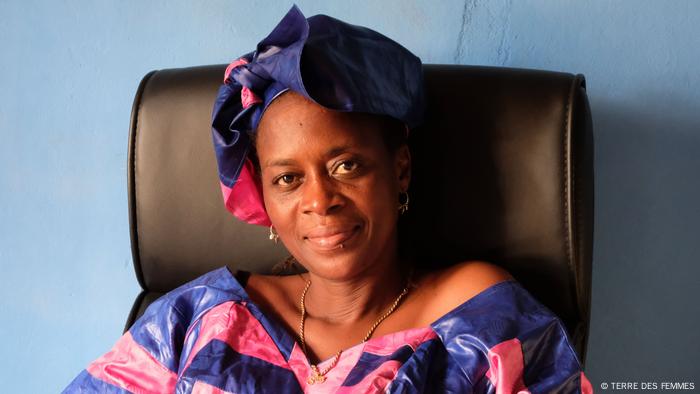
Campaigner Rugiati Turay has won the Theodor Haecker human rights prize for fighting female genital mutilation in Sierra Leone. [for more on this and similar awards see: https://www.trueheroesfilms.org/thedigest/award/23523519-3931-9E2E-2D4F-8F614F366500]

Rugiatu Turay, anti-FGM activist from Sierra Leone

When Rugiati Turay was 12, she was taken to an aunty together with her three sisters and a female cousin.

We were told it was just a visit,” Turay, now 47, recalls. “But I was grabbed and blindfolded and taken to a room. Women sat on me and held me down.”

Turay’s clitoris was then cut off. She still remembers the pain.

“I bled excessively and I almost lost my life. For one week, I could not walk,” Turay told DW. “All I knew was just the pain and the bleeding.”

Like Turay, some 90% of women and girls in Sierra Leone undergo female genital mutilation, or FGM. It is a cultural practice that involves the partial or total removal of the female genital organs, such as the clitoris or labia.

In Sierra Leone, the cutting is part of the initiation into secret women’s societies, known as Bondo, that prepare girls for marriage and motherhood.

When she was cut as a girl, Turay didn’t have the knowledge to express what had happened to her. She just knew it was wrong, she said in a telephone interview from Lunsar, a town some 120 kilometers (74 miles) from the capital, Freetown. Rugiatu Turay works to persuade traditional practitioners to lay down the tools used to cut girls

“I started talking to my friends, explaining to them what I went through,” she said. “Because we were all eager … to become members of the Bondo society. But when I experienced what I experienced, I thought it is high time to talk to others and not to be fooled.”

More than a decade later, Turay found herself in Kalia refugee camp in Guinea, where she had fled Sierra Leone’s civil war that raged from 1991 to 2002. In the camp, she was shocked that amid the hardship and insanitary conditions of the camp, mothers were still organizing for their daughters to be cut.

That was the moment when Turay, who had trained and worked as a teacher before fleeing the fighting, started on her journey to campaign to stop female genital mutilation in Sierra Leone.

The nation is one of 28 African countries where female genital mutilation is practiced

“I decided [that] we needed to engage these people. They needed to know that we have run away from violence committed to us by people  and we are now perpetuating that violence on us,” she said.

In 2000 while still in Kalia camp, Turay founded the Amazonian Initiative Movement (AIM), together with a group of like-minded women, to reduce the incidence of FGM among the refugees.

The name was taken from the “strong and fearless” Amazonian warrior women from Greek mythology, explains Turay, chosen because “looking at the issues I was determined to address and knowing [Sierra Leone] and the people where I came from, I knew it was going to be a rough battle.”

In 2003, when she returned home after the end of the civil war, Turay started up a branch of the grassroots organization in her hometown of Lunsar.

As part of their activities, Turay and other AIM activists visit villages to talk to those involved in FGM, from women and girls, to local chiefs and imams. They also seek out the soweis, the traditional cutters, who earn a living from the practices. They seek to convince them to stop cutting and look for alternative livelihoods for these women. AIM has held several public ceremonies involving hundreds of soweis who have vowed to lay down their knives and razor blades.

It has also held a large alternative rites of passage lasting for 14 days to replace the traditional Bondo bush ceremony that girls usually pass through during initiation  but without the cutting.

As well as running a safe house for girls fleeing from FGM and other violence such as forced marriage, AIM has built a school that includes a curriculum teaching about cutting.

Turay’s work hasn’t been easy. Initially, she couldn’t even rent a building for AIM as no one wanted to have anything to do with an anti-FGM organization. Luckily, her father supported her efforts, turning over his own house to use as her office.

She, and others involved in the organization, have also faced numerous death threats as well as being banned by the village chief – something Turay says has only hardened her resolve.

“When you threaten me and say you’ll kill me, I come back and I engage you,” she said.

“I ask, ‘Why do you really want to kill me? Tell me, what have I done? Have I killed anyone? No, I want to change your beliefs that are not progressive, that have killed so many people, that have kept others quiet but suffering in silence’.”

And so I use those threats and I talk to the leaders of the secret society and I engage them.”

Because of coronavirus travel restrictions, Turay will attend the awards ceremony on October 24, 2020 virtually. Turay was nominated by the German women’s rights organization, Terres des Femmes, for the award.

See also: https://humanrightsdefenders.blog/2016/02/19/profile-of-fahma-mohamed-a-young-british-anti-fgm-human-rights-defender/


https://www.dw.com/en/sierra-leone-anti-fgm-activist-wins-german-human-rights-prize/a-55356392

‘Amnesty Academy’ launched to educate young human rights defenders

October 30, 2020

On 29 October 2020, Amnesty International launched Amnesty Academy, a free human rights learning app which aims to educate the next generation of human rights defenders on a host of topics including freedom of expression, digital security, and Indigenous Peoples’ rights.

Learners around the world will be able to access courses ranging from 15 minutes to 15 hours in over 20 languages, including Urdu, Bangla, Hungarian, Korean, Russian, Thai, Czech and Turkish. All courses can be downloaded within the app, which is available on iOS and Android devices, allowing for offline learning.

This app has been designed to empower and encourage everyone everywhere to learn about human rights. Sharing knowledge is a vital way to help us stand up for our own and for each other’s rights, and to struggle for justice and equality all over the world,” said Julie Verhaar, Amnesty International’s Acting Secretary General. This app has been designed to empower and encourage everyone everywhere to learn about human rights. Sharing knowledge is a vital way to help us stand up for our own and for each other’s rights, and to struggle for justice and equality all over the world.

Among Amnesty Academy’s key features is a flexible self-paced approach to learning, allowing users to start courses as and when it suits them. Learners who complete some of the longer courses will be awarded an official certificate signed by Amnesty International’s Secretary General.

The courses available on Amnesty Academy have been developed and fine-tuned over the past three years as part of Amnesty International’s human rights learning website. They have now been optimized for mobile use, making human rights learning more accessible than ever.

Human rights education is the foundation of Amnesty’s work. Our overall goal is to ensure that people worldwide know and can claim their human rights. The Amnesty Academy app brings us closer to this goal by providing a simple and accessible platform for millions of people to access quality human rights education,” said Krittika Vishwanath, Head of Human Rights Education at Amnesty International.

Amnesty Academy will be regularly updated to accommodate learning in many more languages and with new course offerings in the months and years to come.

https://www.amnesty.org/en/latest/news/2020/10/amnesty-launches-human-rights-learning-app-to-equip-next-generation-of-activists/

Climate defense suffers from on-line abuse of Environmental Defenders

October 30, 2020

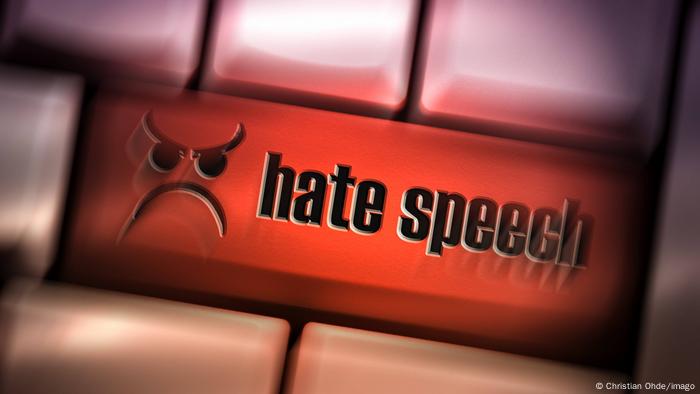
Deutsche Welle carries a long but interesting piece on “What impact is hate speech having on climate activism around the world?”

From the Philippines to Brazil and Germany, environmental activists are reporting a rise in online abuse. What might seem like empty threats and insults, can silence debate and lead to violence.

Hate speech online

Renee Karunungan, an environmental campaigner from the Philippines, says being an activist leaves you “exposed” and an easy target for online hate. And she would know.  “I’ve had a lot of comments about my body and face,” she says, “things like ‘you’re so fat’ or ‘ugly’,” she says. “But also, things like ‘I will rape you‘.”  Such threats were one reason she decided to leave the country.  

There isn’t much data on online abuse against environmentalists. But Karunungan is one of many saying it’s on the rise.  

As it becomes woven into the fabric of digital life, we sometimes forget the impact a single comment can have, Karunungan says: “The trauma that an activist feels – it is not just ‘online’, it is real. It can get you into a very dark place.”  

Platforms like TikTok and Facebook have begun responding to calls for stricter regulation for stricter regulations.  [see also: https://humanrightsdefenders.blog/2020/06/03/more-on-facebook-and-twitter-and-content-moderation/]..

“There is also a huge gray zone,” says Josephine Schmitt, researcher on hate speech at the Centre for Advanced Internet Studies, and definitions can be “very subjective.”  ..

While no international legal definition exists, the UN describes hate speech as communication attacking people or a group “based on their religion, ethnicity, nationality, race, color, descent, gender or other identity factor.” 

According to several researchers and activists, environmental campaigning also serves as an identifying factor that attracts hate.  

Environmental defenders are attacked because they serve as a projection surface for all kinds of group-based enmity,” says Lorenz Blumenthaler of the anti-racist Amadeu Antonio Foundation. 

Blumenthaler says his foundation has seen an “immense increase” in hate speech against climate activists in Germany – and particularly against those who are young and female.  This year Luisa Neubauer, prominent organiser of Germany’s Fridays for Future movement, won a court case regarding hateful comments she received online. This came after far-right party Alternative für Deutschland’s criticisms of Greta Thunberg included likening her to a cult figure and mocking her autism

In Bolsonaro’s Brazil, for example, Mary Menton, environmental justice research fellow at Sussex University, says in there is often a fine line between hate speech and smear campaigns.  She has seen an increase in the use of fake news and smear campaigns – on both social and traditional media – aiming to discredit the character of Indigenous leaders or make them look like criminals. Coming from high-level sources, as well as local lobbies and rural conglomerates, these attacks create an atmosphere of impunity for attacks against these Indigenous activists, Menton says, while for activists themselves, “it creates the sense there is a target on their backs.“.. 

Some of it comes from international “climate trolls” calling climate change a hoax or the activists too young and uninformed. But the most frightening come from closer to home. “Some people outrightly say we are terrorists and don’t deserve to live,” Mitzi says.  In Philippines, eco-activists are targets for “red-tagging” – where government and security forces brand critics as “terrorists” or “communists.” 

Global Witness ranks it the second most dangerous place in the world for environmental defenders, with 46 murders last year, and Mitzi believes there is a clear link between hate speech online and actual violence. 

Online hate can delegitimize certain political views and be the first step in escalating intimidation. Mitzi says many environmental groups are frightened of having their offices raided by the police and have experienced being put under surveillance.

Ed O’Donovan, of Irish-based human rights organization Frontline Defenders says in contrast to the anonymous targeting of human rights defenders by bots, attacks on climate activists “often originate with state-controlled media or government officials.” 

And they can serve a very strategic purpose, dehumanizing activists so that there is less outrage when they are subject to criminal process, or even attacked and killed.  Extractive industries and businesses are also involved, he adds, highlighting how “very calculated” hate speech campaigns are used to divide local communities and gain consent for development projects.  

Indigenous people protesting against large-scale projects, like these activists against a mine in Peru, are particular targets for hate campaigns For those invested in suppressing climate activism, Wodtke says hate speech can be a low-cost, high-impact strategy. For environmental defenders, it diverts their “attention, resources and energy,” forcing them into a position of defence against attacks on their legitimacy.  …

https://www.dw.com/en/what-impact-is-hate-speech-having-on-climate-activism-around-the-world/a-55420930

Also UN calls on India to protect human rights defenders

October 29, 2020

UN High Commissioner for Human Rights, Michelle Bachelet, has called for the Indian government to protect the rights of human rights defenders and NGOs in India. She praised India for being at the forefront of the fight for human rights but cautioned that vaguely worded laws may put that in jeopardy.

Her Tuesday 20 October 2020 statement comes as a response to worrying uses of the Indian Foreign Contribution Regulation Act (FRCA) which various UN bodies have been worried is overbroad and vague in its objectives. Additionally, it prohibits them from receiving foreign money for “for any activities prejudicial to the public interest.” This can and has had an impact on the right to freedom of association and expression and has prevented foreign NGOs from giving money to Indian causes.

“The FCRA has been invoked over the years to justify an array of highly intrusive measures, ranging from official raids on NGO offices and freezing of bank accounts, to suspension or cancellation of registration, including of civil society organizations that have engaged with UN human rights bodies,” Bachelet said. Most recently it led Amnesty international to close their Indian offices after they were raided and their bank account was frozen.  [see: https://humanrightsdefenders.blog/2020/09/29/amnesty-feels-forced-to-shut-sown-its-india-office-amidst-govenment-pressure/]

Bachelet, also called for the Indian government to allow peaceful protest against the Citizenship Amendment Act. More than 1,500 people have been arrested because of their protests to this act and many have been charged with violations of the FCRA.

Finally, Bachelet,called for India to review the arrests of human rights defenders who have been arrested under the Unlawful Activities Prevention Act for exercising their basic human rights.

[see e.g.https://humanrightsdefenders.blog/2020/10/11/the-indomitable-father-stan-swamy-defending-the-adivasis-and-the-dalits-a-cause-of-arrest/]

https://www.jurist.org/news/2020/10/un-calls-on-india-to-safeguard-rights-of-rights-groups-and-ngos-in-face-of-legislation/

On 9 November came: https://theowp.org/reports/new-frontiers-in-the-suppression-of-human-rights-in-india/