Archive for the 'Human Rights Defenders' Category

Facebook and YouTube are allowing themselves to become tools of the Vietnamese authorities’ censorship and harassment

December 1, 2020

On 1 December 2020, Amnesty International published a new report on how Facebook and YouTube are allowing themselves to become tools of the Vietnamese authorities’ censorship and harassment of its population, in an alarming sign of how these companies could increasingly operate in repressive countries. [see also: https://humanrightsdefenders.blog/2020/06/03/more-on-facebook-and-twitter-and-content-moderation/].

The 78-page report, “Let us Breathe!”: Censorship and criminalization of online expression in Viet Nam”, documents the systematic repression of peaceful online expression in Viet Nam, including the widespread “geo-blocking” of content deemed critical of the authorities, all while groups affiliated to the government deploy sophisticated campaigns on these platforms to harass everyday users into silence and fear.

The report is based on dozens of interviews with human rights defenders and activists, including former prisoners of conscience, lawyers, journalists and writers, in addition to information provided by Facebook and Google. It also reveals that Viet Nam is currently holding 170 prisoners of conscience, of whom 69 are behind bars solely for their social media activity. This represents a significant increase in the number of prisoners of conscience estimated by Amnesty International in 2018.

In the last decade, the right to freedom of expression flourished on Facebook and YouTube in Viet Nam. More recently, however, authorities began focusing on peaceful online expression as an existential threat to the regime,” said Ming Yu Hah, Amnesty International’s Deputy Regional Director for Campaigns.

Today these platforms have become hunting grounds for censors, military cyber-troops and state-sponsored trolls. The platforms themselves are not merely letting it happen – they’re increasingly complicit.

In 2018, Facebook’s income from Viet Nam neared US$1 billion – almost one third of all revenue from Southeast Asia. Google, which owns YouTube, earned US$475 million in Viet Nam during the same period, mainly from YouTube advertising. The size of these profits underlines the importance for Facebook and Google of maintaining market access in Viet Nam.”

In April 2020, Facebook announced it had agreed to “significantly increase” its compliance with requests from the Vietnamese government to censor “anti-state” posts. It justified this policy shift by claiming the Vietnamese authorities were deliberately slowing traffic to the platform as a warning to the company.

Last month, in Facebook’s latest Transparency Report – its first since it revealed its policy of increased compliance with the Vietnamese authorities’ censorship demands – the company revealed a 983% increase in content restrictions based on local law as compared with the previous reporting period, from 77 to 834. Meanwhile, YouTube has consistently won praise from Vietnamese censors for its relatively high rate of compliance with censorship demands.

State-owned media reported Information Minister Nguyen Manh Hung as saying in October that compliance with the removal of “bad information, propaganda against the Party and the State” was higher than ever, with Facebook and Google complying with 95% and 90% of censorship requests, respectively.

Based on dozens of testimonies and evidence, Amnesty International’s report shows how Facebook and YouTube’s increasing censorship of content in Vietnam operates in practice.

In some cases, users see their content censored under vaguely worded local laws, including offences such as “abusing democratic freedoms” under the country’s Criminal Code. Amnesty International views these laws as inconsistent with Viet Nam’s obligations under international human rights law. Facebook then “geo-blocks” content, meaning it becomes invisible to anyone accessing the platform in Viet Nam.

Nguyen Van Trang, a pro-democracy activist now seeking asylum in Thailand, told Amnesty International that in May 2020, Facebook notified him that one of his posts had been restricted due to “local legal restrictions”. Since then, Facebook has blocked every piece of content he has tried to post containing the names of senior members of the Communist Party. 

Nguyen Van Trang has experienced similar restrictions on YouTube, which, unlike Facebook, gave him the option to appeal such restrictions. Some appeals have succeeded and others not, without YouTube providing any explanation.

Truong Chau Huu Danh is a well-known freelance journalist with 150,000 followers and a verified Facebook account. He told Amnesty International that between 26 March and 8 May 2020, he posted hundreds of pieces of content about a ban on rice exports and the high-profile death penalty case of Ho Duy Hai. In June, he realized these posts had all vanished without any notification from Facebook whatsoever.

Amnesty International heard similar accounts from other Facebook users, particularly when they tried to post about a high-profile land dispute in the village of Dong Tam, which opposed local villagers to military-run telecommunications company Viettel. The dispute culminated in a confrontation between villagers and security forces in January 2020 that saw the village leader and three police officers killed.

After Facebook announced its new policy in April 2020, land rights activists Trinh Ba Phuong and Trinh Ba Tu reported that all the content they had shared about the Dong Tam incident had been removed from their timelines without their knowledge and without notification.

On 24 June 2020, the pair were arrested and charged with “making, storing, distributing or disseminating information, documents and items against the Socialist Republic of Vietnam” under Article 117 of the Criminal Code after they reported extensively on the Dong Tam incident. They are currently in detention. Their Facebook accounts have disappeared since their arrests under unknown circumstances. Amnesty International considers both Trinh Ba Phuong and Trinh Ba Tu to be prisoners of conscience.

The Vietnamese authorities’ campaign of repression often results in the harassment, intimidation, prosecution and imprisonment of people for their social media use. There are currently 170 prisoners of conscience imprisoned in Viet Nam, the highest number ever recorded in the country by Amnesty International. Nearly two in five (40%) have been imprisoned because of their peaceful social media activity.

Twenty-one of the 27 prisoners of conscience jailed in 2020, or 78%, were prosecuted because of their peaceful online activity under Articles 117 or 331 of the Criminal Code – the same repressive provisions that often form the basis of ‘local legal restrictions’ implemented by Facebook and YouTube. For every prisoner of conscience behind bars, there are countless people in Viet Nam who see this pattern of repression and intimidation and are understandably terrified about speaking their mind. Ming Yu Hah

These individuals’ supposed “crimes” include peacefully criticizing the authorities’ COVID-19 response on Facebook and sharing independent information about human rights online.

For every prisoner of conscience behind bars, there are countless people in Viet Nam who see this pattern of repression and intimidation and are understandably terrified about speaking their minds,” said Ming Yu Hah.

Amnesty International has documented dozens of incidents in recent years in which human rights defenders have received messages meant to harass and intimidate, including death threats. The systematic and organized nature of these harassment campaigns consistently bear the hallmarks of state-sponsored cyber-troops such as Du Luan Vien or “public opinion shapers” – people recruited and managed by the Communist Party of Viet Nam (CPV)’s Department of Propaganda to engage in psychological warfare online.

The activities of Du Luan Vien are complemented by those of “Force 47”, a cyberspace military battalion made up of some 10,000 state security forces whose function is to “fight against wrong views and distorted information on the internet”.

While “Force 47” and groups such as Du Luan Vien operate opaquely, they are known to engage in mass reporting campaigns targeting human rights –related content, often leading to their removal and account suspensions by Facebook and YouTube.

Additionally, Amnesty International’s investigation documented multiple cases of bloggers and social media users being physically attacked because of their posts by the police or plainclothes assailants, who operate with the apparent acquiescence of state authorities and with virtually no accountability for such crimes.


Putting an end to complicity

The Vietnamese authorities must stop stifling freedom of expression online. Amnesty International is calling for all prisoners of conscience in Viet Nam to be released immediately and unconditionally and for the amendment of repressive laws that muzzle freedom of expression.

Companies – including Facebook and Google – have a responsibility to respect all human rights wherever they operate. They should respect the right to freedom of expression in their content moderation decisions globally, regardless of local laws that muzzle freedom of expression. Tech giants should also overhaul their content moderation policies to ensure their decisions align with international human rights standards.

In October 2020, Facebook launched a global Oversight Board – presented as the company’s independent “Supreme Court” and its solution to the human rights challenges presented by content moderation. Amnesty International’s report reveals, however, that the Board’s bylaws will prevent it from reviewing the company’s censorship actions pursuant to local law in countries like Vet Nam. It’s increasingly obvious that the Oversight Board is incapable of solving Facebook’s human rights problems. Ming Yu Hah

“It’s increasingly obvious that the Oversight Board is incapable of solving Facebook’s human rights problems. Facebook should expand the scope of the Oversight Board to include content moderation decisions pursuant to local law; if not, the Board – and Facebook – will have again failed Facebook users,” said Ming Yu Hah.

[see also: https://humanrightsdefenders.blog/2020/04/11/algorithms-designed-to-suppress-isis-content-may-also-suppress-evidence-of-human-rights-violations/]

“Far from the public relations fanfare, countless people who dare to speak their minds in Viet Nam are being silenced. The precedent set by this complicity is a grave blow to freedom of expression around the world.”

https://www.amnesty.org/en/latest/news/2020/12/viet-nam-tech-giants-complicit/

https://www.theguardian.com/world/2020/dec/01/facebook-youtube-google-accused-complicity-vietnam-repression

https://thediplomat.com/2020/07/facebook-vietnams-fickle-partner-in-crime/

75 countries join statement on reprisals at the Third Committee but more needed

November 30, 2020

As reprisals is one of the main topics on this blog [see e.g. https://humanrightsdefenders.blog/tag/reprisals/] readers will forgive me to report a bit belatedly on the GA Third Committee statement which the Service for Human Rights, quite timely, on 19 October 2020, brought to our attention:

For the second year in a row, a cross-regional group of countries called on all States and the UN to prevent, respond to, and ensure accountability for cases of intimidation and reprisals against those who engage or seek to engage with the UN.

In a joint statement presented to the Third Committee of the General Assembly today, 75 countries (listed below) acknowledged the crucial role civil society and human rights defenders play in the work of the UN and condemned acts of intimidation and reprisal against them. This represents an increase compared to the 71 countries that joined a similar statement last year

This welcome move led by the Permanent Mission of the United Kingdom to the UN is in line with the call made last September in resolution 42/28 at the Human Rights Council for the General Assembly to remain seized of all work in this area. 

The joint statement welcomed the Secretary-General’s report on reprisals against those who cooperate with the UN and shared his concerns on the growing number and patterns of reprisals globally; the disproportionate impact on certain groups, including women human rights defenders and peacebuilders; and the continued attacks on journalists and media workers. 

30 years ago, the Commission on Human Rights first expressed concern about reprisals and intimidation against those cooperating with the UN and searching for a solution requested the Secretary-General to report on the issue. Yet we find ourselves three decades later grasping for anything resembling progress. This year’s report is appalling as ever’, said ISHR’s Madeleine Sinclair.

The joint statement highlighted the need for more frequent reporting on reprisals, including in New York, to increase awareness and accountability. ‘At this point the Secretary-General’s report on reprisals is only considered once a year by the Human Rights Council. We are disturbed by the high number of countries cited (45 in 2020), the vast majority of which have been cited before. The increase in the number of countries cited for a pattern of intimidation and reprisals is equally alarming. For countries like Bahrain, Burundi, China, Cuba, Egypt, India, Israel, Myanmar, Saudi Arabia, Sri Lanka and Venezuela, and for the overwhelming majority of victims cited in 30 years of reporting whose cases remain unresolved, it seems a report delivered once a year is not enough’, added Sinclair.  

‘While we welcome this statement and the leadership of the United Kingdom as a step towards enhanced dialogue on the issue of reprisals at the General Assembly, more needs to be done to protect the right of everyone to communicate with the UN. We echo previous calls for States to step up efforts to address reprisals, including by referring to  specific cases during future dialogues at the UN’, added Sinclair. 

The full statement as delivered is available here. The statement was made by the United Kingdom on behalf of Afghanistan, Antigua and Barbuda, Albania, Andorra, Argentina, Australia, Austria, The Bahamas, Belgium, Bosnia and Herzegovina, Bulgaria, Canada, Chile, Colombia, Costa Rica, Croatia, Cyprus, Czech Republic, Denmark, Dominican Republic, El Salvador, Ecuador, Estonia, Finland, Fiji, France, Georgia, Germany, Greece, Guatemala, Honduras, Iceland, Ireland, Italy, Japan, Jordan, Latvia, Lebanon, Liechtenstein, Lithuania, Luxembourg, Malta, Marshall Islands, Mexico, Moldova, Monaco, Mongolia, Montenegro, Nauru, Netherlands, New Zealand, North Macedonia, Norway, Panama, Palau, Paraguay, Poland, Portugal, The Republic of Korea, Romania, San Marino, Seychelles, Slovakia, Slovenia, South Africa, Spain, Sweden, Switzerland, Tunisia, Tuvalu, Ukraine, United Kingdom, USA, Uruguay, Vanuatu. 

New States joining this year include: Antigua and Barbuda, Argentina, Honduras, Nauru, Palau, Paraguay; States who joined last year but not this year include: Samoa and Turkey.

Contact: Madeleine Sinclair, m.sinclair@ishr.ch

https://www.ishr.ch/news/unga75-75-countries-join-statement-reprisals-third-committee

Saudi Arabia’s abominable human rights record..

November 30, 2020

Nothing new in this strongly-worded piece except the source…on 30 November 2020 the Tehran Times published the piece below written by Stephen Lendman an American columnist, and Research Associate of the Centre for Research on Globalization (CRG):

Like the U.S., Israel, and other rogue states, the Saudis operate by their own rules in flagrant violation of international laws, norms, and standards. It’s the world’s head-chopping/public whippings capital. Anyone can be targeted for exercising free expression, human rights activism, or other forms of dissent against despotic rule.

They’re also vulnerable for not praying at designated times, improper dress code, non-observance of gender segregation, and other nonconformity with Wahhabi extremism.

Its documented high crimes include state-sponsored murder, torture, arbitrary arrests, and detentions, supporting ISIS and other terrorist groups, partnering in U.S. regional wars, banning free elections, denying due process and judicial fairness, prohibiting religious freedom, human trafficking, kidnappings, committing crimes of war and against humanity, along with virtually every other rule of law breach imaginable.

In mid-November, the London Daily Mail reported the following: “Saudi interrogators forced jailed women’s rights activists to perform sex acts, hung them from ceilings and ‘tortured’ them with electric shocks,” citing a report, titled: “A Stain on World Leaders and the G20 Summit in Saudi Arabia: The shameful detention and torture of Saudi women.

The report explained that in May 2018, “10 human rights defenders who had successfully campaigned” to end the prohibition against women driving were arrested and detained. 

Weeks later, nine more arrests and detentions followed. Targeted individuals were activists for women’s rights in the kingdom. A few are males who support gender equality were also arrested. Most individuals targeted remain detained. It was learned that they were “subjected to torture, inhuman and degrading conditions of detention, solitary confinement, and unfair trial processes.”

In the report, human rights lawyer Baroness Helena Kennedy called on G20 nations to boycott the virtual November 21-22 Riyadh summit until wrongfully detained women are free. Other charges included forcing them to watch pornography, along with performing other sexual acts on interrogators. [see also: https://humanrightsdefenders.blog/tag/helena-kennedy/]

Commenting on her report, Baroness Kennedy said horrendous abuses endured by detained women in the kingdom wouldn’t be tolerated in “decent nation(s),” adding: “Being expected to deliver for interrogators, what that has done to the soul of a woman is so terrible.

Saudi abuses against nonviolent activist women are typical of how their ruling authorities always operate — showing contempt for the rights of ordinary people, tolerating no dissent.

Crown prince Mohammad bin Salman (MBS) is the kingdom’s torturer assassin-in-chief. He personally signed off on the October 2018 brutal murder and dismemberment of Jamal Khashoggi in the kingdom’s Istanbul consulate. In 2017, he arrested and detained hundreds of royal family members and Saudi businessmen. Held under house arrest at Riyadh’s Ritz-Carlton hotel, they were forced to pay tens or hundreds of billions of dollars in cash and assets to the regime for release — MBS grand theft on the phony pretext of rooting out corruption. 

He consolidated power by eliminating rivals and terrorizing potential ones. Royal family members, Saudi businessmen, and others in the kingdom not willing to affirm loyalty to his rule risk arrest, detention, torture, and elimination.

Since appointed crown prince in June 2017 — gaining power because his of father’s mental and physical deterioration — he’s ruthlessly gone all-out to solidify it unchallenged. He likely OK’s sexual and other torture of detained women activists.

UN secretary-general Guterres is largely silent about Western, Israeli and Saudi high crimes, serving their interests instead of condemning them. As long as Saudi Arabia is oil-rich, its wealth used to invest in Western countries and buy their weapons, as well as partnering in their regional wars, their ruling authorities will turn a blind eye to the worst of kingdom high crimes.
————

Also interesting to note that in “Related News” one finds links such as:

but you will search in vain for information on human rights defenders in Iran, of course.

https://www.tehrantimes.com/news/455241/Saudi-Arabia-s-abominable-human-rights-record

2020 Front Line Defenders Award Ceremony on 9 December and the winners of 2020

November 30, 2020

Front Line Defenders will be celebrating the 2020 Front Line Defenders Award Winners at an online Award Ceremony on 9 December.

The event will be available on the Front Line Defenders Facebook page http://www.facebook.com/FrontLineDefenders, YouTube channel https://www.youtube.com/frontlinehrd  and at http://www.frontlinedefenders.org/2020award

For more on this and other awards especially for human rights defenders, see: https://www.trueheroesfilms.org/thedigest/award/2E90A0F4-6DFE-497B-8C08-56F4E831B47D

This year’s Regional Award Winners include four women human rights defenders and an indigenous collective.

The 2020 Laureates are:

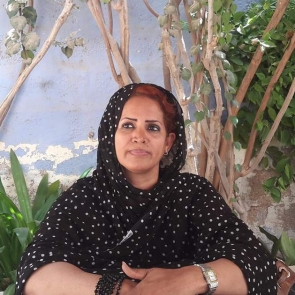
Mekfoula

Mekfoula Mint Brahim is is the President of Pour une Mauritanie Verte et Démocratique (For a Green and Democratic Mauritania), an organisation leading women’s empowerment projects in rural areas. She is also a member of Alliance pour la Refondation de l’Etat Mauritanien (AREM), which promotes good governance and fights against impunity.

Read More

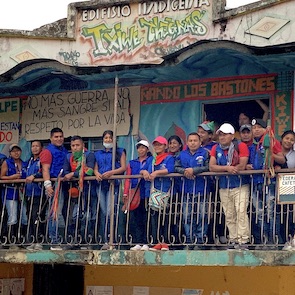
The Guardia Indígena del Cauca – Kiwe Thegnas (Defenders of Life and Territory), member of the organization Asociación de Cabildos Indígenas del Norte del Cauca (ACIN), CRIC branch, is a community life and ancestral resistance composed of women, men, boys and girls who defend their territories in a peaceful, unarmed way.

Read More

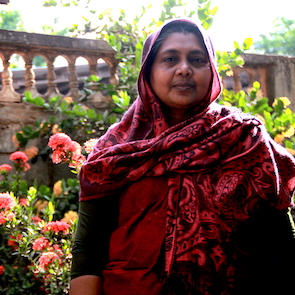
Juwairiya Mohideen is a Muslim woman human rights defender based in Puttalam in the North West of Sri Lanka. In 2010 she established the Muslim Women’s Development Trust (MWDT), providing daily practical support, comfort, advice and legal assistance to women and girls facing abuse, violence and discrimination.

Read More

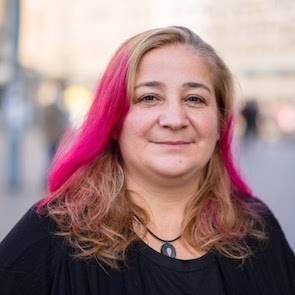
Lara Aharonian is co-founder of the Women’s Resource Center Armenia, a non-governmental feminist organization based in Yerevan that works to empower women and girls to become active citizens by combatting gender stereotypes and providing psychological and legal support to survivors of gender-based violence in Armenia.

Read More

Iraqi Women Human Rights Defenders have faced a wave of assassinations and attempted killings, particularly especially in the southern city of Basra. Since mass popular protests erupted throughout the country in 2019, human rights defenders have been targeted for attack, including kidnappings, physical attacks and killings.

For last year’s Front line award see: https://humanrightsdefenders.blog/2019/05/17/breaking-news-2019-front-line-defenders-award-to-5-lgbti-human-rights-defenders/

https://www.frontlinedefenders.org/en/2020-front-line-defenders-award-human-rights-defenders-risk

International Women Human Rights Defenders Day: two special events

November 30, 2020

On the occasion of International Women Human Rights Defenders Day (29 November) and marking this year’s 16 Days Campaign to combat gender based violence, Front Line Defenders presents a new edition of Cypher: https://www.frontlinedefenders.org/sites/default/files/cypher05.pdf , the digital monthly comic magazine featuring stories of human rights defenders from around the world. This edition features stories of WHRDs working for accountability in the context of the rights of women and girls, with a focus on GBV, from Zimbabwe, Transnistria/Moldova, Tonga and Argentina. [see also: https://humanrightsdefenders.blog/2020/07/23/new-cypher-comics-for-human-rights-defenders/]

Also in celebration of International Women Human Rights Defenders Day the International Service for Human Rights (ISHR) in Geneva organises an on-line ‘exhibition “The Gaze that Subverts” of pieces by the painter Z.

Each painting tells a story of a woman or women who, in defiance of patriarchal structures and authoritarian repression, occupy public space in China in their fight for justice.

Z’s paintings are both prompted by, and provide – in their embodiment, the bent torso, the flexed muscle – a response to, a central question of rights defence: ‘How do we change unjust power relationships with the all-too-scarce resources we have at our disposal?’

The exhibition runs from 29 November 2020 through March 2021. A public event to close the exhibition will be announced in the coming months. Download the flyer <https://ishr.us1.list-manage.com/track/click?u=97549cf8cb507607389fe76eb&id=d75b3cecd8&e=d1945ebb90>

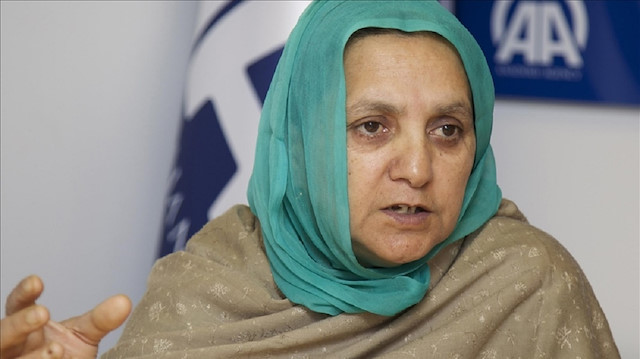
For 30 years Parveena Ahangar has fought for justice against disappearances in Kashmir

November 30, 2020
Parveena Ahangar
Parveena Ahangar

Several weeks ago authorities in Indian-administered Kashmir raided the home and offices of Parveena Ahangar, a local human rights defender, over alleged “terrorist funding,” sending shockwaves in NGOs operating in the region. [see also: https://humanrightsdefenders.blog/2017/09/30/parveena-ahangar-and-parvez-imroz-in-kashmir-awarded-rafto-prize-2017/]

The “iron lady of Kashmir” said that in 30 years of activism, the October raid by the Indian National Investigation Agency was the first time such brazen action was taken against her, calling it “saddening.”

On the eve of International Women Human Rights Defenders Day, Anadolu Agency spoke with Ahangar, who is chair and founder of the Association of Parents of Disappeared Persons (APDP), a group seeking justice for victims of enforced disappearances in the Indian-administered region.

“For the last three decades, nobody has raised questions on my work and integrity. This is for the first time that the Indian Investigating Agency wants to prove otherwise, but I will not budge what I am committed to before my God,” Ahangar said in her office in Srinagar.

In 2017, the Indian National Investigation Agency started pursuing a case against pro-freedom activists and groups, claiming that they were getting money from undisclosed sources and using it to fund terrorist activities Since then, many raids have been carried out across the region..

Ahangar’s son, Javed Ahmed Ahangar, was abducted Aug. 18, 1990, by the Indian army and consequently disappeared. He was a Class 11 student at the time. Overtaken with grief, she looked long and hard to find him, but to no avail. She took the legal route and filed various petitions, but that did not help.

In 1994, she formed the association of Parents of Disappeared Persons when the government and every other institution failed to deliver justice in her son’s case and other victims.

I am myself a sufferer. My 18-year-old son who was abducted by the Indian Army in 1990 has not been returned to me, and there are hundreds of mothers who are still waiting for their sons but have not been returned. I’m fighting for the return of our sons,” said Ahangar.

She said for four years she fought the legal battle to find his whereabouts. “I saw hundreds of mothers waiting at the doors of these institutions pleading for the same but the reply used to come ‘untraced’ with no accountability. Where are our sons, I am asking the Indian government.”

According to APDP figures, 8,000-10,000 people in the disputed region have disappeared with no trace.

In an in-depth peer-reviewed study, Lubna Mohiuddin (1997) observed that despite no formal declaration of a state of emergency, the presence of Indian troops in the region shot up from 0.15 million in 1990 to 0.7 million by 1997, which aggravated human rights abuses in the region.

“Despite India being a signatory of multiple international covenants, charters and declarations, violence in Kashmir continues to occur in the form of extra-judicial killings, arbitrary arrests, tortures, burning of houses, and gang-rapes,” the study said.

On Aug. 5, 2019, when India scrapped the limited autonomy of the Jammu and Kashmir region, the APDP documented the Kashmir region as going through one of the worst forms of state authoritarianism and high handedness.

“The Indian Government has continuously asserted that ‘normalcy’ has been returned to Kashmir. But, the testimonies and ground level reports indicate the contrary, as there are still severe restrictions and curtailment of basic human rights of the residents of the Kashmir region,” according to the report.

Ahangar says if India thinks “by taking out raids at my home or at my office will stop me from doing what I have been doing for the last 30 years, it will not happen. I have been hardened by the pain and grief after hearing thousands of stories of people who have been trampled under the foot of oppression for so long.

If I am asking for protection of my and their rights, what wrong I am committing?” she said. “It is a long battle to go. If I have to stand alone, I will and nothing by the grace of God can deter me from doing that.”

On the tenth of every month, the APDP used to hold a sit-in-protest to demand justice against enforced disappearances but after the abrogation of special status and the current pandemic crisis, it has been suspended.

——

https://www.aa.com.tr/en/asia-pacific/parveena-ahangar-a-story-of-courage-from-kashmir/2059667

https://www.yenisafak.com/en/world/parveena-ahangar-a-story-of-courage-from-kashmirs-iron-lady-3555432

Thailand: joint statement by International NGOs on Pro-Democracy Protests

November 29, 2020

A group of 13 important human rights NGOs – in a joint statement – condemn the Thai police’s unnecessary and excessive use of force against peaceful protesters marching to the national parliament in Bangkok on November 17, 2020. They are concerned that authorities could employ similar measures when facing protesters who have declared they will march to the Siam Commercial Bank headquarters on November 25.

On November 17, police set out barriers and barbed wire to prevent a peaceful march organized by pro-democracy movements from reaching the parliament. Protesters planned to protest outside the parliament as members of parliament and senators debated seven different proposals for constitutional amendments, including an amendment proposed by the lawyers’ non-governmental organization iLAW (Internet Law Reform Dialogue), which was supported by the People’s Movement and its allies. Police refused to let protesters through the barriers, and when the demonstrators acted to breach those barriers, police crowd control units used water cannons laced with purple dye and an apparent teargas chemical, as well as teargas grenades and pepper spray grenades, to forcibly disperse thousands of demonstrators, including students, some of whom are children. Water cannons were first used at approximately 2:25 pm and police continued their efforts to disperse protesters, with constant use of water cannons, teargas and pepper spray into the evening.

Police also failed to prevent violence between pro-democracy protesters and royalist “yellow shirts” near the Kiak Kai intersection, near the parliament. Initially, riot police separated the two groups. However, video posted on social media later showed police officers informing the royalist protesters that they would withdraw and seconds later they vacated their position between the two groups. During the ensuing skirmishes, both sides were filmed throwing rocks and wielding clubs. Live broadcasts included sounds that appeared to be gunfire.

The Erawan Medical Centre reported that there were at least 55 protesters injured, mostly from inhaling teargas. It also reported that there were six protesters who suffered gunshot wounds. The injured included children: a kindergartener and elementary school students….

On November 18, the spokesperson for United Nations Secretary-General António Guterres “expressed concern about the [human rights] situation in Thailand … it’s disturbing to see the repeated use of less lethal weapons against peaceful protesters, including water cannons … it’s very important that the government of Thailand refrain from the use of force and ensures the full protection of all people in Thailand who are exercising a fundamental peaceful right to protest.”

We call on the Thai government to respect, protect and fulfill the right of demonstrators to peacefully protest, in line with Thailand’s international obligations under the ICCPR and customary international law. Specifically, Thailand should:

1.     Permit the People’s Movement march to proceed on November 25 and allow for non-violent protesters, including those who are children, to peacefully protest in front of the Siam Commercial Bank headquarters.

2.     Protect the rights of protesters, including those who are children, in accordance with the Human Rights Committee’s General Comment No. 37 on the Right of Peaceful Assembly.

3.     Facilitate the exercise of the right to peacefully assemble and refrain from dispersing assemblies by using weapons, including less-lethal weapons, against protesters in line with the United Nations Basic Principles on the Use of Force and Firearms by Law Enforcement Officials and UN and other guidance on less-lethal weapons.

4.     Protect protesters, including those who are children, from violence and interference by non-State actors, while also protecting the rights of counter-demonstrators.

5.     Take steps to ensure accountability for rights violations associated with the government’s crackdown on the protest movement and to ensure that those whose rights have been violated enjoy the right to an effective remedy, as guaranteed under ICCPR article 2(3).

Signed by:

Amnesty International

Article 19

ASEAN Parliamentarians for Human Rights

Asia Democracy Network

Asian Forum for Human Rights and Development (FORUM-ASIA)

Asian Network for Free Elections (ANFREL)

CIVICUS: World Alliance for Citizen Participation

Civil Rights Defenders

FIDH – International Federation for Human Rights

Fortify Rights 

Human Rights Watch

International Commission of Jurists

Manushya Foundation

———–

https://www.hrw.org/news/2020/11/25/statement-international-ngos-pro-democracy-protests-november-17-and-25-2020

2020 Award of European Bars Associations (CCBE) goes to seven Egyptian lawyers who are in prison.

November 29, 2020

CCBE awards 2020 prize to Egyptian lawyers Ebru Timtik

The Council of Bars and Law Societies of Europe (CCBE) has granted its 2020 Human Rights Award to seven Egyptian lawyers who are currently in prison.

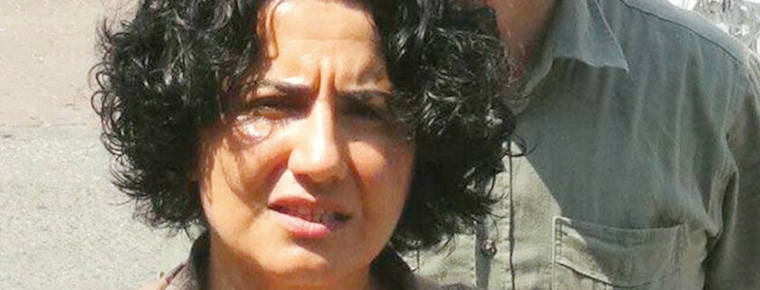
The body, which represents the Bars and Law Societies of 45 countries, has also given an exceptional posthumous award to Turkish lawyer Ebru Timtik (pictured), who died in August 2020.

For more on this and other awards for lawyers see: https://www.trueheroesfilms.org/thedigest/award/A3C73F81-6FCB-4DDD-9356-61C422713949

The seven Egyptian lawyers are:

  • Haytham Mohammadein, a human rights lawyer and labour activist,
  • Hoda Abdelmoniem, former member of the National Council for Human Rights, spokesperson for the Revolutionary Coalition of Egyptian Women and consultant for the Egyptian Commission for Rights and Freedoms (ECRF),
  • Ibrahim Metwally Hegazy, a lawyer, member of the ECRF and co-founder of the Egyptian Association of Families of the Disappeared (EAFD),
  • Mahienour El-Massry, who is often described as a voice of the revolution and is active in the defence of women’s rights and many other citizen’s rights,
  • Mohamed El-Baqer, director of Adalah Center for Rights and Freedoms, 
  • Mohamed Ramadan, a lawyer whose work involves legally representing human rights defenders,
  • Zyad El-Eleimy, a lawyer and a former parliamentarian in Egypt.
  • See also: https://humanrightsdefenders.blog/2014/06/24/egypt-extended-detention-of-human-rights-defenders-protesting-the-protests-law/

Ebru Timtik was a distinguished Turkish lawyer belonging to the Progressive Lawyers Association and the People’s Law Office.

See: https://humanrightsdefenders.blog/2020/09/26/timtik-sisters-in-turkey-share-2020-ludovic-trarieux-prize/

The virtual Award ceremony will be held during the CCBE Plenary Session today (27 November).

https://www.lawsociety.ie/gazette/top-stories/ccbe-awards-2020-prize-to-egyptian-lawyers/

Loujain al-Hathloul’s trial: Judge transfers her case to even worse court

November 26, 2020

Following up on my post from yesterday [https://humanrightsdefenders.blog/2020/11/25/loujain-al-hathloul-to-stand-trial-in-saudi-arabia-today/] Amnesty International reported on 25 November 2020 that a Saudi Arabian judge has decided to transfer human rights defender Loujain al-Hathloul’s case to Saudi Arabia’s Specialized Criminal Court (SCC), an institution used to silence dissent and notorious for issuing lengthy prison sentences following seriously flawed trials

https://www.amnesty.org/en/latest/news/2020/11/saudi-arabia-loujain-alhathlouls-trial-exposes-hypocrisy-on-womens-empowerment/

A Tool Kit for Human Rights in Business Education

November 26, 2020

Just beginning to take shape, the field of business and human rights (BHR) promises to become an important element of teaching and research at leading business schools. As part of the effort to accelerate the evolution of this area, the Global Network of Business Schools was founded in 2017 by the Center for Business and Human Rights at New York University’s Stern School of Business, the Alliance Manchester Business School at the University of Manchester, and the Geneva School of Economics and Management at the University of Geneva. This network now comprises 39 business schools. More information about the network’s annual meeting and activities can be found here: https://bhr.stern.nyu.edu/global-busi-ness-school-network. On a parallel track, the larger Global Business School Network (GBSN), which connects more than 100 leading business schools from 50 countries to improve access to quality and locally relevant management education for the developing world, is an essential partner in this effort. Many of the schools in the GBSN orbit are located in the global South, where many human rights issues are playing out in real time. Adding human rights to the business school curriculum provides an exciting opportunity for new forms of collaboration among these schools and their counterparts in Europe and North America. GBSN is well-positioned to serve as a resource and community for schools implementing recommendations in this toolkit

About this tool kit edited by Dorothée Baumann-Pauly, Michael Posner and Dan LeClair: Representatives from a number of business school, both professors and administrators, have worked jointly to assemble this tool kit. It includes information and resources explaining the increasing relevance of human rights in a business school context and provides resources that can be helpful to those in other business schools who wish to become involved. Specifically, this document provides an overview of readily available teaching resources, research outlets, and various ways of institutionalizing human rights at business schools. It includes contributions from representatives of schools that are already including human rights in classes, public programs, and research. These testimonies highlight some of the key building blocks for successfully integrating human rights into the business curriculum. The appendix provides a list of contacts at key business schools that stand ready to offer you further advice on how to initiate a human rights program at schools.

see also: https://humanrightsdefenders.blog/2020/11/17/2020-un-annual-forum-on-business-and-human-rights-hopefully-not-business-as-usual/