Centre for Independent Journalism executive director Wathshlah Naidu said the fund will be financed by a number of international groups. (Facebook pic)
Imran Ariff – on 9 December 2020 reports that a coalition of NGOs has joined forces to launch a legal defence fund to protect individuals who speak out on issues of human rights. This is to ensure their freedom of expression is not suppressed. Organised by the CSO cluster on Freedom of Expression (FOE), the fund is the first of its kind in Malaysia. It is currently being financed by a number of international groups which have funded similar overseas initiatives, including hosting crowdfunding efforts
At a press conference to announce the launch, Centre for Independent Journalism executive director Wathshlah Naidu said the fund comes at an important time as she believes the government has allowed the reform agenda to “take a backseat” to prioritise its own “political survival at all costs”.
She added that “what we have seen for the last eight to nine months is a government that is focused primarily on initiating all efforts to silence dissent or those who are critical and completely shutdown alternate discourses or narratives that challenge or question their positions and policies.”
The fund will cover legal fees and other expenses incurred by human rights defenders and members of the public facing investigation or prosecution due to them exercising their right to free speech.
Applications will go to a committee which will rule on the eligibility of the individuals and decide on the amount of assistance that needed to be meted out..
In addition to the fund, the CSO cluster called for the Sedition Act 1948, the Official Secrets Act 1972 and the Printing Presses and Publications Act to be repealed and for the Finas Act 1981, Film Censorship Act 2002 and Section 233 of the Communications and Multimedia Act 1998 to be reviewed.
They said these legal reforms will allow for greater freedom of expression across various mediums. These will allow the public to better hold the government accountable for their actions and policies.
Helena Dalli – the European Union Commissioner for Equality – and Dunja Mijatović – the Council of Europe Commissioner for Human Rights – published a joint opinion piece “Stop the rain on human rights” in Euractive at the occasion of International Human Rights Day 2020 on 10 December:
The current pandemic crisis serves as a magnifying glass of all existing inequalities in Europe – racism, gender and sexual discrimination, treatment of migrants: there is still a long way to go to ensure full and real equality in Europe,
Regrettably, for all the progress of the past seven decades, there is still a long way to go to ensure full and real equality in Europe. Our societies breed divisive levels of inequality, fear and polarisation. Structural discrimination keeps millions of Europeans on the margins of our societies, especially in employment, health, education, housing, and the criminal justice system.
The current pandemic crisis serves as a magnifying glass of all existing inequalities in Europe and exacerbates them. Those who were poor before it became poorer; those who were disadvantaged faced even greater disadvantages. Inequalities affecting women, LGBTIQ people and ethnic minorities illustrate this problem well….
Restrictions to freedom of assembly and association, obstacles to legal gender recognition and lack of adequate protection at public events are evident failures of state authorities to uphold their commitments and legal human rights obligations to ensure equality for LGBTIQ people.
The situation is not much better for people from ethnic minority and immigrant backgrounds. If you are of African descent you are more likely than white people to face discrimination in the job market, in education and housing, and to be stopped by the police without reasonable suspicion.
Hate incidents also continue to scar the lives of Jews, Muslims and Roma, who are among the preferred scapegoats of those who still stigmatise some groups of people on the grounds of their ethnic origin or religion.
The unkept promise of equality betrays a long political, philosophical and judicial tradition which places equality at the centre of European democracies. Both the European Court of Justice and the European Court of Human Rights have upheld the principle of equality and non-discrimination since the 1970s.
Yet, more and more governments and parliaments seem to pay little attention to their legal obligations, and to the destabilising consequences that keeping millions of Europeans as second-class citizens is having on our societies. Hard won progress’ longevity is not a given. We must protect and reinforce it every day.
The many challenges that our societies will have to face require that Europe strengthens the place equality occupies in our societies, starting by giving a more central focus to the principle of equality and non-discrimination in relations to all human rights, be they civil, political, economic social or cultural.
We must do better for the rights of the single mother living in poverty and for the disabled child prevented from attending a mainstream school. We must protect the rights of women and girls who have been sexually harassed, of young graduates who face discrimination in the labour market because of how their name sounds.
We also must remain vigilant in the face of worrying attempts to roll back progress towards equality for women and LGBTIQ people.
There is no easy fix, but already taking the decision to address these long-standing problems together is a good start. We firmly believe that the founding principles and values of the Universal Declaration are as relevant today as they were when they emerged from bloodshed, tyranny and war. They require that governments become stronger defenders of human rights.
We are helping them do so by addressing effectively the pervasive discriminations against women in Europe. Ratifying and implementing the Council of Europe Convention on preventing and combating violence against women and domestic violence is key to advance gender equality. This Convention has been ratified by 34 European countries, and signed by the EU.
However, the EU is not yet in a position to ratify because unanimity between member states has not been reached. We will join forces to make clear that the Convention protects from violence and nothing else; contrary to the misconceptions, fallacious and uninformed claims that have circulated and sown doubts.
Likewise, we are committed to fight racism and bring about an anti-racist culture. To this end, we believe that one of the priorities is to help member states stamp out ethnic profiling and end impunity for police misconduct.
We will also strengthen our work to counter discrimination against LGBTIQ people. We will continue to raise the visibility of LGBTIQ people in our dialogue with member states, support activists and use all means at our disposal to defend the right of LGBTIQ people to equality.
For this to happen, however, our voices alone will not suffice. There is the need for a renewed commitment by national authorities to uphold the founding values and legal obligations set out by the European Union and the Council of Europe. And here we get to the heart of the problem.
At best, many politicians in our member states remain indifferent about discrimination. At worst, they instigate violence and hostility. Politicians must be champions of equality, not obstacles to it. International organisations and the human rights community too have their bit to do.
We must become more inclusive in the way we defend human rights. We deliver a public service in the interest of society, but we do not own that service. We talk about, for and sometimes with people who have suffered human rights violations.
But we rarely empower them to speak for themselves. They should take part in decision-making processes as much as possible. We should learn to listen more and they must have the space to tell their stories and shape the policies and laws that concern them.
When states adopted the Universal Declaration on Human Rights on 10 December 1948, they pledged themselves to achieve equality. Giving practical effect to that vision is still possible – but only if we choose to strengthen freedoms, promote participation and empower all people.
On 9 December 2020) the NEW-York based Human Rights Foundation announced that THE DISSIDENT, a new feature film directed by Academy Award-winning director Bryan Fogel and produced by the Human Rights Foundation (HRF), will arrive on streaming platforms for viewers to rent or own beginning 8 January, 2021. Briarcliff Entertainment, the film’s distribution partner, has also announced a limited national theatrical release on Friday, December 25.
The film exposes the labyrinth of deceit behind the high-profile October 2018 murder of Washington Post columnist Jamal Khashoggi inside the Saudi consulate in Istanbul, Turkey. Featuring never before seen surveillance footage and unprecedented access to a wealth of other damning information previously unavailable to the public, the film weaves together a story of courage, money, power, tyranny, love, and technology run amok. See: https://humanrightsdefenders.blog/tag/jamal-khashoggi/
“THE DISSIDENT is a chilling illustration of what results from unchecked power,” said HRF president Thor Halvorssen. “It shines a powerful light on the darkness of authoritarianism. Dictatorships are undone by public exposure and we are committed to taking this story across the world, enlisting the partnership of the general public and civil society across the political and ideological spectrum to hold MBS and his henchmen accountable.”
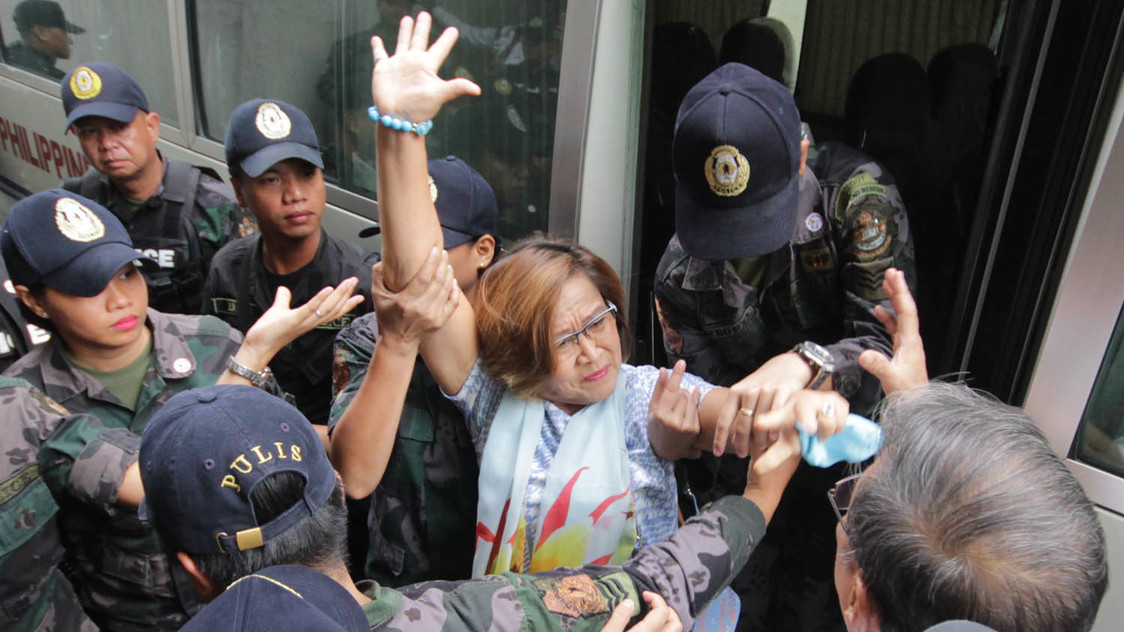
On 9 December 2020 Rappler announced that supporters of embattled Senator Leila de Lima will mark Human Rights Day on Thursday, December 10, with an online film screening titled “CinemaLeila 2020.”
The screenings will include films and documentaries about human rights issues in the Philippines Spearheaded by the Free Leila de Lima Movement, the screening will feature select short films and documentaries about human rights issues in the Philippines.
The line up includes the following titles:
Bad Elements
Miss You ‘Nay
Hayop
I Believe
Marapat Lang
Counter Terror
Paranoia of the Guilty
Dakilang Pagbabago 2020
Sober
Titser Gennie
Selda
Sino si Reina Mae Nasino?
PKNP (Pambili ng Karapatang Pantao)
Pawns
Ili Ili, Tulog Anay
These and other films and documentaries will be streamed on the Facebook page of the Free Leila de Lima Movement and, on De Lima’s official Facebook page.
There will be screenings on Wednesday, December 9 – Human Rights Defenders Day – from 7:30 pm to 9 pm, and on Thursday, December 10, also from 7:30 pm to 9 pm:
Interesting example of enhancing international awards at the local level: Several Dutch embassies have started to issue a local version of the Ministry’s international human rights award, the Tulip [see: https://www.trueheroesfilms.org/thedigest/award/D749DB0F-1B84-4BE1-938B-0230D4E22144]. Here the case of Georgia where the Ambassador, Maaike van Koldam, has awarded 3 Georgian media activists with a Human Rights Tulip prize
Established in 2008 by the Dutch government, the Human Rights Tulip is an annual award intending to support human rights defenders and help them learn from each other. Photo: The Embassy of Netherlands to Georgia.
The winner is Kamilla Mamedova, the founder of Radio Marneuli. The second prize went to Tsabunia Vartagava, an LGBTI and women’s rights activist from Georgia’s western region of Samegrelo, and Manana Qveliashvili, a journalist working on various human rights issues in the Adjara region.
Due to the Covid-19 pandemic, the award ceremony took place virtually. The Tulip prize will remain with the ambassador for now, until she will be able to hand it over to the winner in person.
Efi Koutsokosta in Euronews of 8 December 2020 writes that the European Union has agreed to establish a regime similar to the Magnitsky Act in America that will allow the 27 member bloc to sanction those responsible for human rights abuses. The decision came at a meeting of European foreign ministers in Brussels on Monday and will allow the EU to freeze assets and impose travel bans on individuals involved in serious human rights abuses. [see also: https://humanrightsdefenders.blog/2015/05/08/the-case-for-smart-sanctions-against-individual-perpetrators/]
The new measures will allow for travel bans on involved individuals and the freezing of their funds too. It could also be forbidden from making funds available to those being sanctioned.
“This unanimity rule is a real problem. Another problem with the EU Magnitsky Act is that it doesn’t include kleptocracy, it only includes human rights abuse. And what we found is that kleptocracy and human rights abuse go hand in hand, they are intertwined. Of course, we are celebrating today because this is a huge milestone but tomorrow the work begins to put pressure on sanctioning bad actors in countries like Russia and China and to make sure that the law that the EU has, is upgraded to include corruption,” Browder said.
The criteria for sanctions will apply to acts such as genocide, crimes against humanity, as well as. torture, slavery, extrajudicial killings, arbitrary arrests, or detentions.
It will then be up to the European Council, which consists of all 27 national governments, to act upon a proposal from a member state or from the High Representative of the EU for Foreign Affairs and Security Policy, to establish, review and amend the sanctions list.
.unesco.org/news/visualizing-journalism-without-fear-favour (Image by UNESCO)
The ongoing COVID-19 pandemic has made even clearer the importance of being able to access reliable, unbiased information in a time of crisis – and of independent media as the source of such information. But freedom of the media is under attack in many countries all around the world and journalists are subject to harassment, repression and violence. The World Press Freedom Conference 2020 (WPFC) aims to stand up for a free, safe and independent media and protect journalism from new and existing forms of unwanted control, pressure and influence.
The WPFC is co-hosted by UNESCO and the Kingdom of the Netherlands and will take place on 9 – 10 December 2020 in a new, innovative format, merging digital and in-person elements. It will bring together journalists, media companies, human rights defenders, members of the judiciary, policymakers, academics, youth and NGOs from around the world and is open to anyone, anywhere, who is interested in press freedom. [see also https://humanrightsdefenders.blog/tag/world-press-freedom-index/]
RNW Media will be hosting a session called PRESSure is ON: creating an inclusive and enabling online space for digital media communities. This session puts the spotlight on the marginalised voices of young media makers. Bloggers, vloggers and media makers from teams in Libya, the Democratic Republic of Congo and India will discuss their on-the-ground experiences in their local contexts, the challenges they face when it comes to digital rights (both access and content takedowns) and the possible solutions.
The session on 10 December 12:15 – 13:15, will be led by Melody Patry, Advocacy Director at the digital rights NGO Access Now. The audience will be able to use a chat function to share their thoughts on the topics discussed and will be asked to respond to questions that will pop up on their screens throughout the session. These questions are designed to gather the audience’s opinions on such issues as what poses the biggest threat to freedom of speech and whether or not governments should have the right to censor media content they consider harmful to society.
The RNTC media training centre has joined forces with UNESCO and the Netherlands Ministry of Foreign Affairs to hold an online competition in the run-up to the conference offering the chance to win a two-day online Masterclass in Investigative Journalism. People are invited to submit a short story, picture or 10-second video message explaining what press freedom means to them or how they’ve contributed to it, via direct messaging @UnescoNow. A total of 20 winners will be selected to take part in RNTC’s masterclass which will take place in January.
The on-line training will introduce key concepts and tools for investigative journalism and strengthen participants’ capacity to identify and research issues of governance, accountability, corruption, and misuse of power. In order to publicise the competition, RNW Media has been sharing videos on its social media channels of journalists from around the world explaining what press freedom means to them
Many media (here Sudarsan Raghavan for the Washington Post on 3 December 2020) have reported the good news that three Egyptian human rights defenders were released from detention Thursday after a wave of international condemnation against the Arab nation’s authoritarian government that included UN and Hollywood celebrities.
The trio — Gasser Abdel-Razek, Karim Ennarah and Mohamed Basheer — work for the Egyptian Initiative for Personal Rights, one of the few remaining rights groups in Egypt, where President Abdel Fatah al-Sissi has waged a massive crackdown on opponents and activists alike.
“They are fine, they are in good spirits,” said Ragya Omran, their lawyer, Thursday night.
“It was a very quick and clean release, which is unprecedented,” Omran said. “There was a lot of international pressure. … It worked.”
Few arrests have sparked the global outrage that followed the detention of the EIPR employees. The United Nations, France and other governments publicly denounced the arrests. Antony Blinken, President-elect Joe Biden’s nominee for secretary of state, declared in a tweet that “meeting with foreign diplomats is not a crime. Nor is peacefully advocating for human rights.”
On social media, a petition campaign with the hashtags #FreeEIPRstaff and #FreeKarimEnnarah went viral, spearheaded by Ennarah’s British wife, Jess Kelly. It prompted Hollywood celebrities such as Scarlett Johansson and Emma Thompson to post videos of themselves on YouTube urging the release of the EIPR staffers. In Egypt, EIPR remained vocal and defiant.
On Thursday night, after the three men took cabs from the prison to their homes, one of the group’s leaders publicly noted that the global outcry played a significant role in convincing the regime to release his colleagues.
“I can confirm my friends and EIPR colleague, Gasser, Basheer and Karim have been released and are home which I guess means we (and you) managed to #FreeEIPRstaff,” tweeted Hossam Bahgat, the organization’s founder.
Bahgat, despite being under a travel ban and asset freeze imposed by the Sissi government, returned to take the helm last month after Abdel-Razek, its executive director, was taken into custody. Placed in a cold cell, he was initially denied warm clothing and a mattress, among other ill treatment, said Amnesty International.



 Hans Thoolen on Human Rights Defenders and their awards