As can be seen from THF’s Digest of Human Rights Laureates [https://www.trueheroesfilms.org/thedigest] there is a small number of important individuals which do not appear in the Digest for the simple reason that they did not get an award while they were still alive. One explanation is that these leaders of the early days operated in the time that awards were less numerous (most awards were after all created after 2000).
In order to rectify this a group of individuals has created a Life-time Human Rights Achievement Award, which is an honorary, posthumous award for individuals who have greatly contributed to the international protection of human rights defenders but have been ‘forgotten’ by other awards. Attributed in exceptional cases.
The first 6 laureates are: Werner Lottje, Niall MacDermot, Hansa Mehta, Bertha Lutz, Minerva Bernardino and Charles Malik. This selection is an indication of what the “Ad Hoc Committee for recognition of forgotten human rights heroes” considers lifetime achievements. See: https://www.trueheroesfilms.org/thedigest/awards/3816a904-e225-4c74-a5da-136507ba27a2
For years, Colombia has led the dismal ranking of countries with the highest number of murders of human rights defenders worldwide. Members of indigenous communities who defend themselves against the intrusion of armed groups, organized crime, and the overexploitation of natural resources on their ancestral territories are especially affected. With the 8th Werner Lottje Lecture, we therefore honor the Guardia Indígena de Cauca – Kiwe Thegnas, winners of the 2020 Colombian Human Rights Award and the 2020 Front Line Defenders Award (Americas), who impressively demonstrate how effective the collective peaceful defense of their territories can be. What particular threats do indigenous communities face in Colombia and around the world? [see: https://www.trueheroesfilms.org/thedigest/laureates/26619974-ee3f-42ff-9e94-3e34ebc5ba9b
What effects did the COVID-19 pandemic have? What strategies have these communities developed to defend themselves? What kind of support is required from the international community to protect indigenous communities? We discuss these and other questions with:
• Guardia Indígena de Cauca– Kiwe Thegnas, Indigenous human rights collective, Colombia • Mary Lawlor, UN Special Rapporteur on the situation of human rights defenders • Dr. Peter Ptassek, Ambassador of the Federal Republic of Germany in Colombia
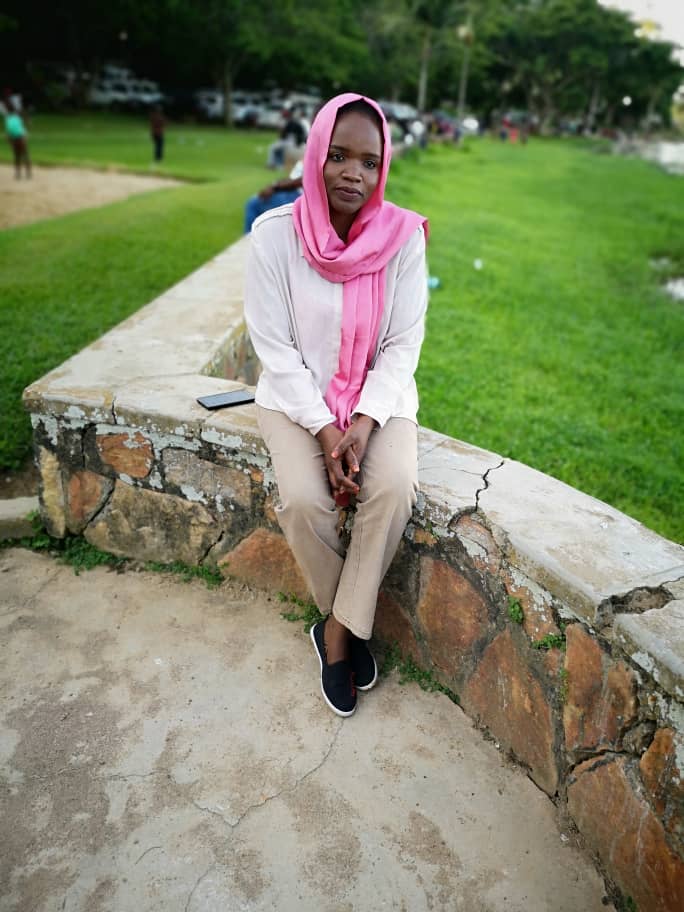
By the time Elrudia Abdalla Hussein, a Sudanese woman human rights defender was in secondary school, she had witnessed the killings of countless people. Growing up in Darfur, she observed violence and human rights abuses. “If you do not have power, you do not have rights,” she concluded. As a result, she decided to join a student association during her tertiary education to raise awareness about human rights and fight injustice.
When strangers entered their family home in 2010, Elrudia and her husband decided to flee to Uganda with their children. As a refugee, Elrudia faced new human rights challenges. Many of the Sudanese refugee women in her community are single mothers struggling financially. Coming from a war zone, they often face mental health challenges. Many of them only know basic English, making it difficult to navigate the Ugandan refugee system. When one of the women in Elrudia’s community struggled to pay rent, she got together with a group of Sudanese refugee women to help out.
“We decided to come together as sisters, and all put in a financial contribution to pay two months of her rent. After this, we decided to continue the communal support and founded an association.” Sudanese Women for Peace and Development association not only helps refugee women financially, but also with asylum procedures, referrals for support by other NGOs, counselling, trainings, and raising awareness about their rights. It is run entirely by volunteers from the Sudanese refugee community, who also fund the project to a large extent.
As refugees, it can be quite tricky to defend human rights in Uganda: involvement in politics can lead to an investigation that could ultimately revoke refugee status, but the line between politics and human rights is often rather thin. Elrudia’s association clearly focuses on social work, yet they carefully steer clear of any speech or activity that could be interpreted as political – a difficult balancing act sometimes. Another difficulty Elrudia and other exiled HRDs face is how to generate income for their families. Refugees have to rely on informal jobs to cover expenses like rent, food or school fees, so Elrudia often sells food she has prepared – while running the women’s association and also completing her master’s degree in Agriculture and Economics.
What keeps her going is hope: “I see things getting better around me. It’s easier to be in touch with friends and family back in Darfur. That gives me hope. Seeing the impact that we make in our community pushes me to continue, despite the difficulties. And: when I start something, I finish it!”
A human rights lens is urgently needed so that the opportunities of digital technology reach all of humanity and solutions can be found for risks online. Human rights Defenders are at the forefront of ensuring digital technology is inclusive, respectful of human rights and employed for human betterment. To offer our support to them and keep the spotlight on these issues, the Martin Ennals Award 2022 will reserve one of its three prizes for defenders working at the intersection of human rights and digital technology.
The deadline for nominations is: 30 May 2021. The independent Jury composed of 10 major NGOs will select three Finalists to the Award, who will be announced publicly in early 2022. The Laureate of the Award will be announced in the first semester of 2022.
Read the Nominations FAQ here to learn more about the nominations process.
MSF worked in collaboration with Sea-Watch on board the Sea-Watch 4 until February 2021, providing medical care and supporting with humanitarian assistance for rescued people. (Credit: Médecins Sans Frontières)
As countries across Europe adopt increasingly tough migration policies, NGOs are being prosecuted for acts of solidarity with refugees, asylum seekers and migrants. We speak to Stephen Cornish, director general of Médecins Sans Frontières (MSF) Switzerland, and Behrouz Boochani, a Kurdish Iranian journalist and author who was imprisoned in Australia’s offshore asylum system for six years, about the threat this growing hostility poses to Europe’s democracies.
On 4 March 2021, Italian prosecutors charged dozens of people from humanitarian organisations including Médecins Sans Frontières (MSF) and Save the Children with colluding with people smugglers while carrying out rescue operations in the Mediterranean. After an investigation spanning nearly four years, crew members, mission heads and legal representatives who saved thousands of people from drowning at sea are facing years in prison, sending shockwaves through the humanitarian community. See also: https://humanrightsdefenders.blog/2020/03/04/new-amnesty-report-on-human-rights-defenders-helping-migrants/
“It’s hard to imagine how saving a life can become a criminalised activity,” says Stephen Cornish, director of MSF Suisse, speaking to Geneva Solutions. The organisation, which denies the accusations, estimates that its six humanitarian ships helped save more than 81,000 lives at sea. “It would be like criminalising the fire department for going to put out a fire.”
The investigation is one of dozens brought against NGOs running search and rescue operations in the Mediterranean since 2016, when a handful of humanitarian organisations including MSF and SOS Mediteranee launched vessels in response to a rise in the number of people attempting the perilous journey from countries such as Libya and Turkey to claim asylum in Europe. Over the past few years, these vessels have been frequently detained by authorities or trapped at sea for weeks at a time, refused entry to ports where they can safely disembark. [see also: https://humanrightsdefenders.blog/2019/12/18/international-migrants-day-the-story-of-the-ocean-viking/]
Hostility towards rescue agencies has grown since the height of the so-called ‘refugee crisis’ in 2015, says Cornish, when over one million people – the majority of whom were refugees fleeing the war in Syria – fled to Europe by sea over the course of the year, mainly arriving in Greece and Italy. The EU’s failure to share responsibility for the dramatic rise in the number of people seeking asylum in Europe left countries such as Greece and Italy overwhelmed, Cornish says: “People initially responded with charity and welcome, but then the failure was at a government level not to share the responsibility, and to repopulate people across different states.”
As anti-refugee politics became increasingly mainstream across Europe, countries began to tighten their borders and scrabble for ways to reduce ‘irregular’ migration into the bloc. Last week marked five years since the introduction of the EU-Turkey Deal – a key pillar of these efforts. The agreement called on Turkey to prevent asylum seekers and migrants from reaching the EU in exchange for financial assistance and the promise of the eventual creation of legal resettlement pathways to Europe.
Five years on, Turkey hosts more refugees than any other country in the world, with the EU accused of outsourcing its migration management and turning a blind eye to the poor living conditions facing many refugees in the country. The agreement is also widely viewed as creating the ongoing humanitarian crisis in the Greek islands, which became a final destination for thousands of asylum seekers trapped in overcrowded camps waiting for their applications to be processed.
The inhumane conditions in refugee camps on the Greek islands are well documented, with reports of squalid facilities, violence, abuse and a lack of basic amenities commonplace. At times, there have been 40,000 people living in camps designed for a few thousand. As well as Syria, the majority of people are fleeing war and persecution in countries such as Afghanistan, Somalia, Palestine and the Democratic Republic of Congo, and one in four are children. The horrific fire that engulfed the notoriously overcrowded Moria camp on Lesvos in 2020, leaving 13,000 people without shelter, became a tragic symbol of Europe’s failed migration policy.
MSF has been operational on the Greek islands of Lesvos, Samos and Chios for many years, although it ceased operations inside Moria citing mass deportation and potential refoulement of asylum seekers and refugees. It no longer accepts EU funding in opposition to the policy.
“[The impact of the EU Turkey Deal] has been horrendous,” says Cornish. “There are still 15,000 people trapped in limbo, in no man’s land in Greece with no way forward and no way back, and suffering at the hands of supposed democracies.”
“We see suicides, we see self-harm in children, we see long term PTSD and people with no hope, no ability to move forward or backward, trapped in punishment,” he says. “We put people in hell holes, and then when hell breaks loose, we pretend like we don’t see it.”
The deal has recently been extended until 2022, when the EU’s New Pact on Migration and Asylum is expected to come into force. The New Pact focuses on fast-tracking screening and asylum processes at Europe’s external borders and includes a system of “mandatory solidarity” by which member states do not have to commit to resettling refugees but can instead fund repatriation. It has been widely criticised by humanitarian organisations for repeating the mistakes of the EU-Turkey Deal and failing to improve the situation for asylum seekers and refugees.
“Everything we’ve seen that failed in the US and failed in Australia, and is failing in Greece and Italy, we’d like to now make more semi-permanent policy,” says Cornish of the New Pact, which is currently being negotiated by member states and in the European Parliament. “As we harden these policies, all we do is push people into the hands of traffickers. We push them to take riskier routes and have higher death tolls and greater suffering.”
While the number of asylum seekers and migrants crossing the Mediterranean has decreased dramatically since 2015, migration has continued to be a highly politicised issue across Europe. Countries have adopted increasingly hostile policies which humanitarian organisations say fail to address flaws in existing systems, to the detriment of the people these systems were initially created to help.
Last week, the UK announced an overhaul of its asylum policy, which was met with outrage from humanitarian actors. Under the new plans, migrants and asylum seekers who arrive in the UK by routes deemed illegal will be indefinitely liable for removal even if they are granted asylum, creating a two-tier system which has been criticised as a violation of international law and eroding the right to asylum.
UK home secretary Priti Patel argues that current European policies “play into the hands of people smugglers”, however human rights and migration experts argue that, while governments fail to expand safe and legal routes, it is inhumane and unjust to punish asylum seekers for resorting to irregular routes when the only other option is an interminable wait in one of Europe’s refugee camps.
“Since a number of years [ago], we have made it almost impossible to be able to flee and request asylum from a conflict zone,” says Cornish. “We put all of these hurdles in place to make it impossible to be able to declare asylum and come [to Europe], and then we criminalise anybody jumping the line because we say they’re not following the procedures.”
Lessons from Australia. It has also been reported that asylum seekers in the UK could be shipped overseas while their asylum claim is pending – a policy that echoes Australia’s offshore processing asylum policy, instituted twice from 2001 to 2008 and 2012 to present.
Under the policy, asylum seekers and migrants who arrived in Australia by boat were immediately sent to offshore processing centres on the pacific islands of Manus and Nauru. The detention camps – which held over 2000 people at a time – have been widely condemned for systemic abuses and human rights violations. Although over 85 per cent of people sent to Nauru and Manus were recognised as refugees, the majority were left there for years awaiting resettlement.
Behrouz Boochani, a Kurdish Iranian refugee who was detained on Manus Island for six years after attempting to reach Australia by boat in 2013, experienced the horror of Australia’s inhumane asylum policy first-hand. He spoke to Geneva Solutions ahead of the FIFDH event he took part in alongside Stephen Cornish.
“The dangerous side is that Australia is introducing this policy to countries in Europe, especially the UK,” says Boochani, who continued his work as a journalist writing for publications such as the Guardian from Manus. “Australia became a model for many of these countries. And for many years, we were warning about this, we were talking about it, but no one heard us.” [See also: https://www.trueheroesfilms.org/thedigest/laureates/55687980-7bdc-11e9-8427-f3aebfb2928e]
“This policy damaged the political culture in Australia [and] the democracy in Australia,” says Boochani. “It damaged the principles in Australia and damaged morality in Australia. I think if the UK followed this policy, you cannot say that [you’ve] just damaged the refugees, you’ve damaged your principles, your democracy, your system, your morality, and your political culture too.”
MSF’s Cornish shares Boochani’s concern that Europe’s asylum policies are damaging the democracy and social fabric of countries, partly fuelling the rise in far-right politics that has gained traction across the continent in recent years.
There have also been reports of mounting deportations and systemic violent pushbacks at Europe’s external land borders by the EU border agency Frontex. At sea, NGOs have also collected evidence of refugees being intercepted and illegally pushed back to Turkey from Greek waters. International human rights and refugee law requires states to protect the right of people to seek asylum and protection from refoulement even if they enter irregularly. The increasingly frequent pushbacks have prompted calls by the UN Refugee Agency for an urgent investigation.
“Respecting human lives and refugee rights is not a choice, it’s a legal and moral obligation. While countries have the legitimate right to manage their borders in accordance with international law, they must also respect human rights. Pushbacks are simply illegal,” said UNHCR’s assistant commissioner for protection Gillian Triggs in a statement…
Tatsiana Hatsura-Yavorska Watch Docs Film Festival
Tom Grater in Deadline.com of 14 April 2021 reports how an unusual collective of human rights organizations, film festivals and industry have called for the release of Tatsiana (Tanya) Hatsura-Yavorska, the director of the Watch Docs Festival in Belarus, who was arrested on April 5 for her role in organizing an underground photo exhibition celebrating health workers.
The Human Rights Film Network and the International Coalition for Filmmakers at Risk have put out a joint open letter calling on authorities to release Hatsura-Yavorska, who is regarded as a political prisoner, as well as others who have been incarcerated in the country. The letter has been signed by a broad selection of film festivals and organizations including Sundance and Berlin.
“We urge the Belarusian authorities to immediately and unconditionally release our colleague Tatsiana Hatsura-Yavorska and other human rights defenders, and to end acts of judicial harassment against them,” the letter reads. You can see it in full here.
Following the event that she jointly organized, which was titled Machine Is Breathing, and I Am Not and was dedicated to the country’s medics and their battle during the pandemic, Hatsura-Yavorska was initially fined 700 Belarusian rubles for “protesting against police” and placed in a detention facility. She has not been released and is now facing trial on charges of ‘raising money for protests’, with her court hearing set to take place 16 April according to those close to her. It is thought she could face several years in prison.
Maciej Nowicki, Director of Poland’s Watch Docs Film Festival, told Deadline that “it is still unclear on what grounds” Hatsura-Yavorska is being prosecuted.
“Numerous reports by the UN, other international organizations and NGOs, unfortunately, have documented various types of violations of law and human rights in Belarus, including the rights of persons deprived of their liberty. This is why we are truly concerned about Tanya,” he continued. “Tanya is an amazing and beautiful person, as well as a very strong one. But now she needs our solidarity.”
A collection of Belarusian organizations and associations also released a statement this weekend, which read: “We consider the persecution of Tatsiana Hatsura-Yavorska by the authorities to be politically motivated, aimed at stopping her public and non-violent activities aimed at protecting human rights and fundamental freedoms.”
Elsewhere, Filmmaker Mark Cousins penned an article for The Guardian expressing his support for Hatsura-Yavorska, detailing how he interacted with the festival exec though his work with the Belfast Film Festival. “Nonfiction cinema is our lingua franca. Those who speak it to governments should be defended,” Cousins wrote.
Annual Report 2020 Human rights work in a challenging year
The Rafto Foundation’s Executive Director Jostein Hole Kobbeltved summarizes last year’s efforts to promote human rights and support human rights defenders.
2020 did not turn out as planned, for anyone. The global Covid-19 crisis is not just a health crisis, but also a human rights crisis. Emergency laws have been used to suppress human rights defenders. According to Human Rights Watch, more than 83 countries have introduced laws restricting freedom of expression. This often occurs where civil society is already under pressure. At the same time, human rights defenders have started to use new and creative tools to be able to continue their work.
The 2020 Rafto Prize, which was awarded to the Egyptian Commission for Rights and Freedoms (ECRF), [see: https://www.trueheroesfilms.org/thedigest/laureates/cb80c53f-6f2a-473d-a3a1-03993cc6a5c6] spotlighted the reign of terror and continuing absence of a constitutional state in Egypt ten years after the Arab Spring. It shone a light on the brave human rights defenders of the ECRF who, at particular personal risk, document human rights abuses and support those being persecuted by the increasingly authoritarian Egyptian authorities. Because of strict travel and meeting restrictions, both the announcement and presentation of the Rafto Prize were made digitally. What started off as a challenge became an opportunity to reach a wider international audience than ever before.
The 2020 Rafto Prize awarded to Egyptian Commission for Rights and Freedoms (ECRF)
Support for Rafto Laureates and human rights defenders
#1000RobesMarch in Warsaw on 11 January 2020 where Rafto organised a Norwegian delegation that participated in the demonstrations.
Increasing human rights competence among businesses
Together with businesses, we have continued to develop our sector-specific work in the finance, seafood, construction and maritime industries. We have leveraged the synergies between our local presence in the Human Rights City Bergen and our international partnerships. 2020 saw the launch of FUTURE-PROOF, a regional collaboration platform for business and human rights, for which engagement among businesses in the Bergen region has continued to rise. We scaled up our cooperation with the CEMS network and our first fully digital Masters in Business and Human Rights attracted a record number of participants. [see: https://humanrightsdefenders.blog/2019/05/01/applications-open-for-raftos-business-and-human-rights-course-in-norway/]
The KAN coalition, which is campaigning to establish Norwegian human rights due diligence legislation for business and which the Rafto Foundation helped found, was officially launched in autumn 2020 with a number of Norwegian businesses as members. The development aid programme to combat modern slavery, to which the Rafto Foundation has contributed, was launched and represents a welcome boost to Norwegian initiatives in this area.
Outdoor school at the Human Rights Cairn at Vidden in Bergen.
Education adapted to a new era
For our democracy and human rights education, it has been important to support schools and teachers in handling the challenges presented by the pandemic. We have revised our programme to include digital education, outdoor courses and training adapted to infection protection at both the Rafto House and in schools. This has enabled us to reach more than 7,500 students and teachers over the whole of western Norway in the most demanding of years. We have also increased the focus on our education platform, the Rafto model, and signalled the need for more resources to meet the growing demand from schools following the launch of our new curricula.
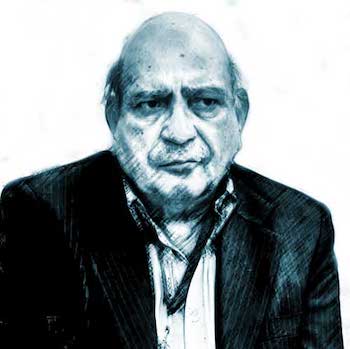
In Dawn.com of 12 April, 2021 it is reported that Dawn columnist and human rights advocate I.A. Rehman passed away in Lahore on Monday at the age of 90.
He was a founding member of the Pakistan-India People’s Forum for Peace and Democracy. As director of the Human Rights Commission of Pakistan (HRCP), he contributed to raising awareness about rights and fundamental freedoms. Rehman started working at a young age, according to human rights activist and former chairperson of the HRCP Zohra Yusuf. She said that Rehman worked as editor of the Pakistan Times before joining the HRCP in the early 90s, first as director and later as secretary general.
Human Rights Minister Shireen Mazari also expressed her condolences, saying Rehman was a “unique personality … who stood by & struggled steadfastly for what he believed in“.
“He was an icon of integrity, standing steadfast for every single fundamental right, every single democratic value in the worst of times. Pakistan will not be the same without him,” PPP Senator Sherry Rehman said.
In a statement, the HRCP called Rehman a “titan of human rights” and said that his “conscience and compassion were unparalleled“. “Even after his retirement from the HRCP, he remained a constant source of wisdom and advice, and a mentor to many. We will carry his legacy forward as he would have wished us to” .
Journalist Syed Talat Hussain said Rehman was to journalism what “constitutions are to civilised countries”. “Every time we needed guidance we looked him up and he showed us the way. A beautiful soul, a great man,” he said.
Journalist Asad Hashim said Rehman was one of Pakistan’s “foremost human rights defenders and a key part of all of the incredible work that the HRCP does”. “A tremendous loss for all Pakistanis, not just progressives and those who work in the human rights space,” he said.
NEWS WIRES of 12 April 2021 reports that thirteen people who describe themselves as “victims of forced confessions broadcast on Chinese television” are urging European satellite operator Eutelsat to reconsider carrying Chinese channels CGTN and CCTV4.
“We are asking you… to determine whether television providers in democratic societies ought to continue to be morally complicit in the broadcast of information that is intentionally twisted and obtained through torture,” the group said.
“We are only a dozen victims able to speak out…. Many other victims are in prison. A few have been executed...The victims have no way of demanding reparations. The only way to stop this is for television regulators to investigate and take measures,” the group added.
The letter notes Australian public broadcaster SBS stopped using content from Chinese state-run television in March pending a review of human rights concerns.
French audiovisual regulator CSA determined in March that CGTN met the technical criteria necessary for broadcasting but just this week Safeguard Defenders submitted two complaints against the channel.
One cited an allegedly coerced interview with a Uighur child and the other was a defamation complaint from German researcher Adrian Zenz, whose reports on the treatment of Uighurs in China’s western Xinjiang region have drawn rebukes from Beijing.
Simon Cheng, a former British consulate staffer in Hong Kong, who was granted asylum in the UK after allegedly being tortured by Chinese secret police also signed the letter.
Also giving support is Swedish activist and Safeguard Defenders co-founder Peter Dahlin, who spent three weeks in jail in 2016 before being expelled from the country as a national security threat.
After serving in President Lyndon B Johnson’s cabinet in 1967 and 1968, Clark set up a private law practice in New York in which he championed civil rights, fought racism and the death penalty and represented declared foes of the US including former Yugoslav president Slobodan Milosevic and Sheik Omar Abdel Rahman. He also defended former Iraqi leader Saddam Hussein.
“The progressive legal community has lost its elder dean and statesman,” civil rights attorney Ron Kuby said. “Over many generations, Ramsey Clark was a principled voice, conscience and a fighter for civil and human rights.”
Clark defended antiwar activists. In the court of public opinion, he charged the US with militarism and arrogance, starting with the Vietnam war and continuing with Grenada, Libya, Panama and the Gulf war. When Clark visited Iraq after Operation Desert Storm and returned to accuse the US of war crimes, Newsweek dubbed him the Jane Fonda of the Gulf
Clark said he only wanted the US to live up to its ideals. “If you don’t insist on your government obeying the law, then what right do you have to demand it of others?” he said.
The Dallas-born Clark, who was in the US Marine corps in 1945 and 1946, moved his family to New York in 1970 and set up a pro bono-oriented practice. He said he and his partners were limiting their annual personal incomes to $50,000, a figure he did not always achieve.
Clark’s client list included such peace and disarmament activists as the Harrisburg seven and the Plowshares eight. Abroad, he represented dissidents in Iran, Chile, the Philippines and Taiwan, and skyjackers in the Soviet Union.
He was an advocate for Soviet and Syrian Jews but outraged many Jews over other clients. He defended a Nazi prison camp guard fighting extradition and the Palestine Liberation Organization in a lawsuit over the killing of a cruise ship passenger by hijackers.
“We talk about civil liberties,” he said. “We have the largest prison population per capita on Earth. The world’s greatest jailer is the freest country on Earth?”