Witness, the NGO that places importance on the use of video to highlight human rights issues, has been rebranded to “encourage collaboration and participation”. Witness was originally founded in 1992 by musician Peter Gabriel. Its central principal was to give cameras to human rights activists so that they could document their stories. The initiative was dubbed “little brother turning the cameras back on big brother”. In 2019 however, cameras in the hands of few have been replaced by smartphones in the hands of many. As a result, Witness’ mission has shifted somewhat, and now focuses on educating larger groups of human rights defenders in the safe, effective and ethical practice of video.
Pentagram partner Harry Pearce stresses in the new identity a focus on collaboration and participation from a “new generation of human rights defenders”.
Reportage shots and portrait photography play a key part in the new branding, emphasising a connection between different human rights battles around the world. Many of these images are closely-cropped shots of eyes, which are processed with a halftone dot technique. According to the team, this is done to achieve a “simple but effective device which holds the viewer’s gaze”. Throughout the branding, the organisation’s strapline “See it, Film it, Change it” can be found alongside the Witness logomark. Both have been set in Akzidenz Grotesk Medium, chosen for its “striking” and “dynamic” qualities. Alongside this, a “more optimistic” colour palette has also been developed, expanding on the organisation’s usual orange and black.
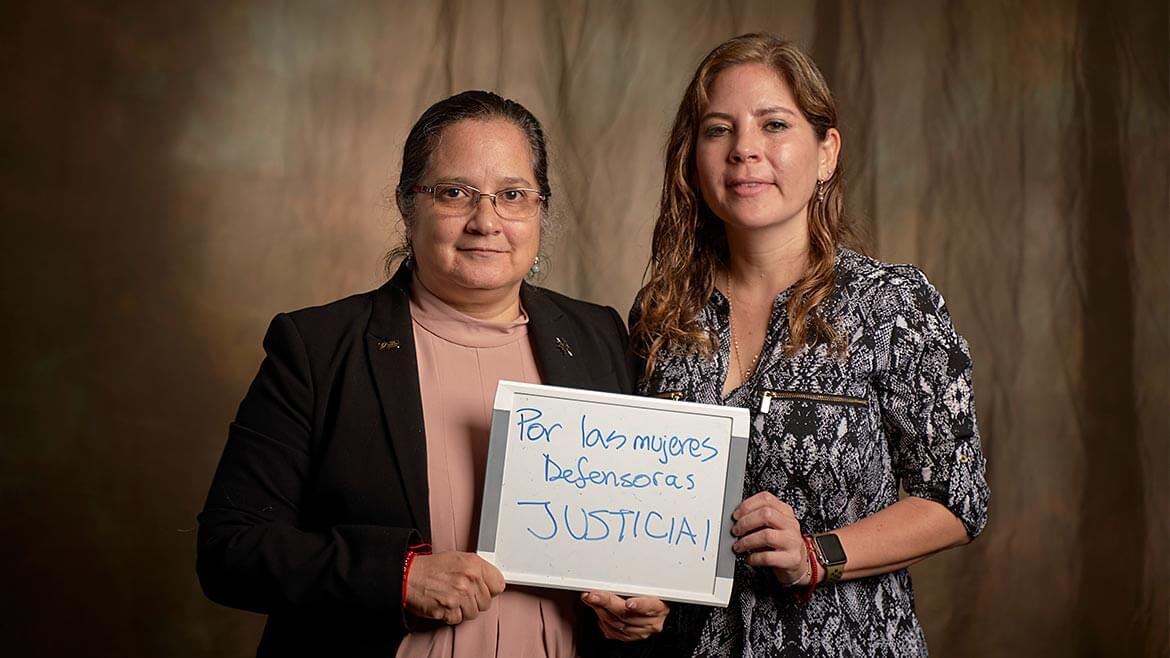
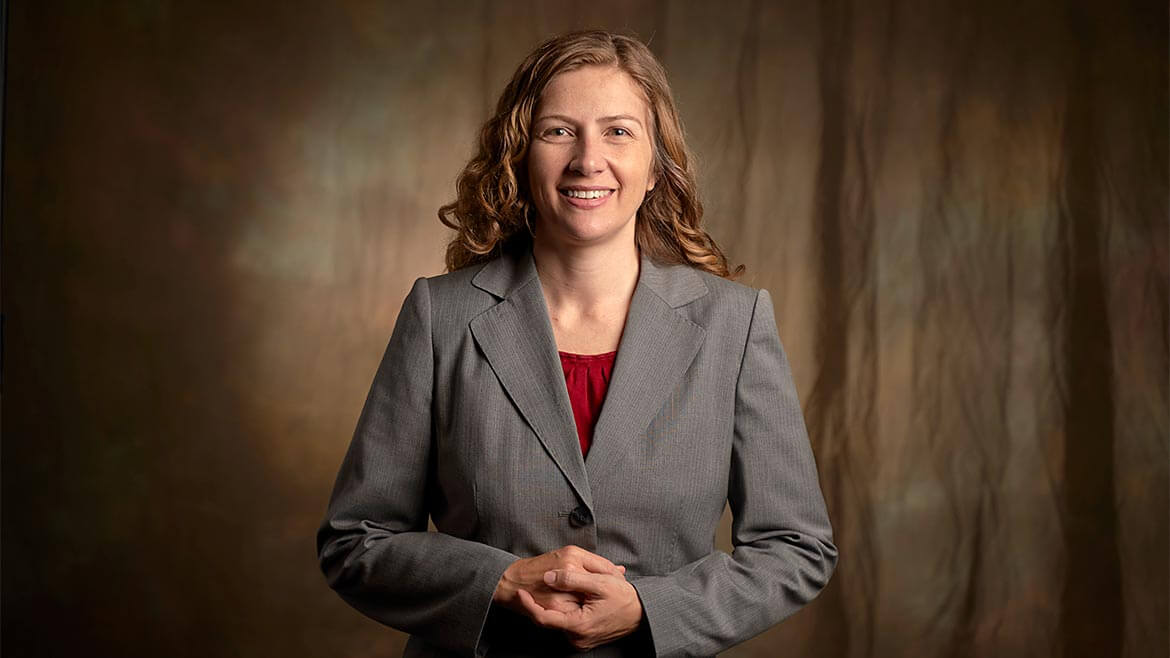
“The right to defend human rights is a right already recognized. We have to be mindful and careful and state clearly that no one should be defamed, persecuted, prosecuted, or killed because they exercise their right to defend rights, regardless of their political position.”
CLAUDIA SAMAYOA
Unidad de Protección a Defensoras y Defensores de Derechos Humanos
Guatemala
and
ALEJANDRA SERRANO PAVÓN
Environmental Law Alliance
Mexico
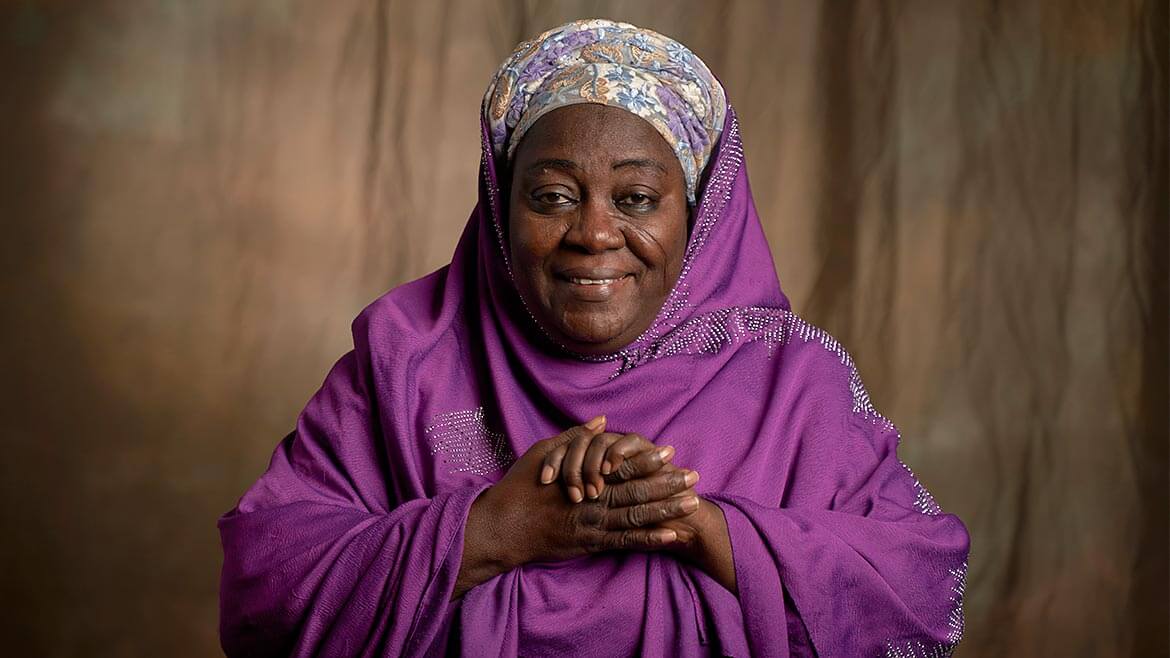
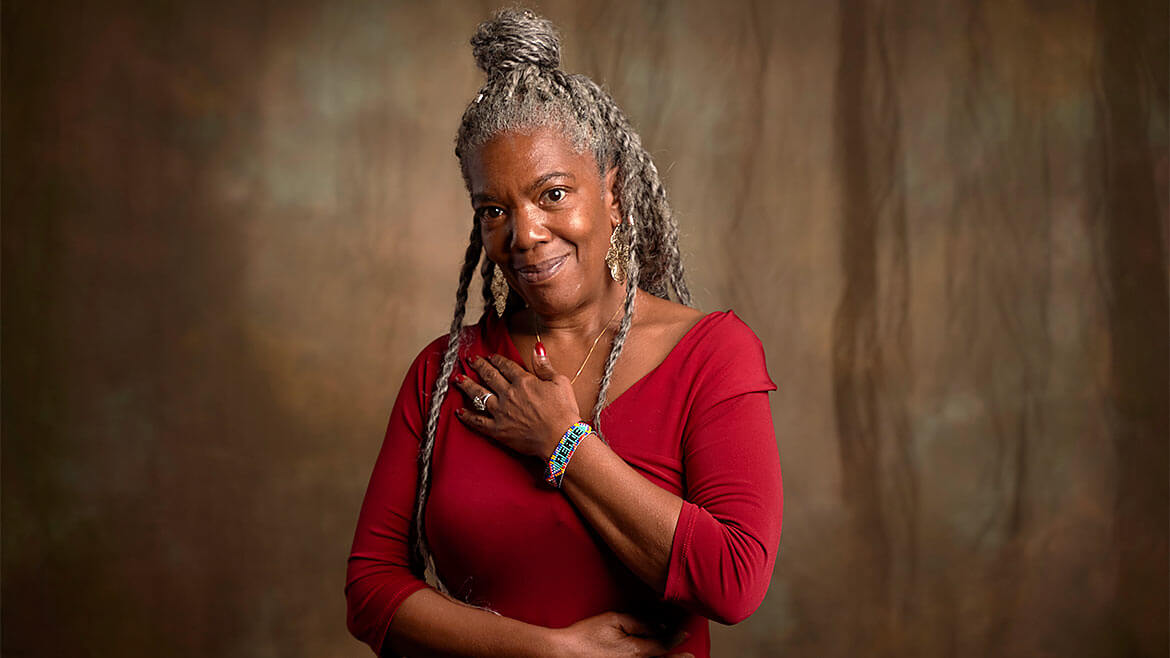
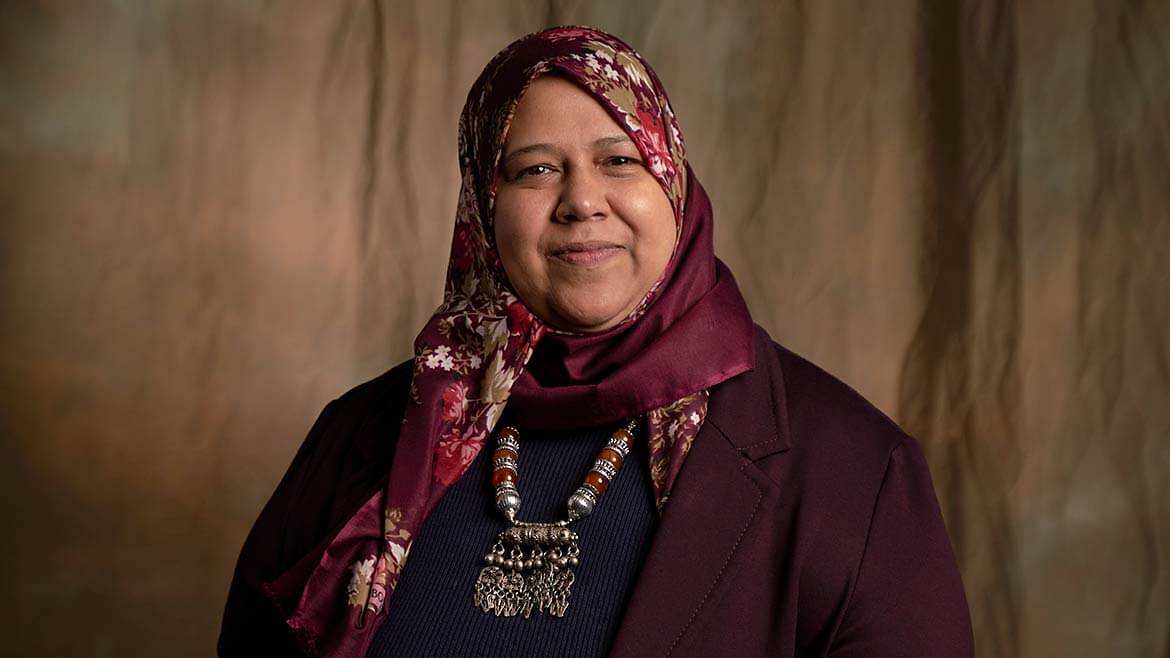
“We believe that if people understand the concept of human rights and are able to apply it to their lives, then there will be more peaceful coexistence. Then government can cut down on the bills for buying arms and ammunitions. Then development can take place because everybody’s living peacefully and they’re able to go about their normal businesses fully.”
HALIMAT JIBRIL
Federation of Muslim Women’s Associations in Nigeria (FOMWAN)
Nigeria
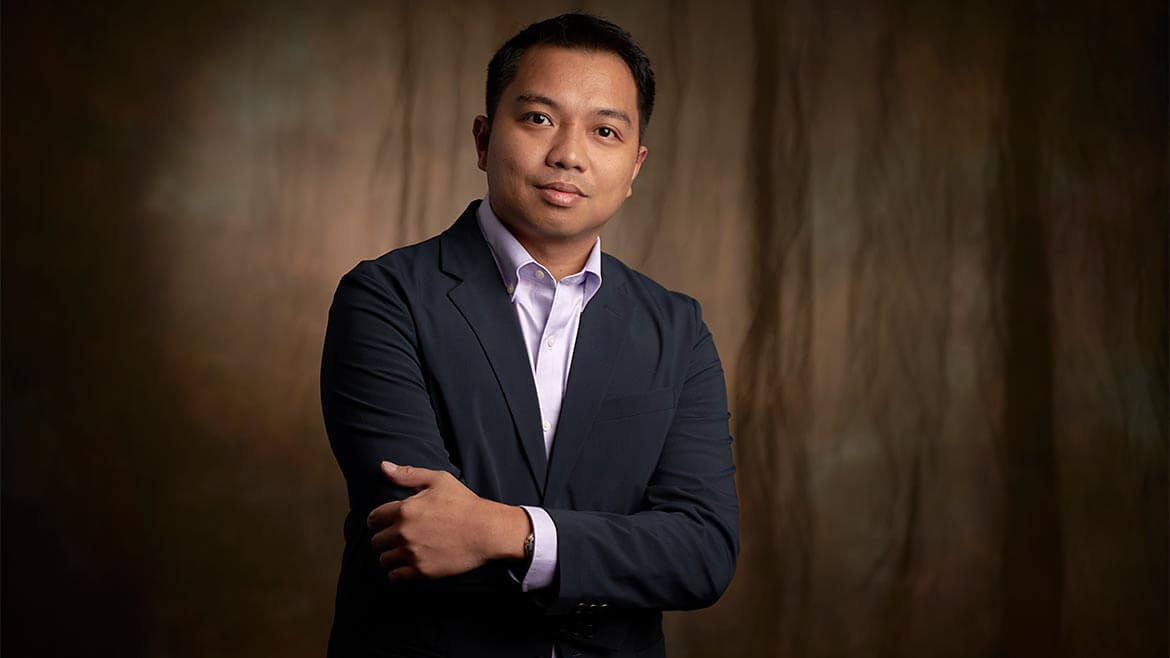
“We have seen the rise of many youth-led movements around the world, and these young protesters are speaking out and standing up not just on the issue of environmental crisis, but also on land rights, on democracy. All of them are using the internet as a tool not just for communication but also for organizing and mobilizing these campaigns. One concrete way we can support youth-led movements is to make sure that these internet tools remain accessible, safe, and truly empowering.”
RAYMOND “MONG” PALATINO
Global Voices
The Philippines
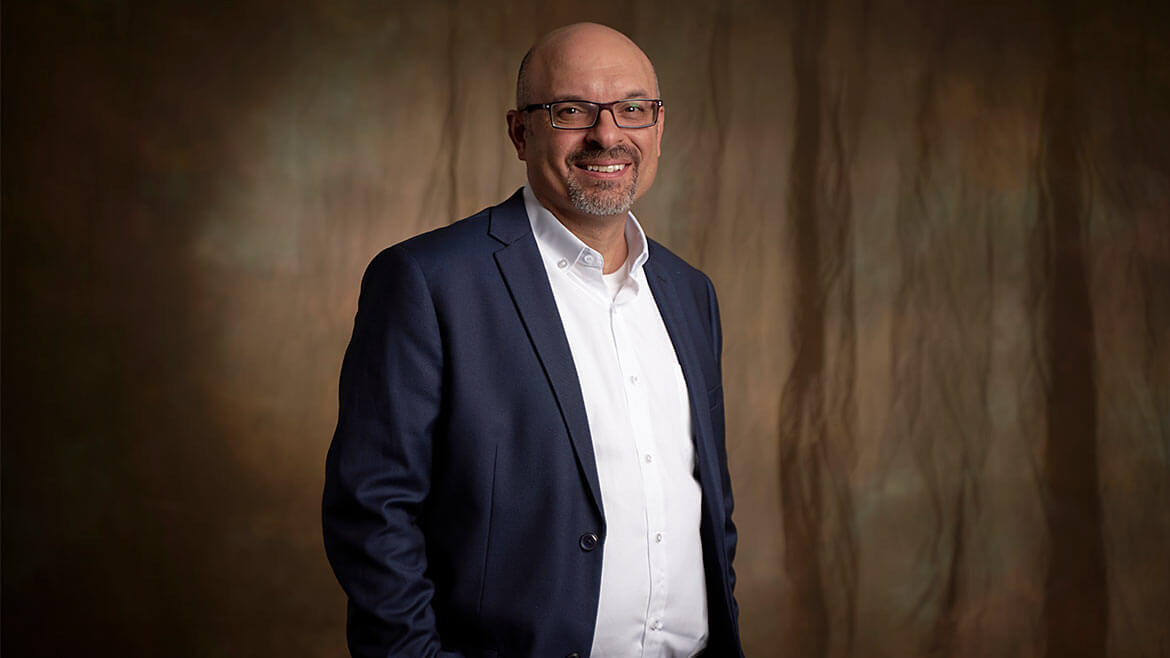
“The Palestinian people, just like all people around the world, are seeking the preservation of life, liberty, and the pursuit of happiness. And when that is undermined in one part of the world, it is undermined everywhere. I feel like the Palestinian situation is just a microcosm of global injustice. If we can solve one, we can solve the other. But big problems require collective minds.”
WESAM AHMAD
Al-Haq
Palestine
“Every time that we’ve had significant change in our country, religion has been at the heart of it. It’s been part of what motivates people. It speaks to our values. To neglect religion in thinking about human rights would be to neglect a huge part of the resources that we have in taking on the injustices we face.”
COLLEEN WESSEL-MCCOY
Kairos Center for Religions, Rights, and Social Justice
United States
“Solidarity is not about ‘me’; it’s about ‘we.’ It’s about just being there – not being ahead of somebody or behind somebody, but standing with them.”
STACEY HOPKINS
Activist
United States
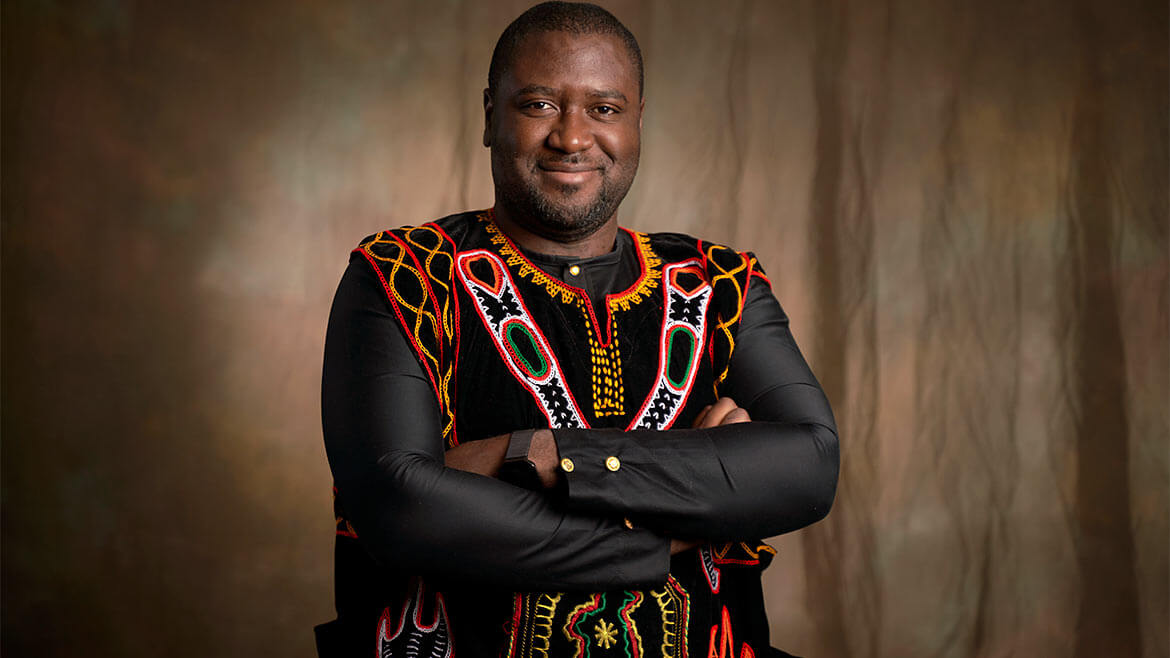
“The relationship we build between people is the greatest wealth we can have. It is beyond money. It goes beyond what you have in your bank account. When you have a good relationship with the people – your friends, your family, your colleagues – that is a good foundation to build a country.”
HALIDOU NGAPNA
Carter Center Human Rights House
Democratic Republic of Congo
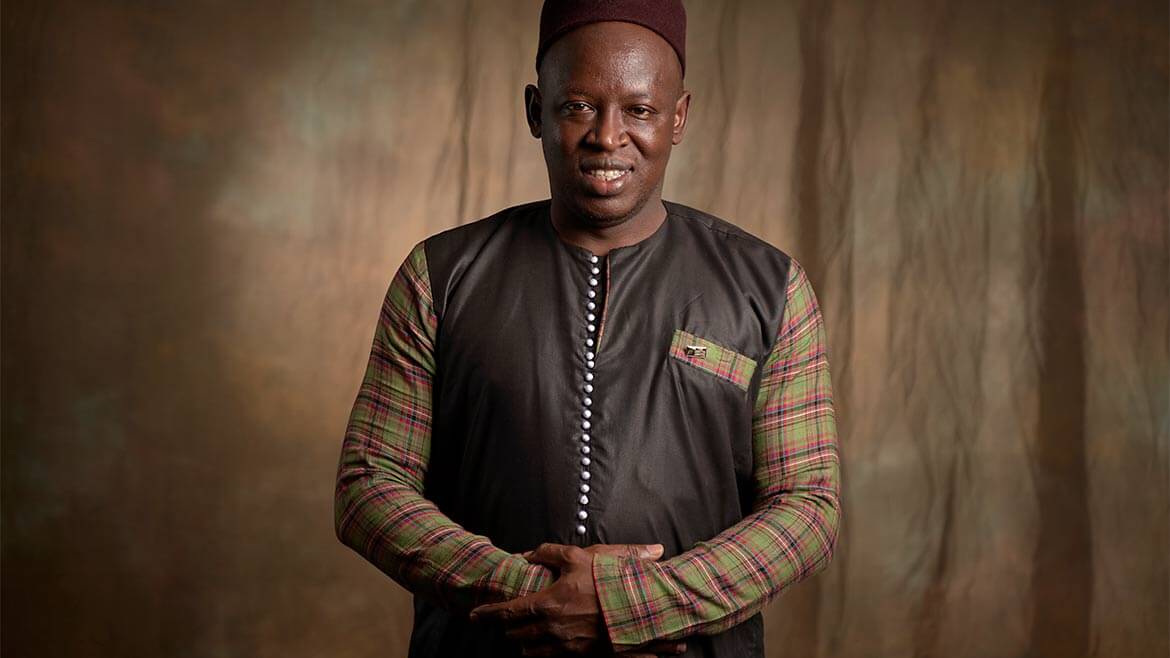
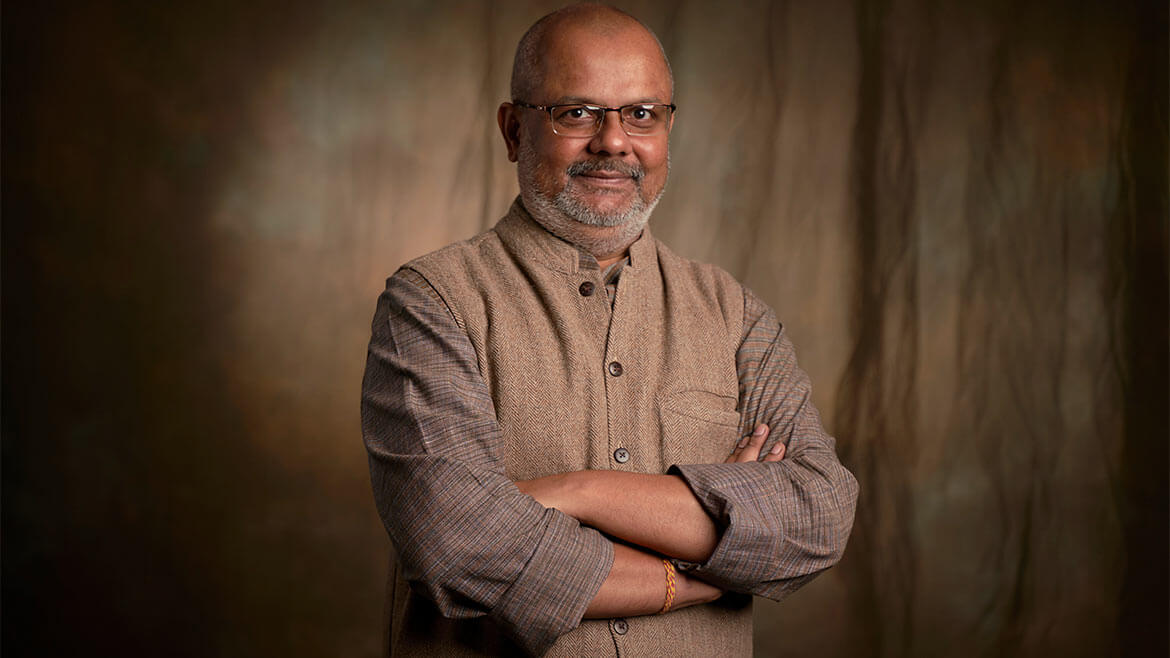
“In 1996, we embedded human rights into our three-year program. Immediately, we started seeing change. It was like a revolution. Community members started coming out and promoting their own rights, started talking about their responsibilities. This was possible because we talked about all the aspects of human rights – economic rights, cultural rights, political rights, and civil rights. After people understood human rights, we started seeing changes in deeply rooted cultural practices, including female genital cutting and child marriage. They started having dialogues around gender-based violence against women and girls. Women started taking political positions, because they now understood they have the right to vote, and the right to be elected. Things started changing.”
GODFREY OCHIENG OKUMU
Tostan International
Senegal
“If you’re not indifferent, the world will be different. Challenging our own indifferences is extremely important.”
RAMESH SHARMA
Ekta Parishad
India
“In 2015, our lives began to change completely. We lost our jobs; we lost our homes; we lost our country; we lost our dignity. But we did not lose hope, and we will never lose hope.”
MUNA LUQMAN
Food4Humanity
Yemen
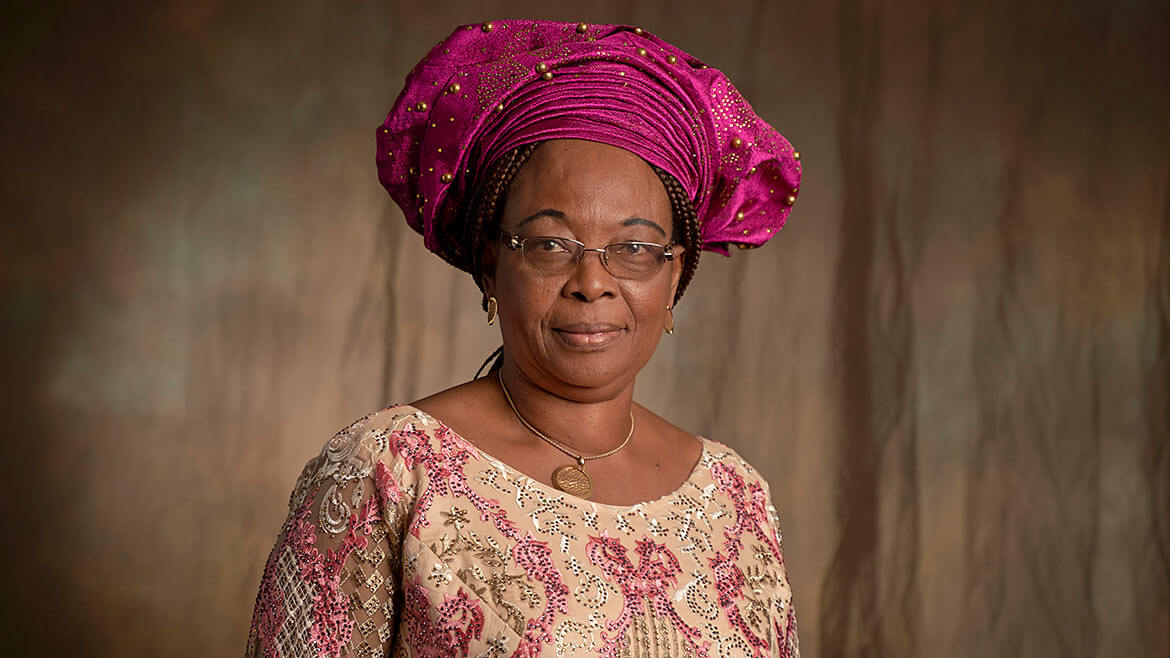
“The motto of our organization is taken from John 17:21, which says, ‘That all of them may be one.’ If all should be one, there should be no violence, there should be no quarrel, there should be no killing. For all of us to be one, there must be love. There must be peace. There must be unity. And there must be togetherness.”
VICTORIA BOLANLE IHESIULOR
Christian Association of Nigeria, Women’s Wing
Nigeria
On 14 November 2019 Ukraine’s film maker Oleg Sentsov received the Magnitsky Human Rights Award in person [for more this award: http://www.trueheroesfilms.org/thedigest/awards/sergei-magnitsky-human-rights-awards]. The prize was awarded last October, but Sentsov was in jail in Russia. The award was presented in London by Meghan McCain, the daughter of 2008 presidential candidate and U.S. Senator John McCain. Her father was also posthumously given the award in 2018.
The seventh edition of the Human Rights Watch Nairobi Film Festival which showcased five films at various locations in the city between October 15 and 18, 2019. Each film was followed by a panel discussion about human rights activism. The festival’s films document struggles faced by activists in the region and elsewhere on the continent, who are pushing back against abuses by states and corporations, often at a personal cost. The festival aimed to generate discussions around movement-building and government’s responsibility to protect human rights defenders.
On 20 October human rights defenders held the Heroes concert on Mashujaa Day. The concert took place at Alliance Francaise to honor over 200 Human Rights Defenders who have made unparalleled sacrifices and contribution into the liberation of the country, advancement of human rights and social justice. The Coalition emphasized its recognition on human rights defenders and social justice activists who have played a crucial role in liberating Kenya with a special mention of Prof. YashPal Ghai. According the Kamau Ngugi, Executive Director, National Coalition of Human Rights Defenders: “For far too long we have had major contributions of many human rights defenders who have continuously pursued the social justice but sadly do not get to be celebrated in any way. Mashujaa Festival is a creative space where as a society we recognize and honor these heroes and heroines.” Top musicians and poets included Sarabi band, Mbogi Konnection, H_Art the band and spoken word poets including Javan the poet, Ndungi Githuku, gravity band, Anthem Republic
Concert to recognize over 200 human rights defenders for their fight for social justice
Asma Jahangir is rightly considered one of the foremost human rights defenders of our time [see: https://humanrightsdefenders.blog/2018/02/11/asma-jahangir-one-of-the-worlds-most-outstanding-human-rights-defenders-dies-at-age-66/]. So, the two-day ‘Asma Jahangir Conference 2019 – Roadmap for Human Rights’ which concluded in Lahore, Pakistan on 20 October 2019 is fully justified. The News carries a long report on the meeting in which some 120 jurists, politicians, human rights defenders and media people acted as panellists from Pakistan, England, America, Sri Lanka, Bangladesh, Ireland, Sweden and Afghanistan. Thousands of students, attended the sessions. They all resolved to carry forward the legacy of Asma Jahangir, who fought relentlessly against dictatorial forces and always sought due process of law, equality for women and protection of minorities in the country.
(Former) Politicians dominated the panels but other speakers at the sessions paid tribute to Asma Jahangir and appreciated her commitment to human rights with a resolve to uphold the rule of law and struggle for women’s rights. Munaza Hassan spoke of women’s right to inheritance. Daughter of Asma Jahangir and journalist Munizae Jahangir, who conducted the session, said: “It is a rare moment when all political parties are seen on the same platform.” She said that politicians conveniently forget to protect fundamental rights and right to expression when in they assume power. She said: “We are convinced that without freedom of the media, the rule of law and guarantees of security to human rights defenders, neither democracy nor justice, is possible. The main challenge to development of Pakistan and the rights of its citizens is a national security state. Until the national security is subservient, no other initiative in economy, health, education and rule of law can find success.
The day began with a short film on Asma Jahangir receiving the Right Livelihood Award, produced by True Heroes Films, where she spoke of growing expectations of citizens as far as what the governments should deliver. And governments falling ever further behind, internationally this gap of creative impulses of society on one side and governments dragging their feet on the other, has been the key engine of human rights challenges. Despite threats to her life, she spoke of never leaving Pakistan as it is a place where she has received most love and affection.
As a continuation of the discussion on ‘Art inspires politics’, Munizae Jahangir conducted a panel discussion on ‘How women can build bridges for peace in South Asia’. Former foreign minister Hina Rabbani Khar, Afghan politician Fawzia Koofi, human rights lawyer from Sri Lanka Bhavani Fonseka, Swedish Ambassador Ingrid Johansson and former Afghan ambassador to Pakistan Omar Zakhilwal opined that peace in South Asia was a prerequisite to securing women’s fundamental rights and the resources should be directed towards socio-economic areas rather than the military. Human Rights Ambassador of the Kingdom of the Netherlands, H. E. Dr Bahia Tahzib-Lie, Award-winning novelist Mohammad Hanif, Christian Caryl of the Washington Post, Wusat Ullah Khan, Ms Aisha Sarwari and Iqbal Khattak participated in the discussion on the role of social media.
Dr Bahia talked about the centrality of human rights in a thriving democratic society, and also the role of her government in supporting human rights initiatives all-over the world, including Pakistan. Aisha Sarwari talked about how women are systematically excluded from law-making process and, therefore, law-making concerning social media. She said it is essential for the social and economic development of all countries for women to be able to use the media as disruptive technology and end permission culture. Wusat Ullah Khan mentioned that the social media gives space to freedom, but also makes people extremely vulnerable. He said freedom of speech is part of a bouquet – you cannot talk about freedom of speech without talking about right to life and education and freedom of religion.
Iqbal Khattak, country representative of Reporters without Borders (RSF), spoke about the need for digital safety training and how one should protect oneself by disengaging with trolls. He particularly highlighted threats, accusations of blasphemy as threats that should be taken very seriously. He strongly encouraged use of PICA laws for individuals to seek online protection. He also highlighted Pakistan’s considerable investment in controlling social media spaces and vigilance on part of civil society. The Government of Pakistan should take social media as fundamental right.
On fighting the culture of shame and silence, woman rights activist Uzma Noorani, British professor of human rights Ms Siobhan Mullally, provincial Ombudsperson Khyber-Pakhtunkhwa Rukshanda Naz, Pakistan People’s Party leader Nafisa Shah, former chairperson of the Punjab Commission on the Status of Women Fouzia Viqar said that there should be universality of rights, for all excluded communities including women and marginalised remote communities.
..
On ‘Silencing civil society’, Ms Fareeda Shahid moderated the session of Knut Ostby, United Nations Resident and Humanitarian Coordinator for Pakistan. Ms Zohra Yusuf, human rights activist and council member of HRCP, Mohammad Tehsin, convener of Pakistan Civil Society National Forum, law expert Asad Jamal said registered civil society organisations should be allowed to function, 2013 policy of banning CSOs should be challenged. Mass communication needed to change narratives.
A counter-protester gives a white supremacist the middle finger. The white supremacists responds with a Nazi salute. Charlottesville August 12, 2017. (Photo: Evan Nesterak)
Jack Xiong writes in Citizen Truth of 17 October 2019 about a new documentary series titled “Why We Hate” which premiered Sunday on the Discovery Channel and explores “one of humanity’s most primal and destructive emotions – hate.” Directed by Sam Pollard and Geeta Gandbhir and produced by Hollywood veteran Steven Spielberg, the six-part docuseries aims to help people understand their own minds to prevent hatred from spreading.
Pollard made no bones about the subject matter’s relation to America today, telling NPR: “If you think about where we are in the United States with Trump as president, the idea that he demonizes people from other countries, specifically Mexico — that’s another way to sort of separate us from them.” He then went on to compare it to the worst outcomes for such divisiveness: genocide, as with the Holocaust in Germany during World War II, and Cambodia.
The isolation of disadvantaged persons and groups can also lead to extremism, Pollard believes — referencing skinheads and gang members who are seeking a family to belong to. This appeals to the tribal nature of humans, which in turn leads to contempt towards outsiders.
Co-director Gandbhir insists that hate “is something that we all have in common. It is not unique to one society or one group of people.” “Why We Hate” manages to show a wide variety of how hate is manifested, such as: a campaign in Colombia to reunify a bitterly divided country from the decades of war between government forces and FARC guerrillas; a de-radicalized white American man who now works to reform white supremacists; pro- and anti-Trump activists; the Israeli and Palestinian conflict; easily angered soccer hooligans and survivors of the Rohingya genocide in Myanmar….Surely in our culturally and politically divisive times, this is a timely subject to tackle and learn more about.
Louis Joinet (born in Nevers onHe was a French magistrate, independent expert to the United Nations Human Rights Committee and very active in the NGO human rights world in particular with regard to the dictatorships in Latin America (he was named illustrious citizen of Montevideo).
He co-founded the Union of the Judiciary (Syndicat de la magistrature) in 1968. At the beginning of his career, he was interested in the early stages of computer sciences in order to evaluate the impact of these technologies on the law. He represented France in the Council of Europe. His report will gave birth to the Data Protection Act. He then participated actively in the drafting of the law relating to computers, files and freedoms of 6 January 1978. He was an adviser on human rights to the succesive Prime Ministers of François Mitterrand between 1981 and 1993.
In the UN context he was the author, in 1997, of the principles against impunity of the Office of the United Nations High Commissioner for Human Rights , also known as the “Joinet Principles” , which are part of the principles of transitional justice. .
He published his memoirs in 2013 (Mes raisons d’État : mémoires d’un épris de justice, Éditions La Découverte). One of the characters of the French television series Sanctuaire , broadcast in 2015, which addresses in particular the role of France in the attempt to negotiate, in the mid-1980s between ETA and Spain, is inspired by Louis Joinet (“Avec “Sanctuaire” j’ai voulu faire un film sur une gauche qui se perd” [archive], teleobs.nouvelobs.com, 2 mars 2015).
His wife Germaine Joinet, doctor and activist in various associations, died in 2008.
Ciné-ONU and the Goethe Institute screened “Un certain monsieur Joinet” (52 mn) on 24 October 2012 at the Goethe Institute in Brussels. According to Amnesty International, “the documentary gives an insight into the fifty years of struggle by Louis Joinet for human rights, from the war in Algeria to Pinochet’s Chile, from enforced disappearances to the fight against impunity”. Language: French with English subtitles. Directed by: Frantz Vaillant. Only the trailer is on the internet and information on how to get hold of the full film is missing.
On 22 September 2019 Indian Spice published an old video (from 12 April 2012) in which former UN High Commissioner for Human Rights Navi Pillay talks about the human cost of homophobia and transphobia. It may date back a few years but the message is still relevant!
All over the world, lesbian, gay, bisexual and transgender people of all ages face harassment and discrimination — at work, at home, at school and in many other everyday situations.
In many countries, national laws are skewed against them. In some 76 States, having a partner of the same sex is a criminal offense. People are being arrested, singled out for physical attack, being tortured, even killed — just for being in a loving relationship.
When I raise these issues, some complain that I’m pushing for “new rights” or “special rights” for lesbian, gay, bisexual and transgender people. But there is nothing new or special about the right to life and security of person, the right to freedom from discrimination. These and other rights are universal … enshrined in international law but denied to many of our fellow human beings simply because of their sexual orientation or gender identity. We cannot let these abuses stand.
We know what needs to be done. States must repeal discriminatory laws and ban discriminatory practices: punish violence and hatred … not love. And we should all challenge homophobic attitudes. The best antidote is education — for children and adults alike. Reach out. Talk. Learn. And help make our world safer and better for everyone. This is an historic moment: more and more States recognize the need for action and are speaking up — including here at the United Nations.
With your help and the support of millions of people who believe in universal human rights, we will secure equal rights for every last one of us.
Teodora Vasquez is photographed during an interview with AFP in San Salvador on September 12, 2019
Teodora Vasquez spent 10 years in jail for murder in El Salvador. Her crime? Giving birth to a dead baby. Now a new film tells her story and highlights the plight of 16 women still serving long sentences, as pressure grows for legislative change. Vasquez, who served more than one-third of her 30-year sentence, will present the 90-minute documentary “Fly So Far” at a festival in Sweden on 23 September. “After being locked up for so long, you can fly, you can go far,” Vasquez told AFP in an interview, explaining the film’s title. Vasquez, who will be in Stockholm to launch the film has become an outspoken human rights defender.
Sixteen women are currently in prison in El Salvador for what human rights groups describe as obstetric emergencies. Under Salvadoran law however, they were convicted of having abortions. “Even if those 16 women regain their freedom, we will continue the fight because we don’t want future generations to end up in jail because of the kind of obstetric problem that happened us,” said Vasquez.
The film by Swiss-Salvadoran director Celina Escher hopes to highlight their plight on the world stage. The film focuses on Maria Teresa Rivera, who was given political asylum in Sweden after being jailed in El Salvador. It portrays her life inside as well as after her release, showing the difficulties experienced by these women integrating back into society, particularly given the stigma of the crime for which they were convicted.
Vasquez currently directs a project that provides ex-prisoners with the chance of a fresh start — offering healthcare, psychological help, employment assistance and legal advice. “We have the problem that when we recover our freedom we leave with a criminal record, and having a criminal record, prevents us from getting any job.“





 Hans Thoolen on Human Rights Defenders and their awards