Discover utopia3, the new podcast in partnership with the FIFDH
Conversations with those who think, make and struggle for Human Rights every day, in their own way.
Activists, filmmakers, researchers and writers meet every year at the FIFDH in Geneva to debate the most pressing human rights issues. utopia3 invites them to express themselves on their background, their motivations and the meaning they give to the human rights of today and tomorrow.
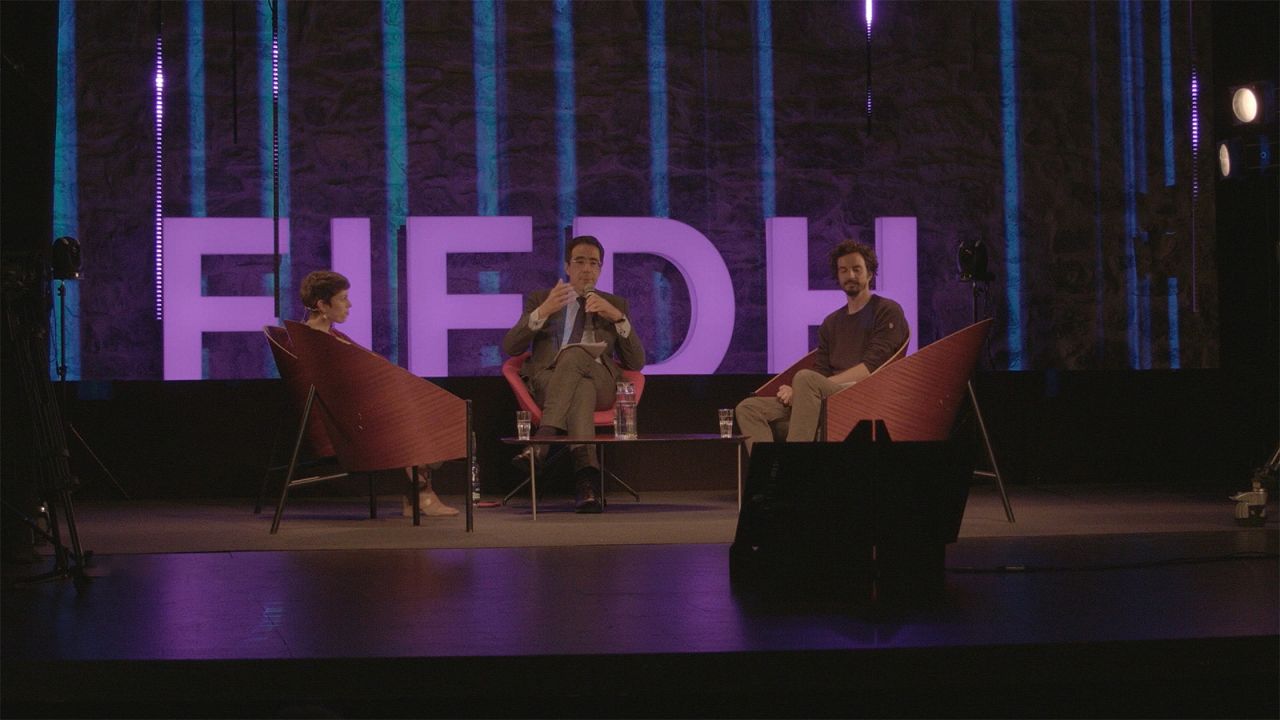
The interviews are conducted by Davide Rodogno, Professor of International History at the Graduate Institute of International and Development Studies in Geneva, and by David Brun-Lambert, cultural journalist.
Episode 1 – Joe Sacco
The legendary cartoonist and reporter Joe Sacco has been criss-crossing the planet for 30 years through his prodigious immersive graphic investigations, interweaving past and present, with a focus on the stigmas of war and its tragic consequences. In this first episode of utopia3, Joe Sacco talks about being rooted and uprooted, the genesis of a good story, the aftermath of colonialism and the recent protests around the globe.
Joe Sacco’s new book, Paying The Land, has just been published .
The next episodes of utopia3
1st June: Perla Joe Maalouli, Lebanese Activist
5th June: Yves Daccord, Former Director of the ICRC
12th June: Burhan Sönmez, Writer
19th June: Alaa Salah, Figure of the Sudanese Revolution
26th June: Ilse and Femke Van Velzen, Filmmakers, and Ruth Hopkins, Investigative Journalist
3rd July: Lauren Anders Brown, Filmmaker, and Ayanda Dlamini, Feminist Activist from Eswatini
utopia3 is recorded at The Spot Podcast Factory studio in Geneva, in collaboration with the FIFDH. The series is produced by David Brun-Lambert and Davide Rodogno (editorial directors), Martial Mingam (art director), Julie Noyelle (coordinator) and Julien Babel (artwork).
TIME of 11 April 2020 carries a long article by Billy Perrigo entitled “These Tech Companies Managed to Eradicate ISIS Content. But They’re Also Erasing Crucial Evidence of War Crimes” It is a very interseting piece that clearly spells out the dilemma of supressing too much or too little on Facebook, YouTube, etc. Algorithms designed to suppress ISIS content, are having unexpected side effects such as suppressing evidence of human rights violations.
…..Images by citizen journalist Abo Liath Aljazarawy to his Facebook page (Eye on Alhasakah’s) showed the ground reality of the Syrian civil war. His page was banned. Facebook confirmed to TIME that Eye on Alhasakah was flagged in late 2019 by its algorithms, as well as users, for sharing “extremist content.” It was then funneled to a human moderator, who decided to remove it. After being notified by TIME, Facebook restored the page in early February, some 12 weeks later, saying the moderator had made a mistake. (Facebook declined to say which specific videos were wrongly flagged, except that there were several.)The algorithms were developed largely in reaction to ISIS, who shocked the world in 2014 when they began to share slickly-produced online videos of executions and battles as propaganda. Because of the very real way these videos radicalized viewers, the U.S.-led coalition in Iraq and Syria worked overtime to suppress them, and enlisted social networks to help. Quickly, the companies discovered that there was too much content for even a huge team of humans to deal with. (More than 500 hours of video are uploaded to YouTube every minute.) So, since 2017, beg have been using algorithms to automatically detect extremist content. Early on, those algorithms were crude, and only supplemented the human moderators’ work. But now, following three years of training, they are responsible for an overwhelming proportion of detections. Facebook now says more than 98% of content removed for violating its rules on extremism is flagged automatically. On YouTube, across the board, more than 20 million videos were taken down before receiving a single view in 2019. And as the coronavirus spread across the globe in early 2020, Facebook, YouTube and Twitter announced their algorithms would take on an even larger share of content moderation, with human moderators barred from taking sensitive material home with them.
But algorithms are notoriously worse than humans at understanding one crucial thing: context. Now, as Facebook and YouTube have come to rely on them more and more, even innocent photos and videos, especially from war zones, are being swept up and removed. Such content can serve a vital purpose for both civilians on the ground — for whom it provides vital real-time information — and human rights monitors far away. In 2017, for the first time ever, the International Criminal Court in the Netherlands issued a war-crimes indictment based on videos from Libya posted on social media. And as violence-detection algorithms have developed, conflict monitors are noticing an unexpected side effect, too: these algorithms could be removing evidence of war crimes from the Internet before anyone even knows it exists.
….. It was an example of how even one mistaken takedown can make the work of human rights defenders more difficult. Yet this is happening on a wider scale: of the 1.7 million YouTube videos preserved by Syrian Archive, a Berlin-based non-profit that downloads evidence of human rights violations, 16% have been removed. A huge chunk were taken down in 2017, just as YouTube began using algorithms to flag violent and extremist content. And useful content is still being removed on a regular basis. “We’re still seeing that this is a problem,” says Jeff Deutsch, the lead researcher at Syrian Archive. “We’re not saying that all this content has to remain public forever. But it’s important that this content is archived, so it’s accessible to researchers, to human rights groups, to academics, to lawyers, for use in some kind of legal accountability.” (YouTube says it is working with Syrian Archive to improve how they identify and preserve footage that could be useful for human rights groups.)
…..
Facebook and YouTube’s detection systems work by using a technology called machine learning, by which colossal amounts of data (in this case, extremist images, videos, and their metadata) are fed to an artificial intelligence adept at spotting patterns. Early types of machine learning could be trained to identify images containing a house, or a car, or a human face. But since 2017, Facebook and YouTube have been feeding these algorithms content that moderators have flagged as extremist — training them to automatically identify beheadings, propaganda videos and other unsavory content.
Both Facebook and YouTube are notoriously secretive about what kind of content they’re using to train the algorithms responsible for much of this deletion. That means there’s no way for outside observers to know whether innocent content — like Eye on Alhasakah’s — has already been fed in as training data, which would compromise the algorithm’s decision-making. In the case of Eye on Alhasakah’s takedown, “Facebook said, ‘oops, we made a mistake,’” says Dia Kayyali, the Tech and Advocacy coordinator at Witness, a human rights group focused on helping people record digital evidence of abuses. “But what if they had used the page as training data? Then that mistake has been exponentially spread throughout their system, because it’s going to train the algorithm more, and then more of that similar content that was mistakenly taken down is going to get taken down. I think that is exactly what’s happening now.” Facebook and YouTube, however, both deny this is possible. Facebook says it regularly retrains its algorithms to avoid this happening. In a statement, YouTube said: “decisions made by human reviewers help to improve the accuracy of our automated flagging systems.”
……. That’s because Facebook’s policies allow some types of violence and extremism but not others — meaning decisions on whether to take content down is often based on cultural context. Has a video of an execution been shared by its perpetrators to spread fear? Or by a citizen journalist to ensure the wider world sees a grave human rights violation? A moderator’s answer to those questions could mean that of two identical videos, one remains online and the other is taken down. “This technology can’t yet effectively handle everything that is against our rules,” Saltman said. “Many of the decisions we have to make are complex and involve decisions around intent and cultural nuance which still require human eye and judgement.”
In this balancing act, it’s Facebook’s army of human moderators — many of them outsourced contractors — who carry the pole. And sometimes, they lose their footing. After several of Eye on Alhasakah’s posts were flagged by algorithms and humans alike, a Facebook moderator wrongly decided the page should be banned entirely for sharing violent videos in order to praise them — a violation of Facebook’s rules on violence and extremism, which state that some content can remain online if it is newsworthy, but not if it encourages violence or valorizes terrorism. The nuance, Facebook representatives told TIME, is important for balancing freedom of speech with a safe environment for its users — and keeping Facebook on the right side of government regulations.
Facebook’s set of rules on the topic reads like a gory textbook on ethics: beheadings, decomposed bodies, throat-slitting and cannibalism are all classed as too graphic, and thus never allowed; neither is dismemberment — unless it’s being performed in a medical setting; nor burning people, unless they are practicing self-immolation as an act of political speech, which is protected. Moderators are given discretion, however, if violent content is clearly being shared to spread awareness of human rights abuses. “In these cases, depending on how graphic the content is, we may allow it, but we place a warning screen in front of the content and limit the visibility to people aged 18 or over,” said Saltman. “We know not everyone will agree with these policies and we respect that.”
But civilian journalists operating in the heat of a civil war don’t always have time to read the fine print. And conflict monitors say it’s not enough for Facebook and YouTube to make all the decisions themselves. “Like it or not, people are using these social media platforms as a place of permanent record,” says Woods. “The social media sites don’t get to choose what’s of value and importance.”
In the midst of the COVID-19 crisis, many human rights organisations have been formulating a policy response. While I cannot be complete or undertake comparisons, I will try and give some examples in the course of the coming weeks. Here the one by Sam Gregory of
…..The immediate implications of coronavirus – quarantine, enhanced emergency powers, restrictions on sharing information – make it harder for individuals all around the world to document and share the realities of government repression and private actors’ violations. In states of emergency, authoritarian governments in particular can operate with further impunity, cracking down on free speech and turning to increasingly repressive measures. The threat of coronavirus and its justifying power provides cover for rights-violating laws and measures that history tells us may long outlive the actual pandemic. And the attention on coronavirus distracts focus from rights issues that are both compounded by the impact of the virus and cannot claim the spotlight now.
We are appalled by the conduct of Kenya security agents as shown in this citizen video. All perpetrators of this act must be held to account. Police and other law enforcement agents must safeguard human rights even as they enforce govt’s regulation during this time. #CurfewKenyapic.twitter.com/MUfxGGKl8A
In this crisis moment, it is critical that we enhance the abilities and defend the rights of people who document and share critical realities from the ground. Across the three core thematic issues we currently work on, the need is critical. For issues such as video as evidence from conflict zones, these wars continue on and reach their apex even as coronavirus takes all the attention away. We need only look to the current situation in Idlib, Yemen or in other states of conflict in the Middle East.
For other issues, like state violence against minorities, many people already live in a state of emergency.
Coronavirus response in Complexo do Alemão favela, Rio de Janeiro (credit: Raull Santiago)
Favela residents in Brazil have lived with vastly elevated levels of police killings of civilians for years, and now face a parallel health emergency. Meanwhile immigrant communities in the US have lived in fear of ICE for years and must now weigh their physical health against their physical safety and family integrity. Many communities – in Kashmir and in Rakhine State, Burma – live without access to the internet on an ongoing basis and must still try and share what is happening. And for those who fight for their land rights and environmental justice, coronavirus is both a threat to vulnerable indigenous and poor communities lacking health care, sanitation and state support as well as a powerful distraction from their battle against structural injustice.
A critical part of WITNESS’ strategy is our work to ensure technology companies actions and government regulation of technology are accountable to the most vulnerable members of our global society – marginalized populations globally, particularly those outside the US and Europe, as well as human rights defenders and civic journalists. As responses to coronavirus kick-in there are critical implications in how both civic technology and commercial technology are now being deployed and will be deployed.
Already, coronavirus has acted as an accelerant – like fuel on the fire – to existing trends in technology. Some of these have potentially profound negative impacts for human rights values, human rights documentation and human rights defenders; others may hold a silver lining.
My colleague Dia Kayyali has already written about the sudden shift to much broader algorithmic content moderation that took place last week as Facebook, Twitter, Google and YouTube sent home their human moderators. Over the past years, we’ve seen the implications of both a move to algorithmic moderation and a lack of will and resourcing: from hate speech staying on platforms in vulnerable societies, to the removal critical war crimes evidence at scale from YouTube, to a lack of accountability for decisions made under the guise of countering terrorist and violent extremist content. But in civil society we did not anticipate that such a shift to more broad algorithmic control would happen so rapidly in such a short period of time. We must closely monitor and push for this change not to adversely affect societies and critical struggles worldwide in a moment when they are already threatened by isolation and increased government repression. As Dia suggests, now is the moment for these companies to finally make their algorithms and content moderation processes more transparent to critical civil society experts, as well as reset on how they support and treat the human beings who do the dirty work of moderation.
WITNESS’s work on misinformation and disinformation spans a decade of supporting the production of truthful, trustworthy content in war zones, crises and long-standing struggles for rights. Most recently we have focused on the emerging threats from deepfakes and other forms of synthetic media that enable increasingly realistic fakery of what looks like a real person saying or doing something they never did.
We’ve led the first global expert meetings in Brazil, Southern Africa and Southeast Asia on what a rights-respecting, global responses should look like in terms of understanding threats and solutions. Feedback from these sessions has stressed the need for attention to a continuum of audiovisual misinformation including ‘shallowfakes’, the simpler forms of miscontextualized and lightly edited videos that dominate attempts to confuse and deceive. Right now, social media platforms are unleashing a series of responses to misinformation around Coronavirus – from highlighting authoritative health information from country-level and international sources, to curating resources, offering help centers, and taking down a wider range of content that misinforms, deceives or price gouges including even leading politicians, such as President Bolsonaro in Brazil. The question we must ask is what we want to see internet companies continue to do after the crisis: what should they do for a wider range of misinformation and disinformation outside of health – and what do we not want them to do? We’ll be sharing more about this in the coming weeks.
And where can we find a technological silver lining? One area may be the potential to discover and explore new ways to act in solidarity and agency with each other online. A long-standing area of work at WITNESS is how to use ‘co-presence’ and livestreaming to bridge social distances and help people witness snd support one another when physical proximity is not possible.
Our Mobil-Eyes Us project supported favela-based activists to use live video to better engage their audiences to be with them, and provide meaningful support. In parts of the world that benefit from broadband internet access, and the absence of arbitrary shutdowns, and the ability to physically isolate, we are seeing an explosion of experimentation in how to operate better in a world that is both physically distanced, yet still socially proximate. We should learn from this and drive experimentation and action in ensuring that even as our freedom of assembly in physical space is curtailed for legitimate (and illegitimate) reasons, our ability to assemble online in meaningful action is not curtailed but enhanced.
In moments of crisis good and bad actors alike will try and push the agenda that they want. In this moment of acceleration and crisis, WITNESS is committed to ensuring an agenda firmly grounded, and led by a human rights vision and the wants and needs of vulnerable communities and human rights defenders worldwide.
The winner of the Grand Geneva Award for the Creative Documentary Competition was the film Colectiv by Bucharest-born filmmaker, Alexander Nanau. “Colectiv is a spectacular political thriller that details of a team of sports journalists who investigate the collective nightclub fire in Romania and, in doing so, uncover high-level government corruption in the Ministry of Health itself,” said President of the Jury Pamela Yates.
The Gilda Vieira de Mello Award for Peace and Reconciliation went to the film ‘Radio Silence‘ by Juliana Fanjul. “At the centre of this documentary is the figure of Carmen Aristegui. This fighter, this Mexican journalist, inspires us so much with her courage, a courage which in my eyes resonates strongly with the whole festival team who decided, despite the very complicated coronavirus situation, not to give up and to set up a 2.0 program to try to continue to communicate the messages of fight and defence that our films carry,” said the films director, Juliana Fanjul.
The Grand Prize for Fiction and Human Rights was awarded to the film Maternal by Maura Delpero. In a country where abortion is not yet legal, Delpero’s first fiction film deals with a significant social issue by setting it in a convent- a place where pregnant and often underage girls cohabit with women who will never be mothers.
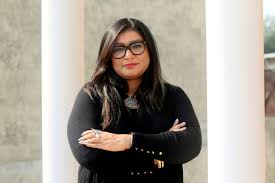
With her “Hack the patriarchy” laptop stickers, Nighat Dad is a digital warrior. But this human rights award winner and founder of Pakistan”s first cyber-harassment helpline still tears up as she describes receiving calls from women afraid of being killed by male relatives for using the internet. Nighat Dad established the help line in 2016 with prize money (100,000 euros) from the Dutch human rights award, the Tulip
Much of Pakistani society lives under the patriarchal, outdated code of so-called “honour” that systemises the oppression of women by preventing them from, for example, choosing their own husband or working outside the home. Activists have denounced pervasive, sometimes deadly violence by men — usually male relatives — against women who break those taboos. The situation is dire enough in the offline world.
But Pakistan is only just beginning to grapple with what violent notions of honour mean for women online, in a country where internet penetration is at 22 percent and growing, but digital literacy is low.
Much of the work the helpline does is to explain to women what recourse they have. Social media companies are playing ball, Dad says — some have even agreed to establish “escalation channels” for getting content off the internet quickly when a woman”s life is in immediate danger. But she warns that community guidelines developed by such companies, usually US-based, are not appropriate in Pakistan. “I think they need to do more,” Dad says. More than three years on, the Tulip money has run out. Now the helpline survives only by the grace of small grants from groups such as the Netherlands-based Digital Defenders Partnership, which supports rights activists.
…. She cites last year”s International Women”s Day march in Pakistan, which saw women turn out in unprecedented numbers loudly celebrating divorce and periods, among other things. The response was swift and shocking in its intensity, with Dad describing mullahs making rape and death threats against the march organisers in videos widely distributed online. The 2016 murder of social media star Qandeel Baloch has also impacted her, she says. Baloch divided Pakistan with her videos and selfies, tame by Western standards but provocative in Pakistan. She was strangled by her brother in 2016 in what has been called the country”s most high-profile “honour” killing.
“She was a hero for me… she did what she wanted to do, and not every woman can do this in Pakistan,” Dad says.
Dad says she cannot help but see the similarities between herself and Baloch. They are from similar backgrounds, both left abusive marriages, and both have gained fame by loudly challenging social taboos online — though admittedly not in quite the same way. Her murder “shook me badly,” she tells AFP. “It was enough to shake us all.”
Following the decision of the Federal Council to cancel any event with more than 1000 people, and in consultation with health authorities of the Canton of Geneva, the FIFDHhave taken the decision to cancel the 18th edition of the Festival, which was due to be held from the 6th to the 15th of March 2020, in 65 locations in Geneva and its surrounding areas.
This decision means that all public screenings of the Festival are cancelled. Tickets already purchased can be refunded (details to be found on this page). However, the team is hard at work to propose an adapted format that respects the FIFDH’s mission to promote human rights, in particular by using digital tools. Further details will be provided in the coming days.
This new film directed by Greg Barker [see also: https://humanrightsdefenders.blog/2014/01/23/we-are-the-giant-film-about-the-arab-spring-here-is-the-trailer/] and based on his own award-winning documentary, confusingly also called Sergio, is a biographical drama about Sérgio Vieira de Mello, a diplomat from Brazil who worked for the United Nations High Commissioner for Refugees (UNHCR) for most of his life and was briefly High Commissioner for Human Rights. He was celebrated as a pre-eminent humanitarian before tragically dying in the Canal Hotel bombing in Iraq alongside many of his staff in 2003. The fiction film Sergio made its premiere at the Sundance Film Festival on 28 January 2020 before heading to Netflix.
Kayleigh Donaldson in Screenrant of 2 january 2020 wrotes perhaps a bit too breathlessly that the film Sergio is “one of the most anticipated Netflix original movies in 2020“.
Now the first two reviews are out and they indicate that it is foremost a romantic story that is well acted but diverts a lot from reality.
Jessica Kiang in Variety of 29 January 2020 is the more critical and – in my view – serious voice:
… handsome, heroic, charismatic de Mello (played with persuasive charm by Wagner Moura) certainly does seem like a man whose present was shaped by …the better, brighter, freer global future he believed the U.N. could be instrumental in achieving and that he personally could help midwife into being. Such noble intentions and such impact on world affairs does render understandable Barker’s rather starry-eyed approach, but [puts] unnecessary length and sentimental emphasis on the man’s romantic life…
..First, we spin forward to the 2003 bombing of the U.N. headquarters in Baghdad, which was ordered by terrorist leader Abu Musab al-Zarqawi and which claimed at least 22 lives and wounded over 100 people, and here provides a loose framing device. De Mello and close associate Gil Loescher (Brian F. O’Byrne), both critically wounded, were trapped under tons of rubble in the blast, and … screenwriter Craig Borten imagines a borderline delirious de Mello reliving moments of significance from his storied life. Chief among these reminiscences is the tale of his romance with Carolina Larriera.. .an Argentinian U.N. economic adviser whom the married father-of-two met while brokering a peace deal between the rebels and the Indonesian government in East Timor.
In Adrian Teijido’s calm, throughful photography (it’s a refreshing choice to not go the shaky handheld docudrama route), de Armas and Moura make an attractive couple, and de Armas is able to imbue Carolina — whose role seems just a little wispy on the page — with an intelligence and will that makes her more than just de Mello’s romantic foil. But Barker’s emphasis on this love story at the expense of a deeper exploration of the exceptional talents that earned de Mello his reputation for feats of diplmatic wizardry in highly fraught situations where others had tried and failed, also has a curiously flattening effect.
Although the relationship with Larriera was doubtless crucially important to de Mello, it was not the thing that made him extraordinary in the eyes of the world. And so the hesitant courtship, the smouldering looks, and the romancing, including a tasteful but unnecessarily lengthy sex scene over which Fernando Velázquez’ otherwise rather generic political-thriller score crescendos like it’s high drama, all feel like a distraction from the more thorny and politically provocative side of de Mello’s story. That’s especially irksome given that the scenes of geopolitical debate, diplomatic argument and even ego clash between de Mello and the world-wearily witty Loescher … are actually where the film crackles to life.
…But this sentimental approach glosses over much of the potential drama that is set up only to dissipate: de Mello’s prickly relationship with U.S. Envoy Paul Bremer (Bradley Whitford); his association, criticized by Loescher, with war criminals and terrorists if he believed it could achieve his ends; and his fateful decision to send the U.S. Army guards away from the U.N. office in Baghdad in 2003. Sergio Vieira de Mello was, by all accounts, not a man who let fear of making the wrong decision stop him from acting decisively, and it’s a shame that the soft-edged romantic prevarications of “Sergio” prevent the film from embodying that same dynamism.
Courtesy of Sundance
John DeForein Hollywood Reporter of 30 January 2020 sees a more than successful transition from documentary to a feature film:
… Rather, it’s one of those rare films .. in which a genuine concern for geopolitics coexists perfectly well with romance and old-fashioned moviegoing pleasures. This portrait of influential U.N. diplomat Sergio Vieira de Mello benefits immensely from two magnetic leads, Wagner Moura and Ana de Armas, whose onscreen chemistry is undeniable; but its deft sense of structure is of equal importance, making it an engrossing picture even for those who know next to nothing about its subject or settings.
..Sergio and refugee expert Gil Loescher were trapped alive in the rubble; as a framing device, Sergio sets flashbacks to various points in his career during the hours when two American soldiers (Garret Dillahunt and Will Dalton) worked to extract the pinned men. These episodes help cement the diplomat’s reputation as an idealistic fix-it man for some of the world’s trickiest conflicts. …Sergio is out for a jog during his East Timor assignment when he passes another jogging foreigner, Carolina Larriera (de Armas). The attraction is immediate, but the film savors its development: …While the film plays up Sergio’s attractiveness to the younger woman (shirtless, the 50 year-old man probably bore little resemblance to Moura), it’s not blind to emotional flaws: He’s ignorant of key facts about his two sons’ lives, and he admits he’s most attentive to relationships and projects whose timeframe is finite.
Also on hand in East Timor is Loescher (Brian F. O’Byrne), who will be trapped by his side in Baghdad. The real Loescher, who had two legs amputated in his rescue from the site, was an independent expert who was only in Sergio’s Baghdad office (along with Arthur Helton – see: https://en.wikipedia.org/wiki/Arthur_Helton) to interview him for a column on openDemocracy.net. In Sergio, Loescher is a composite, depicted as Vieira de Mello’s right-hand man for multiple U.N. missions — the conscience who argues against his boldest moves. As a storytelling device, this works quite well; but using Loescher’s real name is an unexpected choice for a documentarian, and confuses the truth for no reason. [my view: INDEED – see also: https://humanrightsdefenders.blog/2017/06/07/gil-loescher-life-long-defender-of-rights-of-refugees-honored/ and https://www.imdb.com/title/tt0479980/]
Those who know the history intimately may take issue with other condensations that play perfectly well to a layperson: Sergio’s interactions with U.S. diplomat Paul Bremer (Bradley Whitford) are dramatically satisfying, and seem to capture the general nature of U.S./U.N. friction at the time; a question regarding the U.S. Army’s protection of Sergio’s office is probably also finessed for maximum thematic effect. The picture is most vulnerable to Hollywoodisms in scenes set after the bombing, as Carolina looks frantically for Sergio; the latter dreams of a sunny beach in his native Rio de Janeiro; and those soldiers heroically try to extract him despite having none of the necessary rescue equipment. But, coming late in the film as they do, these indulgences feel appropriate to the film’s lionization of its subject and investment in the couple’s relationship. Sergio believes in heroes and big ideals, and hopes we’re capable of the same belief…
Monica Castillo in NBC of 31 January 2020 adds an interview with the star Wagner Moura who “was so intrigued by Vieira de Mello’s story that he signed on as a producer for the movie. In the interview with NBC News, Moura said that this is the first of many stories he’d like to share to address the lack of Latinos on the screen. In the interview he also says “this guy is kind of a personal hero for me, and I’ve been working with the U.N. for a while; I’m a goodwill ambassador for the ILO [International Labour Organization] and the fight against slave labor..[Sergio] was a man who dedicated his life to human rights. When he was killed, he was the high commissioner for human rights; when he started in the U.N., he was the high commissioner for refugees“. Well he was NOT, he worked for the UNHCR.
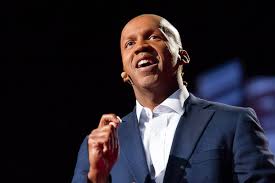
It tells the story of how the Harvard law graduated moved to Alabama in order to help inmates who were wrongly condemned as death row prisoners. The main court case in the film focuses on one of Stevenson’s first clients, Walter McMillian, aka “Johnny D.” who’s played by Jamie Foxx in the movie, a 41-year-old tree-trimmer who was charged for the 1986 murder of Ronda Morrison, a local white teenager.Stevenson’s story is lesson in justice, persistence, and pushing to do what’s lawfully right. McMillian was released from prison after seven years on death row, he passed away from early on-set Alzheimer’s in 2013. However, Stevenson is still very much alive, and still working as attorney for the Equal Justice Initiative, which he founded in 1989. As described on their official website, “EJI is committed to ending mass incarceration and excessive punishment in the U.S., challenging racial and economic injustice, and protecting basic human rights for the most vulnerable people in American society.” Stevenson, who recently celebrated his 60th birthday, has helped release 135 wrongly accused prisoners sentenced to death.
“We don’t see those kinds of stories very often and I think that’s created a void in our consciousness about what’s happening,” Stevenson told Delaware Online. “We have the highest rate of incarceration in the world and most people in this country have no knowledge of that. That lack of knowledge and that lack of compassion is what’s made us so vulnerable to the abuse that is on display in this story.”
Over his career, Stevenson has earned 40 doctoral degrees, including those from Harvard, Yale, Princeton, Oxford, and University of Pennsylvania. He’s also won a long list of awards, including the MacArthur Foundation “Genius” Prize, the ABA medal, which is the American Bar Association’s highest honor, and the National Medal of Liberty from the American Civil Liberties Union. As a professor, he’s racked up even more hardware. In 2003, the SALT Human Rights Award was presented to Mr. Stevenson by the Society of American Law Teachers. In 2004, he received the Award for Courageous Advocacy from the American College of Trial Lawyers and the Lawyer for the People Award from the National Lawyers Guild. In 2006, New York University presented Mr. Stevenson with its Distinguished Teaching Award.
Now, it wants to go further to raise the profile of human rights defenders working in some of the most dangerous environments in the world. PBI UK are working closely with the filmmaker and photographer Manu Valcarce on ‘Right to Defend’, a multi-media, multi-platform communications and awareness campaign, celebrating those making universal human rights a reality. Their stories set an example of solidarity and humanity that needs to be heard: stories of extraordinary human rights defenders taking a stand against injustice: community leaders fighting to protect collective land rights against mining companies; women struggling for gender equality; human rights lawyers risking their own safety to defend the rights of activists.
PBI UK are working on a unique 60-minute documentary film, online platform, photographic exhibition, and social media campaign presenting the work of around 100 at-risk grassroots human rights defenders in Latin America, Africa and Asia on the frontline of the global fight for universal human rights. The first piece of the project was released on the 10th of December: Human Rights Day:
So far, approximately 100 stories of human rights defenders have been recorded across four countries (Colombia, Honduras, Mexico and Nepal) alongside photographic material. You will be able to see the film at festivals in 2020, and the portraits will be debuted at an exhibition held at The Law Society in London, before touring worldwide. The online platform will enable PBI to further its impact as a global entity across 21 countries for campaigning, advocacy and awareness-raising to enhance the protection of human rights defenders.
In the Intercept of 12 December 2019, Natasha Lennard use the release of the new documentary film “The Animal People” – which is available on demand as of this week – to focus on the story of Harper and his co-defendants, all of whom were convicted under spurious charges of conspiracy to commit terrorism — though none of whom were found to have participated directly in any illegal acts. These were activists who attended raucous but legal protests, shared publicly available information about corporations on their website, and celebrated and supported militant actions taken in the name of the SHAC campaign. That is, they were convicted as terrorists for speech activity. It sounds eerily like the criminalisation fo human rights defenders today:
The convicted activists were members of Stop Huntingdon Animal Cruelty, known as SHAC, a decentralized animal rights movement that spread across the U.K. and U.S. from the late 1990s into the mid-2000s. The movement took aim at the notorious animal testing lab company Huntingdon Life Sciences, which did contract work for corporations. SHAC organized a potent direct-action campaign, which, at a number of points, threatened to shutter the huge testing corporation by driving investors to disaffiliate and divest. The tactics were diverse, from spreading information on animal cruelty, to holding demonstrations, to the occasional act of property damage. In response to SHAC activity, the FBI in 2005 deemed the animal liberation movement to be America’s No. 1 domestic terrorism threat. This, despite the fact that not a single human or animal was injured by SHAC activity in the country.
Each member of the so-called SHAC 7 — there were originally seven defendants before charges were dropped against one — has served their sentence and been out of prison for eight or more years. The broader militant campaign to close Huntingdon Life Science has long been inactive. Revisiting their case now, however, is a worthwhile exercise for understanding the extent to which the supposed rule of law can be bent in the interests of corporate power and its attendant servants in politics.
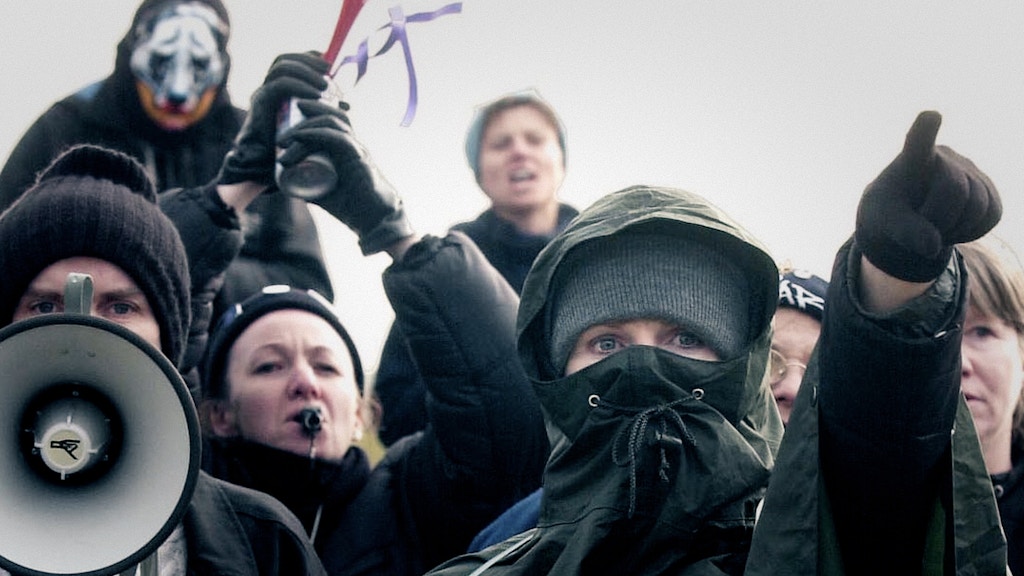
Stop Huntingdon Animal Cruelty protesters. Still: Courtesy of Virgil Films
The SHAC 7 case is a lesson in how legal instruments can be deployed to shut down dissent. At a time of renewed criminalization of protest activity nationwide, the so-called green scare stands as a worrying benchmark for the repression of political speech and the re-coding of protesters as criminals and terrorists. The capricious application of conspiracy charges — which we have seen recently deployed against protesters from Black Lives Matter advocates to Standing Rock water protectors — was mastered in the SHAC 7 prosecution. But “The Animal People” doesn’t only emphasize the excesses of the corporate-state power nexus; it recalls the passionate moral commitments of the SHAC members, and reminds us of a potent protest strategy and set of tactics, which I for one would happily see deployed again.
The first half of the film traces the rise of what seemed, at certain times, to be an “unstoppable” movement. What began as a series of protests in the U.K. soon spread to the U.S., as activists in cities across the country took it upon themselves to confront Huntingdon-affiliated companies and shareholders. Some of the most committed organizers spent hours on complicated research into Huntingdon’s financial infrastructure, following the money to find any and every chokepoint on which to put pressure: be it the major banks and insurance firms propping up the company, or even the janitorial services contracted by a given Huntingdon lab. The information about potential targets was then shared on the SHAC website for activists to use as they saw fit.
……
SHAC tactics were, as any radical political experiment necessarily is, imperfect. Under the campaign’s banner, some activists exposed the names of children of targeted executives — an outlier action, to be sure, but one that visibly still haunts a number of the SHAC defendants in the documentary. The prosecution also made much of the publication on the SHAC website of such information, even though the defendants had no direct involvement. (In the only incident of human harm associated with the movement to shut Huntingdon down, U.K. activists at one point assaulted CEO Brian Cass.)
Skepticism also hovers around the decision to focus wholly on closing Huntingdon, given the prevalence of abusive animal testing. The idea had only been to start with the company, which had already come under public scorn following the release undercover video footage of animal abuse in their labs (parts of which are replayed in “The Animal People”). The activists had planned to win against HLS and expand from there; the biochemical and pharmaceutical industry, with the weight of the federal government behind them, ensured otherwise. Huntingdon has since changed its name to the banal and faux-Latinate “Envigo.”
…..
“The Animal People,” along with most every decent retelling of the SHAC 7 case, makes clear that the six individuals indicted on terror charges were fall guys in the government’s scrambling attempt to put a stop to a movement, which was, against all odds, bringing major corporations to heel. “Corporations get to do what they want — that’s a rule in our society,” Lauren Gazzola, a former SHAC 7 defendant with a robust knowledge of constitutional law, tells the filmmakers. “We challenged the right of this corporation to exist.”
The story of who gets to be a labeled a “terrorist” in this country reflects the ideological underpinnings behind government policy and law. Under the Animal Enterprise Protection Act, expanded in 2006 into the Animal Enterprise Terrorism Act, a terrorist is someone who intentionally damages or causes the loss of property — including freeing animals — used by the animal enterprise, or conspires to do so. It is an obscene state sanctification of corporate private property over life.
…..
As I have written, the current pattern in law enforcement of labeling protests as “riots,” invoking slippery statutes of collective liability, and attempting to justify harsher crackdowns are all troubling for the same reason……
“The animal rights movement has really been the canary in the coal mine when it comes to modern government repression of activist campaigns,” the film’s co-director Denis Henry Hennelly told me by email. The sentiment was echoed by Potter, the journalist. “This is the new playbook for the criminalization of dissent,” he told me. “I’ve already seen it applied to other social movements, both here in the U.S. and internationally. In the years since the trial, though, it has only become more prescient.”
For viewers with little to no knowledge of this history of animal liberation struggle and its repression, “The Animal People” offers a compelling primer, organized through archival protest footage, old home videos of some of the SHAC 7 defendants, interviews with legal experts and investigative journalists, one smug businessman who was targeted by a SHAC campaign, and more recent interviews with the former defendants. As with any 90-minute film, the story the directors, Suchan and Hennelly, chose to tell is only one slice of an international and dispersed movement’s history. But for a documentary with some Hollywood backing — animal lover Joaquin Phoenix is an executive producer — “The Animal People” stands uncomplicatedly on the side of the SHAC defendants and doesn’t dampen their anti-capitalist message.
For Stepanian, this element of animal liberation and the necessary connection with anti-capitalist environmental activism can’t be forgotten. “In terms of the direct-action animal liberation movement today, it’s largely impotent compared to the time period of the SHAC campaign, because most messaging falls squarely in what is safe within the framework of capitalism: Much of the activity revolves around better consumer choices,” Stepanian told me. “I’d like to see another campaign with a lens critical of capitalism, which understands that it is this socioeconomic system which rewards the worst practices when it comes to the treatment of animals as resources, and rewards rapacious attitudes towards the environment.”
The film closes with a montage of uprisings, from students in Hong Kong, to the gilets jaunes in France, to Black Lives Matter activists in the U.S., and marchers for liberation in Palestine. It’s a minimal gesture toward intersectionality in a film that underplays the aspects of SHAC that were dedicated to shared struggle. “It’s not OK to be singular in your solidarity; justice and liberation for all life is paramount,” Stepanian told me, recalling how, prior to his indictment, he went on two organizing road trips with former Black Liberation Army member Ashanti Alston. “We are all intersectional activists,” he said of his former co-defendants.
Jake Conroy of the SHAC 7, who joined one of the road trips, comments near the film’s end: “It’s not just about earth liberation, it’s not just about human liberation, and it’s not just about animal liberation. It’s about collective liberation.”








 Hans Thoolen on Human Rights Defenders and their awards