Archive for the 'books' Category

UN Special Rapporteur on Human Rights Defenders wraps up his first mandate

February 22, 2017

The UN Rapporteur on Human Rights Defenders, Michel Forst, has published his report (A/HRC/34/52) which covers the period of his first mandate:June 2014 and March 2017 [see also: https://humanrightsdefenders.blog/tag/mmichel-forst-2015-hrd-rapporteurichel-forst/  ].
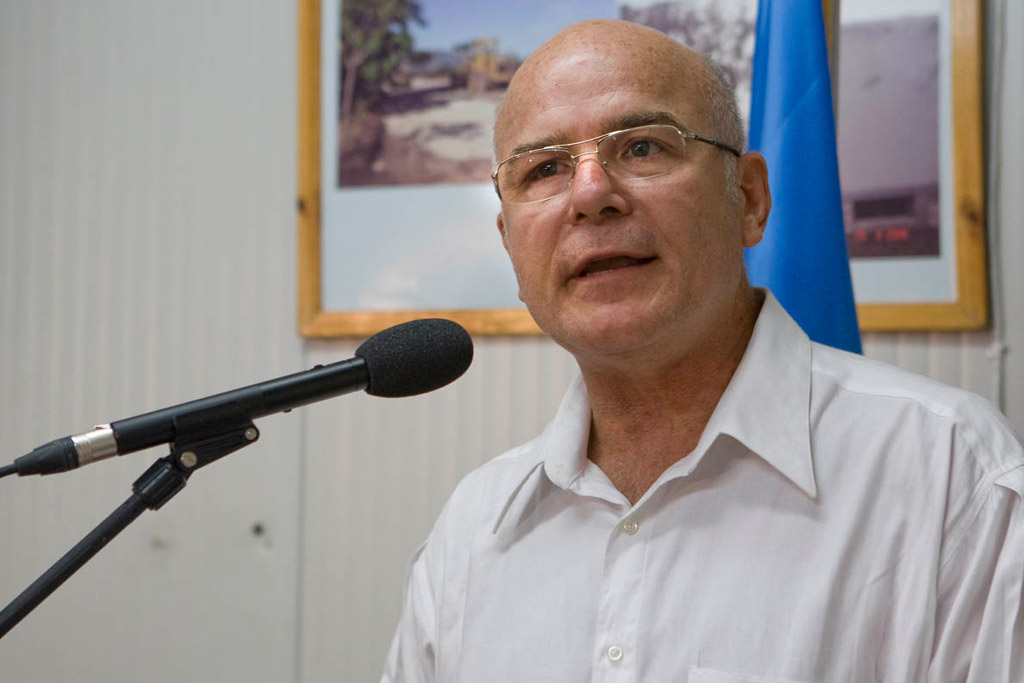
In his report Michel Forst, provides a detailed summary of the activities he carried out during his first mandate, including statistics and trends based on the communications that he sent to States, his visits to a number of countries, the dialogues established with the authorities of various States, and the close cooperation developed with key stakeholders in the protection of human rights worldwide. The Special Rapporteur also presents the work in progress and the challenges and issues on which he plans to focus during his next mandate. The report includes suggestions for diversifying working methods, broadening the scope of cooperation with other key actors, and enhancing the visibility and accessibility of his mandate. Human rights defenders and the promotion of their work and their protection will remain at the core of the Special Rapporteur’s work.

After spending the past three years travelling around the world and documenting the situation of human rights defenders, the Special Rapporteur is more appalled than ever to see attacks against them multiplying everywhere, assailing bloggers, indigenous peoples, journalists, community leaders, whistle-blowers and community volunteers. Furthermore, the Special Rapporteur has become convinced that the incidents in question are not isolated acts but concerted attacks against those who try to embody the ideal of the Universal Declaration of Human Rights in a world free from fear and want. The Special Rapporteur is concerned by the lack of response to observations that have been made repeatedly since the establishment of the mandate.

We must be bolder and more creative in order to face up to threats that weigh heavily on civil society as a whole and on every individual fighting for fundamental rights and freedoms. The Special Rapporteur has also noted that intolerance thrives in part because people know little about their rights or the role of those who protect them. In that regard, it is more vital than ever to make the language of human rights accessible to all in order to ensure that civil society continues to enforce accountability.

As defenders face unprecedented attacks intended to undermine the legitimacy, credibility and sincerity of their commitment, it seems essential to quickly establish links between the specific actions undertaken by the Special Rapporteur and the pledges made at the United Nations when he was appointed in 2014. As populist, nationalist and fundamentalist movements of all kinds multiply, the Special Rapporteur remains convinced that more can be done under his mandate and that his office must continue to serve as a watchdog, a warning mechanism and a crucial resource for thousands of people. [Here he echoes sentiments expressed by others and referred to in this blog, see e.g. https://humanrightsdefenders.blog/2016/12/12/we-must-find-new-ways-to-protect-human-rights-defenders-and-to-counter-the-anti-human-rights-mood/ and the links to other such articles at the end of the post]

The report also identifies those areas in which, in view of the possible renewal of his mandate, the Special Rapporteur intends to become more involved so that his work remains relevant and responds as effectively as possible to defenders’ expectations.

I refer as source here not directly to the UN but draw attention to an excellent documentary service provided by RELIEFWEB:

Report of the Special Rapporteur on the situation of human rights defenders (A/HRC/34/52) – World | ReliefWeb

The killing of Oscar Romero – El Salvador’s ‘turbulent priest’ – written up after 36 years

January 18, 2017

Tom Sandborn wrote in the Vancouver Sun of 7 January 2017 review  of the book “Assassination of a Saint: The Plot to Murder Oscar Romero and the Quest to Bring His Killers to Justice“, by Matt Eisenbrandt, published by University of California Press.

Sainthood and civil torts
Book cover: Assassination of a Saint: The Plot to Murder Oscar Romero and the Quest to Bring His Killers to Justice

It took a single bullet to kill Oscar Romero, but his legacy has outlived many who plotted his murder and he may soon be officially named a saint by the Catholic Church. Assassination of a Saint is an exciting, dramatically paced account of his murder by a right wing death squad and the painstaking and eventually successful efforts to expose some of the men behind the Archbishop’s death.

In El Salvador in 1980, Romero, the Archbishop of San Salvador, had been elevated to his position in part because the cabal of land owners and politicians that controlled the tortured Central American state saw him as unlikely to pose uncomfortable moral challenges to their power. But Romero was fast becoming a problem for the elites…. he was condemning the war of right wing terror being waged against the Salvadoran people by the army, police and paramilitary death squads, all of whom took orders and funding from the country’s ruling class and inspiration from a particularly bloody minded brand of Cold War anti-Communism….

During the three years he spent as Archbishop, Romero was gradually radicalized by the suffering inflicted on the poor of his country by the official and unofficial death squads. In the end, he condemned the state and ruling class sponsored murders and called on soldiers and policemen to refuse the orders to turn their guns on Salvadorans standing up for their freedom. “No soldier,” he thundered from the altar, “is obliged to obey an order contrary to the law of God.” That call for conscientious disobedience was the last straw. The decision was made that the “turbulent priest” must die.

On March 24, 1980, a sniper in a van parked outside the church fired a rifle once, striking Romero in the chest as he said mass and killing him. The assassination made the Archbishop a beloved martyr among the poor, and kicked off a new round of civil war and bloodshed. For decades, no one was held to account for the public murder.

The Assassination of a Saint is the compelling story of how a rag-tag band of idealistic lawyers collaborated with Salvadoran exiles to identify one of the killers, Alvaro Saravia. Because the assassin was found to be living in the United States, the legal team, working out of the San Francisco offices of the Center for Justice and Accountability, was able to file a civil suit against him under an obscure American law, the Alien Torts Act, for damages incurred by Romero’s killing. In the course of that effort, they brought to light much of the hidden history of the Romero murder, meeting with witnesses and accomplices in the crime and uncovering much more about the archbishop’s death than had been known before.

Matt Eisenbrandt was a member of the legal team, and he has written a fast paced, informative and dramatic account. …Before they were successful in that effort in 2004, the crusading lawyers experienced a series of dramatic meetings with perpetrators and potential witnesses, tense moments, mysterious phone calls, frightening visits to El Salvador and years of exhaustive research. Their win was a triumph for human rights defenders, and this book is a powerful account of how that victory was won. 

Tom Sandborn lives and writes in Vancouver. He has been involved in human rights activism for over five decades. He welcomes feedback and story tips at tos65@telus.net.

Source: Sainthood and civil torts

Front Line launches its 2016 Report on Human Rights Defenders at Risk

January 9, 2017


After a short break, this blog resumes its job of selecting and summarizing events related to Human Rights Defenders. 2016 was a horrible year for HRDs and the launch of the annual report of Front Line Defenders confirms this by reporting that “more than 1000 human rights defenders were killed, harassed, detained, or subjected to smear campaigns and other violations in 2016″.

Download the Report

According to the report, 281 human rights defenders were murdered in 25 countries, 49 percent of whom were defending land, indigenous and environmental rights. Front Line Defenders found that in the vast majority of cases, killings were preceded by warnings, death threats and intimidation which, when reported to police, were routinely ignored. In addition to killings, over half of the cases reported by Front Line Defenders in 2016 concerned criminalisation, a tactic which the organisation calls “the first choice of governments to silence defenders and to dissuade others”.

For other post on Front Line last year, see: https://humanrightsdefenders.blog/category/front-line/page/4/

Online Survey on ISHR communication

November 4, 2016
As the Geneva-based International Service for Human Rights (ISHR) is one of the most important sources of information on HRDs and the UN, I hope that many of you will be able to give them feedback on their various communications and digital publications by filling our the on-line survey in the link below. It indeed takes not more than 5 minutes to complete. ISHR-logo-colour-high


Source: ISHR Online Survey

Universal Declaration of Human Rights truly universal: milestone of 500 languages reached

November 4, 2016

The Universal Declaration of Human Rights (UDHR) is now accessible in 501 languages and dialects, the Office of the High Commissioner for Human Rights announced on 2 November 2016.

Our goal is to share the UDHR with the entire world, and it’s a great achievement for us to be able to make this important document available in more than 500 languages,” said OHCHR librarian Alfia Gilbert.

The collection constitutes the world’s most translated document according the The Guinness Records.

The growing number of translations underscores the universality of the Universal Declaration of Human Rights and the power of its words to resonate strongly across cultures and languages,” said UN High Commissioner for Human Rights Zeid Ra’ad Al Hussein.


Source: The Universal Declaration of Human Rights now available in more than 500 languages and dialects

Today CIVICUS launches its worldwide Monitor to track civil space

October 24, 2016

Today, 24 October 2016, the NGO CIVICS has launched its Monitor. The CIVICS Monitor, in cooperation with 20 global research partners, rates countries based on how well they uphold the three fundamental rights that enable people to act collectively and make change: freedom of association, freedom of peaceful assembly, and freedom of expression. The CIVICUS Monitor is not the first to try and provide an overview of the human rights situation the world (see links below) but to my knowledge the first to do so online, in real-time on a global scale, making use of new digital possibilities. Read the rest of this entry »

Shackled Freedoms : what space for human rights defenders in the EuroMed?

September 7, 2016


cover-en-shackled-freedomThe recent report SHACKLED FREEDOMS : WHAT SPACE FOR CIVIL SOCIETY IN THE EUROMED? depicts the obstacles and repression against civil society in the region and showcases first-hand accounts from Turkey, Egypt, Algeria, Syria, Israel and the Occupied Palestinian Territories among others. The report also features recommendations by CSOs for joint action and seeks to influence EU policies to that effect. The report also focuses on the impact of security and anti-terrorist policies and lists the growing arsenal of repressive measures – both in law and practice – that civil society organizations (CSOs) face on a daily basis: judicial harassment, surveillance, arbitrary arrests, torture and assassination.

Despite legal safeguards and the human rights “shared values” rhetoric in the EU, EuroMed Rights argues that European civil society is under increasing pressure. Austerity measures and anti-terrorism laws are increasingly used to legitimise practices that go against individual freedoms and rights of assembly, association and expression, such as in France, Spain or the UK, for instance. The report – published on 7 September 2016 – is the result of a seminar organised in April 2016 as an open dialogue between EU representatives, South Mediterranean activists and Brussels-based CSOs.

 DOWNLOAD THE REPORT


Source: Shackled Freedoms : What Space for Civil Society in the EuroMed? – EuroMed Rights – Euro-Mediterranean Human Rights Network

DatNav: New Guide to Navigate and Integrate Digital Data in Human Rights Research

August 25, 2016

DatNav, a guide designed to help human rights defenders navigate and integrate digital data into your human rights research, was launched today.

DatNav is the result of a collaboration between Amnesty InternationalBenetech, and The Engine Room which began in late 2015 culminating in an intense four-day writing sprint facilitated by Chris Michael and Collaborations for Change in May 2016. Based on interviews, community consultations, and surveys the researchers found that in the vast majority of cases, human rights defenders were not using the tools. Why? Mainly, human rights researchers appeared to be overwhelmed by the possibilities.

DatNav - Digital Data in Human Rights Research

Still, integrating and using digital data in a responsible way can make a huge and important difference to human rights research. Acquiring, disseminating and storing digital data is also more in reach. DatNav is about navigating these new possibilities.

In May 2016, the 3 NGOs gathered a group of experts to create a guide to help address this problem, and created the foundations of DatNav. Nearly 70 key members of the human rights tech and data community, representing nearly 40 different organisations from around the world, played key roles in the creation of DatNav.

This is just the beginning. If you’re interested in taking the guide forward, whether to inform strategy in your work, to train others, or through translations, or adaptations of the content, the organizers would like to hear from you. The content is all CC-BY-SA licensed and remixes of the content are more than welcome. We’re in initial talks to release an Arabic translation of DatNav, and we’d like to carry out others, too.

Download the DatNav pdf

You can sign up for The Engine Room’s newsletter to be notified of new updates and releases.

To find out more about the project or give feedback, you can send an email. You can also reach out on Twitter @zararah and The Engine Room @EngnRoom.


Source: DatNav: New Guide to Navigate and Integrate Digital Data in Human Rights Research | The Engine Room

Consilium EU adopts conclusions on business and human rights

June 21, 2016

On 20 June 2016, the EU Council adopted its conclusions on business and human rights [its 3477th meeting – COHOM 78]. The full document is available through the link below. The main paragraph mentioning human rights defenders is no 19: “The Council recognises the importance of building capacity both within EU Delegations and Member States’ embassies to work effectively on business and human rights issues, including supporting human rights defenders working on corporate accountability and providing guidance to companies on the Guiding Principles. The Council invites the High Representative and the Commission to develop the necessary tools for EU Delegations to help meet these needs, including through building on the support and best practices of Member States.”

Source: Council conclusions on business and human rights – Consilium

“Writing Human Rights and Getting It Wrong” – revealing piece by Alex de Waal

June 10, 2016

Alex de Waal {https://en.wikipedia.org/wiki/Alex_de_Waal} published on 6 June 2016 a long piece entitled “Writing Human Rights and Getting It Wrong” in the Boston Review. There is no way I can give you a summary but reading the whole article is certain worth the time. It is bound to be controversial – especially within the international human rights movement – and stands out by being critical and mostly self-critical about the role of human rights monitors. The focus of the narrative is on Africa (Sudan, Rwanda) and genocide but the former HRW staff reaches out to the general questions of context and impartiality that human rights defenders struggle with, still today.  READ IT!

Read the rest of this entry »