The Martin Ennals Award for Human Rights Defenders (MEA) will announce its three Finalists for 2017 on Wednesday 26 April at 11:00 Geneva time. If you want to find out while on the go see: Social media @martinennals
#Ennals 2017 https://www.facebook.com/MartinEnnals/
On 4 April 2017 the European Court of Human Rights rendered a judgment1 in the case of Milisavljević v. Serbia (application no. 50123/06) in which it unanimously held that there had been a violation of Article 10 (freedom of expression) of the European Convention on Human Rights. What makes the case particularly interesting is that it concerns Natasa Kandic a well-known human rights defender who has won several awards including the Martin Ennals Award for Human Rights Defenders (MEA) in 1999. [see also : https://humanrightsdefenders.blog/2013/04/07/serbian-natasa-kandic-receives-first-civil-rights-defender-of-the-year-awar/] Nothing is simple when it comes to human rights……
A journalist, Ms Milisavljević, had published in September 2003 an article in Politika about Kandic in which this journalist quoted another journalist who said that Kandic had been called a witch and a prostitute. Natasha Kandic sued for libel and the Serbian courts held that by failing to put one particular sentence – “Ms Kandić [had] been called a witch and a prostitute” – in quotation marks the journalist had tacitly endorsed the words as her own.
The European Court found that it was evident, even without the quotation marks, that that sentence, written by another journalist and previously published in a different magazine, had not been Ms Milisavljević’s personal opinion of Ms Kandić, but that she had merely been transmitting how Ms Kandić was perceived by others. Moreover, the domestic courts, limiting their reasoning to the lack of quotation marks, had completely failed to balance Ms Kandić’s right to reputation against Ms Milisavljević’s freedom of expression and duty, as a journalist, to impart information of general interest.
CASE OF MILISAVLJEVIĆ v. SERBIA – Application no. 50123/06)
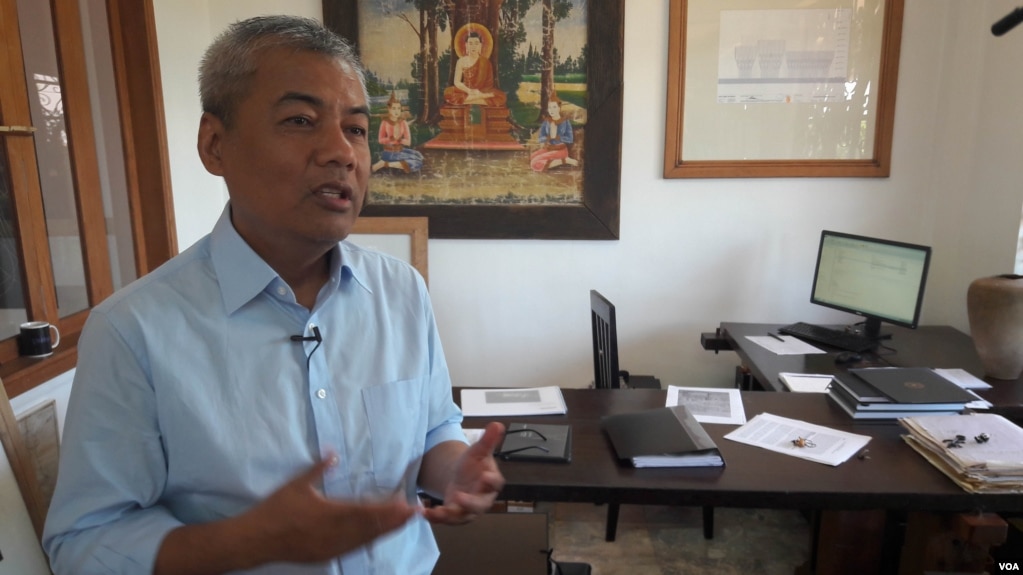
Chhang Youk, director of DC-Cam, talks to VOA Khmer about national reconciliation at his office in Phnom Penh, Cambodia, August 08th, 2016. (Neou Vannarin/VOA Khmer)
Chhang was a survivor of the Khmer Rouge regime. He fled to the United States as a refugee, but memories of the suffering he endured brought him back to his homeland in the early 1990s. He founded DC-Cam and has led the organization since 1995, creating a national genocide education program. Nushin Sarkarati, a senior attorney at CJA, said that without Chhang’s dedication there would be little justice for the victims and survivors.
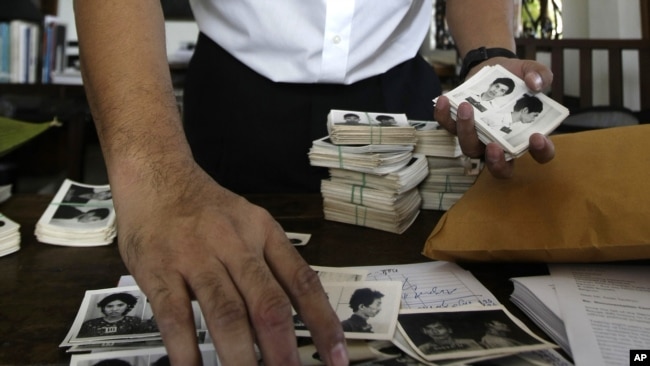
In this photo taken on Aug. 20, 2012, Director of Documentation Center of Cambodia, Youk Chhang arranges photos, a part of about a thousand of newly-discovered photo collection of detainees at the former Khmer Rouge main prison S-21, in his office in Phnom Penh, Cambodia.
Beth Van Schaack, a Stanford law professor who advises DC-Cam, said the group’s orientation towards victims made Chhang a natural choice for the award. “What CJA really admires about DC-Cam is it also has a very victim centered approach, working-hard to help Cambodian victims, experience justice before the ECCC [Extraordinary Chambers in the Courts of Cambodia] and DC-Cam has become in many ways a model for other documentation centers around the world that are collecting information that can be submitted to justice processes where human rights are concerned,” she said.
Nate Thayer, a journalist who has reported on Cambodia for some three decades, said without Chhang’s work, the Khmer Rouge perpetrators would have gotten away with their crimes. “Youk Chhang was a one-man army fighting for justice for those who suffered in Cambodia and his personal passion and devotion bringing those who responsible for mass murder to justice, to face the music, to answer for their crime.”
Peter Maguire, a law professor and an author of “Facing Death in Cambodia,” called Chhang a “Cambodian national treasure” whose efforts bring more truth and reconciliation to the Cambodian people than the combined efforts of the United Nations and ECCC.
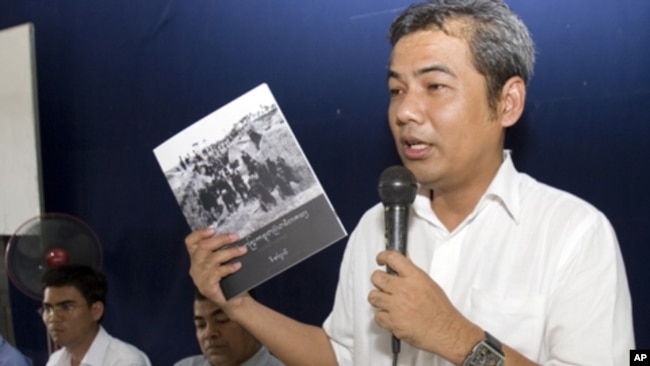
Youk Chhang, a leading Cambodian genocide researcher, shows a copy of the Cambodian version of a Khmer Rouge history textbook to teachers in Takeo province, July 3, 2012.
Neth Pheaktra, ECCC spokesman, told VOA Khmer that DC-Cam deserved the award as it had uncovered valuable evidence that could be used at the court. “The work that DC-Cam has done helps the ECCC save time in finding evidence by ourselves, and it shows us the way, brings us information as well as some historical documents we needed for the trials.”
Chhang is currently working on developing the Sleuk Rith Institute, a permanent hub for genocide studies in Asia based in Phnom Penh.
The Jury has selected human rights defenders from Ukraine, Nicaragua, Vietnam, South Africa and Kuwait as finalists for the 2017 Front Line Defenders Award for Human Rights Defenders at Risk:
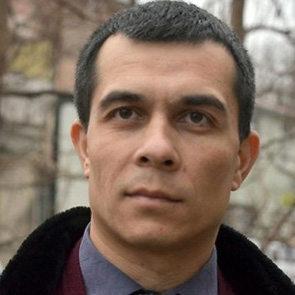
Emil Kurbedinov, Crimea/Ukraine
Emil Kurbedinov is a Crimean Tatar and human rights lawyer. Since the occupation of Crimea by the Russian Federation, Emil has been defending the persecuted Crimean Tatar minority, civil society activists and journalists. He also provides emergency response and documentation of rights violations during raids and searches of activists’ homes. In January 2017, masked representatives from Crimea’s Centre for Counteracting Extremism detained Emil and took him to a local directorate of the Russian Federal Security Service (FSB) for interrogation. A district court found him guilty of “propagandizing for extremist organisations” and sentenced him to ten days in detention.
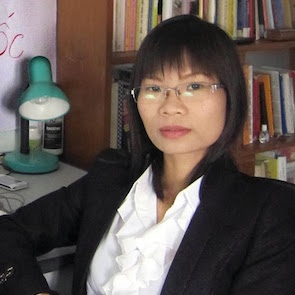
Pham Thanh Nghien, Vietnam
Vietnamese blogger Pham Thanh Nghien spent four years in prison for her work publicising violations against and defending the rights of relatives of fishermen killed by Chinese patrols. Following her release, she was kept under house arrest, during which time she spearheaded numerous human rights campaigns and co-founded the renowned Vietnamese Bloggers’ Network. Nghien has had her home raided, been blocked from attending medical appointments, had a padlock placed on her door from the outside, and been refused a marriage certificate. Nghien has also survived numerous physical assaults aimed at stopping her powerful, peaceful work uncovering and publicising human rights violations in Vietnam.
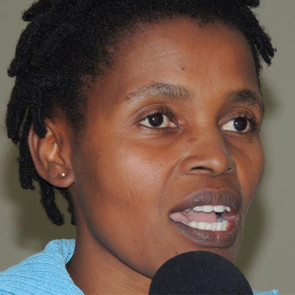
Nonhle Mbuthuma, South Africa
Nonhle Mbuthuma has persisted in her struggle for land and environmental rights in South Africa’s Eastern Cape despite assassination attempts, ongoing death threats and the murder of her colleague. She is a founder and current member of the Executive Committee of the Amadiba Crisis Committee, formed to unite community members in five villages of the Amadiba Tribal Authority region opposing destructive mining projects. In July 2016, Nonhle and other activists successfully forced the biggest shareholder in a titanium mining project to withdraw, but threats to activists continue as the community now fears the project will continue with funding from local “front” companies.
Abdulhakim Al Fadhli, Kuwait
Abdulhakim Al Fadhli is currently imprisoned for his peaceful activism on behalf of Kuwait‘s stateless Bedoon and other minority communities in Kuwait. The term Bedoon, meaning “without” in Arabic, refers to the community of stateless persons, native to Kuwait, who are prohibited from obtaining any official state documents including, but not limited to, birth, death and marriage certificates. Abdulhakim is currently serving a one-year prison sentence and faces deportation upon release. Throughout his imprisonment, he has protested and staged hunger strikes against the inhumane and unsanitary conditions in the Anbar 4 prison facility, where he has also been subjected to solitary confinement. [see also https://humanrightsdefenders.blog/2014/02/27/car-chase-in-kuwait-bedoun-human-rights-defender-the-target/]
Francisca Ramírez Torres, Nicaragua
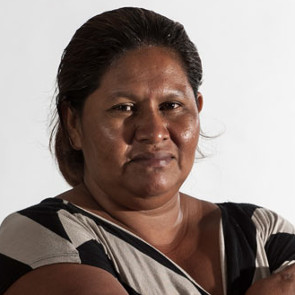
Human rights defender Francisca Ramírez Torres‘ children were attacked in attempt to stop her powerful work advocating against a destructive inter-oceanic canal in Nicaragua. Francisca is the coordinator of the Council for the Defence of Land, Lake and Sovereignty, which educates communities on their rights, campaigns for the repeal of laws allowing land-grabbing. The proposed canal would displace thousands of small farmers and indigenous peoples, without respecting their right to free, prior and informed consent. Francisca has been detained, harassed, and had her home and family attacked for her peaceful resistance to this destructive canal project.
The annual Front Line Defenders Award seeks to focus international attention on the human rights defender’s work, thus contributing to the recipient’s personal security, and a cash prize of €15,000 is awarded to the Award recipient and his/her organisation in an effort to support the continuation of this important work.
In view of the link between Manchester and UAE airlines (Emirates and Ethiad) it is specially interesting to note that AI Manchester has joined the campaign to free Ahmed Mansoor:
Interesting example of how governments (here the EU) can work together to protect human rights defenders in a specific country (here Uganda). Since a few years there is an annual EU HRD Award to recognise and honour the achievements of an individual Human Rights Defender active in Uganda.
EU Heads of mission with the 2016 EU Human Rights Defender Award recipient, Robert Sempala in May 2016.
Now the British High Commission in Kampala, together with other European Union member states represented in Uganda, is inviting nominations for the 2017 EU Human Rights Defenders Award. The broad range of activities carried out by HRDs can include the following:
documenting human rights violations;
seeking remedies for victims of human rights violations through the provision of legal, psychological, medical or other support;
combating the culture of impunity which can hide systematic and repeated breaches of human rights and fundamental freedoms;
mainstreaming a human rights culture, and transmitting information about HRDs at the national, regional and international levels;
advocacy for the respect of human rights.
Nominations should be sent by e-mail to: Kampala.Reception@fco.gov.uk. Nominations should be a maximum of one page in length, and should use the following nomination form (MS Word Document, 51.5KB). The deadline for nominations is 14 April 2017. The winner will be announced on 25 May 2017 at a ceremony hosted by the Embassy of the Kingdom of the Netherlands in Uganda.
10 December is obviously International Human Rights Day, but there are several countries that have a different or additional Human Rights Day of their own. One of them is South Africa where 21 March is historically linked with 21 March 1960 and the events of Sharpeville (on that day 69 people died and 180 were wounded when police fired on a peaceful crowd that had gathered in protest against the Pass laws – https://www.parliament.gov.za/project-event-details/2)
Boipelo Mokgothu in Traveller24 used the occasion on 20 March 2017 to publish a compilation of the 10 most inspirational women from historical figures till today:
On 20 March, 2017, around midnight, Mr. Ahmed Mansoor was arrested at his home in Ajman, UAE, by a large team of the Emirates’ security forces. The Government has finally confirmed that it is holding him, but until today we don’t know where. The reasons for his arrest remain unknown but might be linked to a series of tweets he posted on Twitter in recent days, calling for the release of UAE human rights defender Osama Al-Najjaror to a letter that he signed, along with other activists in the region, calling for the release of all prisoners of conscience in the Middle East ahead of an Arab League Summit scheduled to be held in Jordan on 29 March 2017.
Following a massive crackdown on human rights defenders in the UAE in recent years, Ahmed Mansoor is today widely respected as the only independent voice still speaking out through his blog and Twitter account against human rights violations from inside the country. He was the Laureate of the Martin Ennals Award 2015. [https://humanrightsdefenders.blog/2015/10/07/the-link-to-the-full-mea-2015-ceremony-of-6-october/]. Mr. Mansoor has faced repeated intimidation, harassment, and death threats from the UAE authorities or their supporters, including arrest and imprisonment in 2011 following an unfair trial. Although pardoned and released later that year, the UAE authorities have arbitrarily imposed a travel ban on him. [https://humanrightsdefenders.blog/2015/09/15/fly-emirates-if-the-emirs-let-you/]
The Human Rights Foundation reported that Cuban graffiti artist Danilo ‘El Sexto’Maldonado was finally released from prison on 21 January 2017, after spending two months in detention. Cuban authorities arrested El Sexto for spray painting “Se fue” (in English, “He’s gone”) shortly after the death of the island’s former dictator, Fidel Castro. He was sent to one of Cuba’s most notorious maximum security prisons, El Combinado de Este, where he was subjected to daily psychological torture and frequent death threats. The Human Rights Foundation filed an individual complaint with the U.N. Working Group on Arbitrary Detention for its Havel Prize Laureate.[https://humanrightsdefenders.blog/2015/04/16/havel-prize-for-creative-dissent-awarded-to-girifna-sakdiyah-maruf-and-el-sexto/]
I have written earlier about the wisdom of having purely governmental human rights awards. Now Canada adds to the discussion:
In my article for Oxford University Press (“Human Rights Awards for the Protection of Human Rights Defenders” J Hum Rights Pract (2013) 5 p552) I wrote: “A word of caution with regard to ‘governmental’ awards is in order. While it is one thing for a government to ‘support’ (e.g. financially) an otherwise independent award with an autonomous jury, the notion that governments (such as the USA, the Netherlands, France, Poland, Sweden, Canada) should run their own awards, select the winner, have the Minister hand it out and promote the award through the diplomatic service, does not sit well with the desire to protect HRDs from the charge of being ‘foreign agents’, a frequent claim by repressive governments trying to depict HRDs as being supported and funded from abroad… A degree of distance would benefit governments and would also serve the laureates themselves who usually want to be seen as spearheading the non-governmental human rights movement. Intergovernmental organizations face similar problems in having awards, as was demonstrated by the controversy surrounding UNESCO’s decision in 2010 to launch an award paid for and named after the president/dictator of Equatorial Guinea, Obiang Nguema.”
A recent article (5 March 2017) by Dean Beeby of the Canadian Broadcasting Corporation (CBC) entitled “Diefenbaker award missing in action after Liberals take over” brings home another aspect, namely that such an award becomes a ‘political tit-for-tat’. An award created by Stephen Harper’s government, which honoured former Progressive Conservative prime minister John Diefenbaker, was inaugurated in early 2011 and given out for four years running before ‘disappearing’ in 2015 and 2016. Read the rest of this entry »