“There can be no keener revelation of a society’s soul than the way in which it treats its children.”
— Nelson Mandela, Former President of South Africa
Pavani Kaushik conducted the interview (excerpts):
P.K: Namaste Kailash ji! Thank you so much for taking the time to talk with India Currents. As a mother, as an Indian American, it is a matter of great pride to be able to do this interview with you today! Looks like you are back after a lot of travel?
K.S: Yes. Once the Nobel Prize committee gives you a medal of peace, they take away your ‘peace’ for the rest of your life! (laughs) I am quite used to travel, having been involved in multiple causes, working across 140 countries. As the founder of two largest societal coalitions, Global Campaign for Education & Global Marketing against child labor, my life does involve a considerable amount travel.
……
P.K: And now with the Nobel Peace Prize, you have a bigger voice, a further reach, a larger umbrella naturally. I looked up your biography online as research for this interview. Born in Madhya Pradesh as Kailash Sharma, subsequent change in last name to Satyarthi , the recipient of several awards etc etc… but I’d like to know about the ‘Man’ within these details.
K.S: I don’t think of myself as a man – I still consider myself a child! (laughs) For me, childhood does not mean just the age factor. Childhood means so much more… transparency, thirst for learning, curiosity… all these are related to childhood. I feel strongly that there is a child inside each of us. But we keep suppressing him/her all the time and try to be more mature. And maturity brings artificiality, diplomacy, sometimes falsehood. A child does not care to do things only to make others happy. A child is very straight forward. This quality is something to be preserved. And it is my inspiration & learning.
P.K: I’m looking at the list of awards you have received over the years, starting from 1993 – Elected Ashoka Fellow Award, the Robert. F. Kennedy Human Rights Award – to name a couple. Obviously the Nobel Peace Prize is a distinct honor. It is a matter of pride for India, for Indians abroad and for activists all over the world. Can you speak about how this award is helping to carry your voice?
K.S: Yes, it has definitely helped me spread my message further. But I do not consider this award solely in my honor. The Nobel Peace Prize has been a major recognition for those most deprived, neglected and marginalized lot of humanity – the children who are enslaved & trafficked. I always say that I represent the ‘voice of silence’. They are my children who are hidden under the cloak of invisibility. So now that people have started to recognize my children – it is the greatest award for me!
…..
P.K: What made you pick up the mantle as the person who speaks for children? Tell us something about the journey so far.
K.S: When I started my work in 1981, there was never a question that I do anything other than what I chose to do for children s’ rights. It was a non-issue for me. The conventional wisdom was to collect money or help with charity. And it stopped there. I realized something more should be done. The denial of freedom and human dignity was so deeply rooted. It was non-negotiable. So this inspired me to give up my career. At that time no one was talking about child slavery and child trafficking. As a country, India did not have any laws to address these issues. Even on the international scene there was no legislation that provided me with a path to undertake. The U.N convention on the Rights of Children was adopted by the General assembly in 1989. So in 1981 I started fighting a lonely battle! I had the beginnings of a vision but had no idea about how to make it a reality. I faced total ignorance about these issues and when we brought in strong activism, ignorance turned into denial. People did not want to believe that this problem existed among them. We even faced opposition in the form of local mafia being set against us. So it was a long journey as you can imagine!
P.K: How does your family, your wife Sumedha, your children – handle the dangers associated with your work? Obviously the values your have imparted have made a big effect on them.
K.S: Sumedha was part of the whole movement right from the beginning. We did not have much money or materialistic wealth to give our children. There were dangers of course. When we finally got a telephone, it came with death threats made against me and my family! Slowly they gained courage and understood what my wife and I stood for. They helped with the children in the Ashram during their free time. That is how they grew up. My son Bhuvan is a lawyer and he handles most of the legal work for our cause. The cases he has handled have made a huge impact in the legal and judicial discourse in India.
…..
P.K: Bharath Yatra was a massive social ‘wave’ which happened recently. Could we hear your thoughts on that movement?
K.S: Bharath Yatra has been an unprecedented success! About a million people took to the streets to condemn and speak out against child sexual abuse. This has never happened before in India. They also demanded strong policy measures to be enforced. This was a turning point. Bharath Yatra’s preparation process began about a year ago before we launched it. The idea behind the Yatra was to take up the initiative and see how people’s response to something this large scale would be.
The most encouraging response came from the youth. Thousands of young girls and boys in schools and colleges across India marched with us. Some even came up to me to say “you are telling MY story”! Many appeared on the stage before hundreds of people and said they were breaking their silence to speak out about their own experiences. This was the most satisfying part of the Yatra for me personally. I consider this the beginning of my ‘war’ on rape.
……
The first incident was the rescue of a group of people which had children, men and women, in 1981. I had started a magazine titled Sangharsh Jaari Rahega – The Struggle Shall Go On – dedicated to educating the public about the problem of child slavery and the struggles of marginalized people. One day a man, Wasal Khan, knocked on my door in Delhi. He was a desperate father whose 15 year old daughter, Sabo, was about to be sold to a brothel. He told me how he, along with his wife and a few others from his village were ‘”taken to work with the promise of good salary and a good life,” to a place about 400 km. from his village in Punjab. The hours were long and the conditions were deplorable. So they ended up in slavery, no money, no freedom, working on brick kilns for close to 17 years. In these conditions, children were born, people lived and died. It was shocking that in the year, 1981, in the largest democracy in the world, people were being subjected to this sort of slavery!
I felt very strongly that I should not limit myself to simply writing about his case. I managed to raise a little money by mortgaging my wife’s wedding jewelry, gathered a group of people and went to the site. The poor man was caught by the owner of the kiln and I was thrown out of the compound along with my people.
I returned empty handed but not with an empty heart. With the help of a friend who was a lawyer we took the matter to the courts. And we managed to secure the release of all those men, women and children – including 15 year old Sabo. 36 people were freed that day! This was the first documented incident where children were freed from slavery through a private/voluntary initiative. And this gave me a clear path that I started charting. Within a few weeks after this incident, people started bringing other cases to my notice. And I never looked back.
The most recent one was only few months ago. This was the rescue of children locked inside bathrooms and held on roof tops in a factory in Delhi. The conditions were unimaginable. The children ranged in ages from 7 – 10 or 11 years. They were working – making toys. When I sat with them and asked about their working and living conditions, they claimed they were very happy, and I could see that they were simply repeating what they had been told to say. They were threatened that the police would come and arrest them if they said anything else.
When I asked the youngest child if he got a chance to play with the toys he helped make, he said no – he was not allowed to. If they made a mistake like that, they were beaten up. Apparently the last time he had played was in his village, with sticks and stones, which were his toys! He also said he missed playing with those stones! What was ironic was that in this day and age, when we claim to have made so many advancements in technology, these children were living in such deplorable conditions right in Delhi.
We conducted a second raid on the same day and also managed to free a bunch of children from a neighboring factory where they were sewing jeans. And they were brought to our ashram – Mukti Ashram – also in Delhi. The next morning we noticed these children were trying to shade their faces and eyes in the sunlight. That is when we discovered that for 3 years that they were kept inside a basement of the factory! They were forced to live, work, eat and sleep in that basement. And they had not seen daylight for 3 whole years! Imagine that!
……
P.K: You also have the Bal Mitra Gram concept. Can you speak about that concept?
K.S: Sure. It has been my dream to make the whole world child-friendly, which is easier said than done! Very often the village communities are where child marriages and trafficking etc take place. So the whole idea behind Bal Mitra Gram was to transform the community at the village level – to make them child-friendly.
The first condition is – all children are free from the fears of abuse and exploitation of any sort.
The second condition is – all children irrespective of gender, caste or community are enrolled in schools.
The third condition is – all village children have a chance to form a governing body – called Bal Panchayat. This helps shape them as responsible individuals and to solve their problems through positive governing methods.
The fourth condition – that the Village Panchayat – the elected assembly of village elders – agrees to not just recognize the Bal Panchayat, but also work hand-in-hand with them, by inviting youth leaders to official Panchayat meetings and vice versa.
When these four important conditions are met, the whole village becomes child-friendly.
P.K: That sounds idyllic! Have you implemented these four conditions? Are there villages that are truly child-friendly?
K.S: We have about 560 villages where we have managed this to date! In many cases the youth leaders are the very children who have been freed from child labor. We have about 400 girls who have been elected as Heads of the Bal Panchayats! This is a matter of pride for us! It is my belief that if politicians, leaders, NGOs, corporate bodies, all come together and resolve to protect one generation, then there is no need to worry about the generations of the future.
P.K: Now Kailashji, when you undertake the kind of work you have done, there is always equal parts reward and criticism that you will face. It has been said that your work is a case of altruism gone wrong, that the children are being freed against their will – because the money they are bringing in makes a huge difference to their families. That is is acceptable for the children to learn the trade the families engage in. How do you respond to things like this?
K.S: There are micro and macro level issues – At the micro level, we try to explain to the families of these children how their lives would change when their children can better themselves, with education, with vocational training. We also try to connect them with Government schemes that are already in place. We have volunteers and former child labor victims who take social messages to the villages through street theater staged using local dialects and languages to create awareness. So these are two ways in which we can sensitize the village population to see things differently.
We have a very strong argument that there is a direct relationship between adult unemployment and child labor. Globally 216 million children are engaged in economic activities. Out of this, there are about 152 million children engaged as full-time child laborers. If you draw a comparison with the existing number of youth/adult unemployed globally, the number is 210 million. It is a proven fact that 71% of children are working in the agricultural sector globally. And there is a direct correlation to the number of jobless, unemployed adults! This vicious circle must be broken.
In today’s digital economy, we cannot think of social justice, equality, growth or ways to get rid of poverty in personal or social life without an education. These 216 million children are being denied their chance at escape, by denying them education. So I have been advocating a triangular paradigm to show that – child labor, poverty and illiteracy – form a three way relationship. This is a cause and consequence relationship.
The criticism is part of my work. But the numbers speak for themselves.
….
https://indiacurrents.com/kailash-satyarthi-representing-the-sound-of-silence/
 “I was subjected to violence and sexual abuse. I was interrogated day and night for eight days. They [police officers] were questioning me while they were under the influence of alcohol […] I am afraid of being forgotten here,” Parıldak said in a letter to the Cumhuriyet newspaper in October 2016.

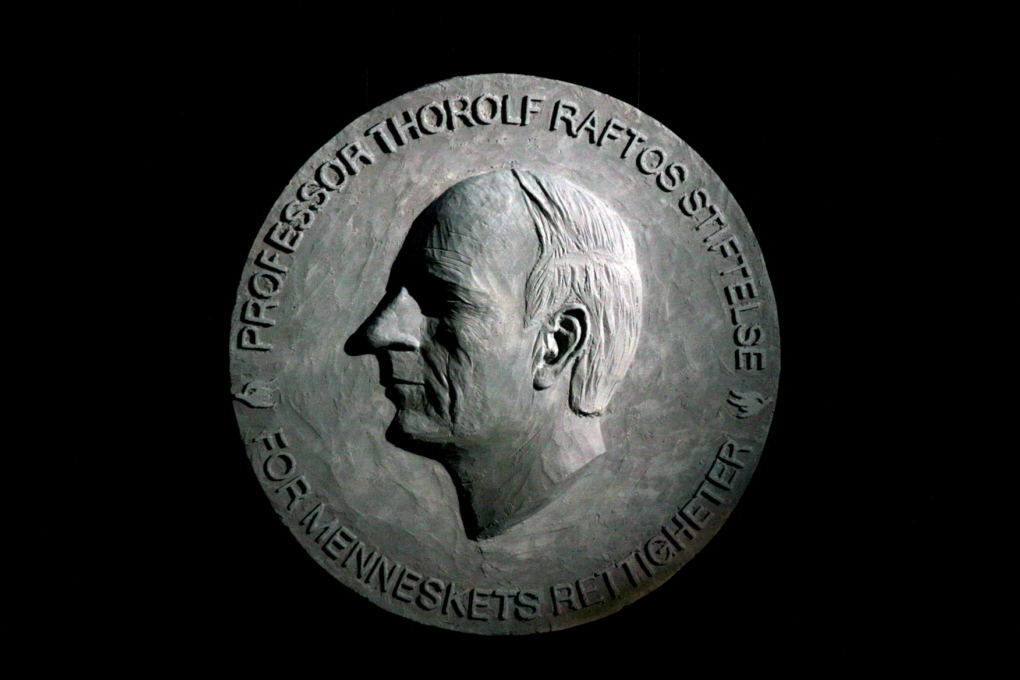


 Hans Thoolen on Human Rights Defenders and their awards