Archive for the 'awards' Category

Cartoons and human rights come together in Geneva

February 23, 2021

Kyra Dupont in Geneva Solutions of 23 February 2021 goes into the history that links Geneva and cartoons: “Drawings for peace, the role of Geneva” Geneva is said to be the cradle of comics thanks to Rodolphe Töpffer who was the first to put words on an illustrative sequence in the 1830s. Geneva has remained a vivid breeding ground for cartoons since then. (Credit: Patrick Chappatte) “Töpffer pioneered the genre, his work was a laboratory,” confirmed Zep at the opening of the exhibition, The comic strip, a Geneva invention? last November. The comic artist and creator of the bestselling Titeuf series discovered him at the age of 20 and admits that it is difficult to escape his influence for a cartoonist living in Geneva.

Since then, Switzerland remains the country with the most important press organizations’ ratio in the world compared to its population.

…..there is indeed a Geneva breeding ground for comic strips and press cartoons, two universes which cohabit in “a kinship never totally assumed, a bit like cousins from first-generation families with their own associations, their own interests, but both take part in this great wealth of talent and artists in a very small area with a very small population,” explains Patrick Chappatte, press cartoonist for Le Temps or the Boston Globe, among others. Indeed, political cartoonists are doing more than well in French-speaking Switzerland between Mix and Remix or Burki, which have now disappeared, but also Barrigues, Herman, Benedict, the new artists of the satirical newspaper Vigousse or the recent application La Torche 2.0 which develops press cartoons on smartphones.

Chappatte recalls that the press cartoons developed hand in hand with press freedom and democracy. Today we cannot imagine the front page of our newspapers without them.

“As luck would have it, today we are in a period where press cartoons are heckled and democracy is being questioned everywhere. We are living in a paradoxical era where we can say absolutely everything and send each other the worst things on social networks, and at the same time we bear a cautious attitude in the traditional media, companies under economic pressure, and exercise great caution in crisis management. On the one hand a precautionary principle is applied to humour and opinion, and on the other hand the real reactionaries are completely unleashed on social networks.”

The filtering of the media, the real professional entities, is what is most damaging to democracy and freedom of expression, according to the cartoonist who had to stop drawing for The New York Times when it decided to no longer publish daily political cartoons in its international edition in June 2019. “They took the easiest path in order to not have problems with political cartoons in the future… Did we just invent preventive censorship ? This, in the end, is about democracy,”  reacted Chappatte in his Ted talk, “A free world needs satire”.

Chappatte is the president of the Freedom Cartoonists Foundation. Renamed last October, the Geneva-based Cartooning for Peace Foundation was created in 2010 at the initiative of Kofi Annan See https://www.trueheroesfilms.org/thedigest/awards/EBEE0ECF-565B-6614-9B67-A6938EB46155. Every two years, with the support of the city of Geneva, the Freedom Cartoonists Foundation rewards a cartoonist for his courage and his role in promoting freedom of expression and human rights in particularly difficult circumstances. Note there is also the US-based Robert Russell Courage in Editorial Cartooning Award [https://www.trueheroesfilms.org/thedigest/awards/089b7a90-6c76-11e7-9ec2-2b88daf768c2]

This year, Chappatte was also awarded the Fondation pour Genève prize for his outstanding contribution to the influence of Geneva and his commitment to freedom of press and expression. “It’s quite a strong message at a time when press cartoons are being called into question,” says Chappatte, who regrets that the sanitary crisis has delayed the Freedom Cartoonists Foundation’s price to May 2021.

The extremists, the autocrats, the dictators and all the ideologues of the world cannot stand humour…We need political cartoons more than ever and we need humour.

For some earlier posts on cartoons see: https://humanrightsdefenders.blog/tag/cartoons/
Lawlor urges UAE to free Ahmed Mansoor, Mohamed al-Roken and Nasser bin Ghaith

February 22, 2021

Having just written about a humanitarian award in the Emirates [https://humanrightsdefenders.blog/2021/02/22/zayed-award-for-human-fraternity-to-latifa-ibn-ziaten-and-uns-antonio-guterres/] it is appropriate to refer to UN Special rapporteur Mary Lawlor’s assessment that three human rights defenders imprisoned in the United Arab Emirates are being mistreated in conditions that may amount to torture.

Lawyer Mohamed al-Roken, jailed in 2012 in a crackdown on Islamists [https://www.trueheroesfilms.org/thedigest/laureates/7B69B1D9-E359-444A-B448-02E8B9C0750C], rights campaigner Ahmed Mansoor, imprisoned in 2018 for insulting the government [https://www.trueheroesfilms.org/thedigest/laureates/074ACCD4-A327-4A21-B056-440C4C378A1A], and pro-democracy blogger Nasser bin Ghaith, arrested in 2015, are all serving 10-year sentences. [https://humanrightsdefenders.blog/2017/03/31/uae-it-is-not-just-ahmed-mansoor-academic-nasser-bin-ghaith-gets-10-year-for-tweets/]

Reports … indicate that the conditions and treatment that these human rights defenders are subjected to, such as prolonged solitary confinement, are in violation of human rights standards and may constitute torture,” said Mary Lawlor,

The UAE government media office did not immediately respond to a request for comment. UAE authorities have previously dismissed such accusations as false and unsubstantiated.

Lawlor described the three rights defenders’ jail sentences as an attempt to silence them and “intimidate and deter others from engaging in this legitimate work“.

The statement said Mansoor went on hunger strike twice in 2019 to protest his conditions, including reportedly being held in a cell measuring four square metres with no mattress, and limited access to sunlight, a shower or portable water.

It said Bin Ghaith went on hunger strike in 2017 and 2018 to protest against being denied access to medication, as well as physical assault by prison authorities and periods in solitary confinement.

https://news.yahoo.com/u-n-rights-expert-urges-141938085.html

Zayed Award for Human Fraternity to Latifa ibn Ziaten and UN’s Antonio Guterres.

February 22, 2021
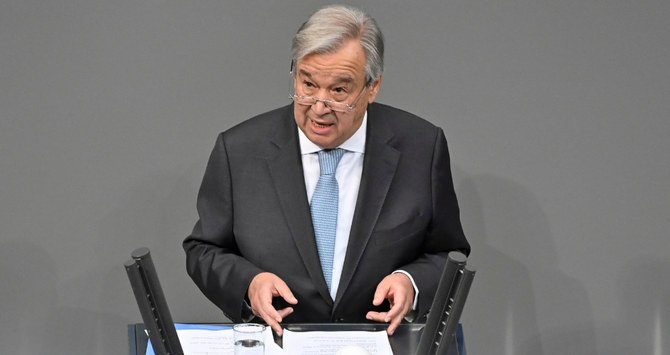
Guterres said he considers the award to be recognition of the work of the UN “to advance peace and human dignity every day and everywhere.” (AFP/File Photo)
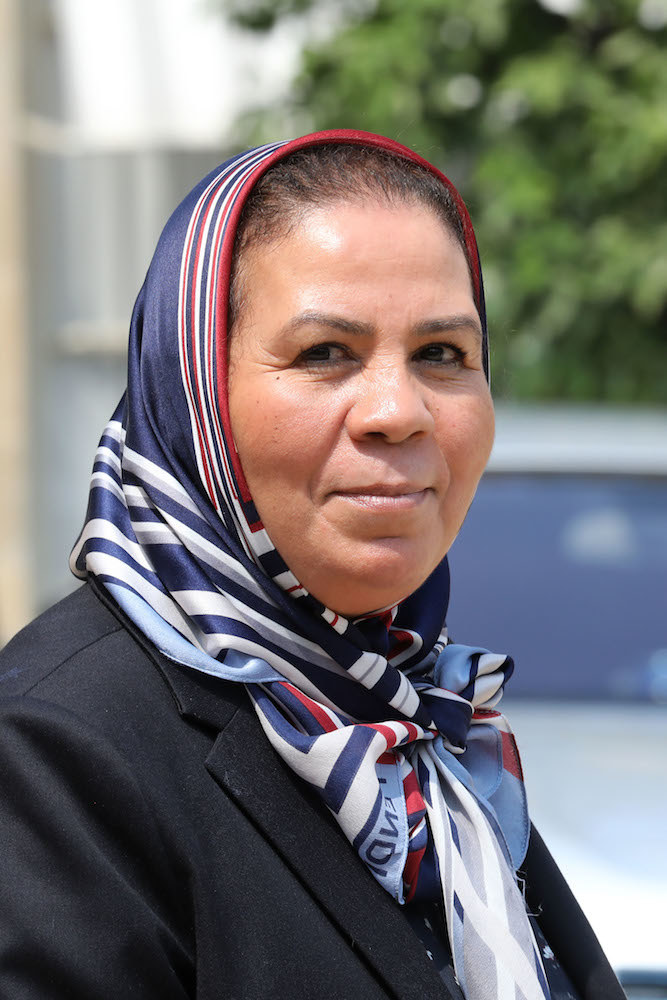
French-Moroccan activist Latifa ibn Ziaten was a co-recipients of the this year’s Zayed Award for Human Fraternity, along with UN's Antonio Guterres. (Supplied)

Arab News of 4 February 2021 writes about the Zayed Award for Human Fraternity 2021 which recognises French-Moroccan activist Latifa ibn Ziaten and Antonio Guterres.

The Zayed Award recognizes the institutions and community of people who are spreading the work of human fraternity and coexistence around the world. It was inspired by the Document on Human Fraternity which was signed by His Eminence the Grand Imam Dr. Ahmed El-Tayeb and His Holiness Pope Francis on February 4, 2019 in Abu Dhabi, the capital of the United Arab Emirates.

The Document on Human Fraternity, alongside the inspiration of the humanitarian actions and values of the UAE’s founder, the late Sheikh Zayed, is the foundational doctrine that informs the criteria for nominees of the Zayed Award for Human Fraternity (ZAHF). The Higher Committee of Human Fraternity (HCHF) is a non-governmental body, based in Abu Dhabi, and the architect of the Zayed Award for Human Fraternity. Obviously not the most appropriate place for human rights award, see: https://www.trueheroesfilms.org/thedigest/laureates/074ACCD4-A327-4A21-B056-440C4C378A1A and also: https://humanrightsdefenders.blog/2016/05/18/uae-emirates-human-rights-defender-nasser-bin-ghaith-ngos-censorship/

HCHF’s mission is to act on the aspirations outlined in the Document on Human Fraternity by meeting with religious leaders, heads of international organizations, and others across the world, to support and spread the values of mutual respect and peaceful coexistence. In addition, the committee provides counsel on a variety of initiatives, including the Abrahamic Family House, which is being built in Abu Dhabi. See also: https://humanrightsdefenders.blog/2018/01/23/emirates-at-the-upr-in-geneva-two-sides-of-the-same-medal/y.

Guterres praised fellow recipient Ibn Ziaten for “her dedicated efforts to support young people and promote mutual understanding, arising out of immense personal tragedy, (that has) won admirers at home and beyond.”[see: https://humanrightsdefenders.blog/2016/04/08/us-state-department-international-women-of-courage-awards-2016-yulan/
Ibn Ziaten’s son, Imad, was the first person to die at the hands of terrorist Mohamed Merah during a series of shootings in the cities of Toulouse and Montauban in southwestern France between March 11 and 22, 2012. When Ibn Ziaten visited Les Izards in Toulouse, where the Merah had lived, to find out more about the man who took her son’s life she was shocked to find young people there hailing the killer as a hero of Islam. “I had the impression they were killing my son all over again,” she said at the time. This motivated her to found the Imad ibn Ziaten Youth Association for Peace to help young people in deprived areas and promote interreligious dialogue.
Guterres reiterated that discrimination, racism and extremist violence continue to surge around the globe, fueled by the COVID-19 pandemic, an economic recession, a climate emergency and continuing threats to peace and security. Unity is more important now than ever, he added. Guterres said he will donate the $500,000 prize that accompanies the award to the Office of the High Commissioner for Refugees to support its work with “the most vulnerable members of the human family: the forcibly displaced.”

https://www.arabnews.com/node/1803496/world

Breaking news: Yu Wensheng, Chinese human rights lawyer, is Martin Ennals Laureate 2021!

February 11, 2021

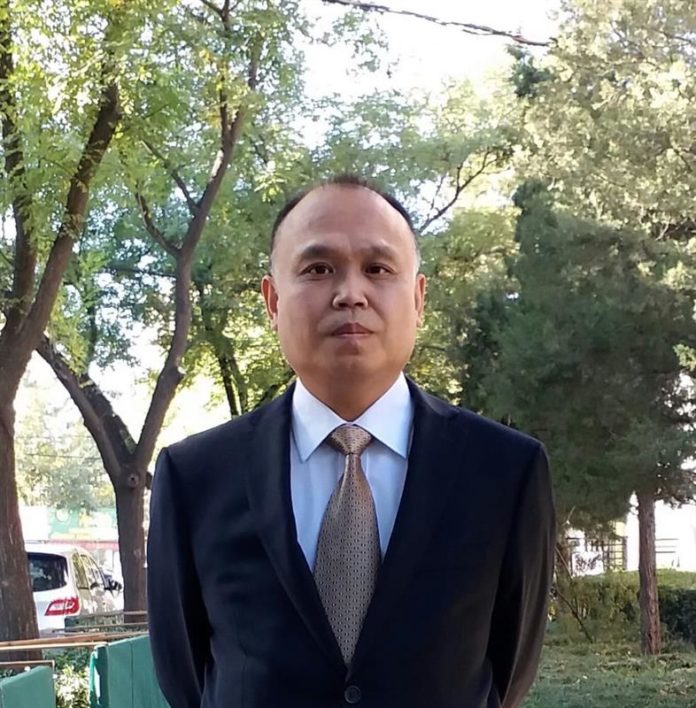
Yu Wensheng, a lawyer from China, was just announced as the laureate of the Martin Ennals Award for Human Rights Defenders 2021 during an on-line ceremony broadcast from Geneva. [https://humanrightsdefenders.blog/2021/02/11/reminder-in-a-few-hours-starts-the-martin-ennals-award-ceremony-2021/]

Yu was just another corporate lawyer in a fast-rising Chinese economy. But when he decided to take on human rights cases and ask for constitutional reform in his country, he drew the ire of one of the most powerful regimes in the world. Yu has been detained, harassed, and convicted in secret. While in custody, he has been tortured and denied medical care and family visits. His wife, Xu Yan, who Yu has not seen in person for 3 years, herself has become an icon. She has taken up the mantel of human rights defense and is currently studying law. Yu’s fight for due process has completely upended his life. [https://humanrightsdefenders.blog/2021/01/21/mea-nominee-yu-wensheng-in-poor-health-after-years-in-prison/]

Let us hope that China will behave a bit more moderately in response this time {see e.g. https://humanrightsdefenders.blog/2020/08/29/chinese-sensitivity-again-on-display-re-human-rights-awards/]

https://www.scmp.com/news/world/article/3121512/jailed-chinese-lawyer-yu-wensheng-wins-international-human-rights-award

Reminder: in a few hours starts the Martin Ennals Award ceremony 2021

February 11, 2021

Nothing can stop us from celebrating human rights defenders!

On-line February 11, 2021 at 18h (UTC+1): Celebration of the 2021 Martin Ennals Award Finalists:

Soltan Achilova, Republic of Turkmenistan

Loujain AlHathloul, Kingdom of Saudi Arabia (who was just released from jail https://humanrightsdefenders.blog/2021/02/09/will-loujain-al-hathloul-be-released-on-thursday-11-february/]

Yu Wensheng, People’s Republic of China

See also: https://humanrightsdefenders.blog/2021/01/18/%e2%80%8b%e2%80%8bmartin-ennals-award-finalists-2021-announced/

With cartoons by Patrick Chappatte, music by Gaspard Sommer and choreography by the Ballet Junior of Genève. An evening hosted by the journalist Catherine Sommer – in French and English – and broadcast on https://www.martinennalsaward.org/


Mary Lawlor opinion: Time for action, the role of human rights defenders in crisis and in a just recovery

February 11, 2021

On 4 February 2021 the Business and Human Rights Resource Centre published an opinion piece by Mary Lawlor, the UN Special Rapporteur on Human rights Defenders:

Human rights defenders (HRDs) all over the world face continuous harassment, threats and intimidation, with some even getting killed in response to their work protecting and defending human rights. Since the start of the COVID-19 pandemic, attacks against HRDs have continued with many facing greater risks as some governments misuse the situation to further curtail civil rights, deny participation in public decision-making, and deploy state forces to repress legitimate, peaceful protests and obstruct access to justice.

Many of these attacks are related to business activities. In 2019, the United Nations High Commissioner for Human Rights (OHCHR) documented the killing of 357 HRDs, half of whom worked on land rights, protection of the environment, minority rights and indigenous people rights. These violations are often carried out in the context of extractive industries, energy production, agro-industrial development and other business activities. When human rights are under threat from business activities, HRDs stand up and put themselves at risk to protect these rights and their communities. For an overview of all such HRDs, see: https://www.trueheroesfilms.org/thedigest

A landmark example is that of HRD Mungunkhun Dulmaa in Mongolia. In 2017, the Mongolian Government entered into a mining agreement with Steppe Gold, a Canadian gold mining company. The local community complained about the environmental impact of the agreement, the associated gold mine, and allocation of land to step-mines – lands which had been used by the community for generations. In 2018, members of the affected community staged a protest and were attacked by private security guards, hired by the company. When Ms. Dulmaa tried to video-record the assault as evidence she was detained, beaten and sexually harassed, and the video was deleted from her phone. A year later, when she attempted to report the incident to local police, Ms. Dulmaa received death threats via text, warning her to stop her work. Here, the lack of engagement by companies with potentially affected communities is blatant. In 2020, my predecessor and the UN Working Group on business and human rights sent a communication regarding Ms. Dulmaa’s case to both the Mongolian Government and the company, but neither responded. This signals a real lack of accountability. If we really want to ‘build back better’ and achieve a just recovery, human rights and HRDs need to become a priority for both states and business.

Five steps companies should take to address risks to HRDs in the context of just recovery:

  1. Implement the UN Guiding Principles on Business and Human Rights (UNGPs) through adequate engagement with rightsholders. A recent report from Trinity College, Dublin on 50 large companies and 10 states showed that companies either don’t know or don’t care about the UNGPs. A key part of the implementation of UNGPs is engagement with potentially affected rightsholders and their representatives, including independent trade unions and other civil society organisations. So far, this is not happening: for example, in the Know the Chain benchmark, all companies scored zero on their efforts to support freedom of association. This must change if we want to ‘build back better’: from the earliest possible stage of each project and throughout their supply chains, companies need to engage with potentially affected communities, workers and HRDs representing and supporting them. This needs to include critical voices and companies must give due consideration to the possible objections of HRDs, even if these may render their work and projects more costly, less profitable or even less viable.
  2. Free, prior and informed consent (FPIC) from affected communities, especially indigenous ones, is non-negotiable. It is an essential part of the effective due diligence called for in the UNGPs and a platform to prevent conflict. HRDs, typically leaders in their communities, can help business develop the kind of precise, contextualised understanding of local situations they need if they intend to prevent and address the potential threats to human rights arising from their activities. In assessing risk, both companies and investors, and the social auditors they hire to help them do so, should give adequate weight to independent civil society and community-level information and evidence. This is fundamental when considering actions for just recovery.
  3. This engagement with HRDs and rightsholders must continue for the duration of any business project, because opinions can change over time. Therefore, companies need to constantly keep their door open to HRDs and their input.
  4. Companies should create public HRDs policies and processes. Business needs to commit to the recognition of communities, HRDs and trade unions as partners by systematically including them in human rights policies and due diligence. They need to commit to a zero-tolerance approach to violence in their supply chains, and enforceable agreements with unions, and consistently prevent, monitor and address risks HRDs face in them.
  5. Companies should also stand with HRDs when they are attacked and release public statements denouncing threats and attacks. Such steps should be taken in consultation with HRDs themselves to increase effective actions that prevent harm and most importantly build trust with HRDs and local communities.

It must be acknowledged some private businesses are already taking positive steps when it comes to protecting HRDs, but most of them do not. This is extremely disappointing and indicates a very strong need for mandatory human rights and environmental due diligence (HREDD). As the UN Special Rapporteur on the situation of HRDs, I strongly support the growing momentum worldwide for mandatory HREDD, and advocate for an early inclusion of rightsholders and HRDs in the legislative process. These laws need to ensure access to justice and the right to an effective remedy, include a business duty to conduct effective, meaningful and informed consultations, and introduce robust safeguards for HRDs and whistle-blowers. An uncritical return to business-as-usual in the post-pandemic period would only perpetuate the deep inequalities between companies, workers and local communities, whereas we have a precious opportunity to reimagine and rebuild an economy that serves and respects the rights of all its participants.

https://www.business-humanrights.org/en/

Geng Xiaonan, Chinese publisher who spoke up for dissident academic, is jailed for three years

February 10, 2021

The Guardian of 10 February 2021 reports that a Chinese publisher who spoke out in support of a dissident academic has been jailed for three years in Beijing after she pleaded guilty to illegal business operations.

Geng Xiaonan, 46, and her husband Qin Zhen, were arrested in September on suspicion of publishing thousands of illegal titles. According to reports, Geng told the court she was guilty of the charges against her, that she was the primary decision maker, and asked it to show leniency to her husband and staff who were just following instructions. She also asked for leniency for herself, because she was sole carer to her ailing father. Qin was given a suspended sentence of two-and-a-half years.

The court proceedings were streamed live and reportedly viewed more than 80,000 times before the recording was taken offline, according to local media. The South China Morning Post said several dissidents and supporters had been prevented from attending the hearing.

Geng had spoken in support of Xu Zhangrun, a Beijing law professor who has been a vocal critic of Xi Jinping and the Chinese Communist party, when he was detained in July last year for six days.

in 2020 Geng was awarded the Lin Zhao Memorial Award, commemorating a Mao-era dissident who was executed after continuing to write in prison using her own blood as ink. [see: https://www.rfa.org/english/news/china/justice-12112020092429.html.

Chinese Human Rights Defenders said Geng had also tried to raise awareness about the disappearance of citizen journalist, Chen Qiushi, and said it was another example of the Chinese government criminalising dissent. Her jailing is the latest in a string of crackdowns on prominent people who have criticised the party, including academic Xu Zhiyong, and businessman Ren Zhiqiang.

https://www.theguardian.com/world/2021/feb/10/chinese-publisher-who-spoke-up-for-dissident-academic-is-jailed-for-three-years

Azerbaijani human rights lawyer Shahla Humbatova being disbarred

February 10, 2021
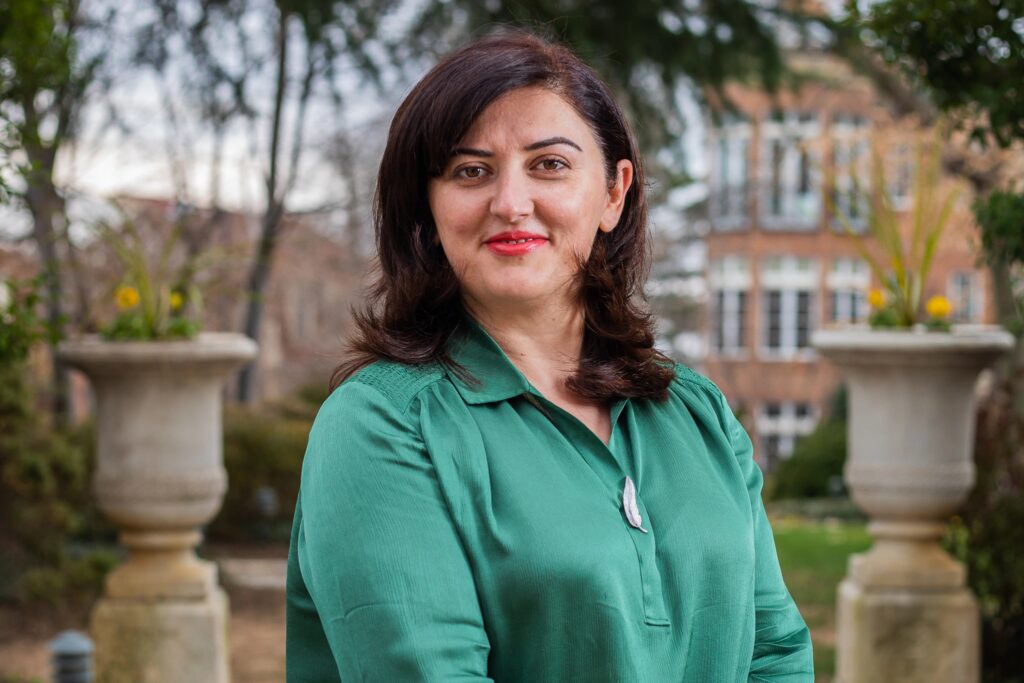
Shahla Humbatova. Photo: US State Department.

On 9 February 2021 Hamida Giyasbayli of OC Media reports that Azerbaijani human rights lawyer Shahla Humbatova has vowed to fight disbarment procedures against her despite what she says is a campaign of ‘harassment and threats’ from the Bar Association.

The Azerbaijani Bar Association has accused Humbatova of submitting a fake document as evidence during a civil case she was litigating, a criminal offence. They have also accused her of owing ₼460 ($270) in membership fees.  The association has taken her to court in an attempt to disbar her, which would strip her of the right to practice law.

Humbatova is well known in Azerbaijan for taking on high-profile human rights cases, including those of queer Azerbaijanis as well as blogger Mehman Huseynov. The move to disbar her follows the disbarment of dozens of other human rights lawyers in recent years, leaving few remaining lawyers taking on such cases. [see: https://www.trueheroesfilms.org/thedigest/laureates/e761cd05-65b0-4a02-8abe-e8ce9c58faed]

Speaking with OC Media, Humbatova said the allegation she submitted fake documents was baseless, and that her defence had submitted evidence proving this.

She confirmed that she had owed eight months of membership fees, but insisted the association did not make any effort to notify her of this. ‘I learned about this from the media the day after the Board’s decision [to take me to court]’, she said.  She immediately made the payment, so when the Bar went to court with her disbarment request, there was no longer any debt. Emin Abbasov, a legal practitioner who also works on human rights cases, criticised the proceedings against Humbatova for being conducted behind closed doors and without any records.  Abbasov, along with four others, is himself appealing to the European Court of Human Rights after being denied certification by the Bar Association.                                                                                                                     

Humbatova told OC Media that the move to disbar her was a continuation of the policy of dismantling human rights defenders in the country.  ‘It is lawyers and human rights activists who are fighting against politically motivated arrests, torture, repression of dissidents and those who simply demand their rights, and informing the public and international organisations. Therefore, they are being neutralised’, she stated.

In December 2019, 42 member organisations of the Human Rights House, a global rights group, called on the Azerbaijani Bar Association to ‘halt reprisals against a number of human rights lawyers, including Shahla Humbatova and Elchin Sadigov’. Sadigov is Humbatova’s current lawyer. 

See also: https://humanrightsdefenders.blog/2020/01/20/annual-reports-2019-azerbaijan-in-review-muted-hope-for-2020/

Will Loujain al-Hathloul be released on Thursday 11 February? – She was.

February 9, 2021

Saudi activist Loujain al-Hathloul had been sentenced to almost six years in jail (AFP/File photo) By Ali Harb in Washington

After more than 1,000 days in detention where she endured torture and hunger strikes, Saudi women’s rights activist Loujain al-Hathloul is expected to be released on Thursday, her sister revealed in a tweet on Monday. 

A Saudi court sentenced Hathloul to close to six years in prison late in 2020 on charges of contacting foreign organisations stemming from her human rights work. With time served and the court suspending part of the jail sentence, she was set for release in March. [https://humanrightsdefenders.blog/2020/12/29/loujain-al-hathloul-sentenced-to-over-5-years-prison-by-saudi-terror-court/]

Her early release would come weeks into the administration of US President Joe Biden, who has vowed to “reassess” relations with Riyadh and prioritise human rights in its dealings with the kingdom. In a phone call with Saudi Foreign Minister Faisal bin Farhan last week, US Secretary of State Tony Blinken stressed “several key priorities of the new administration including elevating human rights issues and ending the war in Yemen”, according to a statement by the State Department.

In 2019, Hathloul and fellow detained feminist activists Nouf Abdulaziz and Eman al-Nafjan received the PEN/Barbey Freedom to Write Award. In 2020 she received the Prix de la Liberte (Normandy) and the Magnitsky award [see: https://www.trueheroesfilms.org/thedigest/laureates/1a6d84c0-b494-11ea-b00d-9db077762c6c] See also: https://humanrightsdefenders.blog/2021/01/18/%e2%80%8b%e2%80%8bmartin-ennals-award-finalists-2021-announced/

And it did happen on 10 February 2021: https://www.amnesty.org/en/latest/news/2021/02/saudi-arabia-release-of-womens-rights-defender-loujain-al-hathloul-long-overdue/

https://www.middleeasteye.net/news/loujain-al-hathloul-saudi-activist-be-freed-sister-says.

However, see https://redactionpolitics.com/2021/03/07/loujain-al-hathloul-still-not-free-argue-human-rights-groups/

Celebrities Who Risked Their Careers For Human Rights: You Always Have A Choice

February 8, 2021

Smrutisnat Jena, writing in scoopwhoop.com of 7 February 2021, lists 10 celebrities from different walks of life who risked their careers for things they believe in. Beginning with a post in 2014 [https://humanrightsdefenders.blog/2014/02/28/and-the-nominees-are-oscars-for-human-rights/] I have regularly referred to the use and abuse of star power (see: https://humanrightsdefenders.blog/tag/celebrities/), and the article below is a welcome addition be it that such a list always remains a bit arbitrary and in this case very US-centered.  Where they are known to have received recognition through a human rights award this indicated with a link to the Digest.

1. Nina Simone

This African American musician was also a civil rights activist. With her unique voice and powerful music, she would often talk about the injustice and discrimination that black people had to face in the United States. And more often than not, radio stations, at the time, would simply refuse to have her on or play her songs. 

Source: Phillymag

2. Harry Belafonte

Another musician, Belafonte had his boyish charm and powerful voice do the work for him. But he was also a civil rights activist and a friend of Martin Luther King Jr. Due to this, the white American media ostracised him, labelled him a communist during the age of the McCarthism Witch Hunt. See also: https://www.trueheroesfilms.org/thedigest/laureates/2083D5D5-2B65-456E-8BB0-9CEFEE7B3EC0

Source: Essense

3. Colin Kaepernick

The former NFL quarterback is famous for taking a knee during the national anthem to protest against police brutality and the judicial murders of people of colour. As a result of this, not only was he demonised by ‘patriots’, who believed that he had insulted the American troops, but Kaepernick also lost his spot in the team and has been a free agent ever since. See also: https://www.trueheroesfilms.org/thedigest/laureates/c871b795-61a3-40e8-8635-37aeb02bc205

Source: Sky Sports

4. Sir Don Bradman

During his years as a cricket administrator, Sir Don Bradman met with South African President, John Vorster during the height of apartheid. Vorster was of the opinion that black people or people of colour were inferior and thus would be a curse on the game of cricket. Bradman then reportedly asked him if he knew who Sir Gary Sobers was. He came back to Australia and said ‘We will not play them until they choose a team on a non-racist basis’. Following this he cancelled Australia’s tour of South Africa.

Source: Sportsadda

5. Muhammed Ali

The greatest boxer of all time was also one of the fiercest defenders of human rights on the planet. When his name was drafted during the illegal war in Vietnam, Ali promptly refused to go. This not only cost him heavyweight title belt but the man also had to spend his prime years in jail. He had very famously said: My conscience won’t let me go shoot my brother, or some darker people, or some poor hungry people in the mud for big powerful America… And shoot them for what? They never called me n*****, they never lynched me, they didn’t put no dogs on me, they didn’t rob me of my nationality, rape and kill my mother and father…Shoot them for what? How can I shoot them poor people? Just take me to jail. See also: https://www.trueheroesfilms.org/thedigest/laureates/76C5F0C9-D414-3DC0-BB0C-AFBD1EEDBD6A

Source: Respectability

6. Tommie Smith, John Carlos and Peter Norman

During the medal ceremony in the 1968 Olympics in Mexico, two African American athletes, Tommie Smith and John Carlos, each raised a black-gloved fist during the national anthem. They were also wearing black socks at the time to raise awareness about black poverty. The duo also had other symbols on them protesting the lynchings and murders of black people in America. 

Australian Peter Norman, who had been a staunch critic of the White Australia Policy, also participated in the protest. The three would never participate in the Olympics again and would be ostracised by their countries’ media for years to come. [see also: https://humanrightsdefenders.blog/2015/10/22/peter-norman-the-missing-third-man-that-famous-picture/]

Source: The Independent

7. Shabana Azmi

Following the murder of the communist playwright and director Safdar Hashmi, actor Shabana Azmi started protesting against the INC government. Addressing the crowd at the 12th International Film Festival of India in 1989, Azmi said: We filmmakers and film lovers wish to register out protest against the system that, on one hand, claims to promote creativity and on the other connive in the murder of a cultural activist.

8. John Boyega

Following the brutal murder of George Floyd at the hands of police officers, many celebrities stage rose in support of protests against police brutality. One of these celebrities was Star Wars actor John Boyega. Boyega, who was once advertised as a key selling point in the Star Wars franchise, had been gradually losing screen time as the series progressed. Many believed internalised racism was a cause of it. The actor was on the streets on the day of the protests and addressed the crowd: We have always been important. We have always meant something. We have always succeeded regardless. And now is the time. I ain’t waiting…We are a physical representation of our support for George Floyd. We are a physical representation of our support for Sandra Bland. We are a physical representation of our support for Trayvon Martin. We are a physical representation of our support for Stephen Lawrence… I don’t know if I’m going to have a career after this, but fuck that.

Source: John Boyega

9. Aretha Franklin

Franklin was known as the Queen of Soul. In fact, when she passed away, people referred to her as the best America ever had. However, when she was alive, she was a huge supporter of Angela Davis. Davis was and still is quite vocal about black rights, human rights, which at that time was frowned upon in the USA. So Franklin’s white audience wasn’t too please about her association with someone like Davis. 

Source: Hollywood Reporter

10. Paul Newman

Newman was a  famous Hollywood actor and director with awards like the Oscars and BAFTAs associated with his name. He was also one of the more consistent activists during the civil rights movement in the USA. He even marched with Martin Luther King in 1963, along with his colleagues that involved celebrities of the stature of Marlon Brando and Bob Dylan. 

Source: Medium

https://www.scoopwhoop.com/entertainment/celebrities-who-risked-their-careers-for-human-rights/