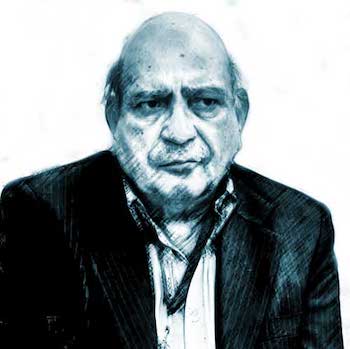
The chair of the Mo Ibrahim Prize Committee, Festus Mogae, a former president of Botswana and himself a recipient of the prize, said that Issoufou had “led his people on a path of progress.” The committee noted that Issoufou had faced “severe political and economic issues.” Niger in the best of times is one of the poorest countries in the world, facing recurrent, severe drought. It has been buffeted by jihadi terrorism, a host of economic issues, and COVID-19. Unlike many other African presidents, Issoufou did not try to remain in office beyond his constitutionally mandated two terms by amending the constitution or pursuing other extralegal means. Since its inception in 2007 the Ibrahim Foundation has granted the award to only seven other presidents. On eight occasions it found no eligible candidate. [see also: https://humanrightsdefenders.blog/2018/02/12/mo-ibrahim-prize-2017-to-ellen-johnson-sirleaf/]
However, there is some criticism of this choice. e.g. from Sebastian Elischer, Associate Professor of Political Science, University of Florida, who writes that:
“During his time in office, his regime has had a heavy-handed reaction to dissent. It also hasn’t upheld the law. In 2017 students protesting for better living and studying conditions were arrested and injured; there were even some deaths. The same is true for broader protests denouncing corruption and calling for improved living conditions. Hundreds of civil society activists found themselves in prison without due process…
In addition, Amnesty International identified a recent surge in human rights violations in Niger. For instance, journalists reporting critically on the government’s war against Boko Haram or on corruption within the state bureaucracy frequently faced expulsion or arbitrary arrest. When Issoufou took office in 2011, the World Press Freedom Index ranked Niger 29th worldwide. In 2020 Niger occupies position 57. This constitutes a significant decline.“
In February 2021 Defenddefenders announced Sandra Aceng as Human Rights Defender of the Month Sandra Aceng is an outspoken and energetic woman human rights defender (WHRD). She is a gender and ICT researcher and policy analyst for Women of Uganda Network (WOUGNET) where she coordinates the Women ICT Advocacy Group, advocating for internet access for all. In addition, she writes on various platforms such as Global Voices, Freedom House, and Impakter Magazine. Her regular contributions to Wikimedia Uganda often focus on profiling WHRDs, female politicians, and journalists. “After Uganda’s January [2021] elections, many female politicians joined parliament. We want to increase their online visibility. For example, most of the profiles on Wikipedia are on men, so we need to close the gender digital divide,” Sandra says.
After Uganda’s January [2021] elections, many female politicians joined parliament. We want to increase their online visibility. For example, most of the profiles on Wikipedia are on men, so we need to close the gender digital divide.
Having grown up in the digital age, the 27-year-old is a digital native and mainly focuses on defending women’s rights online. Her employer WOUGNET empowers women through the use of ICT for sustainable development. Their three main pillars are information sharing and networking, gender and ICT policy advocacy, and providing technical support to WOUGNET staff, beneficiaries, and members. As a Programme Manager, Sandra analyses internet and ICT policies to ensure that they are gender inclusive. She has noticed that oppressive patriarchal structures are shifting and perpetuating online. Part of her work is to document women’s rights violations and gather evidence, but she has also learned that it’s not enough to just talk about statistics. To truly understand the problems, it is important to talk to the victims and listen to find out what they face, she says.
Having experienced some forms of online gender-based violence (GBV) herself, she knows how stressful and draining it can be. On top of receiving non-consensual content, she also felt pressure to keep quiet, women are not supposed to complain, she says. As a WHRD, she is used to the subtle pressure that women not abiding by patriarchal gender norms experience. A continuous trickling of seemingly small questions can be rather stressful: “Why are you so loud and outspoken as a woman? When will you get married? How will you take care of your family if the authorities come for you? These kinds of questions make me feel uncomfortable, they make me wonder if I am doing the right thing,” Sandra shares, “but if we want online GBV to end we also need to end these harmful gender stereotypes. Establishing women’s rights is a slow process and keeping quiet won’t speed it up.”
Why are you so loud and outspoken as a woman? When will you get married? How will you take care of your family if the authorities come for you? These kinds of questions make me feel uncomfortable, they make me wonder if I am doing the right thing.
There is still a lot of work ahead of Sandra and her fellow Ugandan women’s rights activists. She recently researched digital rights violations during the COVID-19 pandemic and struggled to find female interviewees. Female journalists reporting on politically sensitive topics experienced reprisals like rape, but due to stigma and worries how this will affect their future, they were not willing to speak out. While male journalists on the other hand expressed themselves freely: men are often perceived as bold and brave, making it easier to speak out on reprisals and rights violations they endured.
But the more women speak out, the easier it gets, Sandra is convinced. “It really motivates me when I see that other women have faced the same kind of challenges with online violence, and they have dealt with it. Whatever I go through, it’s not the end of life. Hearing other stories helps me to keep working hard, to be a better version of myself and to go beyond the difficulties.” Fighting the digital gender divide is Sandra’s way to make sure that it gets easier for women to speak out and be loud.
On 12 March 2021 the NGO ‘Chinese Human Rights Defenders‘ announced that human rights defenders Li Yufeng and Li Qiaochu are recipients of the seventh Cao Shunli Memorial Award for Human Rights Defenders. The decision to give this year’s award to both Ms. Li Yufeng and Ms. Li Qiaochu recognizes their long-standing civil society activism to promote protection of human rights in China. Both recipients are currently detained in China for their human rights activism.
Cao Shunli died on March 14, 2014, after police denied her adequate medical treatment. Police detained Cao Shunli to prevent her from attending a session of the UN Human Rights Council and an international human rights training in Geneva. Last year on the fifth anniversary of Cao Shunli’s death, several UN independent human rights experts renewed their call for an independent investigation. In calling for justice for Cao, the experts said, “Cao Shunli’s case is emblematic of the struggle that many human rights defenders in China face.” Chinese President Xi Jinping has repeatedly underlined China’s efforts to “safeguard the international system with the UN at its core” and yet the tragic death of Cao Shunli highlights the extraordinary lengths the Chinese government has gone into to stop its own citizens from freely cooperating with the UN human rights operations.
Meet the honorees
Li Yufeng, 63, human rights defender, is currently detained by the Chinese government for her rights advocacy. Li began petitioning in the early 2000s, seeking legal accountability for the forced eviction and demolition of her home by government backed developers. The obstacles she encountered and the punishments she experienced over the years led her to join and support actions with other victims and activists to seek justice. Li actively campaigned for the abolition of “re-education through labor”, a now-defunct system of administrative detention. Li has annually memorialized the victims of the 1989 Tiananmen Massacre.
Li Yufeng was seized by police in October 2015 and criminally detained on suspicion of “gathering a crowd to disrupt order of a public place” and subsequently arrested in a clear act of reprisal for her human rights advocacy work. Li was tried in closed-door proceedings and sentenced to 4-year in January 2017. Li was released in February 2019. But soon after, in July 2019, police detained Li again at Jiaozuo Detention Center in Henan Province to punish her for carrying on rights advocacy.
Li Qiaochu, 30, has long been a human rights advocate against gender-based violence, an advocate for labour rights, and for the building of civil society more broadly. Ms. Li graduated from Renmin University, and earned a master’s degree in public policy from the University of York in England in 2015. She went back to China to work as a research assistant at Tsinghua University.
Li Qiaochu is currently detained at the Linyi City Detention Center in Shandong, after police took her into custody on February 6, 2021. Li Qiaochu had posted many tweets to expose details of torture of detained legal advocate Xu Zhiyong and lawyer Ding Jiaxi. Li Qiaochu is likely targeted in retaliation for her engagement with UN human rights mechanisms.
In 2017, Li Qiaochu volunteered to provide information and resources to affected migrant workers when Beijing authorities forcibly removed them from the city. Li increased visibility of China’s #MeToo movement by compiling data on sexual harassment, garnered greater publicity to combat the exploitative “966” work culture. Li sought to support family members of China’s detained and persecuted prisoners of conscience by speaking out publicly about their plight. When COVID-19 broke out, she participated in online efforts to provide much-needed PPE to sanitation workers in Beijing. On 31 December 2019, Li was summoned by police, and she was subsequently held incommunicado from 16 February 2020 to 19 June 2020.
The 19thGeneva’s International Film Festival and Forum on Human Rights (FIFDH) has wrapped its first digital edition with the announcement of its winners. Running from 5 to 14 March, the event gathered nearly 45,000 people who watched the films, debates and various content available online. “While we regret not having been able to open this Festival to a physical audience, some of the experiments carried out this year will be perpetuated. We must pay tribute to the FIFDH team, which has been able to adapt to many challenges with increased energy,” mentioned general director Isabelle Gattiker.
Starting with the Creative Documentary Competition, the jury headed by Ukrainian filmmaker Oleg Sentsov, and featuring Lamia Maria Abillama, Yulia Mahr, and Arnaud Robert, bestowed the Grand Prize of Geneva valued at CHF 10,000 – offered by the city and state of Geneva – upon Shadow Game by Eefje Blankevoort and Els Van Driel. The jury’s statement mentions that the film “deals with a crucial issue in modern time: young migrants alone on their road, trying to cross boundaries and as they say: ‘playing their game’.With the use of videos and social media material produced by the teenagers themselves, it has innovative filmmaking, and it is pushing cinematic boundaries in many ways.”
Shadow Game also picked the Youth Jury Prize, as it “brings to our attention the fact that we need not look far to find human rights’ violations. This confrontation makes it necessary to take greater responsibility at the sight of this injustice and to abandon the often-stereotypical image of migrants,” the jury stated.
The CHF 5,000 Gilda Vieira de Mello Prize in tribute to her son Sergio Vieira de Mello, went to Downstream to Kinshasa [+] by Dieudo Hamadi for its “powerful and brave character-orientated filmmaking, about reparations for forgotten communities who endured atrocities (the Six-Day War in the Democratic Republic of the Congo in 2000). This film is haunting and shows such a rage of the protagonists seeking justice and reparations.” Once Upon a Time in Venezuela [+] by Anabel Rodríguez Ríos received a Special Mention by the jury as the director “approaches the protagonists in a very crude and yet subtle way, showing brilliantly the inextricable relation between industrial pollution, political and electoral constraints as well as citizens’ welfare.”
In the Fiction Competition, the Grand Prize Fiction and Human Rights, valued at CHF 10,000 and offered by the Hélène and Victor Barbour Foundation, went to Veins of the World [+] by Byambasuren Davaa as it “points beyond itself, towards a formless totality, a shared human experience often forgotten and instantly remembered where the beauty and pain of a profoundly essential human longing is unearthed and laid bare,” according to the jury presided by American filmmaker Danielle Lessovitz, with Santiago Amigorena, Laïla Marrakchi and Philippe Cottier. The film also won the Youth Jury Prize.
The Special Mention went to Should the Wind Drop [+] by Nora Martirosyan, “an important film, especially in the current context where borders are moving and closing and where it is difficult to travel.”
Finally, in the Grand Reportage Competition, the CHF 5,000 Prize of OMCT (World Organisation Against Torture), went to Coded Bias by Shalini Kantayya which, according to the jury, “powerfully depicts the threats that artificial intelligence poses to our liberties, including by hardwiring into algorithms racist and sexist biases.” The Public Award went to Dear Future Children [+] by Franz Böhm, which received CHF 5,000 from the FIFDH.
Starting in 2018, Front Line Defenders changed the format of the Award, naming 5 Regional Award Winners, with one chosen as the Global Laureate by a jury comprised of representatives of Ireland’s parliament from a number of political parties. In 2021, Front Line Defenders took the decision to name all 5 regional winners as Global Laureates, in response to the overwhelming positive response to the greater visibility and recognition of the winners of the Award.
For each region of the world (Africa; Americas; Asia-Pacific; Europe & Central Asia; and Middle East & North Africa) there will be one winner selected and Front Line Defenders will recognize all five as the 2021 Front Line Defenders Award Laureates.
In addition to the Award, winners will receive:
a modest financial prize;
a security grant to improve their security measures;
collaboration with Front Line Defenders for media work in recognition of the Award;
advocacy by Front Line Defenders related to the Award and the work of the winners;
an event co-organized by the HRD, local partners and Front Line Defenders to give visibility to the Award in the winners’ countries (as determined and guided by the winners);
the Global Laureates will attend a ceremony in Dublin at a date to be determined;
ongoing security consultation with Front Line Defenders
If you would like to nominate a HRD for the 2021 Front Line Defenders Award for Human Rights Defenders at Risk, please follow this link to the secure online nomination form
As the person, group or organisation making the nomination, you will be consulted by Front Line Defenders to verify the information submitted and possibly for additional information. Please complete all parts of the nomination form to the best of your ability.
Please submit nominations via the online form. If there are any problems using the form, or if you have any questions, please contact: campaigns@frontlinedefenders.org
It now transpired that Turkmenistan on March 8 stopped broadcasting the news TV channel Euronews, which showed the footage about the 2021 Martin Ennals Award Ceremony for Human Rights Defenders and one of its finalist, the Turkmen journalist Soltan Achilova, independent foreign-based news website Chronicles of Turkmenistan reported.
The 2021 Award Ceremony of the most prestigious award for human rights defenders was held in an online format on 11 February.
Akhal-Teke is a weekly Eurasianet column compiling news and analysis from Turkmenistan. It added on 9 March: Euronews is about as anodyne a news channel as one could hope to find. So much so that the Turkmen Foreign Ministry in January 2020 hosted the channel’s chief business development officer, Roland Nikolaou, for talks on future cooperation. That makes the inclusion of Euronews among the ranks of undesirables all the more remarkable.
Turkmenistan has the backup option of Mir 24, a Euronews clone based out of Moscow and focused on news from Commonwealth of Independent States members. Turkmenistan is an associate member of the post-Soviet bloc. The station began broadcasting inside the country in December 2020, following a cooperation deal signed with the Turkmen state broadcaster a month earlier.
Mir 24 also produces content, of the most unimaginably inoffensive kind, from inside the country. Recent reports have included one on a highly chaste beauty contest for female students, several touching upon celebrations for International Women’s Day and a piece about the creation of a national annual holiday devoted to the Alabai dog breed.
Blocking Euronews is of little import in the larger scheme of things. As RFE/RL wrote on March 7, police are adopting invigorated measures to make sure that smartphone owners are not using VPN services to circumvent censorship. The broadcaster said that authorities in the city of Mary are stopping people in the street for spot inspections of their phones.
The cause of this alarm is the continued seepage of news belying the absurd government insistence that the country has experienced no cases of COVID-19.
This year includes an honorary award for seven women leaders and activists from Afghanistan who were assassinated for their dedication to improving the lives of Afghans:
Fatema Natasha Khalil, an official with the Afghanistan Independent Human Rights Commission who was killed, along with her driver, in June 2020 by an IED in Kabul, on her way to her office.
General Sharmila Frough, the head of the Gender Unit in the National Directorate of Security (NDS) was one of the longest-serving female NDS officers, having served as chief of the anti-kidnapping division and working undercover combating criminal networks. General Frough was assassinated in an IED explosion targeting her vehicle in March 2020 in Kabul.
Maryam Noorzad, a midwife who served remote locations in Wardak and Bamyan provinces before working for Médecins Sans Frontières Kabul PD13 hospital. On May 12, 2020, three gunmen attacked the maternity ward of the hospital, but Maryam refused to leave her patient, who was in labor. Maryam, her patient, and the newborn baby were killed in the delivery suite.
Fatima Rajabi, a 23-year-old police officer originally from Ghazni province and a member of the anti-narcotics division. She was traveling to her home village in Jaghori district in a civilian minibus in July 2020 when the Taliban stopped the vehicle and took her captive. Two weeks later, the Taliban killed her and sent her remains, which had gunshot wounds and signs of torture, to her family.
Freshta, daughter of Amir Mohamed, a 35-year-old prison guard with the Office of Prison Administration. She was walking from her residence in Kandahar City to a taxi on her way to work when she was murdered by an unknown gunman on October 25, 2020.
Malalai Maiwand, a reporter at Enikas Radio and TV, was shot and killed, along with her driver, by a gunman on December 10, 2020, in an attack on her vehicle in Jalalabad. Malalai was not the first in her family to be targeted. Five years earlier, her mother, an activist, was also killed by unknown gunmen.
Freshta Kohistani, a 29-year-old women’s rights and democracy activist, was assassinated by unknown gunmen near her home in Kapsia province on December 24, 2020. Kohistani regularly organized events advocating for women’s rights in Afghanistan and used social media as a platform for her messaging.
The other 2021 awardees are:
Belarus – Maria Kalesnikava
Ahead of the August 9, 2020, presidential election, Belarusian women emerged as a dominant political force and driver of societal change in Belarus due in no small part to Maria Kalesnikava. After authorities jailed or exiled the three most popular male opposition candidates, Maria and her partners mounted a historic and sustained challenge to the 26-year rule of Alyaksandr Lukashenka. Maria continues to be the face of the opposition inside Belarus, courageously facing imprisonment in the aftermath of the disputed election. Despite her detention, Maria continues to keep the democratic movement alive inside Belarus and serves as a source of inspiration for all those seeking to win freedom for themselves and their countries.
Burma – Phyoe Phyoe Aung
An emerging leader who is likely to play a role in shaping the country in the coming years, Phyoe Phyoe Aung is the co-founder of the Wings Institute for Reconciliation, an organization that facilitates exchanges between youth of different ethnic and religious groups. Her work promotes peacebuilding and reconciliation and enables a vital dialogue on federalism and transitional justice. She organized a 2015 protest march from Mandalay to Yangon that was violently suppressed by the Myanmar Police Force as it neared Yangon, and she and her husband were arrested and imprisoned. Phyoe Phyoe was released in April 2016 after 13 months as part of a broad pardon of political prisoners facing court trials. See also: https://humanrightsdefenders.blog/2016/05/11/finalists-runners-up-front-line-defenders-award-human-rights-defenders-2016-announcement/#more-7981
Cameroon – Maximilienne C. Ngo Mbe
Maximilienne C. Ngo Mbe has demonstrated extraordinary leadership, courage, and perseverance through adversity in promoting human rights in Cameroon and Central Africa. She has been an outspoken voice among civil society actors, often sacrificing her personal safety, in the push for a peaceful solution to the Anglophone crisis in Cameroon. She has called for an end to human rights abuses committed by separatists and security forces in the Northwest and Southwest regions and by security forces in the Far North. Maximilienne has also spoken out against the increased constraints placed on civil society, journalists, and political opposition by the Government of Cameroon. Her commitment to promoting human rights has been unwavering despite the intimidation, threats, and assault she has endured.
China – Wang Yu
Wang Yu was one of the country’s most prominent human rights lawyers until her arrest and imprisonment following China’s nationwide persecution of lawyers and rights advocates during the “709 crackdown.” She had taken on multiple politically sensitive cases, representing activists, scholars, Falun Gong practitioners, farmers, and petitioners in cases involving a wide array of issues, including women’s and children’s rights, and the rights to religion, freedom of expression, assembly, and association. She is now under an exit ban and has been harassed, threatened, searched, and physically assaulted by police since she began to take on rights abuse cases in 2011. [see also https://humanrightsdefenders.blog/2016/08/02/another-chinese-human-rights-lawyer-wang-yu-spontaneous-video-confession/]
Colombia – Mayerlis Angarita
Mayerlis Angarita has courageously advanced peace and human rights in Colombia, often at great personal risk. Her work has improved the security, livelihoods, and resilience of countless women leaders, conflict victims, and her community. Finding healing in storytelling after her own mother was forcibly disappeared during Colombia’s conflict, she founded the civil society organization “Narrate to Live,” which now serves over 800 women victims of conflict. Additionally, after the most recent attempt on her life, she engaged the highest levels of the Colombian government to advance a comprehensive action plan to prevent violence against women leaders in her community. Her constructive engagement across 27 government entities, civil society, and the international community has been key to the plan’s success and propelled it to become a model for human rights defender protection throughout Colombia.
Democratic Republic of the Congo – Julienne Lusenge
Since 1978, Julienne Lusenge has been the leading female activist in Democratic Republic of the Congo (DRC) fighting against gender-based violence (GBV) and the promotion of the rights of women and girls in conflict situations. In 2000, she created Women’s Solidarity for Peace and Integral Development, the DRC’s foremost organization defending the rights of women and girls against impunity for GBV. Julienne’s vocal testimony has contributed to the adoption of international agreements such as UN 1820, which recognizes sexual violence as a weapon of war. Julienne has touched the lives of millions of women across the DRC, harnessing the attention of the international community to acknowledge and act on the extent of sexual violence shattering DRC’s communities.
Guatemala – Judge Erika Aifan
Judge Erika Lorena Aifan is a trial judge working in the High-Risk Criminal Court with responsibility for high-impact crimes. She has presided over high-profile corruption and war atrocity cases, leading to defamation and threats of violence against her. Despite these challenges, Judge Aifan persisted as a Guatemalan judge independent of political influence. She has demonstrated determination and fortitude in upholding the rule of law in Guatemala. Despite the strong opposition she has faced throughout her tenure, Judge Aifan has become an icon in Guatemala in the fight against corruption, efforts to increase transparency, and actions to improve independence in the justice sector.
Iran – Shohreh Bayat
When Shohreh Bayat boarded her flight on her way to the 2020 Women’s Chess World Championship, she had no idea she might be seeing her native Iran for the last time. Shohreh, the first female Category A international chess arbiter in Asia, was photographed at the Championship without her hijab visible, which is compulsory in Iran. Within 24 hours, the Iranian Chess Federation – which Shohreh had previously led – refused to guarantee Shohreh’s safety if she returned to Iran without first apologizing. Fearing for her safety and unwilling to apologize for the incident, Shohreh made the heart-wrenching decision to seek refuge in the UK, leaving her husband – who lacked a UK visa – in Iran. In that moment, Shohreh chose to be a champion for women’s rights rather than be cowed by the Iranian government’s threats.
Nepal – Muskan Khatun
Muskan Khatun has been instrumental in bringing about new legislation criminalizing acid attacks and imposing strong penalties against perpetrators in Nepal. When Muskan was 15, she was critically injured in an acid attack after she rejected a boy’s romantic propositions. With the help of a social worker, Muskan lobbied for stronger legal action against the perpetrators of acid attacks under duress of threats and the strong social stigma associated with acid attack victims. She went before a parliamentary committee, wrote a letter to Nepal’s Prime Minister, and eventually met with him in person, to request a stronger law. Within a year of her attack, Nepal’s President issued an ordinance with harsh penalties for acid attacks and regulations on the sale of acids, a testament to Muskan’s significant advocacy.
Somalia – Zahra Mohamed Ahmad
For more than 20 years, Zahra Mohamed Ahmad has been at the forefront of defending human rights in Somalia, especially for its most vulnerable groups. As an accomplished lawyer, Zahra began providing legal aid, for sexual and gender-based violence (SGBV) survivors, women on remand status, and women in pre-trial detention. Zahra is the founder of and legal advisor for the Somali Women Development Center, an organization that reports on human rights violations and cases of abuse; supports survivors through legal assistance; established Somalia’s first free hotline service to combat SGBV; and operates one-stop centers for SGBV survivors, mobile legal clinics, family care centers, safe spaces for women and girls, and community child protection centers for internally displaced children.
Spain – Sister Alicia Vacas Moro
A registered nurse, Sister Alicia Vacas Moro ran a medical clinic in Egypt for eight years, helping 150 low income patients a day treat their maladies. She then moved to the biblical town of Bethany to help an impoverished Bedouin community, especially women and children. She set up training programs for women that provided them with previously unavailable economic opportunities, and established kindergartens in Bedouin camps, providing an educational foundation for children. In an environment shaped by the Israeli-Palestinian conflict, Sister Alicia also assisted traumatized refugees and asylum seekers, a job she continues to perform on a larger scale in her current role as the regional coordinator for the Comboni Sisters in the Middle East. When the COVID-19 pandemic struck northern Italy, she flew to Italy to assist and treat fellow sister nuns, undeterred by extreme danger to herself.
Sri Lanka – Ranitha Gnanarajah
Ranitha Gnanarajah, a lawyer, continues to fight for and defend the rights of the marginalized and vulnerable communities in the country, despite threats and challenges by the state. Ranitha has dedicated her career to accountability and justice for victims of enforced disappearances and prisoners detained often for years without charge under Sri Lanka’s Prevention of Terrorism Act by providing free legal aid and related services. As an individual personally affected by the conflict and based on her extensive experience working with victims and their families, Ranitha has demonstrated tremendous passion and dedication to justice and accountability, especially for Sri Lanka’s most vulnerable populations.
Turkey – Canan Gullu
Canan Gullu has been an activist and organizer for 31 years and is the president of the Turkish Federation of Women’s Associations, an umbrella organization of women’s NGOs; she leads186 branches and 52,500 members. Canan has been a steadfast champion of gender equality, working to promote women’s participation in governance, labor force, and education. In 2007, the Turkish Federation of Women Associations established the first emergency hotline for victims of violence in Turkey, which continues its operations. Over the past two years, Canan launched an education and advocacy campaign focused on failures in the Turkish government’s implementation since 2012 of the Istanbul Convention, the Council of Europe’s Convention on preventing and combating violence against women and domestic violence. Canan’s activism has been critical to educating the public about the convention and reinforcing the need to combat gender-based violence, which quelled some politicians’ calls for Turkey’s withdrawal.
Venezuela – Ana Rosario Contreras
As president of the Caracas Nurses’ Association, Ana Rosario Contreras has been on the front lines in the fight for the rights of healthcare professionals, patients, and labor unions. Contreras’ fierce activism has generated widespread support from the Venezuelan people and is at the center of the civil-political movement pushing for democratic change. In a climate where the government routinely jails, tortures, harasses, threatens, or restricts the movement of its opponents, Contreras defends citizens’ rights at great personal risk. She has advocated for labor rights and has worked tirelessly to ensure that healthcare workers could receive a subsidy through Interim President Juan Guido’s Health Heroes program..
Ales Bialiatski laying flowers at a memorial to Aliaksandr Taraikouski, a protester who was killed during a demonstration on August 10, 2020. Credit: HRC Viasna
On February 16, Ales Bialiatski’s home and the offices of his human rights organisation Viasna in Minsk were raided by police. He was targeted along with more than 40 other human rights defenders, journalists and their relative in towns across the country, with reports of officials using excessive force while seizing phones, computers and credit cards.
Bialiatski, one of Belarus’ most prominent human rights defenders, says the authorities were looking for any evidence of organisations or journalists “financing” peaceful protests against the country’s president Alexander Lukashenko. The raids are the latest development in the government’s brutal crackdown on mass protests which have been ongoing in the country since Lukashenko claimed victory in a rigged election last August. [see also: https://humanrightsdefenders.blog/tag/ales-bialiatski/]
The authorities have recently opened a criminal case against Viasna and Bialiatski himself. A former political prisoner who spent nearly three years jailed in Minsk, he says that, by the time this article is published, he may once again be behind bars.
“Millions of people want change, and the answer of the government is repression,” says Bialiatski, speaking to Geneva Solutions from the Right Livelihood Foundation offices in Geneva. He and Viasna received the prestigious award in 2020.
Seven months on from the election, more than 33,000 people have been detained, and there are widespread reports of police brutality, arbitrary arrests, kidnapping, and torture of detainees.
The human rights situation in Belarus is, in Bialiatski’s words, “an absolute catastrophe”. “The situation is quite horrible because it’s not only human rights defenders that suffer,” he explains. “It’s all levels of society. Anybody who can think.”
Over half a year since the first protests broke out in the capital Minsk, he says the authorities are still tightening their grip on personal freedoms and carrying out grave human rights violations, targeting activists, journalists and anyone who opposes the regime. But the people of Belarus are not giving up.
What’s going on in Belarus? The government’s crackdown in Belarus follows mass protests in the country last summer after a fraudulent election in which Lukashenko, known as “Europe’s last dictator”, claimed to have won 80 per cent of the vote. The poll is widely accepted to have been rigged to extend his 25-year rule, prompting the largest demonstrations in the country’s history.
Elections in Belarus have never been considered free and fair by many international observers. Bialiatski has been working to advocate for democratic freedoms in the country since his early twenties, when the country was still under Soviet rule.
He founded Viasna in 1996, five years after Belarus gained independence from the Soviet Union and two years after Lukashenko came to power. The organisation’s initial aim was to help thousands of protesters arrested during mass pro-democracy rallies after Lukashenko brought in sweeping constitutional reforms that consolidated his authoritarian rule.
“[My colleagues and I] thought that this work would finish in a few years because the problem would disappear,” says Bialiatski. “But it’s been 25 years and there’s still work to do. It’s never ended. Unfortunately, the human rights situation never got better.”
Accusations of rigged elections, brutal suppression of civil rights and corruption have been hallmarks of Lukashenko’s half a century in power. However, Bialiatski says last year’s poll acted as a catalyst. It was then that Belarusian society finally “woke up” and demanded change.
Breaking the silence. In the run-up to elections in Belarus in 2020, a number of opposition figures became extremely popular, including former members of Lukashenko’s government and Sergei Tikhanovskya, a well-known blogger who travelled the country interviewing former loyal supporters of the ruler about why they had turned against him.
Although Lukashenko jailed or exiled many of his opponents, he did not see Sviatlana Tsikhanovskaya – who ran in the place of her husband when he was imprisoned – as a significant threat. However, Tsikhanovskaya became hugely popular, gaining the support of fellow opposition figures and attracting large crowds of supporters to her rallies.
Events in 2020 drastically impacted the Lukashenko’s loyal following and damaged his reputation. The country’s already dire economic situation was exacerbated by the Covid-19 crisis, which the ruler has fervently denied, refusing to bring in restrictions and joking that the virus could be fought with vodka and work in the country’s potato fields. “Lukashenko was laughing into the world’s face and denying the existence of the virus, while people all around were dying,” says Bialiatski.
Tsikhanovskaya was widely expected to win the vote in a landslide. Although independent polling is illegal in Belarus, making it difficult to measure her lead in the run up to the election, some independent exit polls conducted outside polling stations in foreign embassies on election day showed her to have received 79.69 per cent of the vote while Lukashenko received just 6.25 per cent.
When the government announced it had won 80 per cent of the vote, claiming that Tsikhanovskaya had received less than 10 per cent, Belarusians realised the election had been rigged. “It was an open lie in the face of the people,” says Bialiatski. “Of course there were rallies – nobody believed the result.”
“The very first mass protests on the street were a result of despair and disappointment and disagreement with this injustice that had happened in the country,” he adds.
Thousands of people took to the streets across the country to peacefully protest the result, but they were met with a brutal crackdown from authorities. In Minsk, which saw the worst of the violence, police and the army deployed water cannons, stun grenades and rounds of rubber bullets against protesters. Police vans were reportedly driven into crowds and hundreds were injured, with journalists and independent observers apparently targeted.
As reports circulated of extreme violence against protesters, including systematic torture of detainees by police and security forces, thousands more Belarusians rallied. Over 200,000 people took part in the largest protest in the country’s history, and there were hopes that the pressure may finally topple Lukashenko.
However, the result was an even more brutal crackdown, in which thousands were injured and arrested. “Unfortunately, the peaceful protests didn’t lead to a change of government as was hoped and expected,” says Bialiatski. “Instead, daily repressions started against different people at different layers of society, at different organisations and activists.”
Crackdown on human rights and freedom of speech. According to Viasna, over 2,300 criminal cases have been opened against human rights defenders and activists since the protests erupted in August 2020. In February alone, during the latest spate of arrests, a further 511 people were detained, 102 people received sentences and 49 people imprisoned.
There is currently a criminal case open against Viasna and Bialiatski himself for inciting “public disorder” through allegedly financing ongoing protests by paying the huge fines imposed on protesters. He says the latest raids in which police seized phones, laptops and credit cards were an attempt to collect evidence. “This is considered as financial proof against the regime,” he explains. “They are not allowing us to exercise our human rights protection work, which is our right.
“We are working all the time on the edge of the knife because [we] don’t know when this criminal case will take force and [we] will be sentenced for it,” he says.
It’s not just activists who are being targeted. According to Viasna, there are currently 258 political prisoners in the country, including journalists and bloggers. On 17 February, two journalists, Katsiaryna Andreyeva and Darya Chultsova, both of the Polish-funded Belsat TV channel, were convicted of violating public order and sentenced to two years in prison for covering the protests.
“They are looking for ‘criminals’ among those who help political prisoners and write about the struggle of Belarusians for freedom,” wrote Tsikhanovskaya on Twitter in response to the latest raids. Tsikhanovskaya was forced to flee to Lithuania following last year’s elections.
“But in search of criminals, they should look into the offices of the riot police, the GUBOPiK (interior ministry directorate) and all those responsible for the repression.”
A number of Bialiatski’s colleagues are incarcerated in the country’s jails, imprisoned for as little as sending food parcels to jailed protesters. A former political prisoner himself who spent nearly three years behind bars from 2011-2014, Bialitksi knows all too well how terrible the conditions in Belarus’ prisons can be. With widespread reports of detainees being tortured and subjected to brutal treatment, he says he’s deeply concerned for their welfare.
“How people are treated in Belarusian jails is not a humane way to treat people,” he says. “I really hope that my colleagues and my friends can survive it and I really hope that one day they will be released.”
Pressure from the international community. Last summer’s crackdown prompted western countries to impose sanctions on Minsk, but Lukashenko has refused to resign, bolstered by diplomatic and financial support from long-standing ally Russia. Tikhanovskaya, who remains in Lithuania after the country rejected the Belarusian authority’s request for her extradition, is leading a campaign to encourage external pressure on Belarus in the hope that tougher measures against the regime may succeed in toppling Lukashenko.
Her efforts could be paying off. In December, the EU imposed a third round of economic sanctions against key individuals and companies in Belarus, while in February the Biden administration expanded the list of senior officials in the country who are no longer welcome in the United States.
Tikhanovskaya has also created a Coordination Council, effectively a government in waiting, which is headed by Bialiatski. The council is drafting a new constitution and keeps in contact with key figures in Belarus to ensure that the exiled opposition does not become detached from those who are keeping up the pressure on Lukashenko from within.
The situation in Belarus is also being closely watched by the United Nations. Human Rights chief Michelle Bachelet recently presented her report on the aftermath of August’s elections to the 46th session of the Human Rights Council at the end of February. Bachelet warned of a “human rights crisis” in the country and called for an immediate end to the policy of systematic intimidation used by the Belarusian authorities against peaceful protesters and for the release of political prisoners.
Viasna has supported a number of other rights organisations including Amnesty International and Human Rights Watch in calling on the Human Rights Council to establish a new mechanism on Belarus. Bialiatski explains that the situation in the country must be kept high up on the international agenda if there is any hope of bringing down Lukashenko’s regime.
“It is very important to continue to exercise international pressure on Belarus, pointing out that human rights have to be preserved in the country,” he says. “This help of international society is required today – not tomorrow, today. Because tomorrow it might be too late.”
Hope for the future. Bialiatski says it is impossible to predict what the coming weeks, and even days, will bring to the people of Belarus. He says the latest crackdown has had a “very, very intimating result. People are scared. ”
“One thing is for sure,” he continues. “The administrative and criminal charges, and punishments and sentences against the activists and human rights defenders will get harsher. This I can guarantee. The current power is continuing to tighten the screws.
“I ask myself often how long the people can continue to bear this pressure, and if they will continue to bear it much longer.”
There are hopes that the spring could bring another wave of protests in Belarus. Speaking during a trip to Finland last week, exiled opposition leader Tikhanovskaya said she expected mass protest against Lukashenko to start up again soon after a lull in public demonstrations due to the authorities brutal suppression.
Bialiatski shares some of her cautious optimism. “The crisis has not gone, we are not beyond it,” he says. “The disagreement, disapproval and unhappiness of the people is so strong that I think there will be another breakout soon.”
He says that it is only a matter of time before Lukashenko loses his grip on Belarus – be it a result of peaceful protests, international pressure or the deteriorating economic situation in the country, although most likely a combination of all three. “This is the first time we have clearly seen that the current regime is in the minority and this gives us a significant certainty that the regime, the current power, cannot stay much longer,” he says.
After spending most of his life tirelessly working to uphold human rights in the face of relentless persecution at the hands of the Belarusian authorities, Bialiatski has managed to retain faith that his country will one day become a free democracy. What gives him hope that this could finally be the turning point in Belarus’s history? The country’s young people, he says, who have led the movement against Lukashenko.
“These young people in Belarus who strive for a change have totally different values to Lukashenko and his entourage,” he says. “And it’s difficult to change the minds of young people. They are born with it. They will keep on fighting. ”
This day leads to a plethora of statements and actions. Here a small selection focusing on women human rights defenders:
Credit: UN Women/Yihui Yuan.
Joan Kuriansky – a volunteer with The Advocates For Human Rights – writes: “Celebrating International Women’s Day in 2021 compels us to pause and examine the lessons of the past year- the COVID pandemic, economic distress and the surging mandate of Black Lives Matter. Each phenomenon has made so more visible the challenges that historically face women across the globe. Importantly, these forces have also made it clear how connected we are to each other whether in neighborhoods within miles of our home or across a continent and the extraordinary role that women play in making lives better and more just in every corner of the world. The UN and UNDP estimate that the pandemic will push 47 million more women and girls below the poverty line. Our upcoming workshop at the NGO CSW65 Virtual Forum will highlight the economic and other inequalities women face as a result of the pandemic. Register here: https://bit.ly/3dmVgSk Event link: https://bit.ly/2NhPoiL“
Women have been in the forefront of promoting peaceful solutions to conflict -conflict that has often included the rape and violation of women, the death of those in combat and the destruction of communities. Women have been in the forefront of promoting peaceful solutions to conflict -conflict that has often included the rape and violation of women, the death of those in combat and the destruction of communities. The Soldiers Mother’s Committee in Russia and Chechnya [[https://www.trueheroesfilms.org/thedigest/laureates/3371DC1A-42AE-44BF-E349-26987BF98314], or the Women of Liberia Mass Action for Peace founded by Leymah Gbowe or the 3 co-founders of Black Lives Matter have inspired all of us. And as we documented in our work with the Liberian Truth and Reconciliation Commission, women have a key role to play in the post-conflict and peacebuilding process.], or the Women of Liberia Mass Action for Peace founded by Leymah Gbowe or the 3 co-founders of Black Lives Matter [https://www.trueheroesfilms.org/thedigest/laureates/4f840e00-be5d-11e7-b953-f7f66015c2f3]have inspired all of us. And as we documented in our work with the Liberian Truth and Reconciliation Commission, women have a key role to play in the post-conflict and peacebuilding process.
The WWSF introduces 60 Heroes out of 462 Laureates awarded with the WWSF Prize for Women’s Creativity in Rural Life (1994-2020)
UN Women this year is celebrating women’s leadership in all its forms and calling for women and feminists across the world to claim their space in leadership and decision-making. Presently, only 7.4 per cent of Fortune 500 companies are run by women. Despite progress and many broken records, women continue to be excluded in certain sports. Systemic barriers, gender bias, discrimination and gender stereotypes continue to hold women back from rising in STEM careers. Women and girls have been leading climate action and environmental movements, but men occupy 67 per cent of climate-related decision-making roles. 119 countries have never had a woman leader. Just 25 per cent of national parliamentary seats are held by women.
Around the world, the space for civil discourse and movements is shrinking. The media plays a critical role in amplifying women’s voices and stories and drawing attention to key issues. But, with women holding only 27 per cent of top management jobs in media organizations, More than one-third of women’s employment is in agriculture, increasing women’s access to land and providing better support for women farmers is, therefore, essential. The majority of negotiators, mediators, and signatories in peace processes are still men.
Amnesty International stated that across the Middle East and North Africa (MENA), despite some limited reforms, women continue to face entrenched discrimination and daily violence amid the abject failure of governments to stamp out arbitrary arrests, abductions, assassinations, so-called “honour” killings and other forms of gender-based violence, said Amnesty International, marking International Women’s Day. ..Inadequate government action to protect women from gender-based violence and address impunity has long perpetuated this form of abuse. As a first step, authorities must publicly condemn all forms of gender-based violence and dismantle discriminatory structures that facilitate such abuse – such as male guardianship,” said Heba Morayef. “They must also ensure that the rights of survivors are protected, that survivors can safely access justice and that perpetrators are held to account. Survivors must be able to access adequate shelter, psycho-social support as well as legal and other services.”
All over the world, a female-driven political awakening is taking place. But this is met with prosecution by the State and persecution by self-vigilante groups. Their experiences are marred with patriarchal subordination, sexualised violence, threat and harassment. They face severe retribution and systematic abuse, even at the hands of the State. It is important to have an enabling environment for these soft targets who face heightened risks as compared to their male counterparts. International obligation requires the State to stop criminalising women defenders, write SHRUTIKA PANDEY & MRINALINI MISHRA in The Leaflet of 8 March 2021.
MRT of 8 March 2021 states that International Women’s Day is not celebrated, a struggle is commemorated – that has not ended- in favor of justice, peace and freedom of each one of them. In a strict sense, feminism seeks make gender issues visible. Under that idea, there should be no censorship or exclusion. Nevertheless, What about trans women? While it is true that some people do not agree that they are part of the feminist movement, the reality is that they also suffer from violence, harassment and discrimination. Therefore, they are in the same fight. With that said, we present to you 8 recognized trans women in history
The Media Line of 7 March writes that “Women face uphill climb to equality in the MENA region” Activists and human rights groups paint a daunting portrait of the equality landscape between the genders in the MENA region, as they prepare to mark International Women’s Day, March 8. The coronavirus epidemic, certainly, did not help the plight of women this past year. Still, going forward, the largest issues facing women in the Middle East were entrenched long before the pandemic hit.
In the Gulf Cooperative Council (GCC) countries, women’s rights defenders have it tough. While prominent Saudi women’s activist Loujain al-Hathloul was freed last month after almost three years in prison [see https://www.trueheroesfilms.org/thedigest/laureates/1a6d84c0-b494-11ea-b00d-9db077762c6c], Samar Badawi [https://www.trueheroesfilms.org/thedigest/laureates/eaed8641-4056-4130-a5ff-fb7bf289cece], Nassima al-Sadah, Nouf Abdelaziz and Maya’a al-Zahrani remain in jail after their 2018 arrests on charges of advocating for women’s rights. “Those who are behind bars are the champions for the change that took place,” Khalid Ibrahim, executive director of the Gulf Centre for Human Rights, told The Media Line, referring to women driving.
In UCANews of 8 March 2021 Mary Aileen D. Bacalso, Manila writes that “Millions of women the world over suffer from discrimination, abuse, poverty, gender-based violence and human rights violations, of which enforced disappearance is one of the most cruel forms. Enforced disappearance, which motivated the international community to establish the International Convention for the Protection of All Persons from Enforced Disappearance, especially affects women. On this significant occasion, I remember the faces and voices of women I personally encountered from 50 countries that I visited during my almost three decades of advocacy for the cause of the disappeared. Many of them carried pictures of their loved ones. Some gave me every bit of information with the hope against hope to find light amidst the dark night of the disappeared.”
Euromed uses the occasion for a series of podcast. For our first episode, the story you are about to hear is that of Mozn Hassan, a woman human rights defender and the founder and executive director of Nazra for Feminist Studies, a feminist organisation working in Egypt and the MENA region on gender equality and combatting violence against women. See: https://www.trueheroesfilms.org/thedigest/laureates/38B5C337-72F5-C4DE-BC95-95094B9E3939
The Lawyers for Lawyers Award aims to honour lawyers who have made significant contributions to the protection of the rule of law and human rights in challenging environments. Through the bi-annual Award, Lawyers for Lawyers generates public recognition for the work and outstanding achievements of lawyers at risk. See for the award and its laureates: https://www.trueheroesfilms.org/thedigest/awards/B40861B3-0BE3-4CAF-A417-BC4F976E9CB0