Only a few days remain to submit candidates for the 2022 Martin Ennals Award for Human Rights Defenders. For detials see: https://humanrightsdefenders.blog/2021/04/15/call-for-nominations-martin-ennals-award-2022-with-a-focus-on-digital-rights/
Archive for the 'awards' Category
Reminder: Call for Nominations MEA closes on 30 May
May 26, 2021Ocen Ivan Kenneth from Uganda is Human Rights Defender of the Month
May 24, 2021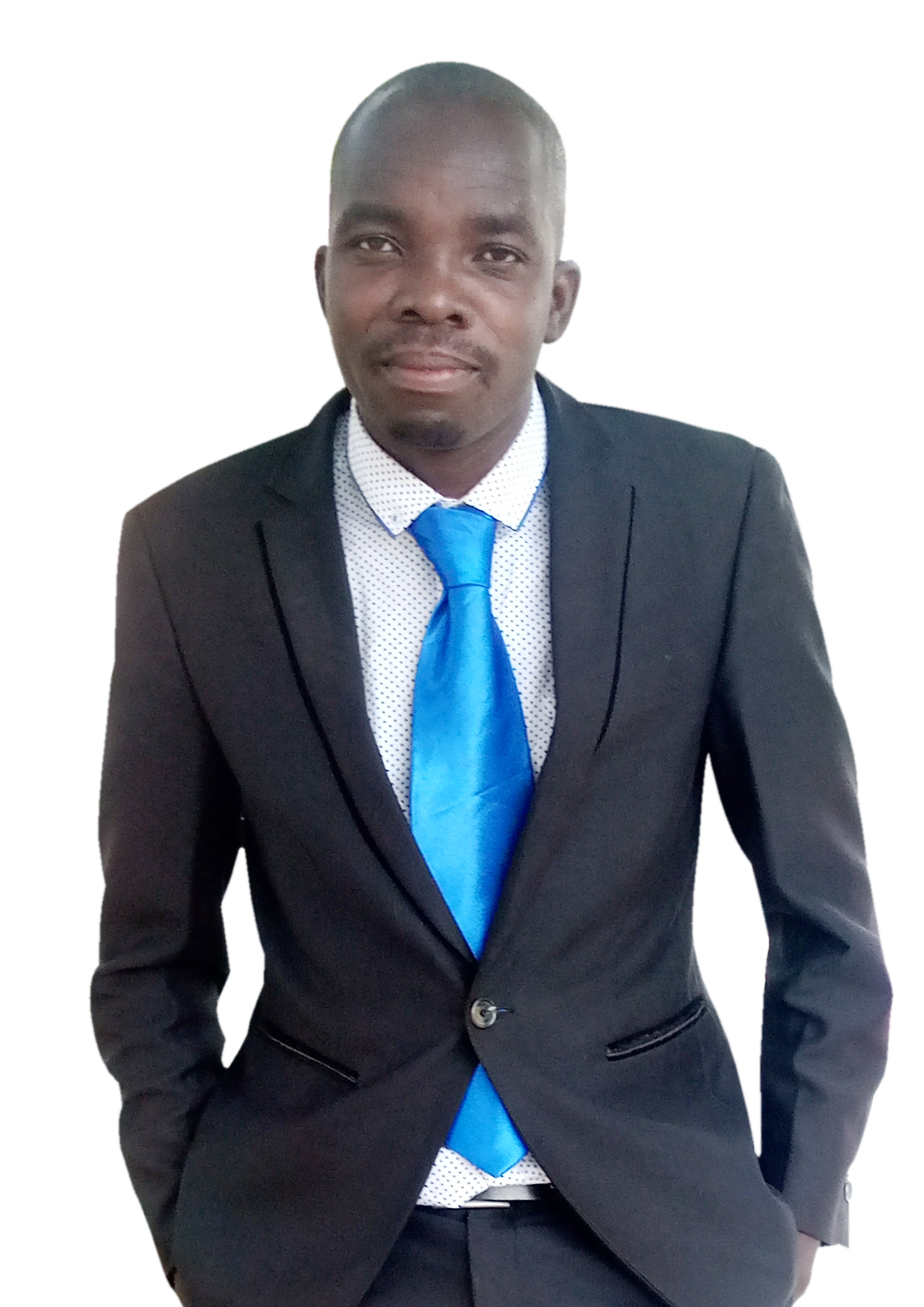
Ocen Ivan Kenneth is a Program Director at Foundation for Development and Relief Africa (FIDRA), with more than 10 years of experience working in the human rights field. Ivan’s ambitions for change focus on building inner peace, defending human rights and empowering local communities using theatre and storytelling. He creates a space where people from the community share their personal stories of trauma and resilience as well as identify mechanisms of healing.
“There may be times when we are powerless to prevent injustice, but there must never be a time when we fail to defend justice.” Ocen Ivan Kenneth Tweet
As an activist, Ivan has faced several challenges including personal threats that sometimes extend to his family and colleagues. His work with victims of conflict related sexual violence also at times takes a toll on him.
“I get moved when speaking to people whose human rights have been violated in some way, or those who have survived sexual violence, or those brutalised by militia. I can see the trauma in their eyes and hear it in their voices. It has always been the most difficult aspect of my job.”
Just like many other human rights defenders, the lack of adequate equipment and limited resources coupled with limited capacity and skills, plus legal restrictions curtail his ability to efficiently execute his work. Despite all these challenges, Ivan’s commitment to keep protecting and promoting human rights remains unwavering.
“After decades of armed conflict, now we are facing another attack, this time affecting our health and life. I am motivated because we are strong resilient workers. We keep resisting this new attack as we have always done by staying together, helping each other, and keeping our spirits high,” he says.
He believes that there should be more work done to support human rights defenders through building their capacity and expertise, strengthening their recognition, and protecting them from threats, risks, and reprisals particularly those who are marginalised or most at risk.
“I believe that current protection measures for human rights defenders in Uganda are insufficient. Particularly protection offered from the government mechanisms towards human right defenders is insufficient. A mechanism needs to be created and developed, and people working on other protection mechanisms for human rights defenders should truly address the different vulnerabilities for male and female human rights defenders.” Ocen Ivan Kenneth
Yury Dmitriev wins 2021 Sakharov Freedom Award
May 21, 2021Thomas Nilsen in the Barents Observer of 21 May reports that The Norwegian Helsinki Committee has given its 2021 award, the Sakharov Freedom prize, to Russian dissident Yury Dmitriev. for more on this award and its laureates, see: https://www.trueheroesfilms.org/thedigest/awards/DC70DA62-BCB5-497A-A145-79D1F865FC11
Dmitriev is well known for his research and campaigns to create a memorial to the victims of Soviet terror in the Republic of Karelia, a northwestern province near Russia’s border to Finland. see also: https://www.trueheroesfilms.org/thedigest/laureates/303c010f-033a-45b1-9d25-ed42d99b1da9
“Yuri Dmitriev has returned the human value back to the Russian state. He confronts the past and gives a new vision for the future, which today’s regime does not have,” says Secretary General of the Norwegian Helsinki Committee, Geir Hønneland, to the Barents Observer.
Explaining the reason behind the award, Hønneland says it is not only about Dmitriev as a historian. “His work has already inspired thousands of young and old people, who want to find their dearest in the darkest graves. It is about hope and common identity.”
Millions were killed during Soviet terror, but the victims of these atrocities and their living relatives have never been given real justice. This was what Yury Dmitriev was working on. In the forests of Karelia, tens of thousands of people were shot and killed without trial or conviction and buried in mass graves.
Dmitriev is currently serving a 13 years prison sentence and is considered a political prisoner by the Norwegian Helsinki Committee and other leading human rights organizations. See also: https://humanrightsdefenders.blog/2020/10/01/dunja-mijatovic-calls-on-russia-to-end-judicial-harassment-of-human-rights-defenders/
MEA laureate Yu Wensheng finally allowed family ‘visit’
May 17, 2021
Two Chinese human rights lawyers serving jail sentences for “inciting subversion of state power,” Yu Wensheng (L) and Qin Yongpei (R), were permitted limited visits with their families, May 10, 2021. Yu Wensheng/Qin Yongpei
Jailed Chinese rights lawyer Yu Wensheng, who was held incommunicado for three years and sentenced to jail for “incitement to subvert state power,” was allowed a visit from relatives at the weekend, his wife said. Yu’s young son was allowed to visit his father in Nanjing Prison on May 9, along with his mother Xu Yan, Xu told RFA.
The couple’s son spoke with Yu by phone from behind a glass partition during the half-hour visit, Xu said.
“Yu Wensheng had a very good chat with our son,” she said. “Both them were laughing a lot, and there was no sense of strangeness.”
“Our son told his father that he missed him, and Yu was happy to hear that,” she said. “Yu told him that he had wanted to spend more time with him … and apologized for not being there longer than three years.”
The reunion was the first face-to-face meeting in more than three years, with the authorities blaming the coronavirus pandemic for the repeated cancellation of family visits.
Yu Wensheng was the MEA laureate of this year: https://www.trueheroesfilms.org/thedigest/laureates/69fc7057-b583-40c3-b6fa-b8603531248e
https://www.rfa.org/english/news/china/lawyers-visits-05112021084728.html
Viasna staff win People in Need’s Homo Homini Award 2021
May 12, 2021
On 11 May 2021 Czech Radio announced that the annual One World festival of human rights documentary films got underway on Monday evening under the motto Connection Lost. The festival, which has moved entirely online due to Covid-19 restrictions, started by presenting its annual Homo Homini prize for human rights advocacy.
During the virtual opening ceremony on Monday evening, the People in Need foundation presented this year’s Homo Homini prize to four members of the Belarusian human rights organization Viasna, who have been persecuted for tracking detained protestors, documenting human rights violations and helping victims of police violence.
Despite having committed no crime, they were detained and face up to 12 years in prison. Prague mayor Zdeněk Hřib presented the award to Nathalia Satsunkevich, their colleague from Viasna. Zdeněk Hřib, Nathalia Satsunkevich. See: https://www.trueheroesfilms.org/thedigest/laureates/7b5ccf60-bf81-11ea-b6a7-3533a3c74ec1
For the first time in the 25-year history of Homo Homini Award, it was presented to the same organization. People in Need director Šimon Pánek explained the decision to Czech Television: “15 years ago Ales Bialatski, founder of Viasna, received the Homo Homini Award. He saw what was happening at the time and put together a group of people to defend the rights of detainees. In the end, he himself ended up in prison.
“He was presented the award by Václav Havel, who said he hoped Belarus would live to see its 1989, but unfortunately, it hasn’t happened yet.
“For a while it looked as if Belarus has resigned, but the new generation of young people have not accepted the situation and despite the brutality of the regime, they have repeatedly taken to the streets.”
The festival was launched with the screening of the Belarusian documentary film Courage, about an underground theatre group The Belarus Free Theatre, which has been criticising the practices of Lukashenko’s authoritarian regime for the past 14 years. See also: https://humanrightsdefenders.blog/2018/04/12/havel-prize-for-creative-dissent-2018-two-of-three-winners-announced-today/
The festival, which runs until May 19, will present over a hundred films in 15 thematic categories, the main one focusing on technology and its impact both on the society and individuals. Some of the screenings will also be accompanied by live discussions as part of the One World Live Programme.
https://english.radio.cz/detained-belarussian-activists-win-people-needs-homo-homini-award-8717241
Juergen Habermas’ rejection of the Sheikh Zayed Award
May 10, 2021
After at first agreeing to accept the grand prize as “Cultural Personality of the Year” in the Sheikh Zayed Book Award, Juergen Habermas then decided to decline the honour. An interesting commentary by Reinhard Schulze sheds light on the wisdom of accepting such awards:
The rejection of the prize awarded by the United Arab Emirates has sparked quite a controversy and even been linked to the debate on “cancel culture”.
Some argue that it is wrong to decline the award because this indicates a failure to recognise the Emirates’ reform efforts; because such a rejection pretends to a freedom from the double standards that characterise political cooperation; because even reforms introduced by absolutist rulers can have positive effects; because Arabs have just as much right to read the works of Juergen Habermas as those in the West; because prizes always connote self-praise by their sponsor; because other famous personalities have also accepted prizes from the Gulf States; and because dialogue is more important than the self-righteous “cancel culture” of the West. [see e.g.; https://humanrightsdefenders.blog/2021/02/22/zayed-award-for-human-fraternity-to-latifa-ibn-ziaten-and-uns-antonio-guterres/]
Who is honouring whom?
The first argument concerns the political context behind the Zayed Award. Some say that the UAE’s foreign, cultural and anti-Islamism policies betray signs of cautious reforms and opening in the principalities. This raises the question: who is honouring whom here? Does the prize honour the laureate, or does the laureate honour the sponsor’s reform policies by accepting?
In reality, the current politics in the UAE are anything but reformist. The interventions in Libya and Yemen, for example, are far more than just military adventures. They instead underpin a foreign policy strategy aimed at establishing a new Arab security architecture against Iran and Turkey, in which the Emirates are setting the tone together with Saudi Arabia. [see e.g.: https://humanrightsdefenders.blog/2015/04/29/the-emirates-not-a-paradise-for-human-rights-defenders/]…
The award in the context of neo-nationalist cultural policy
However, the Emirates’ cultural policy is clearly heading in a different direction. It combines the aspiration to make the Emirates the embodiment of a global culture on the one hand with a sentimental and nostalgic Arabism on the other. The Emirates want to give shape and expression to this Arabism and yet at the same time take on the status of patron of global culture. It is therefore no coincidence that the Zayed Award always selects as its “cultural personality of the year” someone who represents this global culture, this time in the form of Juergen Habermas, who was henceforward to be protected and promoted by the Emirates. See also: https://humanrightsdefenders.blog/2019/10/26/celebrity-endorsements-and-the-dubai-expo-on-the-one-hand-and-the-other/
The Emirates see as their greatest adversaries all organisations and groups that view Islam as a secular order, chief among them of course the Muslim Brotherhood. Such groups are ridiculed as relics of bygone times and at the same time furiously opposed. Promoted instead is an Islamic orthodoxy, provided it renounces any political pretensions. This Islamic orthodoxy is seen as part of the new nostalgic Arabism and reduced to the function of a symbolic cultural system of the Emirati “nation” represented by the princes.
There is no autonomous, discursively self-administering civic sphere, and journalistic freedom is to a large degree restricted. Emirati journalist Ahmad Mansoor, who won the Martin Ennals Award for Human Rights Defenders in 2015, has been in prison again since 2017, serving a 10-year sentence for allegedly using social media platforms to threaten public order and publish false and misleading information. See also: https://humanrightsdefenders.blog/2020/04/24/martin-ennals-award-laureates-rally-to-demand-freedom-for-their-imprisoned-fellow-award-winners/
Current policies in the Emirates thus largely rule out any opening up within society or social change. Only 10% of the population in the seven principalities are considered citizens, while 90% are foreigners or stateless persons (bidun). And only 7% are deemed to be Arab members of the titular nation.
The award and the weak legitimacy of the princes
Like most awards, the Zayed Award is also a mark of distinction for its sponsor. There is nothing inherently dishonourable about that. Things become problematic, however, when, as in Abu Dhabi, such self-adulation serves primarily to enhance the legitimacy of the ruling order through external recognition. Since only a very small minority of people in the country have any function at all as subjects that can legitimise the rule of the princes, a large portion of the population is politically and culturally functionless.
The legitimacy of the princes thus rests on very weak shoulders, which is why they strive to compensate for the lack of an internal basis of legitimacy through increased acknowledgement from the outside. And, as with the numerous principalities in the age of European absolutism, the princes on the Arabian Peninsula can also get ahead in the competition to secure legitimacy from the outside by obtaining prestigious objects. In Abu Dhabi, this includes the “Arab Louvre” and also the Zayed Award, which spotlights the “book” as the route to legitimacy.
Many have already been honoured with this award. In 2003, for example, the 8th President of FIFA, Sepp Blatter, received this highest state award in the Emirates. Zayed Award winners in the “cultural personality” category include the French-Lebanese writer Amin Maalouf (2016), Moroccan historian Abdallah Laroui (2017), Arabists Yaroslav and Suzanne Stetkevych (2019), and Palestinian author Salma Khadra Al Jayyusi (2020).
Abu Dhabi is emerging from Saudi Arabia’s shadow: since the Arab Spring of 2011, the United Arab Emirates (UAE) have been pursuing an increasingly active foreign and security policy and have emerged as a leading regional power. The rise of the UAE to a regional power has made the country a more important and simultaneously a more problematic policy partner for Germany and Europe, argues Guido Steinberg in his study on “Regional Power United Arab Emirates”
Enlightened absolutism in the Gulf?
All of the award-winners to date have had a direct connection to the Arab world. With Juergen Habermas, however, a personality has been chosen for this year’s prize who has a pronounced legitimising function. To a certain extent, this has made the award more international, a move that corresponds quite closely to the efforts of the royal house of Abu Dhabi to gain the broadest possible worldwide recognition. Juergen Habermas’s oeuvre would seem to be ideally suited for this purpose. One might ask, though, why potentates would choose a personality whose work entails a radical critique of discourses of power, when their own actions as rulers run counter to precisely what the honouree has deemed necessary for the success of a society.
Do the princes want to show that they have now become advocates of an “enlightened absolutism”, endeavouring to reform the Leviathan of the state to such an extent that it becomes a beacon for Arab enlightenment? Are they trying to shift the weight of their project onto the shoulders of giants?
But an enlightened absolutism 2.0 would require broad legitimacy that goes far beyond a public sphere controlled by the royal court. This legitimacy, the princes realise, can only be obtained internationally. And if international recognition is tantamount to support for their foreign and security policy strategy, then that is certainly worth the prize money.
Refusing to condone such a strategy is by no means an expression of “cancel culture”. There are often good reasons for honourees to turn down awards. This was the case in 2008, for example, when literary critic Marcel Reich-Ranicki refused to accept the honorary prize of the German Television Award, and in 2011, when Juan Goytisolo from Spain refused to accept the Al-Gaddafi International Prize for Human Rights. Jean-Paul Sartre seems to have had less cogent reasons for turning down the Nobel Prize for Literature in 1964. But in any case, the reasons that lead someone to decline an award should be appreciated and respected. It harms no one, unless you regard the awardee as a sovereign subject of the prize sponsor. So let’s wait and see if Juergen Habermas takes the opportunity to explain his motives.

The argument that culture cannot be kept free of the double standards of politics, which is willing to prioritise economic interests over the demand for human rights, may seem disturbing. In the final analysis, this means that awards such as the aforementioned Al-Gaddafi Prize for Human Rights would also have to be recognised. I believe that the awards culture in particular poses a major challenge, as it can quickly be exploited in an almost extortionate manner to gain legitimacy and recognition. This was evident in some of the reactions to Juergen Habermas’s refusal of the award. The Catholic Bishop for the Apostolic Vicariate of Southern Arabia, Paul Hinder, described the rejection of the invitation to accept the prize as an “insult” to its sponsor. This makes one wonder whether, as an award winner, one automatically has some sort of obligation towards the donor?
It is precisely because international relations are so rife with double standards that it is necessary to create cultural and scientific realms in which the claim can be made to address human rights violations, freedom of the press and freedom of religion on an equal footing and based on an equal rationale. When someone like Juergen Habermas calls for this so urgently, relying on the power of words, then we can rightly expect that receiving an award will also be evaluated from this standpoint.
Not a case of arrogance
Therefore, it is not arrogance on the part of the West to reject this prize, if only because Juergen Habermas is not the West and the prize is not the Arab world. We should keep our feet firmly planted on the ground and not speak here of a new culture war. An honouree has exercised his right to ask who is honouring him and then decide whether to accept that honour.
His rejection of the award is in keeping with the work of Juergen Habermas. Social media reactions coming from Arab countries indicate that the majority welcomes Habermas’s decision; some have even expressed relief because the refusal to accept the award accomplishes two things at once: for one thing, the awards committee has recognised and manifested the prize-worthiness of Juergen Habermas’s work for the Arab world. Arabic editions of his works will surely become more widespread. Secondly, Habermas himself has shown that, despite the honour, he has stood by his critical principles and arrived at a decision that is consistent for him, and he has done so in a political environment where every honour is subject to the suspicion of being corrupt.
© Journal21/Reinhard Schulze/Qantara.de 2021
Translated from the German by Jennifer Taylor
2021 Aurora Humanitarians Announced
May 6, 2021
On 24 April 2021 the Aurora Humanitarian Initiative has revealed the names of five 2021 Aurora Humanitarians, chosen by the Aurora Prize Selection Committee for their courage, commitment and impact. The announcement was made today at the Matenadaran, the national repository of ancient manuscripts located in Yerevan, Armenia. During this special event, the attendees also paid tribute to the great scholar and philanthropist Vartan Gregorian, Co-Founder of the Aurora Humanitarian Initiative and member of the Aurora Prize Selection Committee, who passed away a few days ago. In accordance with the tradition, the names of the 2021 Aurora Humanitarians have been inscribed in the Chronicles of Aurora, a unique 21st century manuscript containing the depictions of the Aurora Humanitarian Initiative activities. For 2020 see: https://humanrightsdefenders.blog/2020/09/17/fartuun-adan-and-ilwad-elman-from-somalia-named-2020-aurora-prize-winners/
One of the Humanitarians will become the 2021 Aurora Prize Laureate and will receive an opportunity to continue the cycle of giving by sharing a $1,000,000 award with the organizations that help people in need. The 2021 Aurora Humanitarians are:
- Grégoire Ahongbonon (Côte d’Ivoire), founder of the St Camille Association, which helps people in West Africa suffering from mental illness and seeks to end the inhumane local practice of keeping them in chains. Mr. Ahongbonon has nominated three organizations that promote international solidarity and support people with intellectual disabilities and mental illnesses: CRÉDIL (Lanaudière’s Regional Committee on Education for International Development), L’Arche Canada Foundation, and St Camille Association.
- Ruby Alba Castaño (Colombia), a human rights activist and founder of ASOCATDAME (Meta Association for Peasants, Rural Workers and Defenders of the Environment) who works to protect the rights of thousands of Colombian peasants that are subjected to persecution, forced disappearances and displacement. Ms. Castaño has nominated three organizations that advocate for the rights of the peasant and impoverished communities in Colombia: ASOCATDAME, Claretian Corporation Norman Pérez Bello (CCNPB), and National Federation of Agricultural Unions (FENSUAGRO).
- Paul Farmer (USA), a medical anthropologist, professor at Harvard Medical School, co-founder and chief strategist of Partners In Health (PIH), an international non-profit organization that brings the benefits of modern medical science to those who need it the most. Dr. Farmer has nominated two organizations that deliver healthcare to the world’s poorest communities and build a global movement of social medicine educators and practitioners: Partners In Health and Equal Health.
- Julienne Lusenge (Democratic Republic of the Congo), a human rights defender, co-founder of Women’s Solidarity for Inclusive Peace and Development (SOFEPADI) and Fund for Congolese Women (FFC), who has been helping the victims of wartime sexual violence for years. Ms. Lusenge has nominated three organizations that support grassroots women’s organizations, empower survivors of gender-based violence and reintegrate internally displaced persons: Fund for Congolese Women, League for Congolese Solidarity and Association of Mothers for Development and Peace.
- Ashwaq Moharram (Yemen), a physician who provides life-saving support to the starving population of Hodeida, facing a humanitarian crisis in the aftermath of conflict and blockade. Dr. Moharram has nominated two organizations that protect the future of children and provide free healthcare services to the people affected by the ongoing conflict in Yemen: Save the Children and Doctors Without Borders.
“It is a great honor to have the opportunity to recognize these distinguished men and women from all over the world. The 2021 Aurora Humanitarians are individuals who truly believe in the basic human rights and have dedicated their lives to helping people in areas of adversity. They are also recognized for the huge impact that even one individual can have by helping thousands and, most importantly, inspiring millions at the same time,” said Lord Ara Darzi, Chair of the Aurora Prize Selection Committee.
“The outstanding accomplishments of the 2021 Aurora Humanitarians show their unyielding willingness to act in response to the needs of people around them. Aurora believes deeply in the power of humanity to improve and save lives and has come up with the concept of “Gratitude in Action” that describes the human spirit that can motivate humanitarian activism. The heroes we are honoring today are the role models the world needs now more than ever before,” noted Marguerite Barankitse, founder of Maison Shalom and REMA Hospital and the inaugural Aurora Prize Laureate.
At the event, the Aurora Humanitarian Initiative also officially announced the opening of the nomination period for the 2022 Aurora Prize and encouraged everyone to put forward inspiring modern-day heroes. Earlier that day, Aurora representatives had commemorated the Armenian Genocide by attending a flower-laying ceremony at the Tsitsernakaberd memorial in Yerevan, Armenia, dedicated to the victims of the first genocide of the 20th century.
Rita Aciro winner of the 2021 EU’s Human Rights Defenders’ Award in Uganda
May 1, 2021Noelyn Nassuuna in KFM of 30 April 2021 reports that Ugandan women’s rights activist Rita Aciro is the winner of the 2021 European Union Human Rights Defenders’ Award.
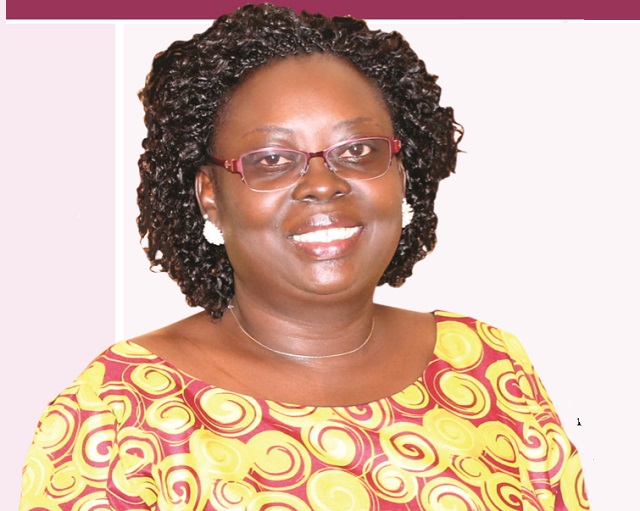
The award is given annually by the European Union and Norway to recognise a human rights defender in Uganda for their outstanding contribution.
Aciro, the Executive Director of the Uganda Women’s Network was recognised for her outstanding work to advance the role of girls and women in all aspects of life in Uganda. For last year’s see: https://humanrightsdefenders.blog/2020/06/19/eus-ugandan-human-rights-defenders-award-2020-to-aime-moninga/
Speaking during the award ceremony last evening, the Germany Ambassador to Uganda Matthias Schauer said human rights need to be defended all over the world especially for disadvantaged groups.
While receiving the award, Aciro said it was an honour of the invisible Human Rights Defenders in homes, and public spaces who never have the spot light yet do an incredible job in giving a voice to women and girls.
Sonita Alizadeh, Afghan-born rapper, receives 2021 Normandy Freedom Prize
April 29, 2021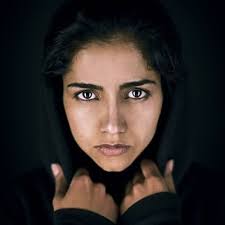
The Normandy Freedom Prize invites young people aged 15 to 25 in France and around the world, to reward each year a person or an organization engaged in an exemplary fight in favour of freedom. The online vote open to 15-25 year olds around the world to elect the 2021 Freedom Prize closed on April 26. Sonita Alizadeh, 25 years old, rapper born in Afghanistan, was named the laureate of this third edition of the Freedom Prize thanks to the votes of more than 5,000 young people from all over the world. For more on this award and its laureates see: https://www.trueheroesfilms.org/thedigest/awards/fef9ddd0-5b73-11e9-aba0-2ddd74eff7fa
Sonita Alizadeh is a rapper who was born in Afghanistan under the Taliban regime. At the age of 9, her parents planned to sell her as a bride but because of the war, her family fled to Iran and the planned marriage fell through. In Teheran, an NGO provided her with access to education and a cleaning job. When Sonita stumbled upon a song by the rapper Eminem, it is a real breakthrough. She began writing to tell her story and to speak out against forced marriage and the plight of millions of children around the world. Her first single, “Brides for Sale” garnered worldwide attention. Having moved to the United States, she now studies law to become a lawyer and to return to her country to defend Afghan women and children.
The reaction of Nadia Khiari alias Willis from Tunis, president of the international jury for the Freedom Prize 2021
“I am proud to accompany the youth jury for the Prix Liberté. It is essential to sensitize the young generation to the defense of freedoms whatever they may be and to involve them in the construction of equality and the rights of every woman and man in the world. This requires awareness and teaching of what is happening elsewhere but also in France. Young people need to be heard because they are just like adults, victims of suffering and indifference.”
https://normandiepourlapaix.fr/en/actualites/sonita-alizadeh-laureate-2021-freedom-prize
Maria Ressa of the Philippines winner of UNESCO’s Guillermo Cano World Press Freedom Prize 2021
April 28, 2021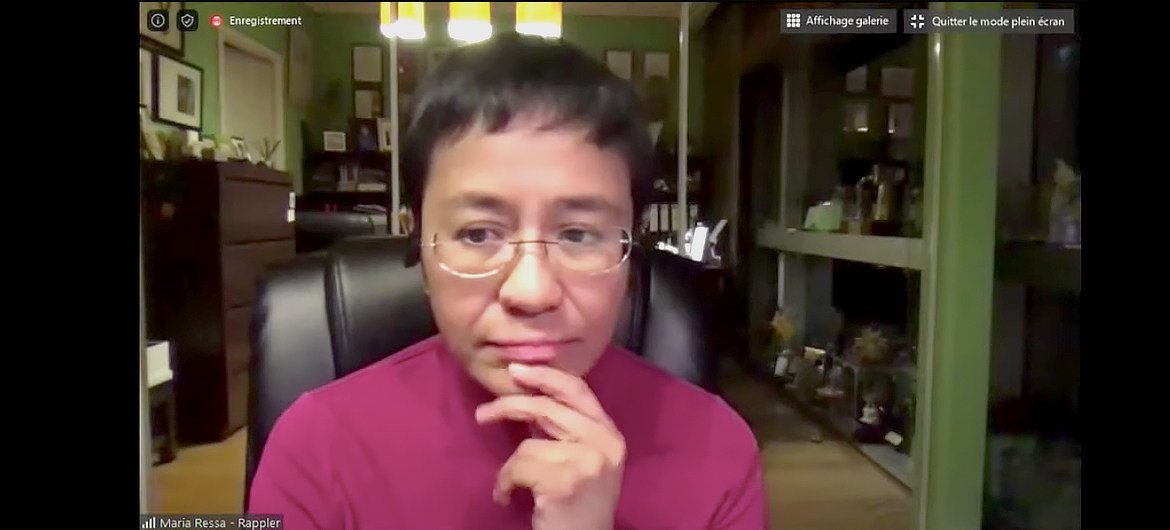
UNESCOA screenshot of Maria Ressa during a UNESCO online dialogue on press freedom in 2020.
On 28 April 2021 UNESCO named investigative journalist and media executive Maria Ressa of the Philippines as the recipient of its 2021 press freedom award. For more on this and other UNESCO awards, see: https://www.trueheroesfilms.org/thedigest/awards/8F8DB978-CD89-4CFB-1C26-D5FEE5D54855
For over three decades, Ms. Ressa has been involved in many initiatives to promote press freedom and currently manages the online outlet, Rappler. Her work however, also made her a target for attacks and abuse, UNESCO – the UN agency tasked with defending press freedom – said in a news release.
Ms. Ressa was chosen for the UNESCO/Guillermo Cano World Press Freedom Prize following the recommendation of an international jury of media professionals.
“Maria Ressa’s unerring fight for freedom of expression is an example for many journalists around the world. Her case is emblematic of global trends that represent a real threat to press freedom, and therefore to democracy”, Marilu Mastrogiovanni, Chair of the Prize’s international jury and an investigative journalist from Italy, said.
The award ceremony will take place on 2 May in Windhoek, Namibia, during the World Press Freedom Day Global Conference. It will be streamed online.
Hosted by UNESCO and the Government of Namibia, the 2021 World Press Freedom Day Global Conference will be held from 29 April to 3 May under the theme of information as a public good, and will focus on topics such as transparency of online platforms and the importance of media and information literacy.
The conference will also tackle ways to promote and support independent media struggling to survive a crisis worsened by the COVID-19 pandemic, at a time when national and local media everywhere face financial instability and other pressures threatening their survival and their journalists’ jobs.
 Hans Thoolen on Human Rights Defenders and their awards
