Archive for the 'awards' Category

Call for nominations 2021 Tulip award

July 19, 2021

The nomination period for the Human Rights Tulip 2021 is open and will end on 27 July at 11:59 PM.

For more on this award and its laureates, see: https://www.trueheroesfilms.org/thedigest/awards/D749DB0F-1B84-4BE1-938B-0230D4E22144

Nominations can be made by filling out Nomination form for the Human Rights Tulip 2021. Please note that human rights defenders and organisations cannot nominate themselves. The nomination form is available in English, French, Spanish, Russian and Arabic.

For any questions, please send an email to dmm-tulip@minbuza.nl.

Selection procedure: To decide who should win, all the submitted nominations are reviewed using agreed selection criteria. A certain weight is given to each criterion. 

The selection criteria are as follows:

  1. Working to peacefully promote and/or protect human rights, especially in one of the following fields:
    • freedom of expression (including online);
    • freedom of religion or belief;
    • equal rights for LGBTI persons;
    • equal rights for women and girls;
    • fight against impunity and accountability for international crimes.
  2. Level of repression and risks faced as a result of the human rights work.
  3. Level of innovation and creativity in the approach to promote and protect human rights.
  4. Ability to achieve impact and to reach and improve the life of (marginalised) beneficiaries through the human rights work.
  5. Working with and involving relevant partner organizations and/or communities.
  6. Sustainability of the project and the possibility to scale up the approach or project.

A panel of 5 human rights experts pre-selects the top ten candidates with the highest scores as well as three ‘wild cards’, so that strong candidates who don’t score well on every single point still have a chance of winning. This list of 13 candidates is then submitted to an independent jury with 6 members. The jury discusses the profiles of these candidates and selects three candidates most eligible for the Human Rights Tulip award. The names of these three candidates are given to the Minister of Foreign Affairs, who picks the winner of Human Rights Tulip.

https://www.government.nl/topics/human-rights/human-rights-tulip/nomination-and-selection-procedure

Goldman Prize laureates express concern about colleague Alberto Curamil in Chile

July 3, 2021
Alberto Curamil. (Vicente Franco/Water For Life)

In the Washington Post of 1 July 2021, Craig Williams and Alfred Brownell (winners of the Goldman Prize in 2006 and 2019 respectively) wrote: He has worked to protect the Earth. Now we must protect him.”

As environmental activists and human rights defenders, we are alarmed by a spike in violent attacks on and killings of land rights activists across the globe and, most recently, in Latin America. The latest in this disturbing trend is a violent assault on Alberto Curamil, a leader of the Indigenous Mapuche people in southern Chile and an activist working to protect his people’s land, water and other resources. As we write, we fear Alberto could become the latest casualty in a global war against Earth’s front-line protectors. [see: https://www.trueheroesfilms.org/thedigest/laureates/4f845ff0-86d2-4b12-97af-1590f6ba8602]

On April 29, Alberto was attending a protest along with his son andnephew, both teenagers. They were there to show support for Elena Paine, another Mapuche leader, and her community a day after her house and crops in Koyam Montre were burned to the ground. Alberto, Paine and members of the Machupe community believe that the threat may have come from far-right-wing groups in the area.

As Alberto and his teenage relatives were driving away from the protest, the back window of their truck was shattered by a tear-gas canister. When they got out of the vehicle, police shot Alberto at point-blank range three times with buckshot, which lodged in his back, side, arm and the back of his leg. Then, police beat the teens with batons while yelling “Pinche Mapuche” (“Lousy Mapuche”). The three were arrested and charged with disorderly conduct at a public event and breach of sanitary provisions. Alberto was taken to a hospital three hours after being brought into custody, bleeding and in excruciating pain. The teens were bruised, battered and traumatized.

This was not the first time Alberto had been a target of the Chilean government. In 2018, he was arrested and jailed for 15 months on false charges of armed robbery based entirely on hearsay evidence. He was acquitted of all charges and released in December 2019. Due to his imprisonment, he had been unable to receive the Goldman Prize — known as the “green Nobel” — at ceremonies in April and May 2019 in D.C. and San Francisco. He was previously arrested after being violently beaten by police in 2014.

Our alarm has led us, along with several dozen of our fellow Goldman Prize winners from across the globe, to demand assurances from Chilean President Sebastián Piñera that Alberto’s safety will be given the highest priority. We are also seeking support through appeals to the U.S. Congress, the European Union and the United Nations.

We believe time is of the essence, especially given the broader context of violence against those who stand up to protect the Earth. In 2016, the internationally celebrated Honduran Indigenous activist and Goldman Prize winner Berta Cáceres was murdered by operatives for the power company Desarrollos Energéticos (Desa) for her opposition to a hydroelectric project on the Rio Gualcarque. Seven men accused of plotting Cáceres’s murder were convicted and sentenced to between 30 and 50 years in prison. An eighth suspect, Roberto David Castillo Mejía, president and chief executive of Desa, is currently on trial, accused of masterminding the murder-conspiracy plot.

In its latest report, Global Witness recorded the highest number of environmental defenders killed in a single year — more than 212 people killed in 2019, a rate of four a week. More than two-thirds of the killings took place in Latin America. [see also: Global]

The killings of and assaults on Earth’s defenders worldwide have accelerated in some of the most fragile pristine landscapes and biodiverse countries, jeopardizing the fight against climate change and species extinction. In Mexico, police are investigating the suspicious killings of two employees at a butterfly reserve in 2020. That same month, six members of an Indigenous community were killed at a nature reserve in Nicaragua. And in South Africa, environmental activist Fikile Ntshangase was killed last year in an attack local activists fear was related to her opposition to disruptive local mining operations.

In Chile, Indigenous communities’ push for human rights go hand in hand with their struggle for land and water rights, as government-backed companies try to run them off their land with threats, harassment and violence.

Attacks on environmental defenders in Latin America and worldwide are not only an affront to human rights, but also a cause for deep alarm at a time when the world must fight climate change and bring about a sustainable future. We are demanding that the Chilean government take immediate steps to stop these aggressive and often deadly attacks on the Mapuche community. There should also be a thorough, independent investigation into the destruction of Paine’s home.

We must act against this brutality, or we threaten the fight for a planet in crisis.

https://www.washingtonpost.com/opinions/2021/07/01/alberto-curamil-chile-environmental-defender-safety/

Samar Badawi and Nassima al-Sadah released in Saudi Arabia

June 28, 2021

Samar Badawi and Nassima al-Sadah were arrested in August 2018 as part of a government crackdown against dissent.

Nassima al-Sadah, left, and Samar Badawi were held in detention for nearly three years [AFP & EPA]

“Human rights defenders Samar Badawi and Nassima al-Sadah have been released following the expiry of the 3-year sentences against them,” ALQST for Human Rights said in a tweet on 27 June 2021. See also: https://humanrightsdefenders.blog/2020/10/23/saudi-arabia-uses-women-to-spruce-up-its-image-2-efforts/

See also: https://www.trueheroesfilms.org/thedigest/laureates/eaed8641-4056-4130-a5ff-fb7bf289cece

https://www.aljazeera.com/news/2021/6/27/saudi-arabia-releases-two-prominent-womens-rights-activists

The winners of the 2021 “Green Nobel” Goldman Environmental Prize

June 25, 2021

The Goldman Environmental Prize, the “green Nobel Prize”, is awarded annually to activists fighting for the well-being of the planet. They’re often called “heroes”. But, foremost, they’re people. Common folk just like us. They don’t have superpowers or wear capes. And that’s what makes them so special. They’re the activists that are celebrated yearly by the Goldman Environmental Prize, also known as the “green Nobel Prize” [for more on this award and its laureates, see: https://www.trueheroesfilms.org/thedigest/awards/928A7FD2-4E3D-400E-BCE9-488658DA3BAF]

Goldman environmental prize

The winners of the 2021 Goldman Environmental Prize

Gloria Majiga-Kamoto, Malawi, Africa

Concerned about the environmental damage caused by plastic pollution in the southeast African state of Malawi, Gloria Majiga-Kamoto decided to fight against this industry by campaigning to stop the production of thin plastics, a type of single-use polymer. Thanks to her campaign a national ban was adopted in 2019. This is the first time a person from Malawi wins the Goldman Prize.

Goldman environmental prize
Gloria Majiga-Kamoto showing plastic under a bridge over the Mudi River © Goldman Environmental Prize

Thai Van Nguyen, Vietnam, Asia

Thai Van Nguyen is the founder of the NGO Save Vietnam’s Wildlife, responsible for saving 1,540 pangolins from the illegal wildlife trade between 2014 and 2020. Nguyen also instituted the first Vietnamese anti-poaching unit. Since 2018, it has destroyed 9,701 animal traps, torn down 775 illegal camps, confiscated 78 guns and brought to the arrest of 558 poachers, leading to a significant reduction in illegal activities in Pu Mat National Park.

Goldman environmental prize Thai Van Nguyen
Thai Van Nguyen with a three-month-old pangolin in a rehabilitation centre © Goldman Environmental Prize

Maida Bilal, Bosnia and Herzegovina, Europe

Together with the women in her village, Maida Bilal mounted a 503-days-long protest to stop the construction of two new dams on the Kruščica River in December 2018. The Balkans are home to Europe’s last wild rivers, but demand for hydroelectric power is threatening these precious ecosystems. This marks the first time that a person from Bosnia and Herzegovina receives the Goldman Environmental Prize.

Goldman environmental prize Maida Bilal
Maida Bilal and her supporters on the bridge where they stopped construction of the dams from going ahead © Goldman Environmental Prize

Kimiko Hirata, Japan, islands and island nations

After the Fukushima nuclear disaster in 2011, Japan began relying on coal-based rather than nuclear energy. Kimiko Hirata’s decade-long campaign has stopped 13 new coal power plants from being built throughout the country. These would have released over 1.6 million tonnes of CO2 over their lifetimes. Therefore, Hirata’s efforts have avoided emissions equivalent to those of 7.5 million cars a year, for forty years.

Goldman environmental prize Kimiko Hirata
Kimiko Hirata in Tokyo, the capital of Japan © Goldman Environmental Prize

Sharon Lavigne, Unites States, North America

In September 2019, Sharon Lavigne, a special education teacher and climate justice advocate, succeeded in stopping the construction of an enormous plastic production plant in Mississippi, in the state of Louisiana. Lavigne mounted an opposition campaign, raised awareness in her community and organised peaceful protests to protect the right of her fellow citizens, especially African-Americans. The plant would have led to the release of huge amounts of toxic waste in an area where pollution is already destroying many lives.

Sharon Lavigne, Goldman Environmental Prize
Sharon Lavigne in the Buena Vista cemetery, where graves of African-American slaves are found © Goldman Environmental Prize

Liz Chicaje Churay, Peru, South and Central America

Thanks to Liz Chicaje Churay and her supporters, in January 2018 the Peruvian government created Yaguas National Park, which protects 800,000 hectares of the Amazon rainforest. The park is key to conserving local biodiversity as well as safeguarding thousands of unique species, carbon-rich peatlands and protecting indigenous peoples.

Liz Chicaje Churay
Liz Chicaje Churay on the Ampiyacu River © Goldman Environmental Prize

See also: https://humanrightsdefenders.blog/2019/05/13/winners-of-the-2019-goldman-environmental-prize/

https://www.lifegate.com/goldman-environmental-prize-2021-winners

Martin Ennals Foundation reaches out: today

June 24, 2021

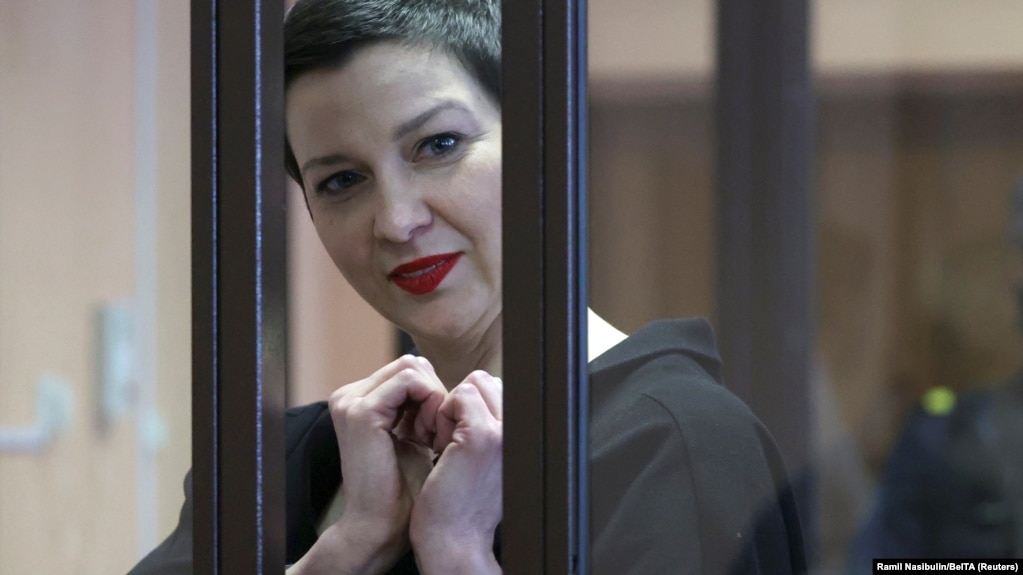
Martin Ennals Foundation, together with the Geneva Academy, IBAHRI, and ODAGE, is organizing a high-level panel discussion on how to effectively defend human rights lawyers in authoritarian times. Today 24 June at 13h30 Geneva time. With Belarussian human rights activist Tatsiana Khomich, sister of political prisoner Maria Kalasnikova; Xu Yan, wife of 2021 Martin Ennals Laureate Yu Wensheng of China; and Turkish human rights lawyer Ayşe Acinikli. You will also have the opportunity to hear Diego García-Sayán, UN Special Rapporteur on the Independence of Judges and Lawyers, Baroness Helena Kennedy QC and ISHR Director Phil Lynch.  

 Register for the event here >>

The MEA has also started an occasional newsletter with in this summer edition:

After a successful campaign, nominations for the 2022 Martin Ennals Award are now closed. We are excited by the high-quality nominations and thank those who contributed to our search for the next generation of human rights heroes.   Meanwhile, our support for human rights defenders continues through the Martin Ennals programs.

Director Isabel de Sola shares how education is paving the way for a more sustainable human rights movement. She informs about the Foundation’s education project – a program aimed at familiarizing students with the concept of human rights and the causes promoted by our Defenders.

Programme Officer Cristina Rendón writes “It takes a village to protect defenders”.  Because the three 2021 awardees were unable to communicate freely with the Martin Ennals Foundation, we had to reinvent our “Geneva Residency” programme by extending its activities to the support networks of our awardees. We learned about the importance of building a strong network of allies who can support defenders, in the good times and the bad

 https://www.martinennalsaward.org/upcoming-event-defending-human-rights-lawyers-in-authoritarian-times/
 

Call for Nominations for Courage to Think award 2021

June 23, 2021

Scholars at Risk is seeking nominations for the 2021 Courage to Think Award, which will be presented during an award ceremony at its annual Free to Think event in November 2021. Please submit a nomination by July 31, 2021, here.

The Courage to Think Award recognizes individuals, groups, or institutions that have demonstrated an exemplary commitment to protecting scholars and promoting academic freedom, whether through their professional work, private or community service, or by facing personal risk. For more of this award and its laureates, see: https://www.trueheroesfilms.org/thedigest/awards/165B4CC5-0BC2-4A77-B3B4-E26937BA553C

University of York names new college after David Kato

June 16, 2021

The University of York has decided to name its new college after Ugandan David Kato who went to the university in 2010 for six months as a Protective Fellow on the Human Rights Defenders Programme at the Centre for Applied Human Rights (CAHR).

The announcement comes during national Refugee Week (June 14-20 ) as the university celebrates its newly-awarded status as a University of Sanctuary with a launch event on today (Wednesday).

David’s time in York provided respite from his role in Uganda as a human rights activist, and his legacy supports the University’s continued commitment to the lesbian, gay, bisexual and transgender communities (LGBT+).

An award in David Kato’s name was established in 2012: https://www.trueheroesfilms.org/thedigest/awards/94EE8123-09C7-410A-9DE9-A0077FA87F31

He returned home to Uganda to fight the country’s controversial anti-homosexuality act. But he was murdered in Kampala in 2011, weeks after winning a court victory over a tabloid paper that called for homosexuals to be killed.

Vice-Chancellor, Professor Charlie Jeffery said: “Colleges are an integral part of university life here at York and we knew we wanted an inspiring role model when naming our new college – one which would also reflect our belief in equality, diversity and inclusion.

Director of the Centre for Applied Human Rights, Professor Paul Gready said:“The naming of the David Kato College also symbolises and demonstrates our admiration of, and solidarity with, human rights defenders across the world and with all previous Protective Fellows, of which there have been over 90 from more than 45 countries over the last 12 years.

The University will mark its newly-awarded status as a University of Sanctuary with an online event tonight (June 16) at 6.30pm. The event will include the launch of a film which tells the story of how York became a University of Sanctuary for refugees, asylum seekers, human rights defenders and those in need of humanitarian protection. The film will be followed by a round-table discussion. Go to http://www.refugeeactionyork.org/refugee-week.

https://www.yorkpress.co.uk/news/public-notices/19373685.new-university-york-college-named-david-kato/

Save the dates for the RAFTO Prize 2021

June 15, 2021

The Rafto Prize Events 2021

These are the dates for the 2021 Rafto Prize Events. They are live-streamed. You can watch them on RAFTO’s website and on Facebook.

The Rafto Prize Announcement (online )

Thursday 23 September at 10:00 AM (CEST)

Watch the press conference where the Head of the Rafto Prize Commitee announces the recipient of the Rafto Prize 2021! The live-stream starts at 09:30, and will include interviews and commentaries by experts and Rafto staff.

The Rafto Conference (online)
Saturday 13 November at 11:00-14:00

Join our online conference with keynote speech by Rafto Laureate 2021. The conference will shed light on and discuss human rights challenges related to this year’s Rafto Prize. Free of charge and open for everyone to attend.
Speakers and program TBA

The Award Ceremony (online)
Sunday 14 November at 18:00-19:15

Live broadcasted from Den Nationale Scene, Bergen, we are celebrating this year’s Rafto Laureate with an award ceremony and a concert.
Free of charge. Artists and perfomances TBA

Torchlight procession, Den Nationale Scene in Bergen.
Sunday 14 November at 19:30

After the Award Ceremony there will be a torchlight procession, that will start outside of Den Nationale Scene, Bergen.
Physical attendance only.

For more on this and other human rights awards for HRDs, see: https://www.trueheroesfilms.org/thedigest/awards/A5043D5E-68F5-43DF-B84D-C9EF21976B18


Follow RAFTO in social media to receive recent updates:

Facebook/raftofoundation
Instagram: @raftofoundation
Twitter: @raftofoundation

The intriguing case of Artur Ligęska who was in prison with Ahmed Mansoor in the UAE

June 9, 2021

Mirage news of 8 June 8, 2021 tells the sad story of Artur Ligęska, a 40-year-old Polish citizen who has spoken out widely about torture and ill-treatment in Emirati prisons. He was found dead in his apartment in Amsterdam, the Netherlands on May 26, 2021. The Gulf Centre for Human Rights and Human Rights Watch are deeply saddened by the news of his death and extend their sincere condolences to his friends and family.

Following his release from al-Sadr prison in May 2019, Artur dedicated himself to seeking justice for the abuse he and other prisoners suffered in prison, especially Ahmed Mansoor, an award-winning human rights defender who is on the advisory boards of GCHR and Human Rights Watch. [see: https://www.trueheroesfilms.org/thedigest/laureates/074ACCD4-A327-4A21-B056-440C4C378A1A]Artur was a uniquely valuable source of information on prison conditions in the United Arab Emirates (UAE).

He was an activist, author, and fitness expert and had recently celebrated the second anniversary of his acquittal on May 9. He had been sentenced to life in prison in the UAE following a deeply flawed trial on drug charges despite the absence of any evidence of drugs in his possession.

In a voice message to a friend at GCHR on May 9, Artur said, “My main wish for this new-life birthday is freedom for Ahmed Mansoor. I really do hope that this year will be special for him. I was thinking all day about him. I remember our last talk, and I was thinking about his wife and kids. …In the last days, Ahmed told me ‘Don’t forget about me.’

Artur said he was planning to organize a protest in The Hague soon to call for Ahmed’s release. Artur’s many actions to help Ahmed included advocacy with Polish and EU officials, providing human rights groups with information, taking part in human rights events, documentary films and TV appearances, and writing about Ahmed in his two books.

Artur first phoned GCHR staff in April 2019 to tell them that Ahmed was on a hunger strike and told them that he was worried that Ahmed might die because his health had deteriorated greatly. He told GCHR that Ahmed was being held in “terrible conditions” in a cell with no bed, no water, and no access to a shower. Ahmed today remains in a 2-by-2 meter isolation cell with no bed or mattress, serving a 10-year prison sentence for his human rights activities.

Despite suffering serious trauma after suffering abuse as a prisoner in the UAE, Artur again phoned GCHR to share the good news that human rights groups’ advocacy had been successful. Ahmed had ended his hunger strike after being allowed to phone his ill mother and to go outside to see the sun for the first time in two years. Artur sacrificed phone calls to his own family to make calls on behalf of Ahmed, referring to him as a brother.

Following his release, Artur was able to provide GCHR with more details about what he called the “medieval prison conditions” in al-Sadr prison, including periods when there was no running water despite extreme heat.

In a wide-ranging interview released by Human Rights Watch in January 2020, Artur described how he and Ahmed had become “prison mates in UAE hell.” Artur spent eight months in al-Sadr prison, in solitary confinement in a cell beside Ahmed’s. His friend suffered psychological torture from a near-total lack of human contact and access to the library, Artur said. See also: https://humanrightsdefenders.blog/2021/02/22/lawlor-urges-uae-to-free-ahmed-mansoor-mohamed-al-roken-and-other-hrds/

Artur told GCHR that after he left the UAE, he had undergone surgery and therapy to treat the damage done by the rape and psychological torture that he said he was subjected to but he was recovering well and taking classes to become a journalist and human rights professional.

On April 13, 17 European Parliament members wrote to the EU’s High Representative Josep Borrell to express their “deepest concern over the ongoing human rights violations in the United Arab Emirates, particularly with regards to the systematic crackdown on freedom of speech and expression and the subsequent retaliation received during detention.” The letter mentions Ahmed, and also refers to Artur, noting, “The use of torture has not been limited to Emirati nationals, as there have also been instances of EU citizens that have reported facing brutal torture at the hands of prison authorities.”

On October 22, 2020, Amnesty Westminster Bayswater and GCHR held an online event, The Prisoner and the Pen, featuring the writing, songs and poetry of prisoners who are human rights defenders and the work of writers and artists from the Middle East and North Africa region. The event, held on Ahmed ‘s birthday, included his poems. Artur read from his memoir, “The Sheikh’s Different Love,” published in 2019 in Polish. He has also written a second bestselling book in Poland, “Prison Diary.” His story is documented in a film by Hossam Meneai, Isolation Cell 32, which debuted at the Polish Film Festival in America in November. Artur also appears in an upcoming documentary about Ahmed Mansoor made by Manu Luksch.

Artur’s untimely and unexpected death comes as a great shock to those who knew him. The Dutch police are investigating the circumstances of his death.

https://www.miragenews.com/tribute-to-artur-ligeska-former-prisoner-in-uae-573024/

Documentary Film Calls for Justice for Kyrgyzstan’s Azimjon Askarov

June 3, 2021
Azimzhan Askarov Pictured here during hearings at the Bishkek regional court, Kyrgyzstan, October 4th, 2016.  
Ethnic Uzbek journalist Azimzhan Askarov. Pictured here during hearings at the Bishkek regional court, Kyrgyzstan, October 4th, 2016.© 2016 AP

Philippe Dam, Advocacy Director, Europe and Central Asia Division of Human Rights Watch, on 2 June 2O21, writes aavout Azimjon Askarov, a 69-year-old human rights defender from Kyrgyzstan, who died in prison after contracting pneumonia. Askarov had been in prison for 10 years, having been given a life sentence following an unjust and unfair trial in 2010, in retaliation for his investigations into the tragic wave of inter-ethnic violence that year in southern Kyrgyzstan. [see: https://www.trueheroesfilms.org/thedigest/laureates/D8B31FA3-E648-4F92-81B9-8C3A4270F80E]

His death was the result of cruelty and negligence by Kyrgyz authorities. A screening this week of a documentary about Askarov, to be attended by senior European Union officials, is a reminder to Kyrgyzstan that it is responsible for his death and needs to show accountability and to the EU to press Bishkek on this issue. See also: https://humanrightsdefenders.blog/2020/07/31/mary-lawlor-calls-death-of-human-rights-defender-askarov-a-stain-on-kyrgyzstans-reputation/

Askarov’s trial in 2010 was marred by serious procedural violations and allegations of torture that were never investigated. A United Nations human rights body ruled in 2016 his detention was illegal and called for his immediate release, but Kyrgyz authorities looked the other way.

Since his death, many have called for a full inquiry into the causes and responsibilities for his death.  A toothless internal inquiry ordered by Kyrgyzstan has gone nowhere. The documentary “Last Chance for Justice,” by filmmaker Marina Shupac, is a touching portrayal of the fight by Khadicha Askarova, Askarov’s wife, for justice and his release from prison.

The screening is on June 4 as part of the One World Film Festival in Brussels. The panel discussion of the film will be joined by Eamon Gilmore, the EU’s top human rights envoy; Heidi Hautala, a European Parliament vice-president; and a representative of the Office of the EU’s Special Representative to Central Asia.

On the same day as the screening, the EU is set to hold its highest-level annual meeting with Kyrgyz officials. This is a crucial opportunity for the EU to make it clear that closer ties with Kyrgyzstan will depend on the resolve of Kyrgyzstan President Japarov’s administration to investigate Askarov’s death, clean up his judicial record, and grant compensation to his family.

This week’s high-profile screening makes clear: Kyrgyzstan will continue to be in the international spotlight on Askarov until it fulfils its human rights obligations to account for his death.

https://www.hrw.org/news/2021/06/02/documentary-calls-justice-kyrgyzstans-azimjon-askarov