Mary Lawlor, UN Special Rapporteur on Human Rights Defenders, shows on her LinkedIn page young human rights defenders who are the ones who will carry the human rights movement into the future, and to who we need to listen now.
👉 e.g. meet Zeinab, a young WHRD from #Kenya who took part in the 2023 Vienna Youth & Children HRD conference:
“Canada firmly believes that the protection of human rights is the cornerstone of a just society. As the world grapples with numerous human rights challenges, Canada is reinforcing its role as a global leader in promoting human rights and protecting those who safeguard them,” said former Immigration Minister Sean Fraser.
“Together, we will continue to champion human rights and foster an environment where individuals can freely exercise their voices without fear of persecution.”
Although these individuals make huge contributions to the building of inclusive and democratic societies that contribute to a peaceful international community, they are repeatedly the victims of criminalization, arbitrary arrest, and threats, with hundreds of HRDs being tortured and assassinated every year.
In responding to the needs of this vulnerable group, Canada has long fostered a tradition of HRD resettlement. In fact, it was ranked as the top resettlement country in the world for the fourth year in a row, welcoming over 47,500 refugees from over 80 countries in 2022.
Fraser furthered this initiative on July 25 by declaring the expansion of the global HRD stream – a government initiative that has resettled HRDs since 2021 through the Government-Assisted Refugee (GAR) Program (and was one of the first to offer a dedicated, permanent pathway for HRDs globally).
Over the following months, Canada is also looking to re-engage civil society organizations on the development of a temporary protection pathway for HRDs in need.
On 4 August 2023, Jaxx Artz in Global Citizen explains the Stand As My Witness’ campaign:
Stand As My Witness was created in response to a growing trend in which civil society actors were arrested for their human rights work. Formerly known as Civil Society Behind Bars, the initiative is one of CIVICUS’ most effective strategies when it comes to sounding the alarm about the plights faced by HRDs around the world. According to the global alliance, hostile government actors and authoritarian regimes often use flawed legal processes with little oversight in order to prosecute activists. “[There are targeted attacks] against people uncovering high-level corruption, exposing very serious human rights violations, calling for accountability, and seeking to drive change in their societies,” Mandeep Tiwana, chief programs officer at CIVICUS, told Global Citizen.
As part of the campaign’s goal to spread awareness about some of the world’s imprisoned activists, CIVICUS profiles a handful of detained HRDs on their website. In actuality, these names and cases represent just a small percentage of people who are currently in prison because of their activism, and whom CIVICUS is trying to get released.
As the global conditions for civic society worsen — with only 3.2% of the world’s population living in countries where civic space is considered open, according to the international global alliance CIVICUS — human rights defenders (HRDs) like al-Khawaja increasingly face the risk of government retaliation.
“The detention of HRDs is often arbitrary and a form of reprisal for the work [they] do,” David Kode, advocacy and campaigns lead at CIVICUS, told Global Citizen. “Take al-Khawaja, for example, who has been in prison since 2011 and is serving a life sentence. Despite many advocacy efforts, the Bahraini authorities seem to be bent on ‘punishing’ him and his family for calling for democratic reforms more than a decade ago.”
Made up of civil society organizations and activists across more than 175 countries, CIVICUS has been campaigning on behalf of HRDs since its founding in 1993. As part of their work, the Stand As My Witness campaign — launched over 10 years ago — has sought to encourage investigations into unlawful imprisonments and bring global attention to cases like al-Khawaja’s.
CIVICUS has found that the tactics used to target HRDs are eerily similar across national borders and, over the years, the trends have only become more apparent and concerning.
“[The imprisonment of HRDS] is often preceded by stigmatization about their work, which includes branding activists as security risks. We saw this happen a lot after the [Arab Spring] in the Middle East and North Africa in 2011,” Tiwana said. “A lot of authoritarian regimes became fearful of people organizing and coming out into the streets to engage in civil society.”
To limit public support of pro-democracy movements and ostracize activists from society, government officials may twist the narrative surrounding an HRD’s arrest and accuse them of being spies for other nations. They may also invoke counter-terrorism or security legislation to pressure judges and quickly detain organizers or protestors without arrest warrants.
Take Khurram Parvez, an HRD from Northern India who was arrested in 2021 on charges of conspiracy and terrorism, for example. Parvez’s work documenting human rights violations — which include instances of disappearance, torture, and unlawful killing — in the Jammu and Kashmir region of India caught the attention of Indian authorities who wanted to silence his advocacy work.
CIVICUS currently advocates on behalf of Parvez through various strategies, such as raising concerns about his detention with the UN, holding meetings with diplomats in India, and encouraging the Human Rights Council in Geneva to put pressure on Indian officials to release him.
“We continue to raise concerns about his detention on social media, telling his story as a human rights defender and highlighting the gaps left by his detention in relation to the amazing work he does promoting human rights in Kashmir and supporting those who are forcibly disappeared in Asia,” Kode told Global Citizen.
In recent years, environmental activists and Indigenous land defenders have faced the brunt of the attacks as corporations file lawsuit after lawsuit restricting the right to protest, leading many activists to face house arrest, financial ruin, or imprisonment.
How Does Stand As My Witness Help Imprisoned HRDs?
Despite the myriad challenges that HRDs and civil society organizations face in their day-to-day work, CIVICUS’ Stand As My Witness campaign has been able to raise the profile of many activists who have been unjustly imprisoned.
CIVICUS and other human rights organizations were able to mount an international campaign to bring attention to the years-long persecution faced by al-Hathloul and other women activists. The hashtag #FreeLoujain popped up across social media platforms, with global citizens around the world speaking up to urge Saudi Arabian authorities to release al-Hathloul.
The Stand As My Witness campaign relies on advocacy efforts from every part of civil society — when Global Citizens take action, for example, their voices can put an immense amount of pressure on world leaders.
“Hostile governments may have [HRDs] locked up for years, and it takes a concerted effort from relevant agencies, state actors, non-state actors, organizations, civil society, the media, and others to put enough pressure that leads to their release,” Tiwana said. “But justice often moves very slowly.”
One of the biggest challenges CIVICUS experiences with the Stand As My Witness campaign is engaging people during the life cycle of a case, which can often last several years. To fight against indifference, CIVICUS encourages Global Citizens everywhere to pay attention to the humanity of each activist who has dedicated their lives to the realization and protection of human rights.
You can get involved with the Stand As My Witness campaign by engaging with CIVICUS on social media, writing letters to government officials, and sharing information about HRDs who are not currently represented on CIVICUS’ interactive map.
You can also demand that governments release HRDs from unjust imprisonment by taking action with Global Citizen on civic space issues.
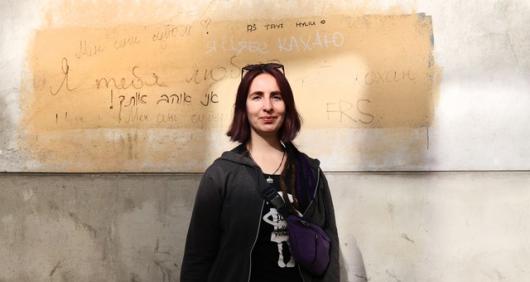
Nasta (Anastasia) Loika was sentenced to 7 years in a penal colony for “inciting racial, national, religious or other social enmity or discord” on 20 June 2023. She is a prisoner of conscience, targeted in retaliation for her human rights work.
Nasta (Anastasia) Loika is a prominent human rights defender and educator, focusing her work on human rights violations resulting from the use of the repressive “anti-extremist” legislation in Belarus, the protection of foreign nationals and stateless persons in Belarus, and on human rights education.
Nasta Loika was sentenced for “inciting racial, national, religious or other social enmity or discord” under Part 3 of Article 130 of the Belarusian Criminal Code on 20 June 2023. The Belarusian human rights defender and prisoner of conscience was arbitrarily detained on 28 October 2022, accused of “petty hooliganism”, a violation under Article 19.1 of the Code of Administrative Offences. As the Belarusian authorities repeatedly brought the allegations against her, she served a total of five consecutive 15-day terms in detention for the same purported offence. On 24 December 2022, she was arbitrarily charged under Articles 342.1 (“Organization and preparation of actions that grossly violate public order, or active participation in them”) and 130.3 (“inciting racial, national, religious or other social enmity or discord”) of the Belarusian Criminal Code.
Nasta Loika reported that she had been tortured by electric shock during questioning and that whilst in detention she was left out in the courtyard for eight hours without outerwear in cold weather. She has consistently not been provided with the medical care she requires, which in itself may amount to inhumane and degrading treatment.
On 10 August 2023 Matthew Ogune of the Nigerian Guardian reported that Nigerian lawyer and human rights activist, Oluwafunke Adeoye, has emerged as one of the winners of the 2023 Waislitz Global Citizen Awards, with a prize money of $75,000. Adeoye is the founder of Hope Behind Bars Africa.
Adeoye was officially announced as a winner in the 2023 edition by the global body. The honour makes her the first individual working in the Criminal Justice sector to win this global award.
The Waislitz Global Citizen Awards are annual cash prizes totaling $250,000 that recognize the excellence of individuals in their work to end extreme poverty. The grand prize is $100,000 with two additional prizes at $75,000 each, for a total of three prizes. The awards are presented by the Waislitz Foundation and Global Citizen, and supported by the US and Australian based cellular medicines company, Mesoblast Ltd. and Unico Capital Holdings.
“Ending extreme poverty is not a choice, it’s an obligation. My hope is that it will inspire many thousands of people around the world to do what they can to improve the living standards of those in dire need,” Chairman and Founder of the Melbourne-based Waislitz Foundation, Alex Waislitz.
The Waislitz foundation exists to create a positive social impact locally and globally through innovative projects that empower individuals to meet their full potential and make a measurable difference to the world.
According to the global body, the Nigerian born lawyer has over the years helped in providing free legal services and direct support to indigent incarcerated people, while promoting criminal justice reform through research, advocacy and technology.
Reacting to the award in a statement on Wednesday in Abuja, Adeoye said she was inspired to begin the initiative in 2018, after some personal encounters with the justice system, including one where her father was arrested and detained for a crime he did not commit several years ago.
The organisation closes the justice gap by providing free legal services and direct support to low-income incarcerated individuals while promoting criminal justice reforms through research, evidence-based advocacy, and technology. Over 7,000 incarcerated individuals have benefitted from their interventions.
With the award, Adeoye plans to fully launch Justicepadi, a tech platform that will revolutionise legal aid in West Africa and also expand her work for climate justice.
“It is crucial for people to understand that behind the labels of ‘convicts’ or ‘prisoners’, there are human beings with stories, hopes, and dreams. By offering legal aid, we strive to ensure that every person, regardless of their circumstances, has access to fair representation and a chance to rebuild their lives,” Adeoye said.
The other winners of the award are: Peter Njeri and Esther Kimani, both Kenya citizens. They were named 2023 Waislitz Global Citizen Award winner and the Waislitz Global Citizen Disruptor Award winner respectively.
What is special is that the report is not a country overview but thematic, including this paragraph on HRDs:
“Assistance to human rights defenders through both political and financial means is one of the flagship EU human rights activities, having a direct impact on individuals, groups and organisations defending human rights. In 2022, human rights defenders continued to face threats and attacks such as killings, arbitrary detention, smear campaigns or judicial harassment. They are also increasingly victims of illegal online surveillance, transnational repression or criminalisation due to ill-motivated “foreign agent” or counterterrorism laws. To counter this trend, the EU raised specific cases of human rights defenders at risk in all its human rights dialogues, subcommittee meetings and consultations (e.g. dialogue with Colombia or India). The protection of human rights defenders was also discussed in EU- supported civil society seminars preceding human rights dialogues (e.g. EU-Brazil and EU-Mexico seminars). The EU also continued to make its voice heard with public statements and declarations to support human rights defenders at risk (for instance on cases in Iran, Russia, or Mexico). Global support for human rights defenders was voiced by The High Representative on the occasion of the World NGO Day in February 2022 and during the 24th EU-NGO Forum on Human Rights in December 2022. EU Delegations and Member States’ embassies engaged and met with human rights defenders, monitored trials, and visited human rights defenders in detention. Annual meetings between EU diplomats and human rights defenders have become an established practice in non-EU countries, increasing the visibility of human rights defenders where appropriate and allowing for in-depth analysis of the challenges they face. Some EU Delegations provided awards to Human Rights Defenders (for instance in Uganda). The support and protection of human rights defenders is also a priority for the EUSR for Human Rights. Throughout 2022, the EUSR continued to raise individual cases of human rights defenders, particularly those in long-term detention, and to meet with human rights defenders, both in Brussels and during country visits. He availed of every opportunity to express support and solidarity directly to the defenders themselves or their families. He raised specific cases during visits to several countries, including India, Uganda, Pakistan, Egypt and Colombia and in other bilateral contacts, notably with Cuba and Brazil. He also participated in a number of high profile events aimed at raising awareness and visibility around their work and the need for their protection, such as the ProtectDefenders.eu beneficiary meeting in September, or the Front Line Defenders Dublin Platform in October. The EUSR was very active on individual cases on social media, notably regarding Belarus. He also highlighted the situation of Palestinian prisoners on hunger-strike and their deteriorating health conditions. The EU remained active in multilateral fora in particular in the United Nations Human Rights Council and the United Nations General Assembly. The EU actively collaborated with the UN Special Rapporteur on the situation of human rights defenders, regularly exchanging information on cases and thematic priorities. The EU advocated for the recognition of human rights defenders in several UN General Assembly resolutions. At the Human Rights Council, the EU highlighted the critical role that human rights defenders play in the protection and promotion of human rights and spoke out in their defence inter alia during the interactive dialogues with several Special Procedures.””Assistance to human rights defenders through both political and financial means is one of the flagship EU human rights activities, having a direct impact on individuals, groups and organisations defending human rights. In 2022, human rights defenders continued to face threats and attacks such as killings, arbitrary detention, smear campaigns or judicial harassment. They are also increasingly victims of illegal online surveillance, transnational repression or criminalisation due to ill-motivated “foreign agent” or counterterrorism laws. To counter this trend, the EU raised specific cases of human rights defenders at risk in all its human rights dialogues, subcommittee meetings and consultations (e.g. dialogue with Colombia or India). The protection of human rights defenders was also discussed in EU- supported civil society seminars preceding human rights dialogues (e.g. EU-Brazil and EU-Mexico seminars). The EU also continued to make its voice heard with public statements and declarations to support human rights defenders at risk (for instance on cases in Iran, Russia, or Mexico). Global support for human rights defenders was voiced by The High Representative on the occasion of the World NGO Day in February 2022 and during the 24th EU-NGO Forum on Human Rights in December 2022. EU Delegations and Member States’ embassies engaged and met with human rights defenders, monitored trials, and visited human rights defenders in detention. Annual meetings between EU diplomats and human rights defenders have become an established practice in non-EU countries, increasing the visibility of human rights defenders where appropriate and allowing for in-depth analysis of the challenges they face. Some EU Delegations provided awards to Human Rights Defenders (for instance in Uganda). The support and protection of human rights defenders is also a priority for the EUSR for Human Rights. Throughout 2022, the EUSR continued to raise individual cases of human rights defenders, particularly those in long-term detention, and to meet with human rights defenders, both in Brussels and during country visits. He availed of every opportunity to express support and solidarity directly to the defenders themselves or their families. He raised specific cases during visits to several countries, including India, Uganda, Pakistan, Egypt and Colombia and in other bilateral contacts, notably with Cuba and Brazil. He also participated in a number of high profile events aimed at raising awareness and visibility around their work and the need for their protection, such as the ProtectDefenders.eu beneficiary meeting in September, or the Front Line Defenders Dublin Platform in October. The EUSR was very active on individual cases on social media, notably regarding Belarus. He also highlighted the situation of Palestinian prisoners on hunger-strike and their deteriorating health conditions. The EU remained active in multilateral fora in particular in the United Nations Human Rights Council and the United Nations General Assembly. The EU actively collaborated with the UN Special Rapporteur on the situation of human rights defenders, regularly exchanging information on cases and thematic priorities. The EU advocated for the recognition of human rights defenders in several UN General Assembly resolutions. At the Human Rights Council, the EU highlighted the critical role that human rights defenders play in the protection and promotion of human rights and spoke out in their defence inter alia during the interactive dialogues with several Special Procedures.“
Other sections specially relevant for HRDs include:
The death penalty…………………………………………………………………………………………….page.21 Torture and other cruel, inhuman or degrading treatment or punishment……………………………………………………………………………………………………………. 24 Freedom of religion or belief ………………………………………………………………………..33 Human rights of persons belonging to minorities………………………………. 38 Gender equality ………………………………………………………………………………………………..40 LGBTI ……………………………………………………………………………………………………………………..50 Migration and mobility – migrants, refugees and asylum seekers ..59 Empowering women ……………………………………………………………………………………….62 Rights of indigenous peoples …………………………………………………………….. 75 Freedom of expression ………………………………………………………………………..78 Safety and protection of journalists…………………………………………………. 80 Countering disinformation, hate speech, extremist and terrorist content………………………………………………………………………………………………………. 81 Academic freedom and protection of the academic community at risk…………………………………………………………………………………………………………….. 84 Labour rights ……………………………………………………………………………………………………… 90
Support to Human Rights Defenders in the Digital Sphere ……………..175
On 4 August 2023 UN High Commissioner for Human Rights, Volker Türk, expressed deep regret at the closure of his office in Uganda, following the Government’s decision not to renew the Host Country Agreement. The office in Kampala will officially cease its operations on Saturday. Sub-offices in Gulu and Moroto closed on 30 June and 31 July. See also: https://www.hrw.org/news/2023/02/15/uganda-threatens-close-un-human-rights-office
“I regret that our office in Uganda had to close after 18 years, during which we were able to work closely with civil society, people from various walks of life in Uganda, as well as engaging with State institutions for the promotion and protection of the human rights of all Ugandans,” said Türk.
“Much progress has been made in the country over the years, but serious human rights challenges remain in the path to full enjoyment of human rights for all,” the High Commissioner said.
Türk expressed particular concern about the human rights situation in Uganda ahead of the 2026 elections, given the increasingly hostile environment in which human rights defenders, civil society actors and journalists are operating.
He noted that most of the 54 NGOs that were arbitrarily suspended in August 2021 remain closed. The High Commissioner also expressed concerns that the amended Computer Misuse law may further erode free expression.
Türk warned against retrogression from Uganda’s commitments under the international human rights treaties it has ratified, including in the passage of the deeply discriminatory and harmful anti-homosexuality law, that is already having a negative impact on Ugandans.
Türk urged the Government to ensure the national human rights body can function effectively and independently, as the the main body tasked with human rights oversight in Uganda.
“The Uganda Human Rights Commission, our long-standing partner in the protection and promotion of human rights in the country, is chronically under-funded and under-staffed, and reports of political interference in its mandate undermine its legitimacy, independence and impartiality,” he said.
“I urge the Ugandan government to provide the Commission with adequate human, technical and financial resources so that it may more effectively execute its important mandate.”
“On our part, the UN Human Rights Office remains committed to working on human rights in Uganda, in line with my global mandate,” he added.
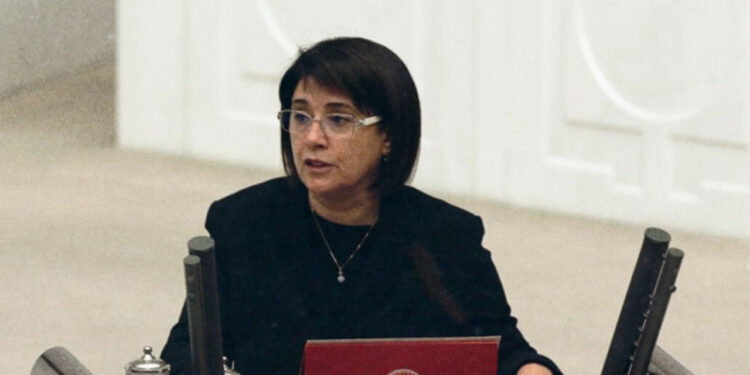
Leyla Zana, a renowned Kurdish politician and human rights activist, and the first Kurdish female member of the Turkish parliament, will face prosecution on 7 September 2023, with her international awards being cited as “criminal evidence” in the indictment.
Former Member of Parliament Leyla Zana is due to stand trial in a Turkish court on 7 September 2023, facing accusations of “terrorist propaganda” in her speeches and charges of accepting international awards, deemed as “crimes” under Article 325/1 of the Turkish Penal Code. The penal code article, titled “Acceptance of Titles and Similar Honours from the Enemy,” stipulates that a citizen who accepts academic degrees, honours, titles, medals, or other honorary ranks from a state at war with Turkey could face imprisonment from one to three years.
Zana’s lawyer, İbrahim Çeliker, has questioned the basis of the charges, asking, “Which awards received by Ms. Zana could be a source of crime? Which country has Turkey declared war on? These need to be clarified. The awards in question that Ms. Zana received are awards given from European countries and America on human rights,” Çeliker stated. [see: https://www.trueheroesfilms.org/thedigest/laureates/82F7AAA5-88D1-47E8-8B62-4EBC66D1602D]
Zana is internationally recognised for her human rights work and political activism. Her accolades include the Thorolf Rafto Memorial Prize, the Sakharov Prize for Freedom of Thought, the Aachen Peace Prize, the Bruno Kreisky Prize, and the Freedom Medal by the American Human Rights Association. One should add the Juan Maria Bandres Prize for Human Rights and Refugee Protection in 2008. She has also been awarded the Silver Medal of the City of Paris and has been recognised as an “Honorary Citizen” by the cities of Paris and Geneva.
The indictment also implicates pro-Kurdish Democracy Party (DEP) former MP Orhan Doğan and Vedat Aydın, the People’s Labour Party (HEP) Diyarbakır (Amed) Provincial Chairman who was killed in 1991, citing their participation in memorial programmes as criminal. Çeliker responded to this, stating, “The prosecutor considers Orhan Doğan and Vedat Aydın as members of the PKK [Kurdistan Workers’ Party]/KCK [Kurdistan Communities Union]. He sees the mention of these names as a criminal element. However, Orhan Doğan is a Kurdish politician who spent years in prison with Leyla Zana and served as an MP. Vedat Aydın is a Kurdish intellectual who fell victim to an unsolved murder.”
Çeliker also emphasised that the indictment targets freedom of speech, stating, “The main point that the prosecutor focuses on is Ms. Zana’s speaking in Kurdish. There is a special clause in the indictment about her speaking in Kurdish. He emphasises this as a fault and evidence of the alleged crime; the crime of making terrorist propaganda. There are expressions picked out from speeches made in the fields of peace, brotherhood, and democracy … Ms. Zana has never praised violence, she has fought for peace to come, she is a politician who has paid the price.”
“Activism is not terrorism” . . . five Filipino indigenous peoples’ leaders and advocates have been branded as “terrorist” individuals and their property and funds have been frozen. Image: CIVICUS
On 28 July, 2023 CIVICUS, a global alliance of civil society organisations, has protested to Philippine President Ferdinand “Bongbong” Marcos Jr in an open letter over the “judicial harassment” of human rights defenders and the designation of five indigenous rights activists as “terrorists“.
CIVICUS, representing some 15,000 members in 75 countries, says the harassment is putting the defenders “at great risk”.
It has also condemned the “draconian” Republic Act No. 11479 — the Anti-Terrorism Act — for its “weaponisation’ against political dissent and human rights work and advocacy in the Philippines.
The CIVICUS open letter said there were “dire implications on the rights to due process and against warrantless arrests, among others”.
The letter called on the Philippine authorities to:
Immediately end the judicial harassment against 10 human rights defenders by withdrawing the petition in the Quezon City Regional Trial Court Branch 84;
Repeal Resolution No. 35 (2022) designating the six human rights defenders as terrorist individuals and unfreeze their property and funds immediately and unconditionally;
Drop all charges under the ATA against activists in the Southern Tagalog region; and
Halt all forms of intimidation and attacks on human rights defenders, ensure an enabling environment for human rights defenders and enact a law for their protection.
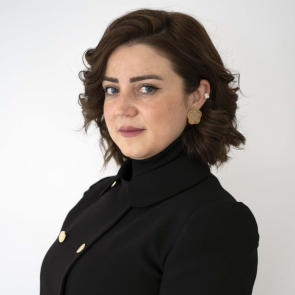
On 26 July 2023 Front Line Defenders stated that it stands in solidarity with Hiba Ezzideen Al-Hajji, and calls on the de facto authorities in Idlib to put an end to the targeting of the Syrian woman human rights defender.
Despite the efforts of human rights organisations, women human rights defenders in Syria continue to face many forms of restrictions and threats. In this context, Hiba Ezzideen Al-Hajji, a woman human rights defender and CEO of the feminist organisation Equity and Empowerment, has recently been targeted by a malicious online defamation campaign because of her work on women’s rights and democracy in Syria. On 4 July 2023, Hiba Ezzideen Al-Hajji received death threats from unknown individuals who disagreed with her advocacy efforts for “equality and democracy,” asserting that such work went against the teachings of Islam. Subsequently, the Facebook page of her organisation Equity and Empowerment was overwhelmed with hateful comments and threats, further escalating the distressing situation.
Those behind the defamation campaign are believed to be Jihadists operating in Idlib, northwestern Syria, where the woman human rights defender conducts her human rights work. The woman human rights defender has previously reported that these radical groups were responsible for similar threats, indicating a pattern of persecution and harassment against her and other human rights defenders in the area.
The attacks have also manifested in offline harm. On 18 July 2023, a family member of the woman human rights defender was insulted by a stranger who threatened them saying that if Hiba Ezzideen Al-Hajji does not stop her work, one of her family members will be killed. The defamatory narrative against Hiba Ezzideen Al-Hajji aims at inciting further hatred and violence against her, all in an effort to undermine her human rights work.
On 21 July 2023, an imam in the countryside outside of Idlib gave a sermon which mentioned the woman human rights defender Hiba Ezzideen Al-Hajji and the organisation Equity and Empowerment. The sermon called for the organisation to be closed, incorrectly mentioning its links to western states as a means of discrediting its work.
On 2 March 2020, Ahmed Shaheed, the UN Special Rapporteur on freedom of religion or belief declared that they “firmly reject any claim that religious beliefs can be invoked as a legitimate ‘justification’ for violence or discrimination against women or girls.”
The campaign has taken place over various online platforms, including WhatsApp, Facebook, Twitter and Telegram, using fake and verified accounts to post derogatory fake images of the human rights defender along with hateful captions. In addition to this, she has been subjected to death threats, harassment, and incitements against her and her family, along with doxing, deep fakes, threats of rape and sexual slurs.
Front Line Defenders believes that the defamation campaign is directly related to Hiba Ezzideen Al-Hajji’s work in defence of human rights, in particular her work towards the promotion of women’s rights in Syria. Front Line Defenders strongly condemns the defamation campaign against the woman human rights defender Hiba Ezzideen Al-Hajji. It calls on the de facto authorities in Idlib to put an end to the targeting of the woman human rights defender, including the defamation campaign, and demands that Hiba Ezzideen Al-Hajji’s safety and well-being be protected as well as that of all women human rights defenders facing similar threats and attacks in the country.






 Hans Thoolen on Human Rights Defenders and their awards