Author Archive

National Human Rights Institutions of Egypt and Bahrain fail the Paris Principles

October 30, 2023
Palais Wilson shutterstock 1084789991

In a letter addressed to the Sub-Committee on Accreditation (SCA) of the Global Alliance of National Human Rights Institutions (GANHRI), civil society organisations, including the FIDH and the World Organisation Against Torture (OMCT), warn that Bahrain and Egypt do not comply with the Paris Principles, failing to respect the very pillars of these principles: pluralism, independence and effectiveness.

The undersigned civil society organisations believe that the two countries’ NHRIs have failed to comply with the Paris Principles and to implement recommendations outlined by the SCA’s previous reports in 2016 and 2018, respectively.

The Paris Principles define the minimal standards that NHRIs must abide by “in order to be considered credible and to operate effectively.” The pillars of these principles are pluralism, independence and effectiveness. NHRIs must be independent from the government, represent and cooperate with civil society, and effectively promote human rights by monitoring violations and addressing them. Based on civil society reports, the Bahraini and Egyptian NHRIs fall short of these standards.

In Bahrain, all the current members of the National Institution for Human Rights (NIHR) were appointed by King Hamad through a royal decree issued on 9 May 2021, and there is no democratic or independant mechanism through which these selections are made. The current Chairman of the NIHR, Ali al-Derazi, was reportedly implicated in abuses against migrant workers. Furthermore, the Vice-Chairperson of the NIHR, Mr. Khaled Abdulaziz Alshaer had previously called on those who criticised the Bahraini government to receive the death penalty.

In August 2022, the UN Committee on Economic, Social and Cultural Rights concluded that “[the NIHR] has not yet attained the independence required to perform its functions.” Previously in 2018, the UN Human Rights Committee had expressed similar concern and “[regretted] the lack of information on the complaints [the NIHR] has received and the investigations it has carried out in response to those complaints.”

In addition, Bahrain’s NIHR fails to address and outright denies the human rights abuses committed by the authorities, including arbitrary detention, ill-treatment and medical negligence in various detention facilities. This contradicts the UN Working Group on Arbitrary Detention’s findings regarding Abduljalil al-Singace, Abdulhadi al-Khawaja and Naji Fateel, three Bahraini human rights defenders who were arbitrarily detained, tortured, medically neglected and subjected to sham trials. [see also: https://humanrightsdefenders.blog/tag/bahrain/]

As for the Egyptian National Council for Human Rights (NCHR), it also lacks independence from the government. In 2021, new members of the NCHR were appointed for four years. The Chair, Ms. Moushira Khattab, and the Vice-President, Mr. Mahmoud Karem Mahmoud are both former Egyptian officials and diplomats. In both 2014 and 2018, Mahmoud was the coordinator of al-Sisi’s presidential campaign, which clearly demonstrates the NCHR’s close relationship with the executive.

In March 2023, the UN Human Rights Committee had echoed these concerns over the “lack of safeguards to ensure [the NCHR’s] full independence and effectiveness”, as well as over “the lack of information provided on the effective implementation of its recommendations.”

The NCHR has left hundreds of complaints unanswered and blatantly denies that certain human rights abuses are being committed. In 2020, the Council stated that findings of the UN Committee against Torture, according to which torture was “systematic” in Egypt, were a “politicized categorization” seeking to “undermine the efforts of the government”. The NCHR has also remained silent on prominent human rights issues such as the practice of enforced disappearance or the dire conditions of detention. In July 2023, the Council’s president compared a new correctional facility in Wadi al-Natroun to a “5-star hotel”. We believe that the Egyptian NCHR is far from acting as a NHRI with “A” status, which it has worryingly been granted since 2006 by the SCA. [see also: https://humanrightsdefenders.blog/tag/egypt/]

In light of the above, it is clear that the NHRIs of Bahrain and Egypt have consistently failed to comply with the Paris Principles and to implement the SCA’s recommendations.

We urge you to consider the aforementioned shortcomings of Bahrain and Egypt’s NHRIs when reviewing them during your upcoming session, and to not grant them status “A”.

Signatories:

  • Bahrain Institute for Rights and Democracy (BIRD)
  • CIVICUS
  • Democracy for the Arab World Now (DAWN)
  • Egyptian Commission for Rights and Freedoms
  • Egyptian Front for Human Rights (EFHR)
  • El Nadeem against Violence and Torture
  • Human Rights Foundation (HRF)
  • HuMENA for Human Rights and Civic Engagement
  • International Federation for Human Rights (FIDH) – within the framework of the Observatory for the Protection of Human Rights Defenders
  • International Service for Human Rights (ISHR)
  • Law and Democracy Support Foundation (LDSF)
  • MENA Rights Group
  • Rights Realization Centre (UK)
  • Salam for Democracy and Human Rights (SALAM DHR)
  • The #FreeAlKhawaja Campaign
  • The Freedom Initiative (FI)
  • World Organisation Against Torture (OMCT) – within the framework of the Observatory for the Protection of Human Rights Defenders

https://www.omct.org/en/resources/statements/bahrain-and-egypts-national-human-rights-institutions-do-not-comply-with-the-paris-principles

Human rights defender Oleg Orlov in further trouble

October 30, 2023

The Prosecutor’s Office has appealed against the verdict passed to human rights defender, Oleg Orlov, who was fined on charges of discrediting the Russian Army, and demanded to sentence him to three years in colony. [see: https://humanrightsdefenders.blog/2022/04/01/grim-times-for-human-rights-defenders-and-real-journalists-in-russia/]

The “Caucasian Knot” has reported that on October 11, the Golovinsky District Court of Moscow sentenced Oleg Orlov, a co-chairman of the “Memorial” Centre for Human Rights Defence, to a fine of 150,000 roubles. At the same time, the prosecutor asked the court to fine Orlov by 250,000 roubles, and his defence stated that the article of the Criminal Code about discrediting the Russian Army was contrary to the Russian Constitution and the international law.

The reason to accuse Orlov was a Russian translation of his article posted on the Facebook*; the original was published in the French outlet named “Mediapart”. The article condemns the special military operation (SMO) in Ukraine.

On October 26, Orlov and his defence filed a complaint against the court verdict, the above “Memorial” Centre reported in its Telegram channel.

“The PO has also challenged the verdict. They demand to sentence Orlov to three years of freedom deprivation – this is the maximum punishment under the article under which he is being tried,” the outlet says.

The PO has justified the change in its position by saying that Orlov experiences political and ideological hatred of the Russian Federation, and also, together with the “Memorial”, continues undermining the stability of the civil society.

Oleg Orlov has treated the PO’s appeal presentation as “an act of self-exposure.” “Now no one can doubt that this trial was and continues to be of a political nature. I am being prosecuted for my dissent,” he has noted.

https://eng.kavkaz-uzel.eu/articles/63362

Death threats against Ecuadorian human rights defender Javier Medardo Feijoo Villa

October 22, 2023

On 20 October 2023 Front Line Defenders wrote that between 2 October 2023 and 16 October 2023, human rights defender Javier Medardo Feijoo Villa received several death threats via phone calls and voice messages towards both him and his family. The unidentified perpetrators claimed that they were keeping the human rights defender under surveillance, and maintained that they had access to his data and aware of all his moves within the community.l

Javier Medardo Feijoo Villa is the president of the Estero Piedras community, located in the coastal area of the Molleturo on Azuay province. This community is also part of the San Felipe de Molleturo Commune, an ancestral territory that has been of great importance to the region, given that it has fought to defend against attempts by transnational mining companies to dispossess the people in the region of their land and water sources. He is also president of the North Zone Road Committee, which represents 15 communities in the region. As a community leader, the human rights defender has sought support from the competent authorities to stop criminal acts and illicit activities, mainly assaults and robberies caused by criminal groups that threaten the area. Javier has played an important role in the defence of water, nature and the territories belonging to the communities who he represents.

Since 2 October 2023, human rights defender Javier Medardo Feijoo Villa has been the target of several death threats. Over the course of two weeks, he has received calls and voice messages threatening to kill him and his family. The callers claimed to be keeping the human rights defender under surveillance, and maintained that they had access to his data, as well as all his moves. The level of violence articulated in these threats increased over the weeks, causing the human rights defender to stop responding to messages or calls altogether, and provoking him to block the numbers of those who called him. The threats continued up until 16 October 2023. The human rights defender has been filing relevant complaints with the Prosecutor’s Office about the recent threats and has requested that the Police Commander of Zone 6 take the necessary measures protect him and his family.

Violence against human rights defenders working on indigenous, land and environmental rights has been on the rise in Ecuador; human rights defenders Andrés Durazno and Alba Bermeo were murdered in 2021 and 2022 respectively. Still to this day no one has been charged with their murder.

https://www.frontlinedefenders.org/en/case/ecuador-death-threats-against-human-rights-defender-and-community-leader-javier-medardo-feijoo

EU’s Lorenzo Natali Media Prize 2023 to 3 Venezuelan journalists

October 21, 2023

The winners of this year’s edition of the Lorenzo Natali Media Prize, awarded by the European Commission, were announced on 11 October at a ceremony hosted at the Solvay Library in Brussels.

The winners of the International Prize are:

Three Venezuelan journalists Carmen Victoria Inojosa, Claudia Smolansky and a third whose name cannot be disclosed for security reasons, were awarded the International Prize for their compelling article ‘Así funcionan las casas clandestinas de la Dgcim en Caracas‘ published in Armando.info. Their work exposed the harrowing reality of systematic persecution in Venezuela, targeting political opponents and their families with alarming impunity.

For more on this award see: https://www.trueheroesfilms.org/thedigest/awards/D49ECF35-4B42-444D-B4FA-F7ACE2BF65BC

Lorenzo Natali Media Prize website

https://ec.europa.eu/commission/presscorner/detail/en/ip_23_4881

Mahsa Amini and Woman, Life and Freedom Movement in Iran awarded EU’S Sakharov Prize

October 19, 2023
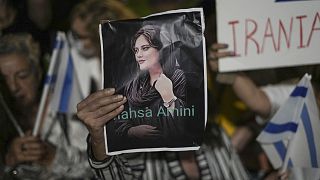
Women attend a protest against the death of Mahsa Amini, a woman who died while in police custody in Iran, during a rally in Tel Aviv, Oct. 29, 2022.

 Euronews reported on 19 October 2023 that Mahsa Amini and the Woman, Life and Freedom Movement in Iran were awarded the European Parliament’s Sakharov Prize for Freedom of Thought.

The 16 September 2022 is a date that will live in infamy and the brutal murder of 22-year-old Jina Mahsa Amini marked a turning point. It has triggered a women-led movement that is making history,” European Parliament President Roberta Metsola said after announcing the winner. 

Two other nominees made it on the finalist shortlist: Women rights’ defenders and Nicaraguan activists. See: https://humanrightsdefenders.blog/2023/10/18/sakharov-prize-2023-finalists-announced/

Sakharov Prize 2023: finalists announced

October 18, 2023

On 18 October, 2023 European Parliament published the names of the finalists of the European Parliament’s Sakharov Prize for Freedom of Thought. For more on this and other awards, see: https://www.trueheroesfilms.org/thedigest/awards/BDE3E41A-8706-42F1-A6C5-ECBBC4CDB449. The finalists were chosen in a vote by the foreign affairs and development committees on 12 October.

The 2023 Sakharov Prize finalists are:

  • 19 October: Parliament President Roberta Metsola and the political group leaders decide on the winner  
  • 13 December: the Sakharov Prize award ceremony takes place in Strasbourg.

2023 Sakharov Prize: finalists chosen

Laurie Wiseberg, pioneer human rights defender, is no more

October 16, 2023

On 12 October 2023, Laurie Wiseberg’s son, Jesse Scoble, informed the world on her passing on 11 October 2023 in Montréal. 

It is with great sadness that I announce the passing of Dr. Laurie Sheila Wiseberg, Laurie to most, Dr. Wiseberg to a few, Libby to her family, Nama to my kids, and mom to me. How does one sum up a life, let alone one as impressive and eventful as hers?

It would take another lifetime to try to capture it. She described herself in simple terms as:

Dr. Laurie S. Wiseberg (project advisor and contributor) was a human rights scholar/advocate who taught and wrote extensively about the work of human rights for non-governmental organizations. She served as Executive Director of a human rights NGO (Human Rights Internet) for 20 years. Dr. Wiseberg spent the following 20 years doing humanitarian work “in the field”, assisting United Nations agencies in providing better protection for persons displaced as a result of conflict or environmental disasters in countries across the globe.

Jesse will write a proper obit for her in the coming days, but wanted us to know that after a year long struggle she left this world on her own terms. “A glass of red wine in her hand“.

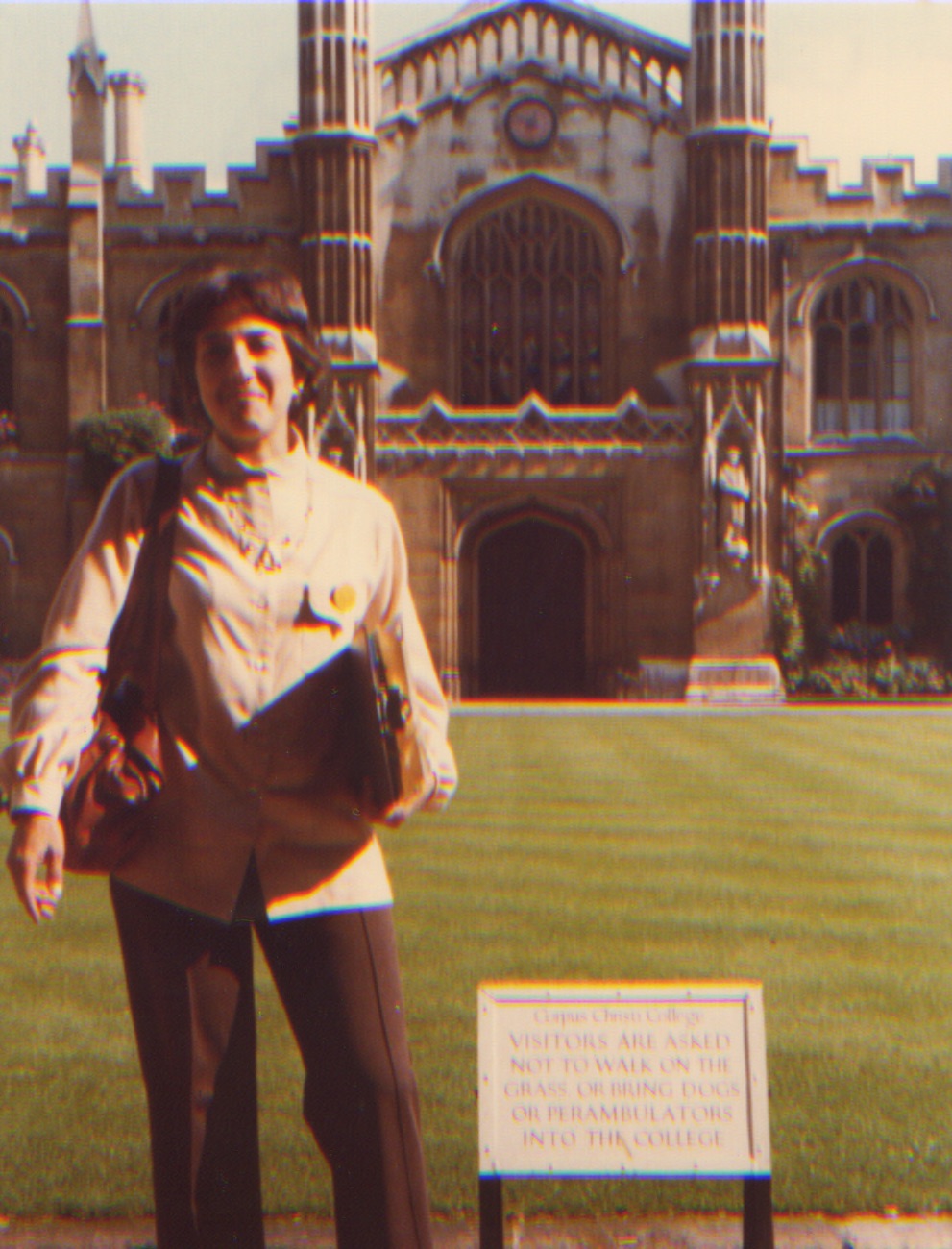
I personally have known Laurie almost all of my ‘human rights life’, starting with the creation of HURIDOCS some 40 years ago. Here the first picture i have of her, September 1978 in Cambridge at an Amnesty meeting.

Results of the 54th session of the UN Human Rights Council

October 15, 2023

On 13 October 2023 the ISHR and other NGOs shared their reflections on the key outcomes of the 54th session of the UN Human Rights Council [see: https://humanrightsdefenders.blog/2023/09/11/human-rights-defenders-at-the-54th-session-of-the-un-human-rights-council/:

…We firmly condemn all crimes and other grave violations under international law committed by both Israel and Palestinian armed groups. Targeted and indiscriminate attacks against civilians can never be justified. We call on the ICC Office of the Prosecutor to accelerate its investigation into serious crimes committed by all parties in Palestine and Israel. We call on Israel to ratify the Rome Statute, and for the ICC to hold both State and non-State perpetrators of international crimes accountable. We call on the Commission of Inquiry to address the situation within the context of its root causes: settler colonialism, apartheid, and denial of the fundamental rights to self-determination and return of the Palestinian people, all amounting to grave violations of international law. We call on governments to immediately stop providing political and military support to Israel, while Ministers manifest a genocidal intent against Palestinians. On 9 October 2023, Yoav Gallant, Israel’s Minister of Defense, stated: “We are imposing a complete siege on [Gaza]. No electricity, no food, no water, no fuel – everything is closed. We are fighting human animals, and we act accordingly”. We deplore the dehumanization of all people, including not mentioning  Palestinian civilians’ killings in statements in this Council. As we gear up to celebrate the 75th anniversary of the UDHR, we remind this Council that for 75 years, generations of people in Gaza and historic Palestine have not been born free and equal in dignity and rights. Until this is addressed, the cycles of violence will not end. As Israel continues to bomb the Rafah crossing, the international community has a duty to guarantee immediate humanitarian access to besieged Gaza. We call on States to establish an international protective presence in the OPT, as called for by UN Special Procedures.  For 75 years, the international community has enabled impunity and failed to fulfill the right to self-determination of Palestinian people, including through their legitimate right to resist colonialism.

The Council has shown that it does have an important role to play in addressing violations amidst multiple human rights crises. We welcome the establishment of the mechanism on Sudan and the extension of the Special Rapporteur on Russia, inter alia, in this regard. But these stand in stark contrast to its failure to renew the critical mandate on Ethiopia, particularly in light of the expert finding of the acute risk of ongoing and further atrocity crimes, as well as other Council blind spots where mounting human rights violations remain ignored. We stress the need for the Council to take a principled approach and to address situations on their merits. 

We remain deeply concerned about reprisals against civil society actors who engage or seek to engage with UN bodies and mechanisms. We call on all States and the Council to do more to address the situation, including raise concerns about specific cases of reprisals and demand that governments provide an update on any investigation or action taken toward accountability. We welcome the adoption of the resolution on cooperation with the UN, including the reference to adequately resourced dedicated civil society focal points, however we are disappointed that several proposals by States and civil society to strengthen the text were not taken on board. The Secretary General’s most recent report on reprisals notes increased physical and digital surveillance of those cooperating with the UN and application of laws aimed at punishing or deterring cooperation. While the resolution takes notes of these trends we regret that the resolution does not fully address how these should be addressed. We welcome the strong focus on prevention and emphasis given to accountability. Nonetheless, the preventative role the Council could play in regard to reprisals, as signs of deterioration in civic space conditions, is overlooked. In addition, States’ monitoring and reporting responsibilities in relation to allegations of acts of intimidation or reprisal could be addressed more fully. Also, we welcome the call to the SG for adequate resources to be allocated to OHCHR to prevent and address allegations.

We welcome the resolution on preventable maternal mortality and morbidity, which reiterates that PMMM is a human rights issue that requires a human rights-based approach response, centering inter alia the principles of accountability, meaningful participation of primarily affected people, non-discrimination and equality and transparency. The resolution aims at garnering political will to curb maternal mortality and morbidity rates that have been stagnating and failing to meet SDGs targets. The resolution rightly highlights the full realization of the right to sexual and reproductive health and the provision of comprehensive sexual and reproductive health information and services, including comprehensive sexuality education and safe abortion (with the caveat of not when against national law), as pre-conditions to lower PMMM. We welcome the call to update the technical guidance on a HRBA to PMMM. We however deplore the amendments put forward seeking to weaken the text and apply a protectionist lens to women’s rights to bodily autonomy, taking away their agency and their status of full rights holders under IHRL.

We express our support for a new resolution on the right to privacy in the digital age, which contains strong new standards under the theme of data protection. The resolution also contains stronger language on remote biometric surveillance systems, such as facial recognition, stressing that they raise serious concerns with regard to their proportionality. While we applaud that the resolution acknowledges that some applications of new and emerging technologies may not be compatible with international human rights law, we call for future iterations to take a step further in establishing “red lines” and to call for bans of such technologies. We also urge the core group to address other emerging issues for the right to privacy in the future, such as social media monitoring.

We welcome the adoption of the resolution on the question of the death penalty aimed at ensuring that criminal justice systems are consistent with international human rights obligations in relation to capital punishment, with a focus on the relation between Art 6 and Art 14 of the ICCPR, particularly on the right to seek pardon or commutation of the sentence, and the right to have one’s conviction reviewed by a higher tribunal according to law. In accordance with the safeguards guaranteeing the protection of the rights of those facing the death penalty, as set out in the annex to Economic and Social Council Resolution 1984/50. We welcome that any attempt by a number of States to undermine the aim of the resolution through a number of amendments, have been rejected.           

We welcome the adoption of the resolution from rhetoric to reality: a global call for concrete action against racism, racial discrimination, xenophobia and related intolerance’ and the mandate renewal of the Working Group of Experts of People of African Descent (WGEPAD). We welcome that the rhetoric to reality resolution, interalia, strongly condemns the discriminatory treatment, unlawful deportations, excessive use of force and deaths of African migrants and migrants of African descent, including refugees and asylum-seekers, at the hands of law enforcement officials engaged in migration and border governance. It calls on States to ensure accountability and reparations for human rights violations at borders and to adopt a racial justice approach, including by adopting policies to address structural racism in the management of international migration. However, we regret that it did not reiterate that the transatlantic trade in enslaved Africans and colonialism were grave violations of international law that require States to make reparations proportionate to the harms committed and to ensure that structures in the society that are perpetuating the injustices of the past are transformed, including law enforcement and the administration of justice. We urge all States to fully implement the Durban Declaration and Programme of Action (DDPA). We also call on States to fully cooperate with the WGEPAD and EMLER including by accepting country visits, and implementing their recommendations as well as those from the Permanent Forum and the High Commissioner’s Agenda towards Transformative Change for Racial Justice and Equality.

We welcome the adoption of the resolution on the human rights situation in the Russian Federation, and the re-mandating of the Special Rapporteur. The human rights situation in Russia has drastically deteriorated in the past year, and the Special Rapporteur needs more time to report on the general situation in the country and the Council to equally be able to scrutinize the situation.

We welcome the adoption of the resolution on a Working Group on the rights of Peasants and Other People Working in Rural Areas. The resolution recognizes the contributions of peasants and other people working in rural areas in ensuring the right to adequate food and nutrition, a clean, healthy and sustainable environment, as well as to conserving and improving biodiversity. It calls upon all States and all stakeholders to cooperate fully with the Working Group on the Rights of Peasants and Other People Working in Rural Areas. The establishment of an interdisciplinary WG with balanced geographical representation will promote the effective and comprehensive implementation of the UNDROP and provide opportunities to share and promote good practices and lessons learned on the implementation of the UNDROP.

We welcome the adoption of the resolution on Afghanistan, which extends and strengthens the mandate of the Special Rapporteur. However, we are dismayed that the HRC once again failed to establish an independent investigative mechanism, despite compelling evidence for its need. This risks the entrenchment of impunity for crimes against humanity. This body must center rights holders and survivors, and heed the call of Afghan civil society, who have consistently asked for such a mechanism. We urge States to recognise the situation of women and girls in the country as amounting to gender apartheid, and to support the codification of this crime in the draft Articles on Crimes against Humanity.

We regret that the item 10 resolution on Yemen, again fails to respond to the urgent need for accountability for past and on-going violations and abuses in Yemen.

We welcome the adoption of the resolution on the enhancement of technical cooperation and capacity-building in the field of human rights and its focus on the Universal Periodic Review. The resolution contains a number of key references to the positive role civil society plays in technical assistance, and the possible role multi-stakeholder partnerships between States, UN agencies and civil society can play in supporting the implementation of international human rights obligations by UN Member States. The establishment of an online repository of technical cooperation and capacity-building activities could help civil society identify advocacy opportunities in regards to country-specific situations, in collaboration with UN agencies, as well as opportunities to share best practices and capitalize on lessons learned in regard to technical assistance.

We welcome the renewal of the mandate of the Special Rapporteur on the situation of human rights in Cambodia. In a context defined by systematic targeting and silencing of human rights defenders, critics and political opponents, the Special Rapporteur’s independent and objective assessment of the situation is more important than ever. However, we regret that the resolution once again failed to adequately reflect the reality of the situation and attempted to justify continuing restrictions on civil and political space on the basis of the country’s political and historical particularities as well as national legislation that contradict its international obligations.

We welcome the resolution on the rights of older persons and its important focus on the right of older persons to live free from violence, abuse, and neglect. Now, more needs to be done to ensure that older persons’ rights are protected in reality, including by establishing an international treaty on the rights of older persons.

We welcome the allocation of additional resources to the OHCHR in the area of economic, social and cultural rights, with the adoption of the resolution on ESCR and inequalities.

One year after the release of the OHCHR report finding possible crimes against humanity committed by China against Uyghurs and Muslim minorities, we deplore the sustained failure of this Council to engage in dialogue on the matter, let alone prevent the continuation of abuses. We regret the absence of a joint statement on China at the Council in 2023. The CESCR, the CEDAW, the CERD, the OHCHR, the ILO, as well as Special Procedures through three joint statements, nearly 30 press releases and over 100 letters to the government since 2018, have provided overwhelming evidence pointing to systematic and widespread human rights violations across the country. So long as the Council is not able to take principled action on the basis of objective criteria, other powerful perpetrators will feel empowered to continue committing atrocity crimes, relying on the Council’s silence. We reiterate our pressing call for all Council Members to support the adoption of a resolution establishing a UN mandate to monitor and report on the human rights situation in China.

Finally, we note the outcomes of the Human Rights Council elections. We welcome that Russia’s candidacy was defeated but regret the election of other members responsible for atrocity crimes, widespread civil society repression, and patterns of reprisals.

Signatories: International Service for Human Rights (ISHR), International Federation for Human Rights (FIDH), GIN SSOGIE NPC, Cairo Institute for Human Rights Studies, FIAN International, Asian Forum for Human Rights and Development (FORUM-ASIA).

See also: https://www.jurist.org/news/2023/10/un-human-rights-council-adopts-5-new-resolutions-including-renewal-of-un-mandate-in-burundi/ 

https://ishr.ch/latest-updates/hrc54-civil-society-presents-key-takeaways-from-human-rights-council/

https://rightlivelihood.org/news/54th-un-human-rights-council-we-shed-light-on-activist-repression-indigenous-peoples-plight-in-nicaragua-environmental-degradation/
Climate Human Rights Defenders increasingly seen as eco-terrorists

October 15, 2023

Damien Gayle, Matthew Taylor and Ajit Niranjan in the Guardian of 12 October 2023 published the result of their research in Europe into using repressive measures to silence climate activists[see: https://humanrightsdefenders.blog/2023/10/04/human-rights-platform-at-the-gulbenkian-foundation-hears-michel-forst-worries-about-treatment-of-climate-defenders/]

In Germany, France, Italy, Sweden, the Netherlands and the UK, authorities have responded to climate protests with mass arrests, the passing of draconian new laws, the imposing of severe sentences for non-violent protests and the labelling of activists as hooligans, saboteurs or eco-terrorists. The crackdowns have come in spite of calls by senior human rights advocates and environmental campaigners to allow civic space for the right to non-violent protest, after a summer of record-breaking heat in southern Europe that is attributed to the effects of climate breakdown.

The UK has led the way in the crackdown, experts say, with judges recently refusing an appeal against multi-year sentences for climate activists who blocked a motorway bridge in east London. The three-year jail terms for Marcus Decker and Morgan Trowland earlier this year are thought to be the longest handed out by a British judge for non-violent protest.

Michel Forst, the UN rapporteur on environmental defenders since June last year [not really, for his correct title is the “Special Rapporteur on Environmental Defenders under the Aarhus Convention, Mr. Michel Forst” [see: https://humanrightsdefenders.blog/2022/07/22/aarhus-convention-on-environmental-information-gets-especially-experienced-rapporteur/], described the situation in the UK as “terrifying”. He added that other countries were “looking at the UK examples with a view to passing similar laws in their own countries, which will have a devastating effect for Europe”.

“Since my appointment I have been travelling to many countries in Europe and there is a clear trend,” Forst told the Guardian. “We can see an increasing number of cases by which these climate activists are brought to court more and more often and more and more severe laws being passed to facilitate these attacks on defenders.”

He added: “I’m sure that there is European cooperation among the police forces against these kinds of activities. My concern is that when [governments] are calling these people eco-terrorists, or are using new forms of vilifications and defamation … it has a huge impact on how the population may perceive them and the cause for which these people are fighting. It is a huge concern for me.”

Amnesty International said it was investigating a continent-wide crackdown on protest. Catrinel Motoc, the organisation’s senior campaigner on civil space and right to protest in Europe, said: “People all around the world are bravely raising their voices to call for urgent actions on the climate crisis but many face dire consequences for their peaceful activism.

“Peaceful protesters are left with no choice but to stage public protests and non-violent direct actions because European countries are not doing enough to tackle the climate crisis.

“There’s alarming evidence of criminalisation, harassment, stigmatisation and negative rhetoric towards environmental defenders.”

In June, Dunja Mijatović, the Council of Europe’s commissioner for human rights, also called for an end to crackdowns on environmental activists. Last December, Volker Türk, the UN’s high commissioner for human rights, appealed to governments to protect the “civic space” for young environmental activists, and “not crack down in a way that we have seen in many parts of the world”.

There was widespread outrage this summer when France’s interior minister, Gérald Darmanin, used one of the state’s most-powerful tools to order the banning of one of the country’s leading environmental protest groups. Les Soulévements de la Terre, a collective of local environmental campaigns, had staged a series of protests, with tactics including sabotage, that ended with violent confrontations with police, and Darmanin denouncing the activists as “far left” and “ecoterrorists”.

In the Netherlands, one of a series of roadblock protests on the A12 highway in The Hague in May was dispersed by police using water cannon, with more than 1,500 arrested. Seven climate activists were convicted of sedition – a charge that had never before been levelled against climate protesters – in relation to online posts calling for people to join an earlier demonstration.

In Sweden, about two dozen members of the Återställ Våtmarker [Restore Wetlands] group were convicted of sabotage for blocking highways in the capital, Stockholm. Others were held on remand for up to four weeks for taking part in protests.

In Germany in May, police staged nationwide raids against the Letzte Generation (Last Generation) group, whose supporters had glued themselves to roads on a near-weekly basis for months, as well as targeting art galleries and other cultural spaces. On a police directive, the homepage of the group was shut down and possessions belonging to members were seized.

At the most recent count, supplied by the activists, police had made more than 4,000 arrests of supporters of Last Generation taking part in road blocks in Berlin alone.

Authorities in Italy have used anti-organised crime laws to crack down on protests, where the Ultima Generazione (also Last Generation) group has staged road blocks since last year. The Digos police unit, which specialises in counter-terrorism, in April justified the use of anti-Mafia laws to target the group by saying its civil disobedience actions had not taken place spontaneously, but were organised, discussed and weighed up by an internal hierarchy. This came along with new, stiffer penalties for protests, with activists facing fines of up to €40,000 for actions targeting artworks and other cultural heritage.

Richard Pearshouse, director of the environment division at Human Rights Watch, said: “These restrictions on environmental protest across Europe and the UK are incredibly short-sighted. These governments haven’t grasped that we all have a huge interest in more people taking to the streets to demand better environmental protection and more climate action.

“Governments need to respect the rights to assembly and expression, and ramp up their own environmental protections and climate ambitions. That’s the only way we have a chance to get out of this climate crisis with our democratic institutions intact.”

A spokesperson for the UK Home Office said: “The right to protest is a fundamental part of our democracy but we must also protect the law-abiding majority’s right to go about their daily lives.

“The Public Order Act brings in new criminal offences and proper penalties for selfish, guerrilla protest tactics.”

The French interior ministry said local officials had the right to ban demonstrations with a serious risk of disturbing public order. “These one-off bans, of which there are very few in absolute terms, are not imposed because of the reason for the demonstration.”

The Italian interior ministry referred to a statement from the culture minister Gennaro Sangiuliano in April, who said attacks on monuments cause economic damage to the community that is is expensive to clean up. “Those who cause damage must pay personally.”

The German interior ministry declined to comment. The Bavarian interior ministry referred the Guardian to the public prosecutor’s office in Munich, which provided a statement from June in which it confirmed it had authorised the tapping of phones for six of seven Last Generation members under criminal investigation.

The Swedish interior ministry declined to comment. The Dutch ministry of justice did not respond to requests for comment.

https://www.theguardian.com/environment/2023/oct/12/human-rights-experts-warn-against-european-crackdown-on-climate-protesters

and later followed by:

https://globeecho.com/politics/climate-protesters-in-europe-face-a-massive-crackdown/

https://www.ohchr.org/en/statements-and-speeches/2023/10/environmental-rights-are-key-all-human-rights-turk-says

Elections to the next UN Human Rights Council: some good and quite some bad news

October 13, 2023

A year after being suspended from the body, Russia will not be returning to the UN Human Rights Council in January, despite its best efforts. Running for one of two seats allocated to countries from Central and Eastern Europe, Russia received only 83 votes, significantly less than competitors Albania (123) and Bulgaria (163).

With this vote, States have acted in line with General Assembly resolution 60/251 and stopped Russia’s brazen attempt to undermine the international human rights system,’ said Madeleine Sinclair, co-director of ISHR’s New York office. ‘Russia must answer for a long list of crimes in Ukraine and for its ruthless and longstanding crackdown on civil society and individual liberties at home. We’re relieved voting States agreed that it could not have legitimately held a seat at the UN’s top human rights body,’. [see also: https://humanrightsdefenders.blog/tag/russia/]

In the only other competitive race, between States from Latin American and the Caribbean, the General Assembly re-elected Cuba, one of Russia’s most consistent allies. Cuba ran for one of three seats for Latin America and the Caribbean, facing three competitors and coming in first, with 146 votes, ahead of Brazil (144), the Dominican Republic (137) and Peru (108).

Results for Asia and Africa were as disappointing as they were predictable, with the election of China and Burundi. Both States ran in uncompetitive races, with only as many candidates as seats available, thus all but assured to win. They were elected with 154 (China) and 168 (Burundi), finishing bottom of each of their respective regional slates with noticeably fewer votes than their direct competitors. 

Both countries are objectively and manifestly unsuitable for the Human Rights Council in view of their domestic records, their past actions as Council members, and the very criteria that nominally governs membership of the Council.

ISHR has been campaigning to call on States at the General assembly to vote in accordance with resolution 60/251 and to use their votes to ensure a strong and principled Human Rights Council. ISHR produced a series of individual and regional scorecards examining the records of all 17 candidates running this year.

https://ishr.ch/latest-updates/general-assembly-states-stave-off-cynical-russian-attempt-to-return-to-the-human-rights-council/

For more on scoring, see: https://www.universal-rights.org/2023-elections-to-the-human-rights-council-did-ga-members-vote-according-to-human-rights-criteria/