Billy Porter is an American actor and singer, who first gained notice performing on Broadway before embarking on a solo career. He is a Grammy, Emmy and two-time Tony Award winner. He is a trailblazer in especially in the LGBTQI+ community including being first openly gay Black man to win an Emmy award. His performance of Audacity at the Royal Albert Hall in London was a world exclusive performance for the Human Rights 75 Concert on 10 December, 2023 in commemoration of the 75th anniversary of the Universal Declaration of Human Rights. #HumanRights75 and #act4rightsnow
Author Archive
Billy Porter performs for UDHR@75
December 13, 2023Jaw-dropping contempt for human rights by the Emirates
December 13, 2023On 12 December 2023 Amnesty International UK issued a press release about a mass prosecution of human rights activists during COP28 by the UAE. Ahmed Mansoor, subject of an Amnesty UK protest during a Man City game last month, is among those facing new trumped-up terrorism charges. [see: https://www.trueheroesfilms.org/thedigest/laureates/074ACCD4-A327-4A21-B056-440C4C378A1A]
Responding to news that the Emirati authorities have begun a mass prosecution on trumped-up terrorism charges of more than 80 Emirati human rights activists – including renowned currently-jailed Emirati human rights activists who have already spent a decade behind bars – Aya Majzoub, Amnesty International’s Middle East and North Africa Deputy Director, said:
“To begin hearings in a new sham mass trial in the midst of what it billed as ‘the most inclusive COP ever’, is a jaw-dropping show of contempt for human rights by the Emirati authorities. The timing appears to be deliberately intended to send a clear message to the world that it will not tolerate the slightest peaceful dissent and that the authorities have no intention of reforming the country’s dire rights record. COP28 has already laid bare the barriers of fear and legalised repression that smother dissent in the UAE.
“The UAE must immediately release all arbitrarily-detained prisoners, drop charges against them and end their ruthless assault on human rights and freedoms.”
The new mass trial – first reported by the Emirates Detainees Advocacy Centre and confirmed to Amnesty by exiled Emirati activists – is a joint prosecution of more than 80 defendants, including victims of a past mass trial such as Mohamed al-Siddiq, father of the late exiled Emirati human rights defender Alaa al-Siddiq, prisoners of conscience such as Khalid al-Nuaimi, Hadef al-Owais, Nasser bin Ghaith and Sultan al-Qasimi, and longstanding human rights defenders such as Mohamed al-Roken and Ahmed Mansoor (see below).
Fresh charges against Ahmed Mansoor
Last month, Amnesty UK campaigners flew a protest plane over Manchester City FC’s Etihad Stadium carrying a large banner saying “UAE – Free Ahmed Mansoor”. Mansoor is a blogger, poet and leading Emirati human rights activist who has been in jail and kept in solitary confinement in the UAE since 2017 as a direct result of his campaigning activity. In 2017, Mansoor was convicted on charges which included “insulting the status and prestige of the UAE and its symbols”, “publishing false information to damage the UAE’s reputation abroad” and “portraying the UAE as a lawless land”. The following year, Mansoor was sentenced to ten years’ imprisonment, with the sentencing court also ordering that he be placed under surveillance for three years after release. His conviction and sentence were upheld by the country’s supreme court on 31 December 2018.
https://www.amnesty.org.uk/press-releases/uae-authorities-launch-mass-prosecution-human-rights-activists-during-cop28
https://www.hrw.org/news/2023/12/14/uae-prominent-critics-face-new-charges
In early 2024 confirmed: https://www.washingtonpost.com/world/2024/01/06/uae-mass-trial-muslim-brotherhood-detained-activists/daff80e4-ac6e-11ee-bc8c-7319480da4f9_story.html
UDHR@75: how UNDP sees itself ensuring rights for all
December 11, 2023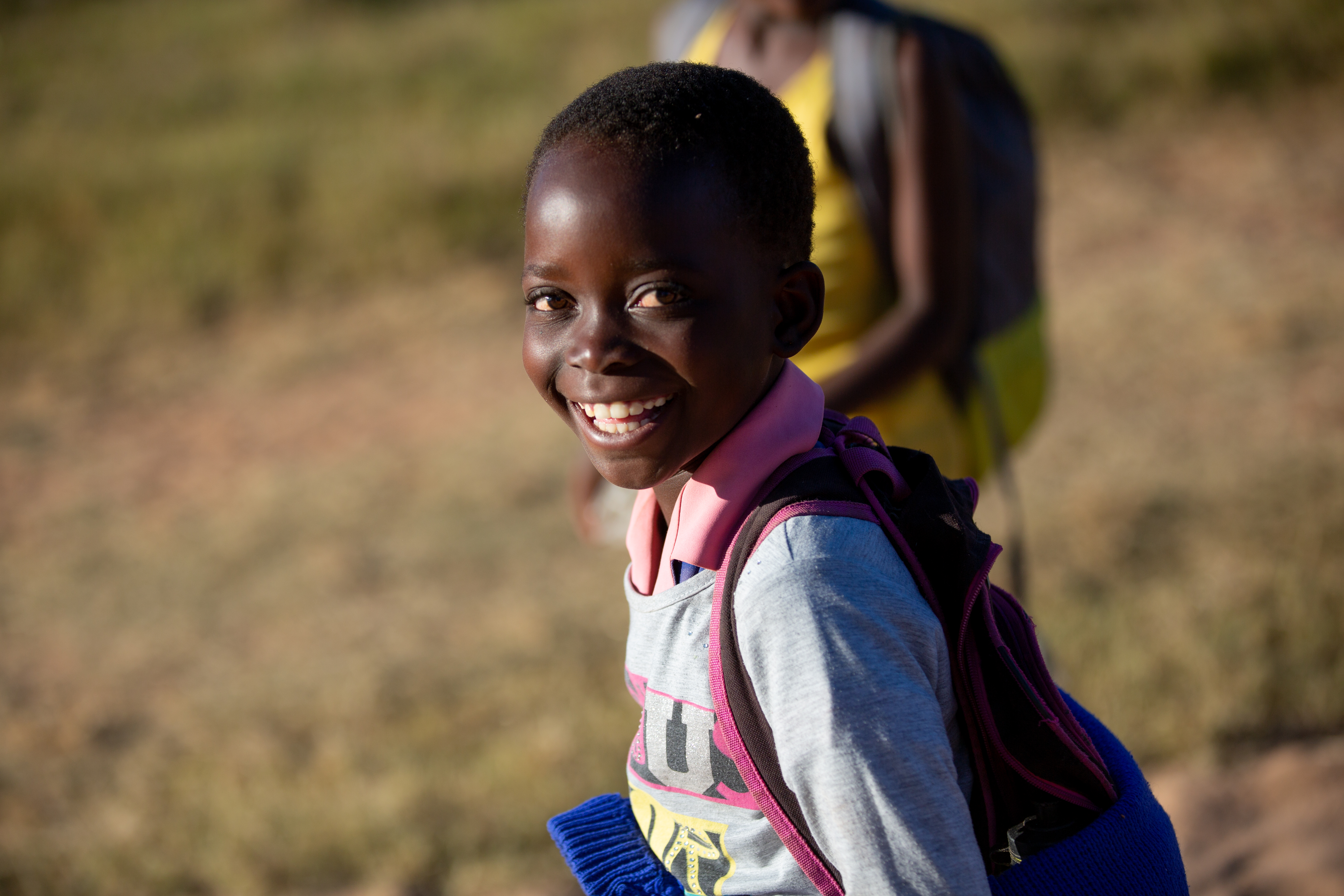
On 8 December, 2023 the United Nations lead agency on international development, UNDP, posted its commitment to human rights:
..Protecting our rights to do so was enshrined in the Universal Declaration of Human Rights 75 years ago, and it has been our North Star for human rights ever since. The past three years have been defined by crises on a global scale. Conflict is at its highest since the Second World War. From Gaza to Ukraine, Sudan and Myanmar, people’s right to live without fear is being undermined. Climate change, brought about by humanity’s own actions, is stripping away the right of our children to a healthy and prosperous future. The COVID-19 pandemic brought to stark light the value of the right to health for all.
Three-quarters of a century on, we are at an important inflection point, where we must recalibrate and reconnect with the principles of the Universal Declaration of Human Rights if we want to shape a future that lives up to its vision. Doing so will not be easy. It will require action across many different spheres of life. Recognizing this, UNDP is prioritizing seven key areas where it is working to strengthen human rights.
Dignity and equality of rights is needed for all people and the rights of people living in crisis and conflict must be assured
If we don’t invest in human rights, we won’t achieve the Sustainable Development Goals
Ninety percent of Sustainable Development Goals (SDGs) targets align with the obligations outlined in international human rights frameworks. However, halfway to the 2030 deadline, development progress and the realization of Agenda 2030 is under threat due to the combined impacts of climate change, conflict, overlapping energy, food and economic shocks, and lingering COVID-19 effects. Human rights can be part of proactive solutions helping to address contemporary development challenges and pushing progress towards Agenda 2030. By adopting a human rights-based approach, UNDP is working to ensure that no one is left behind as we strive for sustainable development. For example, UNDP has worked to promote synergies between human rights and SDG systems in eight countries, including Sierra Leone, Uruguay and Pakistan, boosting both the efficiency and effectiveness of national efforts to advance human rights and sustainable development.
Human rights defenders must be able to speak out without fear
Human rights defenders face alarming threats, including intimidation and reprisals, in the pursuit of a goal that should be a shared aspiration for all – the creation of fair and peaceful societies. In 2022, there was a 40 percent increase in the killings of human rights defenders, journalists, and trade unionists compared to 2021. UNDP works with civil society, human rights defenders and national human rights institutions around the world to ensure those that want to speak out have the freedom to do so. In Thailand, UNDP conducted a study looking into the protection of human rights defenders at the request of the Ministry of Justice.
Young people must be included in efforts to protect the rights of future generations
There are 1.2 billion young people in the world today, and UNDP recognizes the important role they play as positive agents of change.
Private sector has an important role to play
Business can be a powerful driver of sustainable development, offering access to social and economic opportunities and a pathway to prosperity for many.
Human rights and the environment are interconnected
In the next 25 years, building resilience to biodiversity loss and climate change will be key to the realization of all human rights – including the right to a clean, healthy and sustainable environment.
Digital technology must unite, not divide
Technology can be a great enabler of equality and development by improving connectivity, financial inclusion, and public services, positively impacting the realization of human rights. But it can also have a dangerous downside, exacerbating existing inequalities and vulnerabilities. While over 80 percent of developed countries have access to the internet, only 36 percent of individuals in least-developed countries are online. UNDP puts human rights at the centre of its Digital Strategy, and supports countries to harness digital technology as a means to advocate for, protect, access, report on, and exercise human rights…
https://www.undp.org/stories/ensuring-rights-all-rapidly-changing-world
Iran gives the usual treatment to Mahsa Amini’s family: stopped at airport on way to collect award
December 10, 2023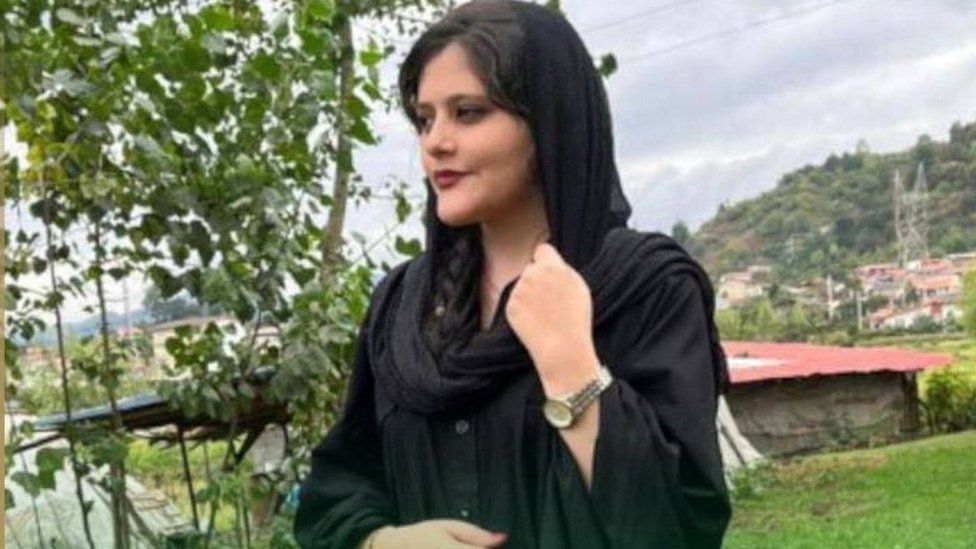
It sounded familiar hearing the BBC News that the family of Mahsa Amini have been banned from flying to France to collect the 2023 EU’s Sakharov Prize [see https://humanrightsdefenders.blog/2023/10/19/mahsa-amini-and-woman-life-and-freedom-movement-in-iran-awarded-eus-sakharov-prize/]. In 2009, as chairman of the MEA, I had to deal with the Martin Ennals Award laureate, Emad Baghi, who could not accept the prize in person due to travel restrictions. The same happened to other awards, including: the Civil Courage Prize (2004), the human rights award from France (2005), and the British Press Award (2008). https://www.trueheroesfilms.org/thedigest/laureates/EA0410ED-BC5A-4436-A3D7-012EF3232C55
Ms Amini’s parents and brother were stopped from boarding their flight and had their passports confiscated, their lawyer said. They were banned from leaving despite having valid visas.
Speaking to the AFP news agency, the family’s lawyer, Chirinne Ardakani, said Ms Amini’s mother, father and brother had been “prohibited from boarding the flight that was to take them to France for the presentation of the Sakharov Prize”.
The president of the European Parliament, Roberta Metsola, called on Iran to “retract the decision” to ban the family from travelling. “Their place next Tuesday is at the European Parliament in Strasbourg to receive the Sakharov Prize, with the brave women of Iran,” she said on social media. “The truth cannot be silenced.”
Universal human rights drowning in geopolitical rivalry between US and China
December 9, 2023
On 8 December, 2023 Jake Werner – Acting Director of the East Asia program at the wrote an interesting piece “Outrage Without Strategy Means Failure on China and Human Rights”. It makes in my view some very valid points, see for yourself:
The deplorable human rights record of the Chinese government has long featured in U.S. political discourse as an example of that venerable trope, the heroic individual demanding freedom from the tyrannical state. U.S. leaders quite naturally align themselves with the advocates of freedom, coming to their aid by repudiating and punishing their tormentors.
The antagonism between civil society and the state highlighted in this view is undeniably true, but this truth is only partial. Its seeming clarity threatens to obscure the complexities of Chinese politics and U.S.–China relations in ways that may produce counterproductive responses.
The political journey of a friend of mine in recent years illustrates dynamics excluded from the conventional human rights framing. I first met Zhao (a pseudonym) a decade ago while doing research in Shanghai, when both of us were grad students interested in leftist politics. I joined a reading group he was running with other Chinese grad students and we discussed ideas that posed a deep challenge to Chinese social and political inequalities.
In the years since, his critical energies have increasingly flowed away from inequalities within China to focus instead on the inequality between what he sees as a domineering United States and a victimized China. Increasingly he deems the Chinese government as the champion of the beleaguered Chinese people, whose opportunity to rise in wealth and status is being harshly circumscribed by jealous American leaders. To him, “human rights” is a fig leaf for the defense of naked U.S. power and a feature of western culture foisted on countries like China, whose level of development makes it inappropriate.
It was not state propaganda that moved Zhao in this direction — when we first connected he was already perfectly capable of seeing through official Communist Party narratives. Instead, it was heavy–handed U.S. behavior, tendentious U.S. narratives that refuse to give any credit to the Chinese system, and the glaring hypocrisy of American leaders harshly condemning Chinese abuses while remaining silent on the abuses of countries U.S. leaders are cultivating to counter China.
From Zhao’s experience, we can discern additional truths: that U.S. human rights rhetoric is not impartial but is a feature of geopolitical rivalry; that this fact threatens to discredit the whole idea of human rights in the eyes of many Chinese; that the Chinese government strategy of casting human rights defenders as agents of U.S. power rather than advocates of universal values may in the process find considerable success among Chinese citizens.
Yet Zhao’s truths are also selective. Other friends of mine bear witness to the reality not only of Chinese government repression but the dramatic expansion of that repression in both quantitative and qualitative terms over the last decade. The labor activist forced to move to Hong Kong to continue his work after the crackdown on worker rights, only to be hounded from Hong Kong when the mainland government crushed its democracy movement. The Uyghur scholar detained under atrocious conditions, forced to recite loyalty oaths that only poisoned him against the regime. The feminist activists studying overseas, wracked with fear that even outside the country they will suffer terrible consequences for criticizing officials’ increasingly open misogynistic policies.
The vision of human freedom and dignity expressed in the Universal Declaration of Human Rights provides a standard against which to judge the Chinese political system. Many of those same principles are enshrined in the Chinese constitution, making the argument that they are alien to Chinese culture untenable. By both measures, the Chinese government falls far short.
Yet neither document provides a strategy to achieve human freedom and dignity. In formulating such a strategy, moral truths are necessary but inadequate. The truths of power politics and psychological dynamics must be incorporated as well.
We in America need to reflect on some uncomfortable truths. As much as we might wish to see ourselves as an agent of global justice, other countries and their citizens do not always share this view. The conflict with China is not only an ethical dispute but is also a power struggle over which country will dominate East Asia militarily and the world economically. The United States is not just criticizing Chinese repression, but is actively seeking to limit China’s global influence.
Where does this leave U.S. policy on China? First, deploying human rights as a resource in geopolitical conflict is more likely to inspire cynicism around the idea of human rights than it is to vindicate the claim to higher values.
Second, because geopolitics makes national rivalry the most salient axis of political conflict, it is singularly ill–suited to advancing the human rights project. A geopolitics focused on U.S. global primacy encourages an alignment between China’s government and the Chinese people against threatening foreign forces. Under such circumstances, Chinese leaders are more likely to see those within China who defend human rights as the agents of alien ideas and alien interests, and can more convincingly portray them as such. Linking human rights efforts to geopolitical conflict strengthens those forces in China and the United States that are most hostile to human rights — forces such as nationalism, xenophobia, and militarism.
A U.S. strategy on human rights in China should begin by reducing the prominence of geopolitical division in U.S.–China relations. This would help to shape a domestic environment in China (and the United States) that would open space for human rights advocacy. America’s longstanding punitive and coercive approach to human rights promotion has failed everywhere it has been tried. The danger of such an approach is magnified in a moment when great power tension threatens to spin out of control.
It is more urgent than ever to formulate a more strategic approach. By stepping away from the commitment to global primacy as the centerpiece of U.S. foreign policy, a foreign policy of restraint offers new ways to approach human rights that avoid the pitfalls of associating universal rights with the power machinations of specific countries.
UN COP28 climate summit sees rare demonstration for imprisoned Emirati, Egyptian human rights defenders
December 9, 2023AP reported on 2 December 2023 that protesters at the United Nations’ COP28 climate summit demonstrated Saturday for imprisoned human rights activists in Egypt and the United Arab Emirates, the past and current host of the negotiations.
Demonstrators carried signs bearing the image of Emirati activist Ahmed Mansoor and Egyptian pro-democracy activist Alaa Abdel-Fattah, part of incredibly restricted, but still-unprecedented protests being allowed to take place within the UAE from within the U.N.-administered Blue Zone for the summit.
However, just before the demonstration organized by Amnesty International and Human Rights Watch, protesters had to fold over signs bearing the Emirati detainees’ names — even after they already had crossed out messages about them. The order came roughly 10 minutes before the protest was due to start from the U.N., which said it could not guarantee the security of the demonstration, said Joey Shea, a researcher at Human Rights Watch focused on the Emirates.
“It is a shocking level of censorship in a space that had been guaranteed to have basic freedoms protected like freedom of expression, assembly and association,” Shea of HRW told The Associated Press.
UDHR@75: occasion for US, UK and Canada to put sanctions on human rights abusers
December 9, 2023The UK, US and Canada are announcing a sweeping package of sanctions targeting individuals linked to human rights abuses around the world, ahead of the 75th anniversary of the Universal Declaration of Human Rights on 10 December.
UK targets forced labour operations in Southeast Asia, and government-linked officials in Belarus, Haiti, Iran, and Syria complicit in repressing individual freedoms.
The first set targets 9 individuals and 5 entities for their involvement in trafficking people in Cambodia, Laos and Myanmar, forcing them to work for online ‘scam farms’ which enable large-scale fraud. Victims are promised well-paid jobs but are subject to torture or other cruel, inhuman, or degrading treatment…
The second is aimed at a number of individuals linked to the governments, judiciaries and prosecuting authorities of Belarus, Haiti, Iran, and Syria, for their involvement in the repression of citizens solely for exercising fundamental freedoms in those countries.
Included in the USA sanctions are two Afghanistan government ministers accused of repressing women and girls, by restricting access to secondary education; two Iranian intelligence officers who the Treasury says plot violence against Iranian regime opponents beyond the nation’s borders and two Chinese officials accused of torturing Uyghur ethnic minorities in the Xinjiang region of China.
https://www.gov.uk/government/news/uk-and-allies-sanction-human-rights-abusers
Norwegian Human Rights Fund and Human Rights First mark 25th anniversary of United Nations Declaration on Human Rights Defenders
December 9, 2023Today, 9 December, marks 25 years of the United Nations Declaration on Human Rights Defenders (HRDs). It provides for the support and protection of HRDs, and for many HRDs it’s been a useful marking in legitimizing and supporting their work.
The anniversary is a good time to reflect on what’s working and what isn’t for HRDs, and we discussed some of these issues on a Human Rights First webinar a couple of days ago.
In many ways it was a different world in 1998. Celine Dion and the Backstreet Boys were the big rock acts then. The internet, mobile phones, and digital surveillance of HRDs, were all in their infancy.
For HRDs, much has changed, and it’s possible to see 25 years of success as HRDs have achieved some great things. They’ve changed laws, won the release of people from prison, distributed humanitarian aid, exposed corruption, documented and publicized human rights violations.
For some HRDs just keeping going despite pressure and threats is success in itself. Hundreds are killed every year for their peaceful work on behalf of others, for embarrassing corrupt officials, for making good things happen.
But there is now a greater recognition of the value of the work of HRDs than there was in 1998, and a better understanding of who they are. The family of HRDs has expanded in the last 25 years – back then NGOs discussed whether those working on environmental rights, or those documenting corruption, or medics working in war zones, really counted as HRDs. Now we know they do.
We better understand too the responsibilities of businesses to protect HRDs, and that defenders working on certain issues face specific threats, that those working on land rights, indigenous rights or environmental rights away from big cities are most likely to be murdered. We know too that many defenders are targeted not just for what they do but for who they are.
Women Human Rights Defenders experience added layers of harassment. They’ve always lived with pressure from society in terms of what they should get engaged in and not, pressure from their families on what a woman should do or not, and since 1998 there’s now added pressures in the digital sphere. They are targeted more than other HRDs with digital harassment, which we see very often leads to physical attacks offline.
Our organizations share a similar approach to working with HRDs. The NHRF supports HRDs working for NGOs outside big cities, often formed by people from the community that they work in. It supports organizations where women are in leaderships roles, and provides resources over the long term. For instance, the NHRF works with an NGO in Thailand originally formed by young women to organize their community in the face of a mining company. Most of these women are now grandmothers, but still keep up their human rights work.
The NHRF also works with organizations of HRDs in Indonesia made up of family members of those killed and tortured in in the 1960s who are now seeking redress and working against impunity.
Human Rights First, meanwhile, continues its decades-long work on Northern Ireland, also working with bereaved families of those killed during the conflict in the 1970s, 1980s and 1990s who are also looking for redress and working against impunity.
For many HRDs achieving success is a long road, requiring perseverance and allies. International standards and rules aren’t protecting them enough. Their work needs to be better understood, and better funded.
The picture for HRDs since 1998 is mixed, and no doubt will be for the next 25 years. HRDs will achieve more successes, but unless governments find the political will to implement the protections of the HRD Declaration, more defenders will be attacked, jailed and murdered.
So, what do the next 25 years hold for HRDs? The future is hard to predict, but one thing we can say for sure is that HRDs will continue to be, as the UN Special Rapporteur for HRDs Mary Lawlor says, ordinary people doing extraordinary things.
In these times, when many people from Gaza to Ukraine question the power of the human rights framework to actually protect people’s rights, everyone with power must ensure that HRDs can be funded, protected and supported. We will all be better off for it.
See also: https://humanrightsdefenders.blog/tag/25th-anniversary-un-declaration-hrds/
Anushani Alagarajah: “As a human rights defender, you’re almost expected to be superhuman”
December 8, 2023
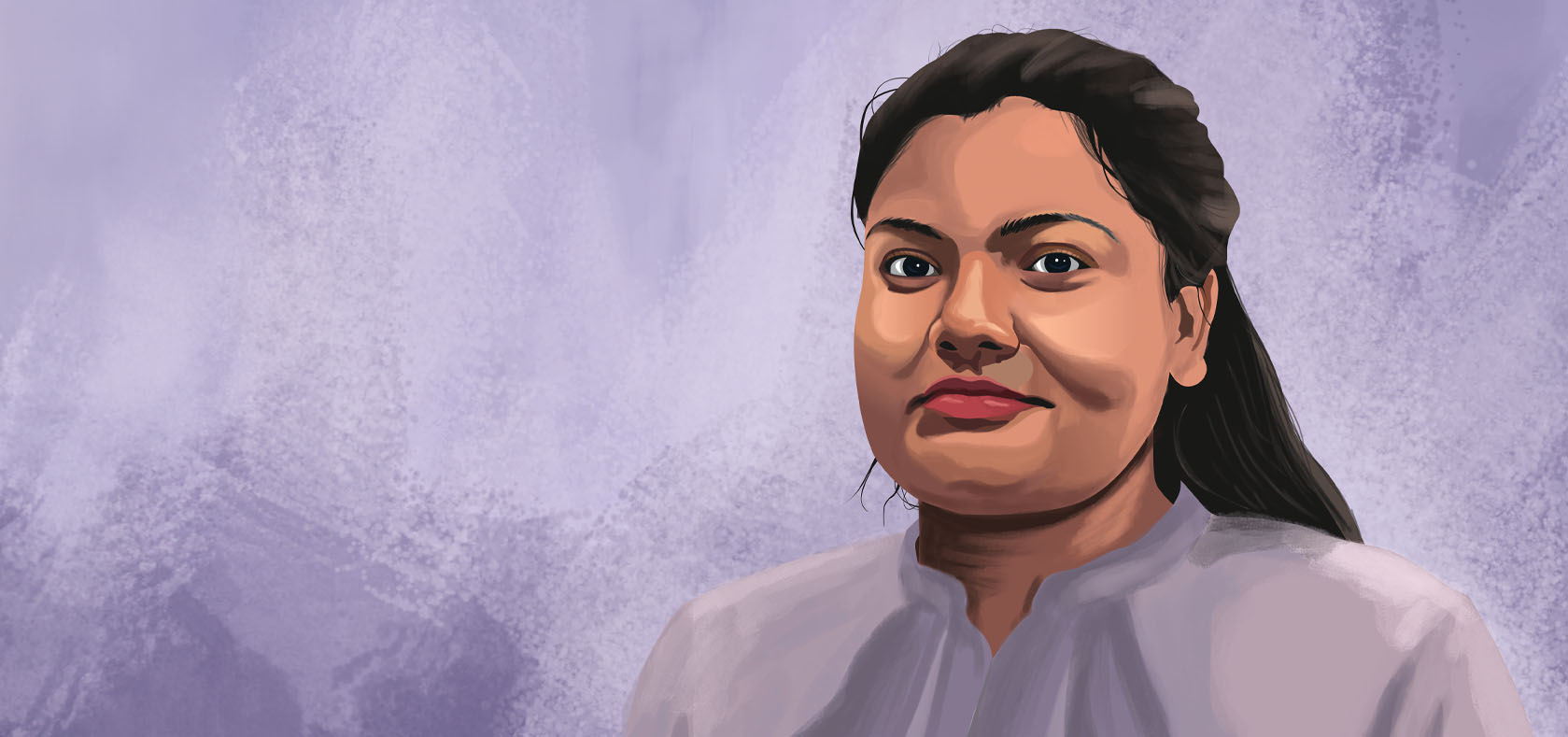
Anushani Alagarajah, human rights defender and executive director at the Adayaalam Centre for Policy Research. Illustration: UN Women Sri Lanka/Dinuk Senapatiratne
Anushani Alagarajah is a human rights defender who has worked closely with conflict-affected communities in the North and East of Sri Lanka. She is the Executive Director at the Adayaalam Centre for Policy Research, a non-profit research think-tank that works on public policy issues in Sri Lanka. On the occasion of the International Day for Women Human Rights Defenders, Ms. Alagarajah spoke about her work in post-conflict Sri Lanka.

I don’t know if I ever consciously decided to become a human rights defender. But when I was seven, there was a gang rape of a girl from our school. Her classmates held a sit-in protest. I didn’t know what rape meant, but children living with conflict grow up fast. I wanted to protest too. If I see injustice, I want to speak up.
As a child, it was horrible to live in bunkers [during the conflict], to come out and see ashes. I’ve been in survival mode my entire life. Seeing what’s happening in other countries, I worry that children will spend their entire lives trying to make sense of it, trying to be okay.
Grief is not only for people, it’s also for a place you called home, that belonged to you. For me, it was always about the childhood I didn’t have. I will probably be grieving that for the rest of my life.
I left Sri Lanka in 2009 to study in Bangladesh. I never wanted to come back. But from the time I left, I knew I had to return. I came home every summer, to conduct workshops with orphanages and conflict-affected communities.
I couldn’t run away. Afterall, I am from this community.
I was displaced thrice. I couldn’t sleep peacefully knowing I could have done something, and I didn’t do it. I thought, “I can try to make things better.” So, I returned after finishing my studies in 2014. Since then, I have been living my purpose in the community.
Whether it is the economic crisis or a lack of opportunities, a lasting political solution requires the political will for change.
It’s difficult when you come from a history of violence, conflict and trauma. During the conflict, a range of violent acts were committed against women.
Women bear the brunt of any damage, and are also expected to be the ones to rebuild, protecting the family unit, community and culture. Yet, particularly in the global South, women are not afforded resources.
Patriarchy is the norm.
Men can take a job in different places, access resources, work with men, divorce, remarry. Women cannot. They must provide out of nothing. Even though they suffered tragic, unspeakable experiences, they are still shackled by stereotypical expectations.
My own work is considered unfitting. I’m expected to be a good woman and get married. We are very far from being inclusive.
In the early days, I would try to talk to older activists about mental health, saying “I’m not doing okay”. But as a human rights defender, you’re almost expected to be superhuman. I think being sensitive helps me do my job better because I look out for others.
For the last four years, when my office researches something difficult, we check in with everyone about how they feel. Whenever one of us needs support, the community will hold them, providing a safe space to be vulnerable or angry. It took a long time for me to find this community.
You cannot heal on your own.
With my colleagues, I run practical workshops to create the next generation of activists, training people in small communities and villages to advocate for their rights. We have participants pick an issue, ideate a solution and work with relevant stakeholders. For example, we have young participants who want to reclaim an occupied land in their village. They met the parliamentarian and the Divisional Secretary’s Office and are now drafting a lease. If they have the courage and knowledge to do that at 20 years old, there is so much we can do. I’m always looking for a few people to take our struggle forward.
Sometimes, it only takes one person.
A wise woman once told me: “You will not see the changes you work for in your lifetime.” This helps put things in perspective. We can only chip at the corners so that one day, hopefully, things will be different. Giving up is not an option. We can’t stop now.”
https://asiapacific.unwomen.org/en/stories/in-the-words-of/2023/11/anushani-alagarajah
A sombre reminder: homicide a bigger killer than armed conflict and terrorism combined
December 8, 2023
© Unsplash/David von Diemar
On Friday 8 December 2023 the UN Office on Drugs and Crime (UNODC) said that more people were killed due to homicide than armed conflict and terrorism combined in 2021, with an average of 52 lives lost per hour worldwide. The Global Study on Homicide analyzes the complex dynamics behind these violent deaths and includes a special section on how organized crime is driving death rates up in Latin America and the Caribbean.
The report examines homicides related to criminal activities and interpersonal conflict, as well as “socio-politically motivated homicides” such as the deliberate killing of human rights defenders, humanitarian workers and journalists.
UNODC chief Ghada Waly said the loss of thousands of lives each year to homicide is “a sombre reminder” of the collective failure of the international community to reduce all forms of violence by 2030, in line with the Sustainable Development Goals (SDGs). The report revealed that during the period from 2019 to 2021, an average of roughly 440,000 deaths worldwide were due to homicide – more than conflict-related or terrorist killings combined.
UNODC said 2021 “was an exceptionally lethal year”, marked by 458,000 homicides. The spike was in part linked to economic repercussions from the COVID-19 pandemic and to a rise in organized crime and gang-related and socio-political violence in several countries.
Organized crime accounted for 22 per cent of homicides globally, and 50 per cent in the Americas, where competition among organized crime groups and gangs can spark a sudden and sharp rise in “intentional homicides”, as has happened in Ecuador and Haiti.
The Americas also lead the world in highest regional homicide rate per capita, with 15 per 100,000 population in 2021, or 154,000 people.
Africa had the highest absolute number of homicides at 176,000, or 12.7 per 100,000 population, “and available data suggests that the homicide rate is not falling, even as decreases have been registered in other regions,” the report said. Meanwhile rates in Asia, Europe and Oceania were far below the global per capita average of 5.8 per 100,000 population in 2021.
Firearms were used in most killings in the Americas in 2021, or roughly 75 per cent, whereas in Europe and Asia they were involved in 17 and 18 per cent of homicides, respectively.
Men accounted for 81 per cent of homicide victims and 90 per cent of suspects, but women are more likely to be killed by family members or intimate partners. “Although they represent 19 per cent of homicide victims in total, they account for 54 per cent of all killings in the home and 66 per cent of all victims of intimate partner killings,” UNODC said.
Aid workers under attack
The data also showed that the deliberate killings of human rights defenders, environmental defenders, community leaders, journalists, and aid workers represented nine per cent of global homicides. “The threat has increased for humanitarian aid workers, who witnessed a higher average number of fatalities over the period 2017-2022 than 2010-2016,” the authors said.
 Hans Thoolen on Human Rights Defenders and their awards