Author Archive

China and its willingness to detain anyone anytime should generate more reaction

January 4, 2019

Michael Caster, human rights advocate and author of The People’s Republic of the Disappeared, is co-founder of the human rights organisation Safeguard Defenders. He wrote in the Guardian of Friday 4 January 2019 “China thinks it can arbitrarily detain anyone. It is time for change”

Canada’s foreign minister, Chrystia Freeland, has called China’s detention of Canadian citizens Michael Kovrig and Michael Spavor a “worrying precedent” but for many China watchers it is all too familiar. It reminds us of the detentions of other foreign citizens, such as Canadian Kevin Garratt, Briton Peter Humphrey, Sweden’s Gui Minhai, or Taiwanese Lee Ming-che, and that over the years China has institutionalised arbitrary and secret detention affecting innumerable Chinese citizens, and with little international consequence. China feels emboldened to place literally anyone under arbitrary and secret detention, regardless of citizenship. It is now long overdue for the world to stand up. While Kovrig and Spavor have been granted consular access, it is reportedly limited to one visit a month. Consular access, like access to a lawyer, is a procedural safeguard against abuse in custody. In China, where abuse in custody, especially in the first few weeks of detention, is well documented, the importance of consular or legal access cannot be over emphasised. There are reports Kovrig is being denied access to a lawyer.

China routinely denies such fundamental rights through its system for arbitrary and secret detention. This includes residential surveillance at a designated location (RSDL) [see: https://humanrightsdefenders.blog/2018/01/10/more-on-residential-surveillance-in-a-designated-location-rsdl-in-china/]….
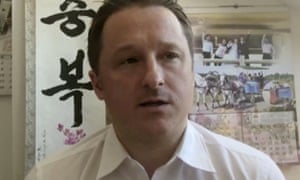
Canadian Michael Spavor
Pinterest Canadian Michael Spavor is one of the latest victim of China’s system of arbitrary detention. Photograph: AP

…Conditions are less severe for foreigners than for Chinese citizens, but they are never free from abuse. Sadly, reports indicate Kovrig is being interrogated morning, noon, and night, and subjected to sleep deprivation. Because of such abuse, the United Nations committee against torture, as early as 2016, called on China, as a matter of urgency, to repeal domestic provisions allowing for RSDL and other forms of secret detention. Earlier this year, human rights groups Safeguard Defenders, the International Service for Human Rights, Network for Chinese Human Rights Defenders, and Rights Practice sent a submission on RSDL to the UN. In their response, experts from the Human Rights Council noted that RSDL exposes its victims to torture and that exceptions in the law make it tantamount to an enforced disappearance, grave crimes under international law.

…..In each case where China has not been held accountable, it virtually guarantees the next.

Any country that systematically denies the rights of its own citizens, and flaunts international norms, should worry us all because such abuses, as we are increasingly seeing, don’t stop at the colour of one’s passport. That China has now arbitrarily detained several Canadian citizens in thuggish pursuit of Communist party interests should clearly be denounced, and their immediate release demanded, but it should surprise no one considering China has institutionalised just this type of abusive behaviour with effectively no international repercussions. It is time for change.

And then there is the remarkable reaction by the same Government when it concerns a Chinese citizen as in the case of Huawei’s Meng Wanzhou: https://humanrightsdefenders.blog/2018/12/06/chinese-government-quote-of-the-year/

https://www.theguardian.com/world/2019/jan/04/china-thinks-it-can-arbitrarily-detain-anyone-it-is-time-for-change

Progress report on “I Defend Rights” project in 2018

January 4, 2019

In 2018 the Norwegian Human Rights Fund and Memria continued their partnership on the unique I Defend Rights initiative, an audio archive of hundreds of stories told by human rights defenders. The purpose of this listening project is to commemorate and celebrate the important roles that human rights defenders have by recording, archiving and sharing their experiences and contributions. The platform includes personal accounts of 188 human rights defenders. This are some of the highlights in 2018:

March
We had the first open call for stories on our site (English version).  Within the first three months, over 50 human rights defenders spoke about why they defend rights. These stories were published on the platform and shared on social media. 

May
Official launching of Yo Defiendo Derechos and Je Defénds le Droits, the archives for Spanish and French-speaking communities.

August
We held a sensemaking workshop in New York with key stakeholders and partners including communication experts to analyze a sample of the archive and think about next steps for the project.

September
Our team participated in a community fair at Forum Asia’s 8th Asian Regional Human Rights Defenders Forum in Bali and engaged with human rights defenders from the region

October
We attended the Human Rights Defenders World Summit in Paris and installed our first storytelling booth. With the help of volunteers, we collected 65 stories in three days. 

A HRD recording his message at the HRD World Summit in Paris, October 2018

November 
We collected more stories and created an exhibition at the Nobel Peace Center in Oslo during the Norwegian Human Rights Fund 30th Anniversary Conference. (Listen to the NHRF Conference and the panel on new tools with the participation of I Defend Rights).

LOOKING FORWARD TO 2019

The gathering will continue during 2019 with an emphasis on dissemination. Our main channels will be social media, a new website, and an exhibition. We want to do this in collaboration with our partners. We hope to have our new website by February, one that reflects our new image and lets us showcase the amazing stories from so many wonderful human rights defenders on our platform.
We are also joining forces with designers to create an exhibition with the voices of the rights defenders. We will be working with libraries, universities, museums and unexpected venues to reach a diverse audience.

Follow them on twitter and facebook.

https://mailchi.mp/9649638e13d0/happy-new-year-from-the-i-defend-rights-team?e=0c88049d46

Illustrative storm in a Zimbabwean teacup: billionaire vs HRW

January 3, 2019
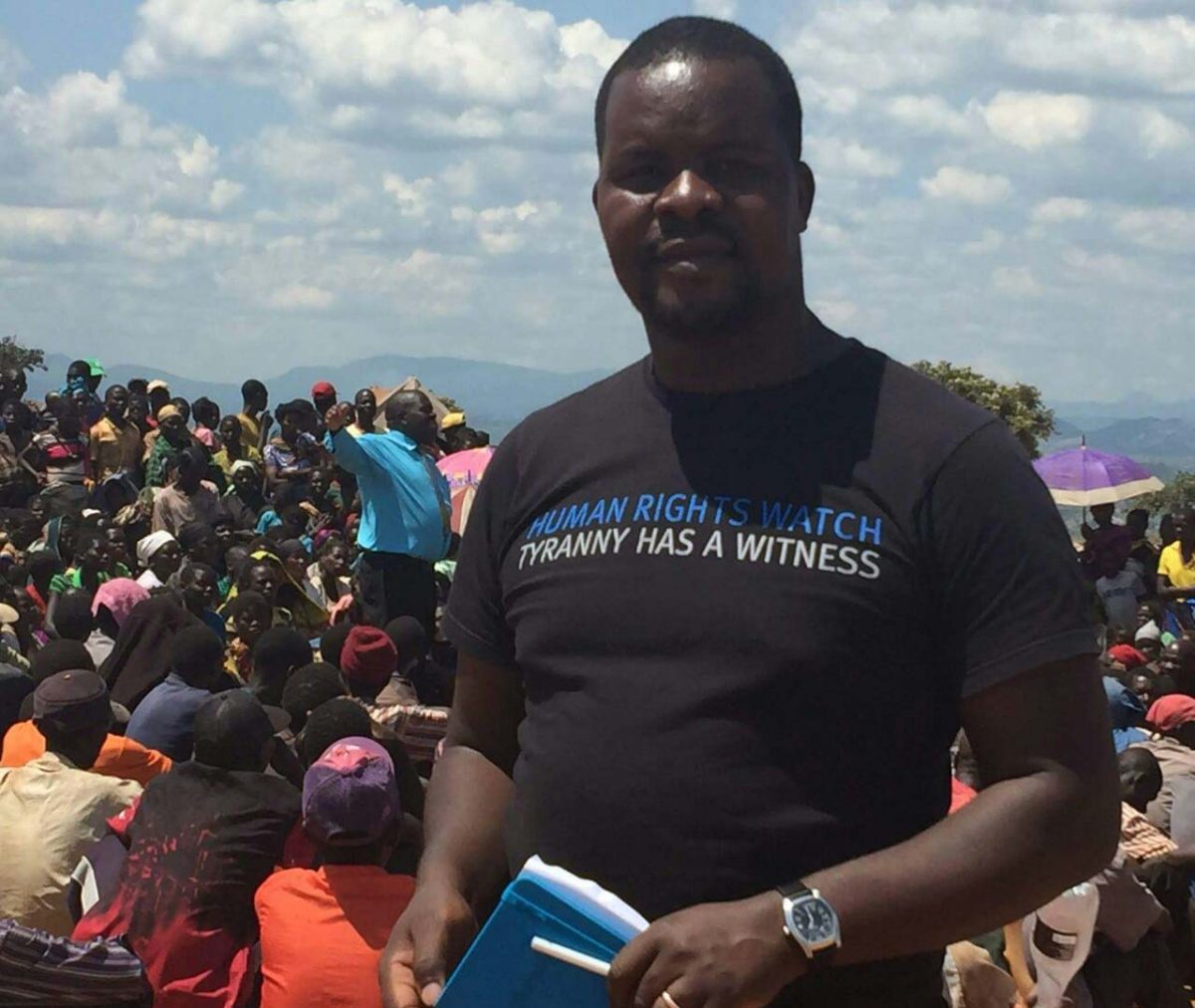
 Human rights defender … Dewa Mavhinga, the southern Africa director for Human Rights Watch

In a Facebook post the billionaire Econet founder Strive Masiyiwa defended his wife Tsitsi’s philanthropic work ands lashed lashed out at an unnamed human rights defender while also appearing to demand his sacking by his employer. This person was soon identified as Dewa Mavhinga, the Southern Africa Director of Human Rights Watch.

Masiyiwa wrote: “Sadly, one of the foremost bullies is a Zimbabwean who works for an international organisation that is highly respected for its work on human rights. It’s founder, now 95, is a close family friend. I hope my human rights friend is happy now that he has stopped her from using Twitter. Maybe now he and others like him will stop this pathetic misogyny. What about the rights of women like my wife to also express an opinion?

In December, Mavhinga took issue with a post by Tsitsi Masiyiwa, in which she suggested human rights causes should only be supported after establishing the motive of those sponsoring them.“Some outcries and actions in pursuit of justice seem and look so right until you discover the source of the outcry and sponsor of the cause. Take a step back and reflect on some of the things we consider good and just causes,” Tsitsi said in a December 18 tweet. In reply, Mavhinga told Masiyiwa’s wife: “If you are implying that all and any outcry and pursuit of justice is sponsored, then that really is sad. When your husband pursued his fight to be licensed [Econet mobile phone network] it was a just cause. In such position of privilege, you should choose your words more carefully, lest you promote injustice.” Mavhinga was not the only one to see this post an an effort to brush up the government’s human rights record and many others expressed similar dismay. As a result Strive Masiyiwa and his wife wife both felt forced to close their Twitter accounts. 

Human Rights Watch executive director Kenneth Roth on Wednesday weighed in on the side of Mavhinga, telling Masiyiwa that their employee “didn’t bully anyone”. Roth said Tsitsi’s comment “closely paralleled the claim of President Mnangagwa and some of his supporters that critics of human rights conditions under his rule are not genuine but are sponsored by outsiders.” He insisted that Mavhinga’s response was “entirely fair – an appropriate way to ensure that your wife’s comment, despite what her intentions might have been, wasn’t understood as an endorsement of the president’s and his allies’ attacks on human rights critics.”

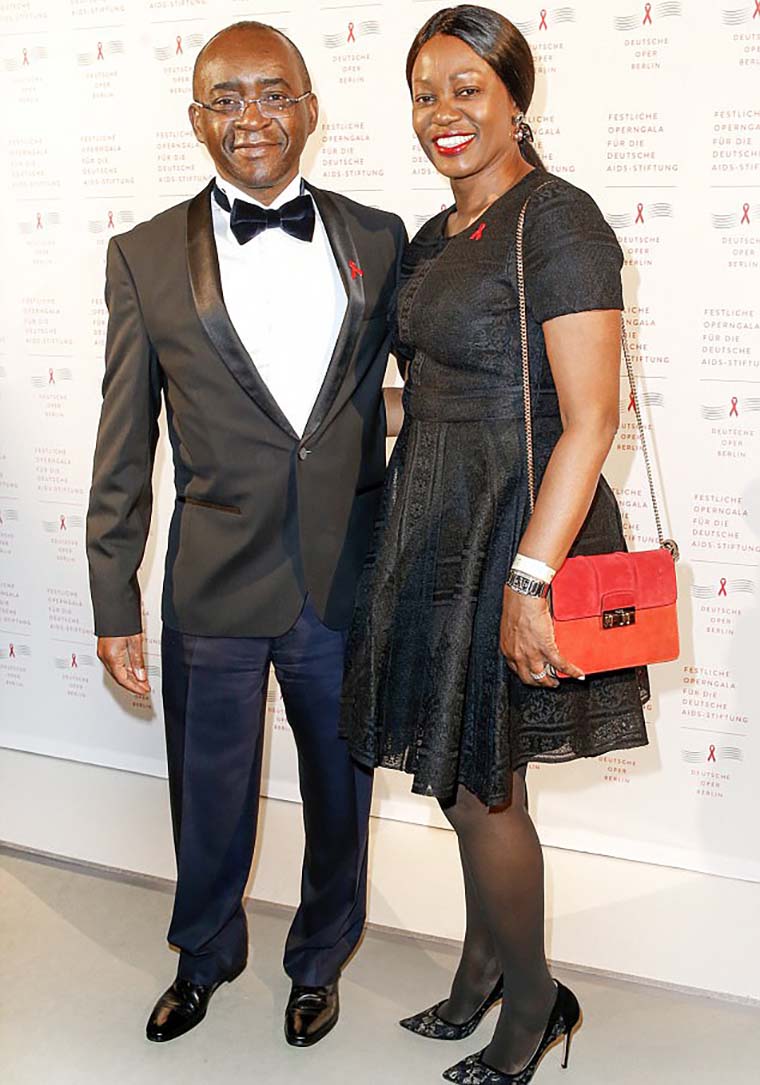
Strive Masiyiwa and his wife

With no further instigation, others took up the theme as well, so your wife chose to close her Twitter account,” he added. “Unlike your statement here, the responder (Mavhinga) didn’t bully anyone – and certainly not your wife – but simply responded to what he feared, whatever her intentions, would be taken as an attack on t he credibility of the human rights movement. That others picked up on this point, without any encouragement or prompting by him, does not make him a bully but speaks to the resonance of his comment,” said Roth. Roth was also dismissive of the claim that Mavhinga was a misogynist, insisting “he would have responded to comments along the lines that your wife made regardless of who had made them.

Zimbabwean lawyer Brighton Mutebuka said he was “thrilled” that Human Rights Watch had backed Mavhinga.  “To seek to use his influence inappropriately to get Dewa fired is unacceptable. Human Rights Watch is a global brand. They would not have taken making such a swift rebuttal and backing Dewa lightly,” Mutebuka said, writing on Facebook. “Whilst Strive and his wife are entitled to their very optimistic views concerning the political trajectory that Mnangagwa’s government is on, they should be aware that a great many people do not share those views. They should also stand ready to be challenged on that, provided that such exchanges are nuanced, proportionate and civil. This is what democracy is founded on.”

Mavhinga and Human Rights Watch had come out of the exchanges as “principled, fearless and uncompromising” whilst Masiyiwa and his wife came across as “petulant, haughty, entitled, patronising and intolerant of divergent views”, he added.

https://www.zimlive.com/2019/01/human-rights-watch-rejects-strive-masiyiwa-bid-to-get-its-southern-africa-director-fired/

Surangya’s take on human right in 2018

January 2, 2019
There are many people looking back on 2018 in terms of human rights. I would like to share the following by Surangya published on 1 January 2019 in Newsclick, entitled: “From terror plots to national security threats, political dissenters faced several charges and labels for raising their voice and questioning excessive power“, with its own angle and priorities:
Political Freedom

As 2018 draws to an end, we take a look at how the year fared for dissent and democracy in different parts of the world:

…Palestinian children detained in Israeli prisons for protesting the occupation

The occupying state of Israel is perhaps one of the best examples of a country normalising violence of all sorts. For decades, Israel has occupied Palestinian lands and subjected the people to all kinds of humiliation. This has only intensified the resistance against the occupation, with Palestinians ferociously protesting, even at the cost of their lives…..Israel recognises this threat, which is why as of November 2018, there were almost 6,000 Palestinians in Israeli prisons, most of whom challenged the occupation in one way or another. Even more astonishing is the fact that among these prisoners are nearly 250 children, over 40 of whom are under 16 years of age..This imprisonment of children and subjecting them to torture, inhumane living conditions, often even solitary confinement, is a clear violation of the UN Convention on the Rights of Child, to which Israel is a signatory. Just recently, a 17-year-old Palestinian boy, Ahyam Sabbah, was sentenced to 35 years in prison for a charge of attempted stabbing…

Plot to assassinate the prime minister in India

… With the general elections approaching in 2019, the far-right government led by the Bharatiya Janata Party (BJP) with Narendra Modi at the helm, has been looking for any excuse to silence those highlighting this government’s many flaws and suppression of minorities. The most prominent case this year was of the arrest of 10 renowned human rights activists, who were labelled members of the banned Communist Party of India (Maoist) and made part of a plan to assassinate Prime Minister Modi, despite there being no concrete evidence supporting these allegations. The wording of the UAPA is such that any speech a person makes questioning the state can be seen as a threat to the country’s security and sovereignty. [see also: https://humanrightsdefenders.blog/2018/09/22/attack-on-human-rights-defenders-in-india-are-an-attack-on-the-very-idea-of-india/]

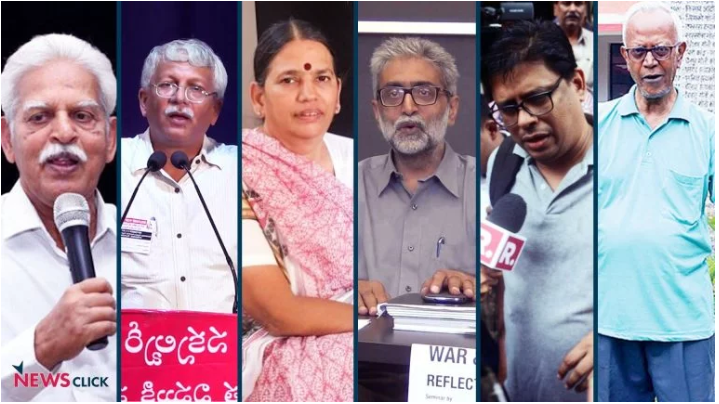
PD%203.PNGVaravara Rao, Vernon Gonsalvez, Sudha Bharadwaj, Gautam Navlakha, Arun Ferreira and Stan Swamy were amongst the activists who faced charges.

Failed peace process in Colombia

Two years after the signing of a peace treaty between the Colombian government and the Revolutionary Armed Forces of Colombia (FARC) in Havana, Cuba, the government has failed to make good on its promises. While the guerrilla organisation surrendered arms for the most part after the treaty was signed, the government now shows no political will to implement the accords and demobilised combatants have been subject of unabated persecution. 92 people who participated in the reincorporation process have been killed……For the more than 400 social leaders and human rights defenders assassinated by right-wing paramilitary and state forces since the Havana agreements were signed, the legal system has been much slower to find those responsible and the government has shown it has no desire to dismantle the criminal structures that carry out these crimes. Just in 2018, human rights organisations reported that over 226 leaders were assassinated and the National Indigenous Organisation of Colombia (ONIC) declared in August that under Duque’s presidency, there has been an increase in the attacks against indigenous people.

Impending elections always create an upsurge in state clampdowns on people’s rights to free speech and protest.

Crackdown in Congo

As the Democratic Republic of Congo finally hit the polls on December 30 after a delay of two years, there was widespread apprehension over the fairness of these elections. President Joseph Kabila held on to power for two years after his constitutionally mandated term ended in December of 2016. Despite being president for the permitted two terms, he remained reluctant to give up control over the country, and only agreed to not contest this time after naming Emmanuel Ramazani Shadary as his successor. Shadary is a former minister of interior, and remains under sanctions by the European Union for committing human rights violations in Congo…..At least 2,000 activists, opposition members, and journalists have been put behind bars since the protests against Kabila began in 2015. Many were released after weeks or months of detention and reported mistreatment. In November alone, at least 18 pro-democracy activists were arrested from the capital city Kinshasa. It remains to be seen if the much anticipated elections will bring a change and some relief to the people of Congo.

Philippines

A scenario similar to this, but of a different magnitude, is being witnessed in the island nation of Philippines under the authoritarian regime of Rodrigo Duterte, with widespread attacks on activists and pubic dissenters…Earlier this month, the government approved extension of martial law for the third time, making it effective for another year. While the stated purpose of this is to combat “extremists”, often labelled as members or leaders of the banned Communist Party of Philippines (CPP) or New People’s Army (NPA), those facing chargers are mostly activists challenging Duterte’s authority. In late February, the Duterte regime released a list of almost 600 activists and political dissenters, which was called the Terror List. Labelled terrorists and members of banned groups, many in the list are renowned activists and public figures, including Victora Tauli-Corpus, the current UN Special Rapporteur on the Rights of Indigenous People.

Brasil

Any concrete evidence to show Lula’s involvement in the corruption scandal is yet to be presented. His indictment, however, gave the extreme right candidate Jair Bolsonaro’s campaign a push, ultimately leading to his victory. The judge responsible for the legal crusade against Lula, Sergio Moro, has been rewarded with a place in Bolsonaro’s cabinet as the Minister of Justice. The attacks against Brazil’s social movements have already intensified. Two leaders of the Landless Rural Workers Movement (MST) were assassinated days before the Human Rights Day on December 10. Members of social movements fear that such incidents will become more commonplace under Bolsonaro, known for encouraging Brazilians to resort to violence when faced with social conflicts.

The year ahead…

While 2018 saw several right-wing regimes and authoritarian leaders accede to power, the coming year offers hope of being different as discontent against neo-liberal systems is rising. The Yellow Vests movement in France, which is still going strong after almost a month and a half, is an inspiring instance of that. Several countries will hit the polls in 2019. The need for mobilising against anti-people parties and disseminating the truth about such parties which often seem appealing to the masses with their populist messages is now stronger than ever, especially if we are to make 2019 any different.

Allard Prize for International Integrity 2019: nominations close on 15 January

January 2, 2019

The Allard Prize for International Integrity (CAD $100,000) goes to an individual, movement or organization that has demonstrated exceptional courage and leadership in combating corruption or protecting human rights, especially through promoting transparency, accountability and the Rule of Law. For more information on this and other awards see: http://trueheroesfilms.org/thedigest/awards/allard-prize-for-international-integrity

The deadline is on January 15, 2019.

Visit the Submissions Page to apply.

You can visit the official page of the Allard Prize for more information

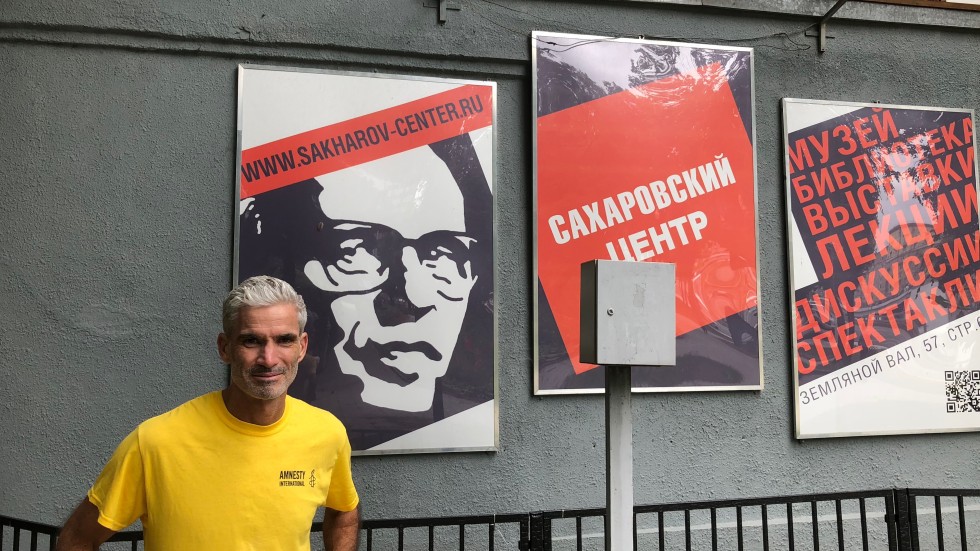
Craig Foster, Australian footballer and …human rights defender!

January 2, 2019

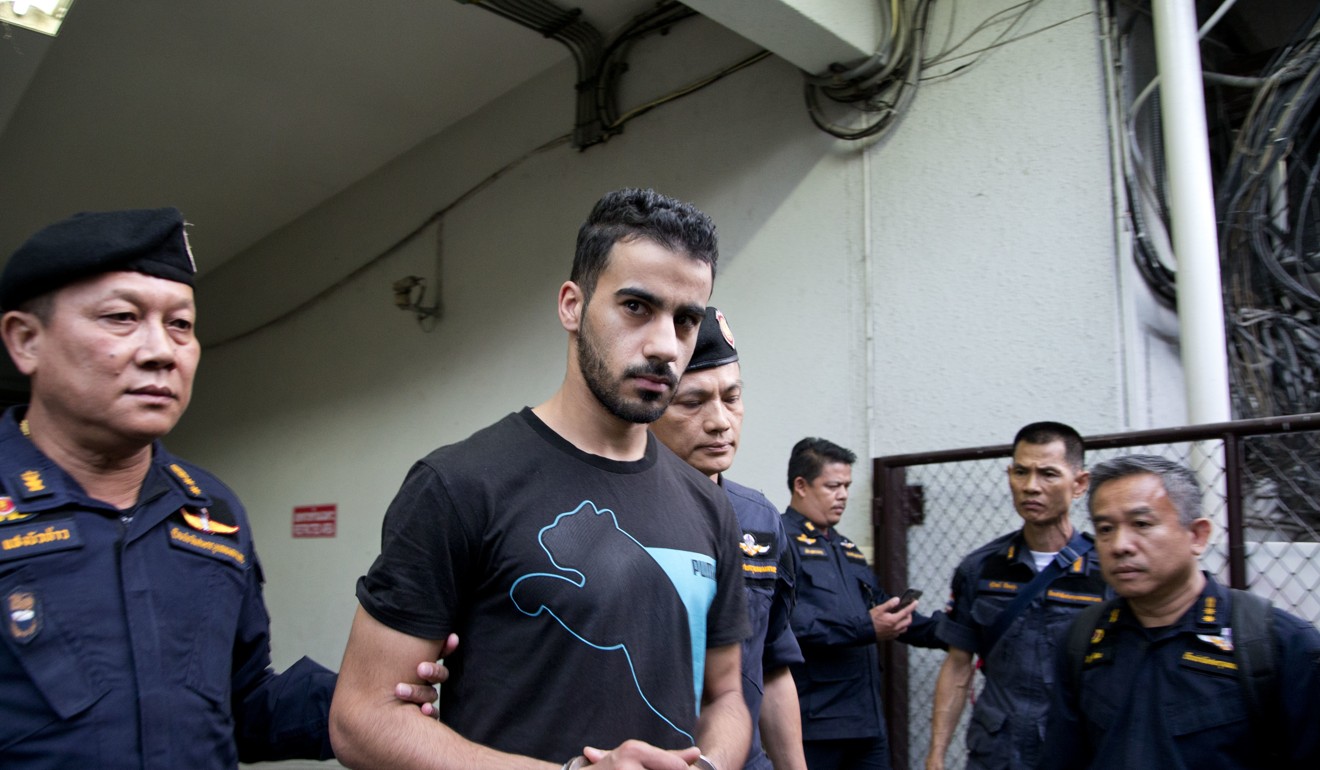
Football’s power to fight injustice motivates Craig Foster. The former Socceroos captain who played for Hong Kong’s Ernest Borel in the early ’90s is a broadcaster in Australia and also works for Amnesty International as a human rights and refugee ambassador. He is among the most vocal of activists in calling out human rights transgressions in football and sport and is one of the many prominent figures fighting for the release of Bahrain’s Hakeem al-Araibi, an Australia-based refugee footballer who is in a Thai jail awaiting extradition to his home country where he fears torture and persecution. [For some of my other posts on football and human rights, see: https://humanrightsdefenders.blog/tag/football/]

On  Tuesday, 01 January, 2019, Nazvi Careem Nazvi Careem wrote a long piece about Craig Foster’s work and dedication:

And if he ever doubted just how powerful this sport can be, he only needs to recall the heartbreaking words of a young African refugee who had lost everything – fleeing his war-torn homeland after his parents, sibling and other members of his family were killed. “He was involved in a football programme over a period of time. He was very, very quiet and said very little,” said Foster. “He was in a new country and was experiencing psychological difficulties, which is totally understandable. “When he was asked why he liked the programme, he simply said: ‘The only thing that still exists in my life is football. It is the only thing that hasn’t been taken away from me’. And he was crying when he said it.

He [Craig Foster] is among the most vocal of activists in calling out human rights transgressions in football and sport and is one of the many prominent figures fighting for the release of Bahrain’s Hakeem al-Araibi, an Australia-based refugee footballer who is in a Thai jail awaiting extradition to his home country where he fears torture and persecution. (AFC must be held to account if Bahraini refugee player is extradited from Thailand, says ex-Socceroos captain Craig Foster)

…Since retiring as a player in 2002, Foster became involved in social issues related to football, working with disadvantaged, minority and indigenous communities in a variety of programmes. “I’m just finishing my law degree, which has given me some further insight into the challenges of human rights and international refugee law. I feel strongly about these issues and in football, we are at an advantage because we are the most diverse, multicultural community in Australia.

…..Foster, who played for Portsmouth and Crystal Palace in England and also had a stint in Singapore, said he felt an obligation to give something back to the sport. As an ex-player and a broadcaster with the SBS organisation in Australia, Foster is in an ideal position to reach out to the masses. At the same time, he puts his contribution to social issues in perspective, admitting that he is in a position of comfort compared with activists whose lives are on the line in their efforts to effect change.

“Of course, you can’t fight every battle, but there are key ones which take a huge amount time. But the people I have immense respect for are the human rights defenders in their countries….In Australia we have serious human rights issues, with indigenous Australians and also in terms of refugees and arrivals.

China: Weiquanwang’s annual report details more than 800 political prisoners in 2018

January 2, 2019
And for those interested in China there is a good wrap up in a piece of 31 December 2018 by Radio Free Asia. It refers to the Weiquanwang rights website which published its annual report detailing more than 800 political prisoners in China. [for some of my other posts on China: https://humanrightsdefenders.blog/tag/china/]

The same article details other cases such as:

Authorities in Guangdong have handed down a two-year jail term to anti-censorship campaigner Zhen Jianghua after finding him guilty of subversion. He was tried in secret in Guangdong’s Zhuhai city on Aug. 10, and sentenced to two years’ imprisonment after the court found him guilty of “incitement to subvert state power,” his former defense attorney Ren Quanniu told RFA. “Given the particular circumstances of the case, two years is quite a harsh sentence,” Ren said. “They could have given him a suspended sentence for this, but this is probably because he refused to cooperate and plead guilty.” Zhen had registered a website overseas to elude ruling Chinese Communist Party censorship, and offered information about censorship, and circumvention tools for accessing the internet beyond the complex system of blocks, filters, and human censorship that make up China’s Great Firewall. [According to Frontline Defenders, Zhen had also worked as a technical consultant with Human Rights Campaign in China, as an advising expert with Chinese Wikipedia, and as a project officer of a HIV/AIDS prevention education project in Zhuhai, run by the Hong Kong AIDS Foundation.]

The tally also included Deng Yaoqiong, a woman incarcerated in a psychiatric facility in the central province of Hunan after she live-streamed video of herself splashing ink on a poster of President Xi Jinping. Dong Yaoqiong was sent for “compulsory treatment” after she streamed live video of herself splashing ink on a poster of President Xi in Shanghai, in protest at “authoritarian tyranny” on July 4. She is being held as a psychiatric patient in a women’s ward in Hunan’s Zhuzhou No. 3 Hospital. Her father Dong Jianbiao and Beijing artist-activist Hua Yong were also detained when they spoke out about her detention. Beijing artist Guo Zi said Hua Yong is now in contact with the outside world after his detention, but that nothing has been heard from Dong Yaoqiong or her father. “It’s nearly 2019 now, and it’s a great tragedy that there is still no legal framework being implemented for the freedom of speech … nearly 20 years into the 21st century,” he said.

Another political prisoner, veteran democracy activist Wang Bingzhang, has warned that his life is in danger in prison, where he is serving a life sentence for “espionage” in the southern province of Guangdong. Wang made the comments to his daughter, who visited him on Christmas Day. “In particular, he said that if he met with an unfortunate end, it wouldn’t be from health or physical problems, because his health was OK.

Patrick Poon, China researcher for Amnesty International, said the mass incarceration of Muslim Uyghurs and other ethnic groups in the northwestern region of Xinjiang has been a major concern during 2018. The authorities have also stepped up a nationwide crackdown on religious believers, shutting down churches and mosques and detaining anyone who resists. “Uyghurs, Kazakhs, Hui Muslims, and other Muslim minorities have been persecuted to a high degree, and we have heard reports of torture and inhumane treatment,” Poon said. Meanwhile, a crackdown on human rights lawyers and associated activists begun in July 2015 continues to widen, while political prisoners are denied a fair trial in Chinese courts. “The Chinese government should stop all of this persecution, and respond to concern from the international community by releasing all political prisoners,“. [see also: https://humanrightsdefenders.blog/2018/01/15/today-ilham-tohti-completes-his-fourth-year-in-chinese-detention/]

https://www.rfa.org/english/news/china/prisoners-12312018133354.html  (as reported by Lau Siu-fung for RFA’s Cantonese Service, and by Liu Fei for the Mandarin Service; translated and edited by Luisetta Mudie))

Happy New Year, but not for Ahmed Mansoor and Nabeel Rajab in the Gulf monarchies

January 2, 2019

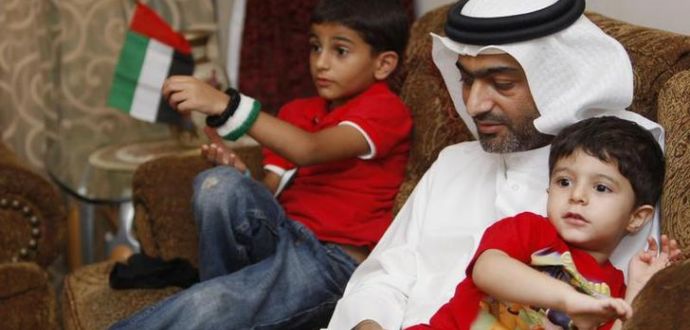
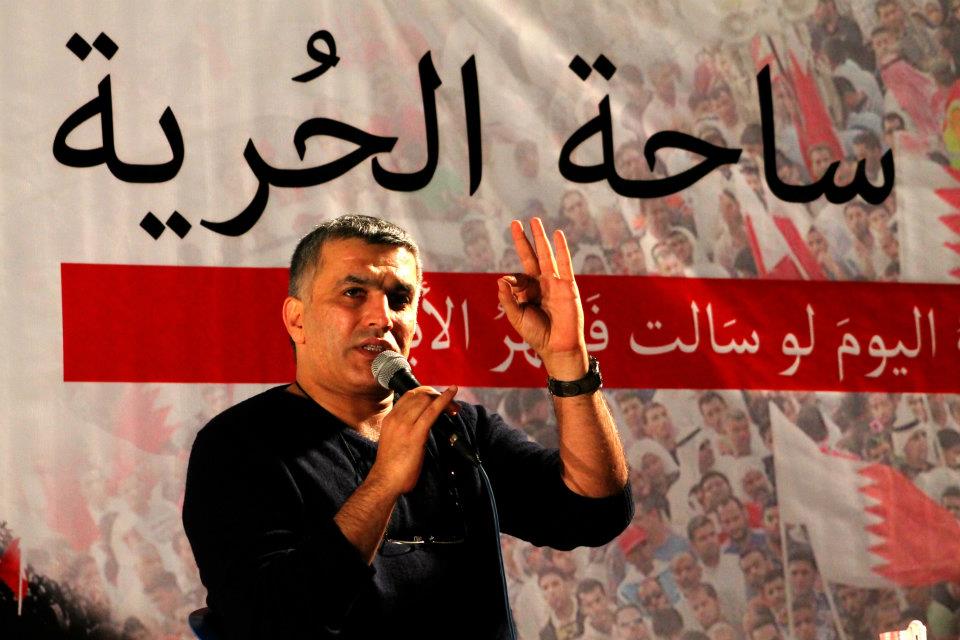
First of all I wish my readers a happy 2019. Unfortunately this year augurs badly for two human rights defenders who have figured frequently in this blog: Ahmed Mansoor [https://humanrightsdefenders.blog/tag/ahmed-mansoor/] and Nabeel Rajab [https://humanrightsdefenders.blog/2015/01/20/video-statement-of-troublemaker-nabeel-rajab-who-is-on-trial-today/]. Courts in the United Arab Emirates and Bahrain on Monday upheld the convictions of these two prominent human rights defenders serving lengthy prison terms for expressing anti-government dissent on social media. They have no right to further appeal. On 4 January 2019 there UN joined the critics of these sentences.

Nabeel Rajab, Final Nominee MEA 2012


https://www.washingtonpost.com/world/uae-and-bahrain-uphold-stiff-prison-sentences-for-human-rights-activists/2018/12/31/a31a3cf2-0d1b-11e9-8f0c-6f878a26288a_story.html?utm_term=.b3d062a3f670

http://icfuae.org.uk/news/uae-10-year-prison-sentence-upheld-ahmed-manoo

https://www.frontlinedefenders.org/en/profile/ahmed-mansoor

https://www.denverpost.com/2018/12/31/emirati-court-upholds-10-year-sentence-against-cu-boulder-grad-for-criticizing-government/

https://www.ifex.org/bahrain/2018/12/31/nabeel-condemn-sentence-upheld/

https://news.un.org/en/story/2019/01/1029832

Barbara von Ow-Freytag argues (well) for a new communication-based approach

December 26, 2018

As the Universal Declaration of Human Rights turns 70 – is it time for a new approach? asks Barbara von Ow-Freytag, Journalist, political scientist and adviser, Prague Civil Society Centre, in the World Economic Forum.This piece is certainly worth reading as a whole. It is close to my heart in that it stresses the need to have a hard look at how young human rights defenders  focus their energy where they can achieve real, concrete change within their own communities. Their campaigns are grassroots-led and use local languages and issues their communities understand. They often use technology and creative formats, with a heavy dose of visual and artistic elements. Where the international scene seems to stagnate and even backpedal, better use of communication skills and tools (such as images) are certainly part of the answer:

As the Universal Declaration of Human Rights turns 70, a new generation of human rights defenders are reinventing themselves to fight for old rights amid a new world order. Based not on declarations, charters and international bodies, but on the values which underpin them – justice, fairness, equality – they shun the language of their predecessors while embracing the same struggle…However, in the new realities of the 21st century, the mechanisms to promote human rights that grew out of the Universal Declaration are showing their age. Authoritarianism is on the rise across the world, with popular leaders cracking down on human rights defenders.

Freedom House found 2018 was the 12th consecutive year that the world became less free. Civicus, which specifically monitors the conditions for civil society activists and human rights defenders, found civil society was “under attack” in more countries than it wasn’t, with all post-Soviet countries (except Georgia) ranging between “obstructed” and “closed”.

Image: Freedom House

Troublingly, both the willingness and the ability of Western bastions of human rights are also on the wane. Inside the EU, talk of illiberal democracy gains traction, and internal crises divert attention away from the global stage. Perhaps unsurprisingly, throughout Eastern Europe and the former Soviet Union, younger activists and civil society are giving up on western governments and international organizations to advocate on their behalf. Pavel Chikov, director of the Agora group, said recently that, “Russian human rights groups no longer have a role model,” calling the liberal human rights agenda “obsolete”.

Growing disillusionment has led many rights groups to shift away from appealing to outsiders for support. Younger campaigners no longer frame their work in the traditional language of human rights, and many do not even consider themselves human rights defenders. Instead of referring to international agreements violated, they focus on solving practical problems, or creating their own opportunities to advance values of equality, justice and fairness.

Formats too have changed. Throughout the region, tools used by civil society to raise social consciousness are becoming diverse, dynamic and smart. Instead of one-person legal tour de forces, genuinely grassroots, tech-powered, peer-to-peer or horizontal networks are proving effective. Media, music, art, film, innovative street protests, urbanism and online initiatives focused on local communities are coming to replace petitions and international advocacy.

Team 29, an association of Russian human rights lawyers and journalists, is among the most successful of this new generation. It has repositioned itself as part-legal aid provider, part-media outlet. Its website offers a new mix of news on ongoing trials, animated online handbooks for protesters, videos on torture and a new interactive game telling young people how to behave if they are detained by police.

What may look like PR-friendly add-ons are actually core to their operation. Anastasia Andreeva, the team’s media expert, says: “Before, we consulted some 30 clients, now we reach tens of thousands of people.”

Azerbaijani activist Emin Milli also embodies this journey of wider civil society – turning away from the international towards local solutions. In the early 2000s, he was a traditional human rights defender, successfully using international mechanisms, such as the Council of Europe to assist political prisoners.

After his own arrest and return to activism, Milli changed tack. “When I was in jail, I had a lot of time to think,” he told the Oslo Freedom Forum. “I decided to do something that will give voice to millions.” His idea? Meydan TV – an online-only independent TV channel, targeting a young audience, which now reaches more than 500,000 people inside Azerbaijan through its Facebook page.  [see also: https://humanrightsdefenders.blog/2013/03/07/azerbaijan-harasses-human-rights-defenders-even-the-recipient-of-the-homo-homini-award/]

The key to Meydan’s success is its accessibility. Milli says: “We do stories about ordinary people. Real Azeris who have everyday problems.” Through its smart coverage, investigating and highlighting how injustice affects these ordinary people, and not referring to UN-enshrined rights and responsibilities, Meydan is “giving a voice to people who fight for women’s rights, people who fight for political rights, for civil liberties, and everybody who feels they are voiceless”.

Music, too, is increasingly being used as a vehicle to realize human rights. Though he might shun the label, Azeri rapper Jamal Ali is perhaps one of the country’s most well-known “human rights defenders”. His songs about injustice and corruption regularly go viral, raising national and international awareness in the same way a statement at the UN General Assembly might have done three decades ago.

In a 2017 hit, he highlighted how two young men had been tortured by police and faced 10 years in prison for spraying graffiti on a statue of former president Heydar Aliyev. In response, the regime arrested Ali’s mother, demanding that he remove the video from YouTube, only to ensure that Ali’s song went even more viral among Azeri youngsters.

Gender equality and women’s rights is also being advanced through unexpected new champions. In Kyrgyzstan, 20-year-old singer Zere Asylbek sparked a feminist shockwave earlier this year with her video Kyz (“Girl”). “Don’t tell me what to wear, don’t tell me how to behave,” she sings, bearing her top to reveal her bra. Seen by millions, the Kyrgyz-language feminist anthem has set off a new #MeToo debate in the Central Asian country, where many young women are still abducted, raped and forced to marry.

In the wake of the video, a first “feminist bar” is about to open in Bishkek. Other feminist videos have been used to directly address the issue of bride-kidnapping, with animated cartoons being used as part of local campaigns to change mindsets in a conservative society.

Perhaps most excitingly, an all-female team of 18 to 20-year-olds is building the country’s first micro-satellite. “Girls taking us into space is the best message against sexism,” says Bektour Iskender, whose news site Kloop initiated the project. He says the girls’ project has a deep social mission, promoting national pride and the country’s return to advanced technological development.

These examples – and countless more – show that civic groups see no value in lobbying an increasingly disinterested West and sluggish international organizations. Instead they focus their energy where they can achieve real, concrete change within their own communities. Their campaigns are grassroots-led and use local languages and issues their communities understand. They target specific audiences, often using technology and creative formats, with a heavy dose of visual and artistic elements.

Addressing discrimination, environmental protection, corruption, health issues, women’s rights, they speak not about the failure of their states to abide by international accords, but about common dignity and life opportunities, addressing people on a direct human level.

Clearly, the values of the Universal Declaration of Human Rights are still valid, but their approach and the packaging have changed. “We all want to change the world,” says Sergey Karpov of the Russian online media and philanthropic platform Takie Dela. “Today communications are the best way”.

https://www.weforum.org/agenda/2018/12/universal-declaration-of-human-rights-70-is-it-time-for-a-new-approach/

Human rights treaties promised a better future. Why did they fail?

December 26, 2018

The end of the year is a good time to reflect on trends that affect human rights defenders. I have referred to several main pieces in the course of this year [e.g.: https://humanrightsdefenders.blog/2018/08/01/human-rights-in-crisis-here-the-last-word-before-the-summer/]. On 20 December 2018, James Loeffler, the Jay Berkowitz chair in Jewish history at the University of Virginia, tried his hands at the the question: “Human rights treaties promised a better future. Why did they fail?” The author argues that the non-binding character of the UDHR, while politically understandable, carried the seeds of its failure: “The strategic decision to sidestep hard law in favor of soft norms yielded a new universal moral language. That success, however, came at the cost of a more comprehensive legal system that could withstand politics and compel states to do the right thing. In a world sorely lacking in global leadership, the champions of human rights stand poised to earn only the hollowest of victories.


Turkey, led by President Recep Tayyip Erdogan, experienced the fastest decline in liberty in the last year, according to the Freedom House rankings. (Adem Altan/AFP/Getty Images)

…….In 2018, however, the declaration [UDHR] remains an unfulfilled promise. Progressives fault the human rights movement for ignoring global economic inequality, and regimes like Iran and Venezuela have cynically weaponized human rights to score propaganda victories at the United Nations while shielding themselves from international scrutiny. But the real problem is less overt politicization or selective implementation than poor design. The truth is that its authors, by crafting a voluntary declaration instead of an international law, left it toothless to protect humans around the world whose rights it sought to enshrine. And in doing so, they laid out a pattern for future failures. Governments might do a much better job of safeguarding the integrity of their citizens today if only the framers in 1948 had insisted that U.N. member-states immediately accept binding rules instead of unenforceable norms.

……..Eleanor Roosevelt clashed with her Soviet counterparts, who opposed trade unions and the right to private property. Latin American representatives wanted God mentioned and abortion prohibited. The Saudis opposed freedom of religion and freedom of marriage as antithetical to Islamic views. The Americans worried about criticism over racial segregation, while the British and the French feared any provisions that might undermine their colonial empires.

What emerged from these debates was a surprisingly modest vision. The goal of the Universal Declaration was not to end state sovereignty or to level the playing field of global justice. Rather, its drafters forged a legal compact in which nation-states would commit to an internal baseline of freedom and welfare for their own citizens. In fact, the final text of the Universal Declaration is remarkably neutral on many core questions of modern politics. It does not demand democracy or proscribe autocracy. It is fully compatible with communism, capitalism and even colonialism.

Most strikingly, it is technically not law at all, but only a statement of nonbinding principles. Originally, the United Nations announced the creation of an International Bill of Rights akin to a global constitution. But over the course of 1947 and 1948, the document’s framers made the fateful decision to separate the declaration from a binding legal covenant, or international treaty, that U.N. member-states could eventually sign into law. At the time, the absence of an enforcement mechanism was viewed as a necessary price to pay for global consensus. Many also assumed that this move would suffice, since Western superpowers would backstop the system with their global clout through the Security Council.

But enumerating rights without obligating states to recognize them left international human rights as soft legal rhetoric bereft of hard legal authority. States could voice selective support for norms without any independent judiciary to verify their claims or provide a forum for injured individuals.

Sharp-eyed observers said as much at the time. In 1947, Hersch “Zvi” Lauterpacht, a leading expert on international law, objected in a BBC radio lecture that “to a lawyer, the enunciation of a right without the provision of a remedy is a juridical heresy . . . What is required at this juncture of history is not the recognition and not even the formulation of inalienable human rights but their effective protection.” A year later, he added, “It is clear to me that the declaration does not carry things further and that in some important respects has put the clock back.”

Lauterpacht was prophetic, for the U.N. Commission on Human Rights, the body of elected country delegates and U.N. bureaucrats charged with supervising the Universal Declaration, quickly showed itself unwilling or unable to respond to requests for help. Between 1947 and 1957, roughly 65,000 letters arrived at its doorstep from individuals alleging human rights violations in their countries. The avalanche of mail powerfully testified to the fact that the Universal Declaration had alerted people to the ideals of human rights. Yet the commission declined to investigate these complaints; neither great powers nor small ones wanted it determining when they’d broken the rules.

In the 1960s and 1970s, the gap between the stirring language of the Universal Declaration and its actual effectiveness only expanded. When new African states entered the U.N. ranks after 1960, many veteran human rights activists hoped they would use their political clout on behalf of the long-planned legal treaties related to the Universal Declaration. They did so in 1966, ushering in two major treaties designed to implement the declaration. This eventually led to other human rights treaties, addressing issues such as racial discrimination and women’s rights, along with the controversial International Criminal Court.

Yet the patchwork nature of this new system of laws made it vulnerable to intense politicization. Worse still, the new postcolonial states proved just as determined as their former Western rulers to guard their sovereignty and pick and choose which rights to observe. In 1968, when the United Nations hosted a conference in Tehran to celebrate the 20th anniversary of the Universal Declaration, Western diplomats came away dismayed by how human rights activism in the developing world had devolved into ideological score-settling. “Many of those who attended the Conference felt that this would be an occasion for mutual backslapping,” wrote Rabbi Maurice Perlzweig of the World Jewish Congress. “As it turned out, it proved to be an occasion for mutual nose-punching.”

Curiously, the political controversy over human rights at the United Nations did not stop a growing interest in the Universal Declaration itself. If anything, disillusionment with the limits of human rights law only increased reliance on the text as a norm. Across the 1970s and 1980s, as human rights grew from an elite U.N. legal project into a grass-roots movement, groups like Amnesty International routinely invoked the Universal Declaration to mobilize public opinion. In the absence of international legal enforcement, popular culture, media and protest politics could be used to name and shame states. The climax came in 1988, when Amnesty International sponsored a series of rock concerts around the world to celebrate the declaration’s 40th anniversary. Leading musicians like Sting, Peter Gabriel, Tracy Chapman and Bruce Springsteen took the stage to promote human rights awareness — along with Amnesty’s own brand and that of its corporate sponsor, Reebok.

The end of the Cold War in the 1990s brought a burst of U.N. efforts to reverse-engineer some of the pieces missing from its half-built legal architecture. The General Assembly launched the Office of the High Commissioner for Human Rights in 1993 to serve as a neutral legal ombudsman, while world leaders gathered in Rome in 2002 to revive the old idea of an International Criminal Court. At the behest of the United States, the rights commission was restructured and renamed as the Human Rights Council in 2006 to depoliticize its work. Yet these institutional developments still do not make up a full legal system that can truly enforce the Universal Declaration as global law.

Last year, the Office of the High Commissioner for Human Rights launched a 70th-anniversary hashtag, #standup4humanrights, and a website that insists “we can all be Human Rights Champions.” All it takes, apparently, is posting individual stories online and recording an article of the declaration in one’s own language. There is hardly any mention of law or politics; it suffices to “promote, engage and reflect.” That lofty rhetoric neatly captures how human rights remain captive to their flawed postwar origins. The strategic decision to sidestep hard law in favor of soft norms yielded a new universal moral language. That success, however, came at the cost of a more comprehensive legal system that could withstand politics and compel states to do the right thing. In a world sorely lacking in global leadership, the champions of human rights stand poised to earn only the hollowest of victories.

https://www.washingtonpost.com/outlook/human-rights-treaties-promised-a-better-future-why-did-they-fail/2018/12/20/bfd843ec-ffc0-11e8-83c0-b06139e540e5_story.html?utm_term=.862e2d5e78fb