Author Archive

Another call for NGO action on Reprisals against Human Rights Defenders.

February 6, 2019

Every year the UN Secretary General publishes a Report on Reprisals against Human Rights Defenders. On 5 February 2019  (President of the Association of World Citizens) summarized it for Global Solutions, lists the main culprits and calls for more action by the NGO community.

Reprisals on Human Rights Defenders: Need for NGO Action

On 23 January 2019, the U.N. Secretary-General Antonio Guterres in a statement listed States which had carried out reprisals or intimidation including killings, torture, and arbitrary arrests against individuals cooperating with the United Nations on human rights issues.  He said, “The world owes it to these brave people standing up for human rights, who have responded to requests to provide information and to engage with the United Nations to ensure their rights to participate is respected.  Punishing individuals for cooperating with the United Nations is a shameful practice that everyone must do more to stamp out.”  …“Governments frequently charged human rights activists with terrorism or blamed them for cooperating with foreign entities or damaging the state’s reputation of security.”…

The information (provided mostly by NGOs) is collected at the U.N. High Commissioner’s Office in Geneva and is evaluated to see if the information fits into a pattern of continuing human rights violations or if it is an individual event. 

Wadlow presents the States listed by broad geographic region rather than all together in alphabetical order as they are in the U.N. statement as other States in each region may also have human rights violation issues, often inter-related to the State named.  Thus, the list of States is only those which the U.N. is aware that there have been reprisals against individuals who have given information to the U.N. units. 

Middle East

 Bahrain,  Egypt,  Israel,  Saudi Arabia,  Morocco

Africa

 Cameroon,  Democratic Republic of Congo,  Djibouti,  Mali,  Rwanda,  South Sudan

Asia

 China,  India,  Maldives,  Myanmar,  Philippines,  Thailand

Latin America

Colombia,  Cuba,  Guatemala,  Guyana,  Honduras,  Trinidad and Tobago,  Venezuela

Europe

 Hungary,  Russian Federation

Central Asia

 Kyrgyzstan,  Turkmenistan

The impact and increasingly higher profile of human rights informants has left them more and more exposed to a high risk of harassment, repression, arbitrary detention and extra-judicial executions.  Governments are not the only actors.  Depending on the country, there can be gangs, militias, paramilitary and other non-governmental groups who also menace people thought to be giving information to the U.N. or to international human rights organizations

The publication by the U.N. of its list is done with the hope that governments themselves will take positive action to protect.  In some countries, internal security services or police-related “death squads” may act without the knowledge of the highest authorities of the State.  In other States, there is little repression that does not come on orders of the higher authorities. There is a need for representatives of NGOs and also the media to be alert, especially for violations in States which are not otherwise in the news. Active networking remains crucial.

For some of my earlier posts on reprisals, see: https://humanrightsdefenders.blog/tag/reprisals/

https://globalsolutions.org/reprisals-on-human-rights-defenders-need-for-ngo-action/

The Pope’s visit does not make the UAE a tolerant state

February 5, 2019

Pope Francis is on a visit to the United Arab Emirates. Although the country is considered relatively religiously tolerant for the region, Human Rights Watch’s Wenzel Michalski says it harshly cracks down on dissent. (Deutsche Welle interview)

Papst Franziskus in Abu Dhabi (Reuters/A. Jadallah)

DW: Pope Francis is on a trip to a country that has earned the reputation as a relatively tolerant state, especially in regard to religion. The claims are that different religions get along well with each other and that the coexistence of ethnic groups is peaceful. One could think that all sounds progressive.

Wenzel Michalski: Yes, that is the reputation they have acquired. But is not true, and that they enjoy such a reputation is completely unjustified. The UAE is not a tolerant state. There are massive violations of human rights, especially when it comes to free speech and freedom of assembly. Those who exercise their rights risk landing in jail. Recently two prominent human rights defenders were sentenced to 10 years in prison: One for criticizing Egypt and the other for speaking out against the general human rights situation in the country. The state is taking severe and brutal action against opponents and critics. [see also: https://humanrightsdefenders.blog/2019/01/02/happy-new-year-but-not-for-ahmed-mansoor-and-nabeel-rajab-in-the-gulf-monarchies/]

Human Rights Watch is also critical of a law passed in 2014 that gives the state legal grounds to take action against critics and dissidents.

Wenzel Michalski of Human Rights Watch (DW/H. Kiesel)

Wenzel Michalski is the director of Human Rights Watch in Germany

Yes, the state’s fear of criticism must be extreme so that anyone who dares to criticize the political situation or human rights in the country can be now defamed as a “terrorist” and therefore can face correspondingly harsh punishments.

It seems more and more that countries in the region have deliberately blurred laws on the basis of which dissidents can be defamed as “terrorists.”

Unfortunately, this is a trend in many countries in the Middle East, but also increasingly in Southeast Asia, Russia and, of course, China, where nearly identical laws and regulations are used to nip any criticism in the bud.…..

https://www.dw.com/en/human-rights-watch-the-uae-is-not-a-tolerant-state/a-47359439

Impunity with Canadian flavor

February 5, 2019

Brent Patterson posted on Rabble.ca on 4 February, 2019 a piece entitled: “Impunity for human rights violations must be challenged from Guatemala to the Wet’suwet’en territories“. It looks at the concept of impunity, especially in the context of indigenous people in Latin America and..Canada. Read the rest of this entry »

Nicaraguan journalist Wilfredo Miranda in exile wins journalism award

February 4, 2019

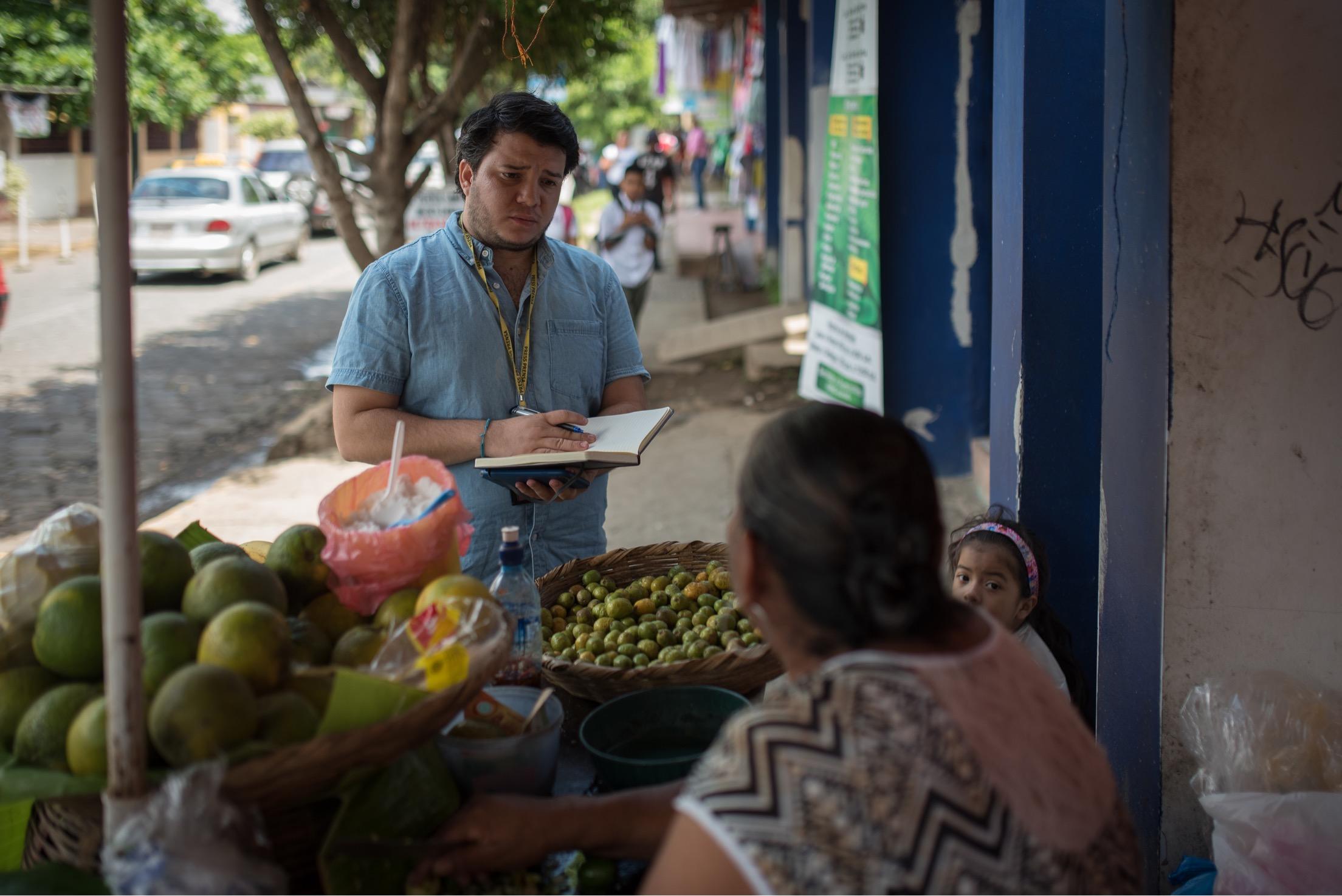
Nicaraguan journalist Wilfredo Miranda interviewing a witness to police repression in Masaya, Nicaragua, last summer. CREDIT COURTESY

Nicaragua’s human rights crisis  see https://humanrightsdefenders.blog/2019/01/18/exceptional-response-by-international-ngos-to-human-rights-crisis-in-nicaragua/] has sent many journalists into exile. Among them is Wilfredo Ernesto Miranda, a young reporter for the respected Nicaraguan weekly newspaper ConfidencialMiranda came to Miami after being threatened with imprisonment for exposing the murders of protesters by pro-government forces in a May 2018 article titled “!Disparaban con Precisión – a Matar!” (“They Were Shooting Precisely – to Kill!”) “I was able to document close-range bullet wounds to the heads and throats of protesters that could only be execution-style shots,” Miranda told WLRN.

The Rey de España prize is one of the most prestigious journalism awards in Spain and Latin America. Miranda said he wanted to dedicate his Rey de España prize – awarded by a jury in Spain – to imprisoned Nicaraguan journalists Miguel Mora and Lucía Pineda, who face terrorism charges that human rights groups call absurd.

http://www.wlrn.org/post/nicaraguan-journalist-exiled-miami-wins-prestigious-prize-and-vindication

https://www.efe.com/efe/espana/agencia-efe/periodistas-de-ocho-paises-iberoamericanos-ganan-los-premios-rey-espana/50000071-3883708

Manus Island detainee Behrouz Boochani wins major literary prize putting more pressure on detention policy

February 4, 2019
Behrouz Boochani in November, 2017. Picture: Jason Garman/Amnesty International

With one of the MEA 2019 final nominees being detained on Manus island in the same way [see: https://humanrightsdefenders.blog/2018/10/24/breaking-news-ennals-award-announces-its-3-finalists-for-2019/ ] it is relevant to note that another such detainee has won literary awards in Australia! Iranian-Kurdish journalist and poet Behrouz Boochani won the richest Australian Victorian Prize for Literature ($100,000) for his hellish first-hand account of life as a detainee on the island. His book, No Friend But The Mountains: Writing From Manus Prison, also won the $25,000 prize for nonfiction at Victorian Premier’s Literary Awards on 31 January 2019. (The eligibility criteria requiring that the authors be Australian citizens or permanent residents was overlooked to award the prize.

Mr Boochani told the Herald Sun from Manus Island, where he has been detained for more than five years, that the award was a victory for literature, resistance and humanity. But, he added: “I don’t want to celebrate this achievement while I still see many innocent people suffering around me.

No Friend But The Mountains.

If I could be there to accept the award I would explain how this award is a morality failure for Australia,” Mr Boochani said. “It is not just a failure on the part of the Australian government but a historical and moral defeat for those parts of the society who have been silent in the face of a barbaric policy over these years…It’s a huge cause of shame for a government that did not recognise us as human beings and did not recognise our human rights. It’s a challenge against a system that has lied to the public over the past years.”.


On 1 February University of Melbourne, followed up with a thoughtful piece on why “Behrouz Boochani’s literary prize cements his status as an Australian writer”

Other Australian authors have also used their voices to bring attention to the plight of asylum seekers. During her acceptance speech for her second Miles Franklin Award in August 2018, Michelle de Kretser chastised politicians for their treatment of refugees on Nauru and Manus Island. To illustrate her point, she read a list of names of asylum seekers who have died there in the past five years. It is tempting to dismiss such actions as gesture politics by an urban elite. But each individual action has served to raise awareness of the Australian government’s policy of “offshore processing” for asylum seekers, and to fuse artistic expression with political activism in a particularly forceful manner.

The author has been awarded the Anna Politkovskaya Award (for investigative journalism), the Amnesty International Award (Australian section) and Liberty Victoria’s Empty Chair Award. These humanitarian awards have confirmed Boochani’s rapidly acquired high profile in the literary field. Last night’s news topped all of that to make Boochani the first “non-Australian” author to win the Victorian Premier’s Literary Awards. The Victorian government established these awards in 1985 to honour Australian writing. The specific challenge this poses to the definition of “Australian writing” can be seen as an intervention by the literary community into the field of politics. If a non-citizen who has never set foot on mainland Australia can win, who counts as an Australian author?…

With no clear solution to the indefinite detention of asylum seekers on Manus and Nauru in sight, the paradox of Boochani’s award success can only contribute further to public debate over the tangled logic of indefinite detention. It shows how cultural practices and political activism can be reconfigured to correspond with the newly created literary currency associated with refugee writing. For now, at least, Boochani is an “Australian writer” because Australia is morally implicated in what he wrote and how he wrote it.

Also won in 2019: https://www.aljazeera.com/news/2019/08/kurdish-iranian-behrouz-boochani-wins-australian-biography-prize-190812071100746.html

See also: https://humanrightsdefenders.blog/2018/12/04/mea-nominee-aziz-abdul-muhamat-suffers-under-australias-endless-detention-policy/

https://www.heraldsun.com.au/news/victoria/manus-island-detainee-behrouz-boochani-wins-literary-prize/news-story/b57918c19d7f4c9a88ef532001b4f164

https://theconversation.com/behrouz-boochanis-literary-prize-cements-his-status-as-an-australian-writer-110986

Sports and human rights: focus on ‘sports washing’ – big names play for big money

February 1, 2019

Sports and human rights (or as some like to say ‘sports and politics‘) remains a hotly disputed topic. While the organized sport world (FIFA, IOC) is slowly coming around to take these matters more seriously [see e.g. https://humanrightsdefenders.blog/2018/12/03/fifas-second-report-on-human-rights-misses-sustainable-approach/  and  https://humanrightsdefenders.blog/2018/12/03/olympic-committee-tries-its-hands-on-human-rights-cautiously/], it seems that less progress is made with sports events organized by repressive regimes simply to boost their image. Recently called ‘sports washing‘ [The term was coined in relation to a planned tennis exhibition match in Jeddah last December between Novak Djokovic and Rafael Nadal, – https://humanrightsdefenders.blog/2018/10/19/novak-djokovic-and-rafael-nadal-have-a-chance-to-score-a-point-for-human-rights-defenders/. It never went ahead due to an injury of Nadal.]. Azerbaijan in 2015 tried to make good use of sporting events (see e.g.    https://humanrightsdefenders.blog/2015/06/12/baku-games-starting-today-with-avalanche-of-human-rights-criticism/; and https://humanrightsdefenders.blog/2015/04/21/azerbaijan-a-formula-for-combining-sports-and-repression/).

Now the regime of Saudi Arabia hopes that it can buy its way to a better image with hosting sport events and Amnesty International has warned sports stars not to become a propaganda tool. Saudi Arabia said it has hired the former England captain, David Beckham, to lead an exhibition team against his former Real Madrid teammate Zinedine Zidane.  The game, to be held later this year, is part of a £60-billion re-launch of the entertainment industry in Saudi Arabia, called the National Transformation Programme. According to an article in the Sun, it would earn Beckham an estimated £1million. [Beckham also has a lifetime endorsement deal worth £120million with Adidas which I think doesn’t sit well with Adidas’ claimed stance in favor of human rights – see e.g. https://humanrightsdefenders.blog/2018/12/13/first-time-major-companies-say-that-human-rights-defenders-are-essential-for-profitable-business/].

Announcing the match in front of big screen images of the football legends, Saudi sports minister Turki Al-Sheikh said: “This is an exhibition match including two big worldwide stars – Zinedine Zidane and David Beckham playing against each other…If God wills, you will see it this year in the Kingdom of Saudi Arabia.

The UN children’s aid group UNICEF, for whom Beckham is a goodwill ambassador, has criticised the Saudi-led coalition saying its bombing attacks there have had catastrophic consequences for the local population. Saudi Arabia has detained more than a dozen women’s rights activists such as Loujain al-Hathloul who once appeared in a Vanity Fair.  Loujain’s sister, Alia, has criticised US singer Mariah Carey for playing a concert on Thursday at the King Abdullah Economic City. She said: “My own baby sister said she is being whipped, beaten, electrocuted and harassed on a frequent basis.” She stated: “Remember, thanks to my sister @LoujainHathloul, you r able to perform in Saudi Arabia. I wish she can attend your concert. But she’s locked behind bars because she tried to improve women’s condition. Don’t forget to thank her on stage,” she wrote to Carey on Twitter. [but Mariah Carey is an old hand when it comes to selling her soul: see e.g. https://humanrightsdefenders.blog/2013/12/19/mariah-carey-needs-better-informed-staff-and-donate-her-1-million-fee-to-human-rights-defenders-in-angola/].

My post yesterday was about golfershttps://humanrightsdefenders.blog/2019/01/31/amnesty-international-calls-on-golfers-not-to-play-the-saudi-propaganda-game/] who were being paid $ 1million when the European Tour staged a tournament in Saudi Arabia. While Paul Casey decided not to take part on human rights grounds, Justin Rose and Ian Poulter did play.

How difficult if not impossible it is to try and separate sports and politics can be illustrated by the recent case of soccer player, Hakeem al-Araibi, a Bahrain-born soccer player for a team in Australia has been held in detention in Thailand [see https://humanrightsdefenders.blog/2019/01/02/craig-foster-australian-footballer-and-human-rights-defender/].  Hannah Beech in the NYT on 31 January 2019 puts the question “Can Big Global Sports Come Around to Human Rights Advocacy?

Hakeem al-Araibi, center, a former member of Bahrain’s national soccer team who has refugee status in Australia, at court in Bangkok in December.CreditCreditAthit Perawongmetha/Reuters

The global sports market is worth hundreds of billions of dollars a year. Now, this powerful industry is coming together to promote an unlikely cause: human rights. Since late November, a Bahrain-born soccer player for a minor team in Australia has been held in detention in Thailand. The player, Hakeem al-Araibi, 24, is not a famous athlete. He has no lucrative sponsors. But he has spoken out against one of the most powerful men in international soccer, who is also a member of the ruling family of Bahrain. His testimony of torture at the hands of Bahrain’s repressive government earned him refugee status in Australia, which determined that he faced credible threats of persecution should he return to the Gulf state. Still, over the past week, Mr. Araibi has collected an impressive list of supporters in the world of international sports.

  • Fatma Samoura, the secretary general of FIFA, has called for Thailand to return him to Australia “as a matter of urgency.”
  • Thomas Bach, the head of the International Olympic Committee, raised the issue with the United Nations High Commissioner for Refugees.
  • Praful Patel, of the Asian Football Confederation, issued a statement asking the Prime Minister of Thailand to ensure Mr. Araibi’s return to his adopted home.

[By the way, the head of the Asian Football Confederation is Sheikh Salman bin Ebrahim al-Khalifa, the Bahraini official whom Mr. Araibi accused of not stopping the persecution of athletes in his charge. Sheikh Salman also serves as a FIFA vice president.!]

Mary Harvey, the chief executive of the Center for Sports and Human Rights, said:  “Hakeem is a historic test case, because it’s the first time that we’ve seen these big, powerful sports bodies all come together publicly to address the fate of a single person”. [see also: https://humanrightsdefenders.blog/2018/12/12/mary-harvey-her-goal-is-now-human-rights/]. The court ordered al-Araibi, who is in the Bangkok Remand Prison, to appear before it at 8.30am on Monday to answer whether or not he is willing to be extradited,  lawyer Bergman said.

—–

Macron’s meeting with human rights defenders in Egypt and follow up

January 31, 2019

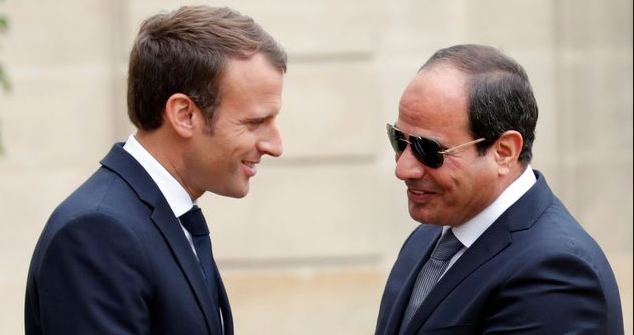
Emmanuel Macron lunched with Egyptian human rights defenders in Cairo on 29 January at the end of a three-day visit (for names see below). On Monday, the French president had visibly annoyed his Egyptian counterpart Abdul Fattah al-Sisi at a press conference, by saying that Sisi ought to restore civil rights and liberties for the good of his country. “Stability and lasting peace in Egypt go hand in hand with respecting individual rights and liberties within a state of law,” Macron said. “A dynamic, active, civil society remains the best rampart against extremism.” In response, President Sisi that “Egypt will not rise up with bloggers… Egypt will develop with efforts and patience.

The French leader was even more forthright with French journalists in Cairo on Sunday night. He had given Sisi a list of political opponents including “journalists, homosexuals, men and women who have convictions” when Sisi visited Paris in October 2017. “Only two of them were freed,” Macron said. “That’s not enough. And things have got worse since.”

On Tuesday, the Cairo Institute for Human Rights Studies issued a statement providing details about the meeting. It said that Mohamed Zaree told Macron that “France must ensure that French weapons and communication technologies are not being used in Egypt against rights activists and peaceful political dissidents.”  Zaree also told Macron that he and 30 of his colleagues are banned from travel and ” stressed that it was vital for the international community to refuse to sanction any attempt to amend the Egyptian constitution to eliminate presidential term limits, on any pretext.” [see also: https://www.voanews.com/a/human-rights-honor-goes-to-egyptian-banned-from-travel/4064632.html; https://humanrightsdefenders.blog/2017/10/10/breaking-news-egyptian-defender-mohammed-zaree-laureate-of-the-martin-ennals-award-2017/]

That the State does not have to do all the criminalisation of HRDs itself was shown a day after the meeting with the HRDs, when Egyptian lawyer Tarek Mahmoud filed a legal complaint against the heads of four of Egypt’s human rights organizations for “threatening national security”, according to local media reports. The complaint was filed on Wednesday against Mohamed Zaree, the director of the Cairo Institute for Human Rights Studies (CIHRS), Gamal Eid, the executive director of the Arabic Network for Human Rights Information, Mohamed Lotfy, the executive director of the Egyptian Commission for Rights and Freedoms, and Gasser Abdel-Razek, the executive director of the Egyptian Initiative for Personal Rights (EIPR). Tarek Mahmoud said in the complaint that the four men “provided French officials with false information on the political conditions in Egypt”. Mahmoud added that they were “insulting the Egyptian state and undermining the country’s national security, and collaborating with the terrorist Muslim Brotherhood group to achieve its goals of bringing down the Egyptian state.

The Irish human rights group Frontline Defenders has presented a report on Egypt’s Attack on Labour Rights Defenders to French media in the run-up to Macron’s visit (with focus on the ill-treatment of workers at the Alexandria shipyard.).

——

https://www.irishtimes.com/news/world/europe/macron-pivots-towards-focus-on-human-rights-abuses-in-egypt-1.3775181

https://egyptianstreets.com/2019/01/31/human-rights-advocates-accused-of-spreading-false-news-after-meeting-with-macron/

Amnesty International calls on golfers not to play the Saudi propaganda game

January 31, 2019
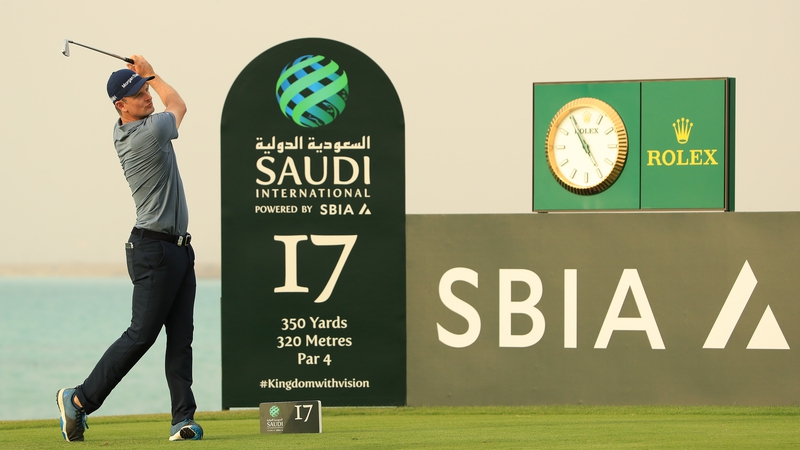
Rose during the pro-am at Royal GreensRose during the pro-am at Royal Greens
Golf’s world number one Justin Rose should use his profile to highlight human rights issues and counter the “propaganda value” of this week’s Saudi International, according to Amnesty International.

The tournament has attracted a star-studded field despite the killing of journalist Jamal Khashoggi last year [see: https://humanrightsdefenders.blog/tag/jamal-khashoggi/]

Rose has defended his participation by the lame response: “I’m not a politician, I’m a pro golfer“. Human rights violating countries are well aware of the ‘sports-washing’ value of international sporting events, and the players need to understand this too. [ just see some the posts: https://humanrightsdefenders.blog/tag/sports-and-politics/]

AI UK’s director Kate Allen said. “We haven’t called on golfers to pull out of the Royal Greens event and it’s not for us to say who should be playing in these tournaments or whether countries like Saudi Arabia should be hosting them“.

The point with this, like other sporting events in countries with atrocious human rights records, is to fully understand the context…By hosting the European Tour, Saudi Arabia is almost certainly hoping to use the glamour of elite golf and the lush panorama of the Royal Greens course to subtly rebrand the country.” 

AI makes the concrete suggestion:”If each member of the European Tour tweeted their support for Loujain al-Hathloul and the other jailed women’s rights activists in Saudi Arabia, they could go a long way to countering their propaganda value to the Saudi government.”

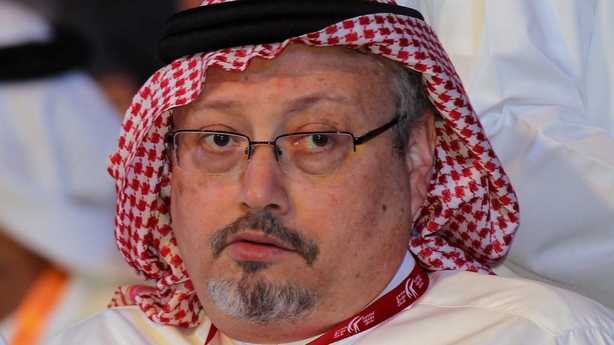
Jamal Khashoggi was murdered by the Saudi regime


See also my: https://humanrightsdefenders.blog/2018/10/19/novak-djokovic-and-rafael-nadal-have-a-chance-to-score-a-point-for-human-rights-defenders/


https://www.rte.ie/sport/golf/2019/0130/1026532-amnesty-calls-golfers/

Tang Jitian receives his French Republic Human Rights prize in Beijing

January 31, 2019

On 10 December, 2018, on the occasion of the 70th anniversary of the Universal Declaration of Human Rights and the 20th anniversary of the United Nations Declaration on Human Rights Defenders, the French National Consultative Commission on Human Rights (La Commission nationale consultative des droits de l’homme) has awarded the annual French Republic Human Rights Prize to six personalities or organizations that have distinguished themselves in their country for the defense and promotion of human rights, and Chinese human rights lawyer Tang Jitian was one of them. He was unable to travel to France to receive the prize. On January 14, 2019, the French Ambassador to China, Mr. Jean-Maurice Ripert, presented him the award in Beijing. For more on this another awards: http://www.trueheroesfilms.org/thedigest/awards/prix-des-droits-de-lhomme-de-la-republique-francaise.

Excerpts from his Acceptance Speech:

Ladies and Gentlemen: 

……Since entering the legal profession, especially after coming to Beijing in 2007, I was determined to use the law to help those who had suffered injustices. In addition to handling human rights cases, I also participated extensively in social actions, one of which was an effort in 2008-09, together with a cohort of lawyers to promote direct elections of the Beijing Lawyers’ Association. This action infuriated the Chinese government, and in April 2010, my license to practice law was revoked. Even though I suffered this blow of losing my normal legal practitioner’s identity, it didn’t stop me from engaging in rights defense work. On the contrary, I threw myself into the work even more actively, including the struggle for lawyers’ own rights and interests. And despite having suffered numerous rounds of forced disappearance and arbitrary detention, accompanied by torture, I nonetheless still had the same intention as before –– to continue to be active in the field of rights defense in China.

Although I’ve been restricted from exiting the country for nearly 10 years, making it impossible for me to fully communicate and work together with the outside world, my view was not completely limited. I still have friends from certain countries who have facilitated my work to varying degrees.

……..Contemporary mainland China has reached a critical juncture: whether to embrace civilization or choose barbarism; whether to practice universal values ​​or push the rules of the jungle; whether to preserve and strengthen the outdated totalitarianism or move toward a new democratic politics –– there is not much time left to waver.  

As a member of civil society, I look forward to China getting on the right track as soon as possible, but those selfish and greedy officials in the government are trying to pull the people back into barbarism. It is difficult to imagine what things would be like to have a China with 1.3 billion people suspended alone for a long period of time outside the civilized world: the deteriorating human rights situation in mainland China is not only a nightmare for the Chinese, but will also be a misfortune for all of humanity.

In the face of this grim situation, groups upon groups of Chinese people eager to live with dignity have fought for their rights and interests in various ways, so that future generations can live in a normal environment, and the Chinese nation will not become a burden to the world. Human rights defenders, including human rights lawyers, are to some extent shouldering a historical responsibility. As one of them, I hope they will receive more understanding, attention, support, and assistance from the international community.

……I will work together with other human rights defenders, from a new starting point, to make a due contribution to the protection of human rights and the advancement of the rule of law...


https://chinachange.org/2019/01/30/acceptance-speech-for-the-2018-french-republic-human-rights-prize/

NGOs express fear that new EU ‘terrorist content’ draft will make things worse for human rights defenders

January 31, 2019

On Wednesday 30 January 2019 Mike Masnick in TechDirt published a piece entitled: “Human Rights Groups Plead With The EU Not To Pass Its Awful ‘Terrorist Content’ Regulation“. The key argument is that machine-learning algorithms are not able to distinguish between terrorist propaganda and investigations of, say, war crimes, It points out that as an example that Germany’s anti-“hate speech” law has proven to be misused by authoritarian regimes. Read the rest of this entry »