Author Archive

RSF’s Press Freedom Award 2019 goes to three women journalists

September 16, 2019

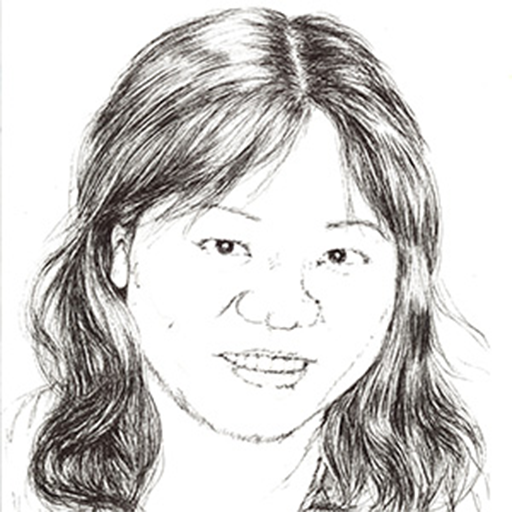
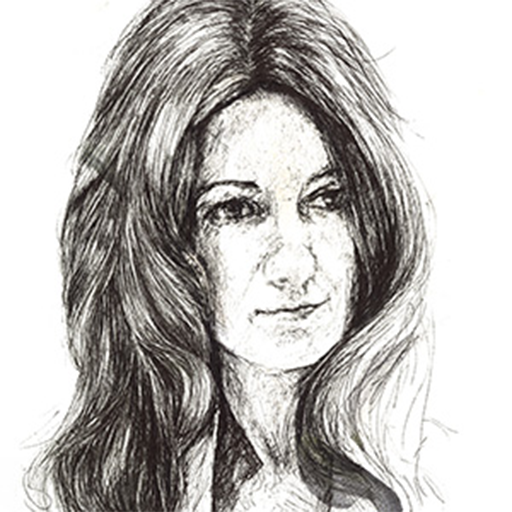
On 12 September Reporters Without Borders (RSF) awarded its 2019 Press Freedom Prize to Saudi journalist Eman al Nafjan, Vietnamese journalist Pham Doan Trang and Maltese journalist Caroline Muscat, at a ceremony held for the first time in Berlin. The award used to be called the Reporters Without Borders Prize {see: http://www.trueheroesfilms.org/thedigest/awards/reporters-without-borders-prize} but is increasingly referred to as Press Freedom Award which could be confusing as there are other awards with that name such as: http://www.trueheroesfilms.org/thedigest/awards/international-press-freedom-awards-canada and http://www.trueheroesfilms.org/thedigest/awards/international-press-freedom-awards-cpj.

The Prize for Courage, which is given to journalists, media or NGOs who demonstrate courage in the practice, defence or promotion of journalism, was awarded to Saudi journalist Eman al Nafjan. The founder of the SaudiWoman.me website and author of many articles in the international media including the Guardian and New York Times, Eman al Nafjan spearheaded the Saudi women’s campaign for the right to drive and against Saudi Arabia’s oppressive male guardianship system. Arrested along with other women’s rights activists in May 2018, she was freed conditionally on 28 March 2019. According to the Saudi media, she is accused of endangering “national security,” maintaining “suspicious contacts with foreign entities” and of being a “traitor,” for which she could be jailed for up to 20 years.

The Prize for Impact, which is given to journalists whose work has led to concrete improvements in journalistic freedom, independence and pluralism, or to an increase in awareness of these matters, was awarded to Vietnamese journalist and blogger Pham Doan Trang. She is the founder of Luât Khoa, an online magazine that specializes in providing information about legal issues, and she edits another, thevietnamese, which also helps Vietnamese citizens to defend their rights and resist the Communist Party’s arbitrary rule. The author of many books including one defending the rights of Vietnam’s LGBT communities, she has been beaten by the police because of her work and was detained arbitrarily twice for several days in 2018.

The Prize for Independence, awarded to journalists for resisting financial, political, economic or religious pressure, went to Malta’s Caroline Muscat. After fellow Maltese journalist Daphne Caruana Galizia was murdered in October 2017, she helped to create The Shift News, an independent investigative news website committed to combatting corruption and defending press freedom in Malta. In this small island nation where most media outlets are subservient to the government, she has exposed many cases of corruption implicating local politicians. Although the repeated target of gag suits, The Shift News has refused to comply with content take-down demands from Henley & Partners, a British firm that advises governments on residence and citizenship-by-investment policy. She received an award from the European Commission in 2015 for her journalism,

Every year, award-winners are unable to attend because the leaders of their countries prevent them,” RSF Secretary-General Christophe Deloire said. “Two of this year’s three laureates have been unable to collect their awards personally,………… These journalists, who should be honoured in their countries, are denied the freedom to travel and often their freedom, period. But their commitment transcends borders without the dictators being able to do anything to prevent it.”

https://rsf.org/en/news/journalists-saudi-arabia-vietnam-and-malta-honoured-rsfs-2019-press-freedom-awards

Carmignac Photojournalism Award for covering human rights violations – in 2019: the Amazon

September 15, 2019
Grajaú, Brazil—A deforested area in the southern Maranhão state seen from a helicopter belonging to IBAMA, Brazil’s national environmental agency [Photo: © Tommaso Protti for Fondation Carmignac]

The Carmignac Photojournalism Award is an annual prize given to investigative photojournalists covering human rights violations [see: http://www.trueheroesfilms.org/thedigest/awards/carmignac-photojournalism-award]. Each year, a team of environmental and political leaders selects a region to focus on and then selects a recipient, who uses the foundation’s $55,000 prize money to shoot the project they proposed. The annual award, now in its 10th year, focuses on a different region and associated human rights topic each year. For 2019 the jury chose to call for project proposals around deforestation and the Amazon. Evan Nicole Brown writing in Fact Company of 12 September 2019 notes that “in an ironic twist, the recipient of the prize money was announced as the rain forest was being obscured by plumes of smoke from the unprecedented fires.

The winner, Tommaso Protti, is an Italian-born photographer who has lived in Brazil for the past five years. ..the prize money supported the production of his photojournalism work, which began in January of this year and wrapped up in July. His reportage, developed in tandem with British journalist Sam Cowie, was revealed at the Visa pour l’Image festival in France on September 4.

……

“There’s a big problem with impunity inside the region because of the state—it leads directly to killing the environment and indigenous leaders,” Protti says. “The people there don’t have the protection [like most of us] experiencing climate collapse. The majority of the people I’ve met try to make a living with what the forest offers them.”

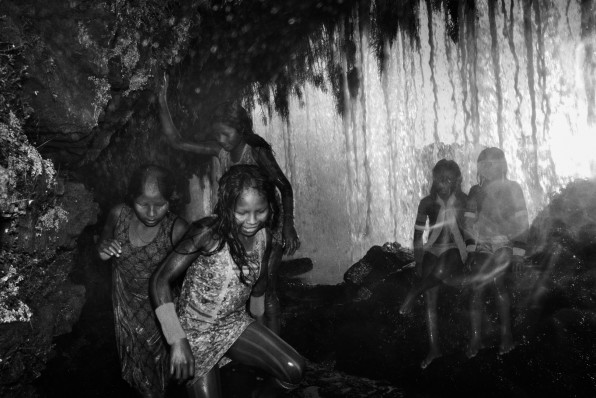
Kayapó Indigenous Land—Kayapo children play behind a waterfall in the Kubenkrãnken indigenous village, in southern Pará state. The Kayapo have only been in contact with nonindigenous society since the 1960s. Their land serves as a crucial barrier to deforestation advancing from the south. [Photo: © Tommaso Protti for Fondation Carmignac]

Poor environmental health in the Amazon is, in part, responsible for poverty and violence in surrounding favelas too. Rural agricultural workers, who depend on the forest for a living, have been forced to leave the Amazon now that it is less dense and farming has been modernized. The only place left for them to go are Brazil’s cities, resulting in a crowding of favelas and the tension that results from a government pushing disparate communities into close proximity.

One of Protti’s selected photographs depicts members of the Guajajara forest guard beating an indigenous man accused of collaborating with illegal loggers. Over the course of his time photographing the rain forest and its native people, Protti was able to observe how seasonal changes affect the Amazon’s health, during the dry season (July through October) and the rainy season too. The joint work between Protti and Cowie explores the humanitarian crises plaguing the region—from Venezuelan refugee groups to agrarian and religious conflicts—and the ongoing deforestation too. “It’s a really complex award from my point of view. [The Amazon] is a national treasure,” Protti says about his win. “It’s nothing new, fires happen every year . . . but at the same time, the fires are consequences of the social [situation].”

Protti’s photographs and the accompanying reportage will be presented in London and at the Maison Européenne de la Photographie (MEP) in Paris starting December 4. They will also be included, concurrently, in a monograph copublished with Reliefs Éditions.

https://www.fastcompany.com/90399868/a-photographers-race-to-document-the-destruction-of-the-amazon-rain-forest

In memoriam Hungarian author György Konrád – age 86

September 15, 2019

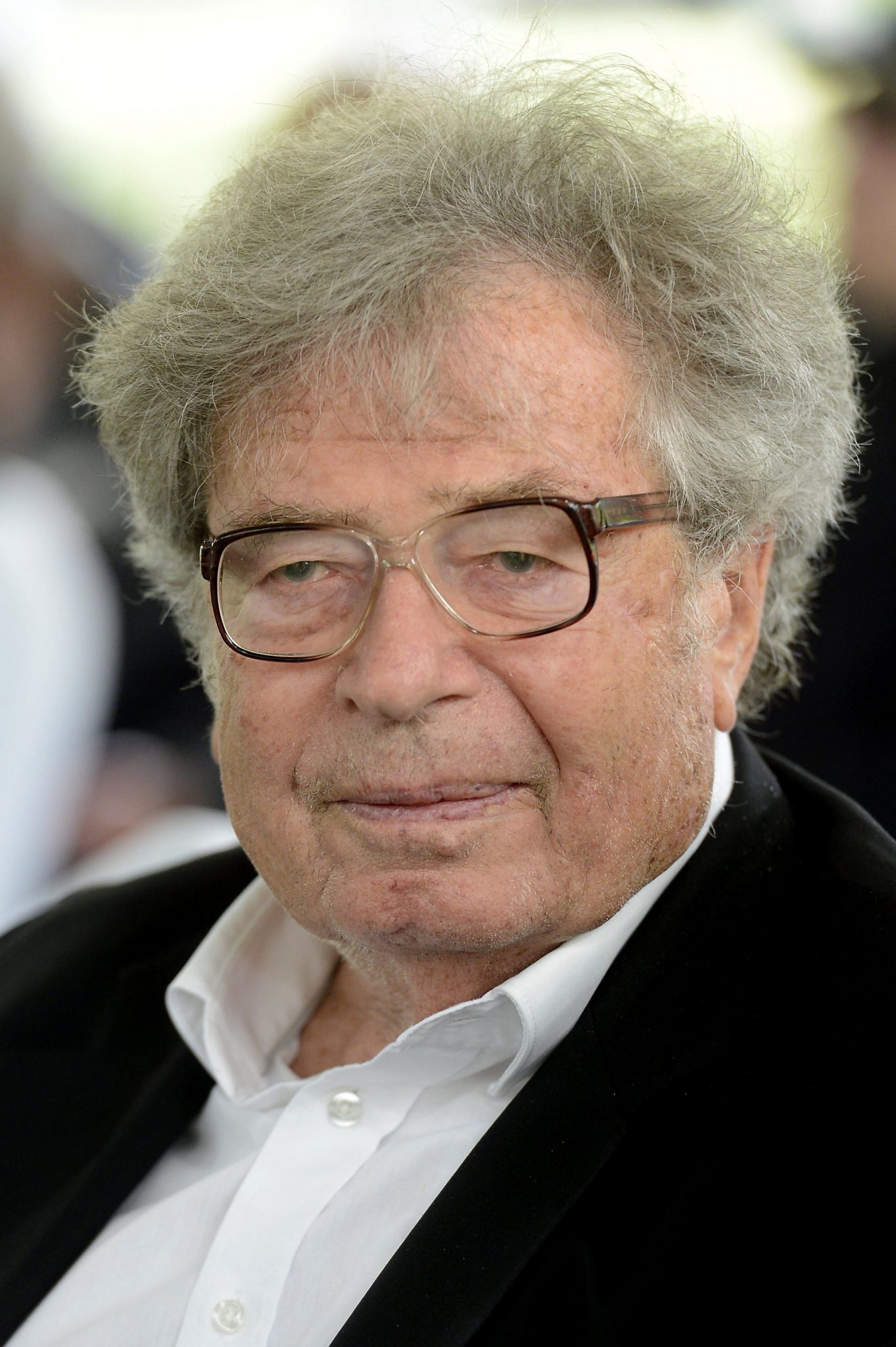
Featured photo by Lajos Soós/MTI
MTI-Hungary Today reported on 14 September 2019 that Hungarian author, essayist and sociologist György Konrád died on Friday 13 September at the age of 86. He was one of the best-known representatives of Hungarian prose around the world, with works translated into many languages.

Born in Debrecen in 1933, Konrád survived the Holocaust in a safe house in Budapest. He graduated as a teacher from Budapest’s Eötvös Loránd University in 1956. After serving in the National Guard during the 1956 revolution, he made his living through ad hoc jobs for a few years. In 1959 he got full-time state employment, working as a children’s welfare supervisor until 1965. The experience amassed during this time served as the basis for his first novel The Case Worker. He was working closely with urban sociologist Iván Szelényi with whom he wrote a book on the sociological problems of new housing estates.

Citing political reasons, the communist authorities banned the publication of his second novel, The City Builder. After losing his job in 1973, Konrád, together with Szelényi, wrote The Intellectuals on the Road to Class Power, a sociological analysis of political history questioning workers’ rule in then Hungary. The political police, however, confiscated the manuscript and arrested the authors for incitement against the state. They were informed that they would be permitted to emigrate with their families. Szelényi accepted the offer, while Konrád remained in Hungary, choosing internal emigration.

He published in Hungarian samizdat and through western publishing houses. Virtually from this period until 1989, Konrád was a forbidden author in Hungary, deprived of all legal income. In 1987-88 he taught world literature at Colorado College in Colorado Springs.

In the 1980s Konrád was member of the Democratic Opposition and in 1988 became a founder of the liberal Alliance of Free Democrats (SZDSZ). In 1990 he was elected president of PEN International, holding the post full time until 1993. Between 1997 and 2003, Konrád was twice elected president of Berlin-Brandenburg’s Akademie der Kuenste. His long list of awards included the peace prize of PEN International (1991), the French Legion of Honour (1996), the Charlemagne Prize (2001) and the Franz Werfel Human Rights Award (2007).


https://hungarytoday.hu/author-gyorgy-konrad-dies-aged-86/


Signatures for human rights: AI Indonesia partners with advertising company

September 14, 2019

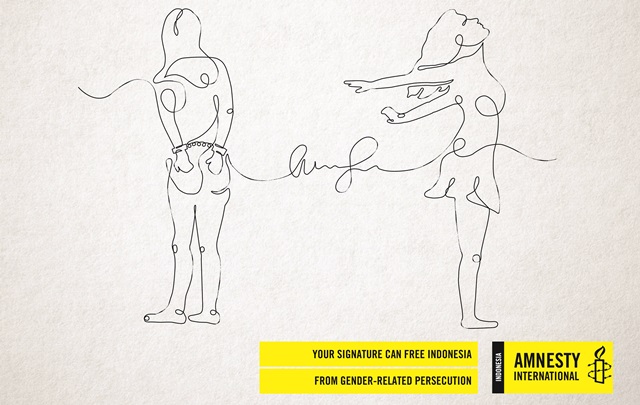
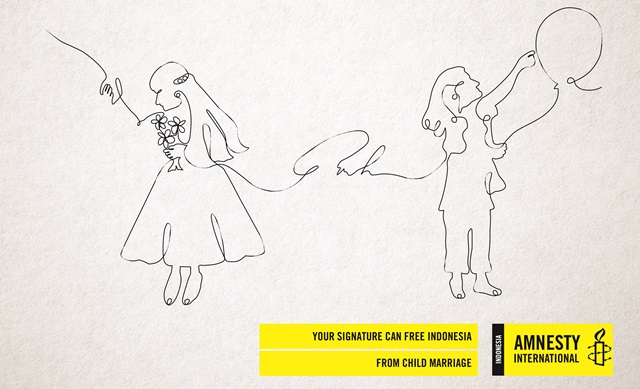
Human rights organisation Amnesty International Indonesia has launched a campaign to spread awareness about how a single signature can make a big contribution to ending human rights violations.

According to a press release, it has partnered Grey Indonesia to produce a series of posters that utilise the simplicity of single line illustrations to visually communicate the strength of signatures. The series highlight three human rights issues that “really matter” to Indonesia’s millennial segment – child marriage, gender-related persecution, and the suppression of freedom of expression.

We at Amnesty International have witnessed how signatures can change people’s lives all over the world. With this campaign, we are hoping that Indonesian youth will recognise its power and start to take action for human rights,” said Sadika Hamid, Amnesty International Indonesia communications manager.

The posters are situated in the Amnesty International office and its immediate vicinity (Menteng, which is a popular hangout spot amongst the youth). They will also be placed near other touch points and locales familiar to Indonesian millennials, such as trains stations, art galleries and coffee shops, over the next few weeks.

Grey Indonesia ECD Patrick Miciano said: “Grey Indonesia believes in what Amnesty International stands for. It is a humbling experience to be able to collaborate with one the world’s biggest defenders of human rights.

UAE: whitewashing specialists get help from the UK

September 14, 2019

Aimed at students aged between 16 and 18, guidelines for entrants urge them to consider “What can the world learn from the UAE’s model for tolerance?” and “How does the Year of Tolerance reflect the already established values of diversity within the UAE?”

UAE launches ‘pledge of tolerance’ despite continued crackdown on dissent

But the guidelines also tell entrants that they must abide by media laws in the UAE, which forbid criticism of the Emirati government and ruling families, its monarchical system, political decisions or “defaming public officials”. Earlier this year, the UAE upheld a 10-year jail sentence for Ahmed Mansoor, an Emirati blogger, for “insulting the UAE’s leaders online.” [see also: https://humanrightsdefenders.blog/2019/06/13/political-prisoners-in-the-emirats-are-detained-indefinitely-even-after-release-date/]

Hiba Zayadin, a Gulf Rights expert for Human Rights Watch, criticised the British government for its participation in this initiative and said it was “helping whitewash” the UAE government. “It is not just ironic to host such an initiative in one of the world’s most repressive countries, but downright irresponsible,” Zayadin told Middle East Eye. “The UAE is a country where the red lines are constantly shifting, and where journalists, academics and critics have been targeted, harassed, threatened, and jailed simply for expressing their opinions.” She added: “By launching such an initiative, the British embassy is not supporting the growth of journalism around the world so much as it is helping to whitewash a repressive regime’s near-obliteration of the space for free speech.”

Press freedom in the UAE has been a constant source of criticism for the Emirates. Reporters Without Borders (RSF) ranked the UAE at 133rd in its 2019 Press Freedom Index and described the country as the “masters of the online surveillance of journalists”.

https://www.middleeasteye.net/news/uk-under-fire-launching-uae-press-scheme

Russian human rights defenders try technology and gaming innovations

September 13, 2019

Tatiana Tolsteneva has written in Global Rights of 12 September, 2019 a very interesting piece about wether technology and gaming innovations can bring new life to Russian NGOs and appeal to younger audiences. Tatiana Tolsteneva has 10 years of managing experience in the Russian non-profit sector, with a focus on human rights defenders initiatives. She has a Master’s degree in Law from Lobachevsky State University of Nizhni Novgorod (UNN) and is finalizing her Master’s Degree in Social Innovation and Entrepreneurship at the London School of Economics. It is long read but contains some fascinating insights:

While there is significant debate over foreign funding issues and closing civic space in Russia, a key problem of the Russian non-profit sector is its “catch-up” form of development. Due to limited resources, this sector develops much more slowly than media or information technologies, for example. In Team 29, an informal association of lawyers and journalists, we are trying to change this, primarily by introducing new media technologies in the non-profit sector.

Lawyers of Team 29 are known not only for taking up cases considered hopeless in which the state accuses people of crimes against national security, but also for seeking so-called “justice in Russian.” That is, fighting for a sentence below the lower limit established by the Criminal Code or for a pardon by the president. In a country in which acquittals account for only 0.02% of total cases, this is considered a success.

In addition, our journalists have developed a niche media resource covering a wide range of issues regarding the relationships of citizens and the Russian government. The Team advises citizens on what actions to take if subjected to searches or questioning, how to find information in governmental databases, and how to protect one’s private data. Through this work, Team 29 is changing the concept of what a human rights activist in Russia can be, and we seek to explain the complexities of this work. The main problem of human rights defenders in Russia for a long time was separation from “ordinary people”. The positioning, language, and public image of human rights defenders were such that average citizens did not understand what human rights workers were doing and how it related to them. Team 29 was one of the first human rights organizations to adopt modern explanatory journalism techniques to strengthen communication with its target audience. In other words, we started to translate from “legal” to “human” language, and to make our materials more engaging to win the online struggle for reader attention.

The positioning, language, and public image of human rights defenders were such that average citizens did not understand what human rights workers were doing and how it related to them. 

In 2015, we joined our legal skills with explanatory journalism technologies in order to develop what are now called “legal handouts”. These are texts providing legal advice, in plain language, mostly on how to deal with unexpected clashes with Russian law enforcement. For example, the handouts explain a person’s rights and how citizens can protect themselves from mistakes often related to lack of knowledge. Each handout has had an average of 100,000 views, and work on these handouts resulted in the subsequent creation of Team 29’s online mini-media resource. Its average monthly attendance amounts to at least 50,000 unique visitors.

The problem in these developments was that the major audience of Team 29’s media projects was people between 25-44 years old, while it is the Y generation—people younger than 25—that has been a driving force of socio-political processes in Russia. For example, this younger age category of Russian citizens has been the one most actively involved in the public mass protests of recent years.

We made it a goal to reach out to that audience with mobile games, which have a huge audience in that demographic and can be played offline. In fact, pro-social games—games with grounded social impact—are an advanced tool in media and non-profit fields abroad. But until now, there have been no such games in Russia.

To develop this new game in Russia, we had to decide what software could be developed with limited resources. We chose “text quests” since they are the least expensive for production and easy in their mechanics. Text quests are a type of game in which interaction with the player is through textual information. The plot of the quest is not rigidly fixed and can change depending on the actions of the player. An important aspect of a text quest is story-telling; we tried to make the plot of our quest fascinating for the player, based on real events, and causing empathy for the main character.

Gebnya is a mobile text quest game that tells users how to communicate with the police and security services in Russia.

The result is Gebnya, a mobile text quest game that tells users how to communicate with the police and security services in Russia, and how to protect oneself, one’s family, and one’s information. The Android version of the app was released on October 6, 2017, and the iOS version on April 18, 2018. At present, the game has been downloaded more than 70,000 times, and the majority of its audience (57%) are people younger than 24. However, less than 15% of users are women.

We also have found that mobile apps can be a part of an alternative business model for human rights NGOs. We have received $1,020 through in-game payments, with most of this revenue (87%) being micro-payments ($1 or 100 rubles).

In the first version of the game, through the in-game payments, it was possible to take part in the crowdfunding of the development of new scenarios. In later versions, we added the ability to pay for the game without ads, as well as for additional gaming options, a standard business model for so-called free-to-play mobile games.

We believe that it can be more important to experiment with something new than to continue with traditional methods that may not be working. 

Once we established the demand for this type of game, we decided to expand it. First, we held a hackathon called “More Games Needed”, which helped non-profit projects of St.-Petersburg to create game software products of their own. A project dedicated to preventing domestic violence called Where Can Couplehood Lead won the hackathon and received mentorship from our experts. We expect the game to release in October 2019. We also intend to release another project together with the educational project Teplitsa (Greenhouse) – Technologies for Social Good.

Second, since Gebnya has currently attracted very few women, we decided to develop a game on problems important for women in Russia and the post-Soviet space. The game dedicated specifically to women’s issues is now under development, and its beta version should be released in November 2019. We decided to focus on three of the many problems faced by women in Russia: cyberbullying, stalking, and intimate partner violence. The game’s plot is designed to help recognize these phenomena, help build personal boundaries, and to get acquainted with legal and psychological defense tools and relevant professional assistance centers.

Team 29 plans to continue this pro-social game development as a project separate from our journalistic and legal work, and we are currently working on additional games with a number of other Russian NGOs.

While developing Gebnya in 2017, we were in fact rather skeptical about the project’s prospects, but we decided to pursue it anyway. We believe that it can be more important to experiment with something new than to continue with traditional methods that may not be working. After all, the non-profit sector cannot survive without innovations.

https://www.openglobalrights.org/technology-and-gaming-innovations-bring-new-life-to-russian-ngos/

See also other posts on communication: https://humanrightsdefenders.blog/tag/communication/

Ending reprisals: side event in Geneva on 18 September

September 13, 2019

I provided already a list of side events at the 42nd Session of the UN Human Rights Council [https://humanrightsdefenders.blog/2019/09/09/42nd-session-of-the-human-rights-council-list-of-side-events/]. Here is one that is really crucial: Ending reprisals: Discussion with human rights defenders and experts.

It takes place on Wednesday, 18 September 2019, 4:30 pm – 5:30 pm in Room VIII, Palais des Nations, Geneva

The event seeks to provide a space for human rights defenders and experts to shed light on the nature and extent of reprisals and intimidation against those cooperating with the UN; discuss and expand on the Secretary-General’s report; and consider efforts to date to address reprisals and intimidation against those cooperating with the UN as well as ways to further develop and strengthen policies and practices to prevent and address reprisals.

Panellists:

Moderator:  Phil Lynch, ISHR Director

For some of my earlier posts on reprisals (among many): https://humanrightsdefenders.blog/tag/reprisals/


https://mailchi.mp/ishr/alert-to-the-human-rights-councils-35th-session-32381?e=d1945ebb90

Opening statement by UN High Commissioner Michelle Bachelet focuses very much on climate change

September 11, 2019

The Opening statement by UN High Commissioner for Human Rights, Michelle Bachelet, at the 42nd Session of the UN human Rights Council in Geneva on 9 September 2019 was widely reported in the media as having an exceptionally strong focus on climate change and human rights.

The crucial paragraph on environmental human rights defenders is quoted below:

Read the rest of this entry »

What should Michel Forst’s successor as Rapporteur on HRDs look like?

September 11, 2019
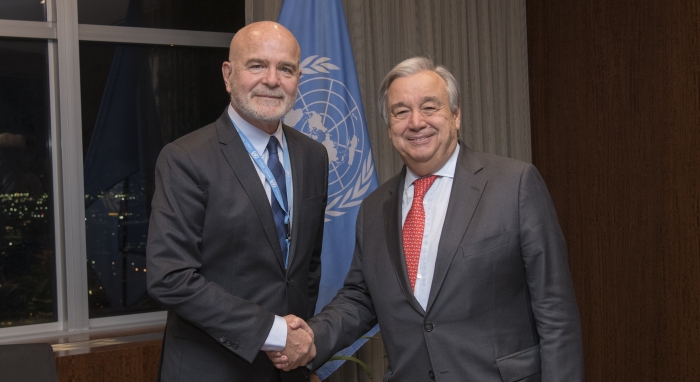
The current Special Rapporteur on human rights defenders shaking hands with the UN Secretary General
Michael Forst (l) with the UN Secretary General

An exceptionally large group of 131 national and international NGOs (for list see: http://www.ishr.ch/sites/default/files/documents/190909_criteria_jt_letter_sr_on_hrds_signatories.pdf) have set out the criteria that should be at the heart of the selection of the next UN Special Rapporteur on the situation of human rights defenders. As Michel Forst’s term as mandate holder comes to an end, candidates have until 17 October 2019 to submit their applications for the position. (If your organisation would like to endorse the criteria, please sign on here)

The document sets out the skills and expertise that should be taken into account in the appointment of the next expert in March 2020. These fit under 4 priorities:

  • qualifications and skills;
  • relevant expertise
  • established competence;
  • and flexibility/ readiness and availability

The document also provides information on the application process, and underlines the importance of independence and impartiality, as well as experience or knowledge of the realities faced by human rights defenders.

ISHR’s Programme Manager Helen Nolan stated: ‘Human rights defenders who are most at risk around the world are often persons with discriminated identities or from communities that are marginalised, so the Special Rapporteur should be able to consider the particular contexts and challenges faced by these individuals and groups with the benefit of insights from the mandate holder’s personal experience’.

The checklist is available here.

http://www.ishr.ch/news/special-procedures-what-skills-do-we-need-next-un-expert-human-rights-defenders-rapporteur

Turkmenistan’s cotton activist Matalaev free after 3 years

September 11, 2019

Gaspar Matalaev

valdosta / Pixabay

blogged in Value Walk of 9 September 2019 about “Gaspar Matalaev Free After Three Years Of Unjust Imprisonment”.  Gaspar Matalaev, a labor rights monitor from Turkmenistan, was released from prison on 6 September after three years’ imprisonment in retaliation for his reporting on forced labor. A court in Turkmenabat sentenced Matalaev on spurious charges of fraud in 2016 and Matalaev served the entire three-year sentence. “We are relieved that Gaspar is out of prison and home with his family where he belongs,” said Ruslan Myatiev, director of turkmen.news, a member of the Cotton Campaign. “But make no mistake, every day that Gaspar spent in prison was a travesty of justice to punish him for his human rights work and intimidate others from speaking out about abuses.”

Gaspar Matalaev, a reporter with turkmen.news who had monitored and reported on the systematic use of forced adult and child labor in Turkmenistan during cotton harvesting, was arrested in October 2016, just two days after turkmen.news published his extensive report on Turkmenistan’s labor practices. While in detention, Matalaev was tortured by electric shock and held incommunicado. Throughout the investigation and trial, he did not have access to effective legal representation or to key files, information, and documents. The United Nations Working Group on Arbitrary Detentions determined that Matalaev’s arrest and imprisonment was arbitrary.

“Matalaev and others take great personal risks when they document these abuses,” said Judy Gearhart, executive director at the International Labor Rights Forum, which hosts the Cotton Campaign. “Turkmenistan’s international partners, including in the U.S., EU, and the international development banks, should use their influence with the government of Turkmenistan to press for greater protections for human rights monitors and journalists.” International Labor Rights Forum honored Matalaev with its annual Labor Rights Defender award in 2019.

More than 100,000 people signed a petition calling on the government of Turkmenistan to release Matalaev. …….

The Cotton Campaign and investors called on companies to sign the Turkmen Cotton Pledge, and work to ensure that cotton from Turkmenistan produced with forced labor does not enter their supply chains. Thus far 70 major apparel and home goods brands and industry associations have signed the pledge.

Thanks to the work of reporters and human rights defenders like Gaspar Matalaev, companies and consumers can make informed sourcing and purchasing decisions,” said Patricia Jurewicz, vice president of the Responsible Sourcing Network, Cotton Campaign co-founder, and host of the Turkmen Cotton Pledge. “Companies can take a stand to end the human rights abuses in Turkmenistan, and ensure that materials produced with forced labor do not enter their supply chains.”

Cotton Campaign is a global coalition of human rights, labor, responsible investor, and business organizations dedicated to eradicating child and forced labor in cotton production.


https://www.valuewalk.com/2019/09/gaspar-matalaev-turkmenistan/